Recording Drums In Small Rooms: Capture A Clean, Direct Sound
Don't let a small room get in the way of a good recording.

 5,0 / 5,0 |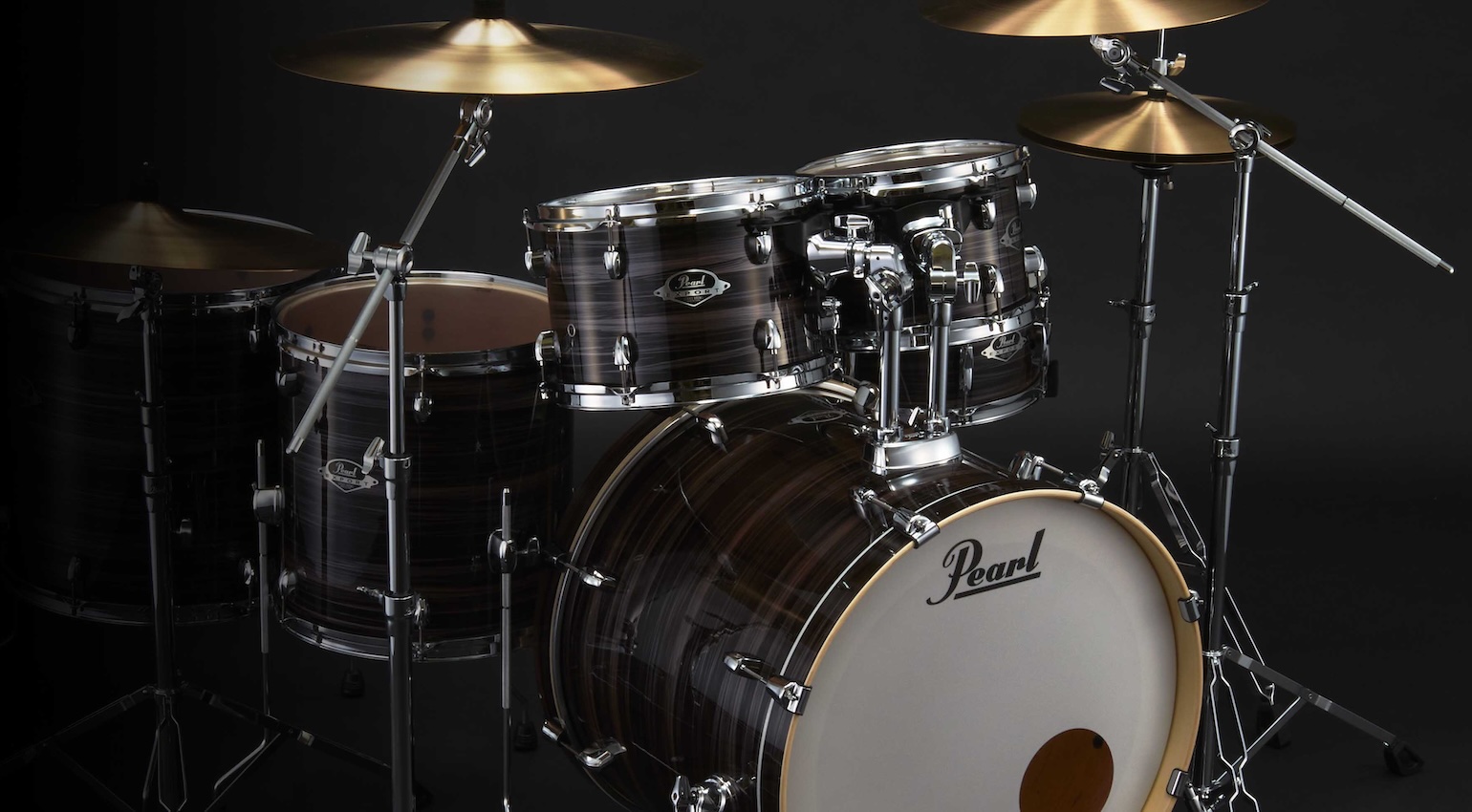

We discuss the limitations of recording drums in small rooms and how to approach the performance, acoustics, and mic placement for the best results.
In this Article:
Not every project has the budget to work at Ocean Way Studios with expansive live rooms and high-end gear. Moreover, it simply isn’t necessary for most projects, as drum plugins are more than adequate to convince the ears of the average Pop Music consumer. Above all, the reason for recording drums on a project is for character, and some of the most sought-after drum sounds of the past two decades or so were not recorded in pro studio settings.
Instead, they were created in home studio environments through the obsessive tinkering of artists like Kevin Parker of Tame Impala, with the balance of particular gear choices, mic placement, and the performance approach. With this in mind, let’s take a look at some of the key areas where planning can help you record the best drums for your project, even in a small living room, bedroom, or garage space.
Recording Drums In Small Rooms: Reading the Room
When it comes to recording in tight spaces, it’s important to prioritize room acoustics, as even a little treatment in key areas can go a long way. Conversely, if this is simply ignored, you could have the best-sounding vintage drum kit with the ultimate mic setup and still come away with recordings that are mediocre at best.
Because the distances between the walls in small rooms are short, reflections can multiply, which often leads to a boxy sound with a buildup in the lower midrange and comb filtering. In pro studios, the ambience of the live room is specifically designed to enhance drum performances, whereas a small room presents obstacles.
To start optimizing the space for drum recording, we need to assess and identify some of the problematic areas. When clapping our hands and listening out for ringing and flutter echoes in the room, these are indicators that treatment is necessary. Household items such as carpets and thick curtains, as well as home-made absorber panels, can provide basic acoustic damping and control. Pay careful attention to the earliest reflection areas on the perimeter of the drum kit and behind the drum throne.
Low-frequency energy can be tricky to contain, but if we can tighten the low-end by positioning bass traps in the corners of the room. For this, we can even create makeshift absorption by draping a blanket over a packed bookshelf.


Recording Drums In Small Rooms: Configuring the Kit
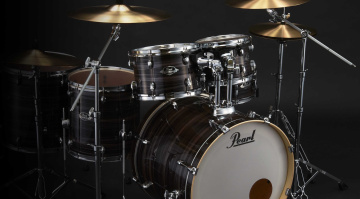
When space is limited, trying to set up an Alex Van Halen-sized kit isn’t the best approach to take. Remember, of course, that we still have to somehow squeeze mics into the mix, so we need to scale the kit accordingly. A kick, snare, hi-hat, two toms, and three cymbals should be the maximum kit size when working in a small room.
Because we’re relying on dry, close miking, drum tuning becomes more crucial. By slightly tightening the skins for higher pitch and reduced sustain, we can improve the articulation and clarity of drums in tight spaces. Moreover, by using tools like cloth, tape, and gels, we can dampen any ringing without destroying the tone of the drums.
The way the drummer strikes the drums also plays a major role. The harder they hit, the more reflections immediately bounce back off the walls and into the mics. Let the drummer feel out the room by playing with and without headphones, so they can get an idea of what the mics are picking up. Control, focus, and consistency are key aspects of a drum recording in a small room.

Recording Drums In Small Rooms: Mic Stance
Your placement and choice of microphones is a critical step, because it allows you to control the zones being captured in the room. As we’ve mentioned, close miking is the name of the game in tight spaces, as this captures direct sound from the source while keeping reflections to a minimum.
Start with the mics that are absolutely necessary:
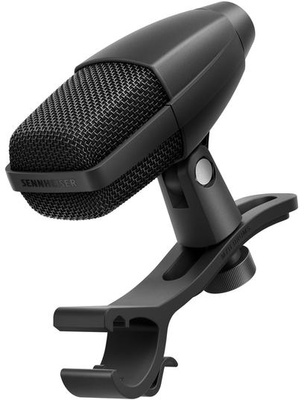
- Place the kick mic at the port hole or just inside to ensure there is a balance of beater click (attack) and defined low-end punch.
- Aim the snare mic at the drum’s center while positioning it so that the hi-hat is in the mic’s dead zone (off-axis) for minimal bleed.
- Position the overheads carefully to minimize the room interaction, but capture a balanced stereo image
In tight rooms, overhead placement can make or break your drum recording. Tighter and lower placement of XY or ORTF (directly above the kit) configurations can ensure stereo focus while capturing less room reflectivity.
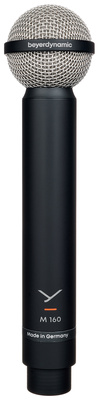
In addition, if you decide to use room mics, you need to approach with caution. Ambient miking in tight spaces can really throw a spanner in the works. However, a tightly placed ribbon mic with a healthy amount of compression can introduce warmth and character.

Recording Drums In Small Rooms: Bleed and Phase
When it comes to drum recording, microphone bleed comes with the territory, but small rooms can create chaos. However, with careful microphone placement, we can minimize spill and ensure that each mic is mostly capturing the drum hits we intend. Remember that each microphone has an address end, where the pickup zone is, and the rear end, where the rejection is usually strongest.
For the most part, the mics we use for drum recording in smaller spaces will be cardioid, which allows us to focus the pickup zone close to where the drumstick is striking while using the rear rejection end of the mic to reduce spill from the cymbals and hi-hat. Another crucial aspect of multi-mic recording is phase coherence.
Phase problems can arise when multiple mics are placed at different distances while capturing the same sound source, resulting in hollow or thin recordings. For this reason, we always want to check the phase between the kick drum and overhead mics, as well as the top and bottom snare mics.
To do this, you can simply flip the polarity on one of the channels and stick with the setting that sounds the fullest. You can also fine-tune your mic positioning to kill phase issues before you hit record.


Recording Drums In Small Rooms: Playing to the Room’s Strengths
Regardless of its size, every room has a particular sweet spot, where the kit sounds best. This means that you may have to move the drum kit around, changing its angle or shifting it by between 30 and 50 cm (12-20 inches). We don’t want the kit placed in close proximity to walls, but it shouldn’t be in the exact center of the room either.
Should your room be especially nightmarish, try creating a dead-zone barrier around the kit with absorptive materials, like draping a thick blanket over the boom shaft of a mic stand. This way, we reduce reflections for a clean, dry signal that can be shaped and enhanced with reverb in post-production.
Recording Drums In Small Rooms: Gain Staging and Monitoring
Decent sets of headphones for both the drummer and engineer are essential, as the frequency range in small spaces can be misleading, particularly in the low frequencies. To ensure the translation properties of your recordings, always check them with a referencing plugin, as well as different playback systems like studio monitors, AirPods, smartphones, and even car sound systems.
Your gain staging in small rooms calls for restraint. Because drums have a wide dynamic range, we want to ensure the best possible signal-to-noise ratio with ample headroom, especially on the kick and snare.
Recording Drums In Small Rooms: Post-Production
When we record in a confined space, it usually requires doing a bit of extra work in the mixing process, but this can be used to our advantage. Clean recordings with balanced dynamics become far more flexible in your DAW.
To isolate and remove harsh frequencies, we can use EQ, especially in the lower mids, which is a problem zone for small rooms. With compressors, we can focus the dynamics of a performance, but watch out for boosting room artifacts.
Reverb plugins are your best friend in this situation. Rather than leaning on natural ambience, we can create a virtual environment for the drum kit that really suits the vibe of the song, whether it be a 1980s hall or a tight, 0.2-second ambience.
Conclusion
When recording drums in a small space, we focus on controlling the sound source and the signal coming in. If we minimize the amount of negative colouration the room is adding, and try to capture the cleanest direct sound, we can achieve professional results. The finer details are key, from room acoustics and mic placement to drum tuning and directing the drummer’s performance.
What’s more, in the context of many modern music styles, tight, dry drums are often preferred for their punchy character. This means that small rooms can deliver decent recordings if we use them well.
More Info:
*Note: This article contains affiliate links and product widgets that help us fund our site. Don’t worry: the price for you always stays the same! If you buy something through these links, we will receive a small commission. Thank you for your support!

This might also interest you