EQD Towers Stereo Reverberant Filter: Ambient FX
Get ethereal with this new Stereo Reverberant Filter

 3,4 / 5,0 |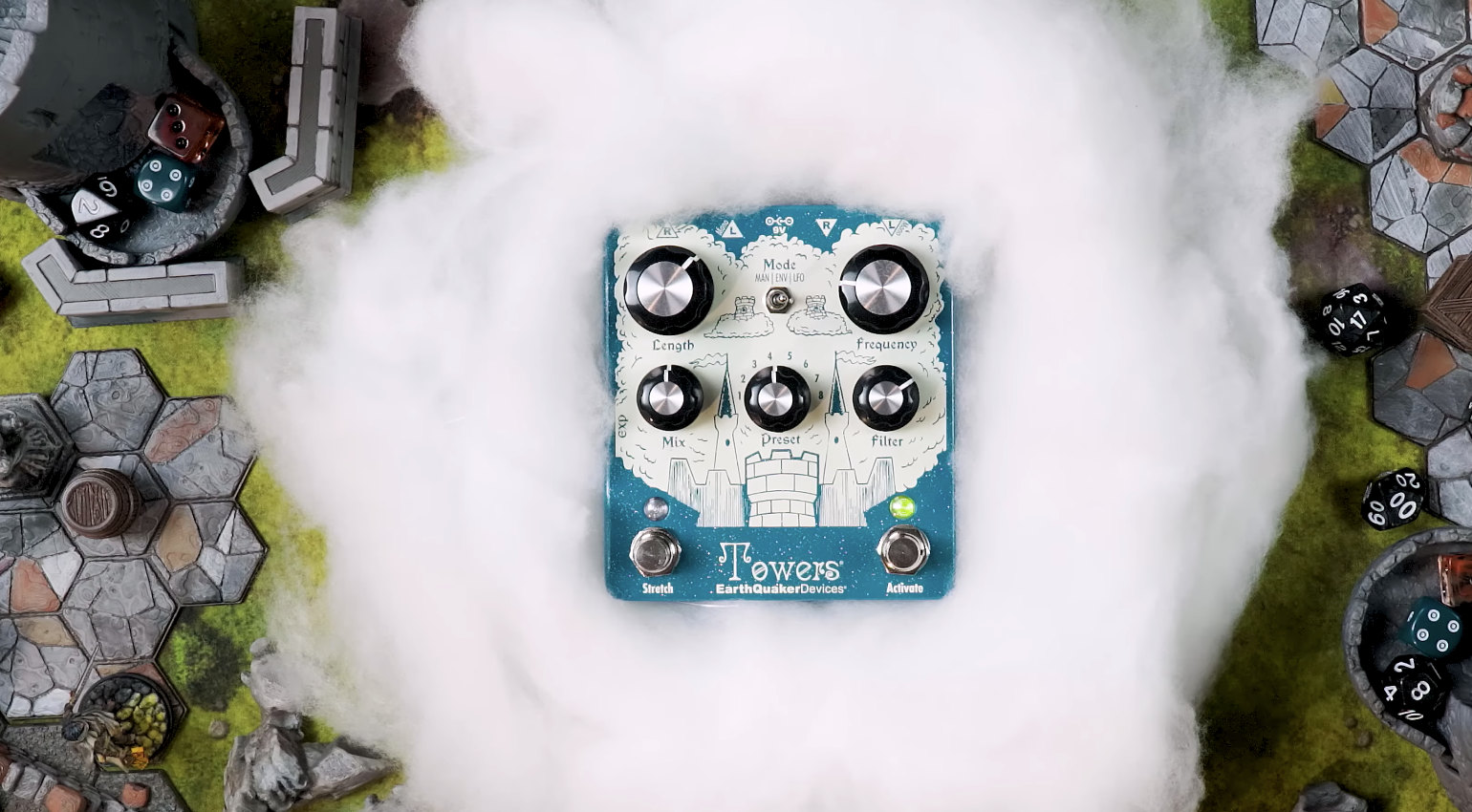

The Towers Stereo Reverberant Filter is EarthQuaker Devices’ latest effect release and offers a cinematic stereo soundscape for lovers of unique reverb/filter effects.
EQD Towers Contents
Towers
The EQD Towers is a new effect that runs in stereo, offering a wide range of reverberation and filter effects in one pedal. This effect will appeal to musicians who like vast expanses of reverb and layers of filtering. Having them both combined into one pedal is a nice idea.
The heart of the EarthQuaker Devices Tower is a cathedral reverb. The input signal is processed through a series of micro-delays and then fired into this booming giant reverb. It alone sounds damn good, as you can hear in the sound samples.
The key is the combination with a resonant low-pass filter. This doesn’t simply filter the reverb signal; rather, the delays and reverb signal are filtered “at multiple points.” And the high resonance creates a whole range of amazing harmonics in the effect
It can also be modulated by its own internal LFO, and the player’s picking dynamics can affect the filter envelopes, so it has lots of ways to create movement in real-time. The Stretch mode then adds an extra layer of ambient sound. Here, the reverb is transposed by an octave, and the frequencies are modulated to produce almost otherworldly sounds.
Three Modes
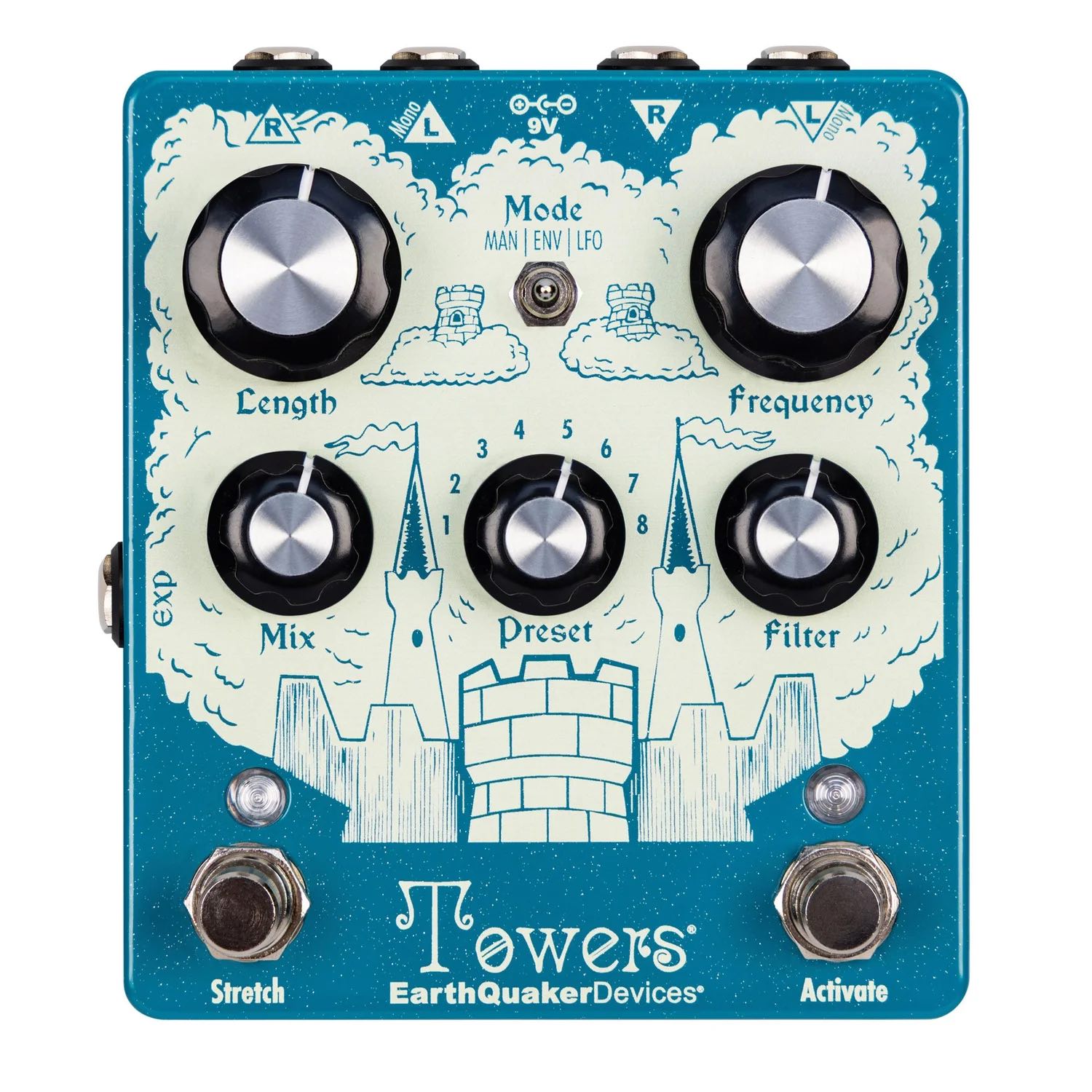
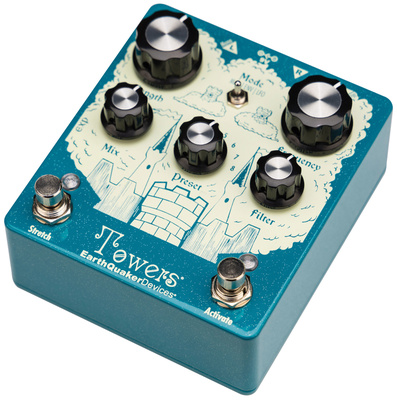
Towers has three dedicated modes to play with: Manual Mode, Envelope Mode, and LFO Mode. These three modes are selected with the three-way toggle switch labelled Mode at the top of the pedal.
Manual Mode
In Manual Mode, you modify the filter frequency by directly adjusting the Frequency control. This adjustment affects the entire stereo field, though it applies to the left and right channels in opposition to create a sense of spatial movement.
Envelope Mode
When using Envelope Mode, the filter frequency responds dynamically to your playing, with an internal envelope triggered by your picking strength. In this specific configuration, the Frequency control no longer sets a static point but instead dictates the sensitivity of that envelope to your dynamics.
LFO Mode
In LFO Mode, the filter frequency is swept by a low-frequency oscillator, and the Frequency control is repurposed to set the oscillation rate. This mode produces a slow, rhythmic sweep across the stereo field, resulting in a distinctive panning filter effect.
Controls & Presets
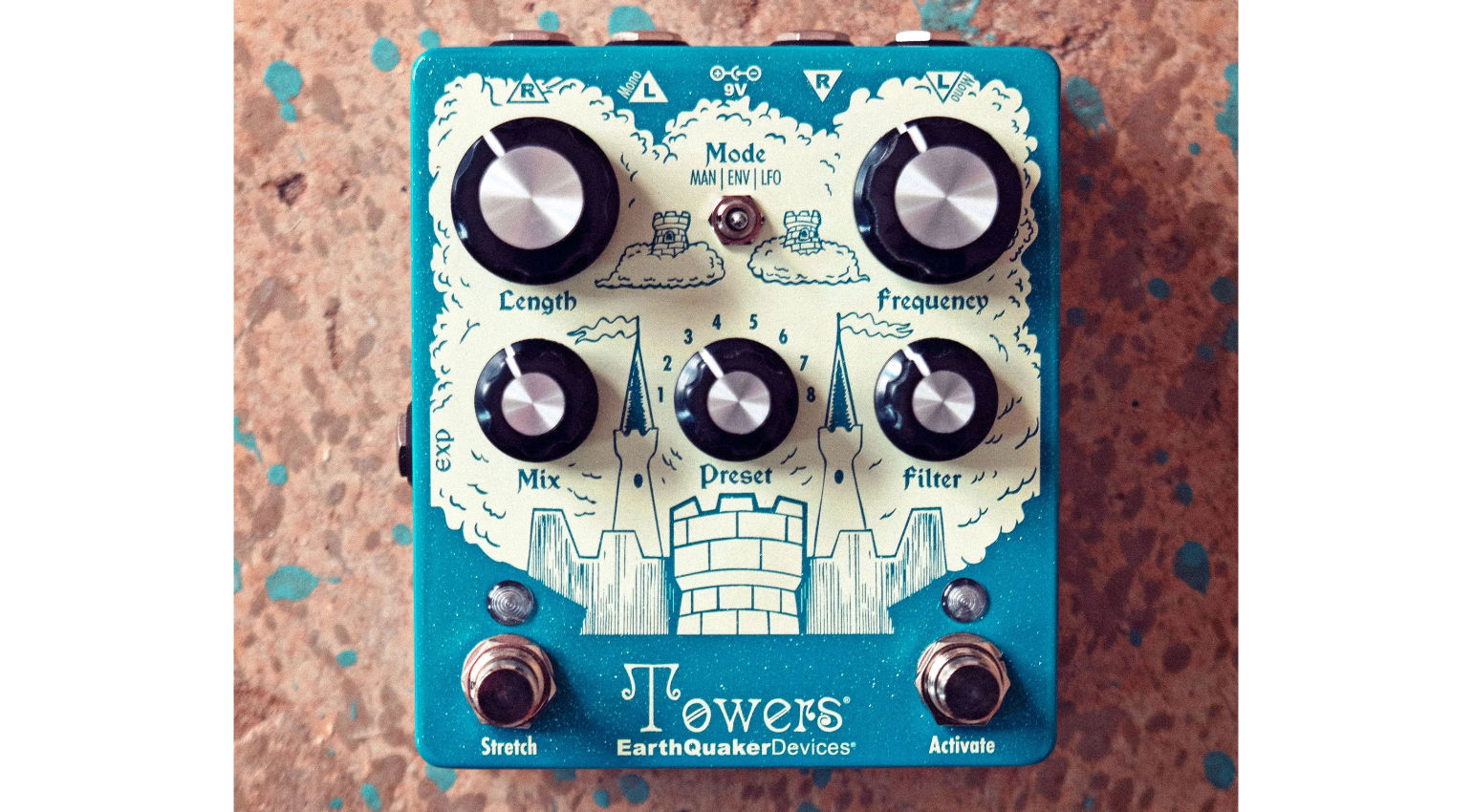
The Length control dictates the duration of the reverb decay, with lower settings providing a tight space and higher settings offering an elongated trail. Beyond merely setting the decay time, this knob also adjusts the speed of the Stretch feature. Then the Mix knob adjusts the output balance of the effect, allowing you to find the perfect balance between the dry, earthly signal and the ethereal wet textures.
The Frequency parameter governs the filter frequency, though its exact behavior shifts significantly depending on the active mode (see the three modes above) selected for the pedal. Finally, the Filter control determines how much of the resonant low-pass filter is integrated into the reverb pathways, allowing you to sculpt the overall depth of the harmonic resonance.
8 Presets
Preset mode (there are 8 onboard presets) allows you to cycle through and select specific user-saved configurations, making it easy to recall your favourite settings instantly.
Not only are all the control knob values saved, but if you’re using an expression pedal, its mapping is also saved. One parameter at a time can be remotely controlled via an expression pedal; the video clearly explains how to adjust the settings.
Mono-Stereo
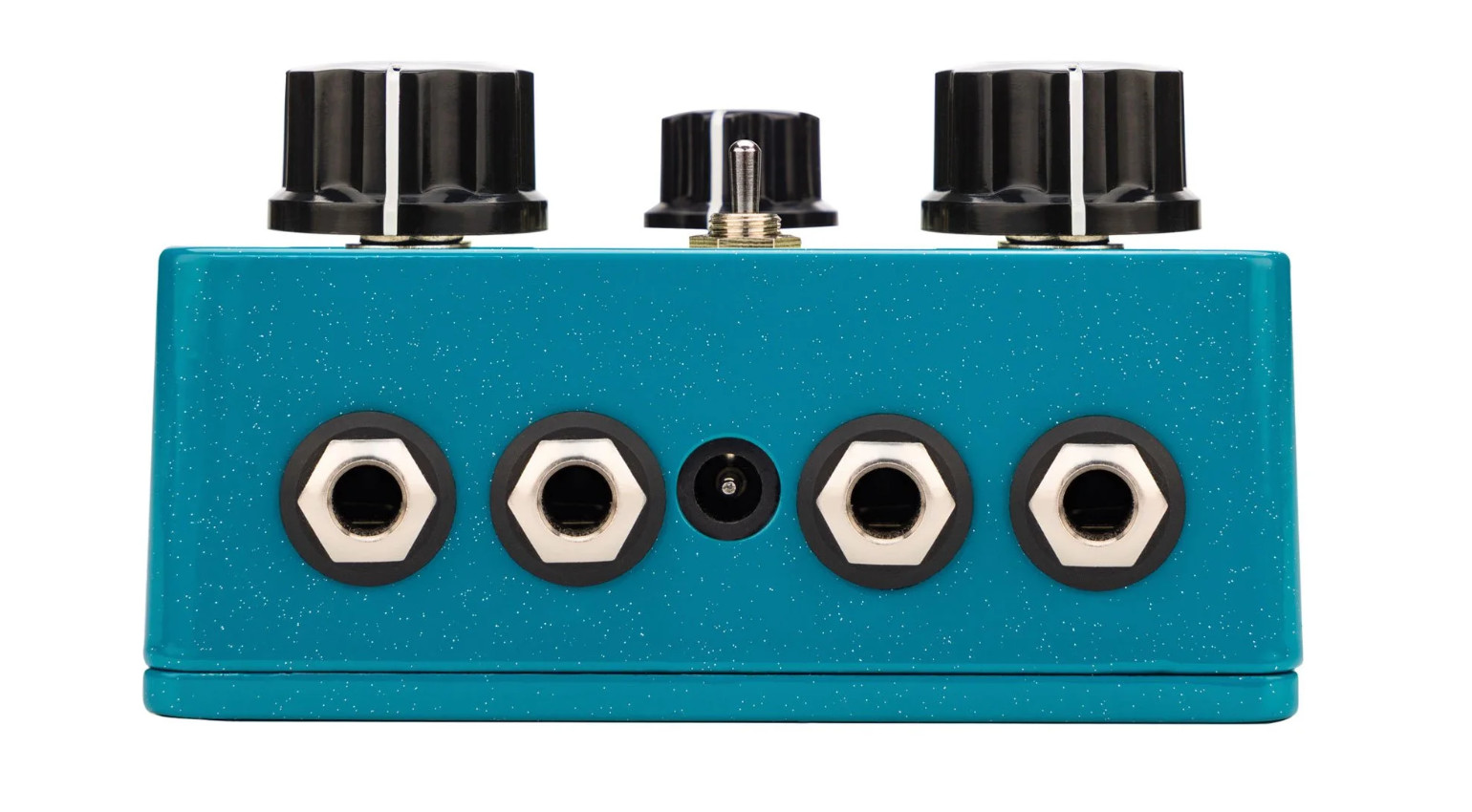
In addition to the expression pedal input, the Towers offers two stereo inputs and outputs on the head. You can also use the pedal entirely in mono or mono-to-stereo.
Like many newer reverb pedals, it also features a Trails mode, where the reverb tail fades out when you switch to bypass. This can be deactivated, with the buffered bypass effect, if desired.
Stretch Footswitch
Engaging the Stretch footswitch decelerates the entire digital architecture of Towers, effectively doubling the reverb length. This process shifts the frequency spectrum and introduces a distinct pitch-bending effect as the system morphs. With the stretch footswitch, you can either tap it for an instant effect or hold it down to keep the morphing going.
The Activate footswitch functions as the primary bypass control, allowing you to toggle the entire effect on or off as needed.
Who is it for?
I’m guessing anyone who is a fan of low-frequency, self-resonating filters and reverberations will love this stereo effect. Having all the extra control via an LFO and an envelope will make this otherworldly effect fun to experiment with, and it can save presets!
Another interesting effect from EarthQuaker Devices, with lots of potential for shoegaze, dreampop, and general stereo experimentation.
Price & Availability
The EQD Towers Stereo Reverberant Filter is available at Thomann for $388 / £349 / €399.

More Information

This might also interest you