5 of the Most Cinematic Hardware Synths: Widescreen Synthesis
Synths with massive soundstages from Moog, Oberheim, Waldorf, KORG, and more!

 4,1 / 5,0 |

Take your music into widescreen territory with these five cinematic hardware synths. Your ears will thank you for it.
5 of the Most Cinematic Hardware Synths
Cinematic Hardware Synths
Nothing compares to a massively wide soundstage. And that’s doubly true when it comes to synthesizers. When a gorgeous pad or cascade of liquid strings wraps around the stereo field, it’s like seeing with your ears.
There are many ways to get wide synth sounds. Originally mono, synthesizers started going stereo in a big way in the 1980s when manufacturers like Roland and Korg put a chorus at the end of the signal path to thicken up the sound. When digital effects arrived, stereo outputs became much more common. Now, thanks to modern technology, we can have stereo filters and binaural processing in our synths.
If you’re after a widescreen sound straight from the source, check out these five cinematic hardware synths.
Cinematic Hardware Synths: UDO Audio Super 6
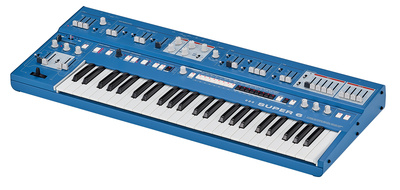
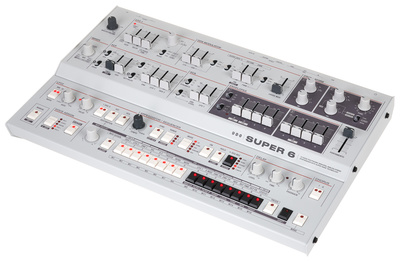
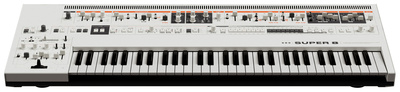
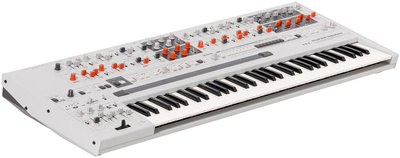
UDO Audio came out of seemingly nowhere in 2020 with Super 6, a polyphonic hybrid synth that paired digital FPGA oscillators with analog filters. With its Juno-like synthesis architecture and lack of LCD screen, it firmly put the focus on sound. And what a sound it is, too.

But we’re here today to talk about stereo width, aren’t we? And that’s a big part of the sound of the Super 6. Although nominally 12 voices, there’s also a binaural mode that assigns six voices to each ear, giving you a widescreen soundstage that comes alive thanks to the independent control over left and right parameters. This allows the player to “create rich and unique stereo images,” according to UDO.
UDO Audio has continued its binaural synthesis throughout its other releases too, with the Super 8 and Super Gemini both having it. Having it large, more like it.


- UDO Audio Super 6 product page
Cinematic Hardware Synths: Oberheim OB-X8
Although we may think of cinematic hardware synths with stereo panning as a recent thing, Tom Oberheim actually pioneered its implementation way back in the early 1970s with his polyphonic Voice series, the Two Voice, Four Voice and Eight Voice. By having each voice be a discrete Synthesizer Expander Module, he was able to give the user control over individual voice panning. Pretty advanced for the time.
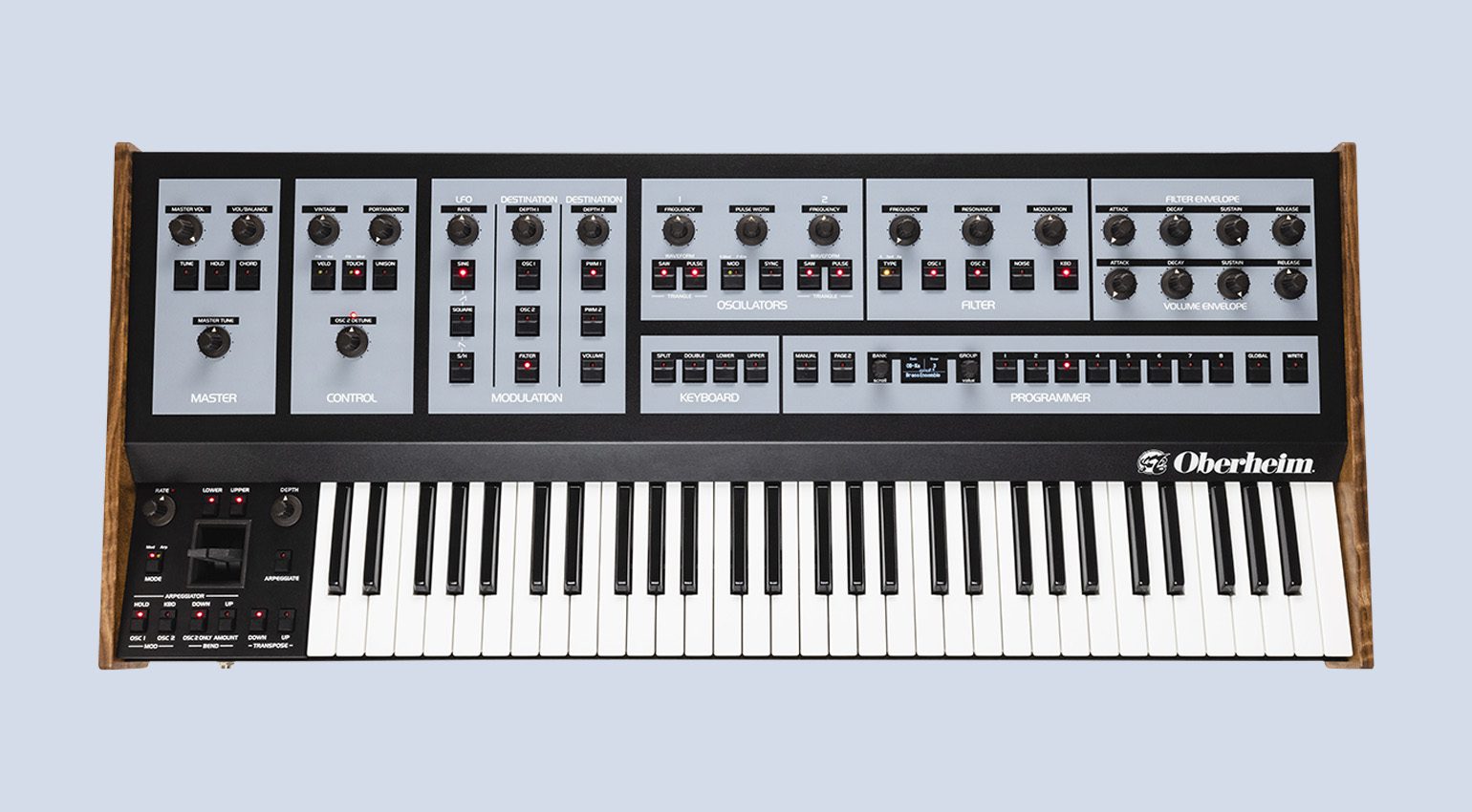
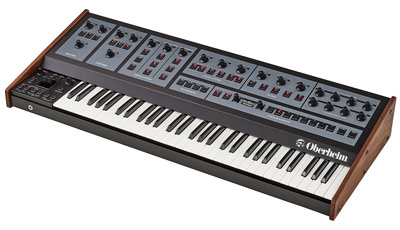
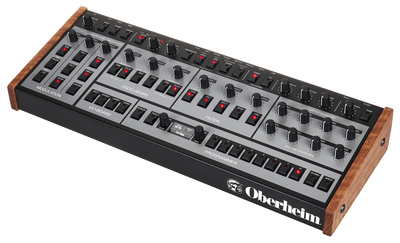
It’s no surprise, then, that Tom would continue to offer panning functionality in his modern analog polys too, like the incredible OB-X8, which is not just stereo, but binaural. As of OS version 2.0, it allows for hard left and right panning of individual voices. This makes the already massive-sounding OB-X8 even bigger. So big, in fact, you may have trouble fitting it into a mix. But what a problem to have, eh?

- Oberheim OB-X8 product page
Cinematic Hardware Synths: Moog Muse
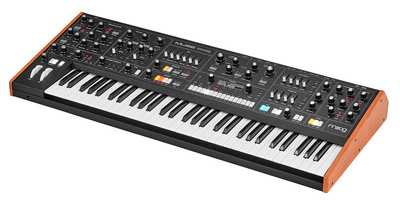
Although Moog flirted with more than one channel on the Voyager and its stereo Ladder filter, the company’s first true widescreen synthesizer was the One. In 2024, the company followed it up with Muse, a more affordable take on analog polyphony that also strides confidently into stereo territory.
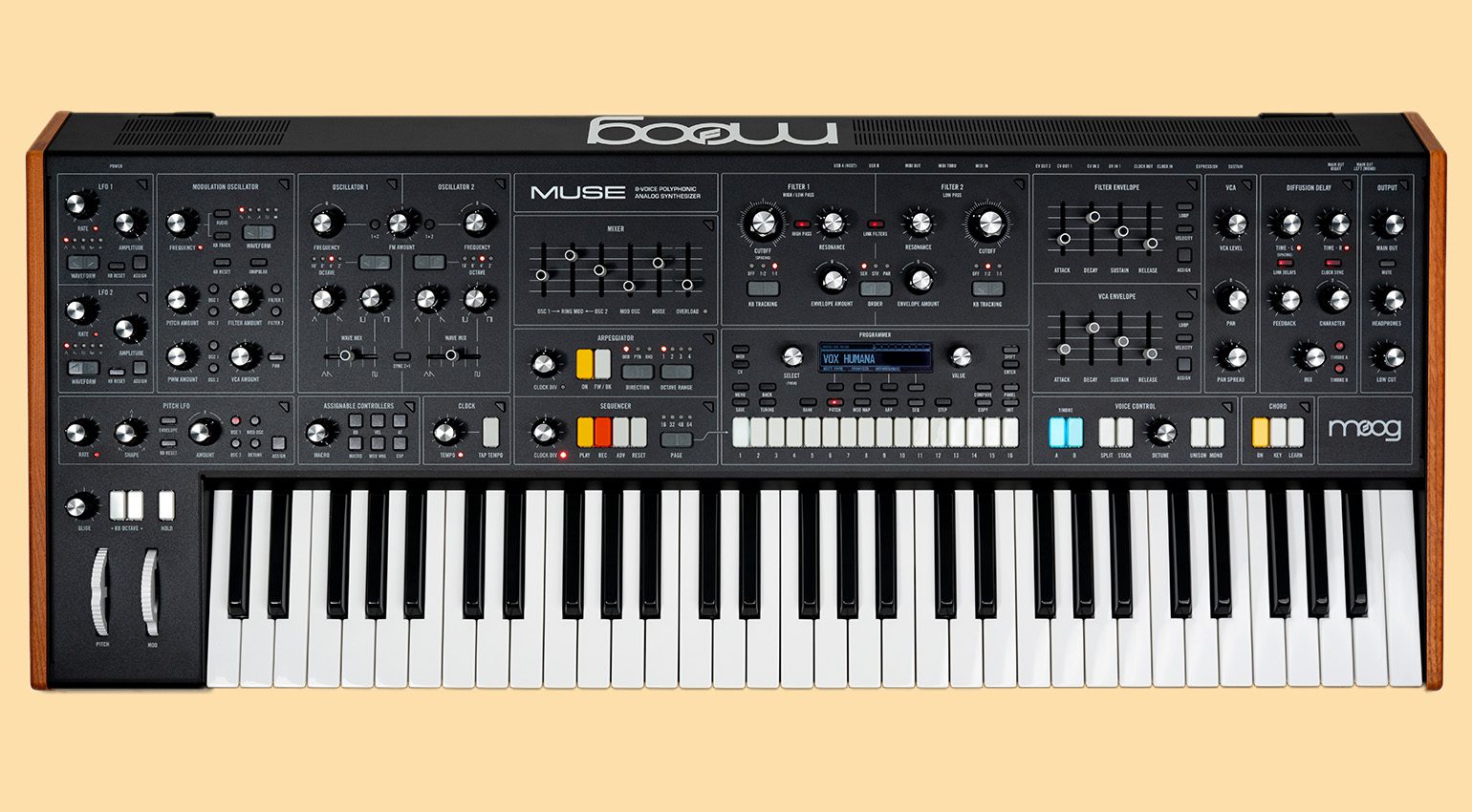
A bi-timbral poly with eight voices, it offers a number of parameters that make it an excellent cinematic hardware synth. The VCA is stereo, with not only per-timbre volume control but also per-timbre panning and spread in the form of L/R and EVEN modes. The filters can also be routed into a stereo mode. Then there’s the lovely Diffusion Delay processor for stereo digital reverbs, delays and filter behaviors.

- Moog Muse product page
Cinematic Hardware Synths: KORG Wavestate MKII
Next, let’s take a look at two digital cinematic hardware synths. Digital is inherently more flexible when it comes to stereo, and these two let you do unusual and exciting things with stereo width and panning.
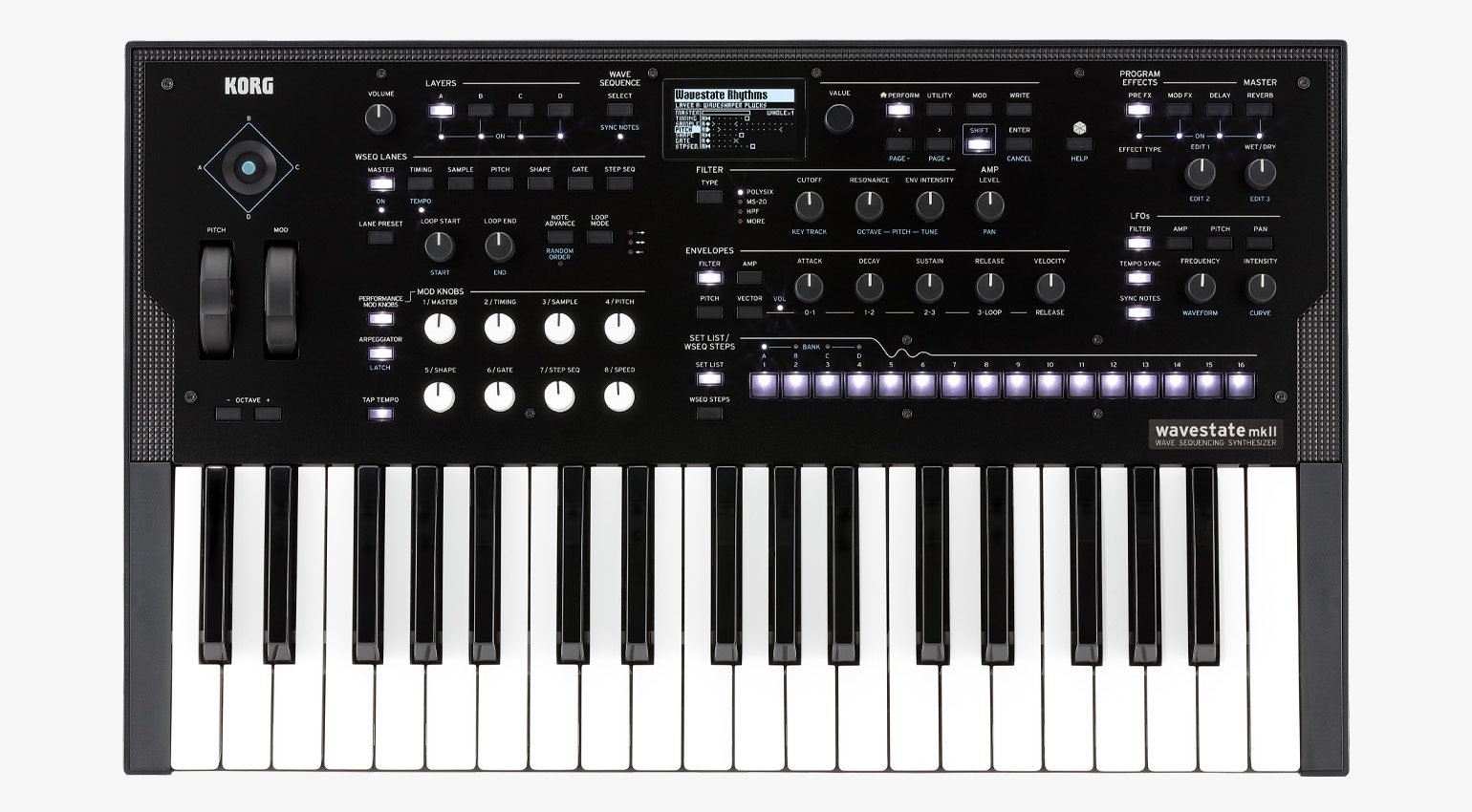
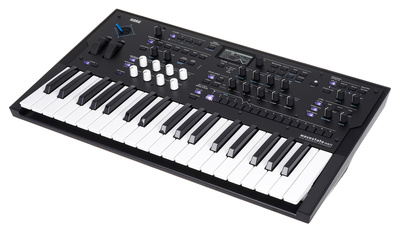
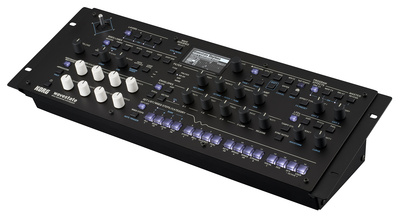
The first is the KORG Wavestate MKII. An update on the Dave Smith-designed Wavetstation from 1990, the Wavestate MKII takes the vector-based sample synthesis original and supercharges it for the 21st century with 96 stereo voices spread across four vector-controlled layers. Don’t forget the 14 simultaneous stereo effects.
Where the interesting stereo functionality comes into play is with the Wave Sequencing, which lets you string together waveforms into a sequence. By assigning pan as a modulation source, you can set each step in the sequence to a different pan position, giving you motion-packed sequences of waveforms that ping-pong around the stereo spectrum.
If you like 90s-style sample synthesis, this is a very powerful modern take on the sound. And with plenty of stereo movement possibilities.

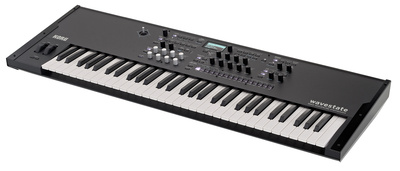
- Korg Wavestate product page
Cinematic Hardware Synths: Waldorf Iridium MK2
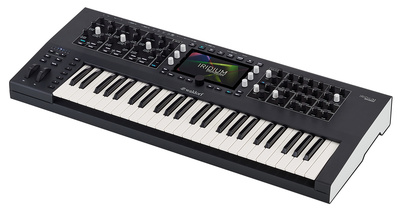
When it comes to cinematic hardware synths, it’s hard to beat the Waldorf Iridium family. The Iridium Core, Iridium Keyboard and new desktop Iridium MKII all offer a variety of synthesis models and effects, plus a heap of stereo-infused functionality.
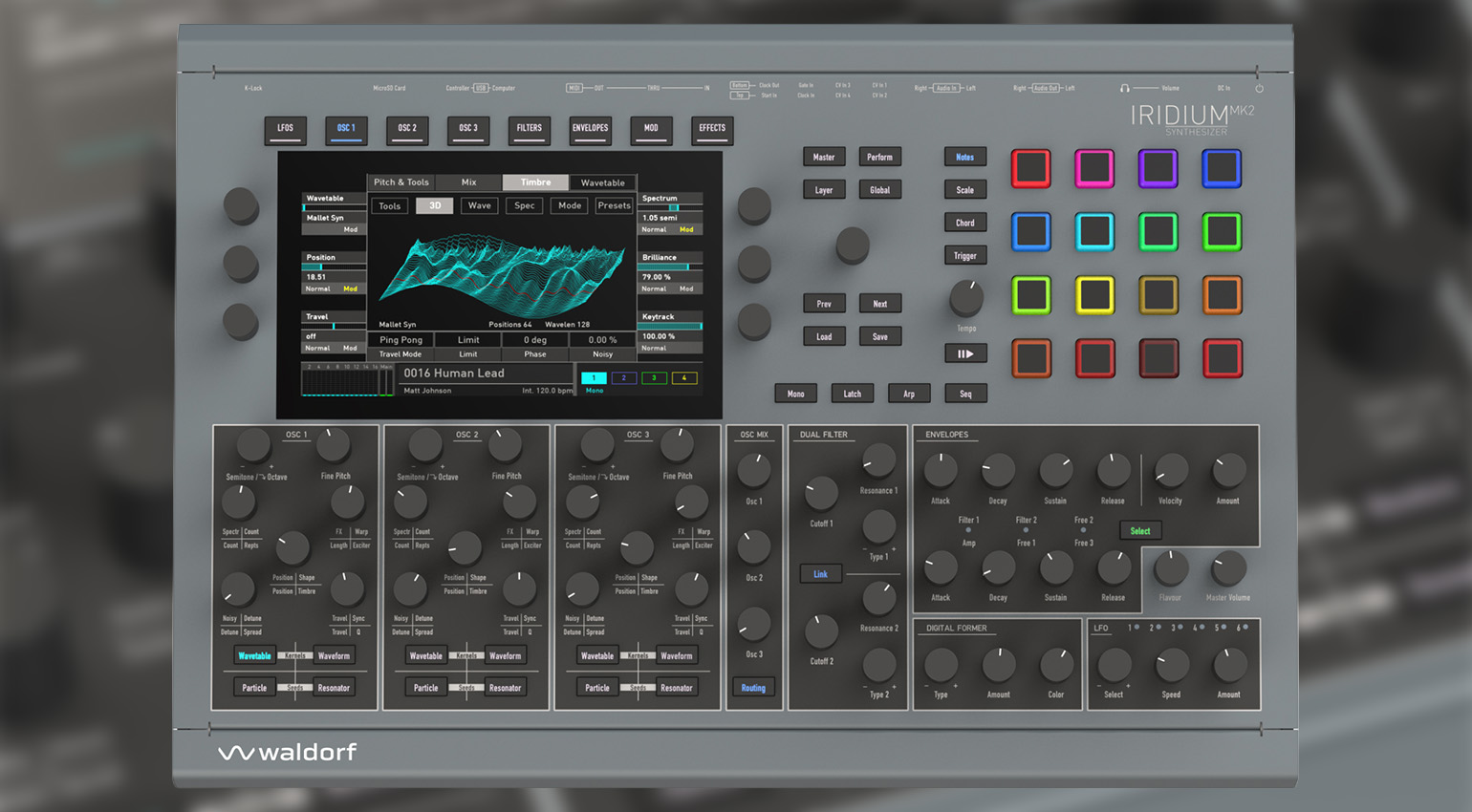
First off, there’s oscillator spreading, allowing you to push pitch, phase, and position parameters around in the stereo field. Each voice contains two true stereo digital filters that allow independent panning and frequency spacing for left and right channels. There’s also the unique Digital Former, which is a dedicated stereo processing stage with stereo comb filters, ring modulation, drive circuits, and formant filters. The effects offer panorama adjustment, and you can even modulate stereo pan using the LFOs, envelopes, or the Komplex Modulator through the 40-slot modulation matrix.

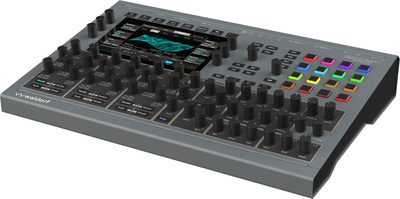
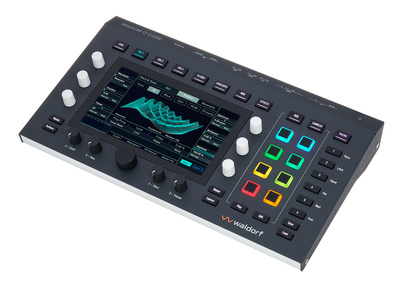
- Waldorf Iridium MK2 product page
More Information
- More about synthesizers
- Buy synthesizers at Thomann*
*Note: This article contains advertising links that help us pay for this site. Don’t worry: the price for you will always be the same! If you buy something through these links, we will receive a small commission. Thank you for your support!


This might also interest you
2 responses to “5 of the Most Cinematic Hardware Synths: Widescreen Synthesis”

Replace UDO with Polybrute
Yamaha Montage M!