Why the Minimoog Is the Most Important Synth of all Time
Synth Videos of the Week

 3,7 / 5,0 |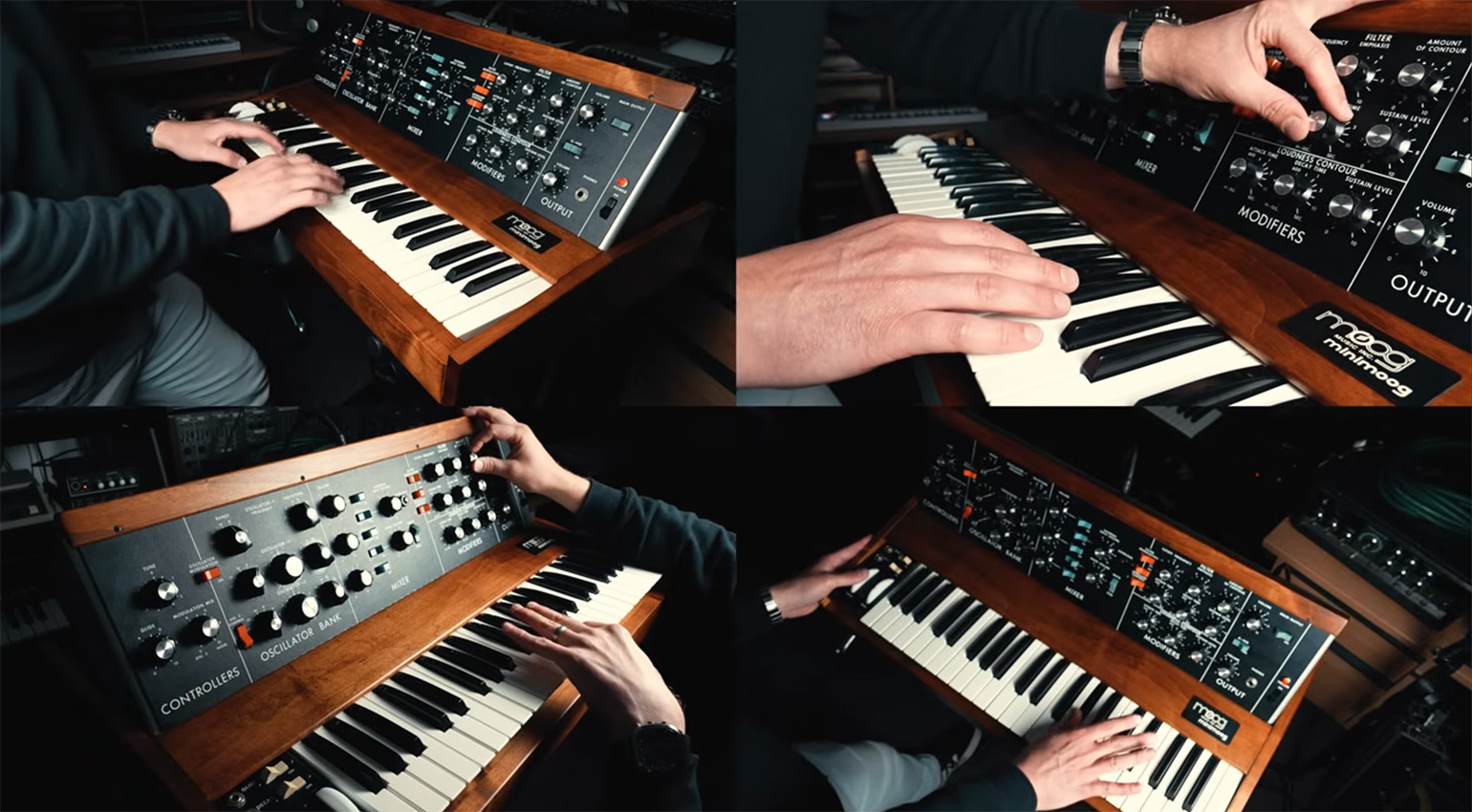
Why the Minimoog Is the Most Important Synth of all Time · Source: YouTube / Alex Ball

Weekend video tips for all you Moog fans out there: Alex Ball has dedicated one of his fantastic mini-documentaries to the iconic Minimoog, and Synthpro restores the extremely rare Minitmoog to the ‘T’.
What Makes the Minimoog so Special?
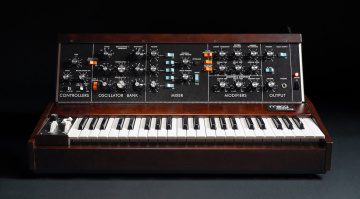
The Minimoog is without a doubt the most famous synth of all time. Even before other legends like the Sequential Circuits Prophet-5 or the ARP Odyssey, it was the Minimoog that helped establish the synthesizer as a “real” instrument. Originally built from 1970 to 1981, it gave musicians a new voice that fit perfectly with the experimental spirit of the time. Even today, the heart of just about every synth fan starts racing when they get a chance to play a vintage Minimoog.
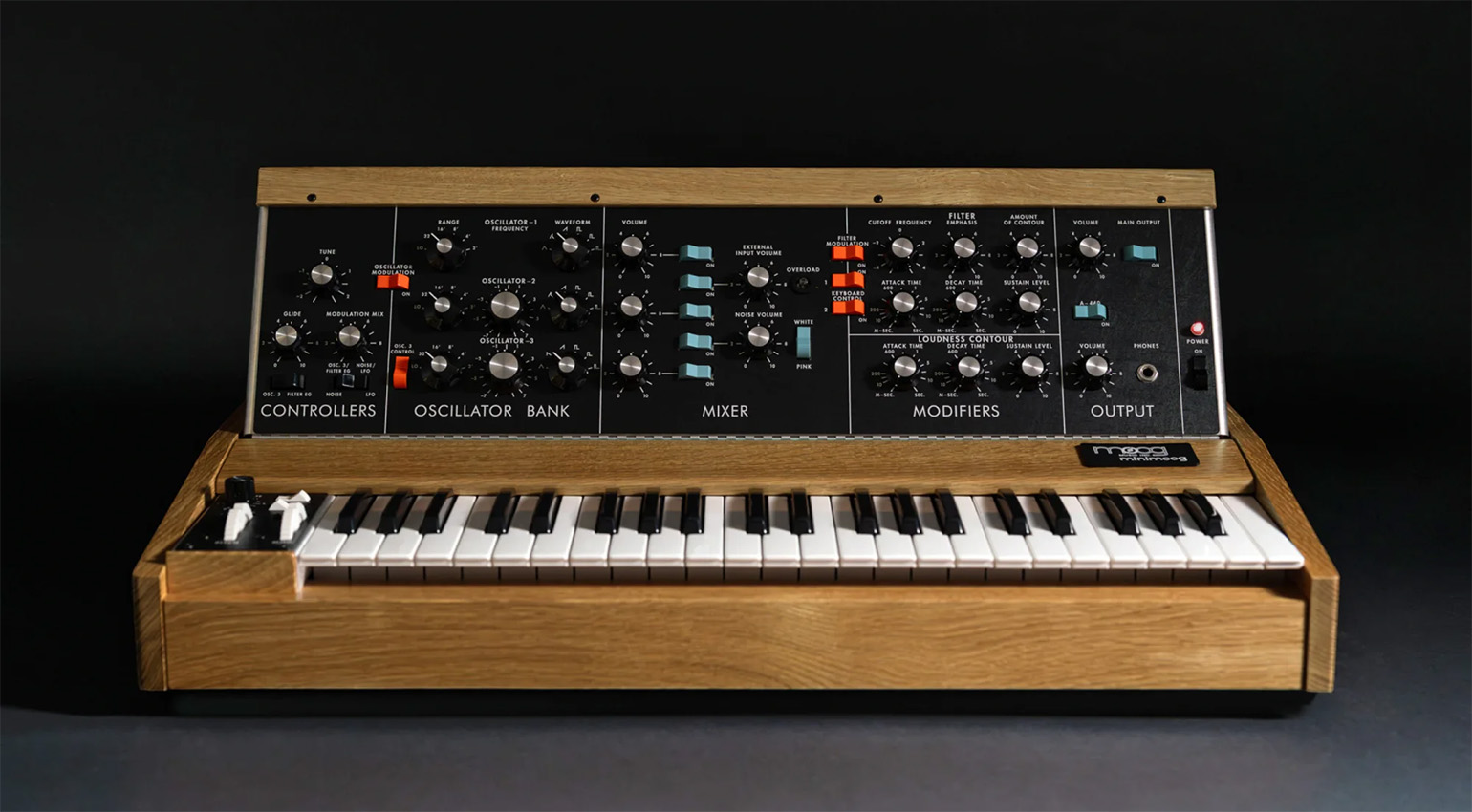
But why is that? What makes the Minimoog so special and makes it stand out even among its contemporaries? Is it the incomparably beefy sound? Is it that Moog had absolutely hit the nail on the head with the iconic 3-oscillator architecture: simple enough to get great sounds with just a few tweaks of the knobs, yet full of surprises?
In his latest synth documentary, Alex Ball sets out to uncover the answer. And as always, it’s the incomparable sounds and banging demo tracks that make his video stand out from the crowd of synth YouTubers—just like the Minimoog!
You can get the official reissue of the most famous synth of all time from Thomann*.



Moog Minitmoog: Rare and Often Overlooked
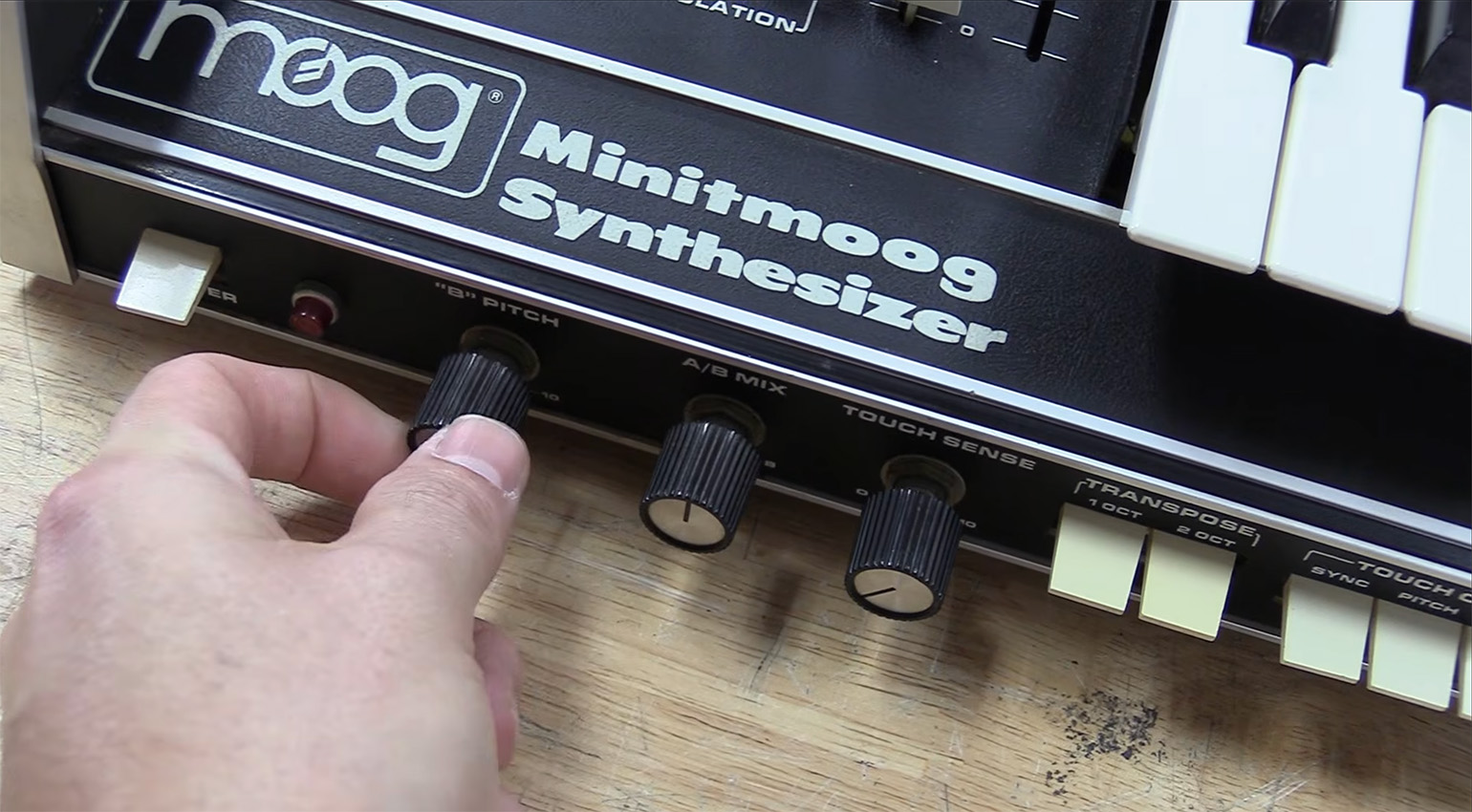
Anyone who isn’t particularly well-versed in the history of Moog might mistake this for a typo: The second Moog video of the week is dedicated to the extremely rare Minitmoog. Only a few hundred units of this monophonic oddity from the Norlin era were ever made, making it extremely rare today.
Like its little brother, the Satellite, the Minitmoog is a preset synth designed to sit on top of an electronic organ. Presets (whose names often only vaguely resemble the corresponding sounds) were a novelty in the mid-1970s, and they played an instrumental role in popularizing synthesizers in general. Many musicians were still intimidated by the parameters of “real” synths and wanted sounds with familiar names that they could recall at the push of a button in the studio or on stage.
So the presets were the main attraction. Nevertheless, the Minitmoog offers some tweaking opportunities. Using the sliders, you can adjust the filter, LFO, and glide. The oscillator mix is also adjustable, as is the tuning of Oscillator B. There’s even oscillator sync! And the Minitmoog had a unique selling point that set it apart even from the Mini: aftertouch. With a little skill, this “ugly duckling” can deliver some unique sounds that go far beyond “Oboe” or “Clarinet”.
In this video, Jareth aka Synthpro takes you through the restoration of this rare contemporary of the Minimoog. If you’re interested in finding out more about the inner workings of this oddball from the mid ‘70s, check this out.
*This post contains affiliate links and/or widgets. When you buy a product via our affiliate partner, we receive a small commission that helps support what we do. Don’t worry, you pay the same price. Thanks for your support!

This might also interest you
2 responses to “Why the Minimoog Is the Most Important Synth of all Time”

Moog… yawn. It’s like this one guy you know for 30 years who still eats the same things daily, over and over.
You’re obviously young and inexperienced to post a comment like that.