Tony Iommi’s Gear: How a Workplace Accident Built the Heaviest Sound in Metal – The Greatest Guitarists of All Time
The SG, the Laney, the Treble Booster, and Why Thin Strings Built Metal's Heaviest Tone

 5,0 / 5,0 |
Tony Iommi's Gear: The Guitars, Amps, and Tricks Behind Metal's Heaviest Tone · Source: Gonzales Photo / Alamy

I’ve been on a big Black Sabbath kick lately, and I keep landing on the same thought: Tony Iommi’s tone is just insane. It’s not even that heavily distorted when you break it down, and yet almost no guitar sounds heavier than Iommi’s SG on those early Sabbath records. Add in a knack for riffs that pretty much invented the term heavy metal, and that’s reason enough to dig into the gear behind it.
Technically speaking, Tony Iommi’s gear is surprisingly minimal: an SG, a Laney tube amp, a treble booster, thin strings, and later some lower tunings. What’s a lot more interesting is why Iommi landed on exactly this setup. Most of these choices weren’t sound experiments at all, they were solutions to a deeply personal problem.
Tony Iommi’s Gear: The Guitars, Amps, and Tricks Behind Metal’s Heaviest Tone
The Accident That Changed Metal
As a teenager, Tony Iommi worked in a sheet metal factory in Birmingham, the same city that decades later would put his face on its bridges. In a workplace accident, the left-handed guitarist lost the tips of his middle and ring fingers on his fretting hand. At first, he genuinely believed he’d have to give up guitar for good.
Hearing the story of Django Reinhardt, who kept playing despite a severe hand injury, pushed him to look for his own way forward. Iommi built himself makeshift fingertip prosthetics and started adapting the instrument to what his hand could actually do.
Standard strings were brutal to press down with the prosthetics. So he started experimenting with thinner strings, and later with lower tunings, to cut down on string tension even further.
Those adjustments eventually became the sound itself. The looser strings, his particular approach to bends and vibrato, and the later drop tunings all helped shape a guitar tone we now take for granted as heavy metal. What mattered for those first Sabbath recordings is that the accident forced Iommi to completely rethink his entire relationship with the instrument.
Tony Iommi’s Gear: The Guitars

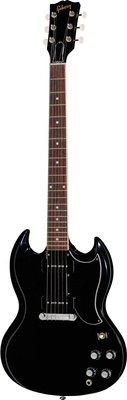
Tony Iommi and the Gibson SG are inseparable at this point. And yet the sound of Black Sabbath almost started out on a completely different guitar.
During the sessions for the first album, Iommi originally wanted to use his Fender Stratocaster. When its bridge pickup died on him, he grabbed his Gibson SG Special instead. The backup plan became his signature sound.

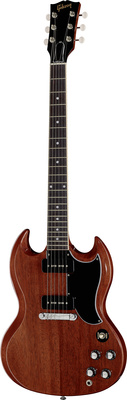


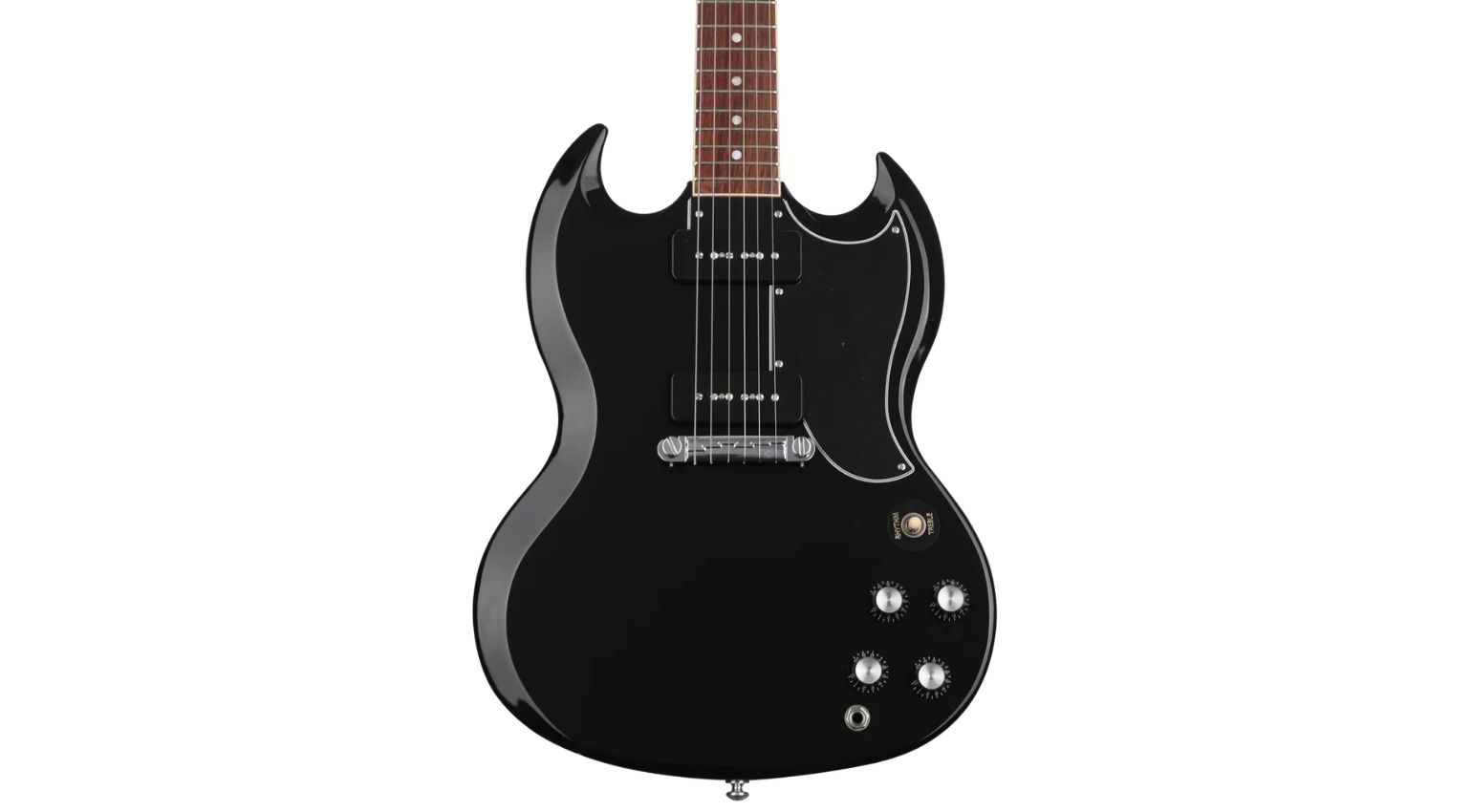
Gibson SG Special “Monkey”
The single most important guitar in Tony Iommi’s gear is his 1964 Gibson SG Special, now known to pretty much everyone simply as “Monkey.”
It originally shipped with two P90s, but Iommi modified it extensively over the years. Working alongside luthier John Birch, he experimented with pickups, shielding, and hardware. Monkey slowly turned into an extremely personalized instrument.
Which also shows just how unusual the early Sabbath sound really was by today’s standards. We tend to associate metal with humbuckers and high gain. One of the sounds that arguably founded the genre, on the other hand, came from an SG Special, P90-style pickups, a booster, and a very loud tube amp.
Jaydee Custom SG “Old Boy”
Another key instrument is the Jaydee Custom SG, built by John Diggins and usually referred to as “Old Boy.”
Visually it stays true to the SG shape, but it was purpose-built around Iommi’s playing style and became one of his most important live instruments over the years. Which points to a core principle of his whole setup: the instruments didn’t need to match any traditional spec sheet, they needed to work for his particular fretting technique.
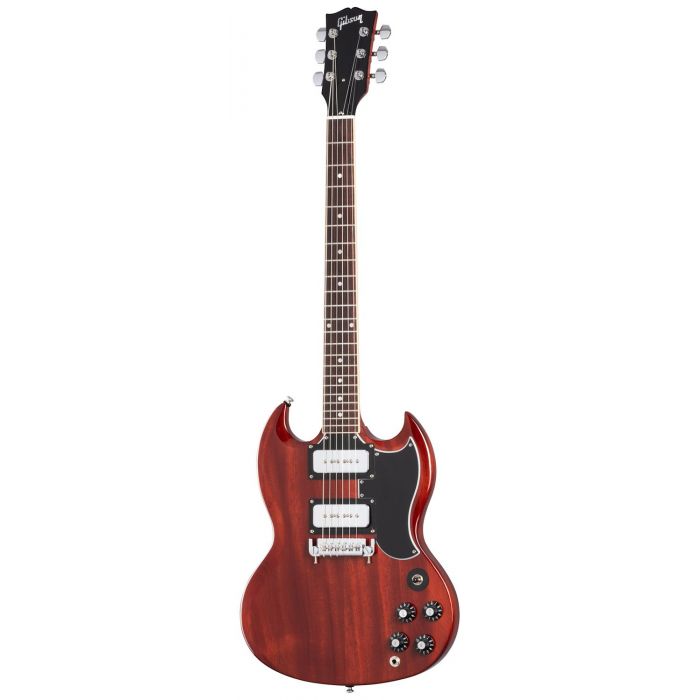
Gibson Tony Iommi Signature SG
Naturally, it wasn’t long before people were begging Gibson for signature versions of “his” guitars, and eventually more affordable Epiphone versions followed too.
What’s genuinely interesting here are the pickups, neck profiles, and setups built around Iommi’s specific requirements. That said, you don’t strictly need a signature SG to get his sound. Tuning, strings, amp, and playing technique matter a lot more.
Tony Iommi’s Gear: Laney Amps
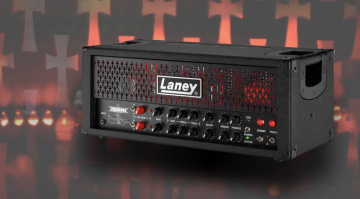
Alongside the SG, there’s a second name permanently attached to Tony Iommi’s gear: Laney. Which, as a longtime Laney player myself, I’m obviously a little biased about. What genuinely fascinates me is how little gain the early Sabbath sound actually runs on. We listen to it today with ears tuned to Rectifiers, 5150s, active pickups, and heavily doubled guitar tracks. Iommi’s rig, by comparison, was almost primitive.
Laney LA100BL Supergroup
The defining amp of the early years was the Laney LA100BL Supergroup, a stripped-down 100-watt tube head.
It’s nowhere near a modern high-gain amp. The distortion comes almost entirely from just running the amp loud. Tubes and speaker start compressing, harmonic distortion kicks in, and that’s genuine overdrive, no shortcuts.
That’s exactly why the early Sabbath tone stays surprisingly open and dynamic despite how heavy it sounds. Individual notes stay audible, and Iommi’s pick attack never disappears behind a wall of gain.
A lot of Sabbath riffs actually respond well to a surprisingly simple trick: turn the gain down. Groove, space, and pick attack all snap right back into focus.
Laney GH100TI and TI100
Later on, Laney worked with Iommi directly on the signature models GH100TI and TI100.
Both offer significantly more gain and flexibility than the old Supergroup, matching the punchier, more modern tone of his later years. The core philosophy stays consistent though: plenty of power, generous headroom, and a pronounced midrange.
The Secret Before the Amp: The Treble Booster
There’s still one crucial piece missing to fully understand Tony Iommi’s gear, the treble booster.
Iommi used a modified take on the classic Dallas Rangemaster circuit. This doesn’t just brighten the signal. The low end gets thinned out, the mids and highs get pushed harder, and the amp’s front end gets hit noticeably harder too.
The result: the Laney distorts more aggressively without turning muddy in the low end. That combination of treble booster and a cranked tube amp is a core part of the early Sabbath sound.
It’s the same basic principle we still know today from a Tube Screamer sitting in front of a high-gain amp, the frequencies get shaped before the actual distortion stage even kicks in.
If you want to chase this tone at home, you don’t necessarily need a vintage Laney. A British-voiced amp with modest gain plus a decent booster will already get you surprisingly close.
Effects: Surprisingly Few

A massive pedalboard was never part of classic Tony Iommi’s gear. The foundation comes down to guitar, booster, and amp.
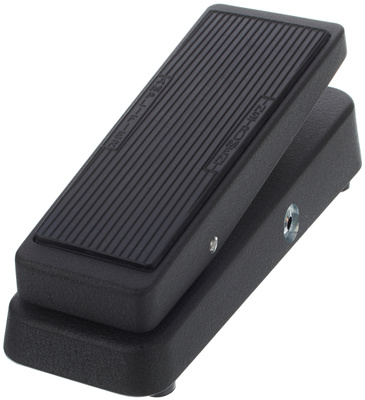
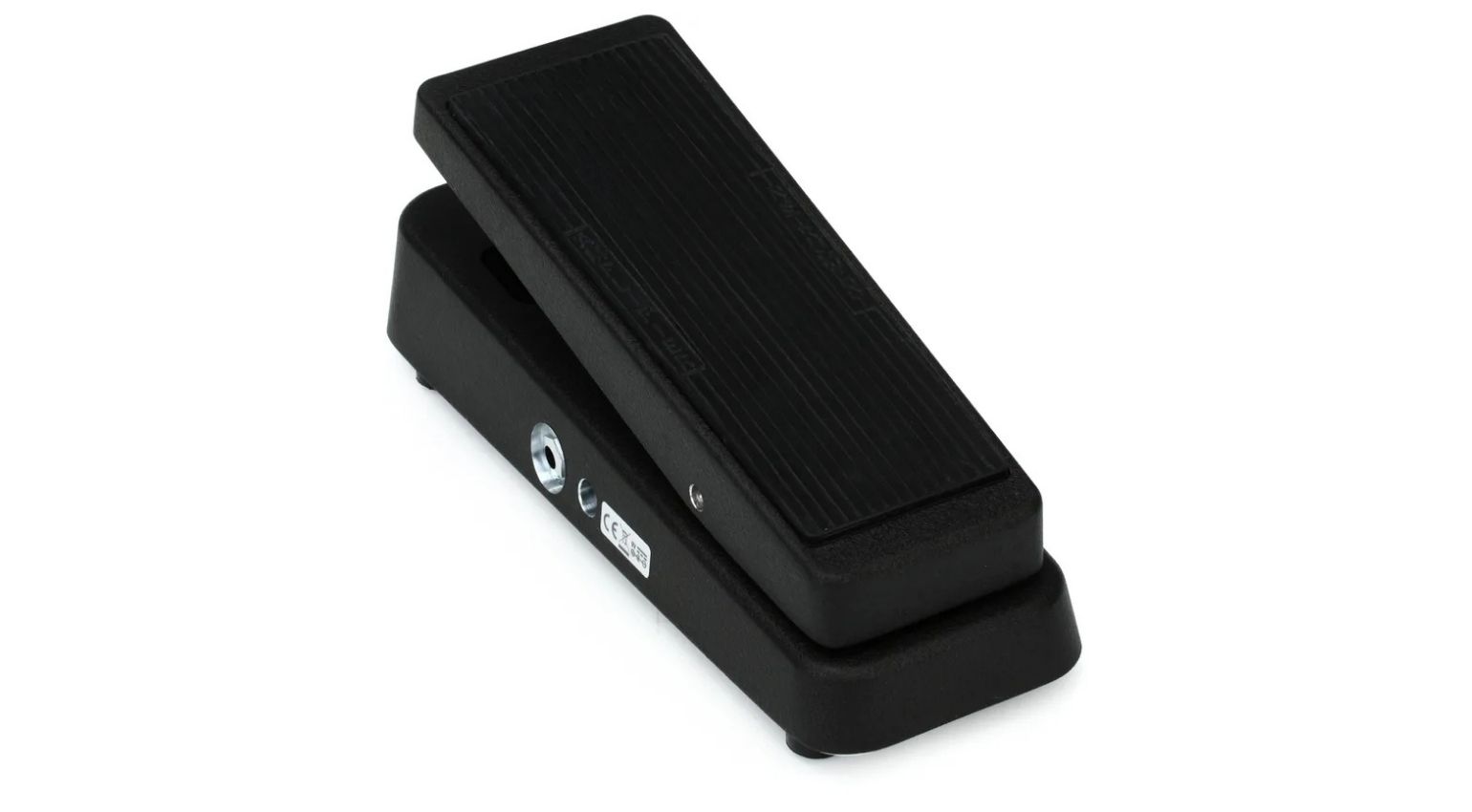
One notable exception is the wah, which Iommi mostly used for leads and occasionally as a fixed filter setting. Delay, modulation, and various rack effects came later, mostly to help reproduce decades’ worth of Sabbath material live.
For the classic tone though, it stays simple: amp, booster, and maybe a wah, that’s plenty.

Thin Strings, Heavy Riffs
These days, low tunings automatically make us think of thick strings. Tony Iommi, for the practical reasons already covered, went the exact opposite direction.
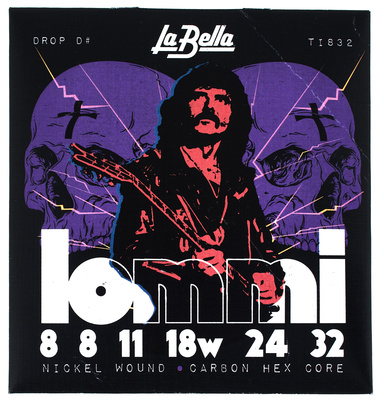
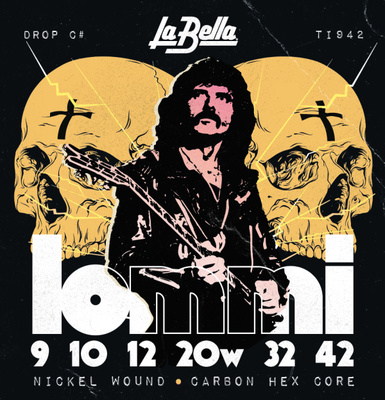
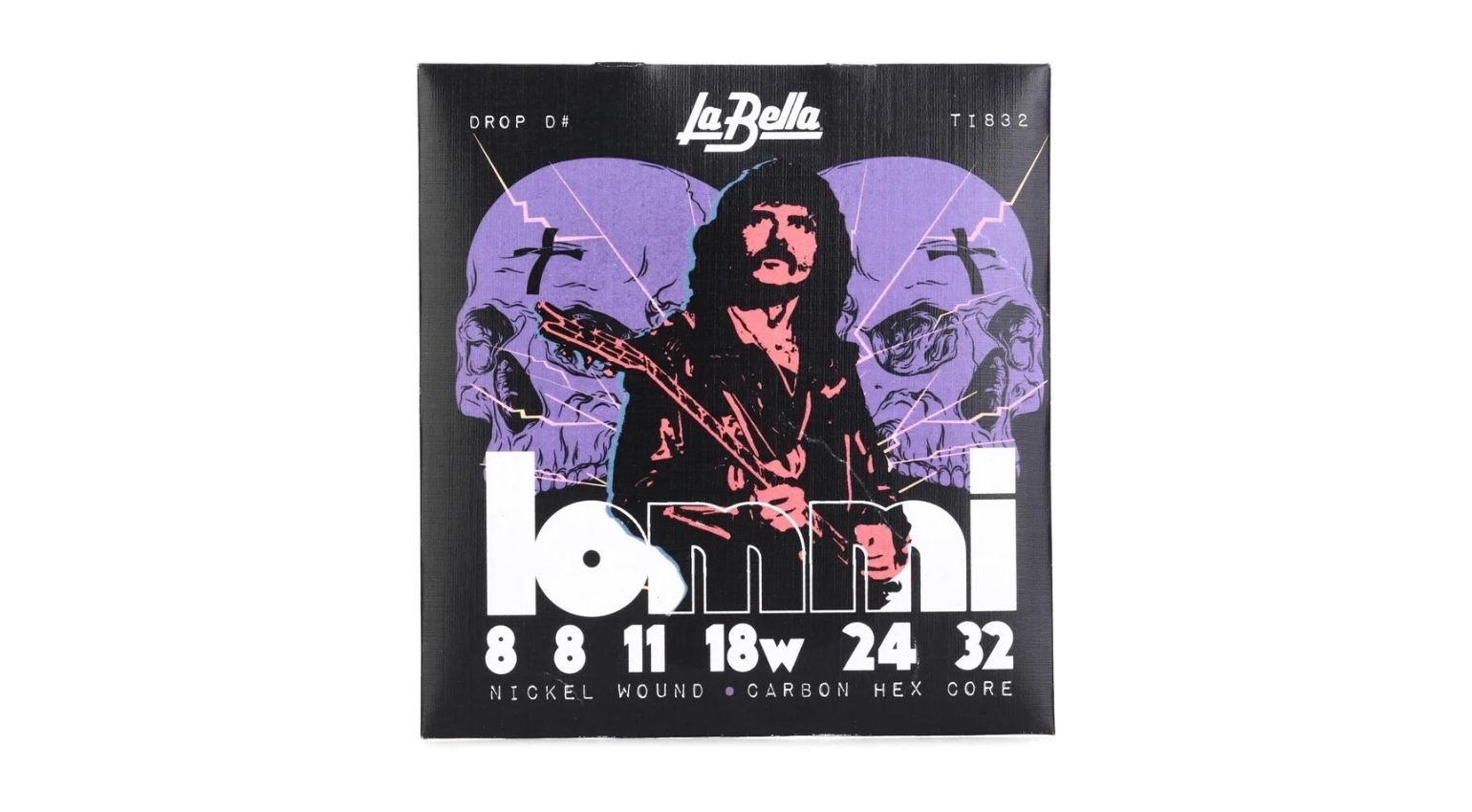
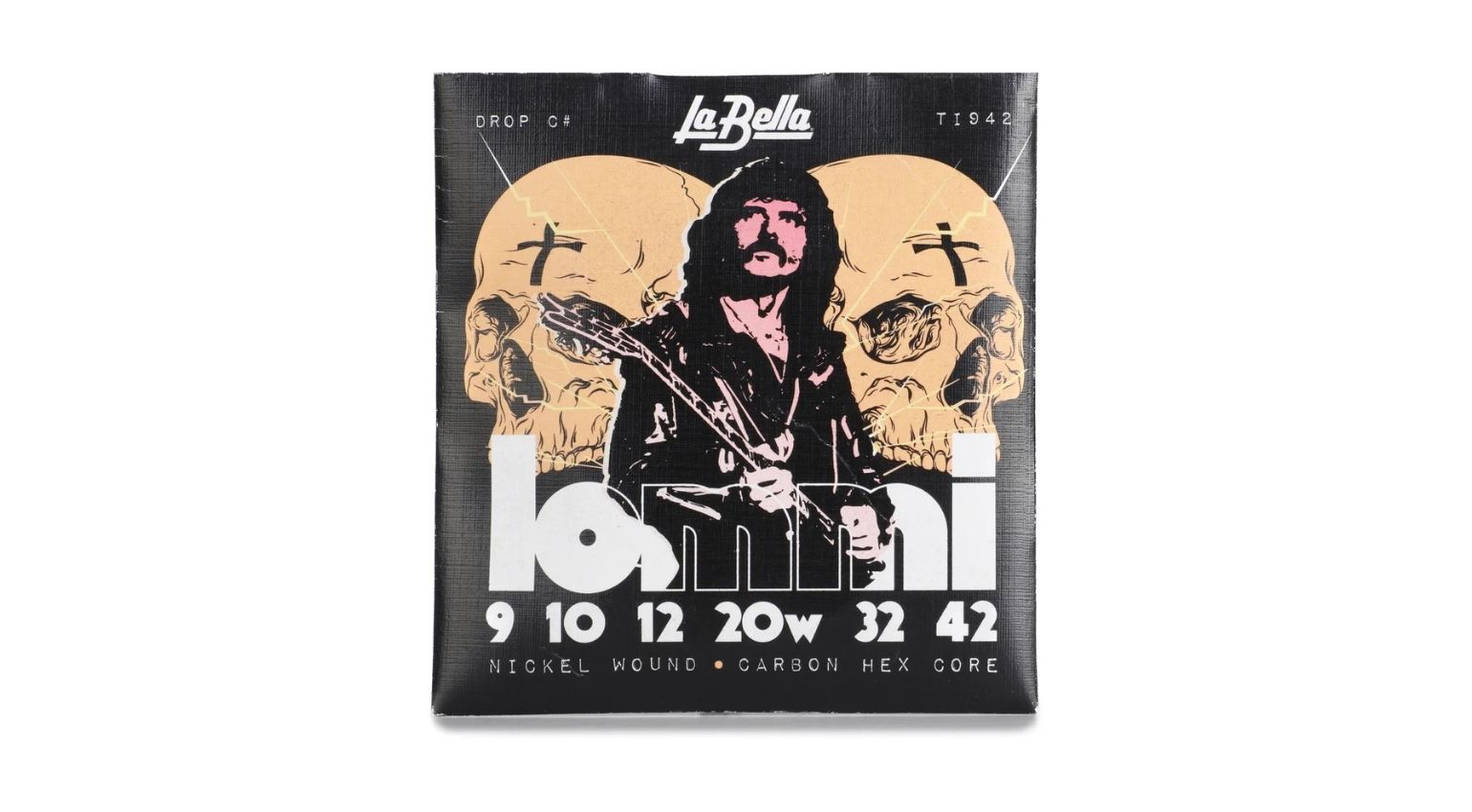
To take pressure off his fingers, he played unusually thin strings, and later custom sets built specifically for him. Combined with C# standard, that produces a notably loose, some would say “floppy,” playing feel.
Which conveniently debunks one of my favorite gear myths: thick strings don’t automatically equal a fat sound.
Iommi’s strings respond heavily to pick attack, bends, and vibrato. That responsiveness is a big part of why his tone feels less sterile and rigid than a lot of modern metal productions.
If you want to actually try this, get comfortable digging into your setup first. Action and intonation both need proper adjusting. For reference, recommended string gauges for getting into Tony Iommi’s gear territory are .008s, on the lighter end of things.

Why Tony Iommi Tunes So Low

Low tunings are as much a part of metal today as distorted guitars themselves. For Iommi, though, it started as a purely practical decision. Less string tension meant less physical strain on his injured fingers.
The first two Black Sabbath albums were still mostly recorded in E standard. On Master of Reality, the band dropped three half-steps down to C# standard.
That doesn’t just change pitch. The strings go slacker, respond differently to pick attack, and give the riffs that slightly loose, heavy character.
If you want to get closer to the Tony Iommi sound, try dropping to C# standard first before cranking gain and bass on your amp. Listen to Into the Void or Children of the Grave, and it’s immediately obvious how much of the tone comes from tuning alone.
How Does Tony Iommi Actually Play?
The single most important part of Tony Iommi’s gear, obviously, remains Tony Iommi himself.
His musical foundation is surprisingly classic: blues and pentatonic scales drive most of his solos. Bends, hammer-ons, pull-offs, and his distinctive vibrato are all core parts of his playing style.
The riffs are where his real strength shows up. Iommi frequently works with single notes, simple motifs, and deliberate pauses rather than leaning purely on big power chords.
Then there are the dissonant intervals, like the famous tritone in the main riff of “Black Sabbath.” But often, what matters most is what he doesn’t play. His riffs have room to breathe.
The Tony Iommi Sound with Modern Gear
Don’t worry, you don’t need an original Monkey or a vintage Laney to get close to the Tony Iommi sound. And your fingers can stay fully intact too.
An SG or another midrangey humbucker or P90 guitar is a solid foundation. Pair that with a British-voiced amp that stays open and dynamic.
In front of the amp, add a treble booster, or at minimum a booster or overdrive that tightens the low end and pushes the amp’s front end a bit harder.
Then drop to C# standard, and pull the gain knob back further than you’d probably assume for metal.
The whole recipe stays refreshingly simple: guitar, British amp, booster, and wah. Pick attack, timing, and the riff itself handle the rest.
Verdict: Tony Iommi’s Gear and the Birth of Heavy Metal
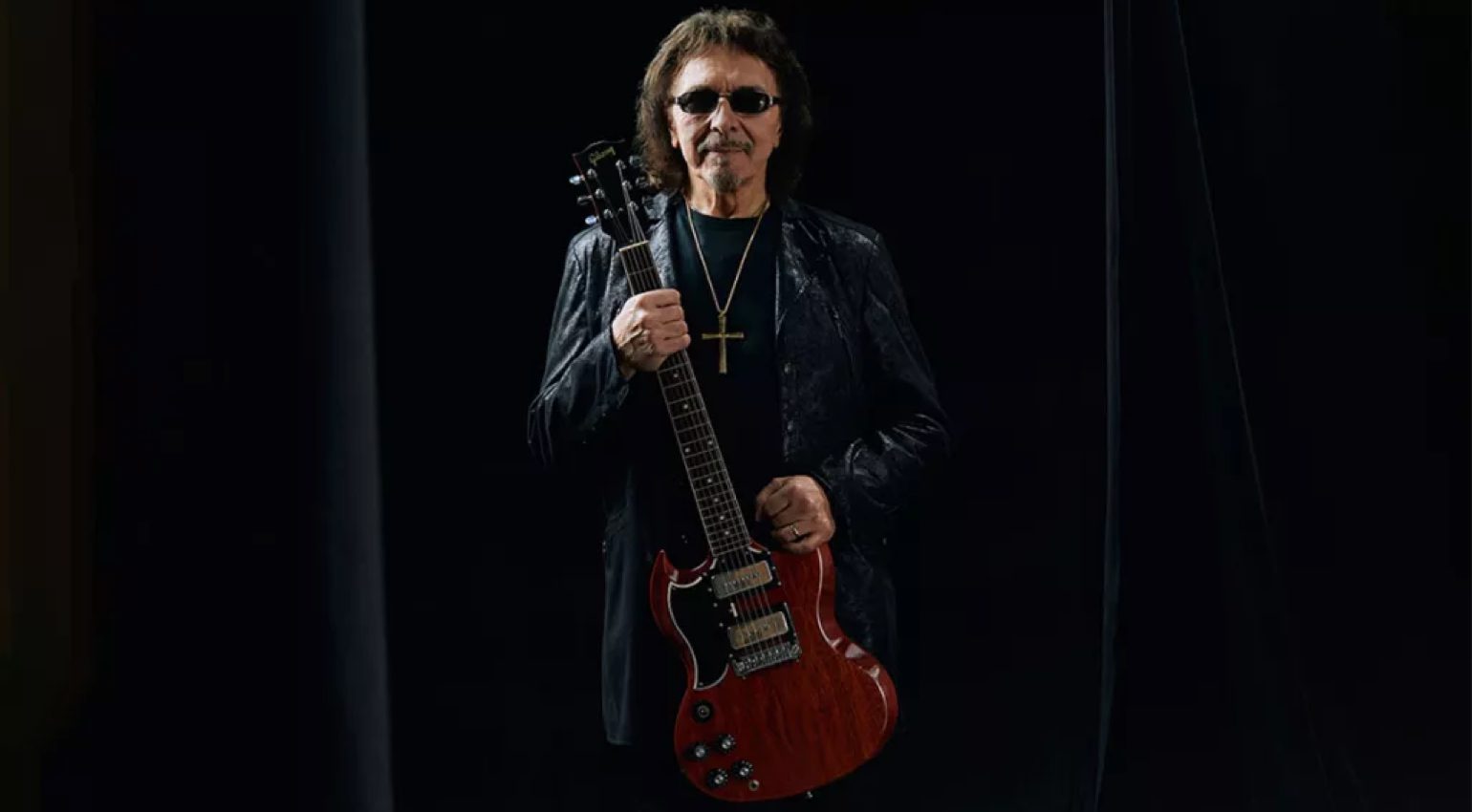
At the end of the day, classic Tony Iommi gear boils down to a surprisingly short list: SG, thin strings, treble booster, and a seriously loud Laney. Add lower tunings, a bit of wah, and above all, a genuinely distinctive playing style.
Why Iommi ranks among the greatest guitarists of all time still can’t fully be explained by a gear list, though. His riffs are often remarkably simple, gain stays restrained, and the solos lean heavily on blues phrasing.
Iommi wasn’t trying to invent heavy metal with his gear. He was trying to keep playing guitar despite a serious injury. So he adapted the instrument to what he could actually do.
That adaptation grew into a style. The style grew into a sound. And that sound eventually grew into an entire genre.
The fact that one of the heaviest guitar tones ever recorded exists partly because Tony Iommi had to make his guitar easier to play is honestly the best punchline in the whole story.
This article was originally written by Jan Rotring for GEARNEWS.de.
*Note: This article about Tony Iommi’s gear contains affiliate links that help us keep Gearnews running. The price for you always stays the same! If you buy something through these links, we receive a small commission. Thanks for your support!


This might also interest you