Are Fender Stratocasters Still Cool?
Is the Comfort Contour Body looking tired in 2026?

 3,7 / 5,0 |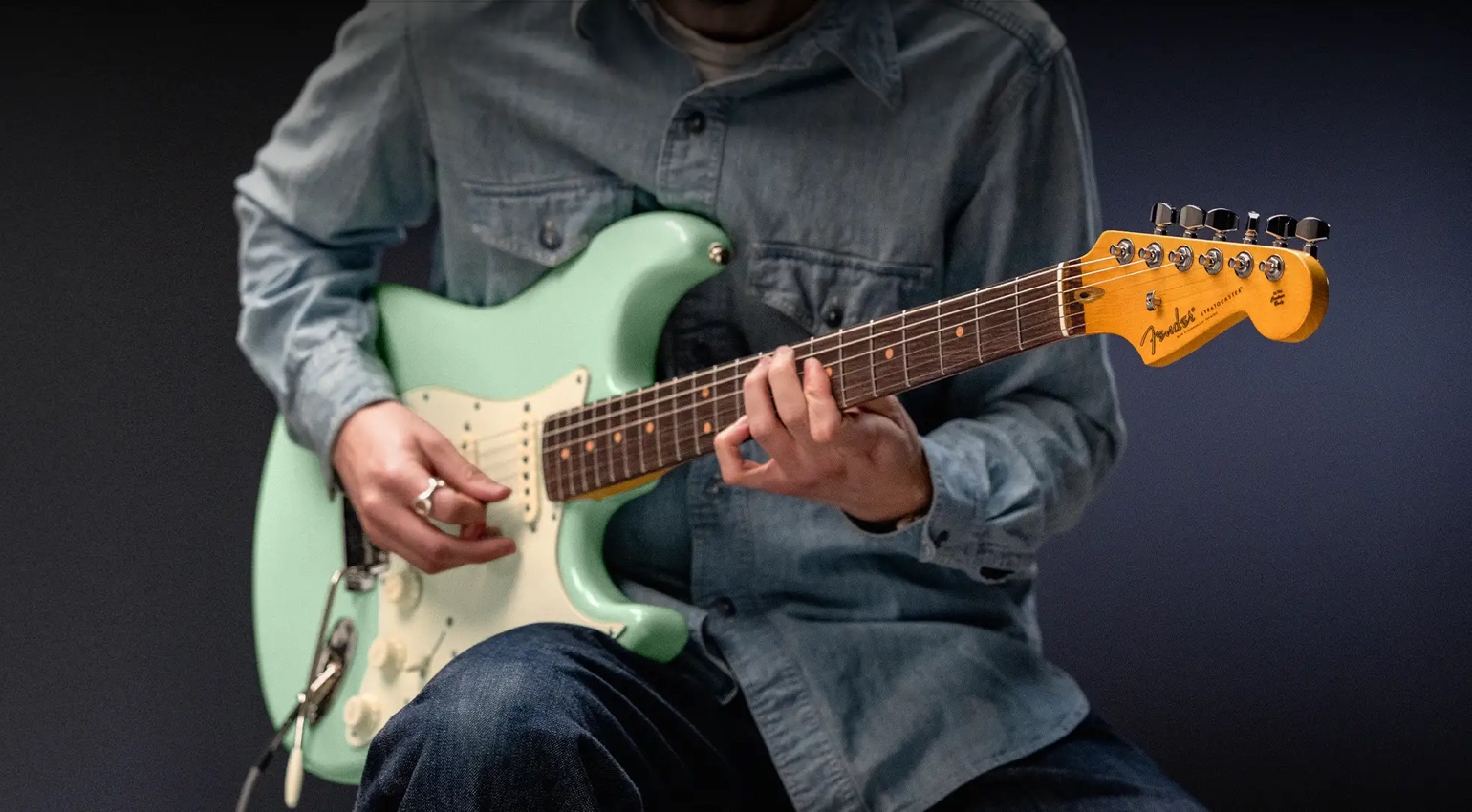

In the world of electric guitars, there is one silhouette that reigns supreme. Even if you’ve never picked up a plectrum, you know the shape: the double cutaways, the contoured “comfort” body, and that distinctively swooping headstock. Since its debut in 1954, the Fender Stratocaster has become the universal shorthand for “rock and roll.”
But as we pass the 7-decade mark of Strat dominance, a legitimate question arises: Are Fender Stratocasters still cool?
Contents: Are Fender Stratocasters Still Cool?
The Space-Age Masterpiece
When Leo Fender and his team designed the Stratocaster, they weren’t trying to make a fashion statement; they were trying to solve problems. The Telecaster was “the plank”—a block of ash that dug into your ribs. The Stratocaster, by contrast, featured the “Comfort Contour Body,” designed to hug the player’s torso.
It looked like it belonged on a 1950s sci-fi movie poster. It was sleek, ergonomic, and unapologetically futuristic. The irony? It still looks futuristic today. While other guitar designs feel like relics of a specific era, the Stratocaster remains timeless.
The Fender Stratocaster was designed between 1952 and 1954, finally appearing officially in the spring of 1954. Leo Fender used feedback from working musicians to create his new design, and their input helped shape its iconic curves.
America was looking at space, and Leo took this into account when naming the guitar. When Fender hit the ’60s, the custom finish options used classic American car finishes and took the ‘1950s Sunburst look in a new solid-color direction, which is still loved by many fans to this day.
Why the Design Just Works
The brilliance of this design begins with the double cutaway, an ergonomic masterstroke that provides players with effortless access to the higher frets for unrestricted soloing. This physical freedom is paired with the mechanical versatility of the synchronized tremolo, a system that allowed for dramatic pitch-shifting “dive bombs” (not quite Floyd Rose-style, but good for the era and better than the competition) and nuanced vibrato decades before the invention of modern effects pedals.
Beyond performance, the instrument’s longevity stems from its modular construction. Because every major component is screwed on rather than glued, the guitar functions as the “Jeep” of the musical world; if a part breaks or requires an upgrade, you simply fix it yourself rather than retiring the instrument.
This combination of accessibility, expressive range, and rugged repairability is exactly why the design remains a gold standard. Compared to Gibson or Gretsch, the Stratocaster is a far more futuristic design with the ability to swap out worn-out parts using just a screwdriver.
Those Classic Strat Tones
One reason the Stratocaster is ubiquitous is its sheer versatility. Thanks to its three single-coil pickups and (eventually) the 5-way selector switch, it can do almost anything.
The bridge position is defined by a bright, biting, and sharp character, making it the definitive choice for surf rock or any searing lead solo that needs to cut through a dense mix. When you notch the selector to the middle and bridge combination, you unlock the famous “quack.” This nasal, funky texture provides that signature Nile Rodgers-style chic funk sound that dominated the dance floors of the seventies.
For a more centered approach, the middle pickup alone offers a balanced, punchy response that serves as a reliable backbone for classic rock rhythm tracks. Moving the switch to the neck and middle position produces a bell-like, “woody” chime. This specific setting creates the haunting, liquid tone found in the delicate phrasing of Jimi Hendrix’s “Little Wing.”
The journey ends at the neck position, which delivers a warm, bluesy, and almost flute-like quality. It is the heart of Stevie Ray Vaughan’s legendary Texas blues sound, offering a thick, soulful resonance that handles high-gain saturation with incredible grace.
Plus, you can add a bridge humbucker and go HSS, or two humbuckers and go HH. In fact, the pickup permutations are pretty much endless in 2026 for modifying Stratocasters.
But, Are They Still Cool?
First off, I love Stratocasters, and I have owned many of them over the years. I’m not hating on them; I really do enjoy playing them and the sound they create.
They can be associated with a diverse range of famous players, including Buddy Holly, Jimi Hendrix, and Yngwie Malmsteen. The list of famous Strat players is very long, and I’m sure I could list them for hours, but I think those three show a good variety of tones that can be coaxed from the Stratocaster.
So, are Strats still cool?
The Stratocaster has been played by so many legends that it carries a massive weight of expectation. When a beginner picks one up, they aren’t just holding a guitar; they are holding a piece of cultural history. There is a certain stigma that the Strat is the “default” choice—the safe bet.
In some circles, playing a Strat is seen as lacking “indie cred” because it’s the most popular guitar on the planet.
“The Stratocaster is the only guitar that looks equally at home in a tuxedo or covered in lighter fluid and set on fire.”
Because it is so common, some players feel it lacks the “personality” of an obscure offset or a quirky vintage pawn-shop find. But that’s a bit like complaining that oxygen is too popular. It’s popular because it works.
I would also add that all the relic’d and aged versions have turned the modern Fender Stratocaster into a running joke for many musicians, as they look like pre-worn designer jeans, and the ‘road warrior’ aesthetic comes across as a little daft.
However, they did survive the 1970s, where brass replacement parts and Dimarzio bridge humbuckers destroyed many a vintage guitar, and the 1980s, when being repainted with some custom finish and having a locking trem system and/or active pickups added was the way forward for many guitarists.
While other guitars have come and gone, the Strat persists because it adapts. It survived the hair metal era (via the “Superstrat” mods), the grunge explosion, and the modern lo-fi movement. It is a blank canvas.
The Strat isn’t just a trophy for your wall or a prop for a photoshoot. It is a professional tool that happens to look like a piece of mid-century modern art. Whether you’re playing blues, metal, pop, or jazz, the Stratocaster doesn’t care about being “cool”—it just wants to be played.
And honestly? That’s the coolest thing about it.
Final Thoughts
As a kid, I thought the Fender Stratocaster was too conservative and a little boring, since I didn’t want to play a guitar used by Hank Marvin. As a teenager, I discovered Hendrix, and that ignited a love for this guitar, and then Stevie Ray Vaughan, Robin Trower, and Buddy Guy just cemented that love.
I would say that the post-punk, indie scene of the late ’80s and early ’90s opened my eyes to offset guitars and more ‘pawn shop’ and obscure models. However, players including Bob Mould and Billy Corgan kept that flame alive for me.
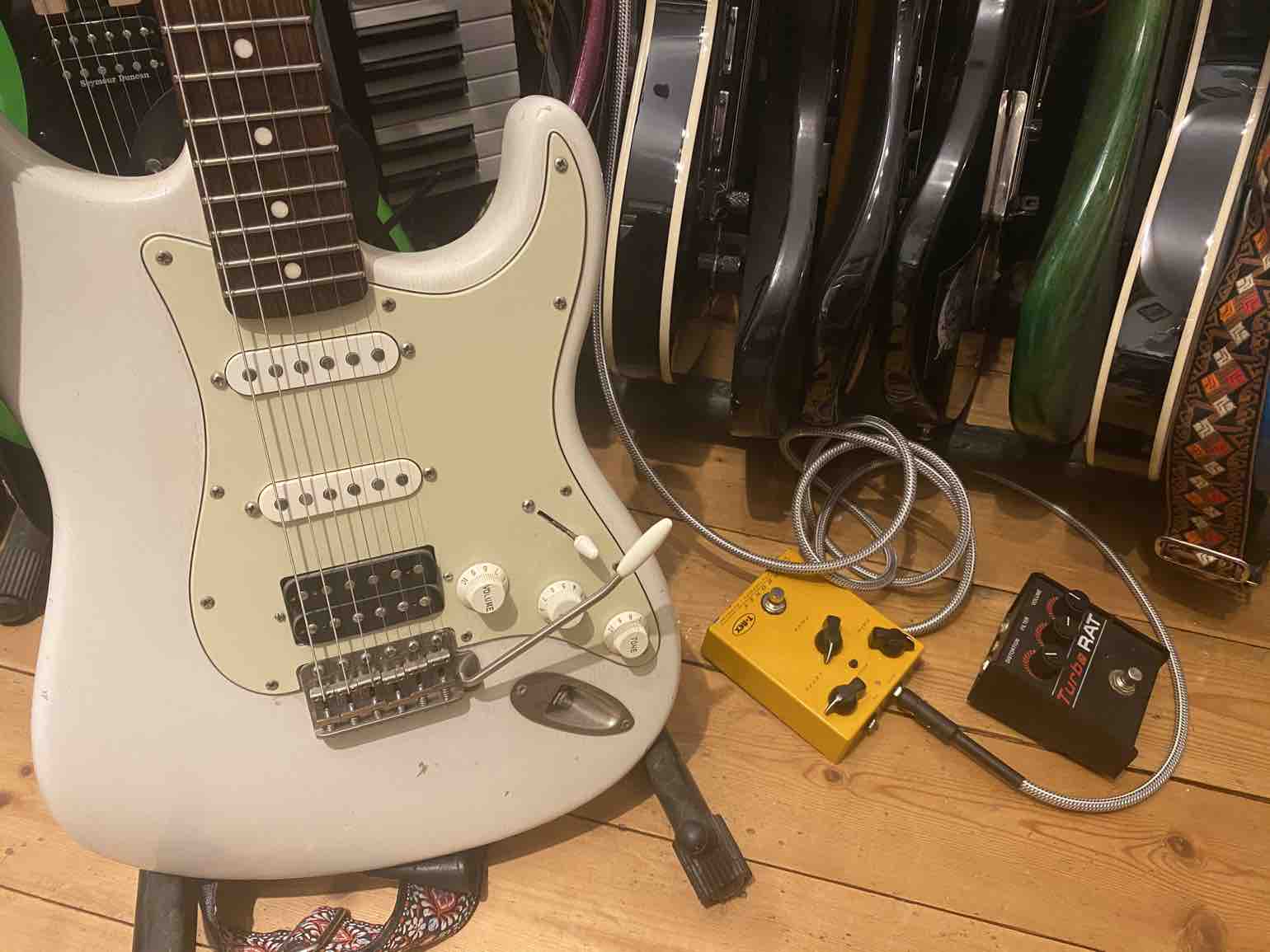
Now, in 2026, as I write this, I still own Stratocasters, yet I don’t gravitate to them as much as I used to. Most of mine are ones I have heavily modified or built from scratch, so they aren’t really off-the-shelf Fender models (except for one Billy Corgan signature model).
My first real Fender Stratocaster was an ’80s Made in Japan model, and I have owned so many variations of the model in the last 40 years that I think I have played enough to understand the guitar and its pros and cons.
I’m not sure they are still cool, or that they ever really were. But surely the ‘rule of cool’ is more down to the player than the guitar anyway?
I will say they are super versatile, easy to play, and sound fantastic, which is what is really important in an electric guitar. Leo Fender was a genius, and for a man who couldn’t play the guitar, he created some of the most iconic guitars in modern history.



This might also interest you

7 responses to “Are Fender Stratocasters Still Cool?”
They never were “cool”
But they’re still the best most comfortable guitar to play
Go play a jazz master if you want to be “cool”
Whenever I see someone playing a Strat, my first thought is “play a Telecaster you coward”
My love for Telecasters knows no bounds… https://www.gearnews.com/is-the-telecaster-the-most-versatile-guitar-ever/
Anything Jimi used is forever cool.
100% agree when Hendrix played one. But not so much with the millions of Jimi clones who followed.
Strats are not cool, they’re iconic, it means you’ll always consider having one, like a Gibson Les Paul or SG.
I associate the Stratocaster with a lot of guitarists I can’t be arsed with, but I do love my EOB Stratocaster – solely because Ed made some tasty choices, not least one of the most playable necks I own and a fun pickup selection.
You are currently viewing a placeholder content from Facebook. To access the actual content, click the button below. Please note that doing so will share data with third-party providers.
More InformationYou are currently viewing a placeholder content from Instagram. To access the actual content, click the button below. Please note that doing so will share data with third-party providers.
More InformationYou are currently viewing a placeholder content from X. To access the actual content, click the button below. Please note that doing so will share data with third-party providers.
More Information