Anukari: The Crazy 3D Physics Synthesizer Gets an Official Release

 4,5 / 5,0 |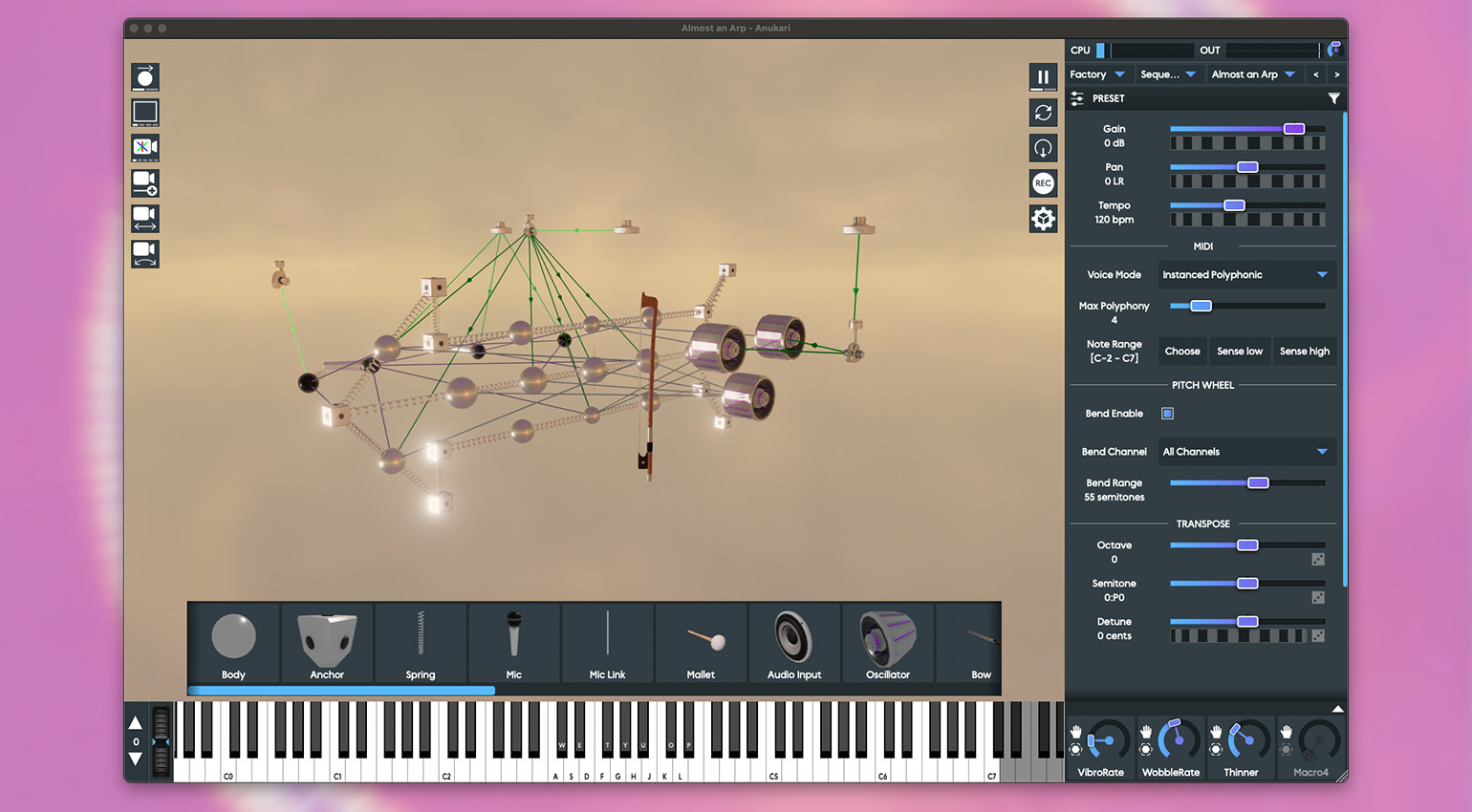
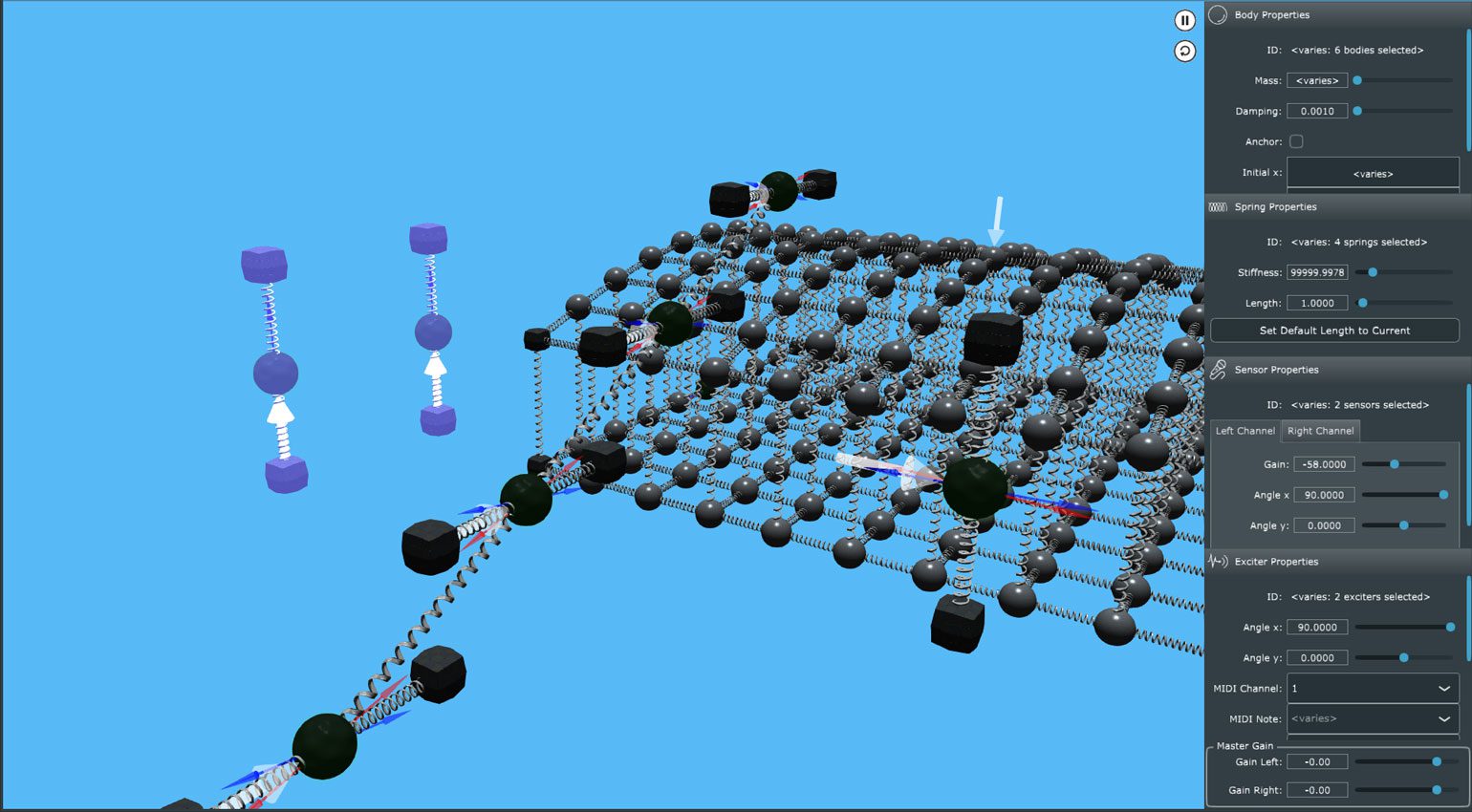


After three years of development, Anukari is finally out. Create your own 3D synths and watch them do their thing.
Anukari
Now Available
Way back in 2023, we first told you about Anukari, an ambitious physical modeling soft synth that lets you create your own 3D instruments and play them. You can read the original article below, but it’s fair to say that the instrument has come a long way in these three years.
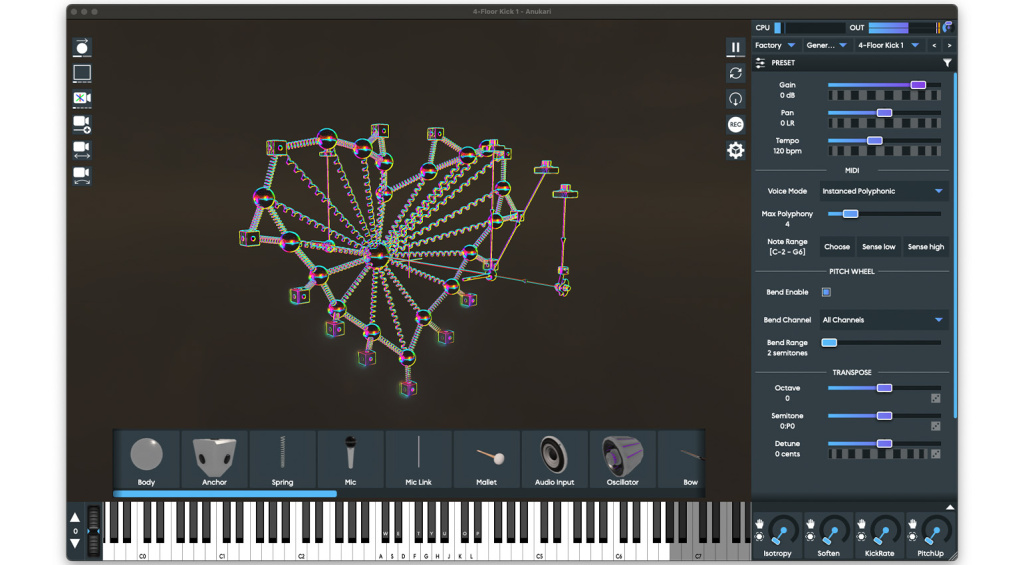
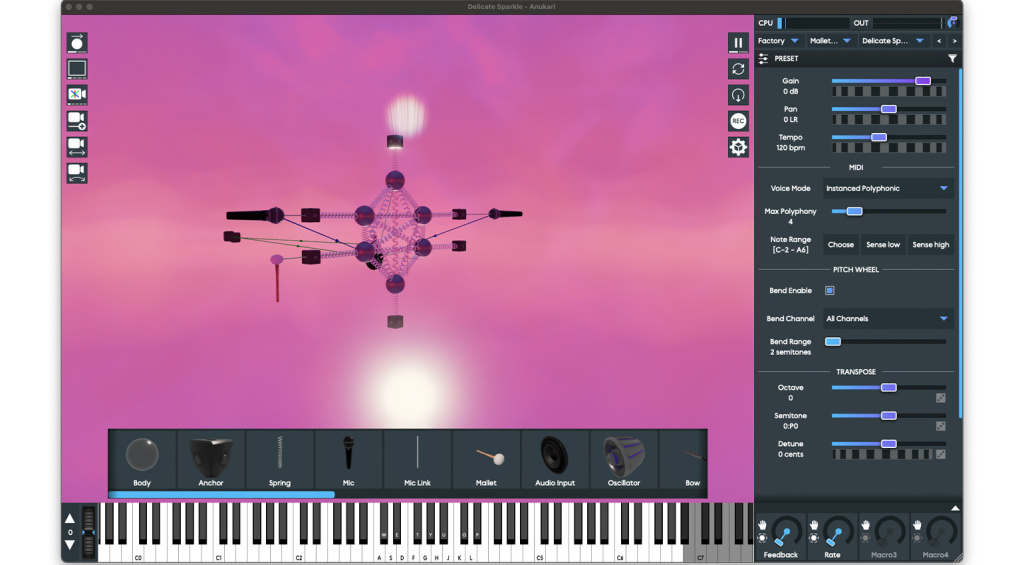
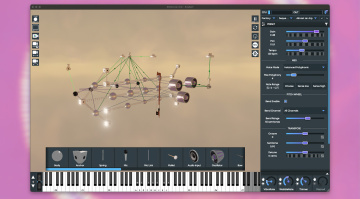
I’ve been playing with Anukari for a while now, and I’ve actually spoken with developer Evan Mezeske a few times about his creation. What I like about Anukari is how unique it is. Physical modeling is a fairly unexplored area of synthesis. Anukari gets really out there by not only letting you create 3D sculptures of masses of springs, but you can also add oscillators and other traditional subtractive synthesizer elements to the structures. You can even use it as an effect in your DAW.
There’s also a whole visual aspect to the instrument. I mean, it makes sense: you’re building a 3D structure, so it helps to have a rendering of what you’re doing. The fact that it’s floating in some kind of vaporwave space just makes it that much cooler.
“I built Anukari for the intrepid sonic explorer. They may simply want to play and discover, or they may be a professional artist or producer looking for inspiration or a new sound to work with. Either way, I want people to push it, try to break it, and to see what surprises emerge in the process,” reflects Evan Mezeske, founder and creator of Anukari. “I thought it was cool, and I want to invite others to make cool shit. That’s really our whole mission.”
Anukari is available now from the company website for $99 ($50 off the regular price) and comes in AU, VST3, AAX and standalone versions for both Mac and PC.
- Anukari website
Sound through the laws of physics
[14 June 2023, written by Robin Vincent] The physics-based Anukari is all about generating sound from interconnected masses and springs held in three-dimensional space and then giving them a good whack.
Anukari
Evan Mezeske of Anukari Music has unveiled an early prototype of a software synthesis engine based on the interaction of masses and springs. It’s a lot like physical modelling, but where you are building a network of vibrations that you directly engage with. This could be a very interesting journey into sound design.
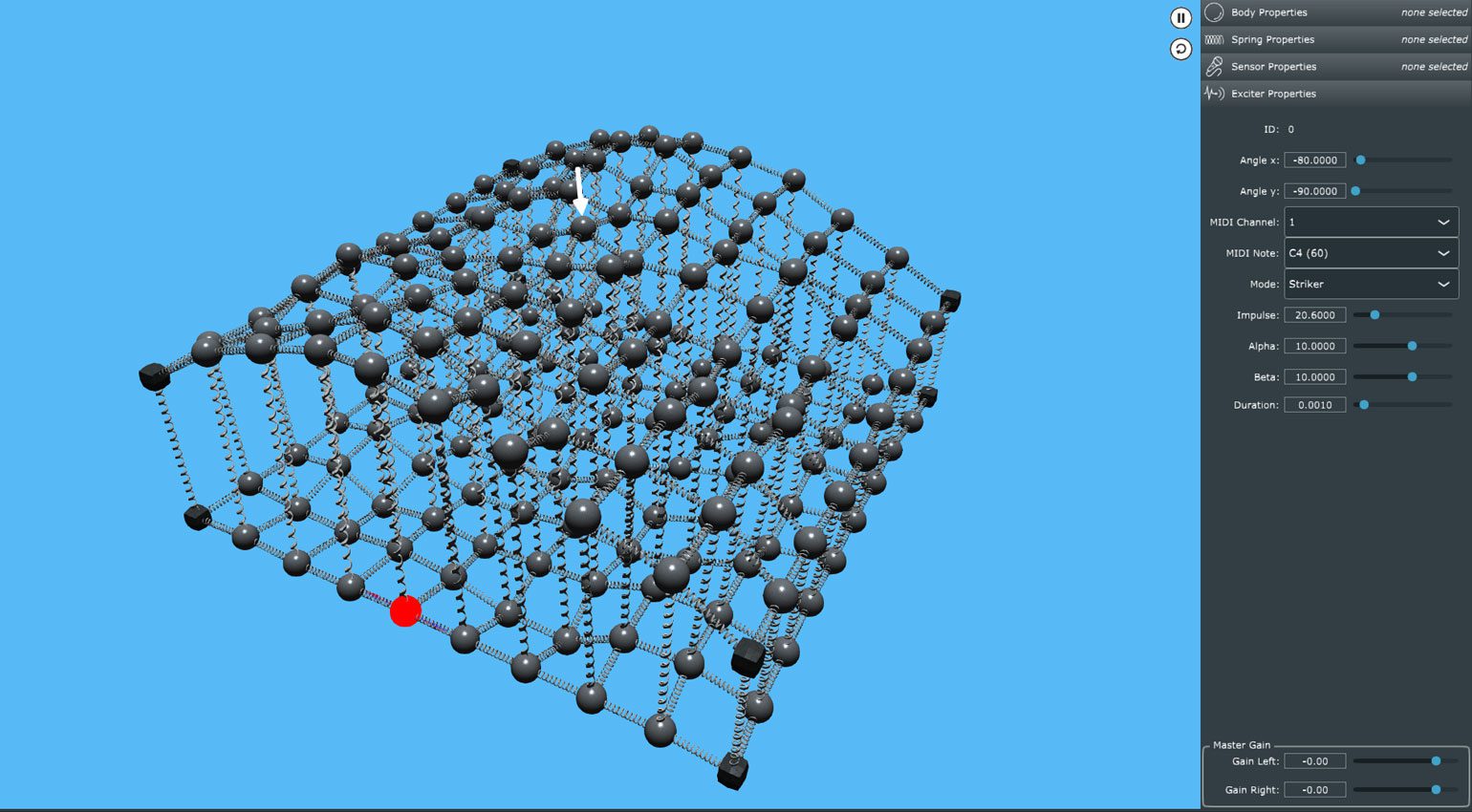
The interface is pretty rudimentary at this stage, but it does demonstrate what’s going on. The basic idea is that you have a three-dimensional space into which you place a pair of fixed points. Between those points, you connect a ball stretched between a pair of springs. Twang the ball, and it will vibrate exactly as you expect it to. From a side panel, you have control over every physical aspect of what you’re seeing. You can control spring tension, length, dampening, the ball’s mass, and how hard it was struck or how far it was pulled. With the right settings, you can generate musical notes, percussive tones or sympathetic vibrations that respond to incoming audio.
A single ball bouncing between two points is just the beginning. From there, you can build whole networks of springs and masses for complex interplays and unexpected outcomes. Within the 3D space, you can design whatever you want, drag the shapes around, and experiment with how it responds to stimuli.
Interact
Playful interaction is definitely at the heart of Anukari. At the moment, MIDI can be used to generate strikes against the masses. Evan intends to expand on this to simulate bowing action, wind resonance, and internal oscillators. You also have control over microphone placement and the direction of attack. Alternatively, you can use the networks for effects such as spring reverb on incoming audio
The results are intriguing, and it undoubtedly has bags of potential for organic sound design. It could get very complex very fast, and I imagine it will need some way of controlling multiple systems without having to edit each mass individually.
There’s no release date yet, but it’s planned to be both standalone and VST compatible. It will need a decent graphics card to handle the processing. Evan says that on a relatively modern Windows PC, it could handle up to 750 connected masses in real time at 48kHz.
More Information
- Anukari Music website
- More about synthesizers
- Buy synthesizers at Thomann*
*Note: This article contains advertising links that help us pay for this site. Don’t worry: the price for you will always be the same! If you buy something through these links, we will receive a small commission. Thank you for your support!

This might also interest you