Molecular Bytes finally release AtomicTransient
Badged as a "polyphonic multichannel transient effect", what does that mean?

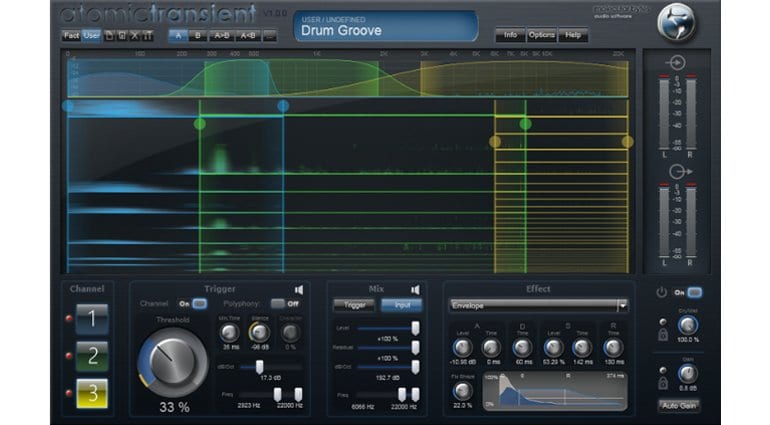

Molecular Bytes announced AtomicTransient a few months ago and Robin reported on it here: “Molecular Bytes announce…“. Robin called it “something I didn’t know I needed”, and to be honest it’s still an unusual concept. It’s described as the first note-based envelope processing tool for polyphonic audio material, but how useful is it?
AtomicTransient Features
When we think of transient designers, we imagine the obvious scenario of adding more punch and attack to percussive sources, or even softening sounds and adding sustain. However, as they’ve become popular mixing and post production tools, their uses are being developed further. Already this year we saw Envolution by Sonnox, which added frequency dependant side-chaning to a transient designer. AtomicTransient however, is taking the uses of transient shaping even further with polyphonic detection capabilities.
The polyphonic capabilities allow you to break down musical parts, even on instruments like guitar and piano. This could give you control over the emphasis of key parts in an arrangement for example, or even aid in building a sample. It’s clear to see how this plugin might be used on complete mixes, but it’s also useful on single elements within a mix. See the video below for more details.
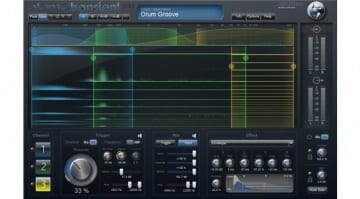
Besides the polyphonic detection, AtomicTransient also offers a unique method of application. Instead of separating an audio signal into bandwidths, there are in fact 3 available channels that offer independent processing. Each channel can operate as a standard transient designer, or listen and process individual elements within a mix, or even trigger modulation adjustments by LFO filters. Molecular Bytes even claim you can overwrite a grove envelope with an effect called ADSR, which controls Attack, Decay, Sustain and Release by time and level. (See the Re-Rhythmic example at the bottom of their webpage – link below.)
Would I use it?
I can see producers, arrangers and beat makers loving this software. Being able to manipulate audio clips in several new ways than has been possible before is very exciting. If you’re someone that uses samples in your music, then this could prove to be one of your most used tools. I can also see some mastering engineers using it when presented with a mix that isn’t great.
From a mixing point of view, I see some creative uses that might arise from time to time. However, it’s easy to get distracted with things like this. I’m certainly from the school of thought that believes something should be recorded properly and as it was intended. If I need a transient designer in a mix then I believe there are some better choices with regards to sonic quality. However you never know, it might be something that you need to realise it’s potential before appreciating it’s uses. It certainly offers something different.
More Information & Audio Examples
For more information see Molecular Bytes own webpage. There you will also find several audio examples which demonstrate the potential uses of AtomicTransient and the quality of it’s processing. Personally, I found there are a few nice surprises and the obvious drum processing examples are good. The piano sustain example however, I thought struggled with the rich harmonic content of the piano.
AtomicTransient will be priced at 159 EUR, but until the end of July there is an introductory price of 129 EUR. AtomicTransient is available for Mac and Windows systems in either VST or AU formats – shame there isn’t an AAX version. Windows users only, will benefit from a standalone version too.
Video
Here’s a video on Molecular Bytes own YouTube channel, demonstrating some of the uses of AtomicTransient:
You are currently viewing a placeholder content from YouTube. To access the actual content, click the button below. Please note that doing so will share data with third-party providers.

This might also interest you