Two-Piece Bands: A Signal Chain For Splitting Your Guitar into Guitar and Bass – Perfect Match!
Two pedals, one amp - giant sound!

Two-Piece Bands: A Signal Chain For Splitting Your Guitar into Guitar and Bass – Perfect Match! · Source: Boss

Two-piece bands aren’t anything new. From giants like The White Stripes, Twenty One Pilots, and Royal Blood to indie darlings like Death from Above 1979 or Cleopatrick, figuring out how to sound like guitar and bass simultaneously has been a creative endeavor for many. So, now you want to form an iconic duo, you’ve got your guitar board ready, and you’re wondering how to set it up? Take a look.
Everything you need to know
Two-Piece Bands: Drums plus Guitar/Bass
I play in a two-piece band myself as the drummer (my guitarist is just leagues better than what I can play. And I’ve toured with Dÿse, a German two-piece band that plays some of the most inventive stoner rock and prog I’ve ever heard. In both bands, my band Chaos Commute and Dÿse, the guitar player does what most duos do: add an octave-down signal to their guitar.
Because when you start out together, you quickly notice how sonically important a bass player is. Not having a massive low-end between 20 and 100 Hz makes any song feel much more empty. So, an octave pedal joins the board. But, as a drummer, I can tell you: that is not enough.
Once Camilo, my bandmate, split the signal, added an octave pedal to one signal, a preamp, and it’s own bass amp, it actually felt like there was a bass. Because running an octave pedal in your signal flow on your guitar board will just get you a bit of low-end through your guitar amp. Not the same.
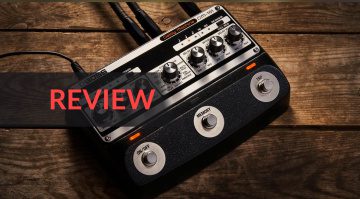
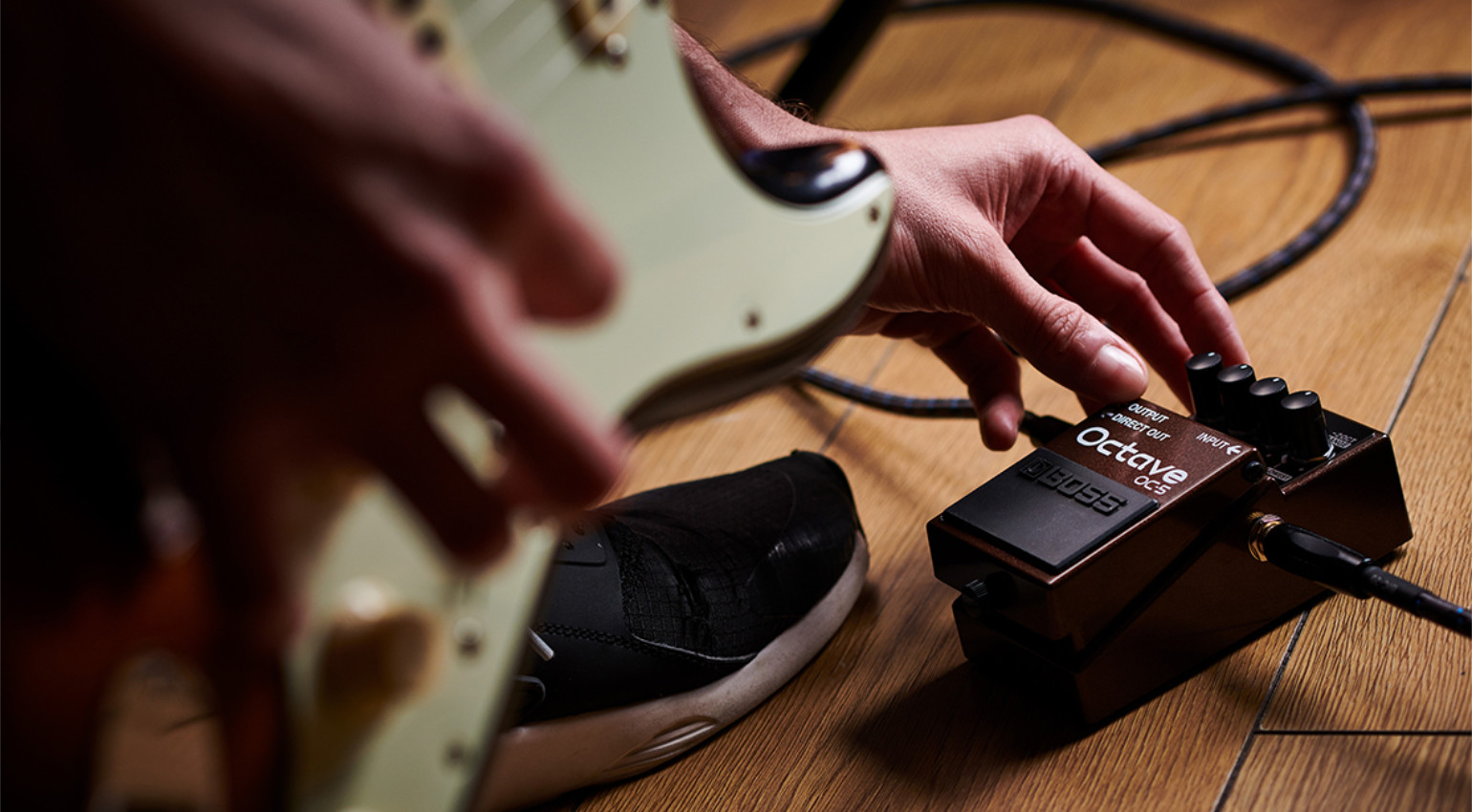
The Octave Pedal: Boss OC-5
I’d argue that if you ask around this is what most two-piece bands start with. Limit its sub-octave to the lowest note through the range control, so it only lowers the low E from an e chord for example. Or, if you mainly play single note, switch to the pedal’s Vintage mode (emulates the OC-2).
You don’t need an additional splitter for the pedal, as the OC-5 has a bass out AND a direct out. Put it as early as possible in your chain, definitely before any overdriver or distortion. Octave pedals track best when the signal is clean. An absolute staple among two-piece bands.
Check out the Boss OC-5 at Thomann* or Sweetwater*:





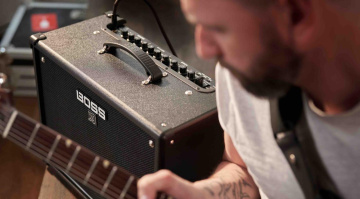
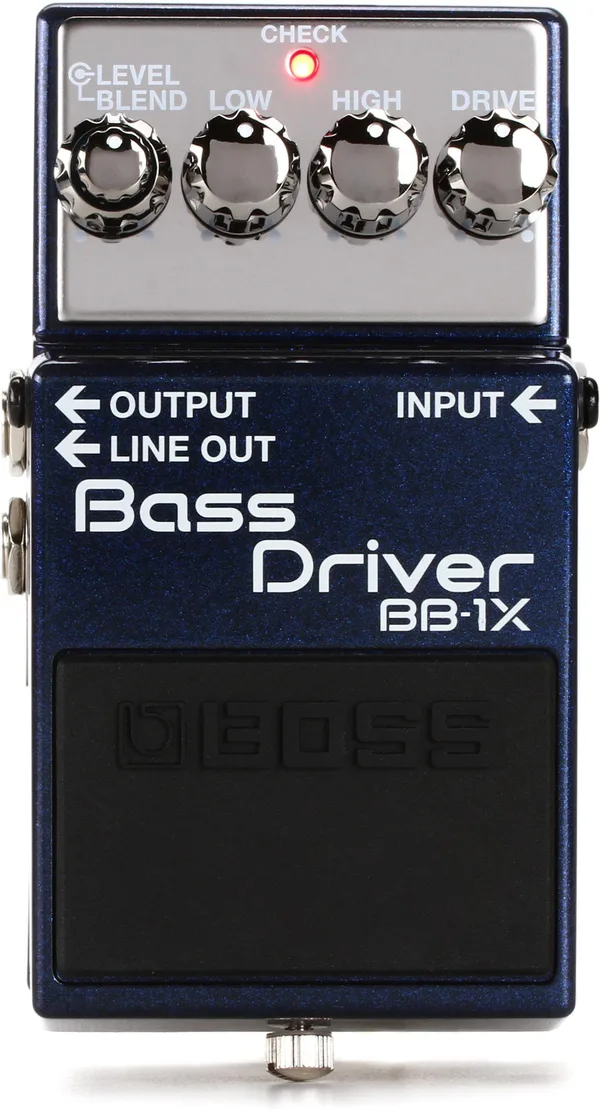
The Bass Pre-Amp: Boss BB-1X
You’ll quickly notice how the OC-5’s octaved-down signal sounds massive and low, but a bit synthetic. Time to add some grit. Let’s just stay with Boss, because with the Bass Driver BB-1X* (Sweetwater*), they have the perfect companion.
This is where you change the bass signal’s character. How much Drive you add and how much of the clean octave signal you blend depends entirely on your taste, the sound of your band, and the venue you play in. Some venues require more gritty midrange; others need more clean bass.
And if you’re playing a fly-in show, the BB-1X even has a direct out where you can send the bass signal to front-of-house without needing an amp.

The Bass Amp: Fender Rumble 100
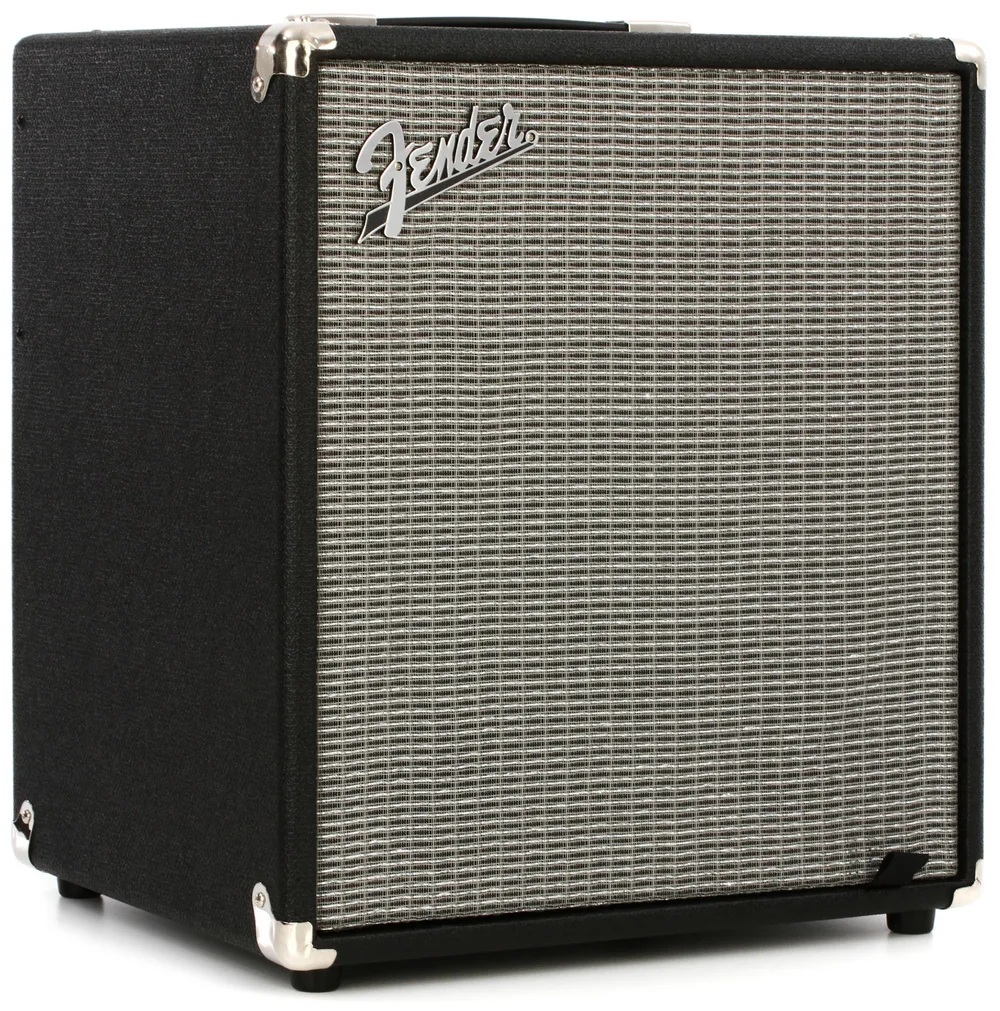
Doesn’t the BB-1X have a direct out? As the drummer in a two-piece band that mainly plays with in-ears, I can tell how (literally) massive the difference is to still have an actual bass amp on stage. Most In-ears sound pretty amazing these days.
But there is a very realy physical limitation to the low frequency bands. These just can’t be replicated through these tiny drivers with the same impact an actual bass amp can. And that can make a dramatic difference on any two-piece band’s performance
Something like Fender Rumble 100* (Sweetwater*), a 100-watt 1×12″ bass combo with a 4-band EQ and three voicing switches (Bright, Contour, Vintage) is more than enough. It’ll subtly shake the walls of your rehearsal space, it’ll massage your back on stage, but it’s not a giant to tour with.


Conclusion on Two-Piece Bands
Of course, there are those players like Royal Blood or Death from Above 1979, who do it the other way around. Come in with a bass signal, split that, and add a whole bunch of upper-octave distortion signal. Which route you take, depends entirely on your taste and preference for playing.
You can’t really play chords with a bass, but you’re also kind of limited on guitar when you play through a rig like this, as you’re often forced to keep in mind where to place your chords to keep the bass intact. Both solutions have their pros and cons.
What’s your solution? Do it like the Nova Twins, just be the duo on strings and hire a drummer? Avoid bass-heavy songwriting? Backing tracks?
Let us know in the comments!
FAQ
Is an octave pedal enough, or do I need a bass player?
As it’s increasingly been heard in the past 20 years, playing through an octave pedal can be more than enough. But it limits the guitar player in many ways. Plus an actual bass player can add groove and weight in ways, no octave pedal can.
How do I split the signal for a two-piece band setup for bass and guitar?
Boss OC-5 comes right after the guitar, then direct out goes to your guitar pedal board, bass out goes to your pre-amp which goes to your bass amp or the PA.
What are the best settings for the Boss OC-5 in a two-piece band?
If you use it to split your signal, dial in the OC-5 so that only the bass signal (-1 and -2 oct) goes to the output. The direct signal automatically goes to the direct out, so there’s no need to turn up Direct Level, as that will blend your guitar’s signal with the bass signal.
*Disclaimer: This post contains affiliate links and/or widgets. When you buy a product via our affiliate partner, we receive a small commission that helps support what we do. Don’t worry, you pay the same price. Thanks for your support!

This might also interest you