Improvisation Tips for Electric Guitar: Steps for Better Solos
The art of improv is just a few steps away...

 3,7 / 5,0 |
Improvisation Tips for Electric Guitar: Steps for Better Solos · Source: Alamy Stock Photo / Al Kancello

These improvisation tips will level up your solo jamming. Whether you’re just starting or are stuck in a rut, stick around.
Improvisation Tips:
Key Information about Guitar Improvisation:
- Improvisation tips should entice and enrich your current playing. Learn how small changes can make big differences.
- Using backing tracks will help your improvisation to flourish, taking your time to learn new phrases.
- Steal ideas from the best players. Listen to the blues legends and see how they master their craft.
What is Improvisation on Guitar?
Guitar improvisation is one of the best things about playing the electric guitar. This is the art of crafting your own solos and melodies, on the spot, for your own enjoyment.
It’s also a bit of a get out of jail free card. Let’s say you’re with a band and don’t know a certain solo. Why not improvise? Make it up! That’s the whole point. All of our guitar heroes do it. So why not us too?
All you need to be good at is a few basic techniques, a couple of scales, and these improvisation tips. Of course, this isn’t everything, but for a quick read, it’ll hopefully give you something to practice.
Backing Tracks
Okay then, what’s first in our look at improvisation tips? Well, finding a backing track is essential. Sure, a comprehensive scale knowledge helps, but let’s assume that you know a couple of shapes. If not, we’ll get to this later on. You can find tracks on YouTube for free. Just watch out for adverts!
What are you trying to practice? If you’re just looking for basic phrasing work, I would recommend a slow blues-style track. Blues backing tracks have easy backing chords to follow and won’t be too hard to slot in your own riffs and licks.
However, if you’re looking to get quicker at playing, maybe go for something heavier like an 80s rock track? These feature faster tempos, verse, chorus and bridge sections, making them harder to follow. Allowing players to experiment with fast phrasing to improve their overall playing.
Minor Vibes
Let’s say that you’re totally new to guitar improvisation. The first thing you should learn is your scales. As a guitar tutor, I see students regularly in despair at the very idea of learning scales. However, when it comes to improvisation tips, guitar scales are the only place you should start.
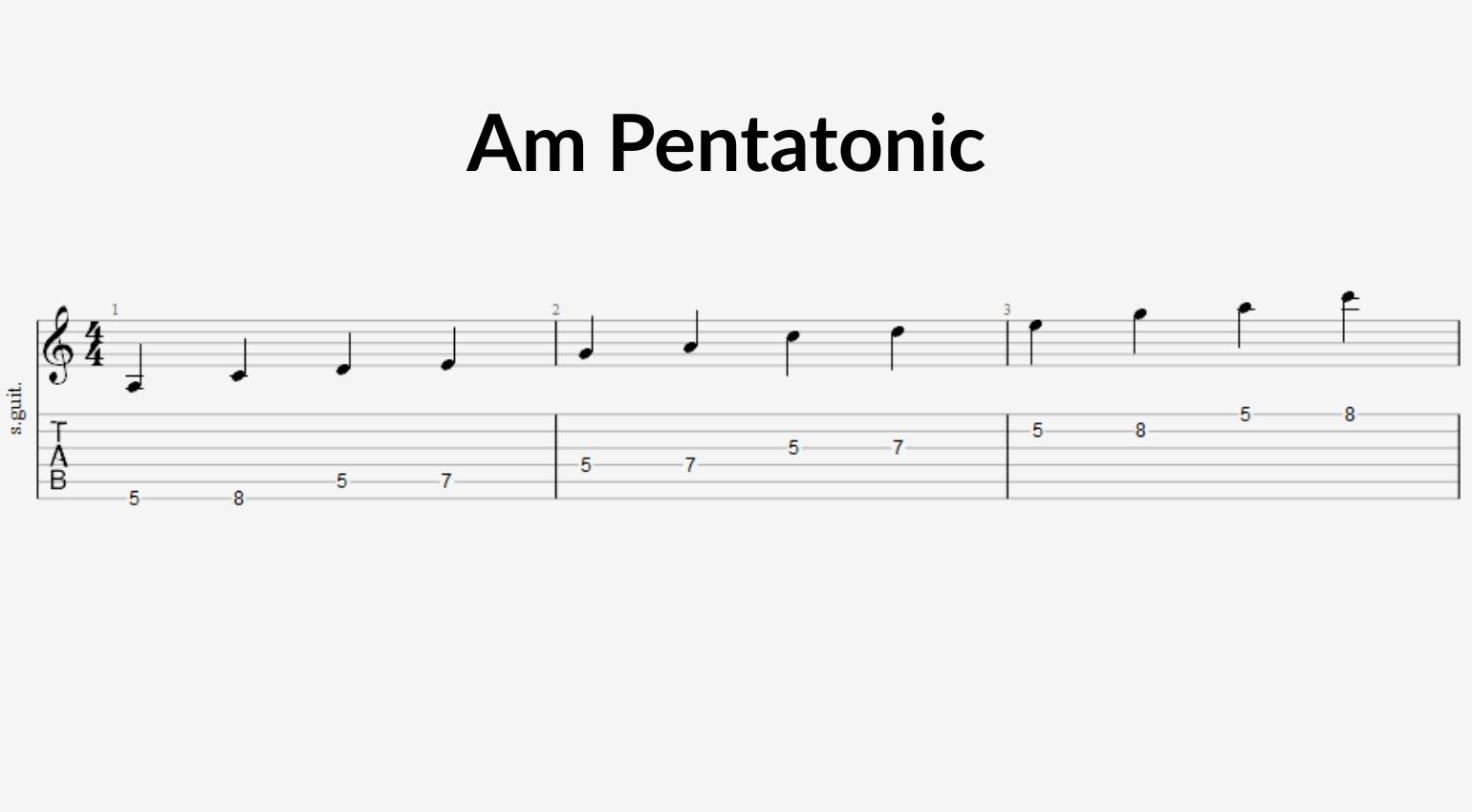
In the image above, we’ve got the A minor pentatonic scale. This is the easiest, most beginner-friendly scale you can start with. Moreover, it works really well over minor backing tracks.
What’s the difference between minor and major keys on guitar? Minor keys sound sad, think of the blues or most rock songs. Whereas major keys sound happy and lean more towards country and pop genres. The difference between a major chord and a minor chord is a flattened 3rd note in the chord’s composition.
Major Vibes
Right then, let’s look at some major vibes. You can still rock out, though! Just think of the Let It Be solo or even Oasis’ Don’t Look Back In Anger. Both of these solos are in C major, but with a little hack.
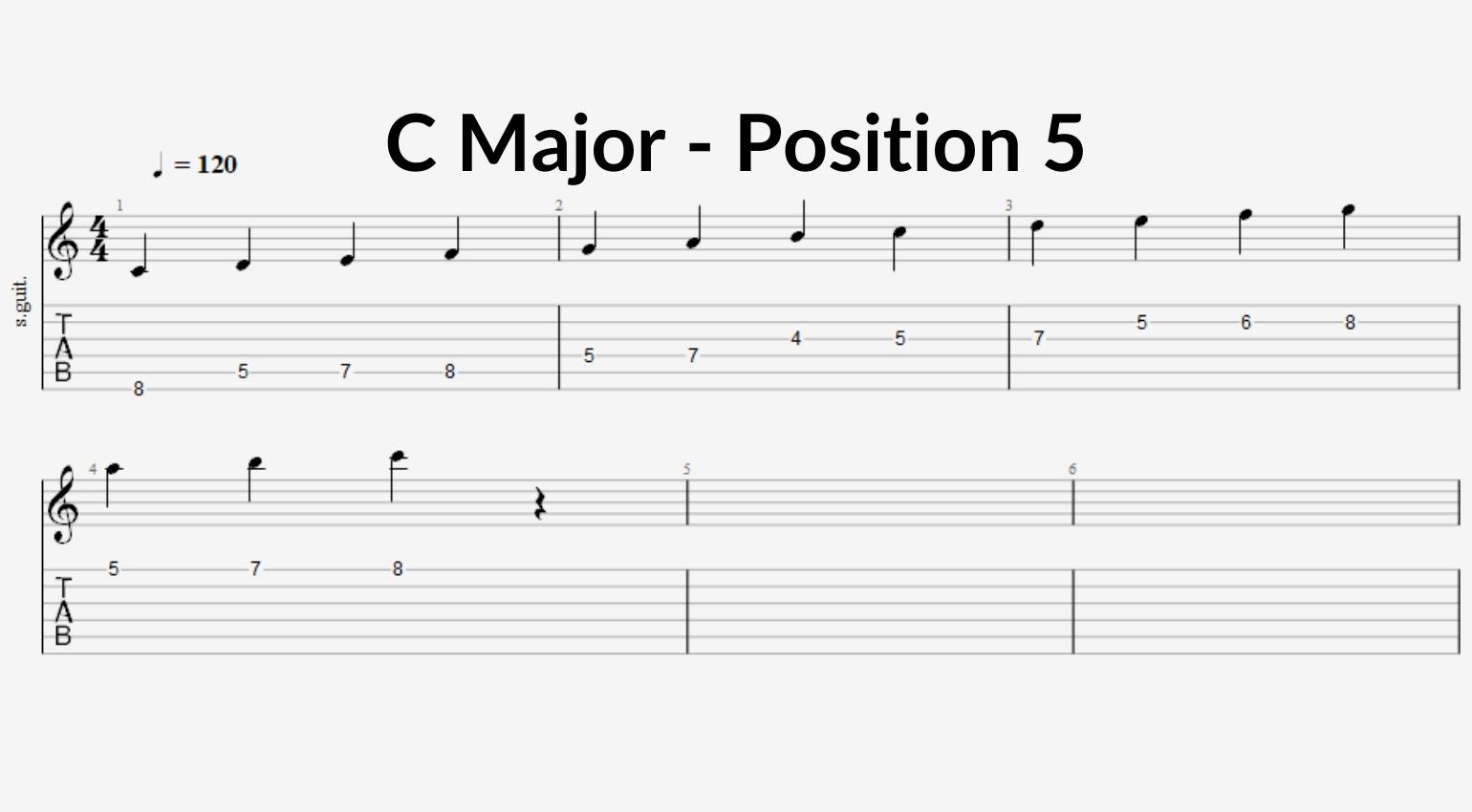
Here, we’ve got position 5 of the C major scale. Now, that may sound scary, but it’s much nicer than you think. This scale shape essentially allows you to play your comfortable minor shape, but over a major key.
As far as improvisation tips go, this is a groundbreaking factor that will allow you to play over so many more tracks, styles and genres.
Octaves
Concluding our look at these basic improvisation tips, we’re going to be looking at octaves. I would argue that the power of octaves is more important than any crazy techniques like tapping, slides or bends.
What is an octave? An octave is a musical interval where the two notes in question are 8 notes apart, but are also the same note. On guitar, if yoy play a power chord and add in your pinkie finger underneath your third finger, that’s your octave. Such as a B and another B, but in a higher octave.
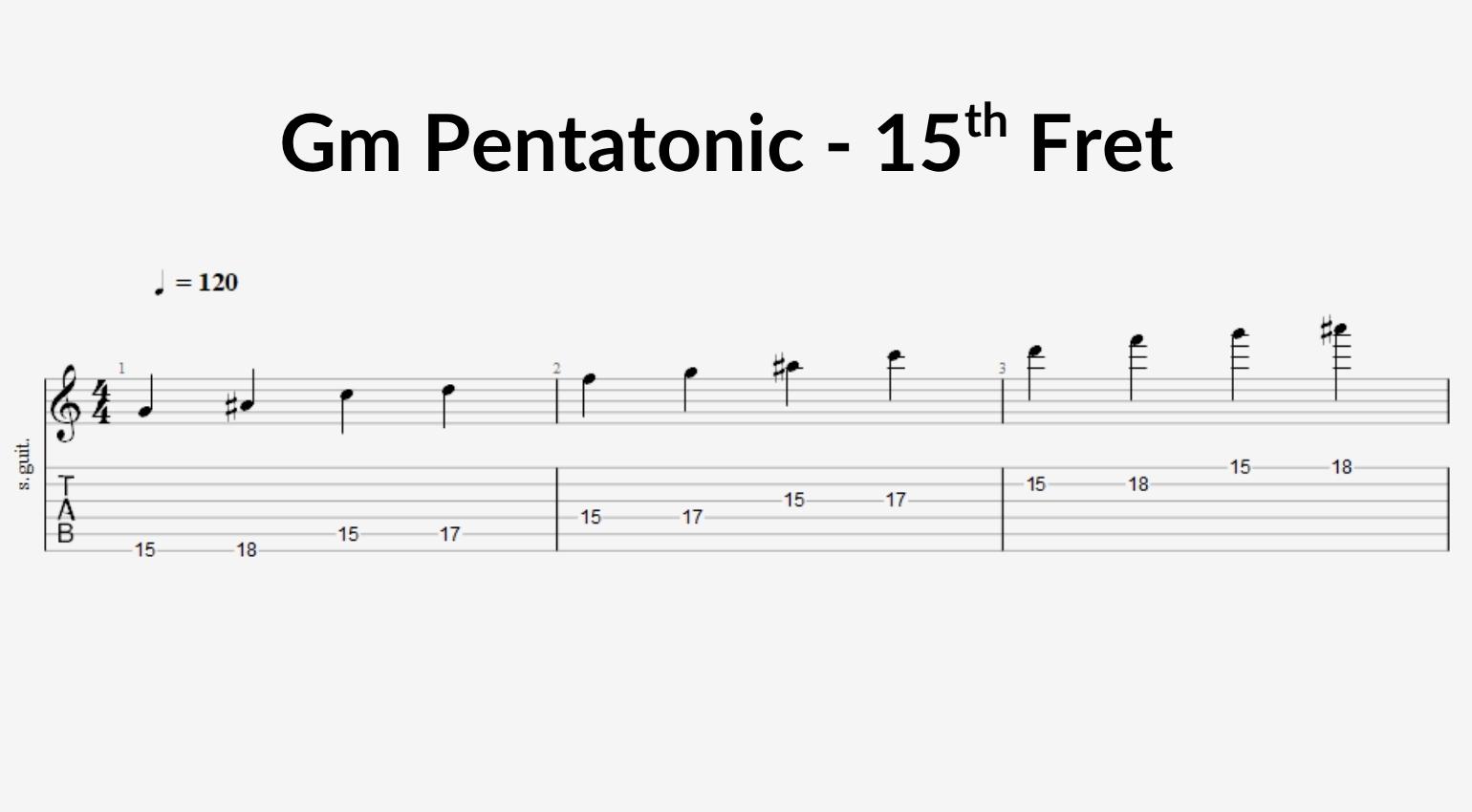
For improv, such as in the key of G, you can play your scale shape from the 3rd fret, in addition to the 15th fret on the guitar. Even though the 15th fret sounds scary, all of the notes are the same as on the 3rd fret, but in a higher octave. Overall, this gives you a new sound to experiment with. Furthermore, some players find it difficult to reach these higher notes, so this will be great practice for doing so.
Videos
Further Information
*This post contains affiliate links and/or widgets. When you buy a product via our affiliate partner, we receive a small commission that helps support what we do. Don’t worry, you pay the same price. Thanks for your support!

This might also interest you


One response to “Improvisation Tips for Electric Guitar: Steps for Better Solos”

The definition of Guitar Scales is truly a Complexed theory or understanding that should be explained to it fullest complexity, yet in a BASIC manner that BEGINNERs & Advanced players, should understand, completely. I have Search the Internet & have NOT YET FOUND A PRECISE, EXPLANTION, of the Theory of GUITAR SCALES .. Once I completely understand & Learn the SETS OF DIFFERENT SCALES PATTERNS, then I plan to create a YOUTUBE VIDEO, explaining the IMPORTANCE LEARNING & FULLY UNDERSTANDING THE ALMOST INFINITE THEORYS OF GUITAR SCALES…Respectfully.