Guitar Scales for Beginners: 5 Concepts Explained
Scales don't have to be boring!

 4,5 / 5,0 |
Guitar Scales for Beginners: 5 Concepts Explained · Source: Alamy Stock Photo / Wachiwit

Guitar scales are vital. We don’t like learning them, but they sure are good to know! Let’s take a closer look.
Guitar Scales
Guitar Scales for Beginners: Getting Started
- Guitar scales are one of those things that, at some point, every player has despised. As a beginner, we’re made to assume that they’re boring and tricky.
- In reality, they’re not as glamorous as others make out. Despite this, they are extremely useful and open up many doors as a player.
- Naturally, there are different levels of scales. Here, though, we’ll be looking at a few entry-level examples and the benefits they bring to your playing.
Major and Minor Pentatonic
Firstly, let’s check in with the good old pentatonic guitar scale. Typically, the pentatonic scale has just 5 notes between octaves, rather than the 7-note major and minor scales. More on that later.
As a beginner, learning these basic scales acts as both a theory and a technical exercise. You could work on your alternate picking whilst also learning a new scale. The TAB below depicts the C Major pentatonic scale, starting from the 8th fret of the E string.
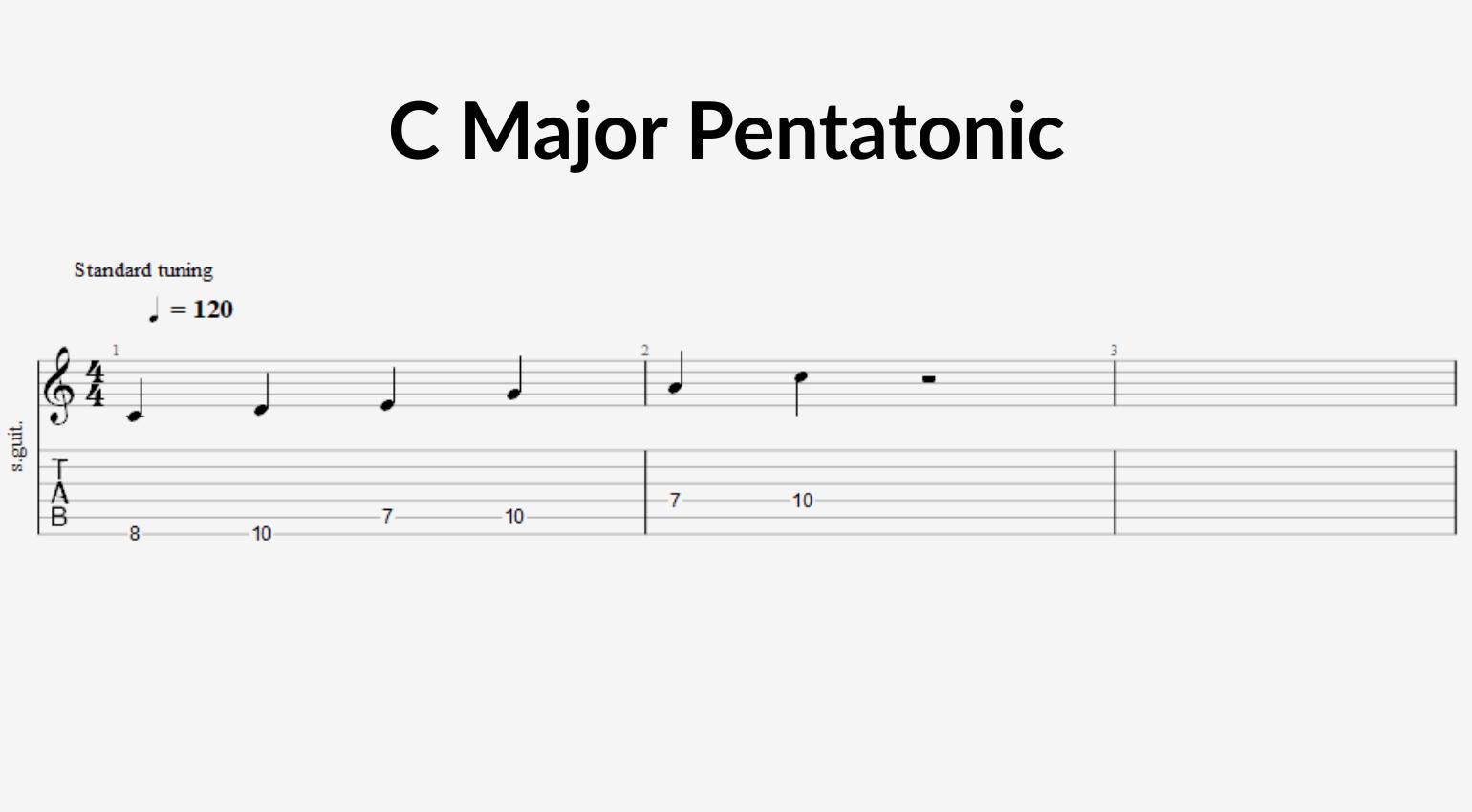
A real benefit of starting in C major is that this key has no sharps or flats, making it easier to remember the notes, compared to other guitar scales.
Moreover, we also have minor pentatonic shapes. How do major and minor guitar scales sound? Think of major as sounding happy, and minor as sounding sad. The TAB below shows the A Minor pentatonic scale, which is arguably one of the most used shapes out there!
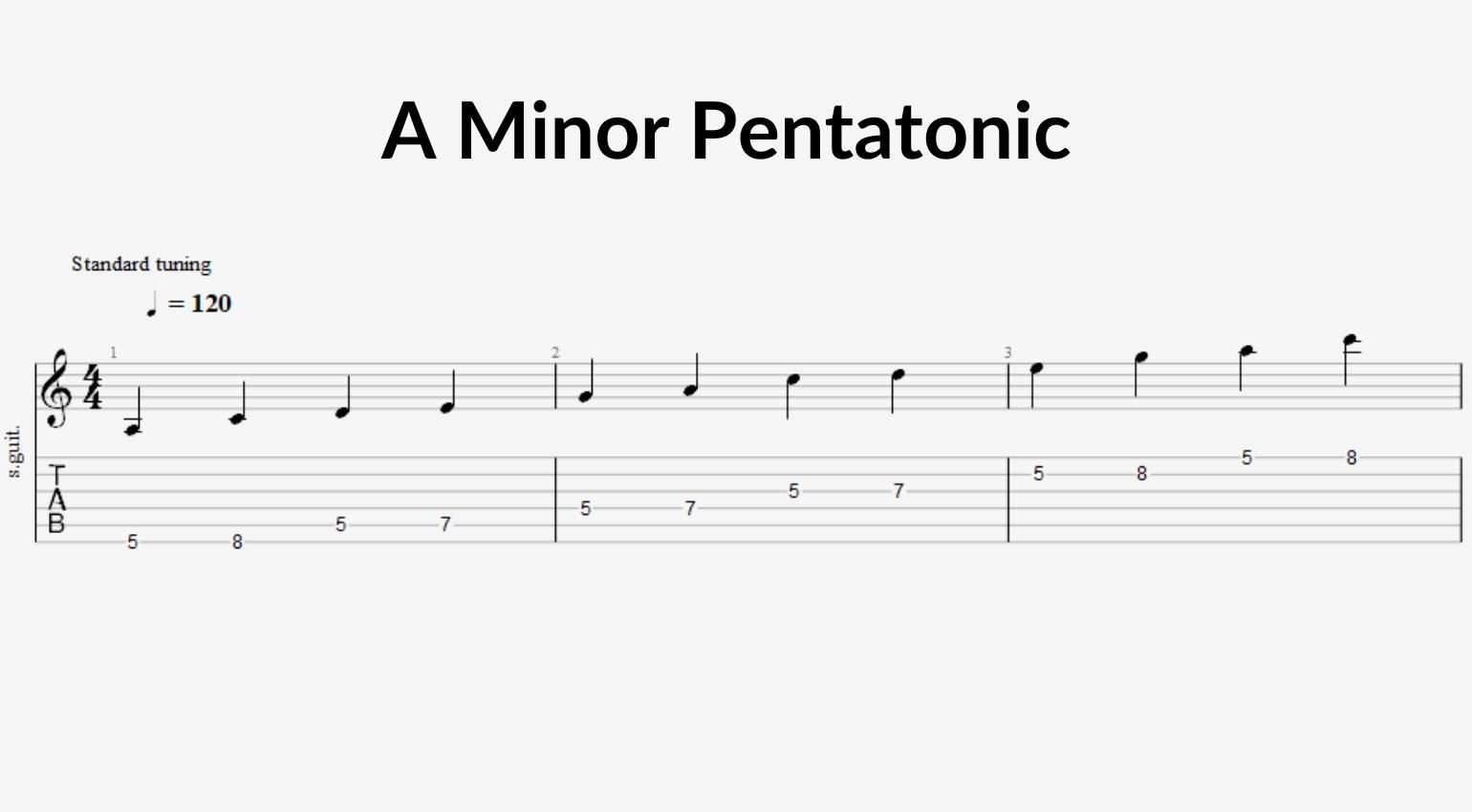
Getting a good understanding of these shapes is good for your own knowledge of musical theory, in addition to gaining some extra playing experience. The best part? These shapes can be played anywhere across the neck! But more of that later…
Blues Scale
Okay, now that we’ve looked at the pentatonics, let’s try something a bit more musical. The blues scale is where emotion starts to come in. Similarly, we’re in A minor here. This looks a lot like the Am pentatonic; however, we’ve got a few more notes to play with.
If we refer to the diagram below, we’ve got what we call blue notes within this guitar scale. These are out of key notes which give the blues scale its distinctive sound. Each of these flattened 5ths (b5) requires a resolution.
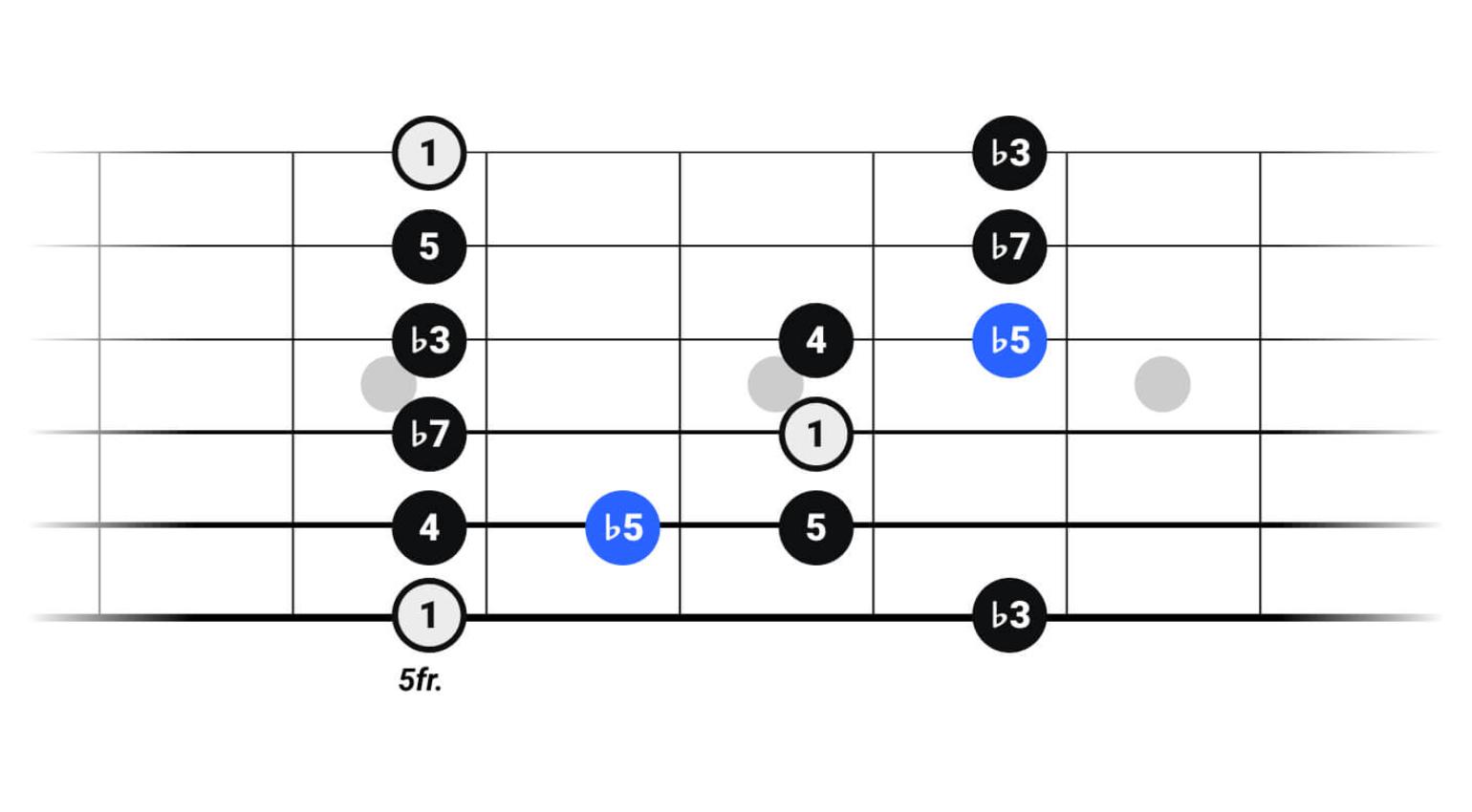
This idea of a resolve is what we call a cadence, the process of one note proceeding another. We can have perfect cadences, which sound finished, along with imperfect cadences that do not sound as complete.
Overall, the blues scale allows us to build on our technical skills and adds some extra flavour, thanks to the blue notes, into our practice schedule.
Dexterity and Strength
One thing that is often overlooked when learning the guitar is that from day one, you may not have a lot of dexterity or strength. This is where our guitar scales come in.
I highly recommend and advise slowly working through easy exercises like these to get used to playing on the fretboard. Initially, fretting just a single note can feel difficult and stressful. Therefore, the more experience you get with fretting notes, the easier they will become.
Neck Navigation
Now, remember when I said that one size fits all? Well, this is a real tip that you can use! Let’s take the blues scale, and let’s say we want to learn it in other keys. There are 12 keys to choose from. Where do you start?
Every scale you encounter starts on a root note, which is the first note of that key. If we want to play the C# blues scale, we’d want to take the same shape that we had in A, and move that root note from the 5th fret of the low E string all the way to the 9th fret of the same string.
By doing this, it allows us to play multiple different scales in various keys, whilst only needing to remember one shape. How cool is that?
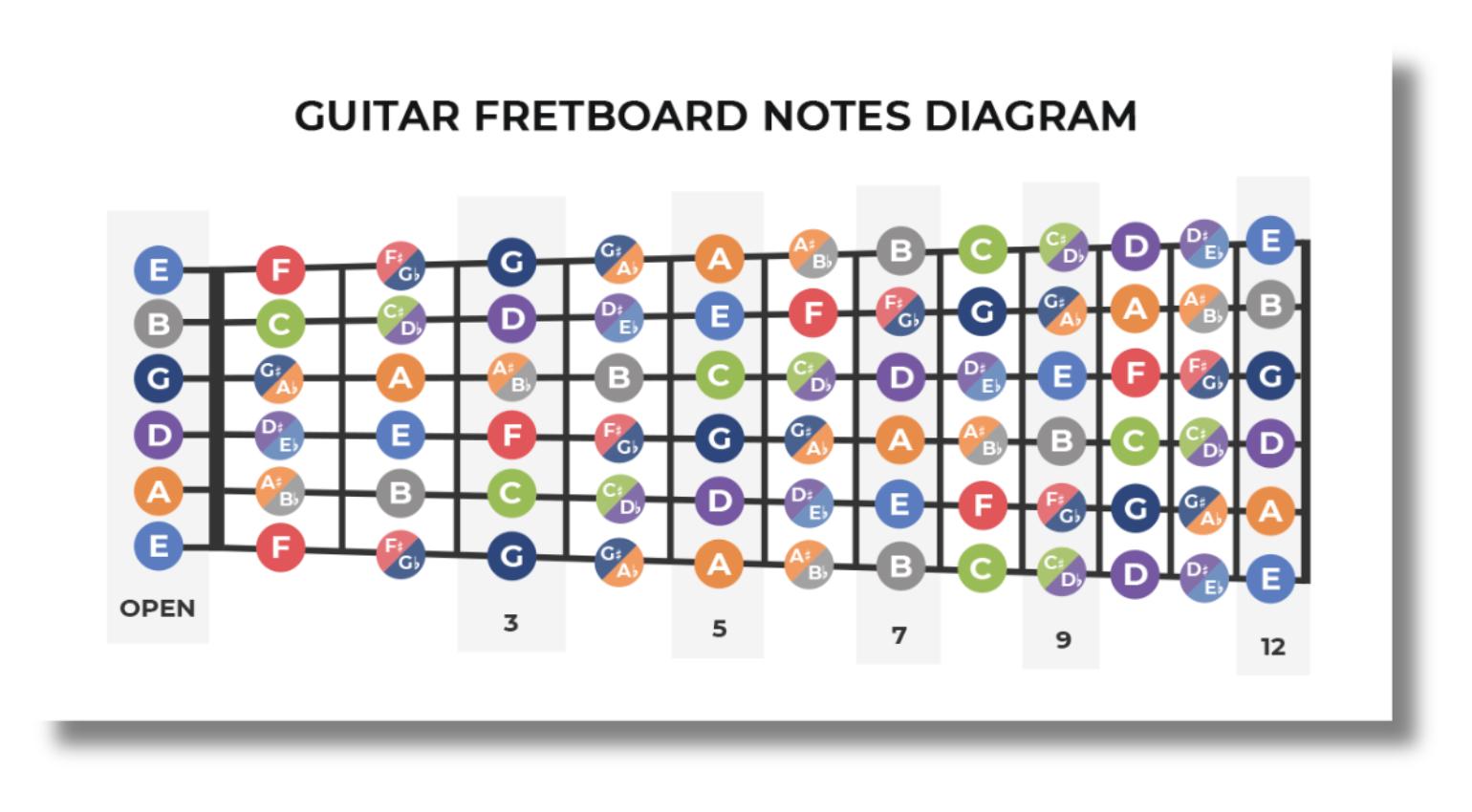
By doing this, it allows us to play multiple different scales in various keys, whilst only needing to remember one shape. How cool is that? Mind, blown.
Improvisation Benefits
Why do we bother with all this? There’s no point in learning all of these shapes if we can’t use them. As a guitarist, the main benefit of learning scales is to improvise.
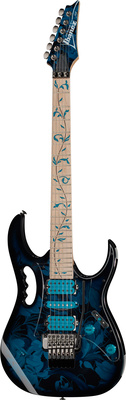
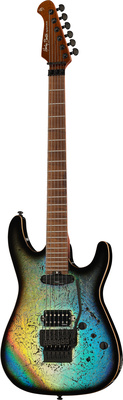
Guitar improvisation is where we take notes within a scale and mix them up along with various guitar techniques. Improvisation gives players the freedom to express their musical identity. Especially when playing a *Harley Benton MAX Fusion signature.
The best way to do this is by experimenting. Look at YouTube for a backing track in your chosen key, and work around the blues scale, seeing what notes you like the sound of and where. It’s almost foolproof!



Videos
Further Information
*This post contains affiliate links and/or widgets. When you buy a product via our affiliate partner, we receive a small commission that helps support what we do. Don’t worry, you pay the same price. Thanks for your support!


This might also interest you


2 responses to “Guitar Scales for Beginners: 5 Concepts Explained”
Good advice
I’m Asif Akhtar from Pakistan and I am a choir leader in my church. I love to play guitar