Voice as Instrument: 3 Pieces of Gear for New Sounds – Perfect Match
No DAW, No Looper, No Plugins, Just Your Voice and the Right Hardware

 3,5 / 5,0 |

For our Perfect Match series, we’re always looking for new ideas built around a well-matched trio of instruments, gear, or software. Today’s topic: how do you use your voice as an instrument, and can you actually build complete tracks from it? Turns out, yes, and you don’t need a DAW, a looper, or a stack of plugins to do it.
Voice as Instrument: The Best Hardware Setup for Turning Vocals into Beats, Melodies and Complete Tracks
Voice as Instrument: A Few Thoughts
The idea of using your voice as an instrument opens up a lot of territory. Beatboxers create jaw-dropping sounds with nothing but a microphone. Others run vocals through effect chains in the DAW. Some use pitch tracking to generate MIDI data for controlling synthesizers. And with AI and machine learning now in the picture, vocals can be transformed into virtually any sound imaginable.
There are also dedicated hardware options like talkboxes and vocoders, available as both hardware and plugins, plus a whole range of specialized vocal processing effects.
For this Perfect Match, we’re taking a different angle. The focus is on a hardware setup that works completely standalone, with enough creative potential to build full tracks from start to finish. And we’re thinking about people who aren’t necessarily beatbox virtuosos, but who want to experiment with vocals and push them somewhere new. Speaking of which, here’s beatboxer D-low to set the mood:
Voice as Instrument: A Microphone as the Foundation
Obviously, if you want to use your voice as an instrument, you need a microphone. For beatboxers or performers like Michael Winslow, a microphone alone is enough to capture an astonishing range of sounds. But you do need one, so that’s where we start.
There’s a huge selection out there, across different microphone types as well. Timbaland, for example, uses the Neumann U87 AI* for the sounds he creates with his voice. For a small home setup, though, that’s a bit ambitious.
Instead of a sensitive condenser microphone, we’d go with a dynamic mic. Easier to handle, more forgiving, and considerably more affordable.
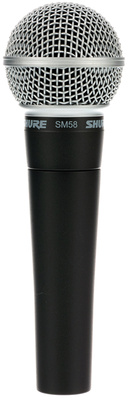
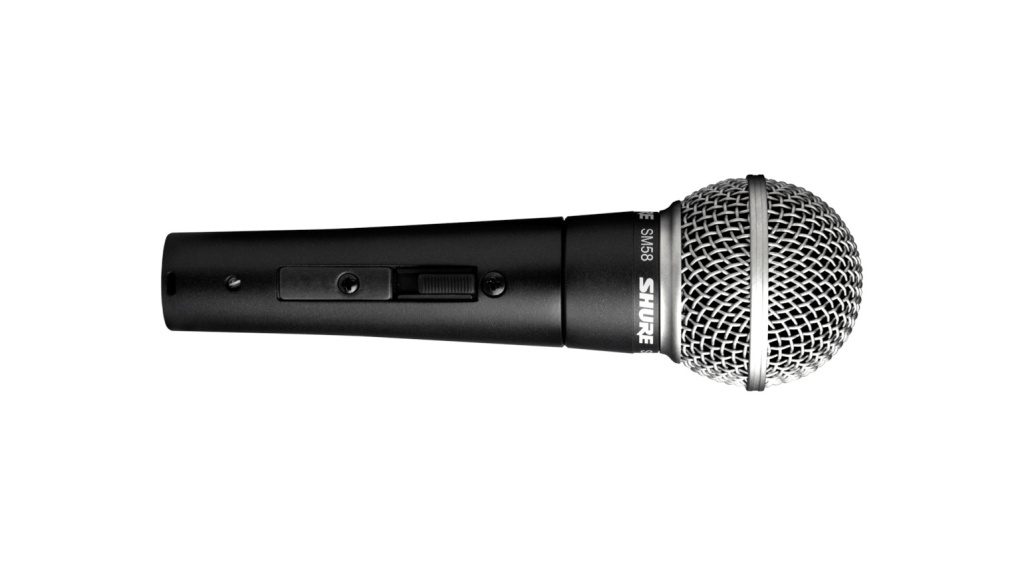
The Shure SM58 was originally developed as a studio mic but has become one of the most popular live vocal microphones in the world, and it’s a great fit for this kind of vocal experimentation.
It doesn’t react as sensitively as a condenser, which means you can hold it in your hand during performances without constantly fighting feedback or handling noise. It’s also a great mic for exploring the proximity effect: the closer you get, the fuller and more intimate your voice sounds. And compared to condensers, you’re much less likely to clip it. The SM58 handles loud sources without breaking a sweat.
Another practical advantage: dynamic microphones don’t need phantom power, so they integrate easily into almost any setup without an additional preamp.
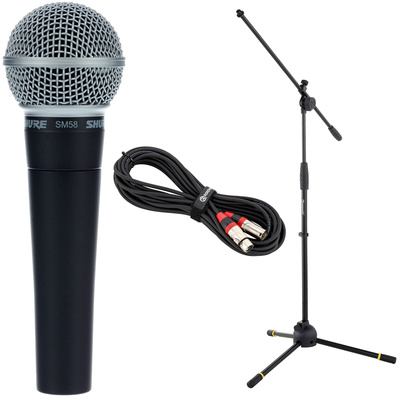
In short, the SM58 is an excellent starting point for this kind of vocal experiment, with one of the best price-to-performance ratios in the business. Until May 31, 2026, you even get a free K&M 210/30 mic stand when you buy it. Grab it at Thomann*.
If you want alternatives, the Shure SM7B* is worth a look: also dynamic, outstanding for speech and vocals, and basically the industry standard in broadcast and podcast. Or maybe you already own a mic you know and like. Either way, Thomann’s vocal mic selection* is a good place to browse.



Voice as Instrument: Elektron Tonverk as the Creative Hub
Not everyone has the skills to turn their voice into an instrument on its own. And even if you do, you probably want to layer sounds, generate harmonies from a single sung note, process the results further, and use all of it as the foundation for complete tracks that can also include real instruments.
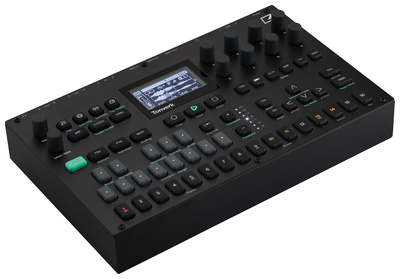
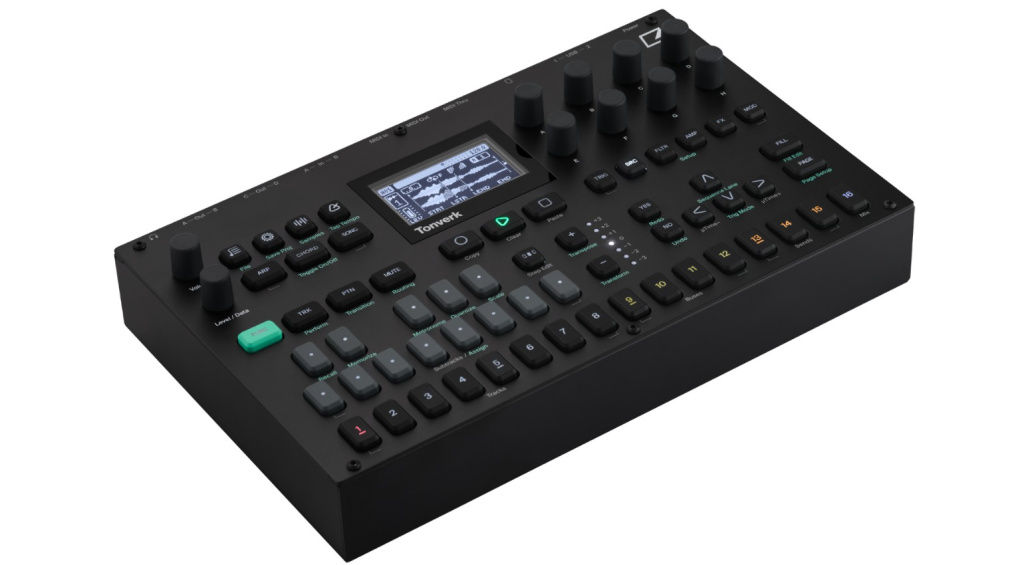
A lot of people think of loopers here, but we want to go a step further. The Elektron Tonverk works in this setup as a full creative control center. You sample microphone input directly, process the results with effects, resample to create completely new sounds, and arrange full tracks from that material.
Compared to other Elektron samplers like the Digitakt II, the Tonverk offers more options for manipulating and reworking samples. The effects section is unusually deep, with tools like Chrono Pitch, Grainer, and Frequency Warper that are genuinely excellent for turning vocals into instruments and playing with melodies, textures, and harmonies.
You can even convert samples into wavetables, which is another interesting way to use your voice as an instrument. The sequencer is a highlight too: its extensive feature set turns vocal snippets into lively grooves surprisingly fast. As a complete package, the Tonverk opens up an enormous amount of creative territory, and not just for vocal sampling.
More skilled vocal performers can obviously use simpler samplers, but for creative sample manipulation specifically, the Tonverk is currently in a league of its own. And given Elektron’s track record, more updates expanding its capabilities are almost certainly on the way. Get the Elektron Tonverk at Thomann*.

Voice as Instrument: A Vocal Processor as the Link between Mic and Sampler
If you’re using your voice as an instrument, a vocal processor is a natural addition. It handles several jobs at once: it accepts the microphone signal directly, amplifies it, and gives you a set of effects for shaping and manipulating the sound before it hits the sampler.
Beyond the usual suspects like delay, reverb, and chorus, you want effects that do something more creative with your voice. Auto-tuning is particularly useful here, because hitting precise pitches makes it a lot easier to create musically usable samples, especially if you’re not a trained vocalist. That’s the whole point: using your voice as an instrument and being able to play sampled vocal sounds melodically.
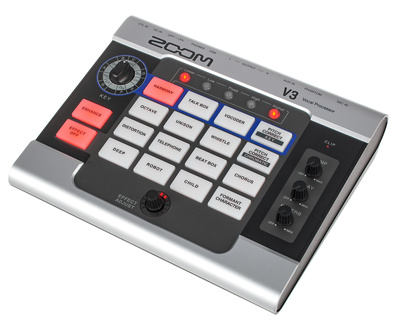
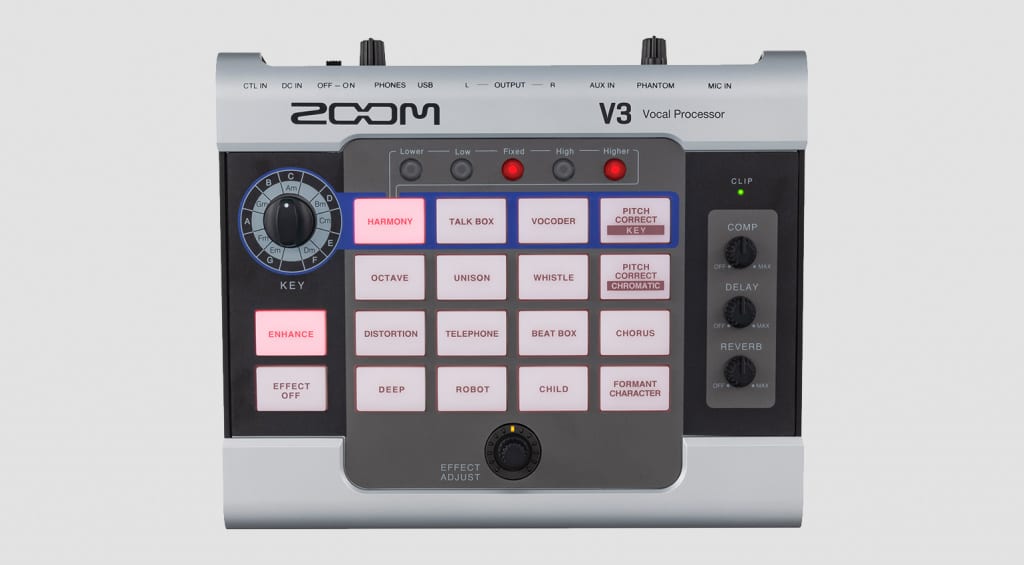
The Zoom V3 ticks all these boxes and also works as a USB audio interface, which makes it stage-ready as well. Beyond standard reverb, delay, and compression, it includes Harmony, Vocoder, Robot, Telephone, Beat Box, and Talkbox effects. You can correct pitch automatically to a selected key or generate harmonies on the fly. The Enhance function optimizes the mic signal when needed.
Get the Zoom V3 at Thomann*. If you want even more creative options for voice processing, the Roland VT-4* is a very interesting alternative. More vocal effects are available at Thomann here*.
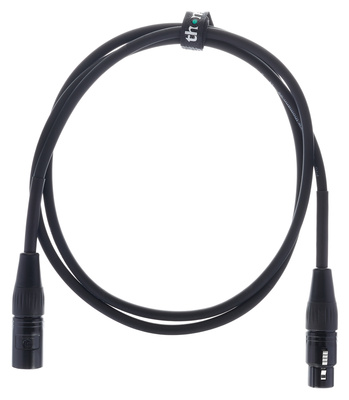
One more thing: don’t forget the cables. You’ll need an XLR mic cable* to connect the microphone, and a TS/TRS jack cable* to run from the vocal processor to the sampler.

Conclusion: Why This Trio Is a Perfect Match for Voice as Instrument
Using your voice as an instrument can mean a lot of different things. This setup works completely outside of a DAW, without a looper, without plugins, and makes your voice the actual foundation for complete tracks.
You don’t need much to get started. A dynamic microphone like the Shure SM58 is ideal for vocal experimentation, not just for singing and speech, but for any sound you can produce with your voice.
The mic connects to a vocal processor like the Zoom V3, which acts as a mic preamp while also giving you a range of effects for shaping the sound. The auto-tune options are particularly handy for creating precisely pitched samples, especially if your ear isn’t fully trained yet.
From the vocal processor, the signal goes straight into the Elektron Tonverk, a genuine powerhouse for creative sampling. Process your vocal samples further, turn them into instruments for drums, melodies, leads, bass, whatever you can imagine. Use the sequencer to arrange complete tracks from your material, and add real instruments on top whenever you feel like it.
A Perfect Match. Not just for vocal acrobats.
More on Voice as Instrument
- Pop Vocals: Three Tools for a Hypermodern Sound
- Sampler Meets Drum Synthesis: This Trio Is a Perfect Match
- Review: Elektron Tonverk
- Fred again.. — Gear and Sound
- All about Perfect Match
*Note: This article contains affiliate links that help us keep Gearnews running. The price for you always stays the same! If you buy something through these links, we receive a small commission. Thanks for your support!

This might also interest you
One response to “Voice as Instrument: 3 Pieces of Gear for New Sounds – Perfect Match”

Nice! I was looking at Sarah Belle Reid’s Youtubes on using envelope followers and voice just yesterday – she is great on using voice creatively with electronics. Also Imogen Heap. I know that Tonverks are probably brilliant for this but also any creative sampler, something like a 404 will do nicely, or a Kaoss Replay is even better for this (NOT beat making). If you are cash strapped then Koala on your phone 🙂