Best Hammer Action Keyboard Controllers 2026
MIDI Keyboards with Weighted Keys

 4,5 / 5,0 |

Do you swear by a weighted keyboard with a piano-like feel? Then, a hammer action keyboard controller is one of the most important pieces of gear in your studio or live setup. Let’s check out the best ones.
Best Hammer Action Keyboard Controllers
Pros and Cons: Do You Really Need a Hammer Action Keyboard Controller?
Many keyboard players swear by 88-key keyboards with a weighted, piano-like action. And that’s no surprise: as most keyboard players start on piano, this type of action just feels natural. Whether justified or not, many trained pianists look down on synth-style keyboards with a certain degree of disdain. Consequently, 88-key hammer action keyboard controllers are a vital component of many studios—often occupying a central position in the pull-out drawer under the studio desk.
So you might get the impression that a hammer action is always preferable to a lightly weighted synth action. But is that really the case? Depending on the kind of music you make and what you plan to do with the controller, the answer to this question can vary, and both types of actions have their strengths and weaknesses. Not least, it’s also a matter of personal preference.
Weighted hammer action keys really shine when it comes to pianistic playing. So if you mainly play piano and electric piano sounds, a hammer action keyboard controller is the obvious choice, as it provides a more or less realistic playing feel. In my experience, weighted keys also do a pretty good job for many other sounds such as pads and strings, as long as it doesn’t get too percussive. The biggest benefit of a good hammer action is that it provides excellent dynamic control, which is, of course, essential for piano-style playing.
However, the situation is a bit different if you play a lot of synth parts using a wide variety of sounds. As it turns out, certain things are actually harder to play on weighted keys, such as funky, percussive bass lines. Anyone who’s ever tried to finger drum on a hammer action keyboard controller will probably agree. And when it comes to organ sounds, weighted keys are completely out of the question. That’s why, although I grew up playing classical piano, I now prefer a synth-action keyboard as the main controller in my studio and only switch to weighted keys for piano sounds. For you, it might be different. As always, it’s ultimately a matter of taste.
Tip: There are also 88-key controllers without hammer action—I’ve put together a brief overview at the end of this article.
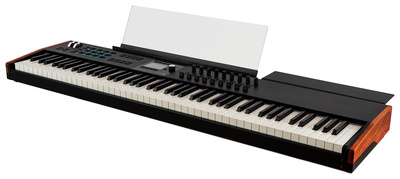
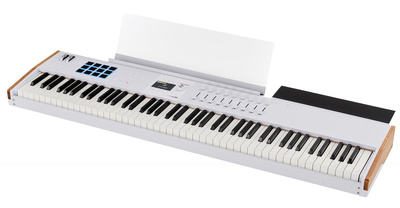
Arturia KeyLab 88 mk3: Versatile and Popular Hammer Action Keyboard Controller
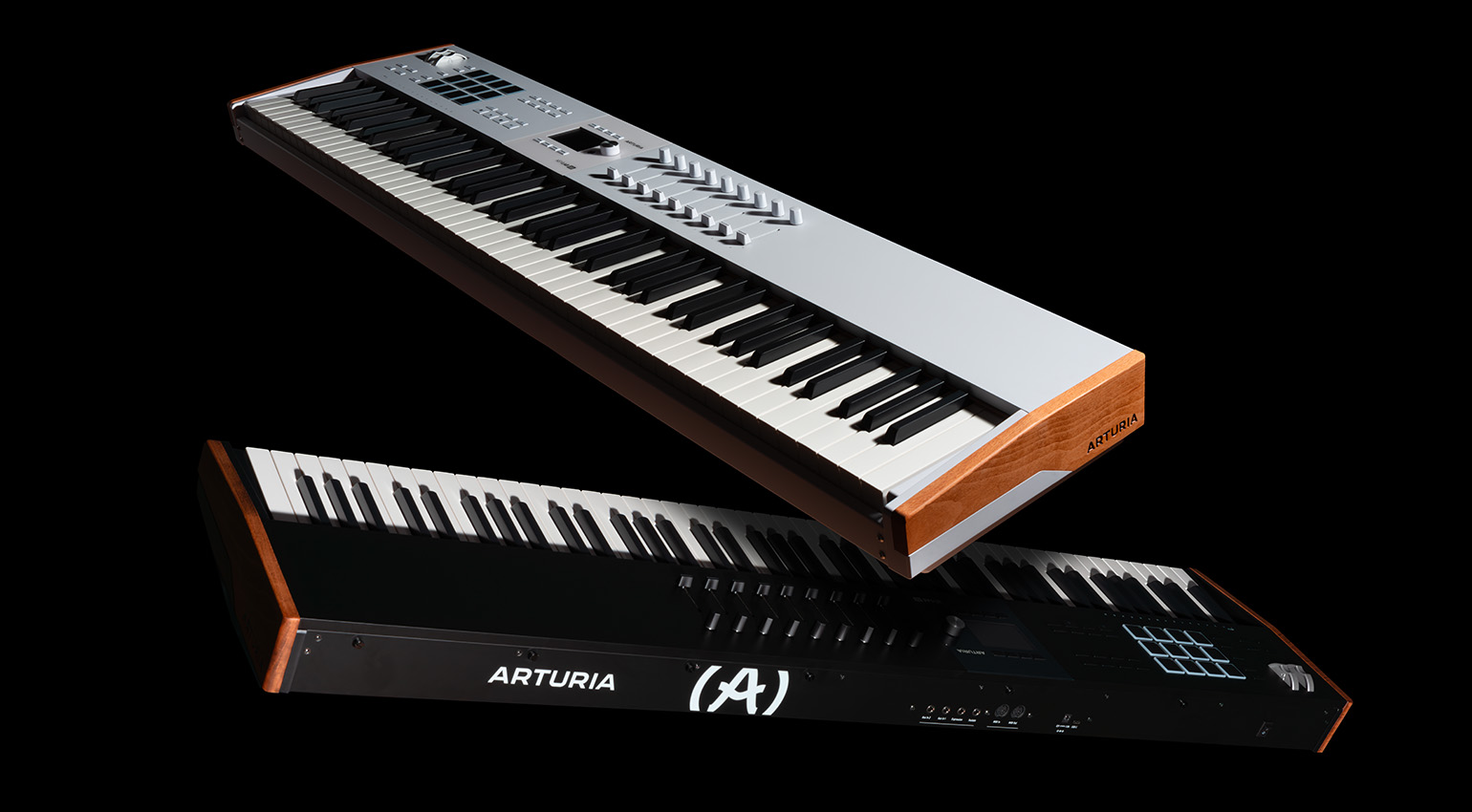
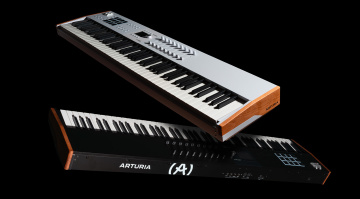
Now in its third generation, the Arturia KeyLab 88 (read our review here) has long been one of the most popular hammer action keyboard controllers. And for good reason: The KeyLab 88 mk3 not only features a latest-generation Fatar keybed (TP/110 with aftertouch), but also stands out for its many useful features for everyday studio work.
With nine touch-sensitive faders and rotary encoders each, the KeyLab 88 mk3 puts your software instruments and DAW mixer at your fingertips. In addition, there are 12 velocity-sensitive pads that can be assigned to various functions across four banks. Of course, DAW transport buttons are also included, so you’ll rarely need to reach for the mouse. Pre-configured templates ensure seamless integration with all popular DAWs. The controller supports the NKS standard, allowing you to instantly control compatible plugins and software instruments from Native Instruments and other vendors without having to assign the parameters manually.
Other helpful features of the Arturia KeyLab 88 mk3 include scale and chord modes and an arpeggiator. In addition to a USB-C port and a MIDI output, the keyboard features four pedal jacks.
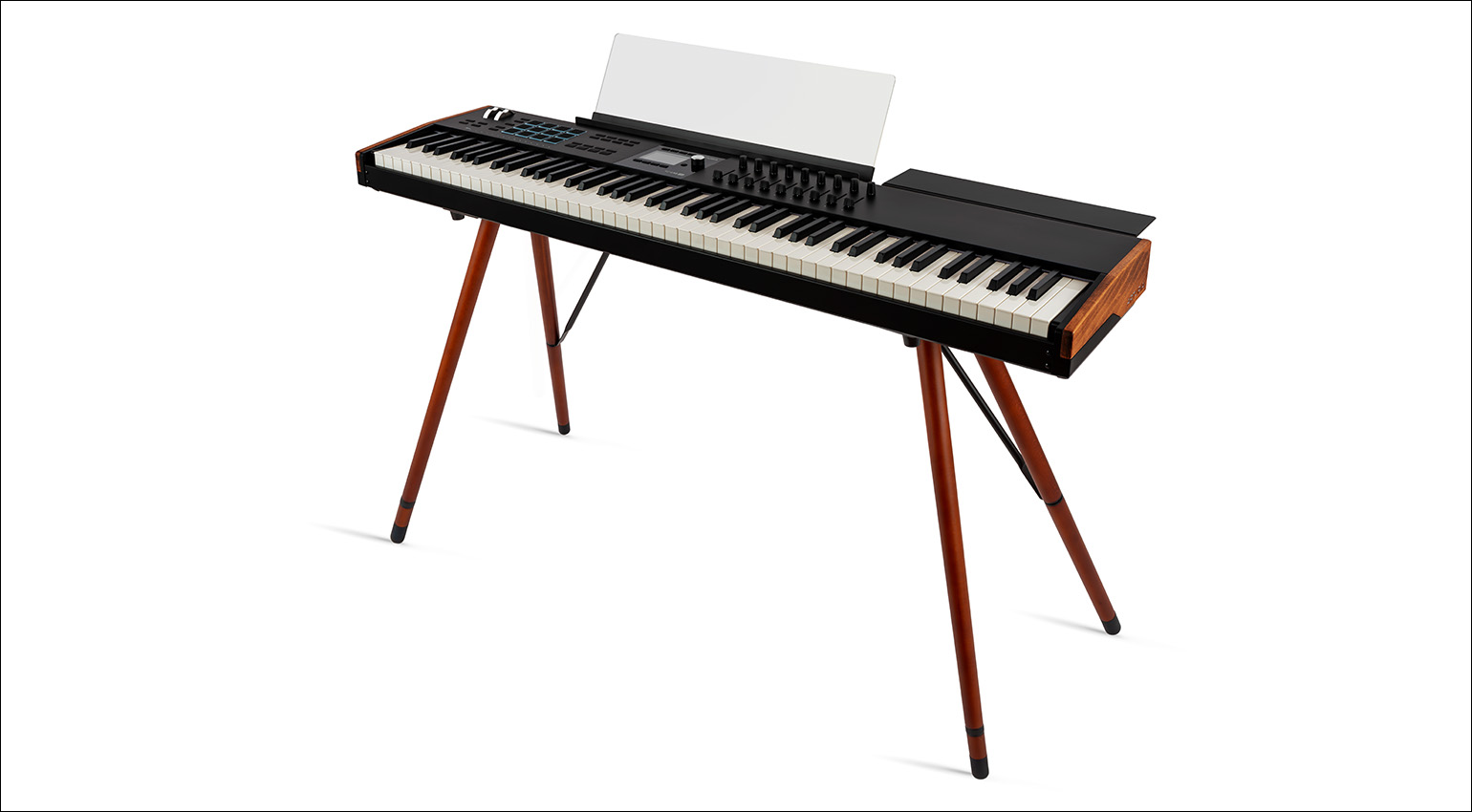
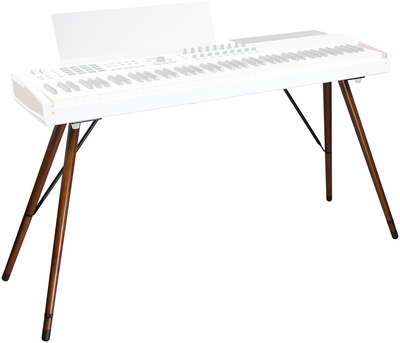
When combined with the optionally available Wooden Legs, the Arturia KeyLab 88 mk3 is a real eye-catcher, especially in the white version!
The Arturia KeyLab 88 mk3 is available at Thomann*

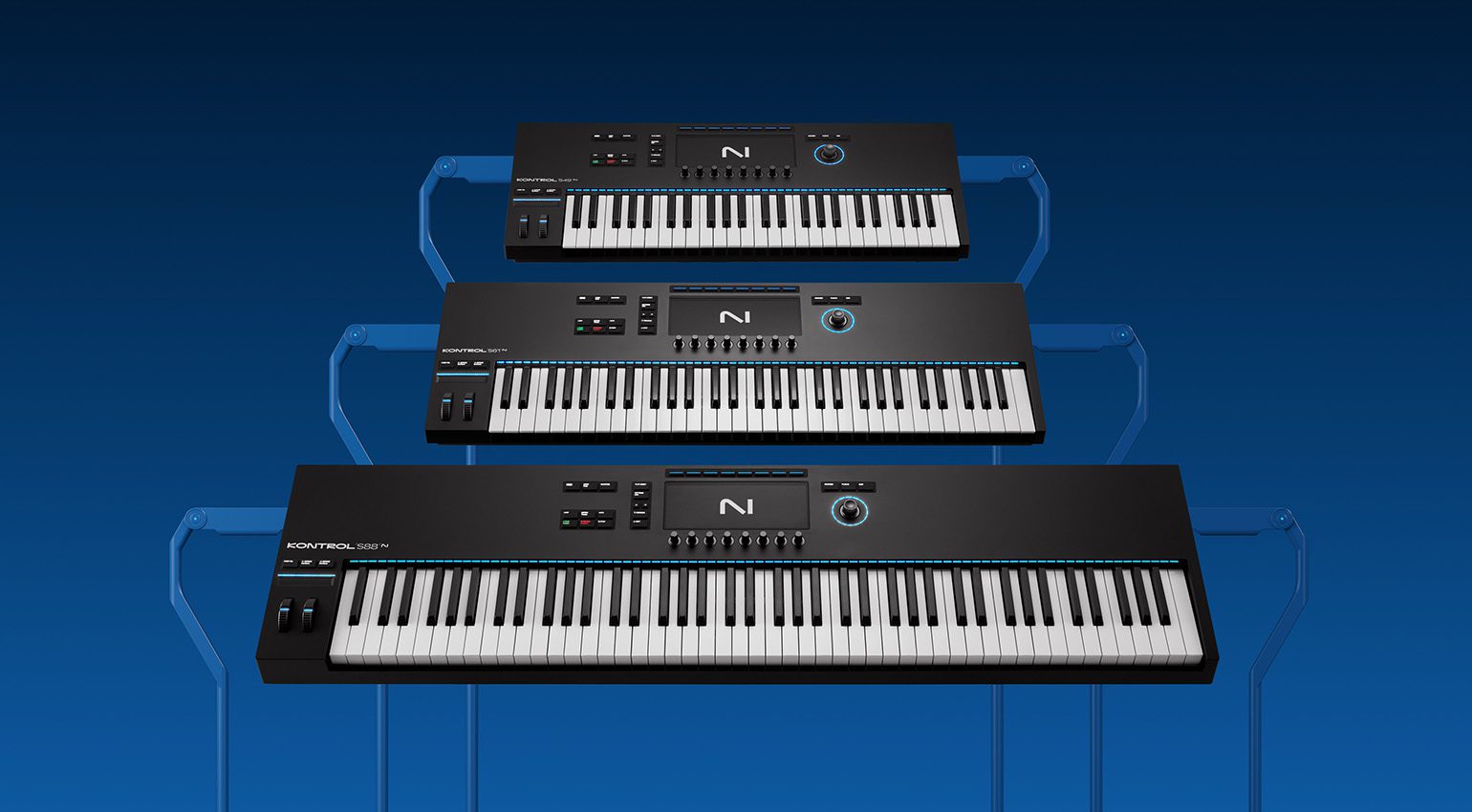
Native Instruments Kontrol S88 MK3: Hammer Action Keyboard Controller with Polyphonic Aftertouch
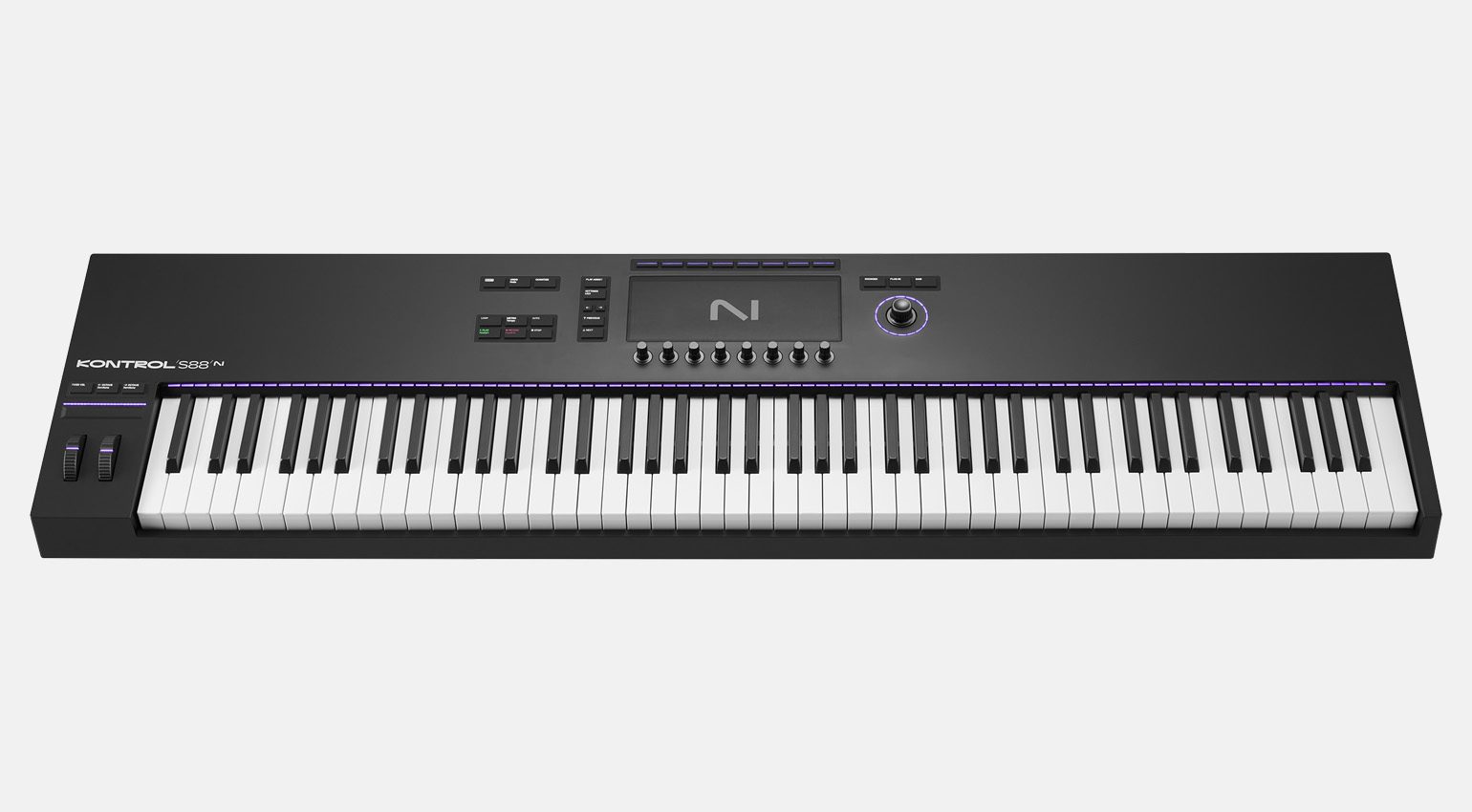
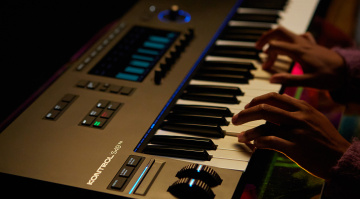
The Native Instruments Kontrol S88 MK3 has two unique selling points that no other hammer action keyboard controller offers. First, the Fatar keybed (TP/100) features polyphonic aftertouch, which is still quite rare in hammer action keyboards. Second, the Kontrol S offers the unique Lightguide—a multicolored LED strip above the keys with many practical uses.
Among other things, the Lightguide can display special functions such as keyswitches and articulations in NKS-compatible sample libraries. So you can see at a glance which keys to press to switch between staccato and legato strings, for example. This is an extremely helpful feature, especially for a keyboard controller used for composing and producing in the studio.
Speaking of NKS: The Kontrol S88 MK3 really shines when used with the Komplete bundle and other NKS-compatible instruments. You don’t need to configure anything; all parameters are automatically displayed by name on the keyboard’s large screen, making tedious parameter mapping a thing of the past.
To control plugins, the Kontrol S88 MK3 offers eight touch-sensitive rotary encoders that correspond to the parameters currently shown on the display. In addition, there are eight buttons and a large data encoder that also functions as a joystick. Thanks to the touch-sensitive encoders, you can view related information—such as the current value or a selection menu—just by touching them, without having to turn the knob and thereby change the value. Nice!
The Native Instruments Kontrol S88 MK3 features two USB-C ports for power and data, MIDI In/Out, and four pedal jacks. It can also be used as a USB MIDI interface.
The keyboard controller is available at Thomann*

Studiologic SL mk2 Series: Versatile Hammer-Action Keyboard Controllers
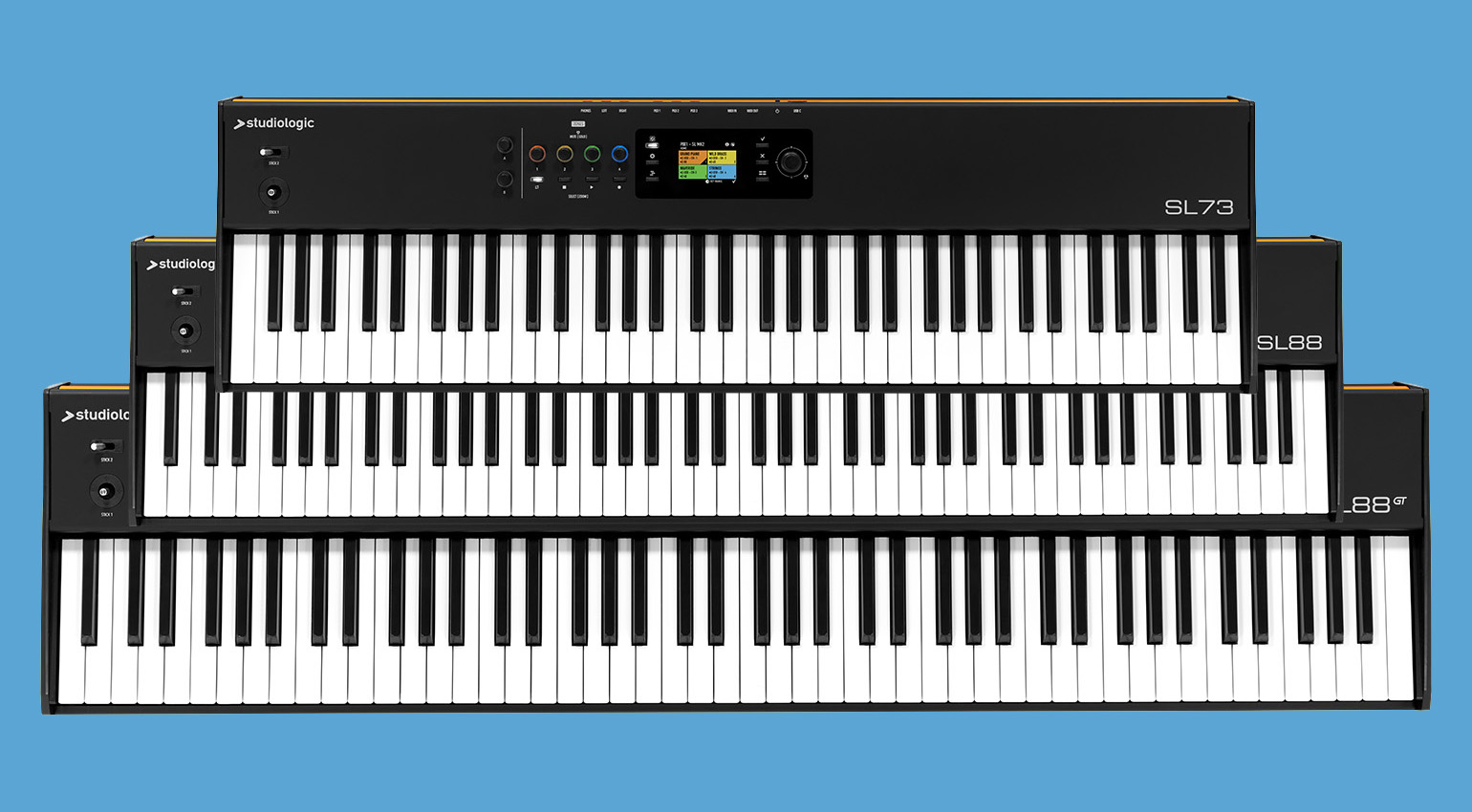
As a sister brand of Fatar, Studiologic has been known for high-quality keyboard controllers for many years. The new Studiologic SL mk2 (read our review here) features Fatar’s latest-generation hammer action mechanism (TP/110 with aftertouch). To my knowledge, the Studiologic SL mk2 is currently the only hammer action keyboard controller that’s available in a compact version with 73 keys (unless you want to repurpose a Nord Electro or Stage as a controller).
The four rotary knobs are color-coded, so you can tell at a glance which zone or parameter they’re currently linked to. Designed more as a classic master keyboard than as a DAW controller, the Studiologic SL mk2 supports up to four freely configurable MIDI zones. You can save up to 100 programs. While the SL mk2 does let you control the transport functions of most DAWs, it doesn’t offer advanced DAW control features, such as pre-configured mappings for the DAW mixer or software synths. If that’s important to you, some of the other hammer action keyboard controllers on this list are better equipped for this purpose.
The SL mk2 comes with the Studiologic Numa Player app, which communicates seamlessly with the keyboard via the SL-Link protocol and contains a wide range of sounds. In this context, it also makes sense that the controller features a built-in audio interface equipped with stereo outputs, but no inputs. All you need to do to turn the SL mk2 into a stage piano is connect it to your iPad or a computer over USB-C and run Numa Player; the sounds will then be played through the keyboard’s outputs without the need for any additional gear. Additional connections include MIDI In/Out and three pedals.
If you want an even more realistic grand piano feel, you can opt for the SL88 GT mk2, which is equipped with the TP/400 Wood keybed with wooden keys.
All three versions of the controller are available at Thomann*.

Doepfer PK88 GH and LMK4+ 88 GH: Hammer-Action Keyboard Controllers Built into a Flight Case
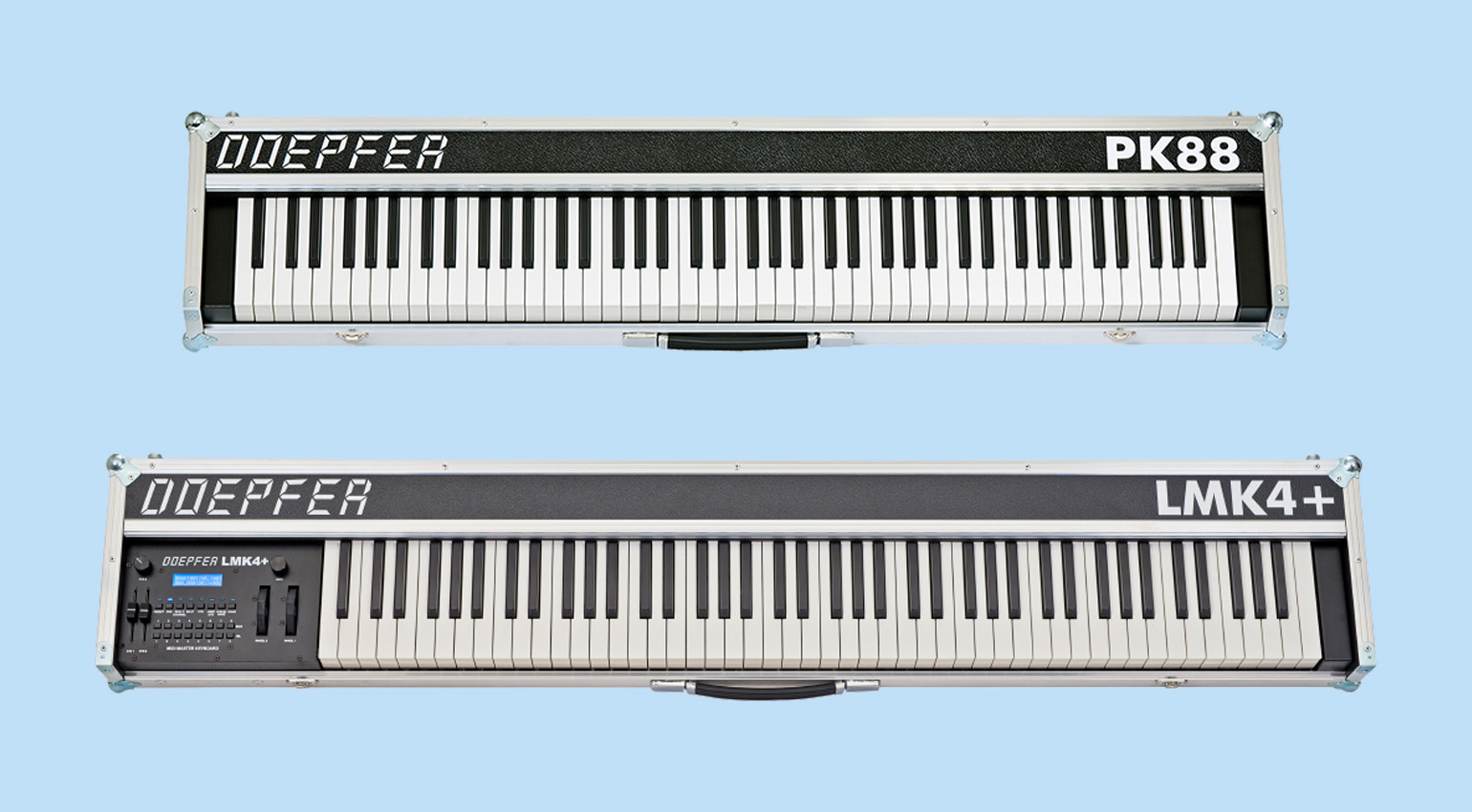
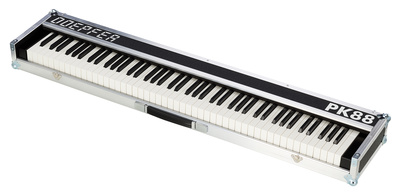
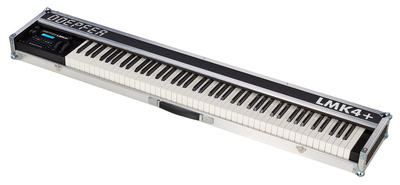
Doepfer’s distinctive keyboard controllers, which are also equipped with the popular Italian-made Fatar keybeds, have been a staple in the studio and on stage for decades. You can easily recognize them at first glance by the fact that they’re built directly into sturdy flight cases—perfect for touring.
The PK88 GH is as no-frills as a MIDI keyboard can be: keys, MIDI output, USB, two pedal jacks—that’s it. It transmits only MIDI notes (with velocity), volume (CC7), and the two pedal controllers CC64 and CC67. If you just want to play, that’ll be all you need.
If you need a little more, go for the LMK4+ GH. This model features a control panel to the left of the keyboard, allowing you to send additional control data and program changes to control a larger synth rig. You can split the keyboard into up to eight freely definable MIDI zones, so the LMK4+ can manage your entire setup. 128 preset slots are available. In addition, the LMK4+ features pitch bend and modulation wheels, three assignable controllers (2 faders, 1 rotary knob), two MIDI outputs, one MIDI input, and three pedal jacks. Keep in mind, though, that the additional control panel makes the keyboard extremely wide—at around 155 cm / 61 inches, it’s too wide for the pull-out drawers of many off-the-shelf studio desks.
Both models use the Fatar TP/40GH. While the PK88 GH does not have aftertouch, the LMK4+ GH does.
The two hammer action keyboard controllers from Doepfer are available at Thomann*
Roland A-88 MKII: Hammer Action Keyboard Controller with Ivory Touch and MIDI 2.0
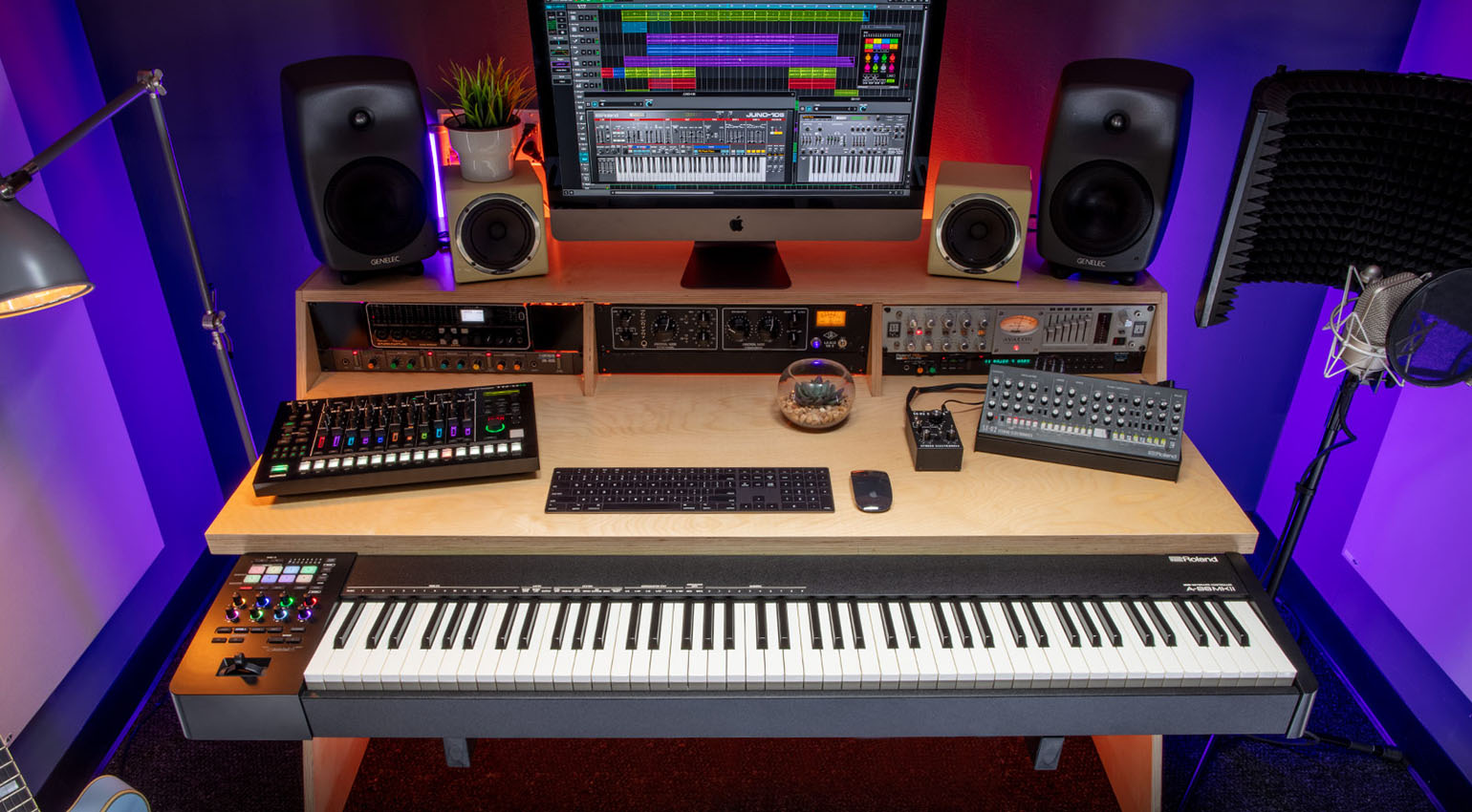
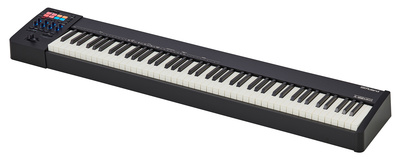
The Roland A-88 MKII features the PHA-4 Standard hammer action mechanism, which is also used in some of the manufacturer’s higher-end digital pianos. While it sports an Ivory Feel coating, it unfortunately lacks aftertouch. The keyboard can be divided into up to three zones. Roland has also thrown in an arpeggiator and a chord memory function. Unfortunately, however, the A-88 MKII offers only eight memory slots for user configurations. While this is hardly an issue in the studio, it makes the controller less suitable for complex live sets.
On the control panel to the left of the keys, you’ll find the typical Roland pitch and modulation lever, eight pads, eight rotary knobs, and two programmable buttons. Connectivity options include USB-C, MIDI In/Out, and three pedals.
Since the control panel is positioned to the left of the 88 keys, the A-88 MKII is also quite wide (just under 143 cm / 56 inches). So it’s best to make sure before purchasing that the controller fits under your studio desk or on your keyboard stand.
The Roland A-88 MKII is available at Thomann*.

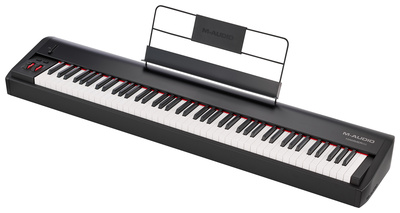
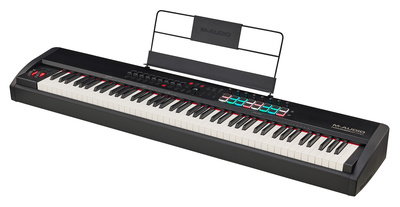
M-Audio Hammer 88 and Hammer 88 Pro: Affordable Hammer-Action Keyboard Controllers
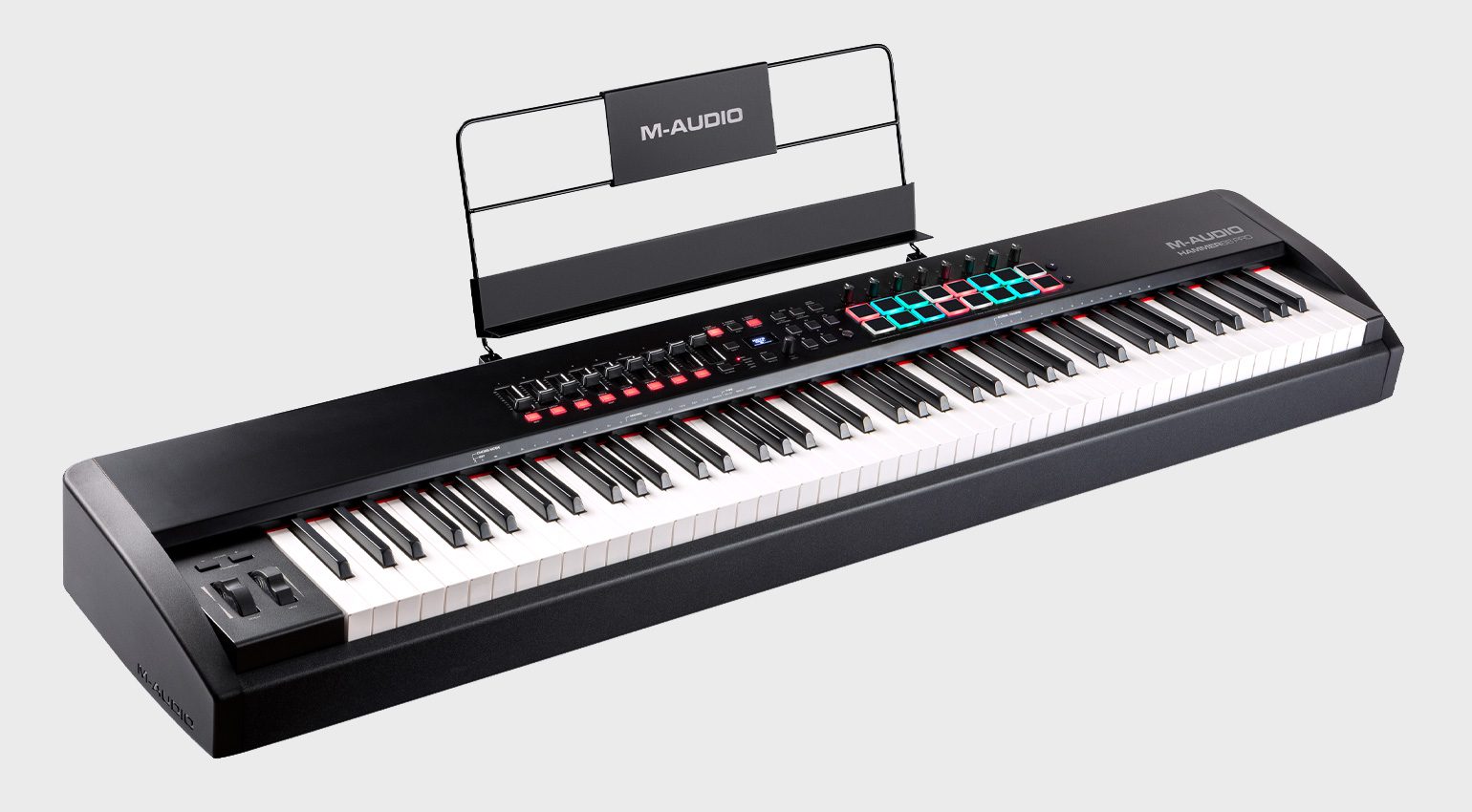
Are you looking for a hammer action keyboard controller that doesn’t break the bank? Then the M-Audio Hammer 88 might be just what you need. The particularly affordable standard version has a fairly straightforward set of features. In addition to 88 keys (without aftertouch) and two wheels, you get two buttons and a volume fader that can also be assigned to other parameters. Connectivity includes USB, MIDI Out, and three pedals.
Although it’s only slightly more expensive, the Hammer 88 Pro offers a significantly more extensive feature set. Unlike the standard model, it’s equipped with a graded hammer action keybed with aftertouch, as well as numerous programmable controls. In addition to nine faders and nine buttons, there are 16 pads and eight rotary knobs. Furthermore, the Hammer 88 Pro features an arpeggiator, Smart Chord, Smart Scale, Note Repeat, and DAW control functions. On the back, you’ll find a USB port, MIDI In/Out, and four pedal jacks.
Both versions of the M-Audio Hammer 88 are available at Thomann*.
Kawai VPC1: Hammer Action Keyboard Controller for Piano Libraries
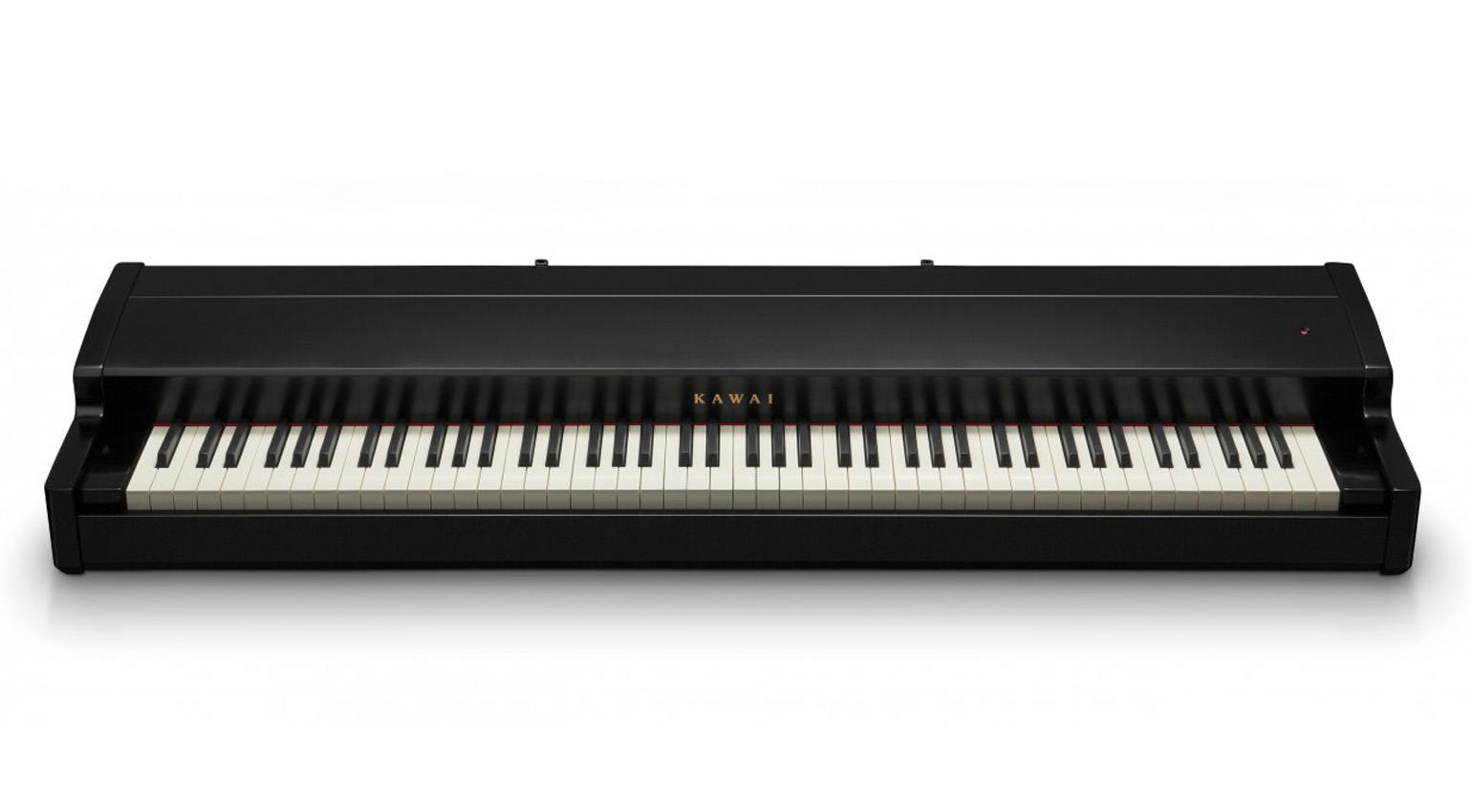
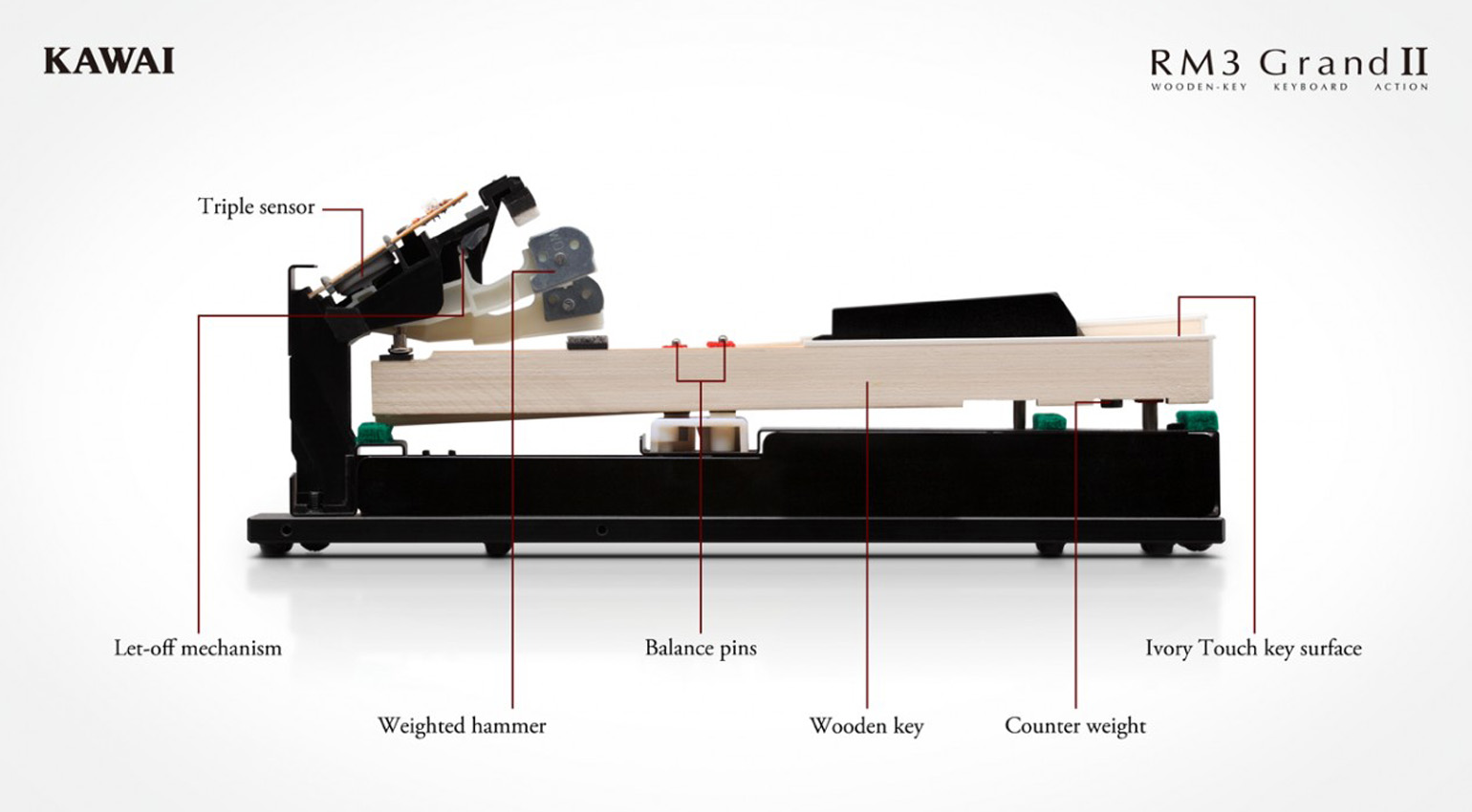
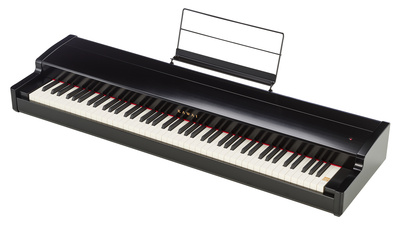
With its distinctly traditional lines, the Kawai VPC1 is a hammer action keyboard controller for the discerning pianist looking to play software-based piano libraries. Its keyboard mechanism (RM3 Grand II) was developed in-house by grand piano maker Kawai. It features wooden keys with an Ivory Touch coating and is equipped with three sensors per key. The dynamic curve can be precisely configured to suit your personal playing style and adapt the controller to the sounds you’re looking to play. A triple pedal unit with half-pedal detection is included.
If you’re looking for a keyboard controller that makes you feel like you’re sitting in front of a grand piano, the VPC1 could be the right choice for you. The rest of its features, however, are rather bare-bones. For example, the VPC1—which has been out since 2013 and is beginning to show its age—doesn’t offer any knobs or sliders for controlling your DAW and software instruments. And at just under 30 kg / 66 lbs, it’s a real heavyweight—that’s a lot of wood to lug around!
The Kawai VPC1 is available at Thomann*.

88-Key Keyboard Controllers without Hammer Action
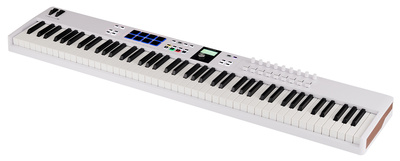
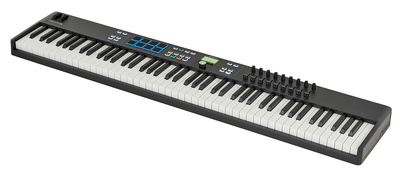
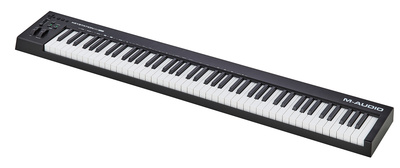
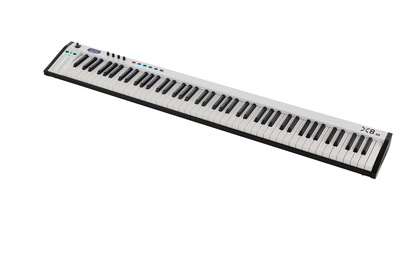
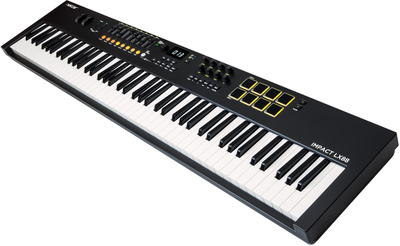
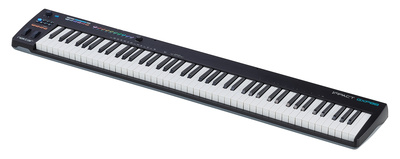
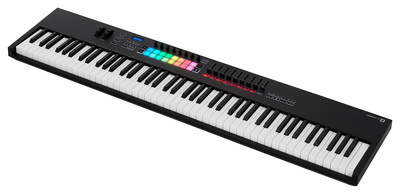
As mentioned earlier, a hammer action keyboard controller might not be the right choice for you, depending on your style and taste. Even if you deliberately prefer a keyboard with a lighter touch, you can still enjoy the full 88-key range. The following full-size keyboard controllers are equipped with lightly weighted keys without hammer action:



More on Keyboard Controllers
- Best Portable Keyboard Controllers 2026: MIDI Keyboards for Your Hand Luggage
- How to find the best MIDI Keyboard Controller
- What is MIDI? A Guide to Understanding MIDI
- 5 Budget MIDI Controllers for Music Production
*This post about hammer action keyboard controllers contains affiliate links and/or widgets. When you buy a product via our affiliate partner, we receive a small commission that helps support what we do. Don’t worry, you pay the same price. Thanks for your support!

This might also interest you
3 responses to “Best Hammer Action Keyboard Controllers 2026”

My Montage m8x keybed is the best i even played in 20 year. So great piano feel.
How is Thomann selling the VCP1 for $1,239.00 / £1,138.00 / 1,298.00€? Everywhere else is selling it for about double that price! What’s the deal?
It took a long while for me to find anything that replaced the feel of my trusty Yamaha KX-88. I finally caved and bought an Arturia KeyLab 88 Mk.III. It’s not quite the same feel, but near enough, and it has 21st-century integration and compatibility 😉