Wampler Golden Jubilee: Hot-Rodded Dual Drive
Brian Wampler announces new dual drive pedal

 5,0 / 5,0 |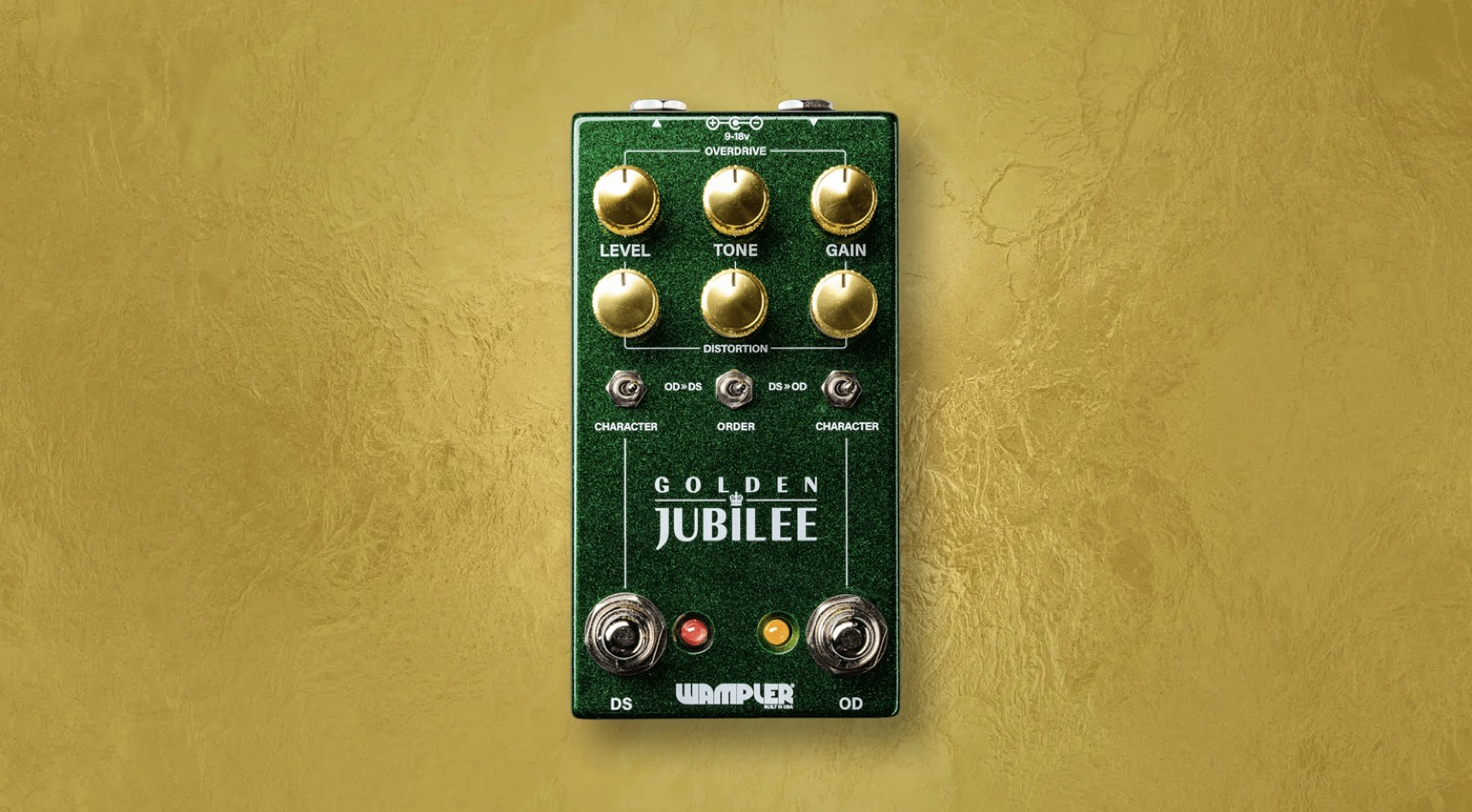

The new Wampler Golden Jubilee is Brian Wampler’s take on British tube amp tone, with two channels from the ’80s. One very British, the other all-American, and all with a super easy-to-use layout.
Golden Jubilee
Brian Wampler makes some good effects, and his new Golden Jubilee is voiced on one side like an ’80s/’90s hot-rodded Marshall-style overdrive amp voice (OD), think Silver Jubilee series, etc. The other half (DS) is an American-voiced ’90s California-style (Mesa-Boogie) distortion voice.
Evergreen Emerald Sparkle
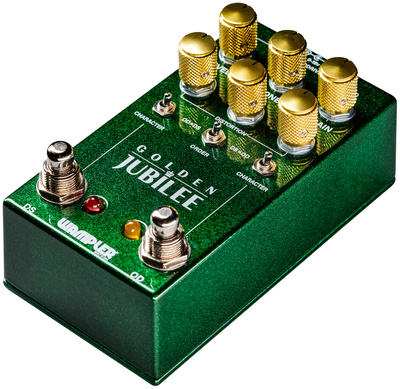
It comes in a sparkling, evergreen emerald case with gold-anodised controls and looks great, is easy to use, and is flexible.
Stacking Drives
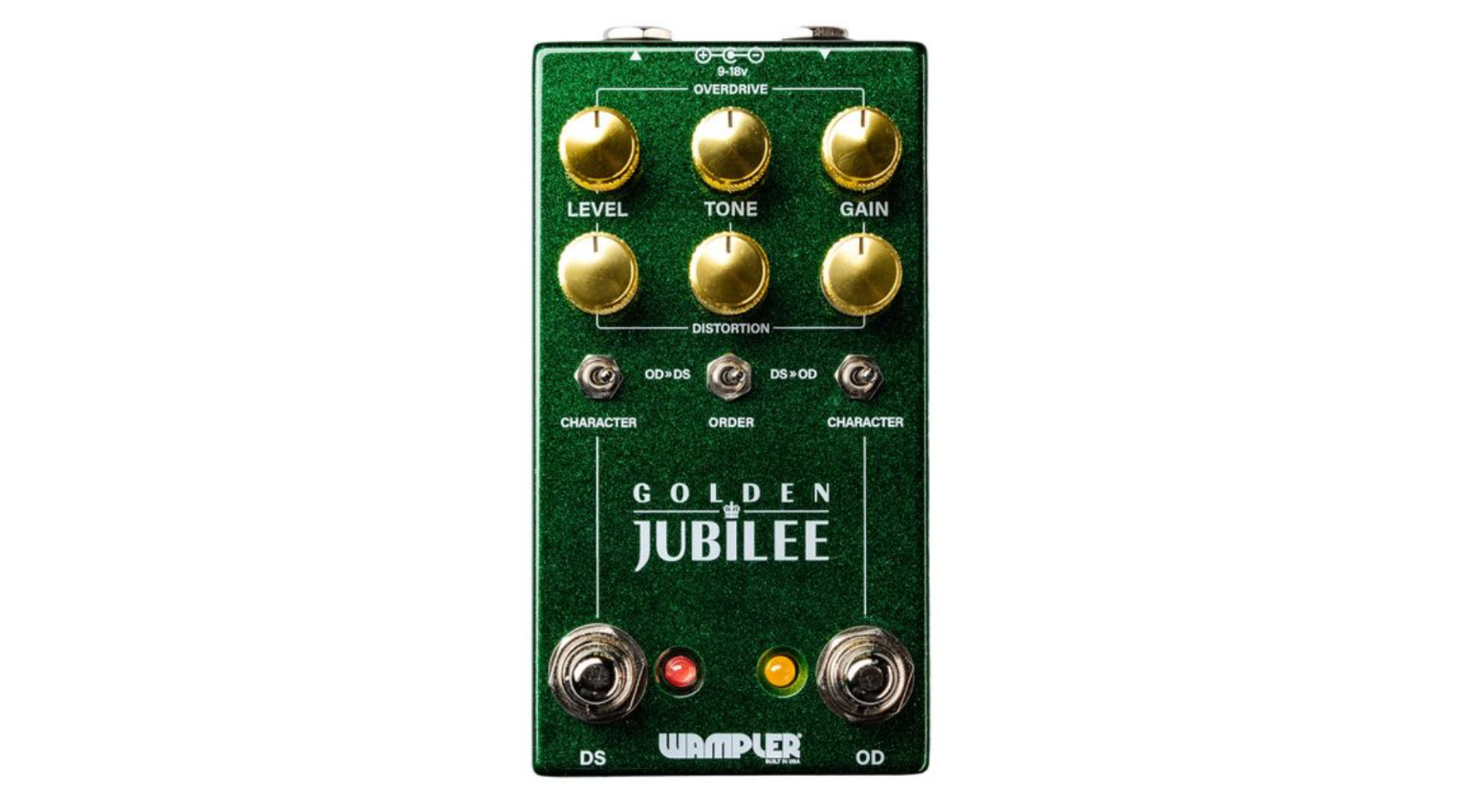
The pedal features a central Order toggle switch that lets users flip the internal routing, allowing them to choose whether the overdrive circuit feeds into the distortion or vice versa.
Two additional toggles further refine the sound by adjusting the overdrive channel’s gain profile and the distortion’s brightness, ensuring the pedal pairs perfectly with any guitar’s pickups. This makes one compact pedal very versatile, so it could be a great drive pedal for many guitarists who need these amp voices.
The circuit is completely analog, and I really like the design’s simplicity and controls. This pedal doesn’t rely on fancy switching, MIDI, or complex menu systems, so players can get up and running quickly with great drive tones.
Simple Controls
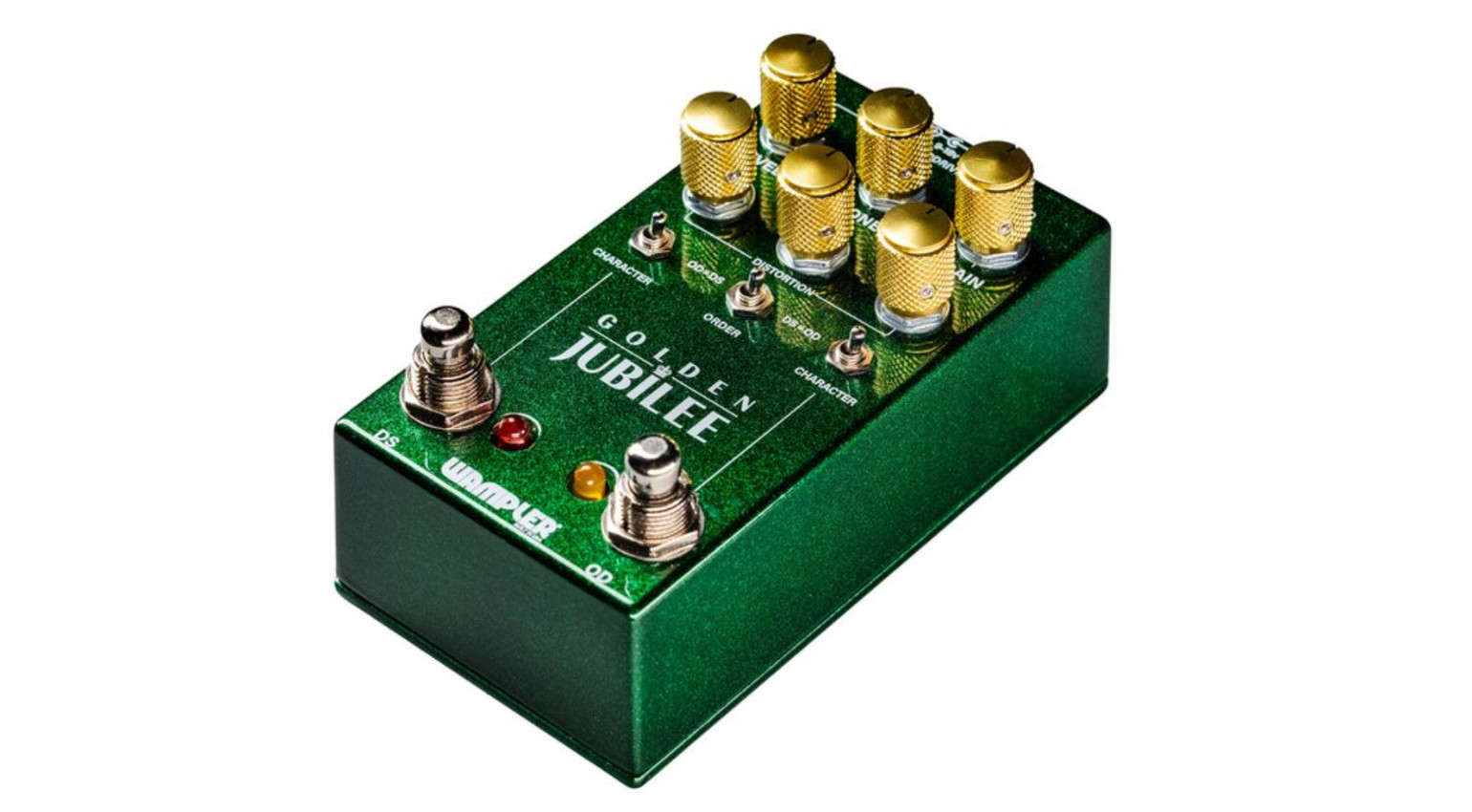
With independent Volume, Gain, and Tone for each channel and individual footswitches for the OD and DS sides, Wampler has made it super simple to operate (always great in my opinion), and I think this makes it a real winner.
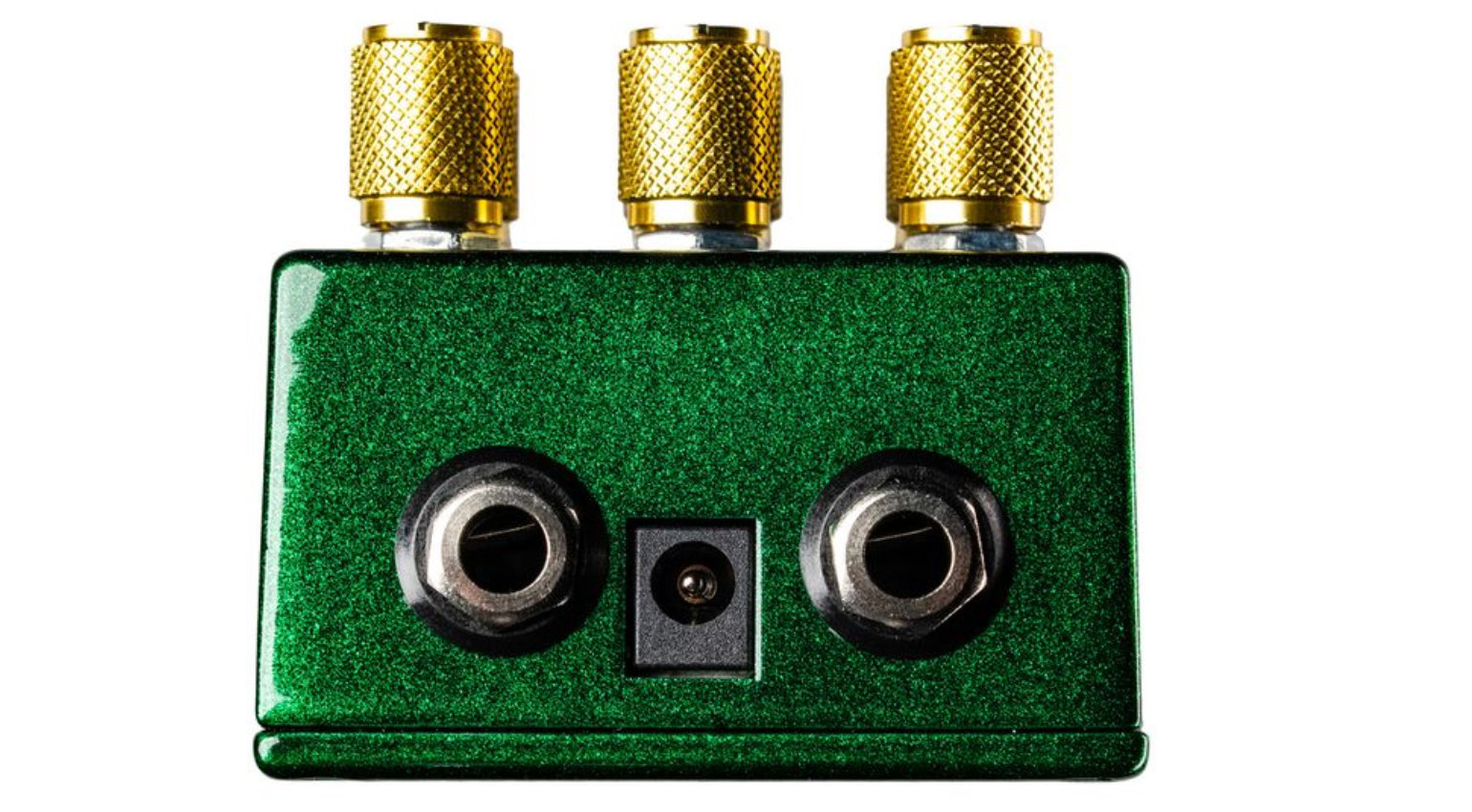
The pedal runs on a standard 9V DC center-negative power supply, has top-mounted jack plugs, and is a true-bypass design, so again, it is simple and perfect for most pedalboard setups.
Price & Availability
The Wampler Golden Jubilee is available at Thomann for only $198 / £176 / €199.
It could be great for introducing some analog, drive tones into your rig, whether you use tube-amps, solid-state amps, or amp modelling.


More Information

This might also interest you