Behringer JT-16 VST: The Long-Awaited Jupiter Clone Becomes a Software Synth

 4,2 / 5,0 |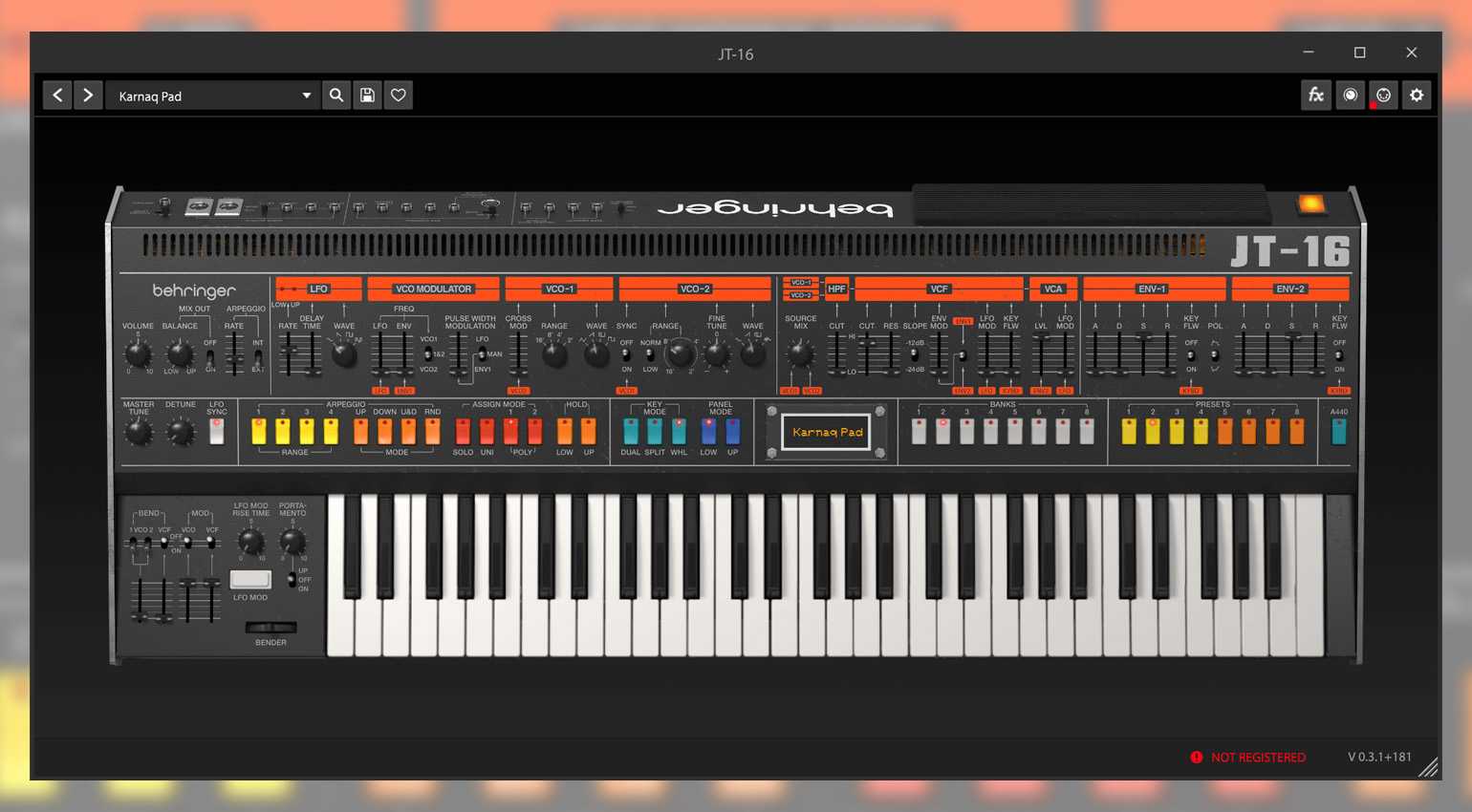

While there’s still no sign of the hardware version of Behringer’s Jupiter clone, the upcoming JT-16 VST looks like a great way to pass the time!
JT-16 VST: Behringer Transforms the Jupiter Clone into a Software Synth
First announced several years ago, Behringer’s impressive 16-voice copy of the legendary Jupiter-8 is turning into a never-ending story. We last heard from the synth at NAMM 2025, when Behringer showcased the JT-16 at its booth, albeit without turning it on. Since then, things have become suspiciously quiet.
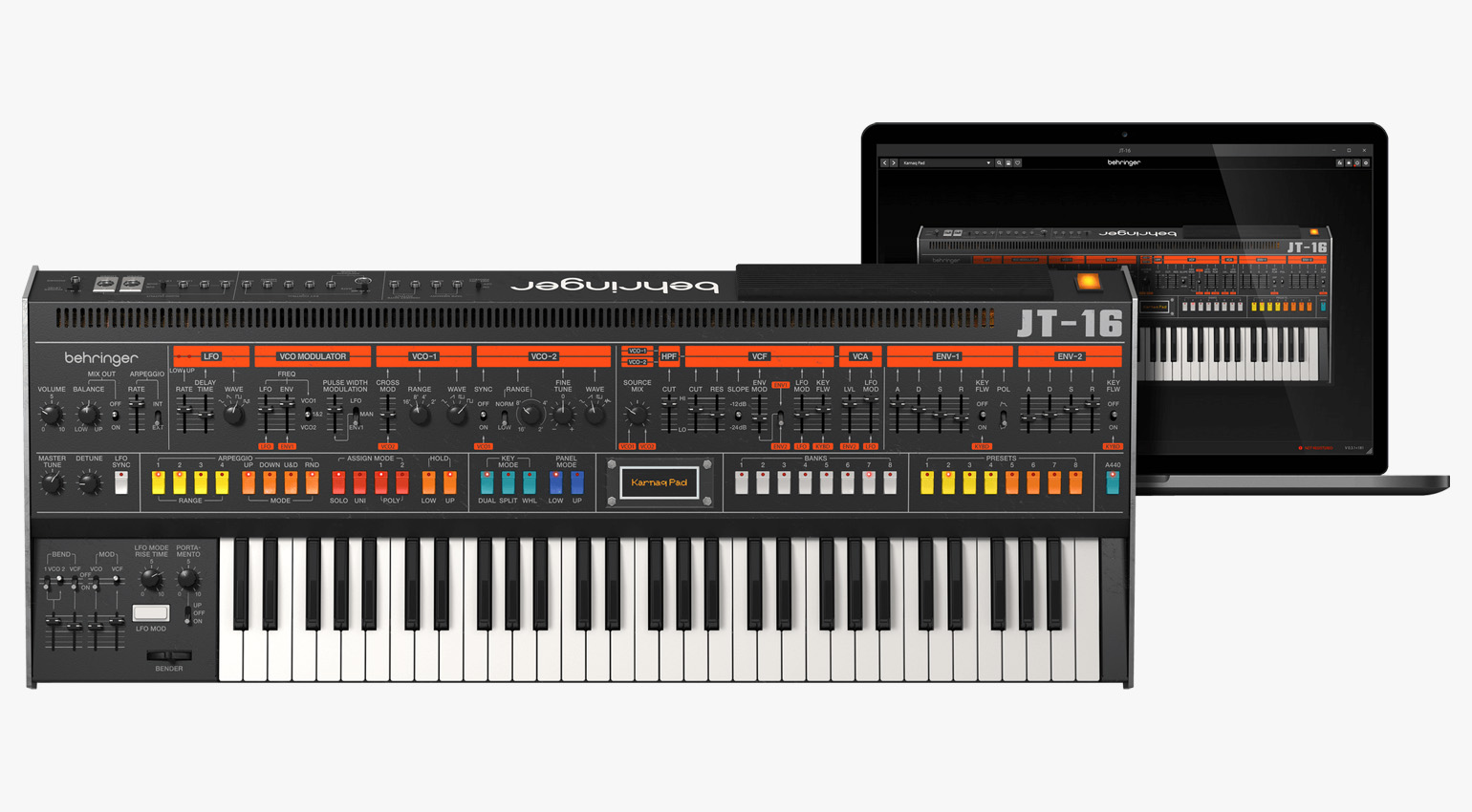
The JT-16 also wasn’t among the synths that were briefly visible on Behringer’s new website a few days ago. Instead, the manufacturer has now published a product page for the (presumably) upcoming JT-16 VST – a software version of the 16-voice behemoth that has captured the imagination of vintage synth enthusiasts ever since it was announced. It appears that Behringer plans to go head-to-head against household names like Arturia, Cherry Audio, Acustica Audio, and, not least, Roland’s own emulation.
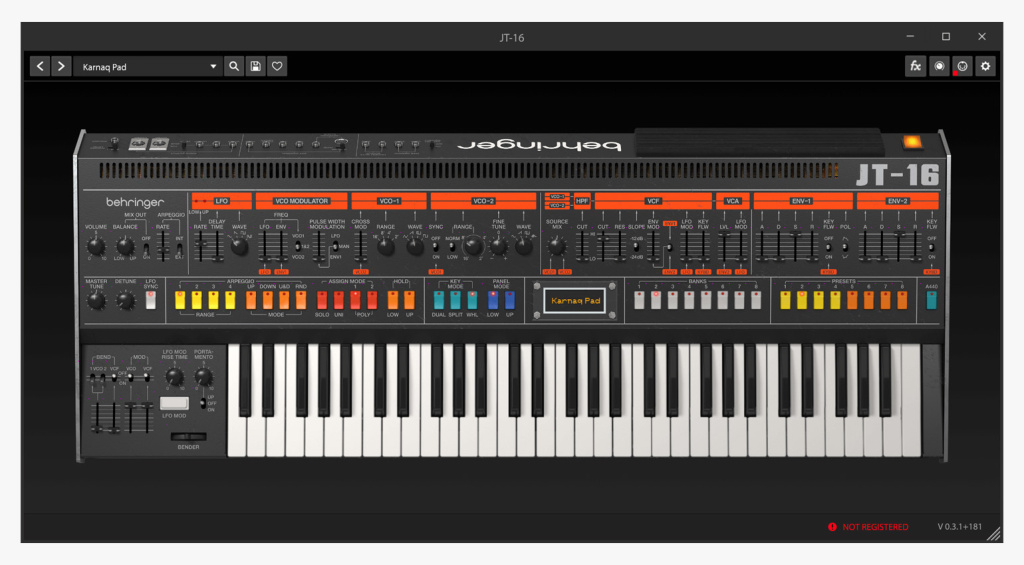
But when will the JT-16 be released? Unlike the other leaks, the JT-16 VST is still up on Behringer’s website, so we can assume that it’s real. As of now, however, there’s no link to purchase or download the software synth, so the current status is unknown.
Judging by a screenshot of the registration form, the JT-16 VST seems to be built on the same software platform as the Behringer Vintage synth. According to Behringer, the plugin is a “meticulous recreation of all the original oscillators, filters, and envelopes”. It also includes the original presets.
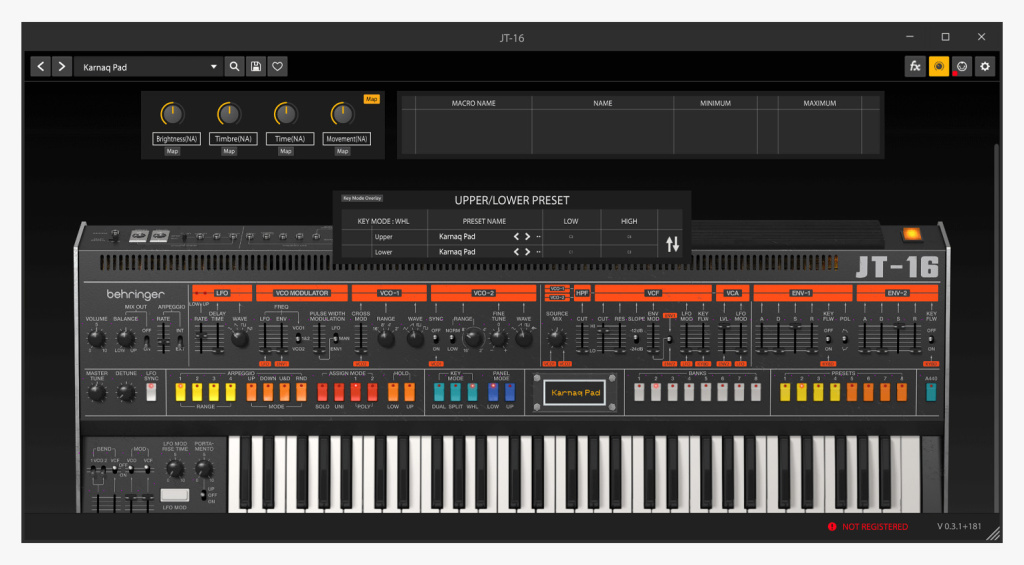
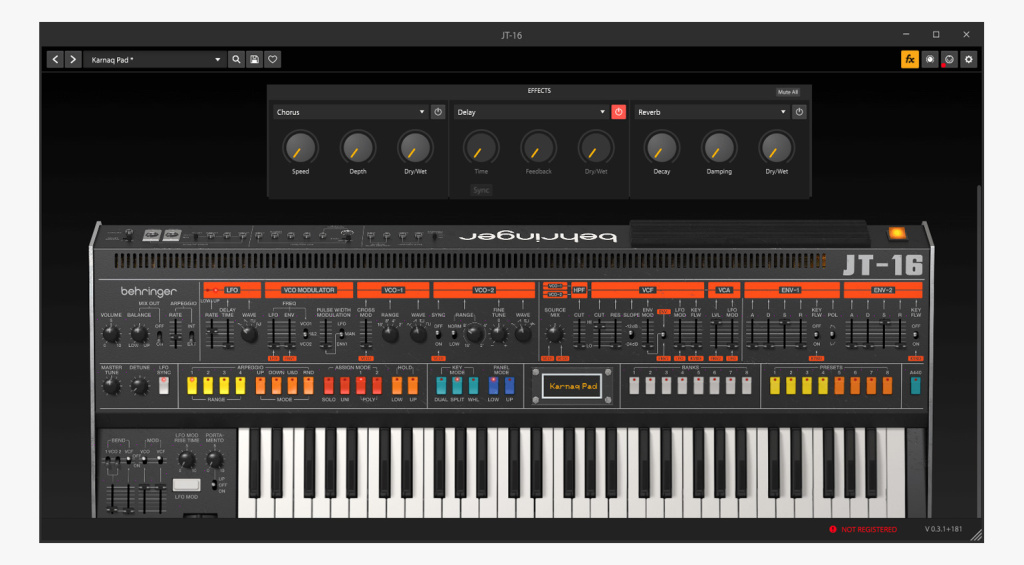
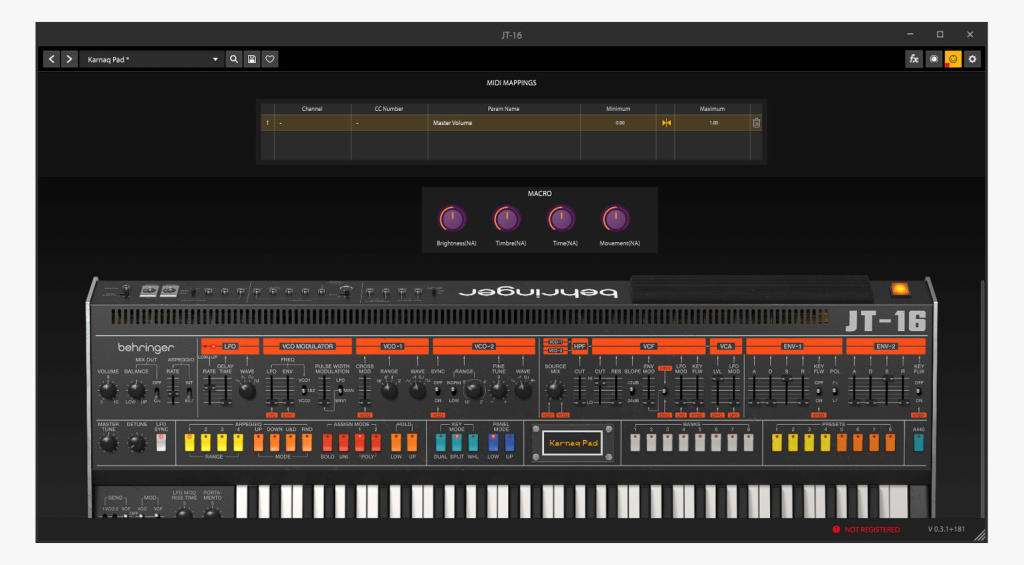
The software synth also appears to be bitimbral, letting you split the keyboard into two parts. It also offers assignable macros and built-in effects.
Further details are still unknown. Most importantly, we don’t know whether and how the plugin can interact with the hardware version – does it also function as an editor and librarian? On the other hand, that would require the hardware to be released, and at this point, only Behringer seems to know for sure.
Price and Availability
As of today, we don’t know when the Behringer JT-16 VST will be released and what it’ll cost. We’ll keep you posted!
More Information
*This post contains affiliate links and/or widgets. When you buy a product via our affiliate partner, we receive a small commission that helps support what we do. Don’t worry, you pay the same price. Thanks for your support!

This might also interest you

9 responses to “Behringer JT-16 VST: The Long-Awaited Jupiter Clone Becomes a Software Synth”
Right, as if anyone would seriously consider buying a plugin from a company with a terrible track record of designing and maintaining companion apps…
As much as I do appreciate all the synths you guys release, already have a couple of em, I also appreciate longevity in my software…
Dear manufacturers… Can we please start doing VST plugin emulations that haven’t been done already in the past 25 years?
Something fresh from the mid-late 1990s/early 2000s, maybe…?
That would be nice.
I didn’t realize there was a need for yet another VSTi that already has an existing clone. I wonder what motivates developers to create these.When Behringer released their free Vintage VSTi, it stayed on my computer for about five minutes. Generally, I have nothing against Behringer gear; in fact, I’m glad they exist, as I have tested and owned many of their products. However, releasing a VSTi like this seems unnecessary to me. I suspect that even if it turns out to be free, it won’t generate much interest.
Fake and ghey Jupiter clone. No, thanks.
Me too, Uli. It might be a good companion app/librarian for the JT-16, and if so, good. But there are plenty of VSTs of the Jup 8 already. Perhaps this is aimed at cash-strapped kids? If so, fine. It’s the JT-16 hardware that everybody wants, and when it’s finally released it’ll be on ‘back order’ for a couple of years, and may well outsell all of Behringer’s other synths, including the Juno 60 clone. With a bit of luck it will sell well enough to finance the other ‘big’ two, the VCS3 and the CS80. Finally, we do use the Deepmind software (not a VST) a lot for setting up the effects, which are among the best of any synth, but are easier to set up with the app.
As we wait for the JT-16, does anyone have any thoughts on the ‘best Behringer clone so far’?
I’m gonna go for the LM Drum that screams ‘use me!’ with its multiple kits, sampling and separate outs/12 bit sound.
And the MS-5, which is near flawless an SH-5 replica, and it’s a non-preset monosynth that’s begging you to fidget with its knobs. My favourite’s so far are old design but not stuck in 1977 or 1980, useable today for modern stuff, and tactile.
Having worked with numerous major synthesizer brands and several Behringer models, I can confidently assert that the Model D is the most outstanding, straightforward, and logical choice. Since the Minimoog Model D serves as the foundation for all modern synthesizers, looking for the “best” elsewhere is redundant. While it is obviously not the tool for replicating a classic Acid 303 sound, as an all-around monophonic analog synthesizer, the Model D remains my top recommendation.
This is a smart move – it will appeal to those who write in software clones but then once that process is finished they track in hardware.
When do you think they will drop it on the market?
You are currently viewing a placeholder content from Facebook. To access the actual content, click the button below. Please note that doing so will share data with third-party providers.
More InformationYou are currently viewing a placeholder content from Instagram. To access the actual content, click the button below. Please note that doing so will share data with third-party providers.
More InformationYou are currently viewing a placeholder content from X. To access the actual content, click the button below. Please note that doing so will share data with third-party providers.
More Information