Celebrating the SEM Filter: 5 Ways to Get That Smooth Oberheim Filter Sound
SEM filter-powered hardware and software instruments from Arturia, GForce Software, Oberheim and more!

 5,0 / 5,0 |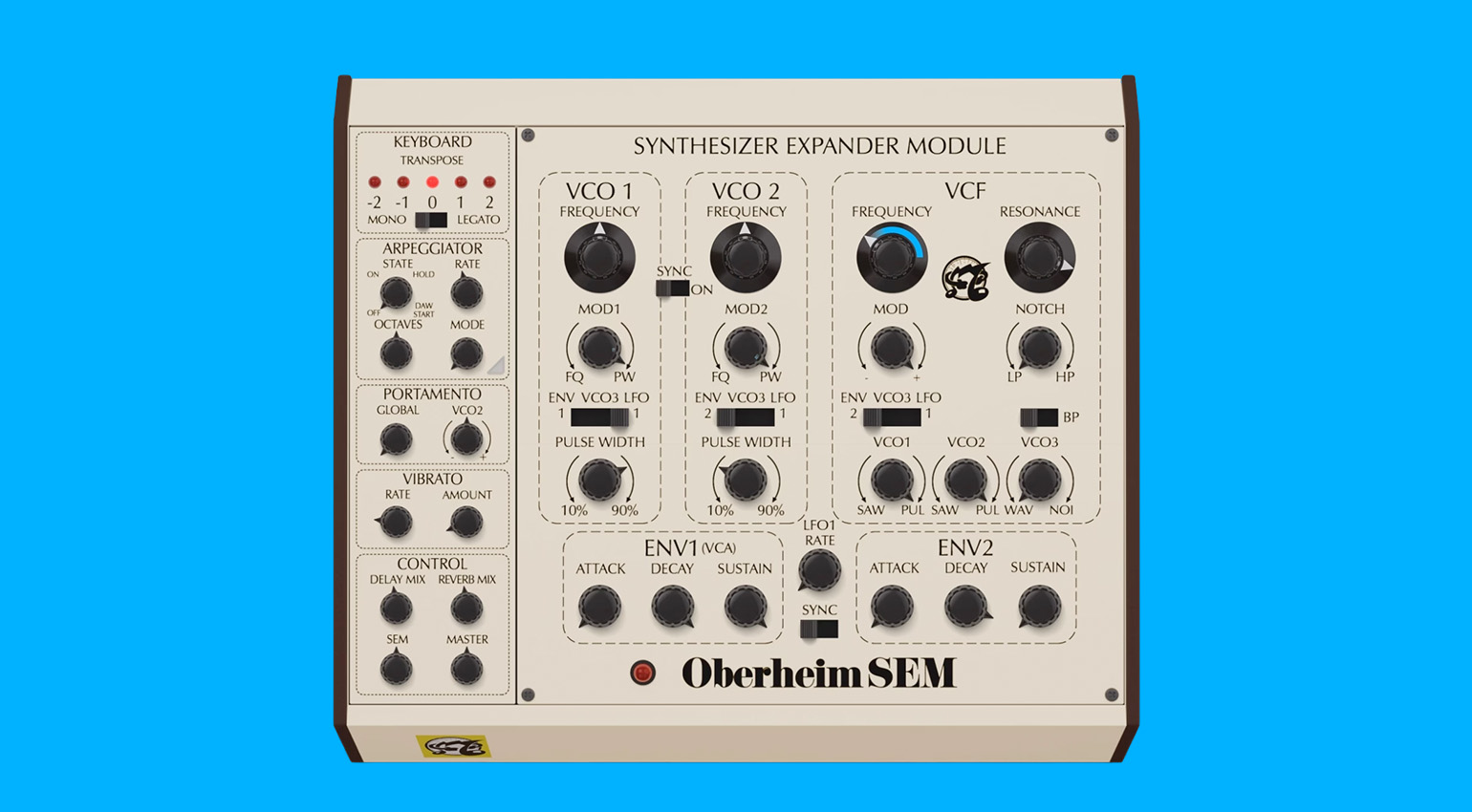

The Oberheim SEM filter is a beautiful and flexible thing, and one of the best-sounding ever made. Let’s celebrate the classic topology and explore five ways to get it into your own productions.
Oberheim SEM Filter
SEM Filter
What’s your favorite filter? There are many amazing filter topologies, including the Moog Ladder, MS-20 and TB-303. All are characterful and impactful. You know when it’s a Moog Ladder – you can hear it and even feel it. And while I love all of those, there’s one that I’ll reach for more often than not when I need to put a filter over something in a track. And that’s the Oberheim SEM filter.
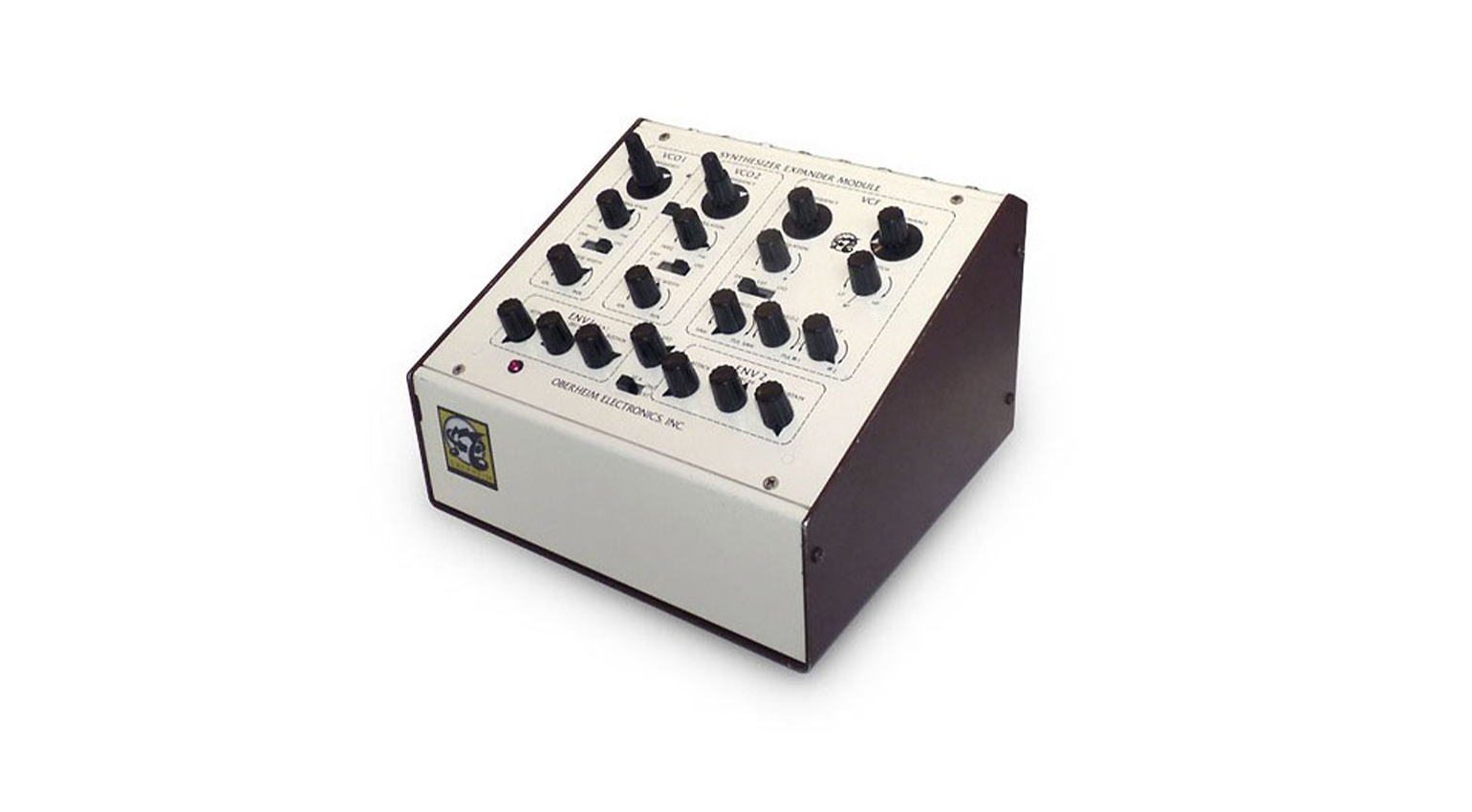
Originally designed by Dennis Colin of ARP and appearing in the Oberheim Synthesizer Expander Module (or SEM) in 1974, it’s a 12dB/Oct design with a smooth sound that improves pretty much anything you run through it. It also features a unique multimode design, with a Notch knob that sweeps it from lowpass to highpass, with an additional bandpass setting as well. It’s resonant, of course, but doesn’t self-oscillate. I love to strap it over big Reese basses and automate the Notch control. What a sound.
The SEM filter appeared in all of the SEM-based polysynths like the Four Voice and Eight Voice, and also made it into later instruments like the OB-1 and OB-X. These days, there are lots of different ways to get your hands on the filter, either via software, hardware, or Eurorack. Here are five examples for a variety of budgets.
SEM Filter: Arturia Filter SEM
My go-to SEM filter when working on music in my DAW has to be Arturia’s Filter SEM. Part of the same series that also includes the Oberheim Matrix-12 and Moog Minimoog, Filter SEM features the same multimode configuration for those beautiful notch sweeps.
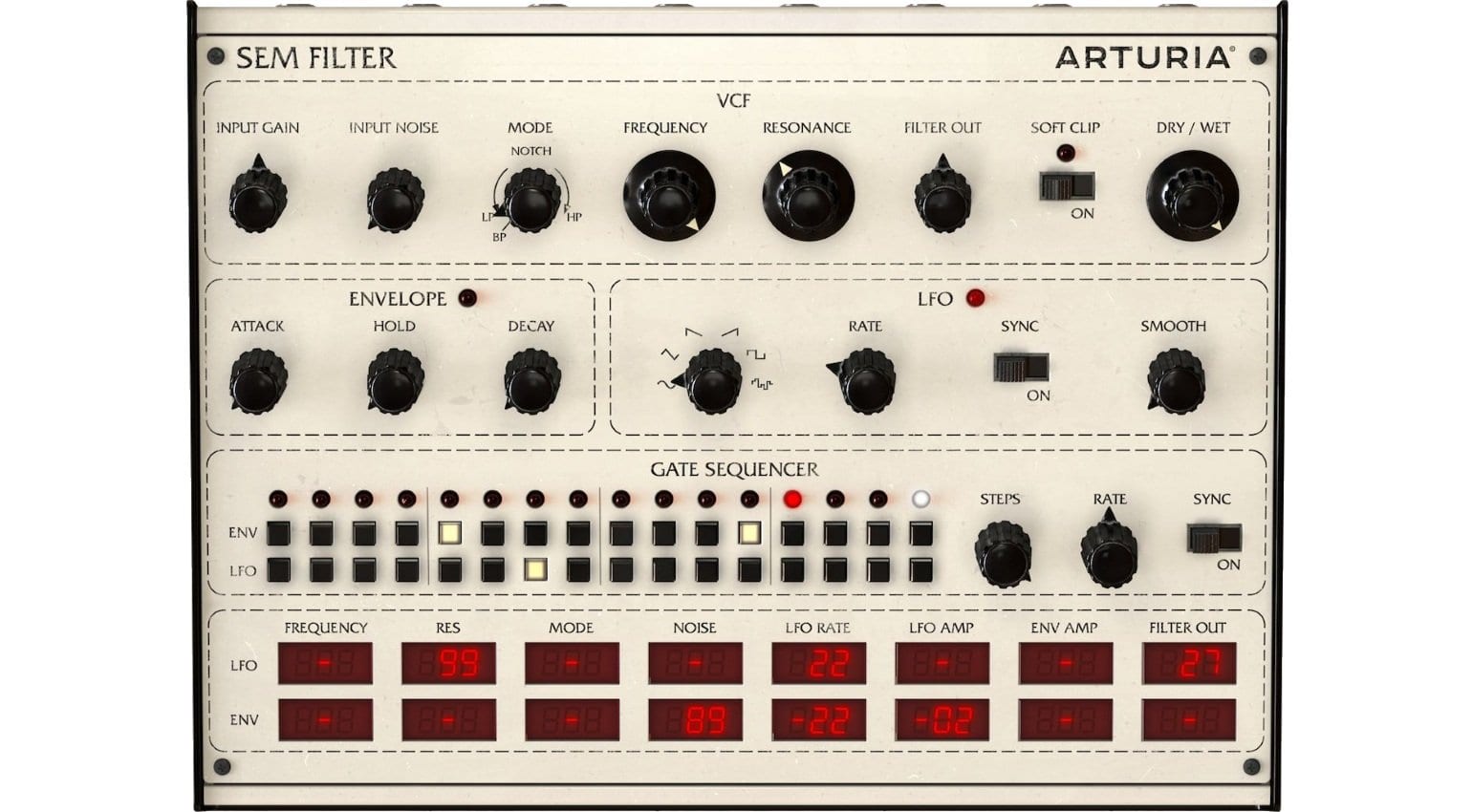
As with the other entries in the series, Arturia’s take on the SEM filter also includes extras, such as a noise oscillator, soft clipping, an envelope with Attack/Hold/Decay, an LFO, a gate sequencer and a modulation matrix.
It’s also incredibly affordable and a solid way to add the SEM sound to a production. Use it to shape synths, drums, vocals, whatever.
Arturia Filter SEM is available at Thomann* and Sweetwater*.


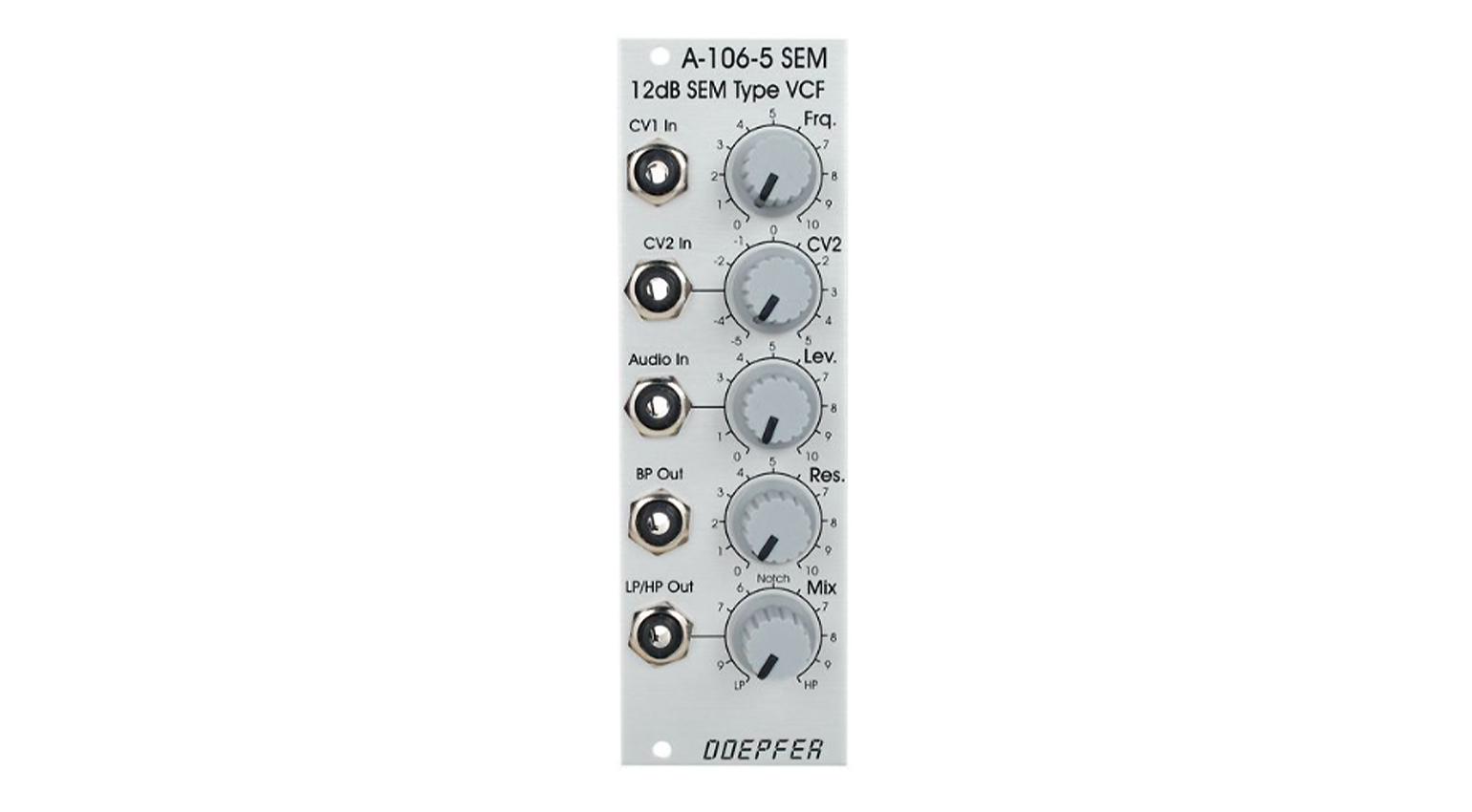
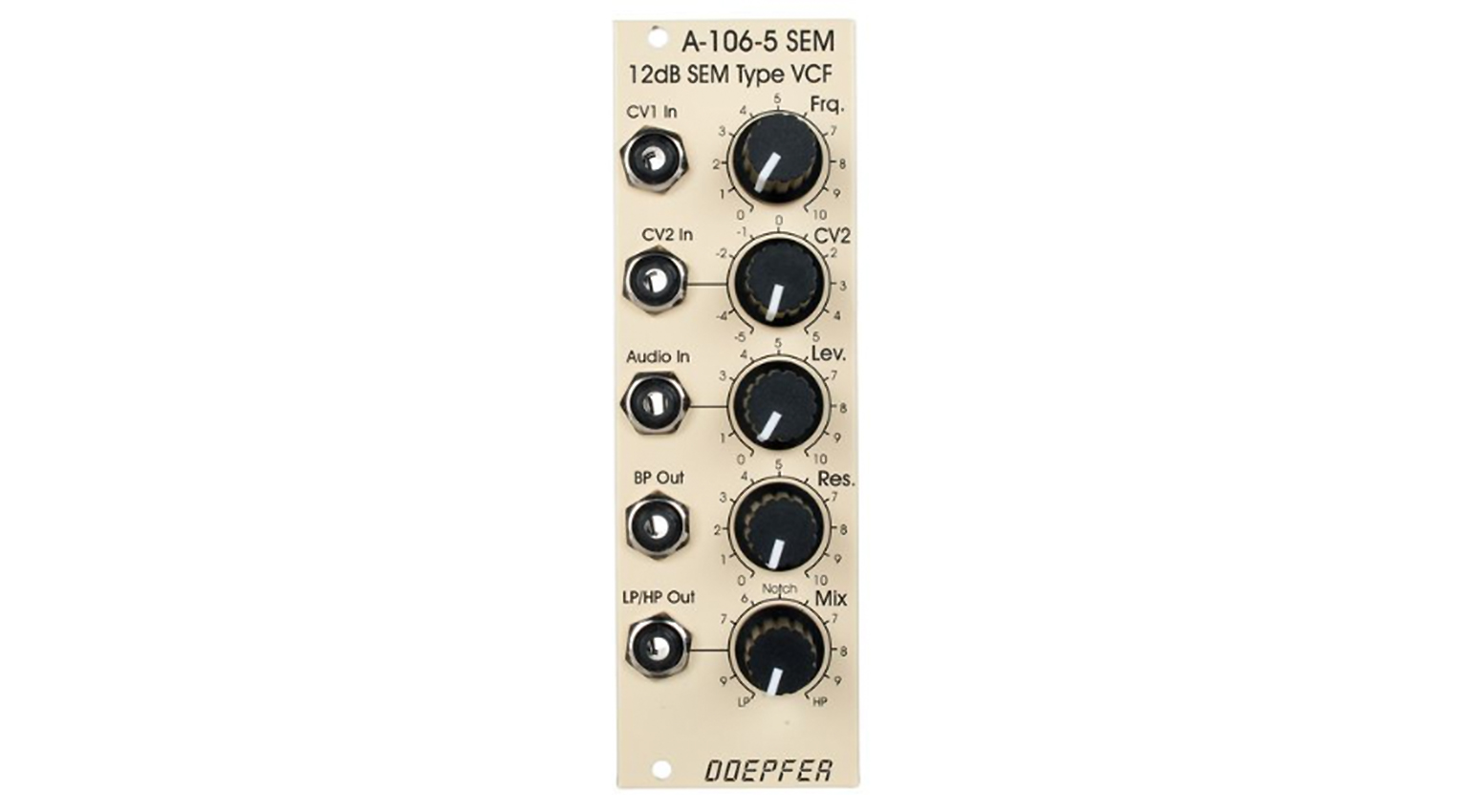
SEM Filter: Doepfer A-106-5 SEM
Eurorack users have access to the power of the SEM filter through Doepfer’s A-106-5 SEM, part of the Eurorack inventor’s filter series that also includes recreations of the Wasp and 303.
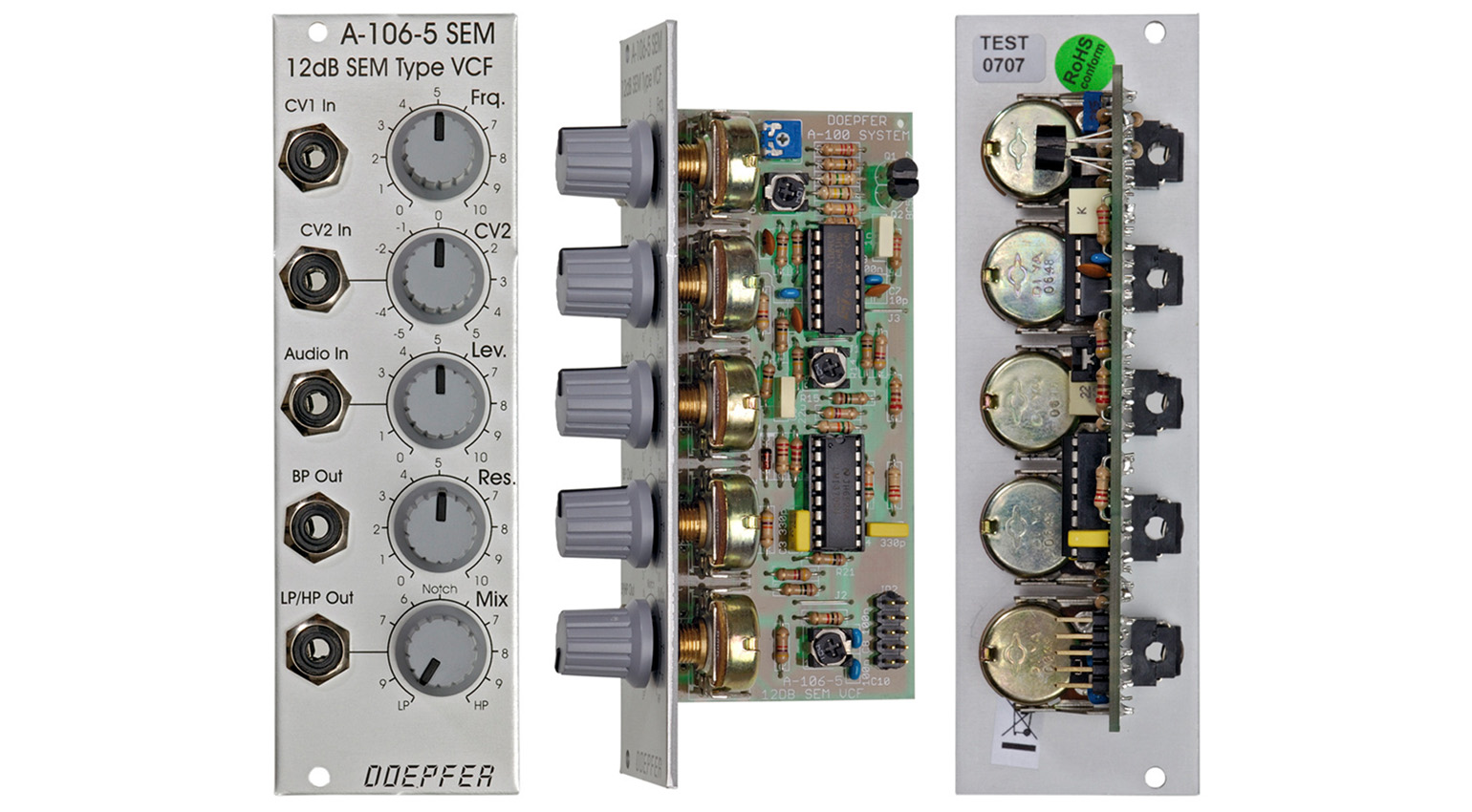
Like the original, module A-106-5 is a 12dB/Oct multimode filter. You get both lowpass/notch/highpass and bandpass circuit outputs, with CV in for frequency and resonance, as well as a separate Polarizer CV2 knob. The module will also distort if you push the audio in hard.
Doepfer A-106-5 SEM is available at Thomann* and Sweetwater*.
SEM Filter: GForce Oberheim SEM
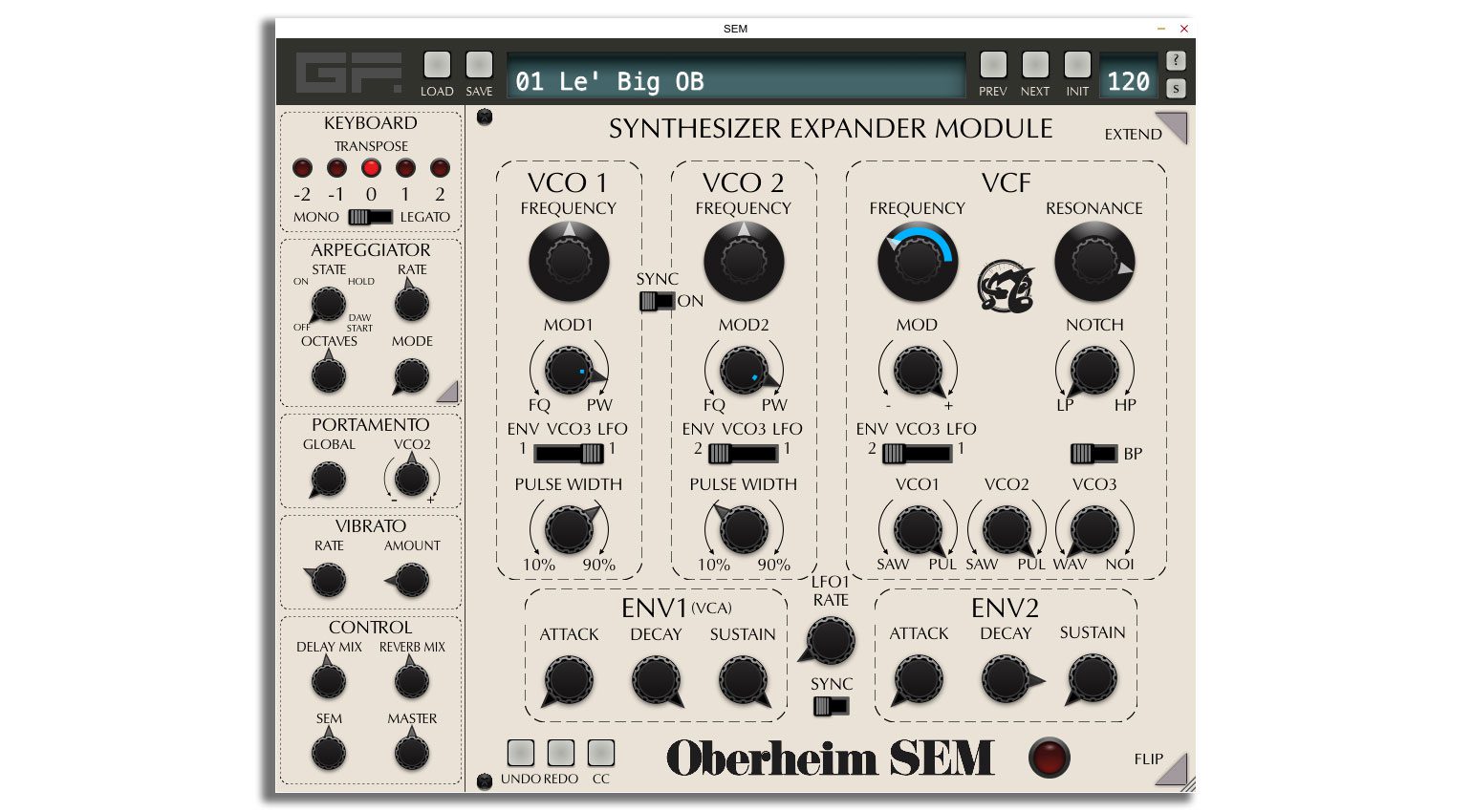
There are no official hardware SEMs on the market right now. Tom himself made updated SEMs in the early 2010s but they’ve since gone out of production. Until he convinces Focusrite to re-release them, the closest we have (in terms of official, at least) is the Oberheim SEM from GForce Software.
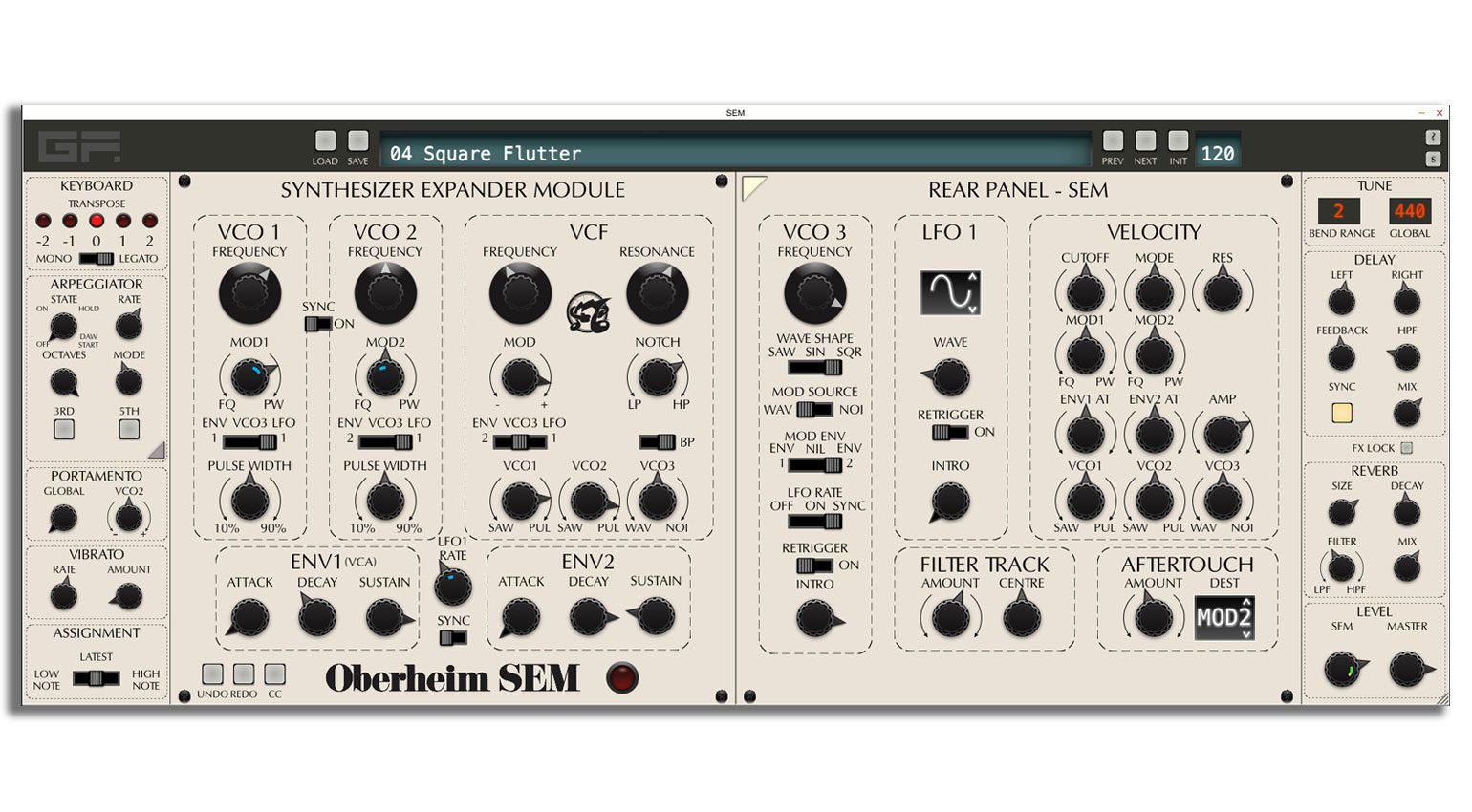
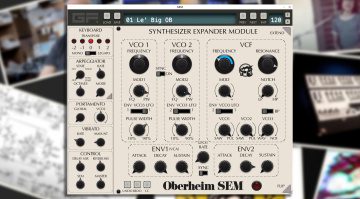
Made with the blessing and guidance of Tom and Marcus Ryle, GForce’s take on the two-oscillator synth is a real beauty. It also expands the expander with a third oscillator/LFO and extensive velocity and aftertouch control, plus an arpeggiator, sequencer, and delay and reverb effects. There’s no FX version of the plugin, which is a shame, so you can’t use it to process your other soft synths, but for a top-notch emulation of the monophonic SEM, GForce’s version is pretty incredible.
GForce Oberheim SEM is available at Thomann* and Sweetwater*.
SEM Filter: Behringer 2-XM
If you’re looking for hardware access to the SEM filter and sound – and need to watch your pennies and pence – Behringer does a desktop version that can also slot into your Eurorack rig. Called 2-XM, it recreates the Two Voice in all its duophonic glory. And if you buy two or three, you can create poly chains.
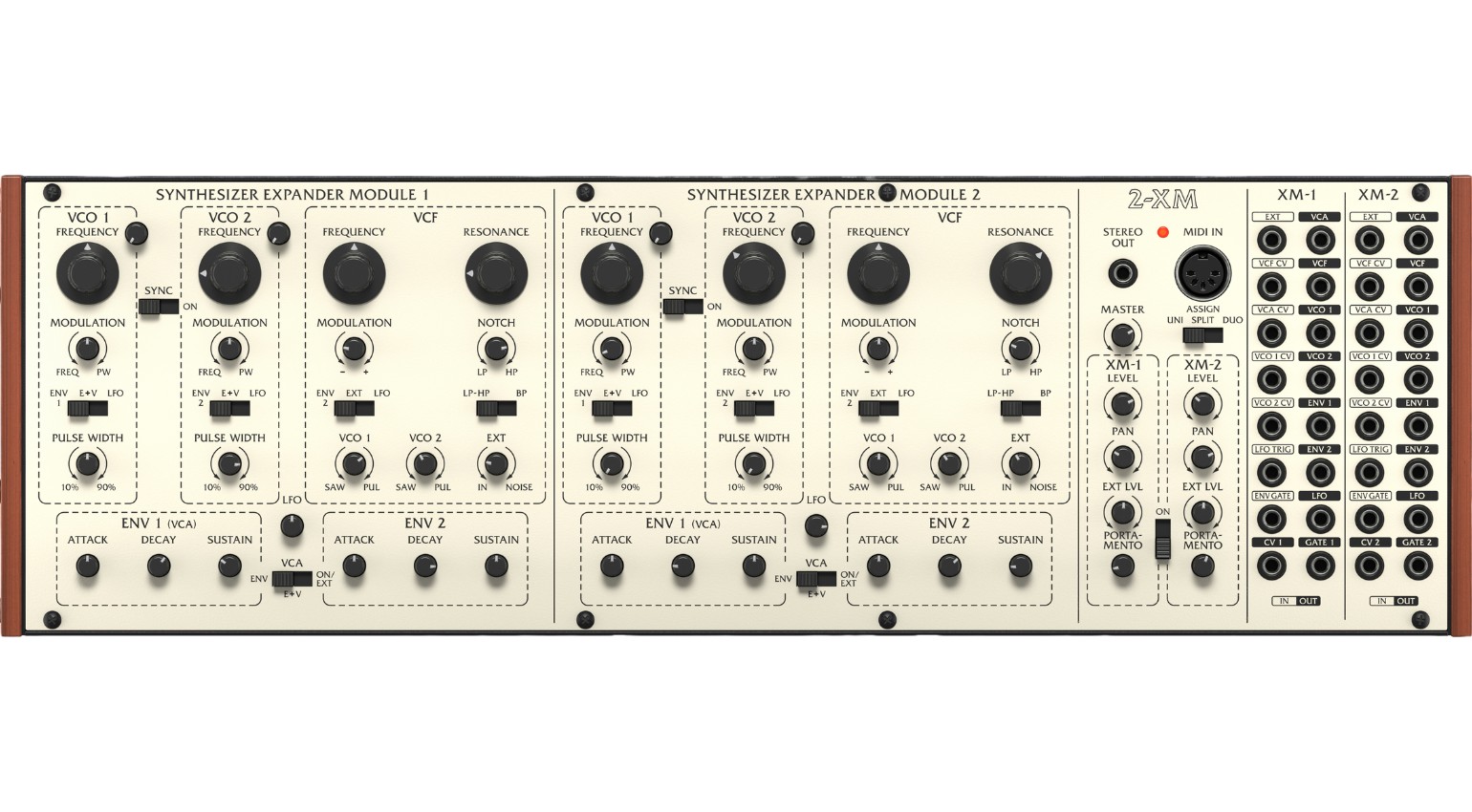
As with the original, the 2-XM provides dual SEM-style units, for a total of four oscillators, two filters, and two VCAs. You also get four envelope generators and two LFOs, plus the ability to configure the voices as split, duophonic or four-oscillator unison. Massive!
And yes, you can use it as a filter effects unit. Two actually, with separate audio ins for processing of external signals. And, as you’d expect from Behringer, it’s very affordable.
Behringer 2-XM is available at Thomann* and Sweetwater*.
SEM Filter: Oberheim TEO-5
When it comes to current Oberheims, the one that’s most SEM-like is TEO-5. Billed as a continuation of instruments like the Four Voice and TVS (Tom’s later remake of the Two Voice), TEO-5 offers what you expect from a SEM-style instrument like two oscillators and that famous SEM filter, as well as new features like through-zero FM and emulations of Tom’s classic Phase Shifter and Ring Modulator effects units.

The five-voice analog poly doesn’t include an audio-in, so you’ll have to content yourself with using the SEM filter on internal sounds only. But with oscillators that sound this good, I don’t imagine that will be too much of a sacrifice.
Oberheim TEO-5 is available at Thomann* and Sweetwater*.

More Information
- Oberheim homepage
- More about Oberheim
- More about synthesizers
- Buy synthesizers at Thomann*
*Note: This article contains advertising links that help us pay for this site. Don’t worry: the price for you will always be the same! If you buy something through these links, we will receive a small commission. Thank you for your support!

This might also interest you

One response to “Celebrating the SEM Filter: 5 Ways to Get That Smooth Oberheim Filter Sound”

Quote: “The SEM filter appeared in all of the SEM-based polysynths like the Four Voice and Eight Voice, and also made it into later instruments like the OB-1 and OB-X”
That’s not true. The OB-1 and OBX filter are similar to the SEM filter in the sense that both are based on CA3080 OTA’s. However, both have only the LPF mode, so they are limited compared to the SEM. Oberheim added a switch to change the response from two pole to 4 pole instead. They probably did that because the SEM filter would add to much things to control for the limited processor and memory the OB’s have.
It also means that they don’t sound like a SEM. In 4 pole mode, with just one osc enabled, you could mistake the OB-1 for a Roland. The design of the Roland SH-1 filter is pretty close to the OB-1.