Elektron Monomachine and Machinedrum Now as a Plugin: Free Emulator for the Legendary Classics
Two Elektron cult machines return for free as VST3 plugins

 5,0 / 5,0 |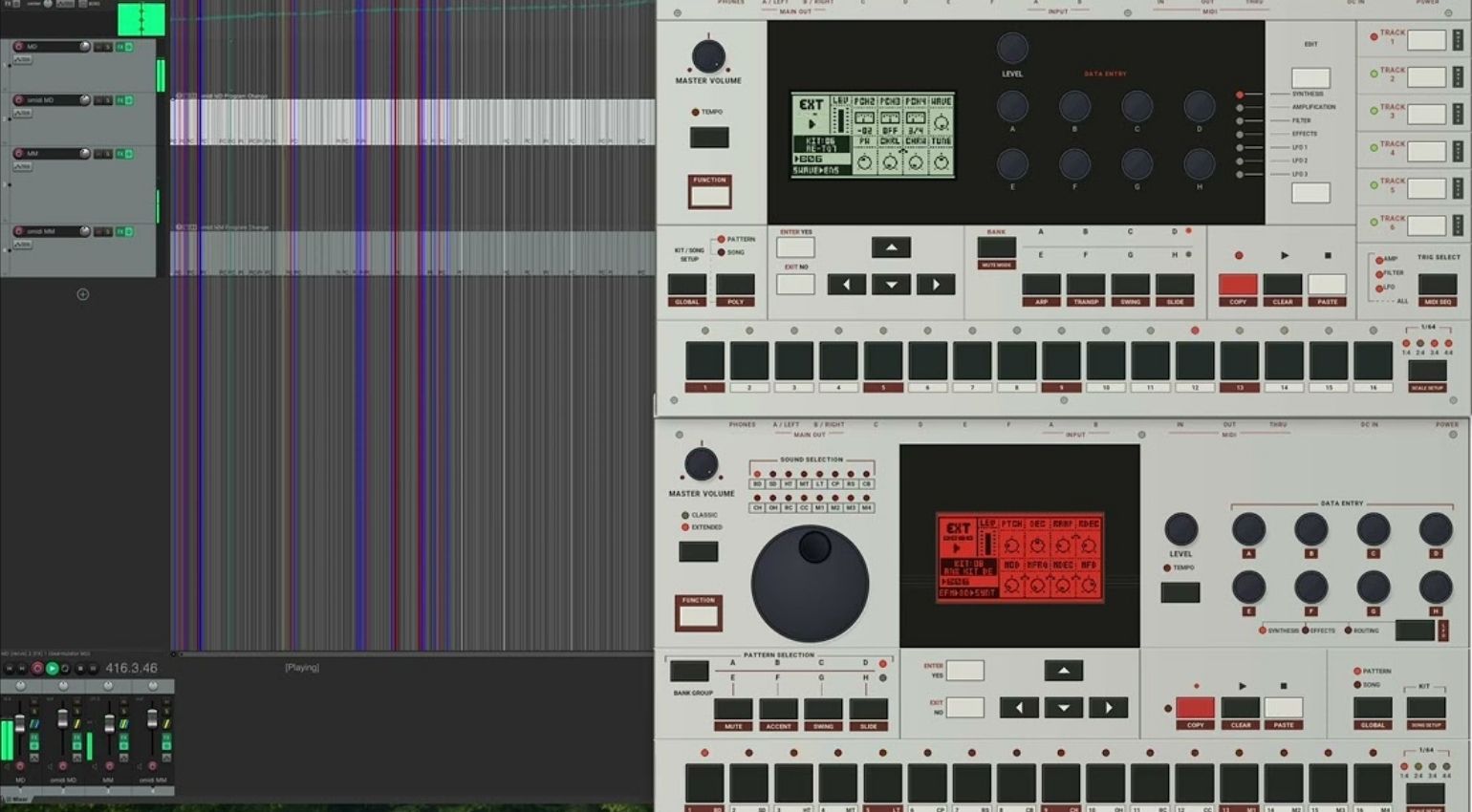
Elektron Monomachine and Machinedrum Now as a Plugin: Free Emulator for the Legendary Classics · Source: Joe Landers

What’s long been nothing more than a pipe dream for plenty of Elektron fans is finally real: free emulators now exist for the Elektron Monomachine and Machinedrum, running as both standalone software and a VST3 plugin right inside your DAW. They were built by Berlin-based developer Joe Landers, based on a fork of the Gearmulator project from The Usual Suspects (TUS).
Monomachine and Machinedrum Emulator: What the Free Plugin Recreation Can Do
Monomachine and Machinedrum as a Plugin, Finally!
Both machines rank among the most influential digital instruments Elektron ever made, used by artists like Autechre, Radiohead’s Thom Yorke, and The Chemical Brothers. The fact that these two cult classics are now available as free plugin recreations is bound to turn heads well beyond the Elektron community. I’m honestly pretty excited to try both of these out in my own studio. Let’s take a look at how the emulation actually works and what you’ll need to run it.
How the Emulation Actually Works
The emulation runs on the Motorola DSP56303, a chip from the DSP56300 family that shipped in pairs inside both original instruments. Just like with previous Gearmulator emulators, you’ll need the original ROM files pulled from your own hardware to actually use this, no links to those are provided anywhere, for obvious legal reasons.
Beyond just recreating the sound, Joe Landers also rebuilt authentic control interfaces, complete with key chording, parameter locks, encoder clicks, and secondary functions, exactly like the originals. There’s SysEx support too, plus extensive audio interface functionality: you can route host audio straight into the virtual devices’ input effects or sampling functions, for instance. Genuinely impressive. The VST3 version also supports multi-output, giving you access to additional output pairs.
Early Alpha Status: What You Should Know
Before you rush off to GitHub to grab this: the project is still in a genuinely early, experimental alpha stage. Several users are already reporting fairly heavy CPU load, which could turn into a real issue on older systems. That said, additional developers have apparently joined the project since, so things could improve quickly, especially on the CPU usage front.
What Made Monomachine and Machinedrum So Iconic
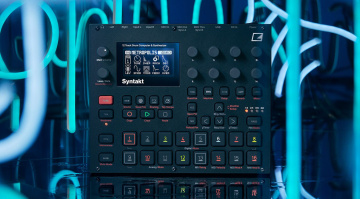
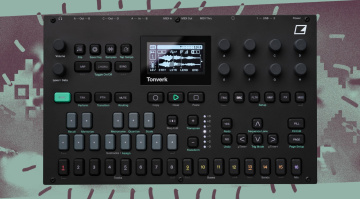
The Elektron Monomachine, made and sold between 2004 and 2016, was a synth with a genuinely powerful sequencer for its time, best known for its unusual digital synth engines: an SID-based voice engine inspired by Speak & Spell, a DX-style FM+ engine, and virtual-analog SuperWave and DigiPro engines. What really made the machine famous, though, were Elektron’s signature parameter locks, still a defining feature of every new piece of hardware the Swedish company makes today.
The Machinedrum, meanwhile, was a drum machine built around four independent percussion synth engines: TRX (inspired by classic Roland TR machines), EFM (percussive FM synthesis), E12 (sample playback), and PI (physical modeling). Every drum sound could be shaped with AM, a 1-band EQ, a multimode filter, distortion, a sample-rate reducer, plus delay and reverb effects, backed by an advanced drum sequencer running two modes.
Price and Availability
The Monomachine and Machinedrum emulators are available right now, free, on GitHub. They run as standalone software and as a VST3 plugin on macOS (native for both Apple Silicon and Intel) and Windows.
Legal Gray Area: What You Should Know Before Installing
The legal situation here isn’t entirely clean-cut. Elektron’s EULA explicitly bans reverse engineering and creating derivative works based on its software, and strictly speaking, this kind of emulation would likely fall under that. So far, though, manufacturers haven’t taken legal action against the current wave of emulators like this one, whether that stays true long-term is anyone’s guess.
On the flip side, neither of these machines is still manufactured or officially sold anywhere. Elektron itself almost certainly isn’t losing anything here, if anything, quite the opposite. I’d argue this actually adds real value to the company’s history. Honestly, Elektron should probably just release the old ROMs for free to anyone interested. The loyal Elektron community has earned that much.
More Information

This might also interest you
One response to “Elektron Monomachine and Machinedrum Now as a Plugin: Free Emulator for the Legendary Classics”
Nice, but where do we find the .bin files? “_”