Alkove, Fractaos and Analog Kick Drum Design: Synth Journal

 4,2 / 5,0 |
Alkove, Fractaos and Analog Kick Drum Design: Synth Journal · Source: Pylobolus, KAONA, Erica Synths

Pylobolus Alkove is an exciting new hybrid synth that might just have broken the record for number of displays on a synth. Also in this week’s Synth Journal: a Fractal-based polyphonic oscillator for your Eurorack, and a detailed guide on how to design your own analog kick drum circuit from Erica Synths and Moritz Klein.
Synth Journal
Pylobolus Alkove: How Many Screens Would You Like?
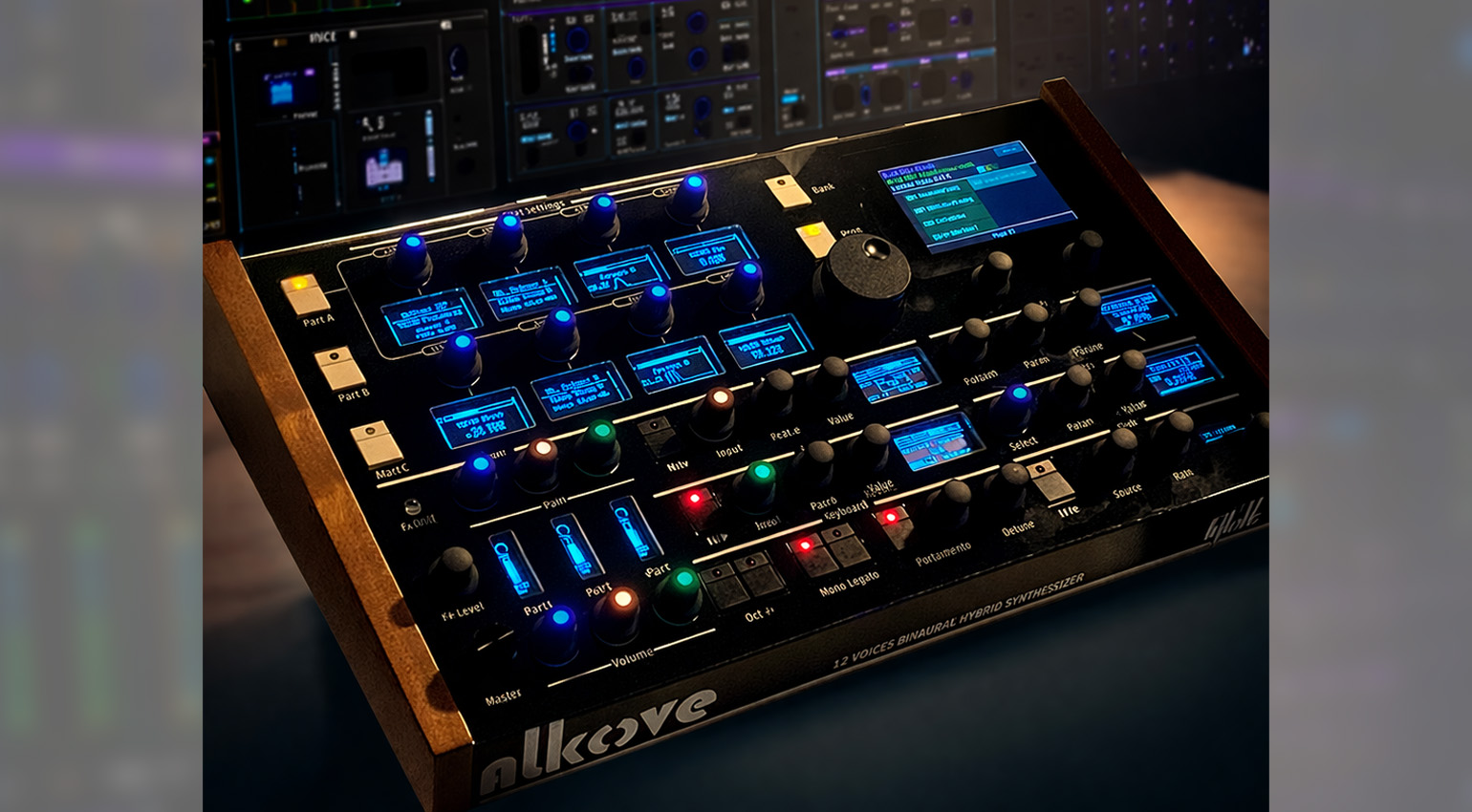
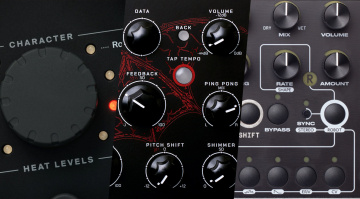
Ahead of SynthFest France, which will take place this weekend in Nantes, France, Polybolus has announced Alkove, a stunning-looking hybrid synth based on an earlier prototype named Alkohol. While it builds on a similar binaural synthesis architecture, Alkove has evolved considerably in terms of hardware. While Alkohol was built around a single large display with a handful of knobs and buttons, Alkove features no less than 17 screens – that must be a record!
For designing patches from scratch, there’s a software editor that integrates seamlessly with the hardware. According to the developer, all changes are instantly reflected on the hardware synth as you build and refine a patch. You can then disconnect the synth from the editor and use the hardware controls and screens for instant control and feedback during a performance.
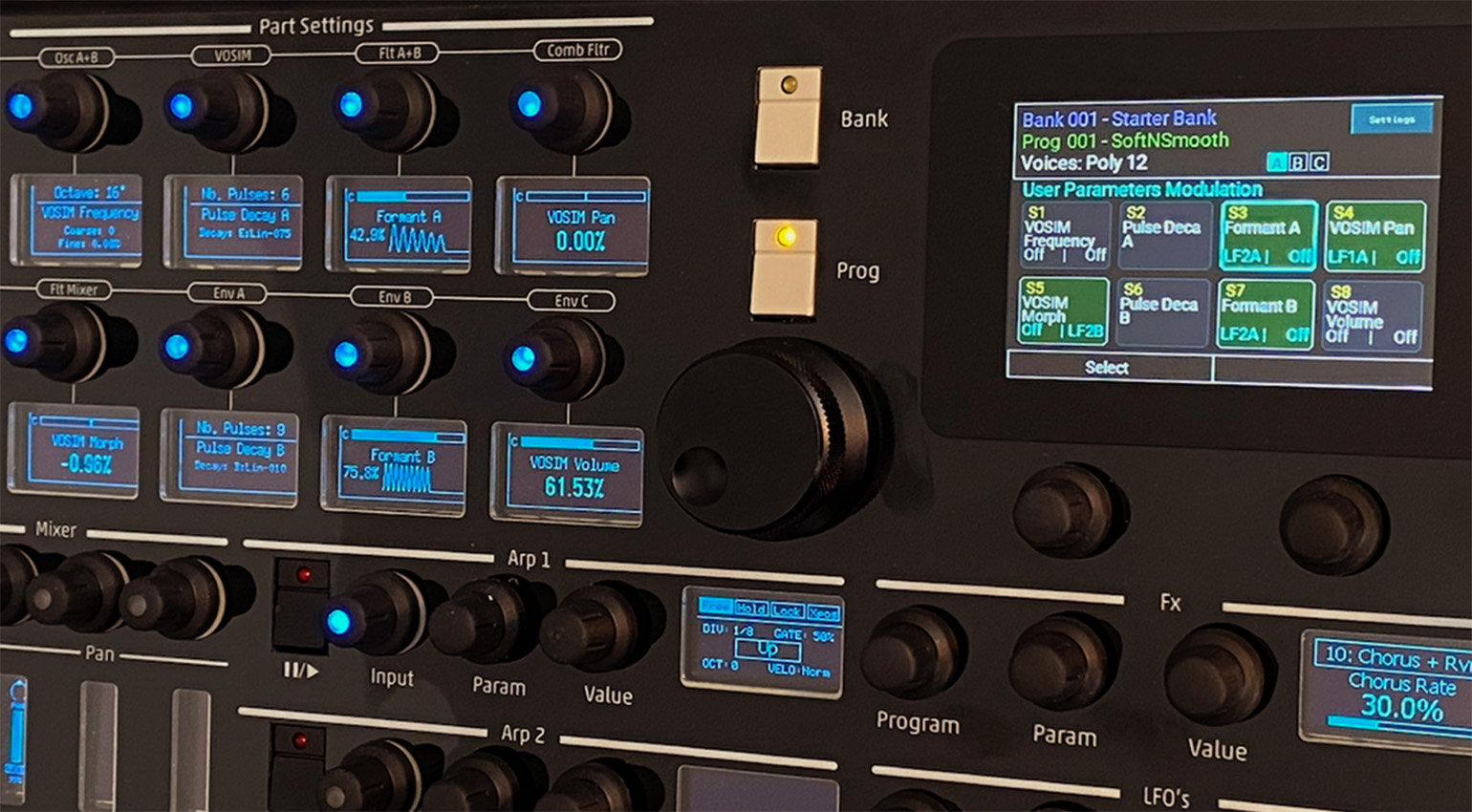
Screens and editor aside – what can Alkove do? In a nutshell, it’s a 12-voice polyphonic, 3-part multitimbral synthesizer with a binaural signal path, meaning that it operates in stereo all the way from the sound sources to the outputs. While it’s mostly digital, each voice is equipped with an analog VCA, which makes Alkove a hybrid synth.
There are three oscillators per voice, each of which can be a classic oscillator or a formant-based VOSIM oscillator. The filter section is also very versatile, offering an array of ‘polymorphic’ elements, including ladder, SEM, SVF, and comb filters. You can combine and interconnect various filters to achieve the desired architecture.
For modulation, Alkove offers three DADSR envelopes per voice, as well as global and per-voice LFOs. Pylobolus says that the LFOs can be phase-shifted and distributed across the stereo field, which should offer some interesting opportunities for spatial modulation. The synth is also MPE-compatible. Two synchronized arpeggiators and a built-in effects engine are the icing on the cake.
Alkove surely is an impressive-looking synth, and I’m pretty sure it can do a lot more than what the first sound demos on the developer’s website reveal. I can’t wait to see/hear the first proper demos from SynthFest France!
KAONA Fractaos: Polyphonic Eurorack Oscillator Based on Fractals
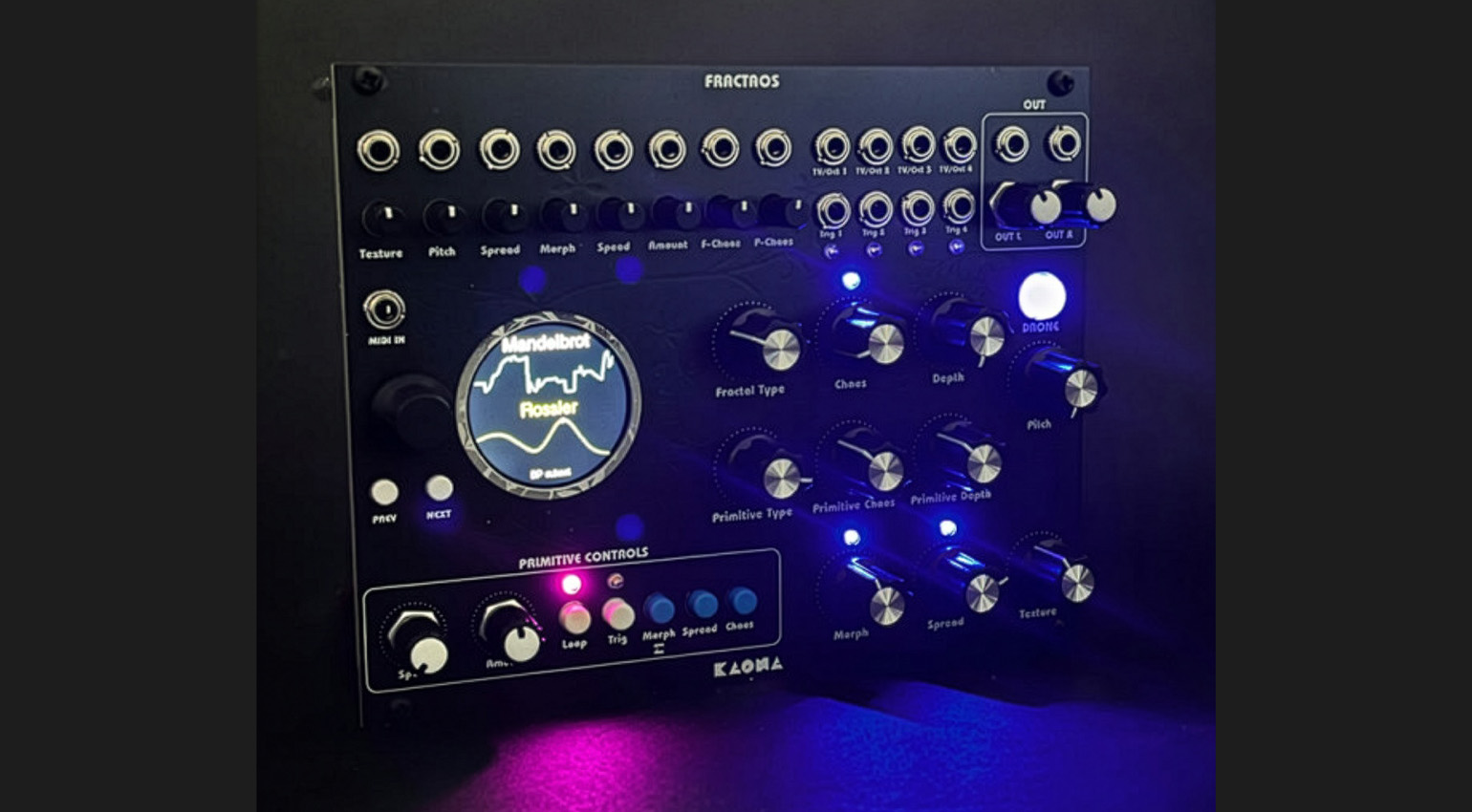
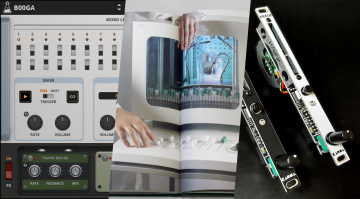
Here’s another exciting piece of kit announced ahead of SynthFest France. Fractaos by KAONA is a polyphonic oscillator for your Eurorack system. Instead of standard waveforms, it delivers a wide range of unusual timbres based on fractals.
Fractaos lets you select a main fractal shape and a fractal primitive that modulates it. This can yield some pretty chaotic and sometimes unstable shapes, hence the name Fractaos. You can shape the main and primitive shapes using the Chaos and Depth knobs, and control how they interact through morphing, detune, formant extraction, filtering, FM, and more.
In addition to a 4-voice polyphonic mode (controllable via CV or MIDI), Fractaos offers a drone mode where all eight oscillators (4 main fractal shapes, 4 fractal primitives) are continuously active. There’s also a polyphonic ADSR envelope, meaning that you can use the module as a complete synth voice.
You can now pre-order Fractaos from the KAONA website with a 15% early bird discount for €474.30. The regular price will be €558.
How to Design an Analog Kick Drum Circuit with Erica Synths and Moritz Klein
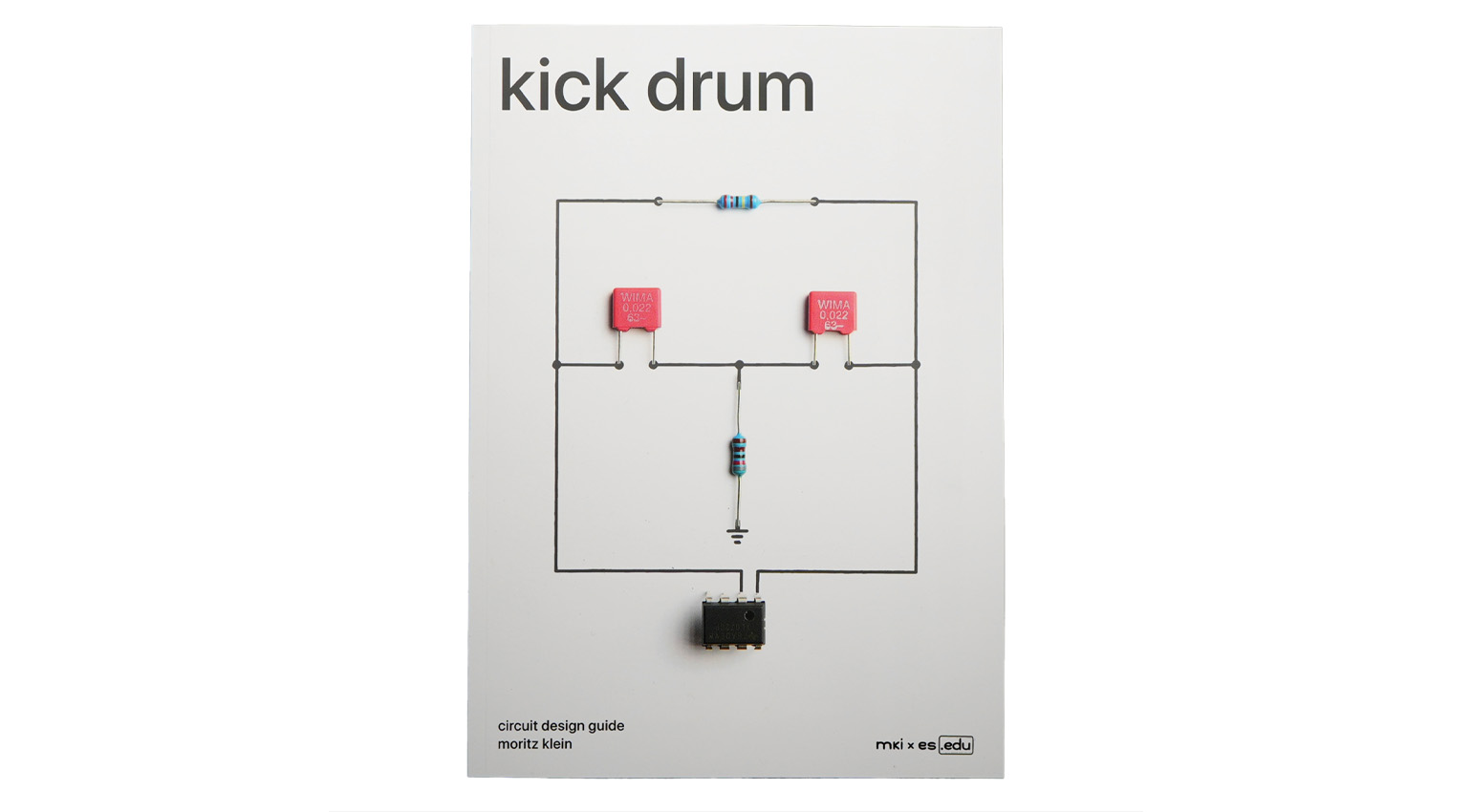
The awesome EDU DIY module series by Erica Synths and Moritz Klein has been out for a few years now, and it is without a doubt one of the best and easiest ways to get your feet wet in synth DIY and analog circuit design. Each kit comes with detailed instructions that not only tell you which component goes where, but also teach you how the circuit works and what each component does.
Now, they’ve taken it a step further with the new Kick Drum Circuit Design Guide. While the book is based on the build instructions for the EDU DIY Kick Drum module, it doesn’t stop there and also encourages you to modify and extend the circuit through various design challenges. It also includes patch examples for emulating TR-606, TR-808, and TR-909 kick drum sounds, as well as notes on how to turn a breadboard circuit into a production-ready module.
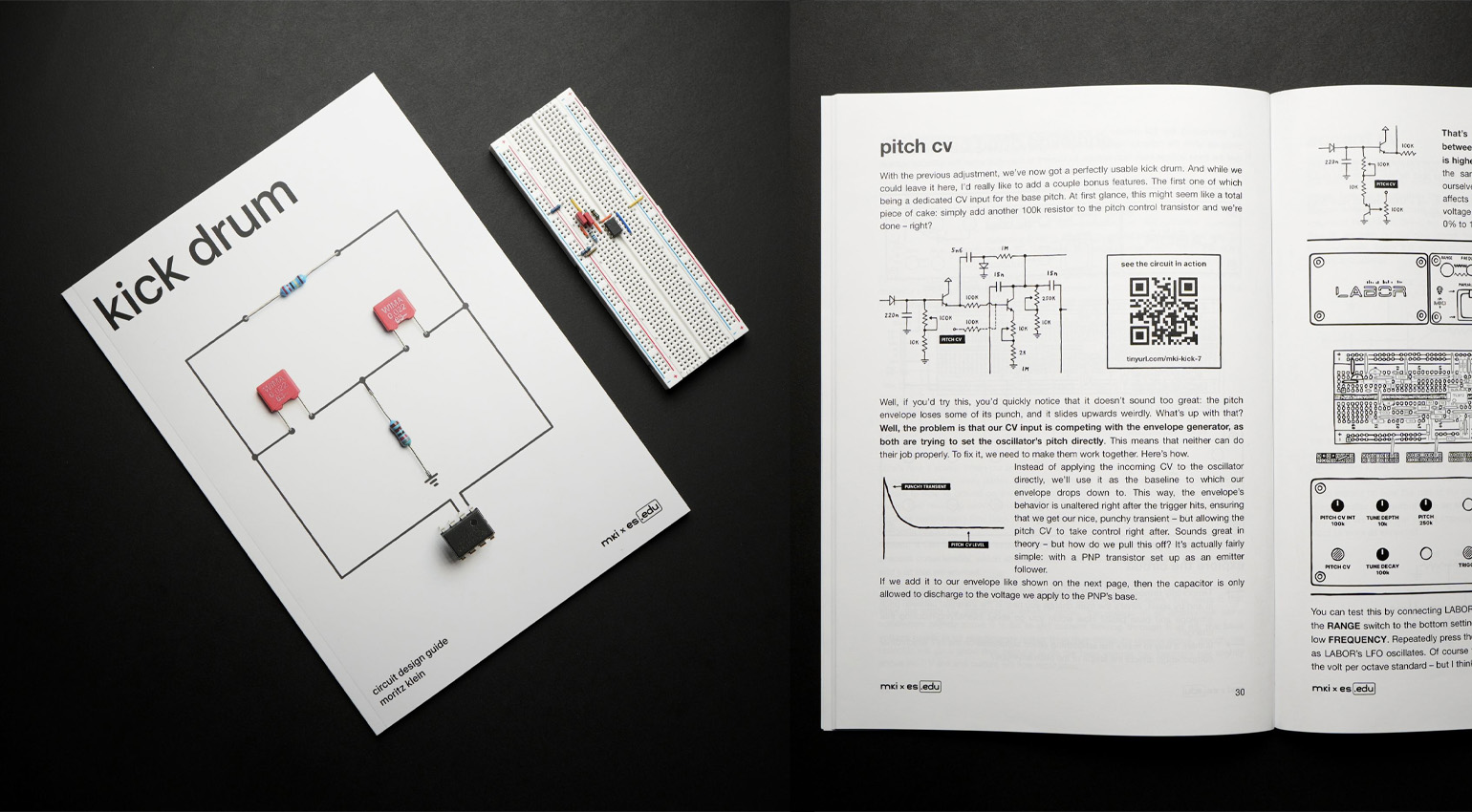
While Erica Synths recommends using their LABOR prototyping board, you can also follow along using a standard breadboard and battery power supply.
Although they haven’t announced anything, I have a feeling that this could be the beginning of a whole series of expanded DIY guides from Erica Synths and Moritz Klein – great times for soldering enthusiasts!
You can order the Kick Drum Circuit Design Guide from Erica Synths for €15 plus VAT.
*This post contains affiliate links and/or widgets. When you buy a product via our affiliate partner, we receive a small commission that helps support what we do. Don’t worry, you pay the same price. Thanks for your support!

This might also interest you