Visual Synthesis: 5 Synths to Make Crazy Sounds With Images
See your sound with these unusual instruments.

 4,9 / 5,0 |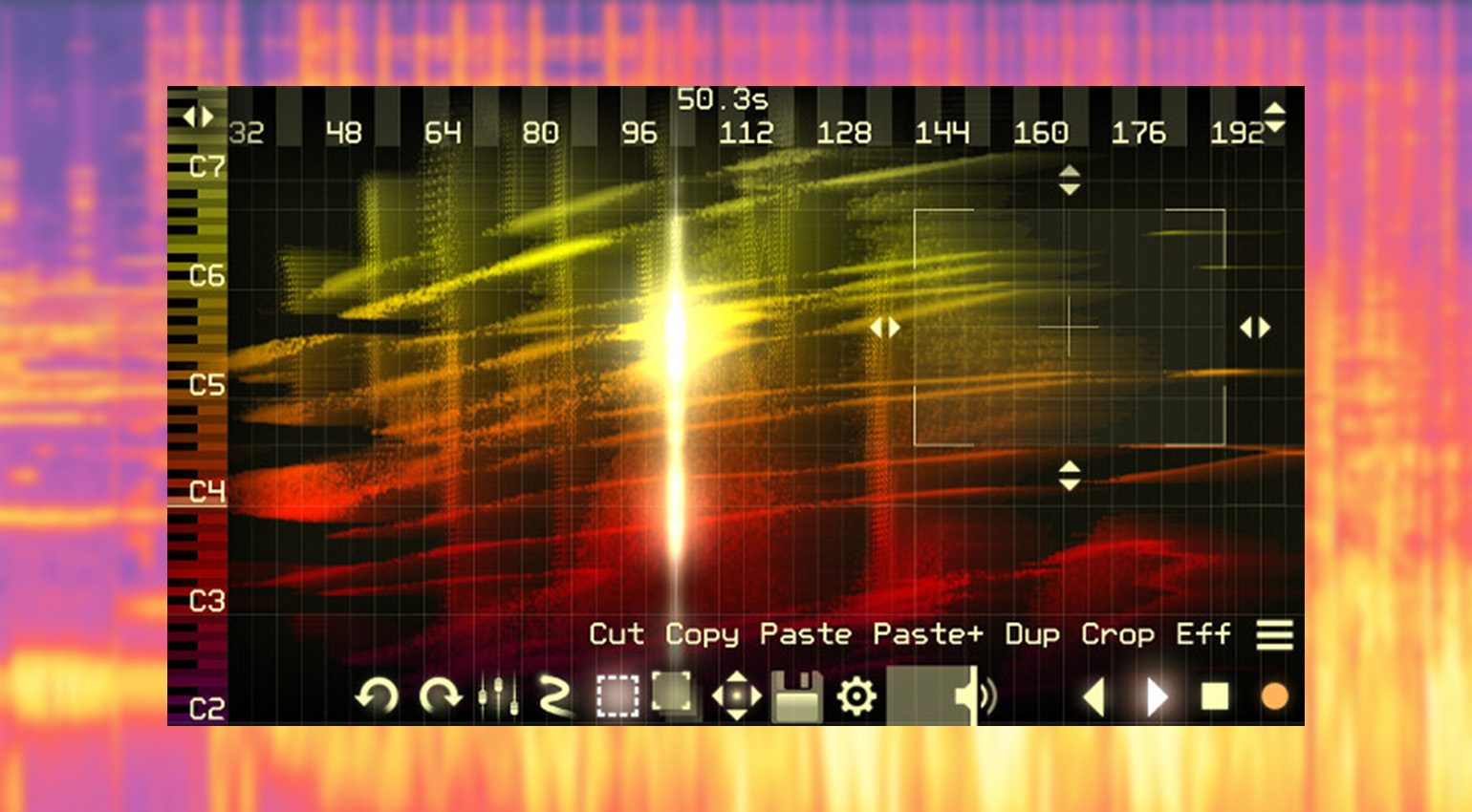

Turn your pictures into music with these wild examples of visual synthesis: hardware and software synthesizers that use images to generate sound.
Visual Synthesis
Making sound with images may sound like a contradiction, but there is a thin but persistent thread throughout the history of electronic instruments that allows you to do just this. Whether this is shining a light on drawings to create sound with sine waves, or dropping image files into a plugin, there are a number of different ways to make music with pictures.
Here are five visual synthesis instruments that I’ve come across. Have you found any others? Let me know in the comments.
Visual Synthesis: ANS
Perhaps the first electronic musical instrument to generate sound with images, the ANS synthesizer from Soviet Russia-era inventor Evgeny Murzin incorporated techniques developed for imprinting sound onto film reels. The instrument, developed over two decades and finished in the late 1950s, generated sound based on sonograms, or spectrograms.
The ANS user interface is a glass plate covered in a non-drying black resin. By scratching out the resin and letting light through, you can create sound, with the horizontal axis representing time and the vertical affecting the pitch.
There is only one ANS in existence, at the Glinka State Central Museum of Musical Culture in Moscow. You can hear it on the soundtrack for Tarkovsky’s movie Solaris. Coil also made an album with it, called ANS.
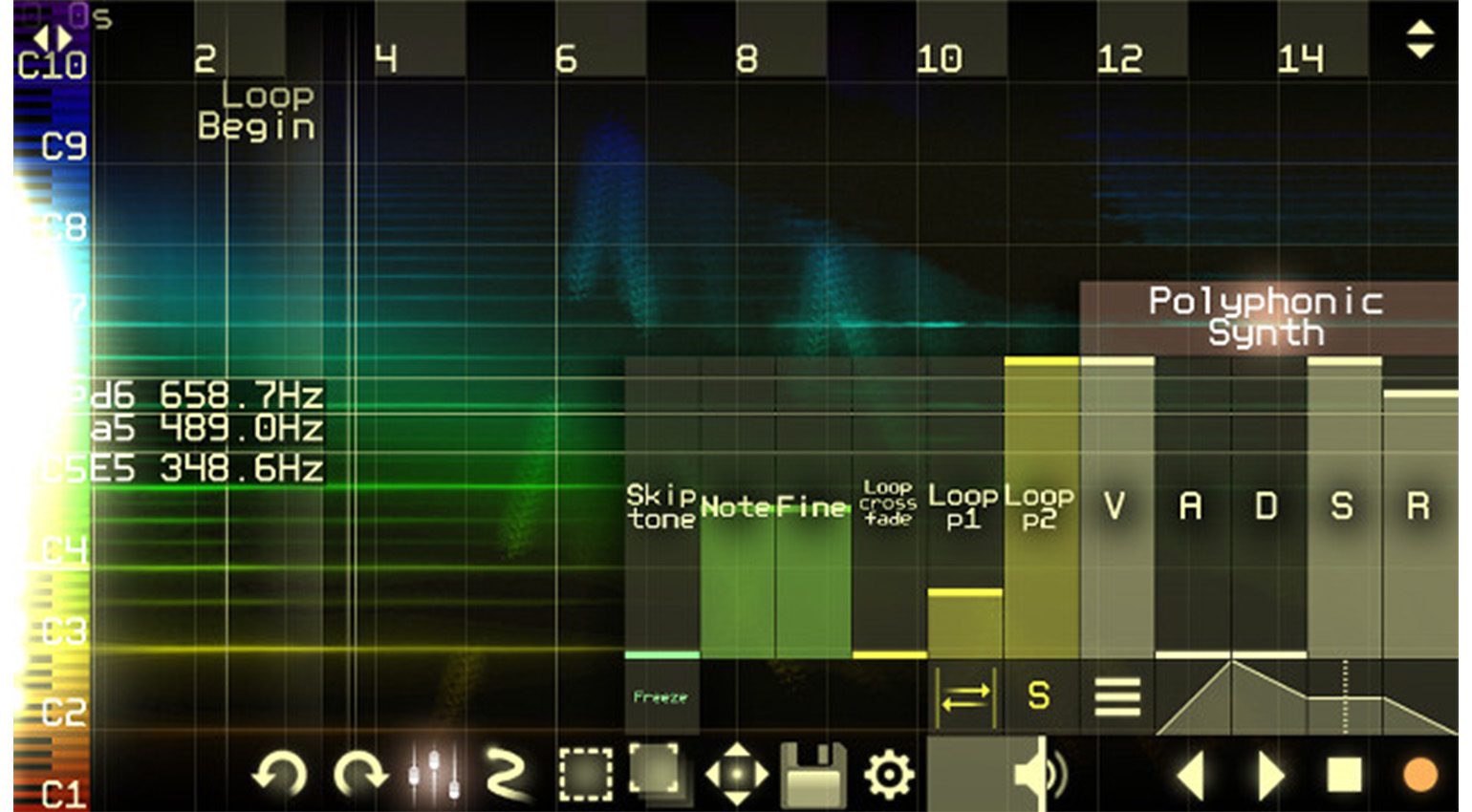
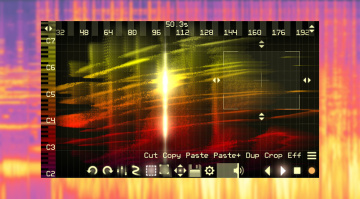
If you can’t go all the way to Moscow, you can download Virtual ANS for desktop or iOS devices, which lets you draw out your own sonogram or even convert image files into sound.
- Virtual ANS product page
Visual Synthesis: Daphne Oram Oramics Machine
Daphne Oram, who co-founded the BBC Radiophonic Workshop in 1958, developed her own image-based instrument in the 1960s. Known as the Oramics Machine, it used spools of 35mm film stock on which she would draw images to generate sound. According to Daphne Oram.org, “It used optical scanning technologies to read and interpret hand-drawn waveforms (timbres) and sequences of control information for musical pitch and dynamics.”
With its 10 strips of film and time-based sequencing, you can think of the Oramics Machine as a kind of forerunner to modern DAWs, although very much analog and not digital.
There used to be an app based on the Oramics Machine for iOS, but it seems to have disappeared from the App Store, unfortunately.
- Daphe Oram Oramics page
Visual Synthesis: U&I Software MetaSynth
Probably the first time I became aware of visual synthesis was when a creepy spectrograph image of Richard D. James’ face started showing up online. The Aphex Twin had used a computer program to render his face into sound. If you put the song “∆Mᵢ⁻¹=−α ∑ Dᵢ[η][ ∑ Fjᵢ[η−1]+Fextᵢ [η⁻¹]]” (also known as “Formula” from the Windowlicker EP) into a spectrograph program, you get a weird face. The blog Bastwood wrote about it, and they stabilized the image into something more visible.

Apparently, Richard used the application MetaSynth to accomplish this. MetaSynth is still around more than 30 years later. Made by a company called U&I Software, it offers a number of different image/sound tools, including Image Synth, where you “paint to control sound,” according to the company.
Benn Jordan made a video about it a few years ago, too.
- U&I Software MetaSynth product page
Visual Synthesis: Silhouette Sport
Johannes ‘Pit’ Przygodda is the brains behind Silhouette, a series of visual synthesis-based hardware instruments that convert images into experimental sounds.
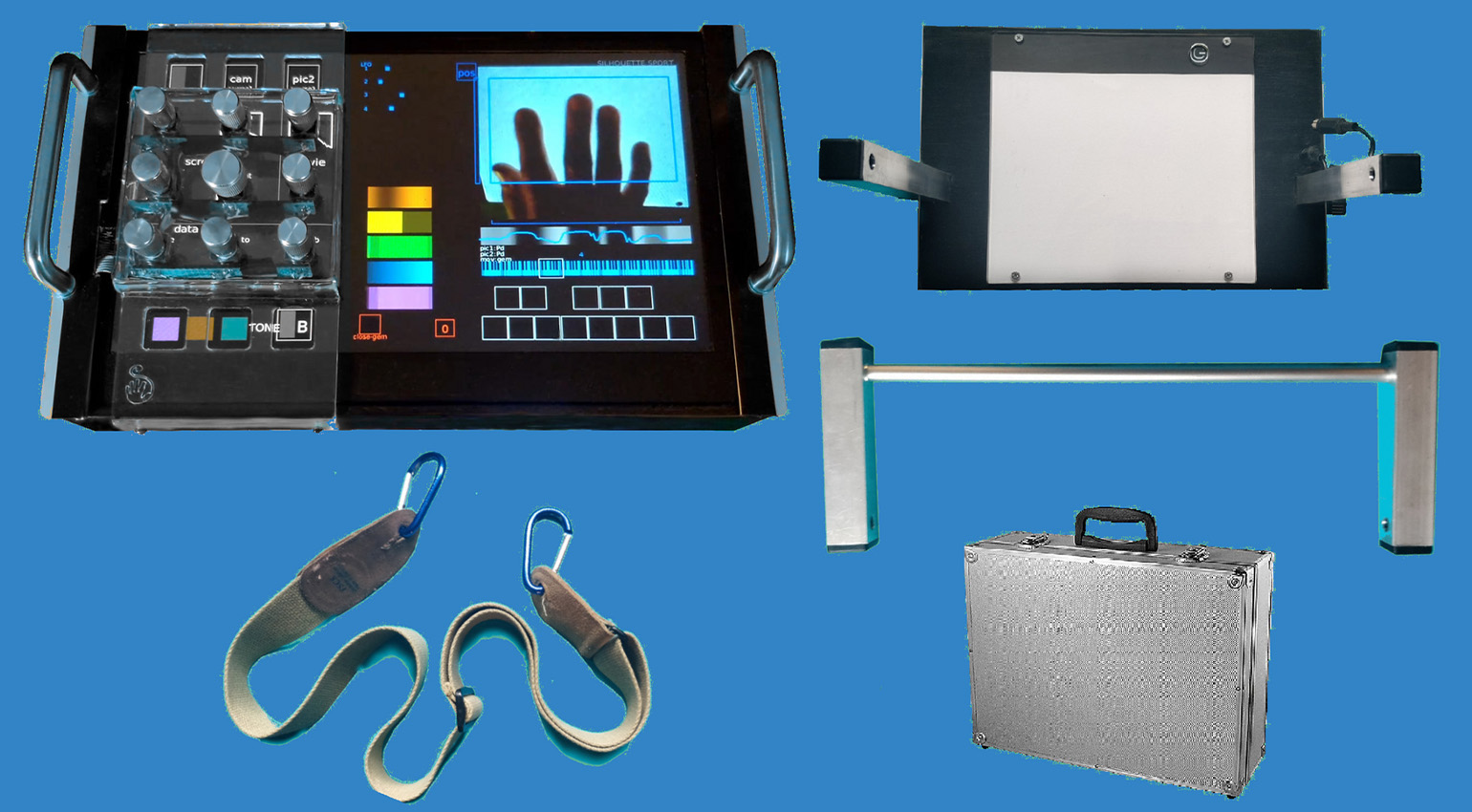
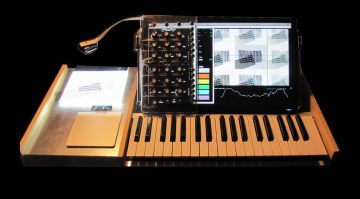
We covered Przygodda’s Silhouette prototype back in 2021. Since then, he’s developed the Silhouette Sport, a synth with a screen that can display jpgs, movies, or live images broadcast from the built-in camera. Using the trackpad, you can choose the area to “play,” with the visual data within the selected rectangle transformed into waveforms.
The Silhouette website is frustratingly light on information, but it looks like you can buy the Sport in a kit that also includes a light table, carrying case, and other unnamed accessories. It costs €1700 and appears to be made to order.
- Silhouette Synthesizer product page
Visual Synthesis: GCS Spectral Synthesizer
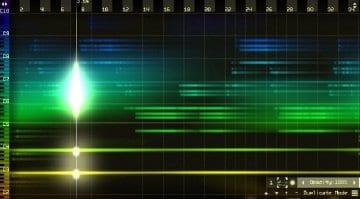
The last visual synthesis instrument on our little tour is the newest, Spectral Synthesizer from Gulf Coast Synthesis. A plugin for both Mac and Windows, it allows you to create sound either by drawing on a spectral canvas (“directly draw the harmonics of your patch, paint spectrally-shaped noise, and sculpt your timbre with a brush”) or by resynthesizing an image file. It can also resynthesize audio.
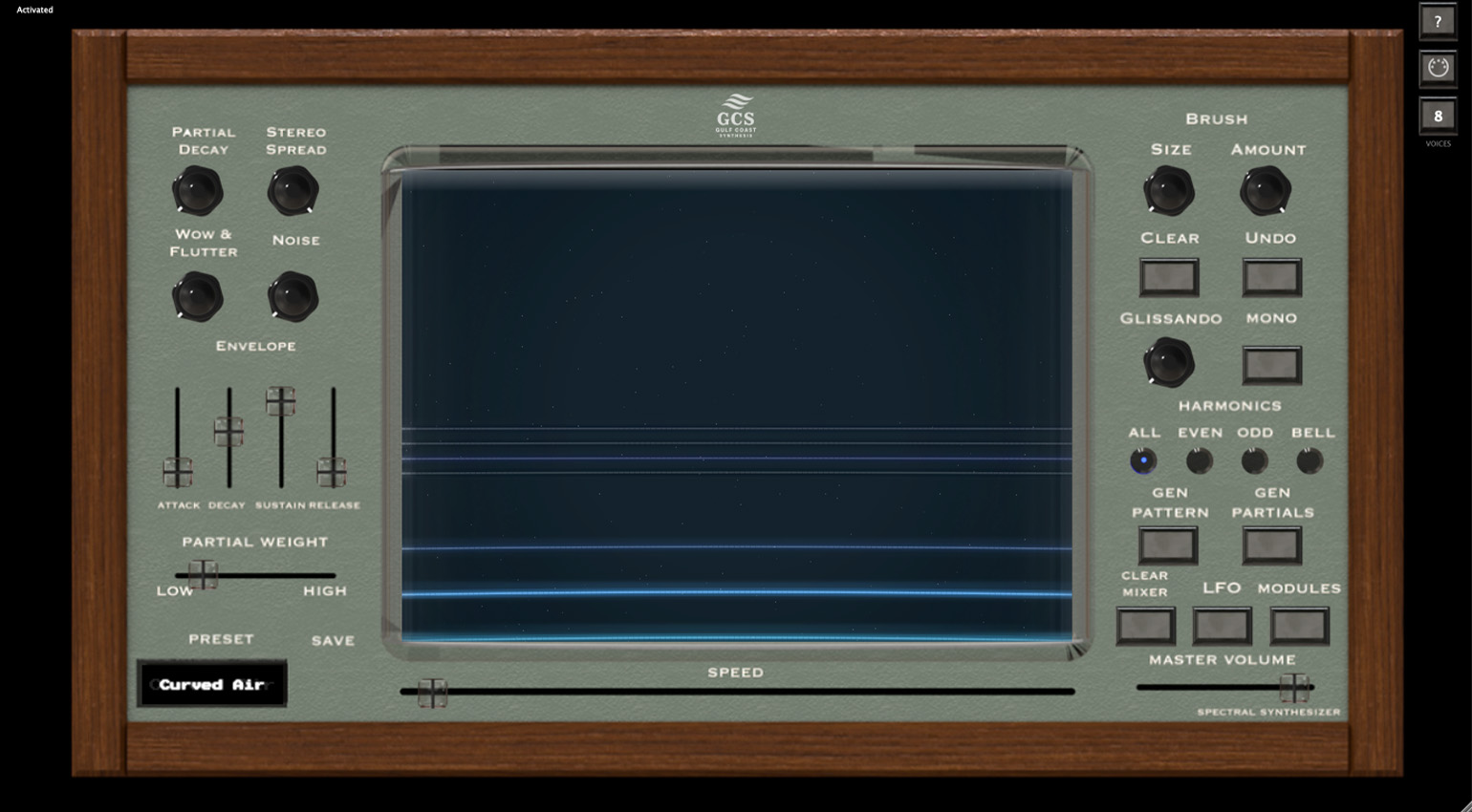
Once you have the audio captured, you can modulate it like a traditional analog synthesizer, with oscillators, filter, envelope, LFOs, and even tape-style effects.
Spectral Synthesizer is available for $69 from the Gulf Coast Synthesis page. It’s currently in beta stage, but the developer states that all future updates will be free.
- GCS Spectral Synthesizer product page
iZotope RX 11
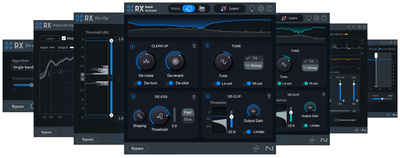
Lastly, I should mention iZotope’s RX 11. While it’s not strictly a visual synthesis instrument, the audio repair suite lets you use a spectrogram to identify noises and other audio intrusions for removal. However, it’s also fun for processing audio in unusual ways, like running drums through the De-clicker.




More Information
- All about synthesizers
- Get synthesizers from Thomann*
*Note: This article contains advertising links that help us pay for this site. Don’t worry: the price for you will always be the same! If you buy something through these links, we will receive a small commission. Thank you for your support!

This might also interest you


3 responses to “Visual Synthesis: 5 Synths to Make Crazy Sounds With Images”

you should have mentionned UPIC by Iannis Xenkis. I believe there is an iPad app which kind of mimics it
Izotope also used to have this synth called Iris, unfortunately it is neither sold or supported anymore. Somebody might think it should be made available for free. Well… there’s always The Pirate’s Boutique store and the discounts there are craaazy.
Also worth mentioning is “Coagula” by Rasmus Ekman https://www.abc.se/~re/Coagula/Coagula.html – hours of fun and sounds – for free