Thomann Woodpicker: Your Perfect Pair of Drumsticks is Just a Click Away
Stick sizes, wood types, and more!

 5,0 / 5,0 |
Thomann Woodpicker: Your Perfect Pair of Drumsticks is Just a Click Away · Source: Thomann

Thomann currently lists 756 different products in its drumsticks category. How do you tell them apart? Aren’t they all just pieces of wood you hit a drum with? That’s where Thomann Woodpicker comes in. It’s a super easy-to-use tool to find the perfect pair of drumsticks for you!
Key Takeaways
- Thomann Woodpicker offers different parameters to find the perfect pair of drumsticks
- Select a stick size or dial in how much a stick’s length, tip shape or price matters
- Find all the signature drumsticks from your favorite drummers
- Choose between different wood types and ratings
This is Woodpicker
Drumsticks: What to consider
When it comes to drumsticks, most drummers are a lot like guitar or bass players with picks and strings: once you’ve found yours, you’ll likely “stick” with it. So, there are two scenarios for using Woodpicker: you’re just starting out, and you’re still figuring out what you like. Or you’re looking for a change.
Generally, there are four drumstick sizes: 7A, 5A, 5B, and 2B. The lower the number, the thicker (and heavier) the stick. Which one is perfect for you and your hands depends on many factors. First and foremost, it’s your hands! A giant 2B stick might just feel oversized and hard to play fast with in smaller hands. On the opposite side, smaller 7A models might feel like chopsticks that break just by looking at them.
These four numbers mostly refer to a stick’s thickness: 7A is around 0.54″ in diameter, a 5A around 0.565″, a 5B around 0.595″ and a 2B around 0.63″. Most sticks have a similar length of 16″ with some XL versions adding up to half an inch.
The general rule of thumb on these is that if you have to squeeze your hand a lot to hold the stick securely, it is likely too thin. Likewise, if your hand cramps or the stick feels unwieldy during fast passages, it is probably too thick.
A stick’s balance (determined by the wood and the taper) can make a huge difference, too. Front-heavy sticks suit big, powerful strokes, while sticks heavier toward the back feel quicker and are easier to control when playing doubles or ghost notes. If you have sweaty hands, consider the stick finish: lacquered sticks can become slippery, whereas unfinished or textured grips provide better grip.
Woodpicker: Taper, wood type, and tip
When you compare different drumsticks in Woodpicker, you’ll notice three differences: a stick’s taper, the shape and material of the tip, and the wood type. By far the most common type of wood used for drumsticks is hickory. It is a fairly dense type of wood, absorbs the shock of the impact on the drumhead well, and does not break easily.
By comparison, maple is a lot lighter and less dense, making it better suited to a softer touch and quieter settings. And oak is heavier and harder, providing more mass behind each stroke and a longer lifespan. There are also drumsticks made of carbon, nylon, and even aluminum, but these types are rather rare and expensive.
The taper of a drumstick is just as important. It’s the angle and shape of the thin part of the drumstick towards the thick part. Depending on where and how long the taper is, two equally sized drumsticks can feel very different when playing them. For example, a shorter taper puts more mass toward the tip. This moves the center of gravity toward the tip, so the impact is a lot louder – perfect for heavy metal drumming.
By comparison, a longer taper makes a drumstick more flexible and bouncy. So, if you love ghost notes and lightning-fast rolls, this will help your playing. When it comes a drumstick’s tip, there are two choices: material and shape. For material, you’ll either find drumstick tips in the same wood type as the rest of the stick or nylon. If you love playing the ride cymbal, the closed hihat, and tend to hit hard, nylon tips are your friend. These create a brighter sound and last longer.
Regarding the tip shape, barrel and acorn shapes are more common and create a darker, fuller sound (especially on cymbals), since these shapes have a larger contact area. Smaller, often ball-shaped tips create a more articulate sound, if that’s what you’re looking for.
What is the perfect stick for my genre?
You probably have it figured out by now that stick size heavily relates to genre, as well. It’s much easier to play soft jazz grooves with lighter 7A sticks. And those ultra-loud metalcore breakdowns will feel that much more intense with 2Bs.
Most drummers start with 5A, which seems to be the most common stick size. So, if you got your first drum kit or you’re playing your friend’s kit, you’ll very likely notice soon, if the pair of sticks you’re playing is the right one for you.
I can’t stress enough that your hands’ shape and size matter much, much more than any genre recommendation. Fun fact, originally, the letters next to the numbers of the sizes referred to the purpose of the sticks. A was for orchestra drumsticks, which were lighter and thinner, and B was for band drumsticks (often marching band), which were heavier and thicker. These days, of course, this is a very different story. Here is a bit of a guide, if you need a starting point.
- 7A: Jazz, swing, for younger drummers
- 5A: Pop, funk, punk, blues, and general purpose
- 5B: Many rock players go for these slightly heavier ones
- 2B: Heavy metal, metalcore, industrial
How does Thomann Woodpicker work?
You have quite a few different ways to pick your favorite pair of sticks at Woodpicker. As a starting point, select one of the sizes on the right: S, M, L, XL or XXL. You’ll notice how the number of sticks does not change (I was a bit confused initially), but the sorting does. As soon as you select a size or change one of the four parameters, the ranking of the 756 different sticks changes; none are excluded.
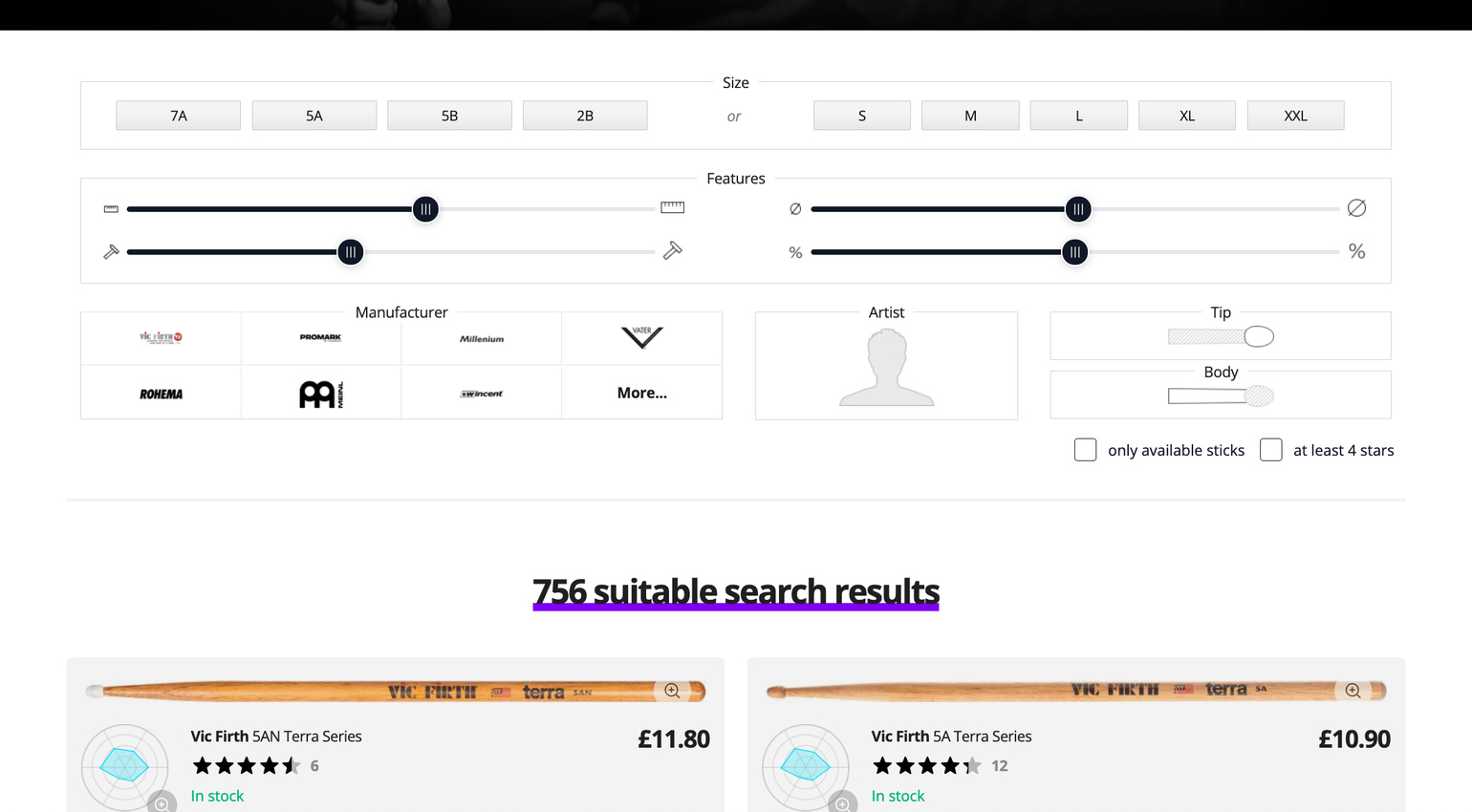
With the four feature sliders, you can further narrow down which sticks you’re looking for. Size, Punch, Diameter, and Price each allow you to change the sorting so the perfect sticks for you are displayed at the top in Woodpicker.
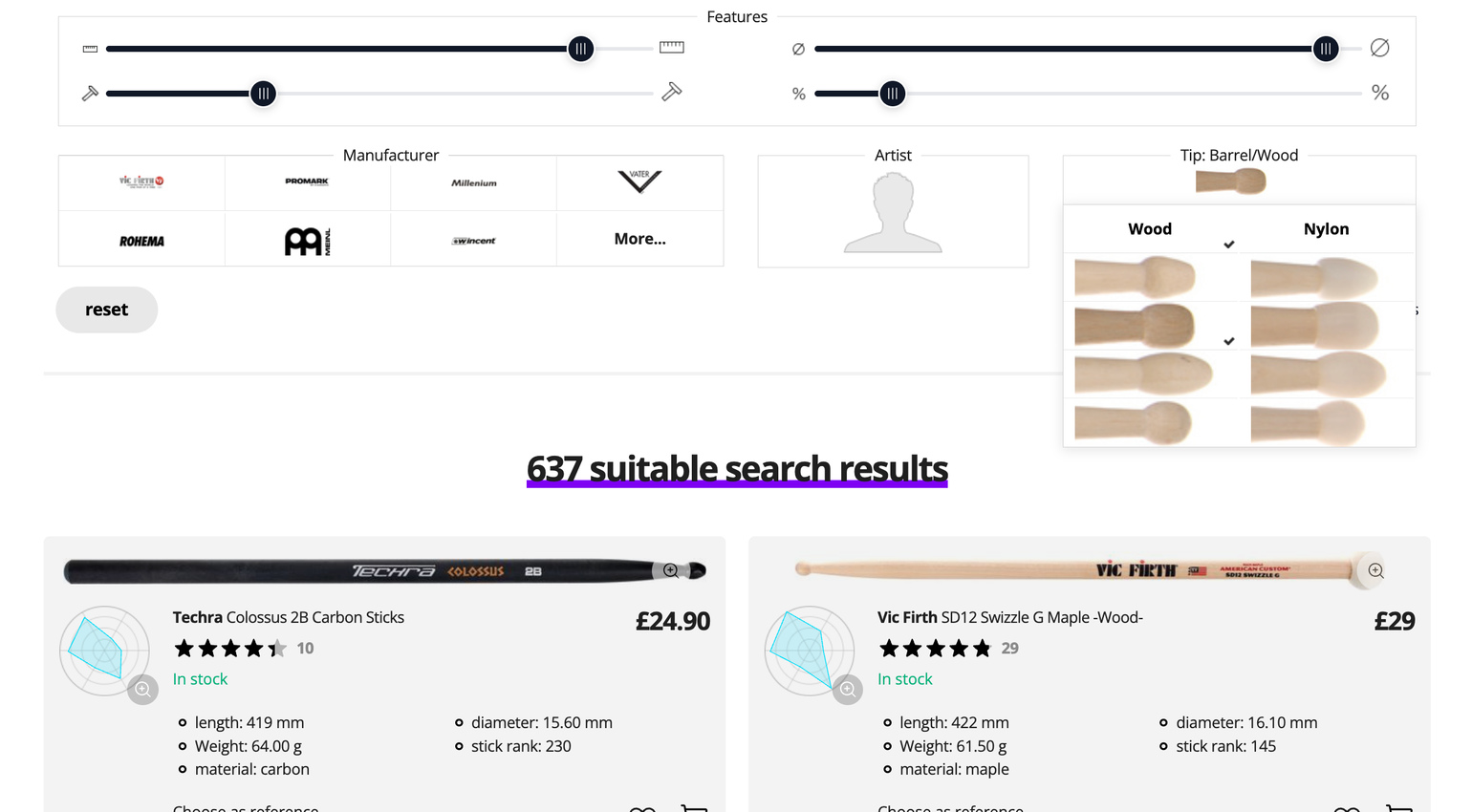
If you still don’t find the right pair of sticks, you can further refine your search by selecting a single stick brand, a signature drummer, the tip type and material, and the wood type. Thomann makes it even easier by letting you narrow the search to products with an average review of 4/5 or higher, and to sticks that are currently available (some are on pre-order).
Pick your Sticks with Woodpicker!
If you’re like many drummers who start playing because there is a drummer they admire, why not start by checking out the “Artist” listing and see if your favorite has a signature pair?
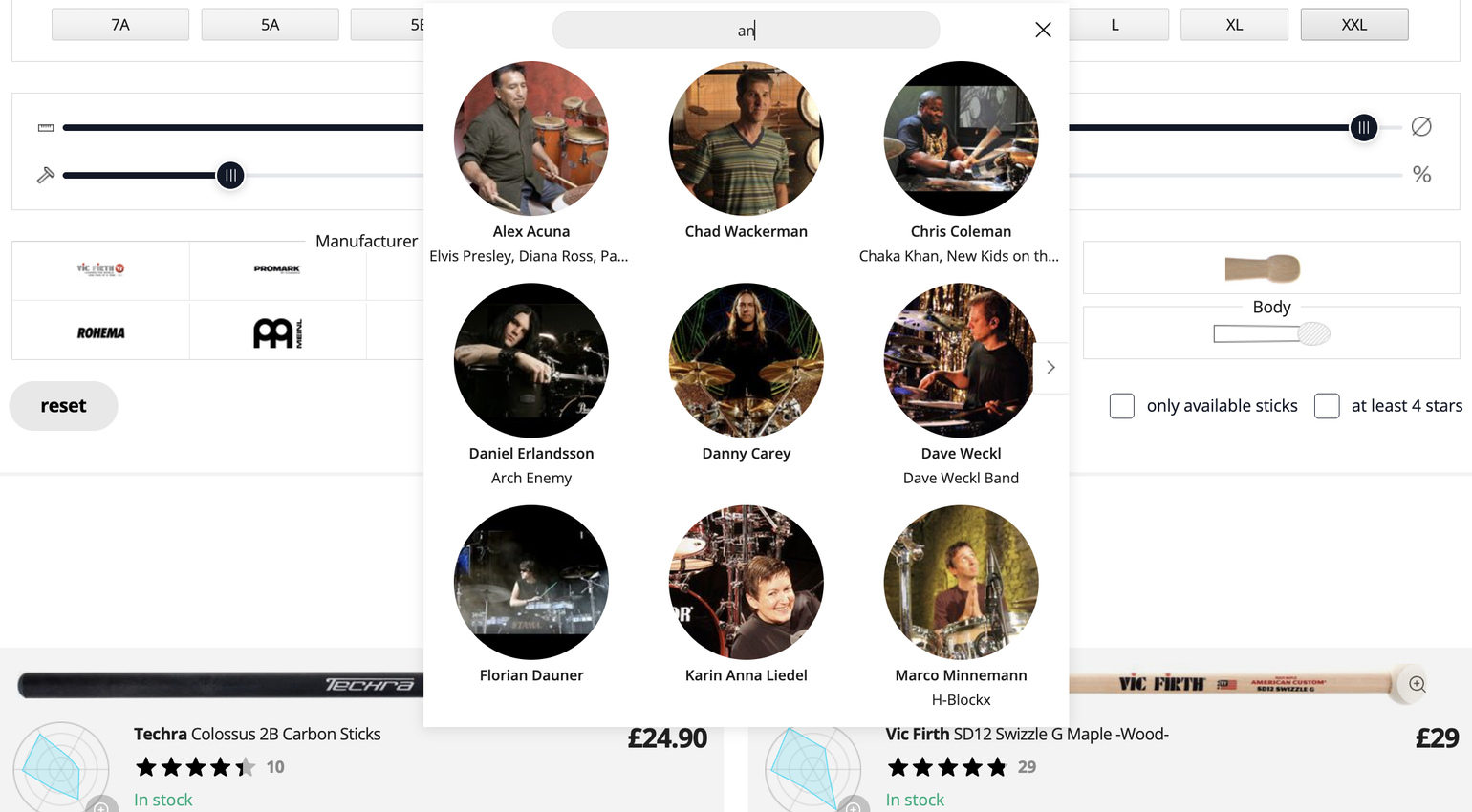
Check it all out at Thomann*.

*Disclaimer: This post contains affiliate links and/or widgets. When you buy a product via our affiliate partner, we receive a small commission that helps support what we do. Don’t worry, you pay the same price. Thanks for your support!


This might also interest you