Thomann Case Factory: Build Your Own Custom Gear Cases

Thomann Case Factory: Build Your Own Custom Gear Cases · Source: Thomann Case Factory: Build Your Own Custom Gear Cases

When you’ve got a piece of gear that isn’t covered in Thomann’s standard case range, the Case Factory can help you find the perfect fit.
Key Facts about Thomann Case Factory:
- Thomann Case Factory lets you build your own case for almost any piece of gear
- Start by choosing from the five different case types and then the additional subcategories
- Customize the dimensions, select the thickness of the foam lining, choose a color, and the type of fasteners
- Add wheels to your design and even make it stackable
All about Case Factory:
Thomann Case Factory: Where Do I Start?
Designing your own case starts by knowing exactly what the case is for and where you are taking it. So questions like: “Which instrument or piece of gear is the case for?”, “What are the exact weight and dimensions of the instrument?”, “Which mode of transport are you using on tour?”, and “How secure do you need the case to be?” are all essential in determining the type of case you need.
Luckily, Thomann has made the process of narrowing down the most suitable case relatively simple. As you select one of the five types of cases (Cases, Trunks, Flight Cases, 19-inch Racks, and Keyboard Cases), you are then presented with a number of subcategories. Each of these clearly states the type of gear that it’s best suited for, and there are clear descriptions for each type of case.
This allows you to make your selection confidently, as you are guided through each step of the process with your precious musical cargo in mind. If you do have questions at any stage, the Case Factory has an email address (thonmann@thomann.de) that allows you to talk to a specialist and voice any concerns you may have.
Thomann Case Factory: Choosing The Right Case Type
As we mentioned earlier, your choice of case will be largely dependent on the weight and dimensions of the piece of gear you need to transport. Note that when you select the custom dimensions of the case, you are specifying the internal size, and you can match this information with the specs of the instrument on the Thomann product page or the one on the manufacturer’s website.
The external dimensions are also important, because every mode of transportation has size limitations. So if the case needs to fit into the boot of your car, for example, or fit through the doors in your house, you’re going to need to measure these areas so you know what the physical restrictions are. This means that your case will not only fit your gear correctly but also make it easily transportable.
What is helpful is that as you make your selection, you will see essential pieces of info specific to the case type you’ve chosen. Pay attention to these recommendations, as some cases state that they will not fit through a standard door while others may require at least two people to carry the case safely.
You can choose between the following types of cases:
- Cases – briefcase-style cases for light to medium-weight items like desktop synths, controllers, and non-rackmount mixers
- Trunks – treasure chest-style cases for medium to heavyweight items like lighting rigs and drum hardware
- Flight Cases – cases optimized for air travel, for anything from compact DJ mixers to guitar amps and PA equipment
- 19-inch Racks – cases for individual rack units, mixers, or entire front of house or guitar effects rigs
- Keyboard Cases – transport cases for 61-, 76-, and 88-key keyboards
Thomann Case Factory: Customizing Your Case
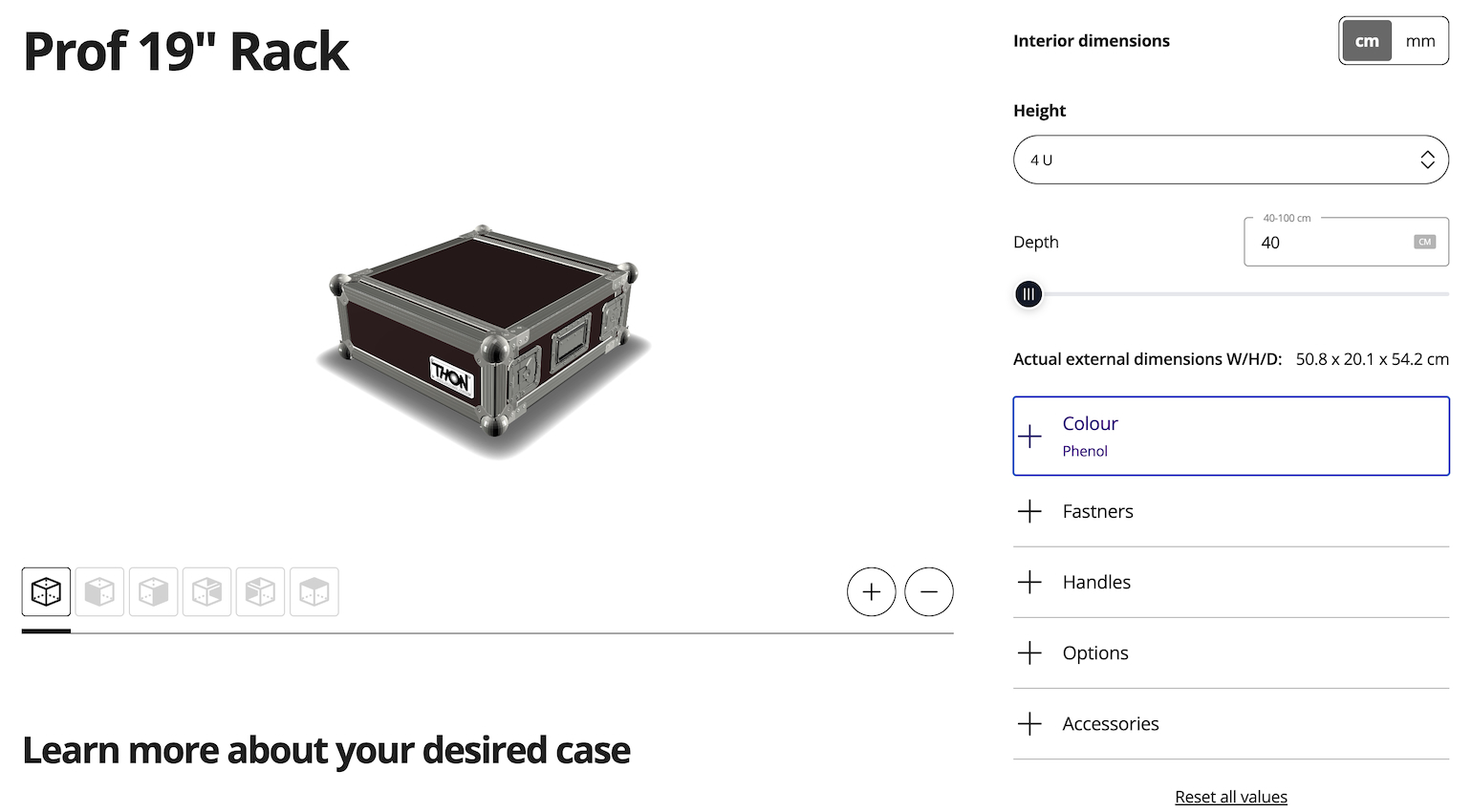
When you reach the customization page for your chosen case type, you’ll find that it is detail-oriented and laid out to make the process as hassle-free as possible. Of course, it’s important to be as precise as possible with your dimensions, so you can choose between cm (centimeters) and mm (millimeters) when you specify the interior dimensions of the case.
When you make any adjustments to these dimensions, you’ll notice that the page automatically updates the actual exterior dimensions and weight of the case, as well as the scaled 3D render of the case in the center of the page and the price. This render gives you a relatively accurate visual representation of what the case will look like, and you can rotate the view through different angles to check out where the fasteners and handles are positioned.
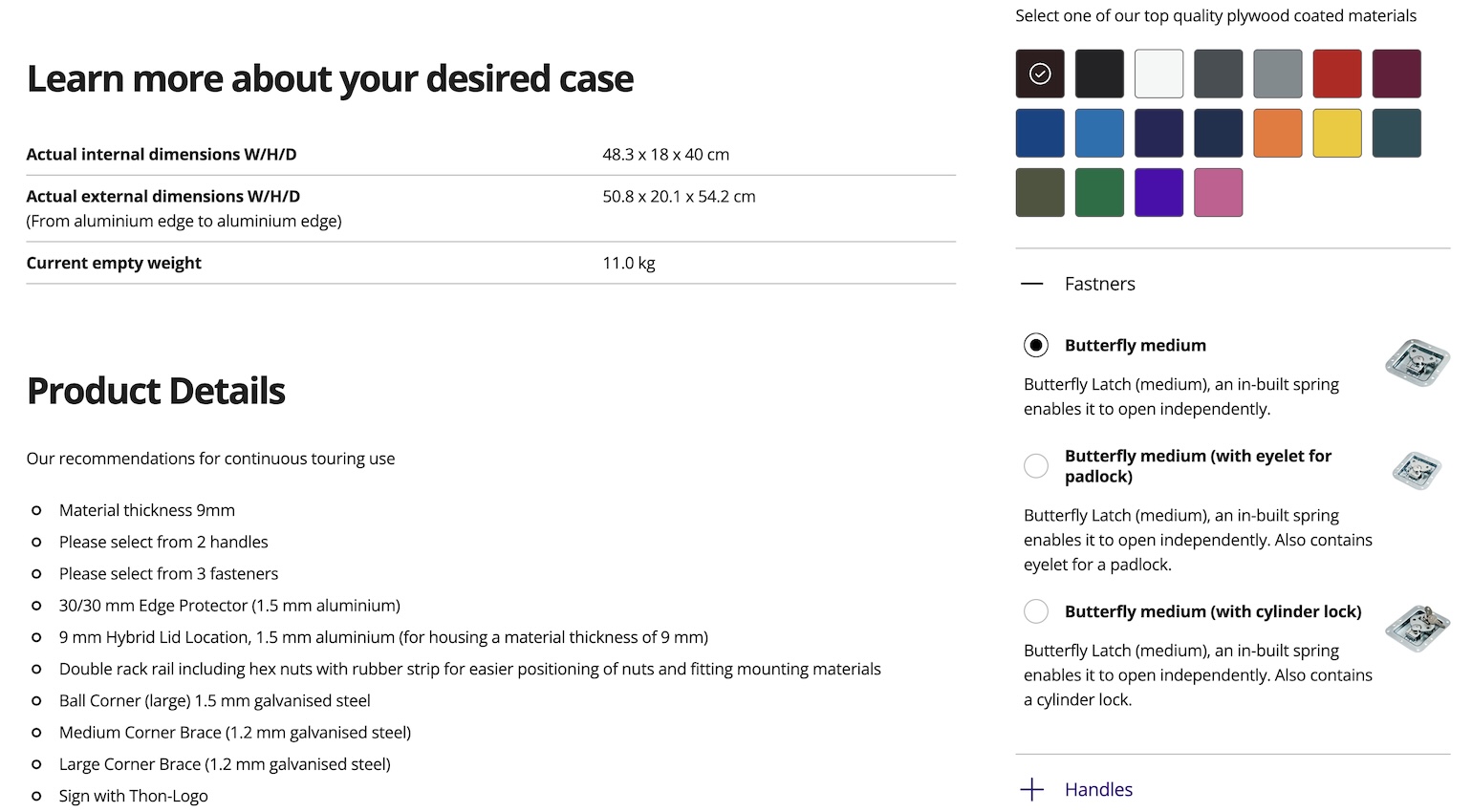
Here, it’s a good idea to go over the product details, as these specs tell you about all the different components used in the construction of the case you’ve chosen. Also, they mention items that allow you to choose between various options, like different types of fasteners or the thickness of the foam lining.
Thomann Case Factory: Finalizing Your Choice
As you explore the different types of cases you can build in Case Factory, there are some important details worth considering before you make your choices. For one thing, some cases offer higher durability, reinforced with heavier gauge materials, whereas others offer more lightweight transportation solutions.
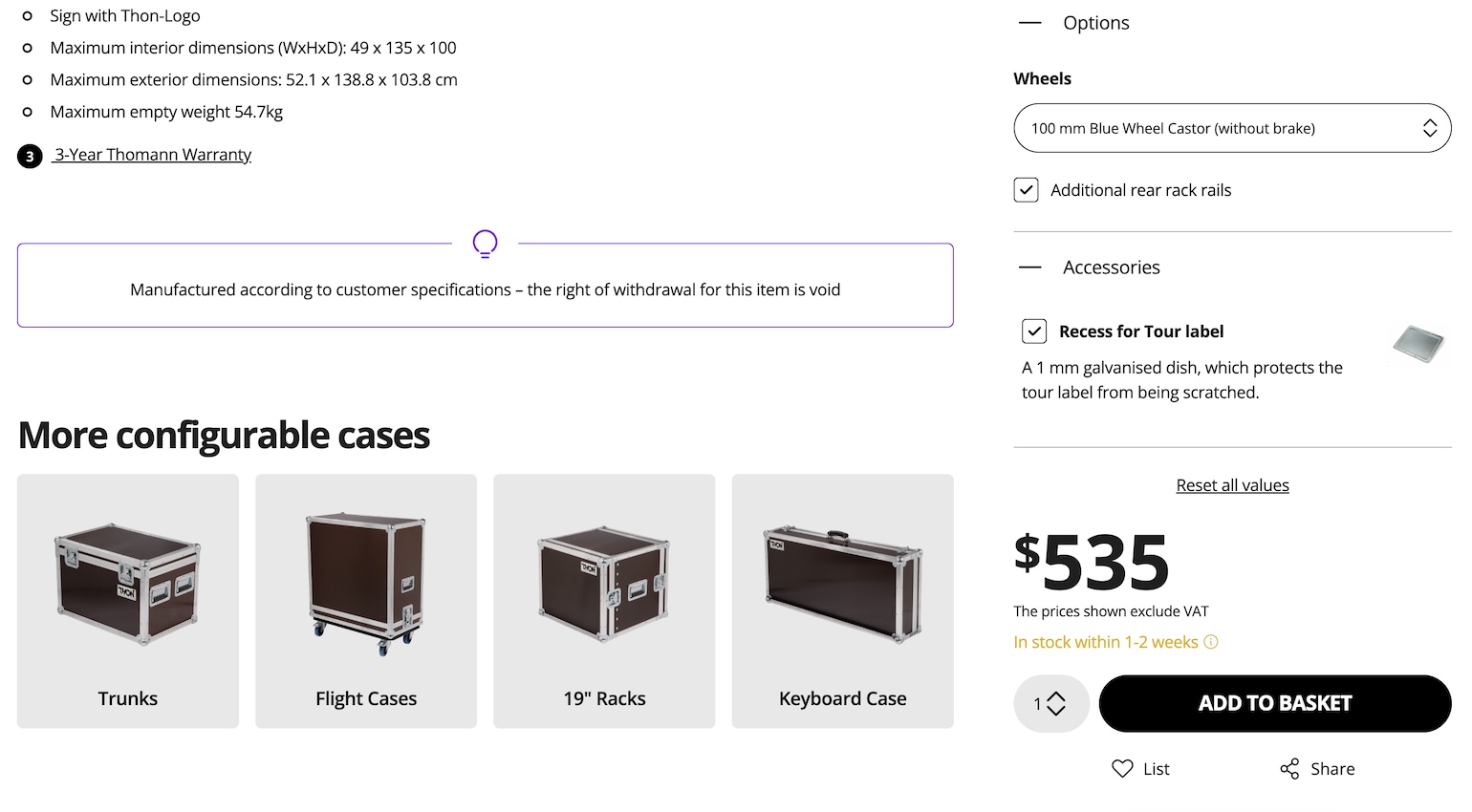
Your choice here will affect the price, but it may be worth it in the end to go with a case that is built to last. Another aspect to think about is that some case designs will allow you to use the equipment and access a particular unit’s connectivity panel while it’s in the case. Of course, the nature of how some instruments like keyboards are played does not allow this, but for 19-inch outboard rack gear, it’s very practical.
To truly make the case your own, you have a choice of 18 different color coatings for the plywood used in the case’s construction. Also, most cases will allow you to optionally add wheels or even wheels with a brake to keep the case from sliding around. What’s more, there is also the option to add a galvanized plate to protect whatever label you need to display on the case.

More about Thomann Case Factory:
*Disclaimer: This post contains affiliate links and/or widgets. When you buy a product via our affiliate partner, we receive a small commission that helps support what we do. Don’t worry, you pay the same price. Thanks for your support!

This might also interest you