The Best Modeling Amps 2026: From Versatile Beginner Model to Pro-Level Beast
The ideal solutions for beginners, practice improvement, and more!

 4,1 / 5,0 |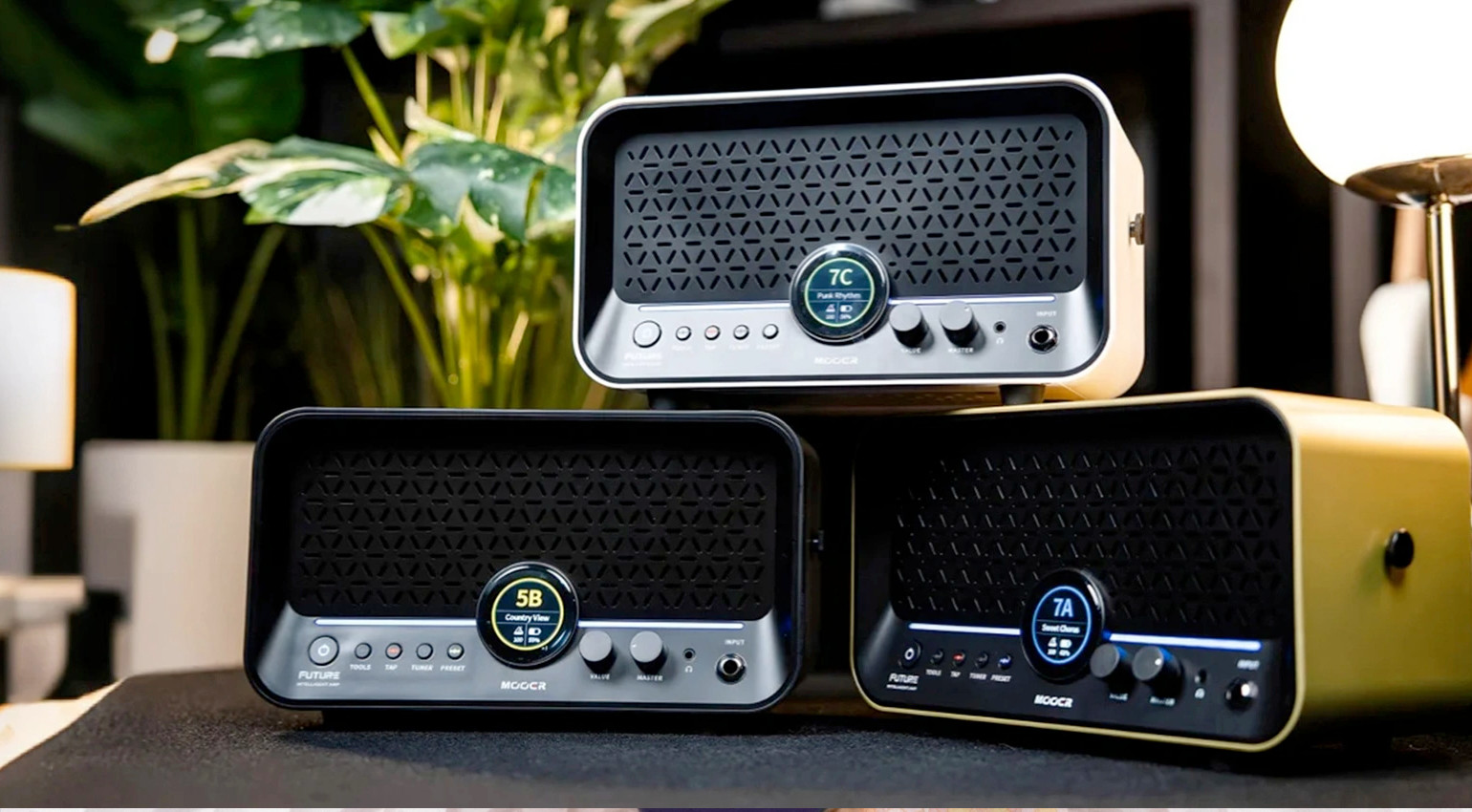
The Best Modeling Amp 2026: From Versatile Beginner Model to Pro-Level Beast · Source: Mooer

The best modeling amps provide the authentic feel of tube amps, tones for days, and real-world usability in a single unit. Contemporary modeling amps can cover everything from quiet practice sessions to full-volume performances.Let’s check out everything you need to know and the five picks to get you started.
Table of Contents
A Brief History of Modeling Amps
The concept of modeling amps emerged in the 1990s when manufacturers started using digital signal processing to recreate the sound and behavior of traditional valve amplifiers. In the late 2000s and 2010s, modeling took a major leap forward. Improved DSP power enabled amp builders to model not only tone stacks and speakers but also power-amp behavior, tube sag, and dynamic response.
This shift made modeling amps feel far more responsive and ‘alive,’ closing the gap between digital and analog. Today’s modeling amps blend powerful digital technology with practical amp design. Many combine traditional combo formats with onboard effects, impulse response (IR)-based speaker simulation, MIDI, and app-based editing.
Some are designed to behave like classic amps with simple controls, while other models offer full programmability and preset-based workflows. Let’s take a look a five picks, strictly ranked by price.
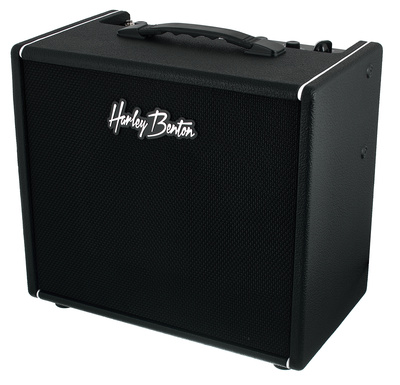
Harley Benton DNAFX AmP20
The Harley Benton DNAFX AmP20 is one value-packed modeling combo. It offers eight classic and modern amp voices, modulation and time-based effects, and six programmable presets in a compact, 20-watt Class-D package. The included amp models range from clean and blues to lead and metal. In addition, you get effects like flanger, phaser, tremolo, chorus, and spring/delay/reverb types.
Customers on Thomann highlight the modeling amp’s solid build quality and versatility for practice or small jam sessions. Users also praise its convenience, thanks to features like Bluetooth for backing-track playback and a dedicated headphone output. For those wanting one of the best modeling amps at a beginner-friendly price, it’s hard to beat its mix of features, tone variety, and sheer value. Check it out at Thomann*.


Mooer F15i Li Modeling Guitar IG
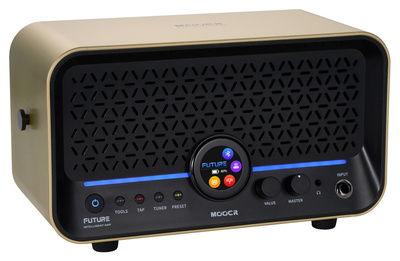
The Mooer F15i Li takes a very different approach to traditional practice amps, as a more portable, all-in-one modeling hub. Featuring 55 amp models, 69 effects, a built-in drum machine and a looper, Bluetooth audio and a colour touchscreen, this is as modern and versatile as it gets. Features like the rechargeable battery (up to 5 hours), USB-C recording, and app-based deep editing make it appealing for home practice, travel, and songwriting.
Users praise the amp for its sound quality with headphones, its intuitive touchscreen interface, and the amount of functionality given its size and price. Common criticism focuses on the small 2″ speakers, which naturally limit the bass and volume, making it less suitable as a traditional “room-filling” amp. All in all, it’s one of the best modeling amps for practicing at home and for getting your feet wet in the world of digital amps. Get it from Thomann*.

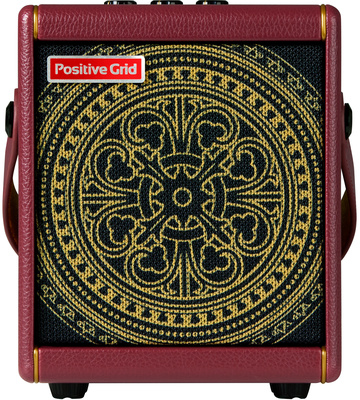
Positive Grid Spark 2
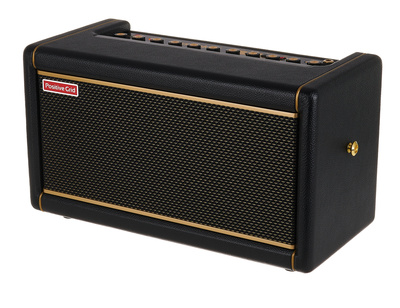
The main appeal of the Positive Grid Spark 2 is that it’s one smart practice, learning, and songwriting hub. With 50 watts of stereo power, and support for electric guitar, acoustic guitar, and bass, it comfortably fills your practice room. It also doubles as a powerful Bluetooth speaker. In terms of modeling power, you get 33 amp models, 43 effects, an onboard looper and a drum machine to jam with, and USB audio interface functionality.
Customer feedback on the Spark 2 is overwhelmingly positive, with users praising the modeling amp for its sound quality at low volumes, intuitive app workflow, and AI-powered tools like Auto Chords and Spark AI tone matching. Criticism tends to focus on the fact that it’s clearly not designed as a loud gigging amp. If your focus is practice, learning, backing tracks, and creative exploration at home, the Spark 2 is one of the most user-friendly and inspiring options among today’s best modeling amps. Check it out at Thomann*.

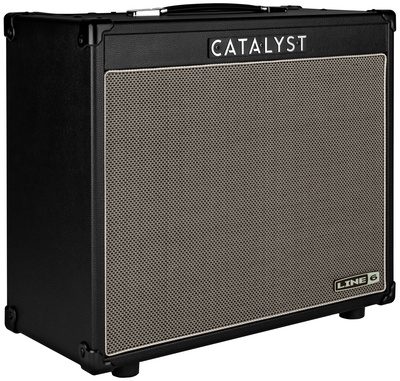
Line 6 Catalyst CX 100
The Line 6 Catalyst CX 100 is designed for players who want a modeling amp that feels more like a traditional combo on stage. With 100 watts of power, a single 12″ speaker, and amp-style controls, it avoids the menu-diving sometimes associated with digital equipment. Under the hood, you get 12 original amp designs covering everything from clean to modern high-gain, plus a dedicated effects section and 12 onboard preset slots.
According to customer feedback, players especially appreciate its punch and headroom, as well as how easily the Catalyst integrates into live setups. Some users note that, while the amp models aren’t direct replicas of specific classics, they sound cohesive and respond well to pedals. In summary, if you’re looking for a loud, reliable modelling combo that behaves like a real amp on stage, the Catalyst CX 100 is one of the strongest contenders in the best modeling amp category. It’s available at Thomann*.

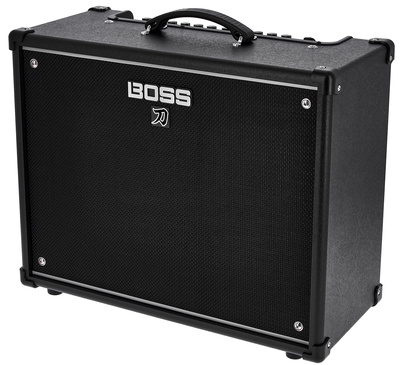
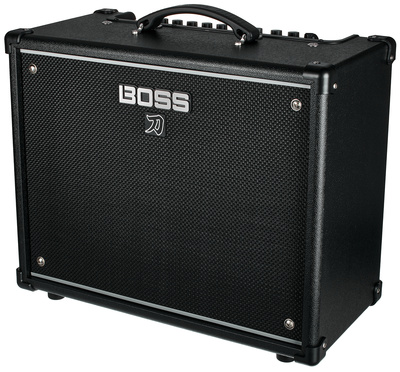
Boss Katana 100 Gen 3
The Boss Katana 100 Gen 3 continues the Katana legacy as one of the most popular and reliable modelling combos on the market. With 100 watts of power, a 12″ speaker and six amp types, plus additional voicings, it can handle everything from clean and edge-of-breakup to modern high-gain with ease. The front panel is packed with hands-on controls, including EQ, effects, presence, cab resonance and power scaling, so it still feels like a ‘real amp’, which is one of the main reasons it is consistently mentioned as one of the best modelling amps.
Customer reviews on Thomann frequently praise the Katana 100 Gen 3 for its reliability, volume headroom and flexibility for rehearsals and gigs. Many players highlight how well it works with pedals and how usable the core tones are without the need for extensive app editing, while others appreciate the option to expand via USB-C or Bluetooth for greater control. In summary, if you’re looking for a reliable, gig-ready modelling amp that strikes a balance between power, versatility, and ease of use — and all at a competitive price — the Katana 100 Gen 3 remains one of the safest and smartest choices among today’s top modelling amps.
- Boss at Gearnews
- Website

FAQ on the Best Modeling Amps
What is a modeling amp?
A modeling amp uses digital signal processing to recreate the sound and feel of classic and modern guitar ampls, often combined with built-in effects. In essence, you get a variety of amp sounds in a single combo.
Are modeling amps good enough to replace tube amps?
For many players, yes. Modern modeling amps offer convincing dynamics, reliable consistency, and far greater flexibility than many traditional amps, especially for practicing and recording at home.
Which wattage should you choose?
For home practice, 15–50 watts is more than enough. For rehearsals and live performance, 100-watt modeling combos provide the necessary headroom and volume to keep up with a full band.
Do modelling amps need apps or computers to sound good?
Not necessarily. Many of these amps are designed to sound great straight from the front panel. However, apps often unlock more advanced editing, preset management, and recording features.
Are modelling amps good for pedals?
Yes. Most modern modeling amps work well with pedals, especially when used with clean or edge-of-breakup amp models. Some also offer effects loops or power amp inputs for even better integration.
Modeling amps combine multiple classic and modern amp voices with effects, deep editing options, and practical connectivity. Recent advances in digital signal processing mean that the best modeling amps can serve as practice amps, rehearsal workhorses, and even gig-ready heads in one compact package.
Conclusion
Now that we’ve listed the five best modeling amps, it’s your turn. What are your experiences with modeling amps? Did you make the transition from team analogue? Have you always played digital amps and modelers?
Let us know in the comments!
*Disclaimer: This post on the best modeling amps contains affiliate links and/or widgets. When you buy a product via our affiliate partner, we receive a small commission that helps support what we do. Don’t worry, you pay the same price. Thanks for your support!

This might also interest you
9 responses to “The Best Modeling Amps 2026: From Versatile Beginner Model to Pro-Level Beast”
How about those Positive Grid amps? Absolutely recommended to check out!
I had a Spark too, and it’s still Bassey sounding
There’s just not in a fat models in the clean to break up tone
Effects are limited
No IR out and no Cabinet out on the spark 2
Plus, their support is awful and I feel they could do so much more with this unit. They could’ve added a lot more amps a lot more effects. Have you move the effects around using the app in a chain and also adding IRS for recording but I fear they will just avoid that and they don’t really give you a direct answer when you ask for support.
voxvtx20
the best
Yeah for the Spark amp ByPositiveGrid
I agree with the above comments. The Spark amp has options the other amps don’t have plus the modeling options which are amazing as well.
which is best to play whooly bully ?
I have a Catalyst, and it gets good chimy, gritty sounds good for Brit Invasion / garage rock.
IK would add Ampire included with Studio One. I add it to my dry Telecaster/Strat VST’s and absolutely no one knows it’s not a real guitar.
no blackstar idx! so much better than the katana
You are currently viewing a placeholder content from Facebook. To access the actual content, click the button below. Please note that doing so will share data with third-party providers.
More InformationYou are currently viewing a placeholder content from Instagram. To access the actual content, click the button below. Please note that doing so will share data with third-party providers.
More InformationYou are currently viewing a placeholder content from X. To access the actual content, click the button below. Please note that doing so will share data with third-party providers.
More Information