Techno Legends Use This Gear: Surgeon – Techno as a Live Patch
Modular Systems, Improvisation, and Risk For an Uncompromising Techno Sound

 3,0 / 5,0 |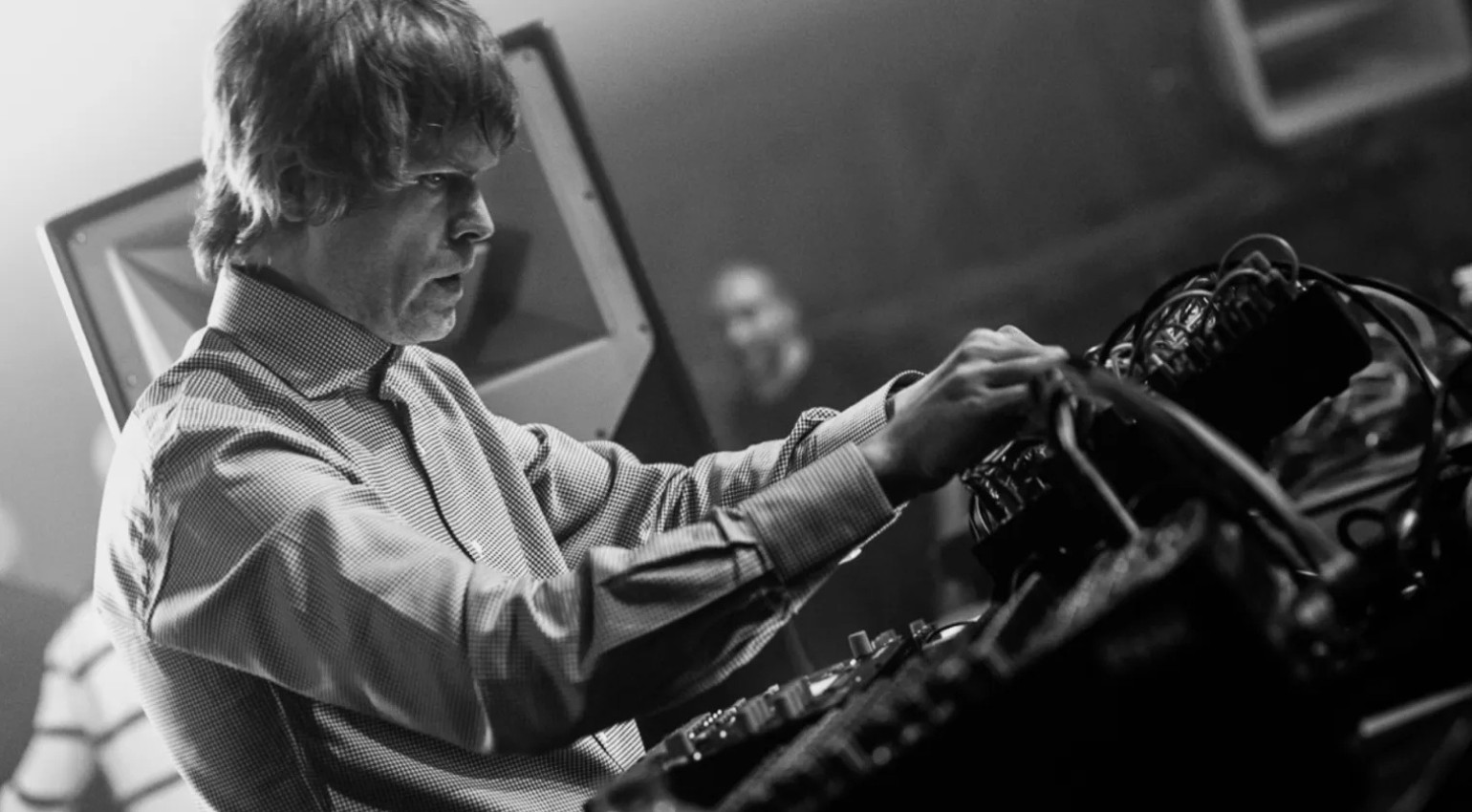

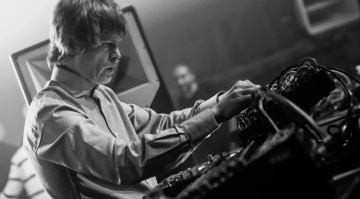
Compared to Jeff Mills, Richie Hawtin, and Robert Hood, Surgeon represents a radically different approach. For him, techno is not a reproducible arrangement but a process that unfolds in the moment. His music is not played back; it is patched, reshaped, and kept under tension. Machines are not a safety net, but active collaborators. At the center of this mindset is hardware — especially modular systems. Not as sound sources in the traditional sense, but as performance instruments. Surgeon does not use technology to reproduce finished ideas, but to create new situations. Techno becomes a live event in which structure emerges from interaction rather than planning.
Key Facts
- Surgeon is regarded as one of the most influential live techno performers
- Focus on hardware, modular systems, and improvisation
- No prepared tracks, no preset safety net
- Techno as a system and a process, not a finished product
- Risk and instability are part of the performance
- Strong influence on modern live and modular techno concepts
All About Surgeon
Surgeon: From UK Techno to Radical Live Performance
Anthony Child, a.k.a. Surgeon, emerged from the British techno scene of the 1990s. At a time when techno was increasingly fragmenting into clearly defined styles, many producers focused on refining and polishing their sound. Surgeon deliberately chose the opposite path. His music stayed raw, physical, and at times uncomfortable. Distortion, pressure, and tension were not side effects, but core design elements.
This approach inevitably moved him away from traditional, track-based thinking. Rather than fixing arrangements in advance, Surgeon began to understand techno as something that happens. Live performances became experimental spaces where machines, chance, and human decisions collide. The result is not a perfect sequence, but a constantly shifting state.
Techno as a Live Patch Instead of a Track
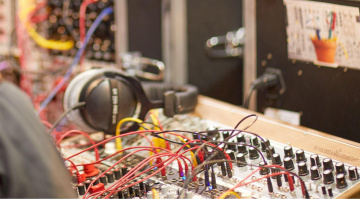
For Surgeon, a “patch” is not a technical detail, but an attitude. Modular systems allow him to keep the relationships between sound, rhythm, and dynamics open. Small changes in modulation, a missing cable, or altered clock structures can flip the entire course of a set. This fragility is intentional.
Unlike pre-produced live sets, there are no guarantees here. Grooves can fall apart, tensions can build or collapse abruptly. The appeal lies not in controlling these processes, but in steering them. The audience experiences not a sequence of tracks, but a system in motion.
Modular Systems as Performance Instruments
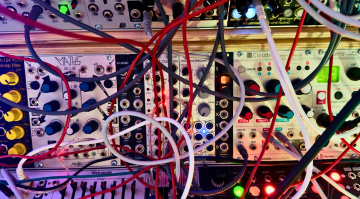
In Surgeon’s setups, modular systems are not an add-on, but the core. Sequencers, clock generators, filters, VCAs, and modulation sources interlock seamlessly. Sound shaping, rhythm, and dynamics emerge at the same time. There is no clear separation between sound design and arrangement.
This way of working requires deep knowledge of the setup. Mistakes cannot be undone, and decisions take effect immediately. That is precisely why his performances feel so direct. You don’t just hear the sound, you hear the consequences of each intervention. Techno becomes physical, almost tangible.
Live Means Risk — and That’s the Point
A defining feature of Surgeon’s performances is the deliberate absence of safety nets. There are no backing tracks, no emergency loops, no backup hardware, and no automated transitions. If something becomes unstable or simply doesn’t work in that moment, it remains part of the performance. And that’s exactly how it should be — for him and for the audience. This stands in stark contrast to many modern live setups designed for maximum control.
For Surgeon, risk is not an obstacle, but a prerequisite. Without uncertainty, there is no tension in the track — and therefore none in the performance. As a result, his sets retain a sense of urgency that cannot be planned. Every show is different and unique, because from his artistic perspective, it has to be.
What This Means for Techno Today
In an era where techno is often visually exaggerated and technically perfected, Surgeon’s approach feels almost provocative. It’s a reminder that techno doesn’t have to be flawless to work. Groove doesn’t come from precision alone, but also from friction.
Many contemporary live acts, especially in the modular scene, have embraced this idea. Even producers who mainly work in a DAW adopt elements of it: fewer presets, more interaction, and openness to unexpected developments. Techno becomes a process again, not a product.
Techno tracks built from loops taken straight out of sample libraries feel dull and interchangeable by comparison. What’s missing is life — and the personal signature Surgeon brings to his tracks.
Surgeon Today: From Modular Chaos to Modern Hardware
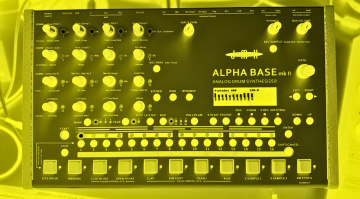
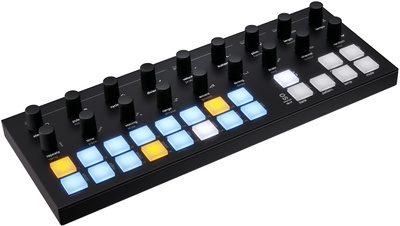
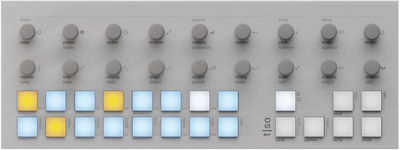
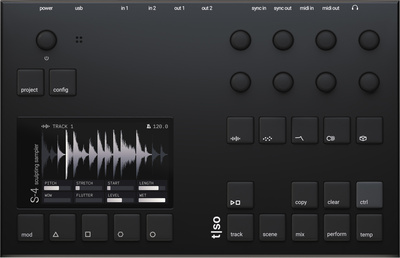
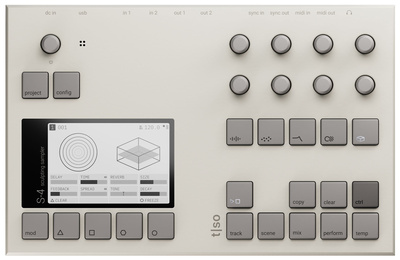
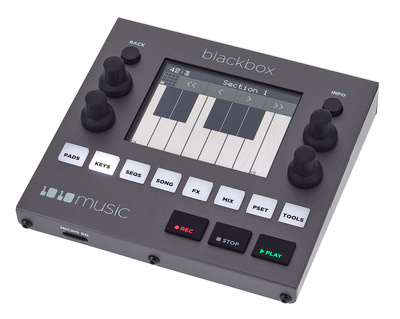
Recently, Surgeon moved away from his modular system and adopted a new concept for performing live. He now relies on modern hardware that allows him to create more dancefloor-focused sets. His current live setup includes the following equipment:



Recreating Surgeon in the Studio – Thinking Techno as a Live Patch
To approach Surgeon’s mindset, it helps to think less in terms of tracks and more in terms of systems. Instead of planning an arrangement from start to finish, build a setup that influences itself. In a DAW context, this means multiple sequencers, modulations, and effects that are not rigidly synced. Parameters such as filter cutoff, volume, or gate length should be able to modulate and influence each other.
A good starting point is a deliberately reduced setup with a kick, a rough percussion or noise voice, and an aggressive synth sound. Each element receives its own modulation, running at slightly different speeds or with random variations. The pulse stays stable while the details constantly shift. Groove emerges not from perfection, but from the tensionbetween elements.
It’s important not to intervene too quickly with corrective moves. Record longer jams and accept changes in direction. A patch is allowed to fail, dissolve, or tip over unexpectedly. That openness is the key difference between a conventional loop and a living live patch in the spirit of Surgeon. If you own a larger modular system, this philosophy naturally applies even more directly.
Your Surgeon Gear: A Setup for Techno as a Live Patch
Starter – Entering the Live Patch Mindset
For beginners, a small hardware setup is enough: a drum machine or groovebox, a simple voice module, and a compact sequencer. The goal is not versatility, but understanding interaction and modulation. Of course, this can also be realized in the box using a DAW and plugins.
Goal: Understand how a system influences itself. Few devices, lots of interaction, no overkill.
Example Setup:
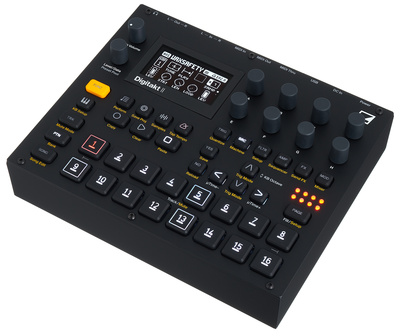
- Elektron Digitakt II: The core for drums, triggers, and simple sequences. Ideal for varying rhythmic structures live.
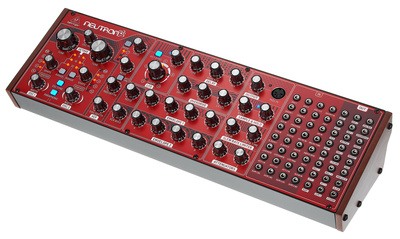
- Behringer Neutron: Semi-modular synth for raw sounds, feedback, modulation, and first patching experiences.
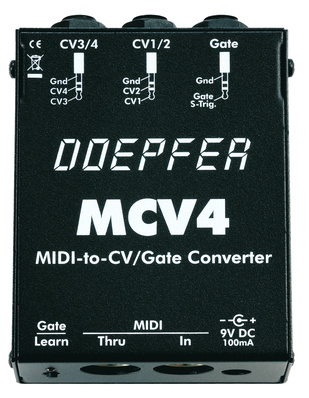
- MIDI-to-CV interface (e.g., Doepfer): Connects groovebox and synth into a shared timing system.
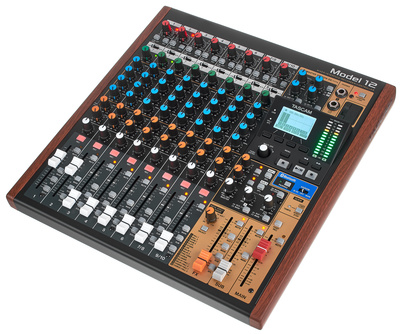
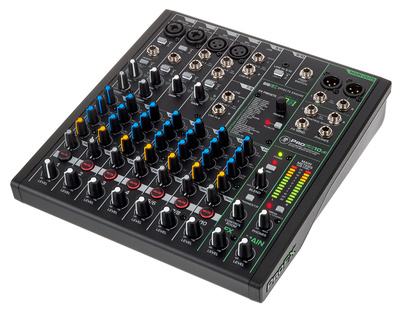
- Compact analog mixer (e.g., Tascam Model 12 or Mackie ProFX10v3): For performance, overdriving, and hands-on control.
Why it works: You learn how to create instability with limited means. Digitakt II provides structure, the Neutron breaks it apart. That tension is the entry point to Surgeon’s way of thinking.





Advanced – System Instead of Collection
Here, multiple modular voices, separate clock and modulation sources, and performance-oriented filters and VCAscome into play. The focus shifts to building relationships between elements rather than perfecting individual sounds.
Goal: Less dependence on fixed patterns, stronger modulation, true live shaping of rhythm and sound.
Example Setup:
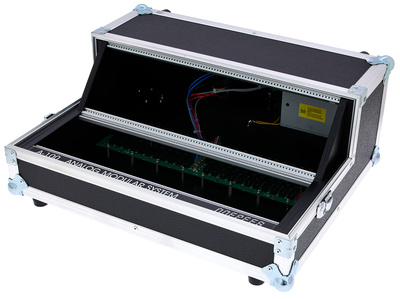
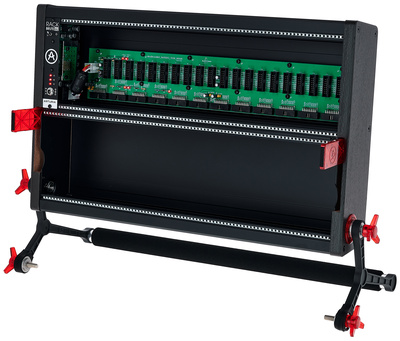
- Eurorack case (6U–9U): Focus on sequencing, modulation, and sound shaping rather than many sound sources.
- Pamela’s New Workout: Central clock for polyrhythms, modulation, and timing shifts.
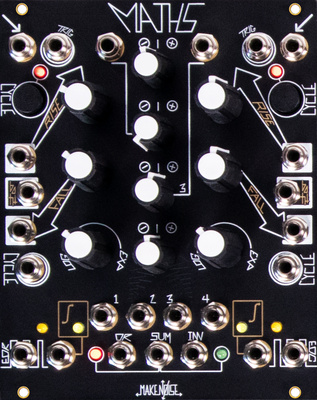
- Make Noise Maths: A versatile module for envelopes, LFOs, slew, and unpredictable movement.
- Noise Engineering Basimilus Iteritas Alter: Drums, noise, and aggressive percussion in one module.
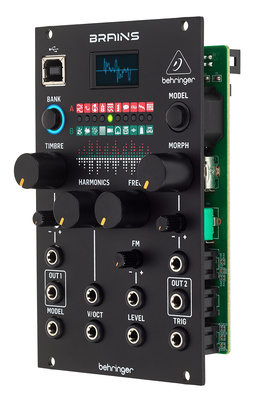
- Mutable Instruments Plaits (or a current clone): Flexible sound source for bass, texture, and rhythmic elements.
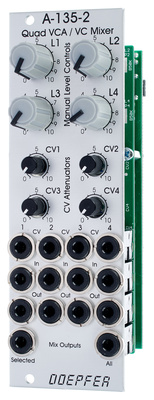
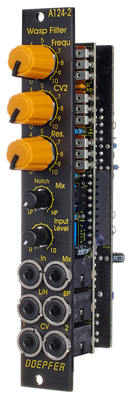
- VCAs & filters (e.g., Intellijel / WMD): For dynamics, accents, and controlled chaos.
- Small performance mixer: Direct control without menu diving.
Why it works: This is where techno really starts to tip over. Sequencing, sound, and dynamics interlock. You’re not playing patterns — you’re steering states.




Live Performer – Uncompromising and Open
A clearly structured but risk-ready setup without backing tracks. Modular systems handle rhythm, sound, and dynamics simultaneously. Each performance is a one-off state, not a reproducible set.
Goal: No safety net. No going back. Techno as a one-time event.
Example Setup:
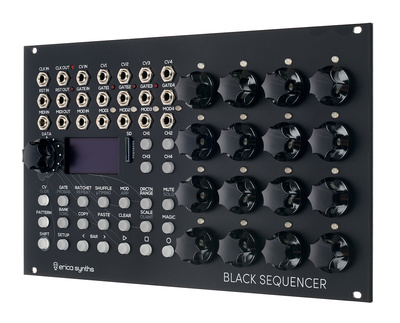
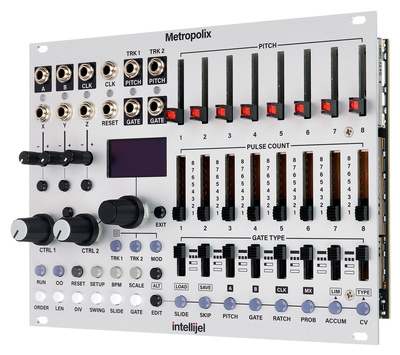
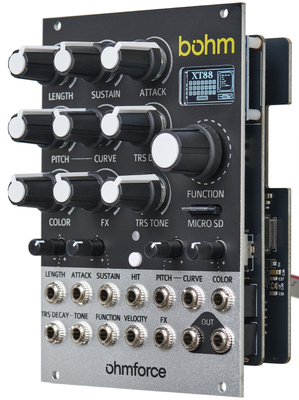
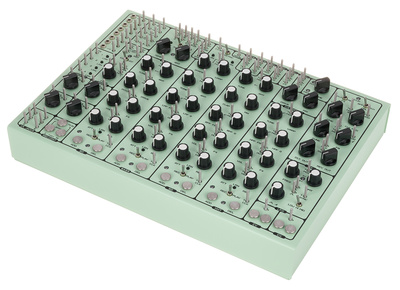
- Large Eurorack system (9U–12U or more): Clear structure: clock → sequencing → sound → dynamics → mix.
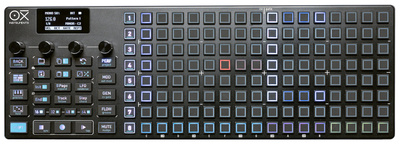
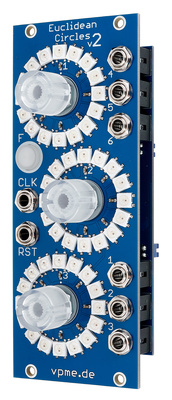
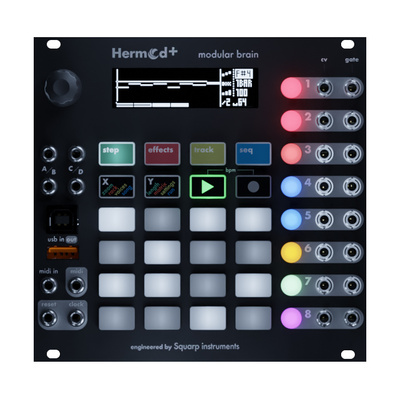
- Multiple sequencers / trigger generators: Different pattern lengths, probability, clock divisions.
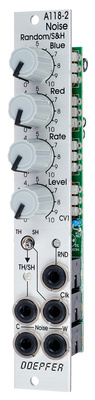
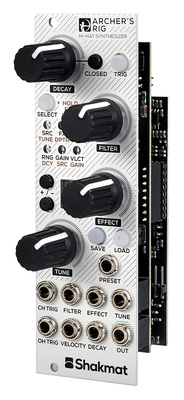
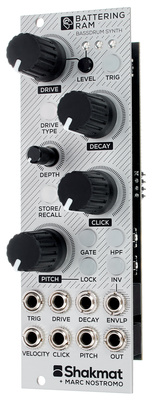
- Multiple drum and noise modules: Not for variety, but for friction between similar roles.
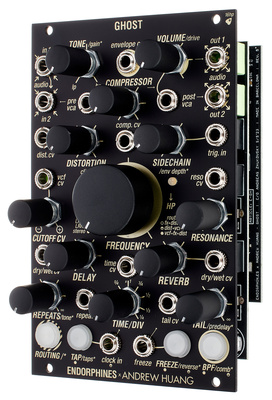
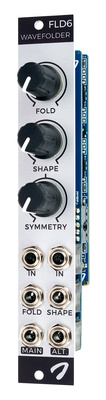
- Analog filters & distortion modules: For pressure, feedback, and physical presence.
- Performance-oriented mixer (e.g. Boredbrain Xcelon SL): Direct overdrive, muting, layering.
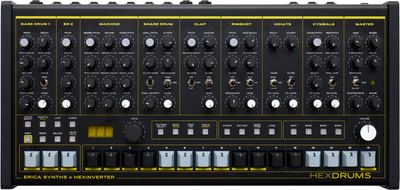
- Optional – Drum machine without memory dependence: As a stable pulse, not a track player.
Why it works: This setup forces decisions in the moment. Every intervention changes the system. Mistakes can’t be hidden — they become part of the performance. That’s where the energy Surgeon stands for comes from.










Software Additions
Also valid in the Surgeon context — not as a replacement, but as an extension:
- Ableton Live/Bitwig Studio as a recording and routing hub
- VCV Rack or Softube Modular for testing patch ideas in advance
- Max for Live for unpredictable modulation and generative processes



Conclusion: Techno as a Living System
Surgeon proves that techno doesn’t need to be arranged to be effective. Sound is patched, played, and shaped in the moment. Machines are not tools for firing off finished tracks, but partners in an open process. Control and loss of control exist in deliberate tension.
This approach challenges both producers and audiences. It demands attention, acceptance of uncertainty, and the courage to allow mistakes. In return, techno emerges in its most immediate form: raw, physical, and unpredictable. Not as a product, but as an event. In the end, Surgeon sends us on a journey with his sound — his journey.
FAQ: Surgeon and Live Modular Techno
Who is Surgeon?
Surgeon is a techno producer and live performer from the UK. He is known for his uncompromising, hardware-based approach and is regarded as one of the key pioneers of radical live techno performances without pre-arranged tracks. His focus lies on direct interaction with machines and the conscious use of risk on stage.
What is Surgeon Musically Known For?
Surgeon is best known for his intense, improvised live sets built around modular systems and hardware. His sound is raw, physical, and forceful, shaped by distortion, tension, and dynamics. Instead of polished arrangements, he focuses on immediate energy and constant change.
Does Surgeon Use Modular Systems Live?
Yes, modular systems are a central element of his live performances. They allow him to shape rhythm, sound, and structure in real time without relying on prepared arrangements or played-back tracks. Sound design and composition happen simultaneously on stage.
Why are Surgeon’s Live Sets so Different From Others?
Because they are not traditionally rehearsed. Each performance emerges from interaction, risk, and spontaneous decisions. There are no safety nets, no emergency loops, and no fixed sequences. This openness creates the distinctive tension and immediacy of his sets.
What Can Producers Learn From Surgeon?
That techno doesn’t have to be perfect to work. Thinking in systems instead of tracks, allowing more interaction, and prioritizing live control over automation can lead to more expressive and alive results. Surgeon’s approach shows how much power lies in unpredictability.
Surgeon doesn’t use machines to gain control, but to consciously give it up. Modular systems, hardware, and open signal paths are not safety nets for him, but fields of tension. Machines respond, sometimes resist, and force decisions in the moment. That’s where the raw energy of his live performances comes from.
In the context of techno, Surgeon represents a radical perspective: technology is not a guarantee of perfection, but a means of expression. Understanding his way of working reveals that it’s not about individual modules or devices, but about interaction as a system. Machines become collaborators — and techno becomes a living process rather than a reproducible sequence.
More Information
- Techno Legends Use This Gear: Robert Hood and the Discipline of the TR-909
- Techno Legends Use This Gear: Richie Hawtin aka Plastikman
- Techno Legends Use This Gear: Jeff Mills and His Roland TR-909
- Eurorack in Techno 2026: Why Does a Modular System Belong in a Modern Techno Setup?
- The Best Synths for Techno Productions in 2025: Powerful, Flexible and Creative
- Techno Rumble in Ableton Live – Made Easy!
- Surgeon’s Instagram
- Surgeon on Bandcamp
*Note: This article contains affiliate links that help support our site. Don’t worry — the price stays the same for you. If you purchase through these links, we receive a small commission. Thanks for your support!

This might also interest you