Modal ELEMENT One: Cobalt8 in Sheep’s Clothing – Pre-Order Now
An Affordable, Performance-Focused Alternative to the Cobalt Series?

 4,6 / 5,0 |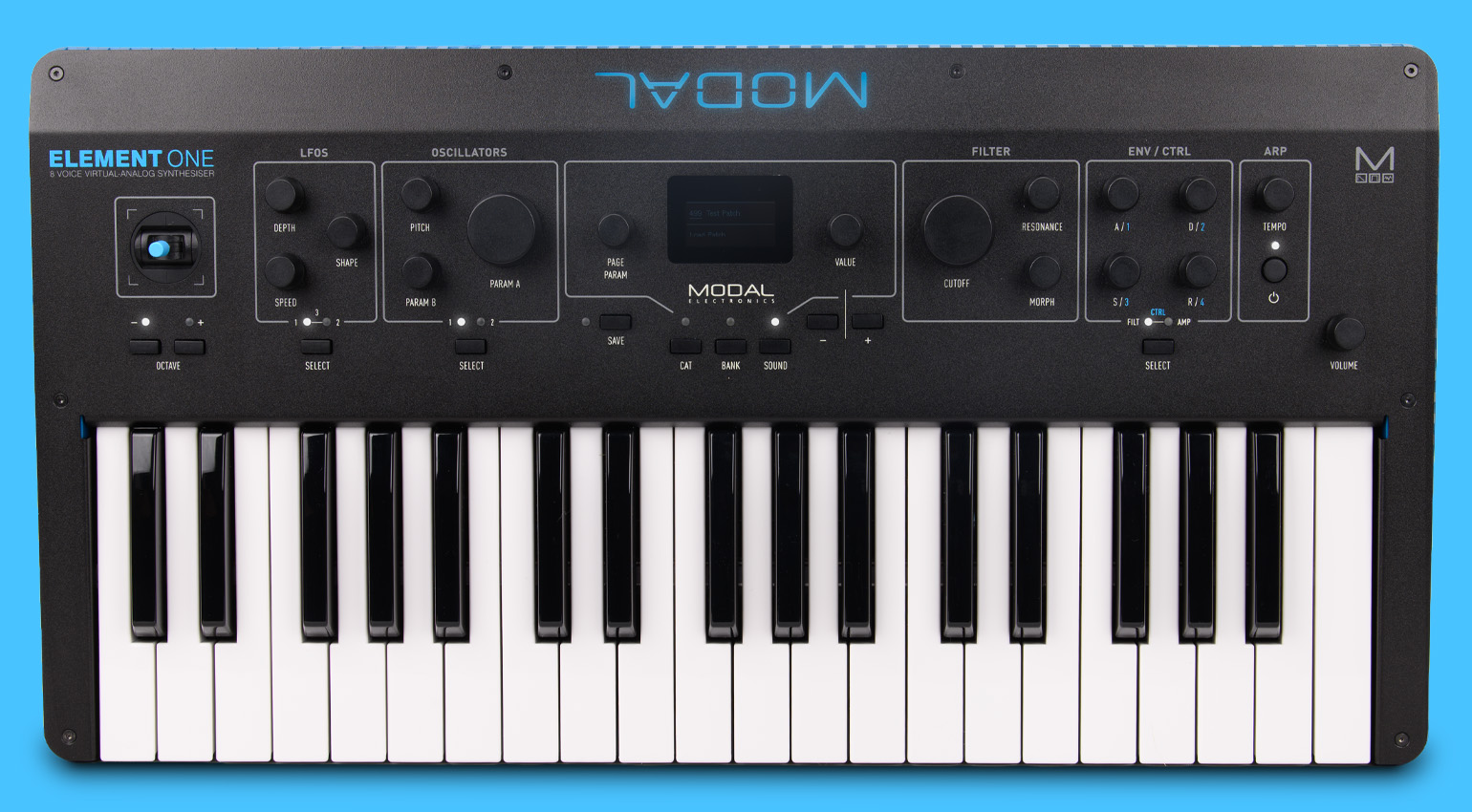


The new Modal ELEMENT One pairs powerful virtual analog synthesis with a streamlined, performance-focused user interface. Available for pre-order now!
All about the Modal ELEMENT One
Modal ELEMENT One: Pre-Order Now!
Superbooth has only just finished, and you can already order the new Modal ELEMENT One. The virtual-analogue synth is available for pre-order from Thomann* for $629 / £555 / €639.

Modal ELEMENT One
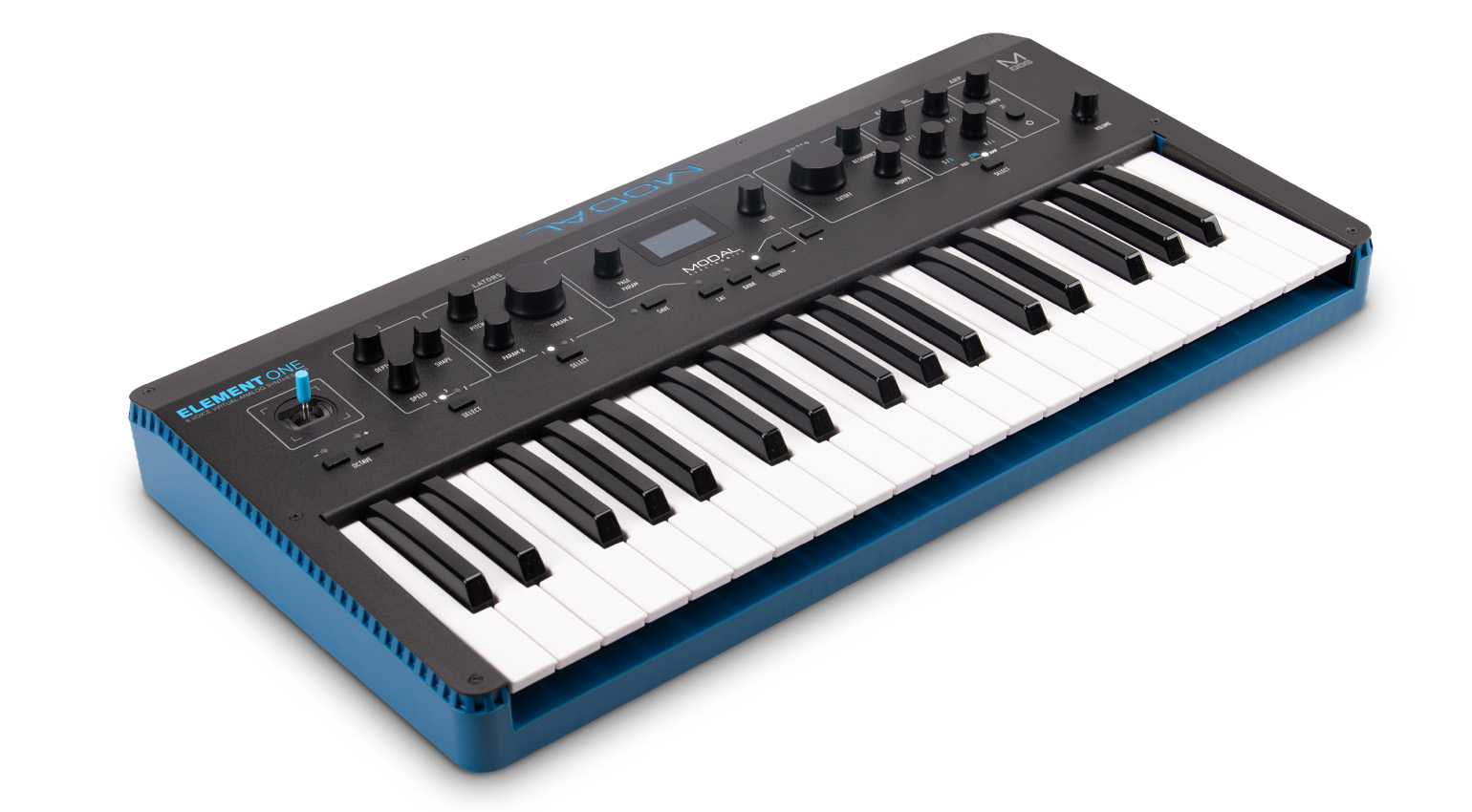
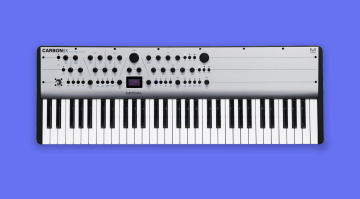
Modal Electronics has unveiled the new ELEMENT One at Superbooth 26. The first instrument developed entirely after Modal’s corporate restructuring process is an 8-voice polyphonic virtual analog synth, just like the Cobalt 8.
Compared to the Cobalt series, however, the Modal ELEMENT One has a much more streamlined user interface and weighs in at just 4.5 kg / 10 lbs. This makes it an obvious choice for live performers, beginner synthesists, and anyone who can’t be bothered with navigating complex menus.
Under the hood, the ELEMENT One seems to share much of its DNA with the Cobalt. Like the bigger brother, the new synth offers two independent oscillator groups per voice. Up to eight oscillators can sound per voice, or 64 in total. You can choose from 34 algorithms, which range from basic waveforms to more complex configurations like sync, ring and cross modulation, PWM, bit crushing, and more. You can also morph continuously between waveforms.
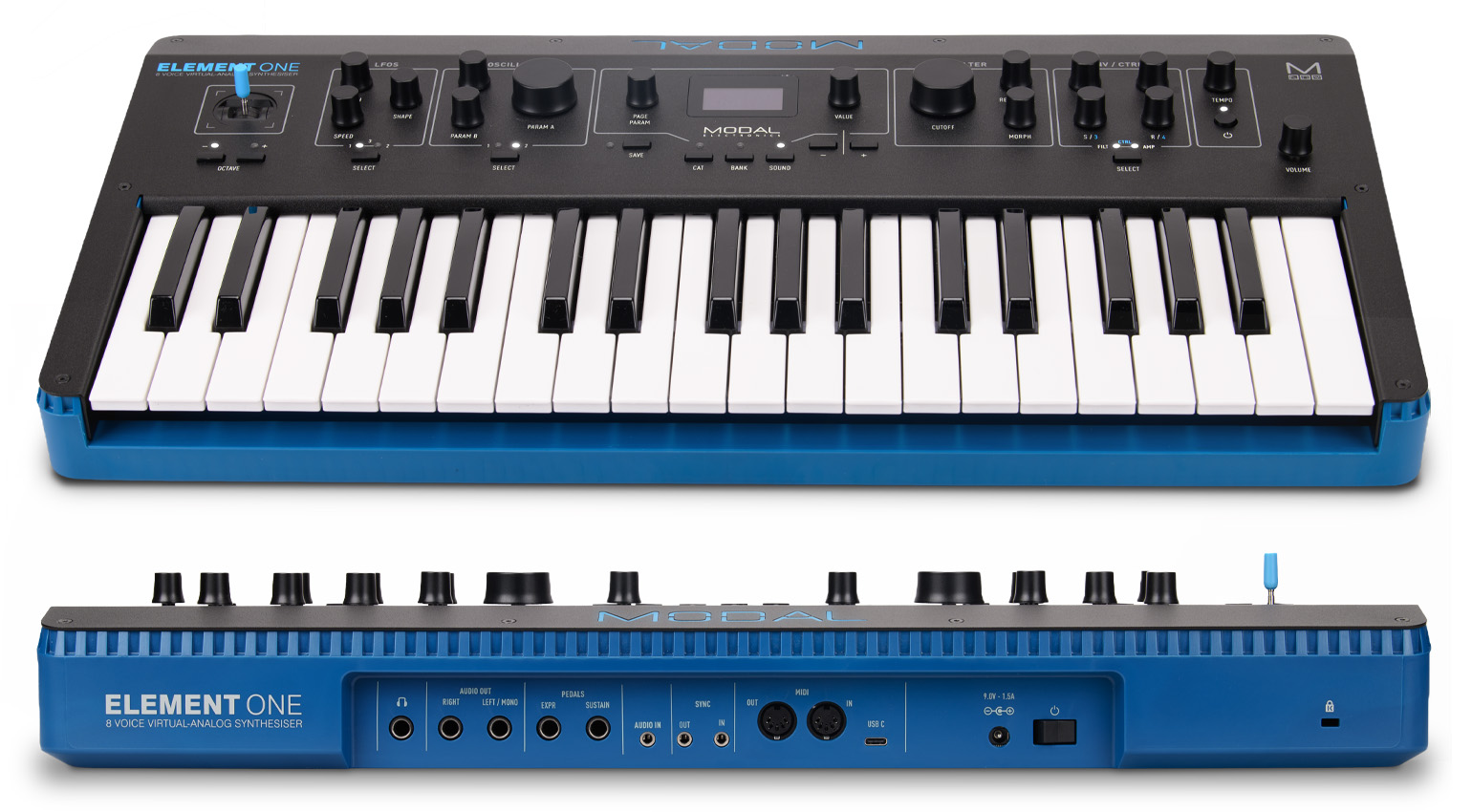
The filter section also seems to be identical to the Cobalt’s and offers no less than 31 filter types, including morphing variants. For modulation, the synth has three envelopes and LFOs each, which can be assigned via a modulation matrix with 12 sources and 55 destinations. For additional sound shaping, there are three effects engines that can be arranged in any order and offer effects such as chorus, flanger, tremolo, LoFi, rotary, delay, and reverb.
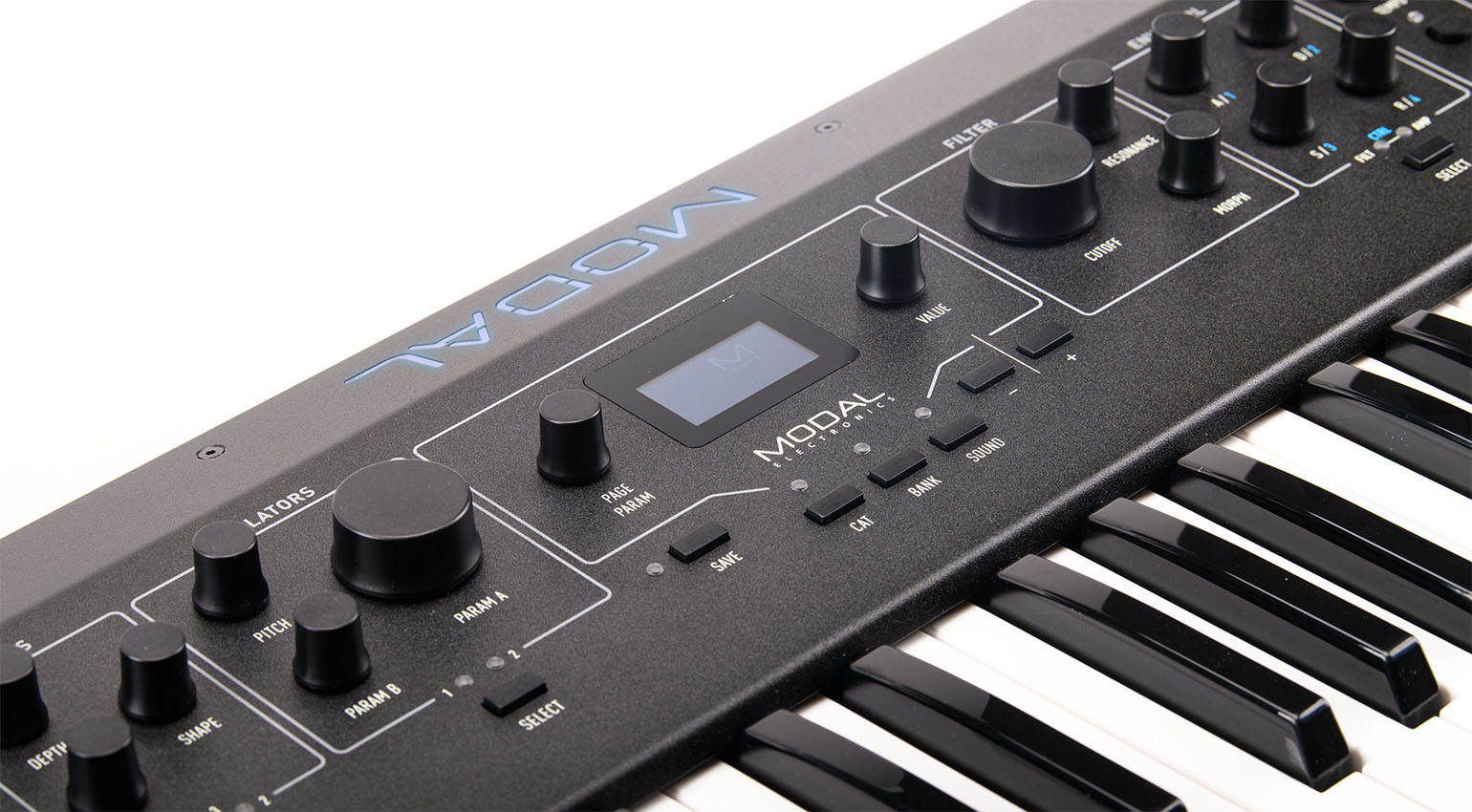
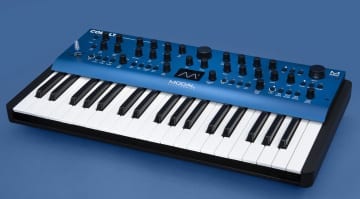
Up to this point, this reads almost exactly like the Cobalt’s spec sheet. Even the keyboard with 37 velocity-sensitive keys and channel aftertouch seems to be similar, if not identical. Like the Cobalt, the ELEMENT One has an assignable 4-way joystick for pitch bend, modulation, and other control tasks. It’s even compatible with Cobalt patches. So what are the differences?
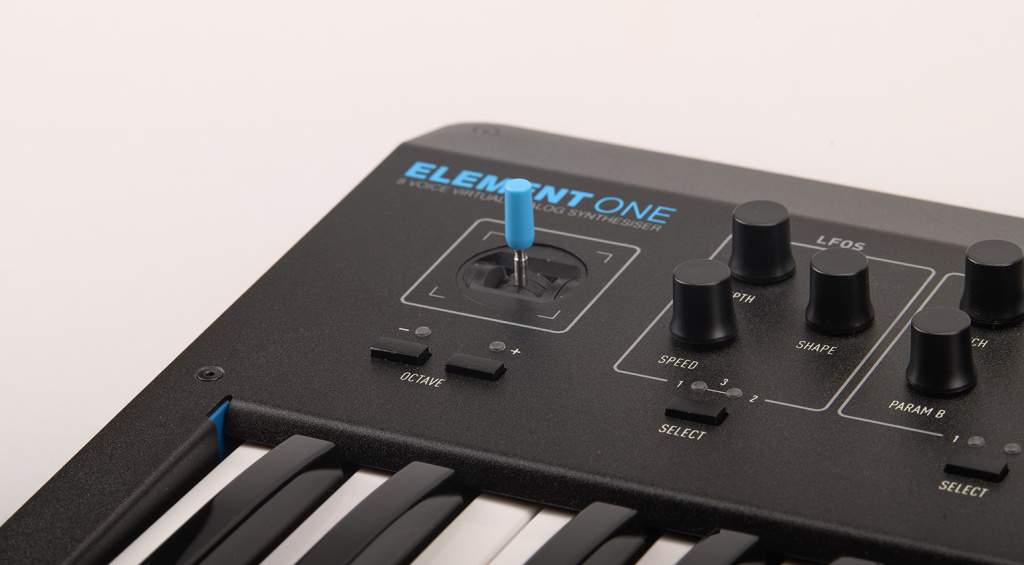
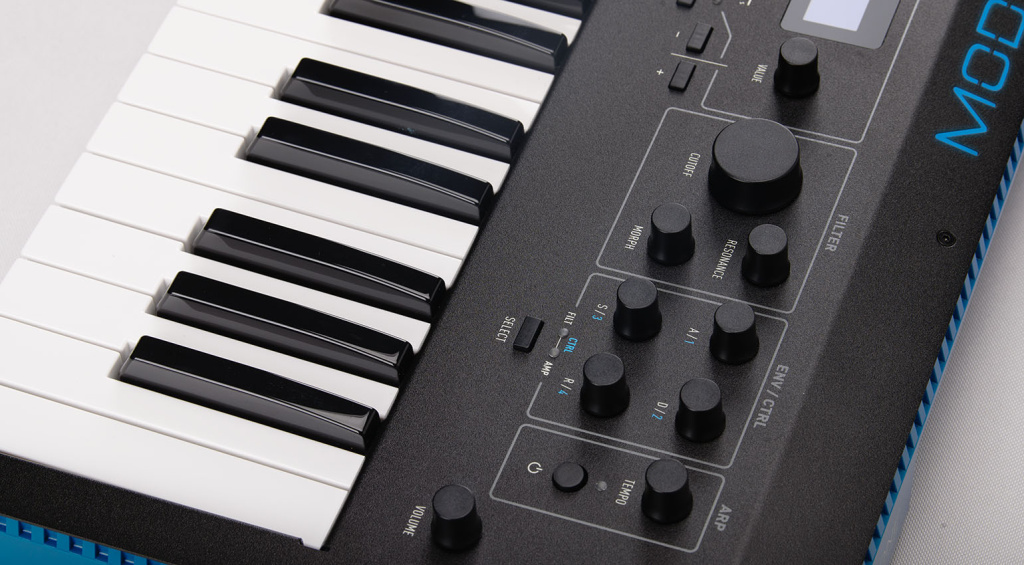
It all comes down to the user interface. While the sound engines are obviously very similar, the ELEMENT One doesn’t have nearly as many controls as the Cobalt8. And this is no coincidence: according to Modal Electronics, the design “prioritizes immediate inspiration and expressive playability over dense menu-diving”.
For example, although the structure of the oscillator section is identical, the ELEMENT One has only three knobs to control it instead of the Cobalt’s seven. You also need to make do with fewer controls for the envelopes, LFOs, and the arpeggiator; the effects even have no panel controls whatsoever. That said, you can use the four envelope knobs as universal assignable controllers for any parameter.
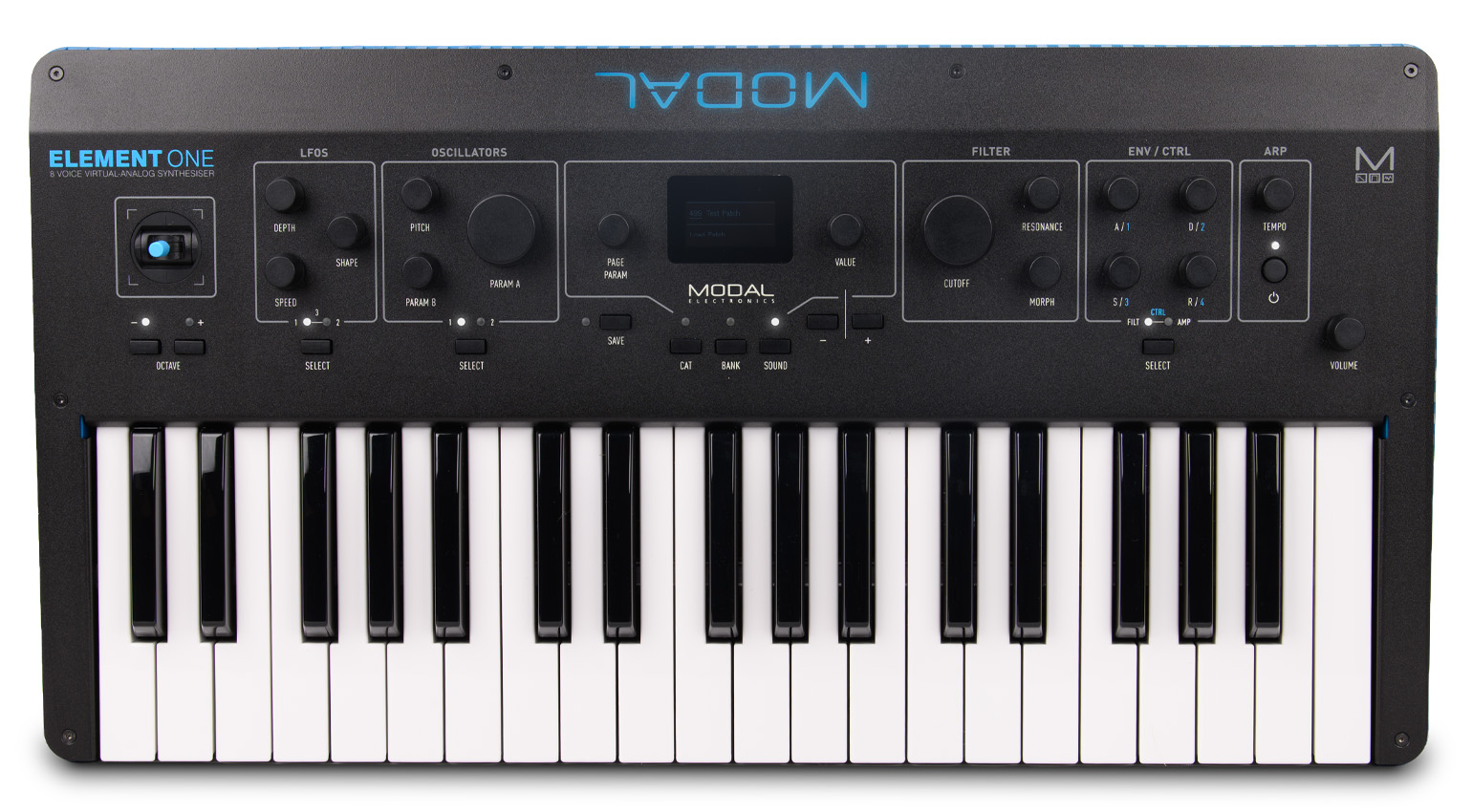
Such a powerful synthesis engine in a lightweight, more affordable package is an exciting thought. However, I wonder if the streamlined user interface really does make for a more intuitive, user-friendly experience in this case. Don’t complex synth engines actually tend to get harder to use with fewer knobs and buttons? But maybe that’s just me.
We’ll have to wait for the first reviews to see how the ELEMENT One holds up in practice. In any case, the streamlined interface doesn’t mean that you can’t go deep diving into every detail of the synth engine: the ELEMENT One is compatible with the free MODALapp, a comprehensive editor with access to all sound parameters.
Price and Availability
The Modal ELEMENT One will be available in July 2026. The manufacturer states an MSRP of €649.
More Information

This might also interest you

5 responses to “Modal ELEMENT One: Cobalt8 in Sheep’s Clothing – Pre-Order Now”
You are currently viewing a placeholder content from Facebook. To access the actual content, click the button below. Please note that doing so will share data with third-party providers.
More InformationYou are currently viewing a placeholder content from Instagram. To access the actual content, click the button below. Please note that doing so will share data with third-party providers.
More InformationYou are currently viewing a placeholder content from X. To access the actual content, click the button below. Please note that doing so will share data with third-party providers.
More Information
I would have loved to see an Argon 5M with the well-established form factor.
This wasn’t what I expected from Modal. Though, I’m quite intrigued by it so far.
* Argon 5S
They better fix their shitty hostile customer service attitude and maybe they’ll make it better this time.
I detached the rack brackets from my Argon8m, and to not risk losing track of the screws I screwed them back into the machine again. Result, the joystick got damaged and doesn’t work properly anymore as they’ve supplied too long screws, when the rack brackets are not in-between… Now they claim it’s a user error, and instead of shipping me a new component (worth what, $1?) for free I will have to buy it from the distributor for 49€ + Shipping. Where is this communicated? In the manual? (no), on the box (no), on a sticker on the chassi (no), how is this now a user error then?
it’s these kind of things that pisses customers off and makes us abandon the brand! (will sell as soon as I have changed the bloody joystick and never again buy any Modal products).
The Cobalt8 is kind of the modern Access Virus, and this is an ‘Explorer’ version of it. At about £550 it should sell well to your ‘upgrade from Microkorg’ users. I prefer the Cobalt8 full size, but in support of the idea I must say that the Hydrasynth Explorer pulled me in when the full size one didn’t. The same engine with fewer controls made it a much more appealing synth. I reckon this one might do the same for the Cobalt8
For the same price ($650), can’t I just buy a used Cobalt 8 that has a much better keyboard and far more hands on control?