Deep House with Modern Hardware: 3 Essential Pieces for the Perfect Match
Gear for Warm House Grooves

 4,8 / 5,0 |
Deep House with Modern Hardware: 3 Essential Pieces for the Perfect Match · Source: Shotshop GmbH / Alamy

If you’re passionate about deep house and want to produce it with modern hardware instead of relying solely on your DAW, the right setup makes all the difference. We’ll show you three carefully chosen pieces of gear that complement each other and help shape the warm, groove-driven sound you’re after. Here are our recommendations for a focused and effective studio setup.
Perfect Match: Deep House with Modern Gear
Deep House with Modern Hardware
Nowadays, nearly every music genre is divided into countless subgenres, and house music is no exception. Emerging in the 1980s from the legacy of disco, this style developed almost in parallel with techno. Deep house stays rooted in classic Chicago house, while gradually incorporating influences from other genres.
In terms of tempo, deep house typically remains moderate and doesn’t rely solely on early disco foundations. Many sounds echo elements of disco, funk, and subtle jazz influences, often expressed through warm, moody chord progressions. These chords shape the overall aesthetic, giving deep house its warmer and more restrained character compared to other house styles.
Larry Heard and Robert Owens, together as Fingers Inc., laid the foundation for what many later called deep house with the classic “Can You Feel It.” Tracks by Moodymann, such as “I Can’t Kick This Feeling When It Hits,” are often placed in the same category, as is “Do It Your Way” by Mood II Swing.
As these examples show, the boundaries aren’t clearly defined — and that’s exactly what makes the genre so compelling.
After this brief — and, as is often the case with music, somewhat controversial — classification, let’s turn to the actual topic: Which modern hardware works best for producing deep house? We’ve selected three suggestions, none of which are meant to be definitive. There are certainly other options, but our goal is to highlight the essential hardware that truly shapes the sound.
A Sample-Based Groovebox for Beats and Sequencing
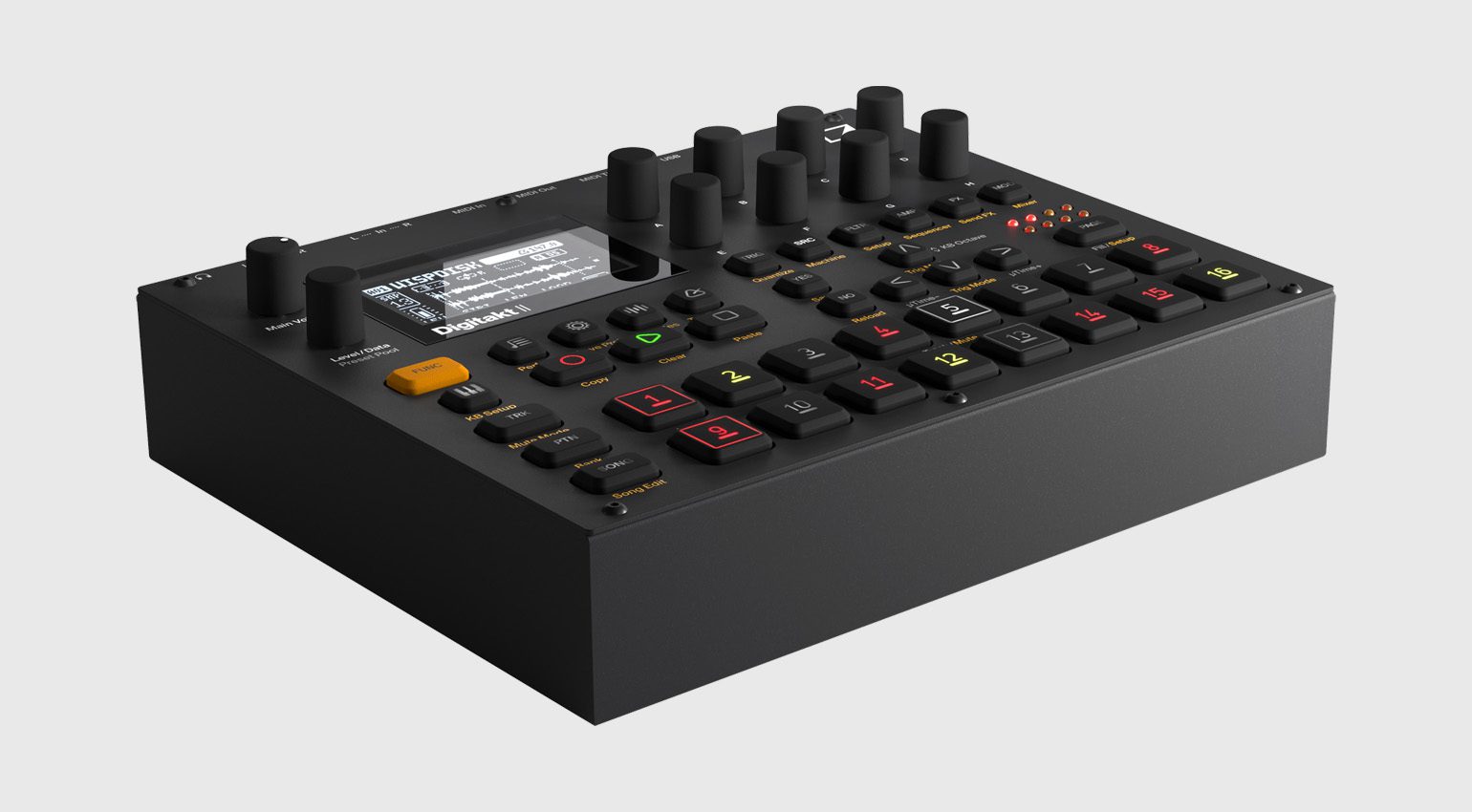
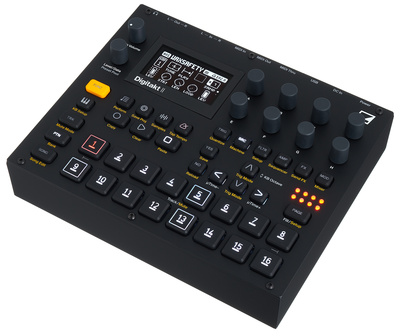
If you want to produce deep house with hardware, a sampler is a strong place to start. Samples provide flexibility and open up a wide range of sound design possibilities. For many deep house producers, samplers remain among the essential tools. Often, these are classics like the AKAI MPC or the E-MU SP-1200. For a modern example, we’ll look at the Elektron Digitakt II.
Like the legendary AKAI and E-MU Systems units mentioned above, the Digitakt II combines a sampler with a drum sequencer. This makes it ideal for building beats and grooves while also integrating external hardware via MIDI. Elektron’s signature Overbridge connection is another major advantage. Using the companion software, individual tracks can be transferred directly to your DAW via USB for further processing.
The Elektron Digitakt II stands out thanks to its compact size, generous internal memory, built-in effects, and, not least, its powerful sequencer. Features such as parameter locks and trigger conditions make it easy to create lively, evolving grooves. With adjustable swing and micro-timing, you can quickly give your beats the right feel and subtle movement.
Of course, a sampler like the Digitakt II is not limited to drums and percussion. It also works perfectly for chords, stabs, loops, and other signature sounds. Deep house often draws on tones inspired by instruments like the Fender Rhodes or classic digital pianos. With the right samples, you can shape authentic-sounding deep house tracks with ease. We recommend the Digitakt II over its predecessor, as it supports stereo samples, offering greater depth and flexibility. You can find the sampler at Thomann*.


Roland JU-06A for Chords, Pads, and Basslines
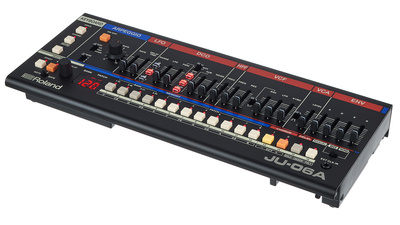
Some may call it “conservative,” but deep house has remained true to its core despite changing trends and developments. When it comes to achieving an authentic sound, a synthesizer like the Roland JU-06A fits seamlessly into the picture. Powered by ACB technology, the JU-06A digitally recreates the tones of the classic Juno-60 and Juno-106, both of which can be heard in countless house productions.
The JU-06A also offers several practical advantages over the original models. It is far more affordable, and its compact size fits comfortably into even the smallest studio spaces. Unlike vintage units, it requires no maintenance or repairs. With its built-in arpeggiator, 16-step sequencer, and chord memory, you can achieve expressive results quickly. Everything can be easily controlled and synchronized via MIDI, whether paired with a Digitakt II or your DAW.
With the JU-06A, Roland brings its legendary instruments back in a modern format. The sound of these classics remains highly sought after, as shown by Behringer’s upcoming JN-80, which draws inspiration from the Roland Juno-60. You can find the Roland JU-06A at Thomann*.

Novation Bass Station II Brings Analog Bass to Deep House Tracks
With the Elektron Digitakt II and the Roland JU-06A, you already have a strong foundation for producing deep house with hardware. Combined with your DAW, the creative possibilities expand even further.
But the perfect match usually comes in threes — so what would make a meaningful addition to this setup?
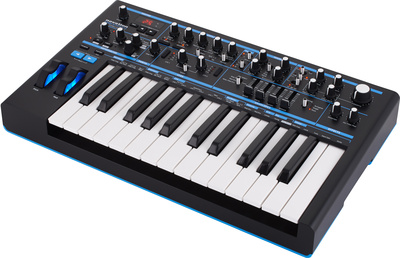
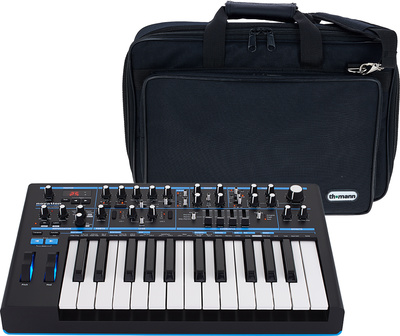
We suggest adding an analog synthesizer capable of delivering warm, deep bass while also handling other sound duties. While names like Moog often come to mind — such as the Subsequent 37* — we’d like to focus on the Novation Bass Station II instead.
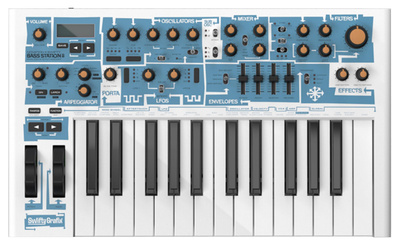
This synth has earned its place as a modern classic, remaining in production for over a decade. With the limited-edition Swifty Edition released in 2025, Novation makes it clear that the Bass Station II continues to be supported and valued today.
This paraphonic analog synthesizer offers a great deal at an attractive price point. From deep basslines and leads to percussion, effects, and even classic acid bleeps, the Novation Bass Station II covers a wide range of sonic territory. While the Bass Station II excels at bass, the JU-06A shines with chords and pads, and the Digitakt II takes care of drums, sequencing, and sampling duties.
If you’re after a sound reminiscent of Moog but don’t want to invest in a big-name instrument like the Subsequent 37, the Behringer Model D* is an extremely affordable — and compact — alternative. You’ll find additional sound examples of the Bass Station II below. The synthesizer is available at Thomann*.

Conclusion: Why This Trio Is a Perfect Match
Let’s wrap it up. If you want to produce deep house with modern hardware, there are plenty of compelling devices available today. A combination of sampler and groovebox provides a strong foundation, as it allows you to quickly build an authentic framework of beats, samples, and loops from instruments and other sound sources. The Elektron Digitakt II offers a wide range of creative features and is fully capable of producing complete tracks on its own. With its built-in sequencer and MIDI connectivity, it also serves as an excellent hub for controlling external hardware.
In our view, two additions complete the picture. First, a synthesizer like the Roland JU-06A, which recreates the sound of classic Juno synths in a modern format. With its four-voice polyphony, it’s perfectly suited for lush chords – such as the Maj7 chord often heard in deep house – as well as warm pads. While the JU-06A can deliver solid basslines, an analog synthesizer like the Novation Bass Station II provides the ideal complement. It excels at warm bass foundations, acid tones, and a broad range of additional textures. Together, these three instruments form a truly balanced and versatile setup.
More Information
- Techno Legends Use This Gear: Robert Hood and the Discipline of the TR-909
- Drum Machines for Techno 2026: Punch, Workflow, and Character
- Roland TR-1000: All Hail the Rhythm Terminator – Review
- Dub Techno: This Gear is a Perfect Match in 2026
- How to Use Dub Delay Plugins to Create Authentic Sounds
- More about Perfect Match
More Videos
*Note: This article contains affiliate links that help us finance our site. Don’t worry: the price for you remains the same! If you buy something through these links, we receive a small commission. Thank you for your support!


This might also interest you