Best Mixers for Synths: Mixers for Electronic Live Performance

 4,7 / 5,0 |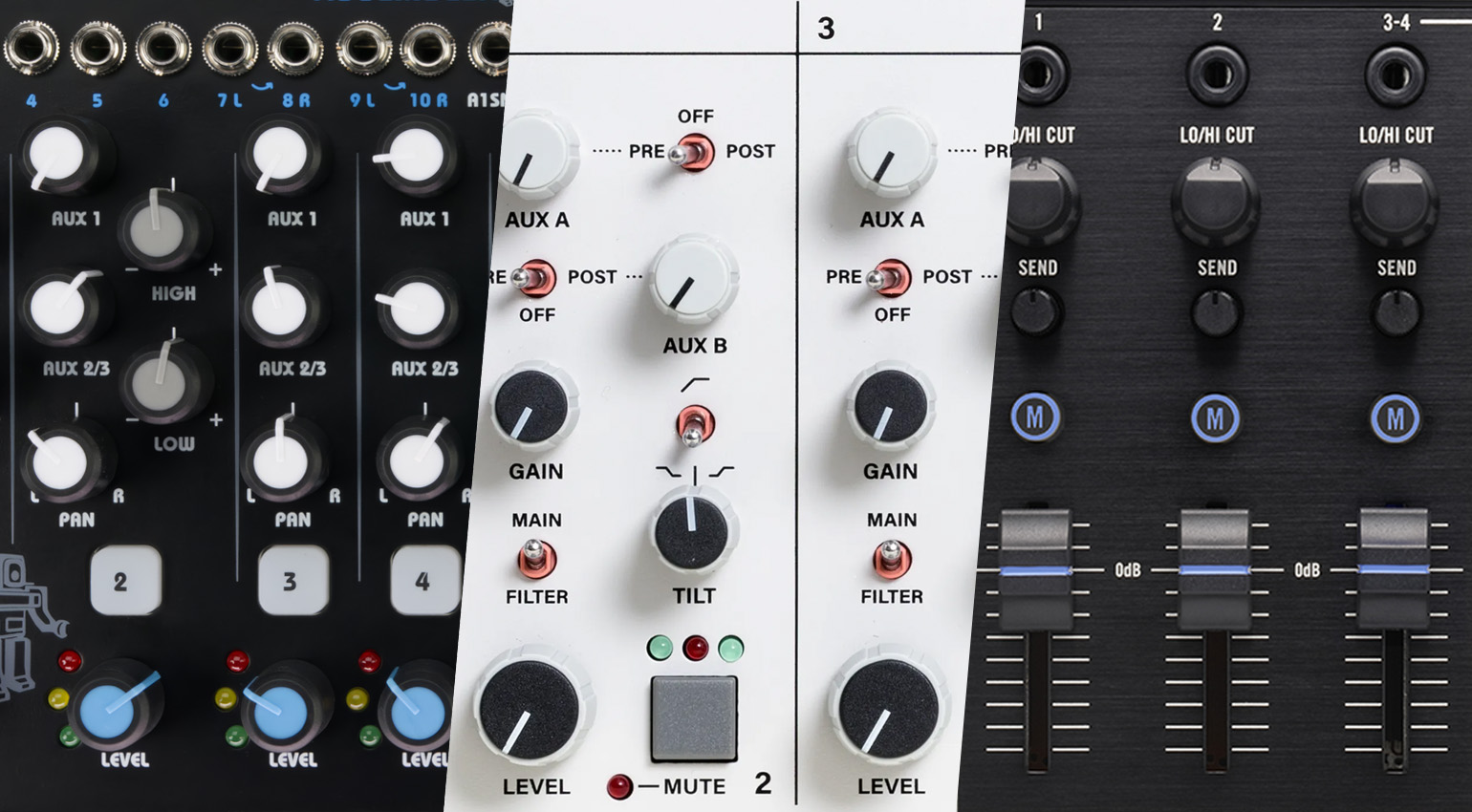

If you produce or perform with synths and drum machines, you need a mixer that’s up for the task. We check out some of the best mixers for synths and electronic performance setups.
Best Mixers for Synths
Do you Need Special Mixers for Synths?
No, of course not! Any run-of-the-mill mixer can also be used for synths, provided it has a couple of line inputs. However, if you’re running a setup that consists mostly or exclusively of synths, drum machines, and groove boxes, standard mixers have some disadvantages that make them somewhat impractical.
Most compact mixers from brands such as Mackie, Behringer, Soundcraft, or Yamaha are designed primarily for mixing or recording bands. They tend to have mostly mono input channels – perfect if you need lots of microphones for vocals and/or drums, but less practical for synths and drum machines. Why invest a lot of money (and space!) in mono channels with expensive mic preamps that you don’t even need?
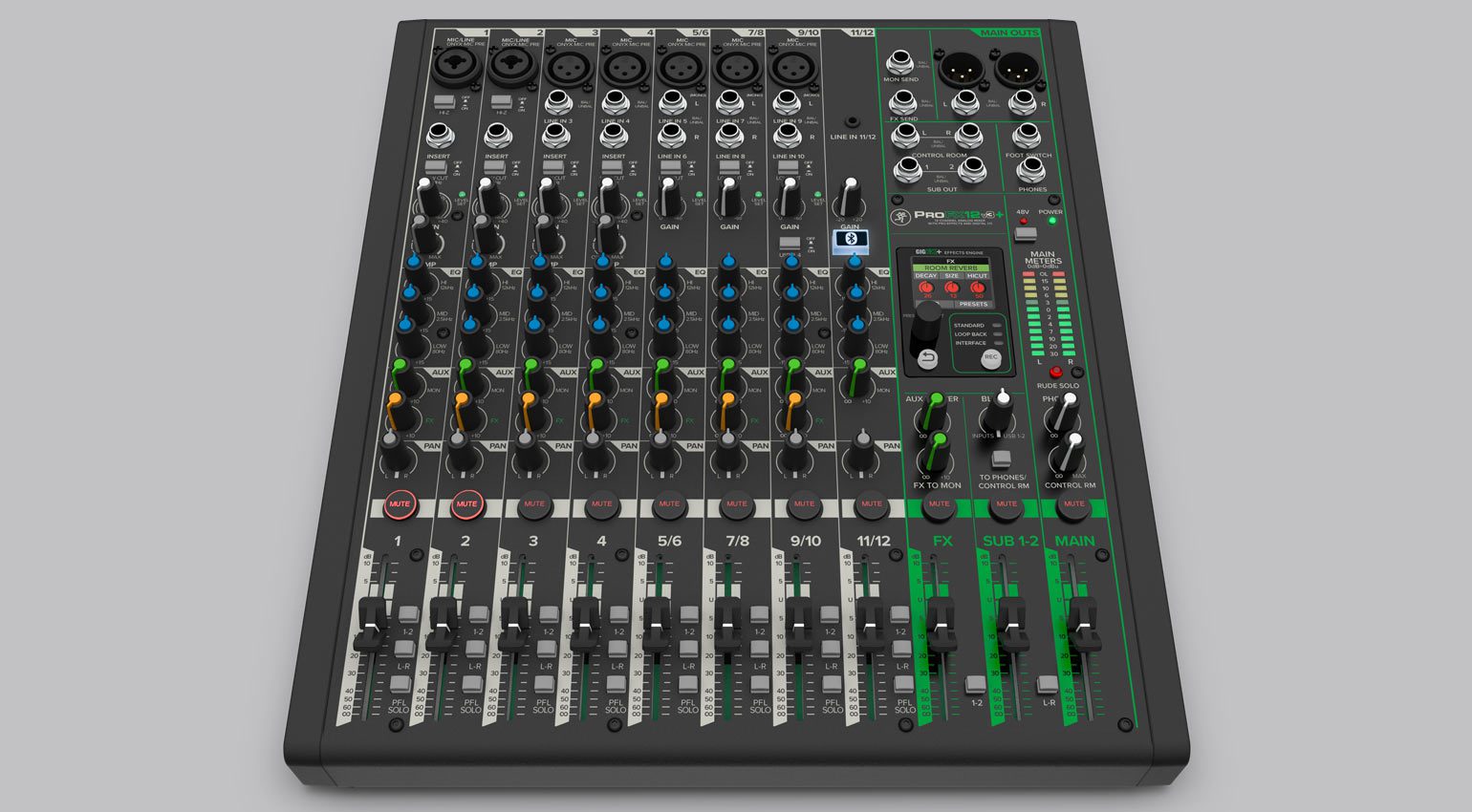
Of course, the mono input channels of most mixers can also be used as line inputs for synths. However, if the synth has stereo outputs, it’ll occupy two channels, meaning that you’ll have to move two faders for one instrument, not to mention the EQ and effect send settings. For purely electronic performance setups, special mixers for synths are often a better solution.
What are the Advantages of Mixers for Synths?
In recent years, several manufacturers have introduced mixers specifically designed for electronic performances. Such mixers often differ greatly from “normal” mixing desks in terms of their appearance. They’re usually pretty small, so they don’t take up too much space among all your other desktop gear. Some even fit in your jacket pocket!
Most mixers for synths have mostly line inputs on 1/4” or 1/8” jack sockets. Sometimes one of the channels also lets you connect a microphone or guitar, but that’s an exception. Depending on the mixer, the channels are often predominantly stereo.
Instead of fully equipped channel strips with parametric EQ, compressor, and multiple aux sends, most performance mixers for synths have rather limited features. For example, the tone control, if available at all, is often a simple tilt EQ, which allows you to quickly balance the bass and treble frequencies with a single knob. And since electronic live performers usually don’t need to make a separate monitor mix, there are usually only one or two aux sends that can be used for external effects.
This somewhat limited feature set is intentional: it prevents you from getting lost in details during a performance. If each channel only has a handful of controls, you’ll find the right knob with your eyes closed during a performance. The goal is to be able to make quick adjustments without interrupting the creative flow.
Depending on the model, some mixers for synths offer extra functions and effects such as DJ-style filters or distortion. However, complete built-in multi effects sections, as found on many standard mixers, are rather rare. That’s what desktop effects are for!
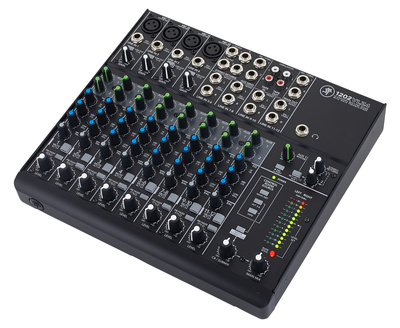
Another important thing to consider is: Do you want a mixer that’s as clean as possible, or should it actively contribute to the character of the sound? For example, Daft Punk and many other big names of the 90s swore by the first-generation Mackie 1202 – a truly awful mixer by today’s standards, but a key ingredient of that signature sound. Old mixers from Boss, such as the KM-60, are also very popular.
By the way, the successor to the 1202 is still available to buy* – even though it has little in common with the original.


Which mixer is best for your setup depends on more than just the number of channels. Especially when it comes to performing live, you need a mixer that really suits your workflow. And if you’re looking for a ‘character mixer’ with a specific sound, the only thing that helps is to try it out! That’s why this article isn’t about whether one mixer is better or worse than another – that’s purely subjective. Instead, we’ll give you an overview of the mixers for synths that are currently available. This will help you quickly find a mixer that fits your setup and workflow.
Intellijel Jellymix: Performance Mixer for Synths
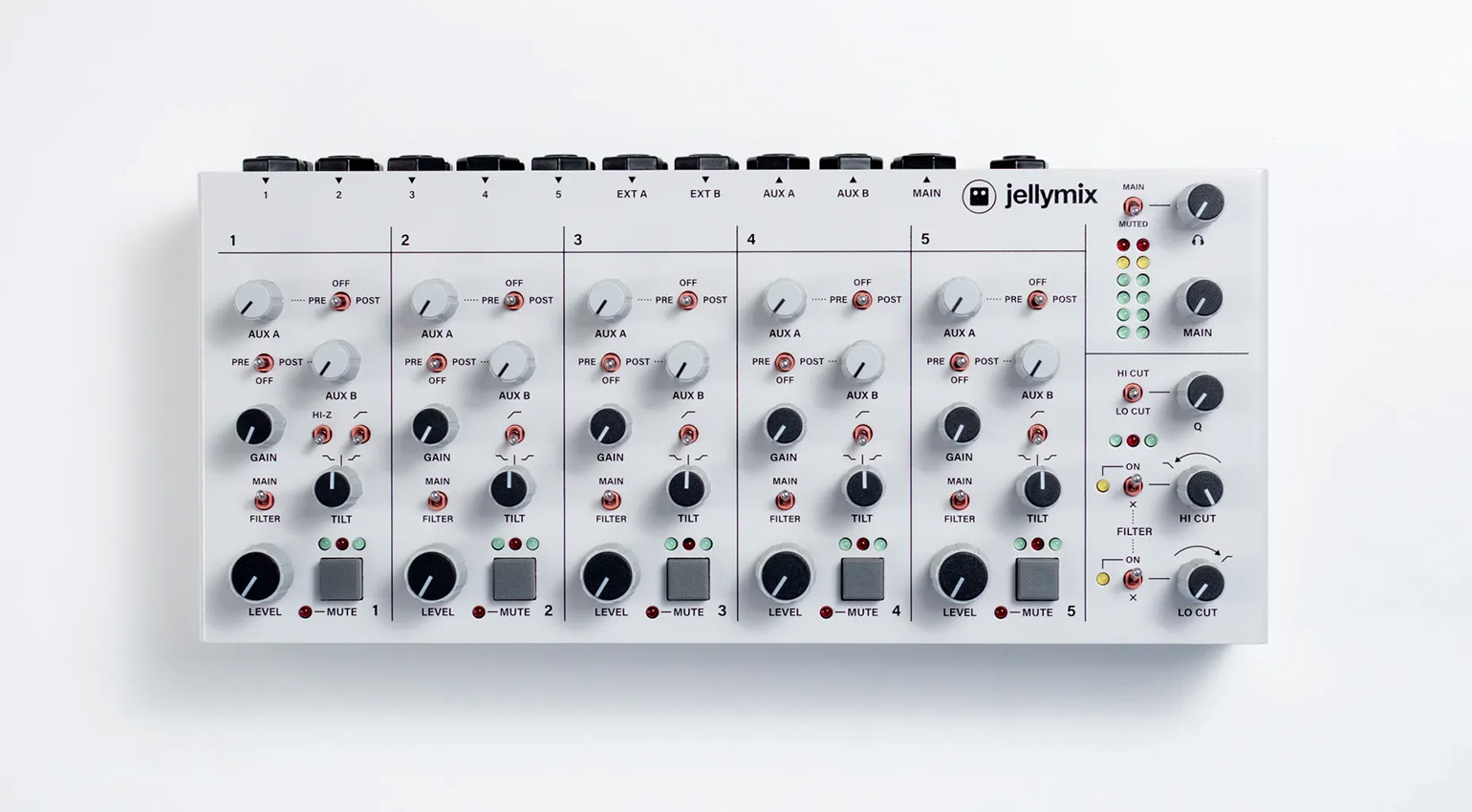
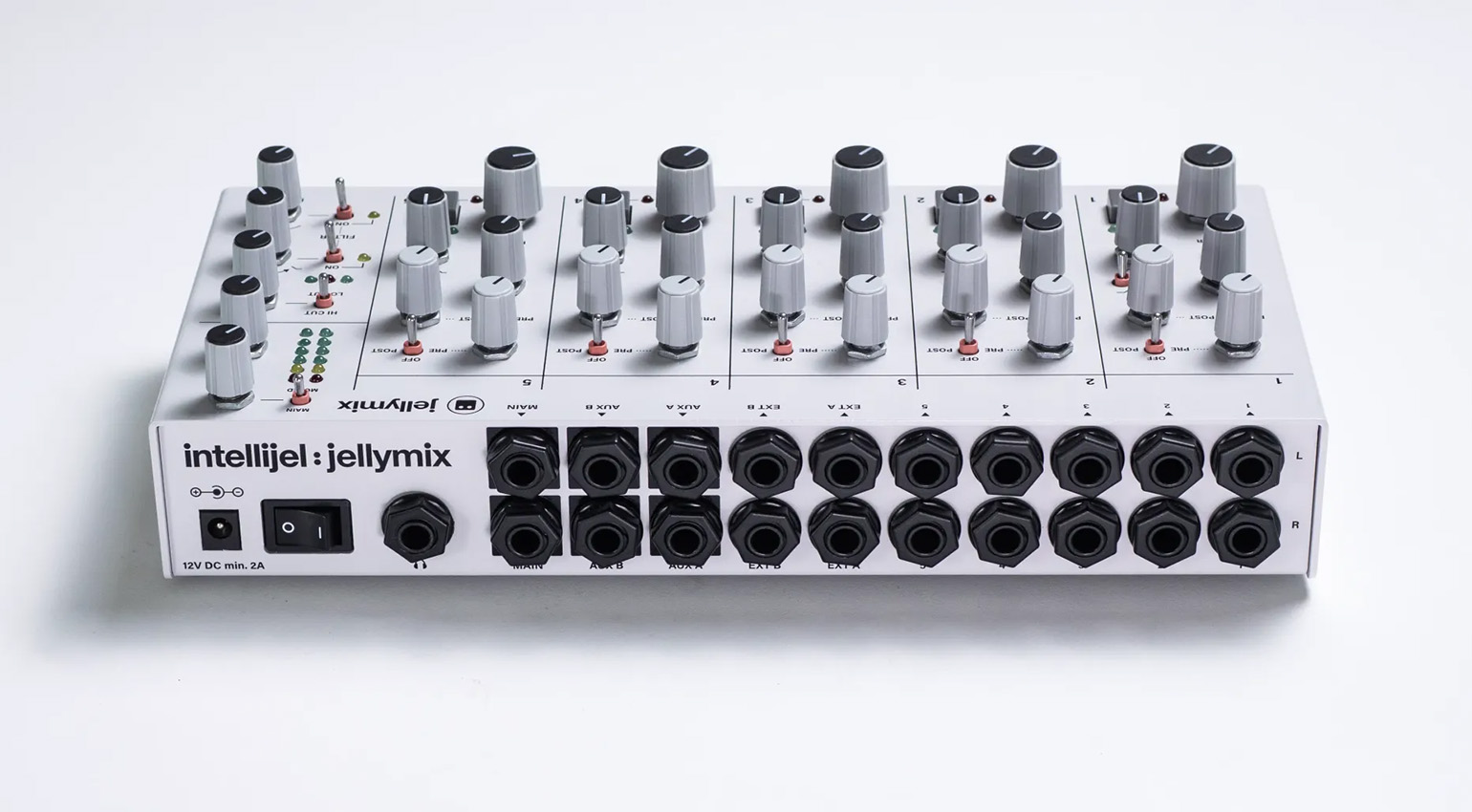
With the new Jellymix, Intellijel presents their vision of what compact performance mixers for synths should look like. It offers five stereo input channels with balanced inputs and clickless mute buttons. Channel 1 can also be used as a Hi-Z input for a guitar or bass.
Each channel has a simple, but effective tilt EQ for tone control. The Jellymix also offers two stereo aux sends (pre or post) with stereo returns.
The filter is what really sets the Jellymix apart. Each channel can be routed either to the main output or a separate filter bus equipped with a resonant state-variable filter with separate high-pass and low-pass controls.
Another great performance feature is the mute bus: the headphone output has a switch that lets you choose between the main mix and the muted channels.
You can get the Intellijel Jellymix at Thomann*

cre8audio Assembler: 10-channel Mixer for Synths and Drum Machines
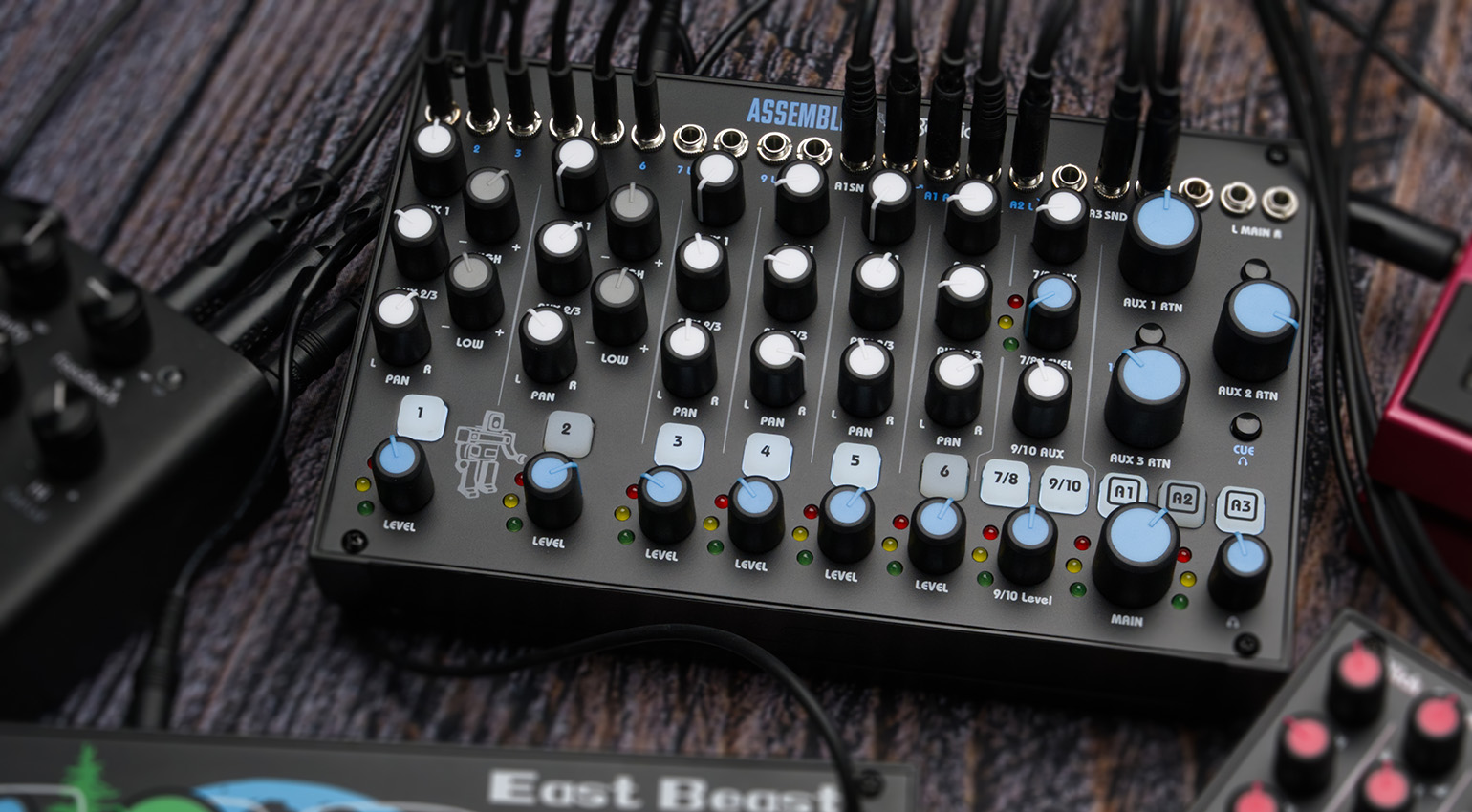
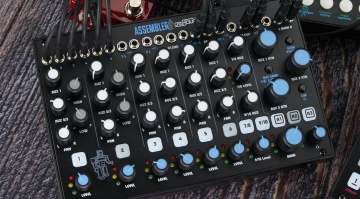
The cre8audio Assembler was designed from the get-go as a vintage-style ‘character mixer’. Developed in cooperation with Pittsburgh Modular, its analog circuits are meant to color the sound and give it a good dose of punch or grit. Among other things, the Assembler offers powerful preamps that can easily drive the signal into saturation, emulating the effect of overdriven tape.
The Assembler has a total of ten channels, divided into three categories. The first two channels are mono channels with 2-band EQs. Channels 3-6 are also mono, but without EQ. Channels 7/8 and 9/10 are stereo channels.
The aux sends are where things get interesting. The Assembler has three aux sends in total. Channels 1-6 each offer two controls for Aux 1 and Aux 2/3. The two stereo channels each have only one aux control, which can be assigned to any of the three outputs. Aux 1 and 2 have stereo returns, while Aux 3 has a mono return. It sounds complicated, but with a little planning, this setup offers a lot of flexibility for adding external effects.
In addition to the stereo main output, there’s an independently controllable cue or headphone output. Compatible with line and Eurorack levels, the mixer can be added directly to a Eurorack system if desired. All connections are mini jacks, making the Assembler perfect for setups with modular gear and small desktop synths (such as the manufacturer’s East Beast, West Pest, and Boom Chick) and modular gear, but less ideal for gear with 1/4” outputs.
The cre8audio Assembler is available from Thomann*.

Bastl Instruments Bestie: 5-Channel Mixer that Fits in your Pocket
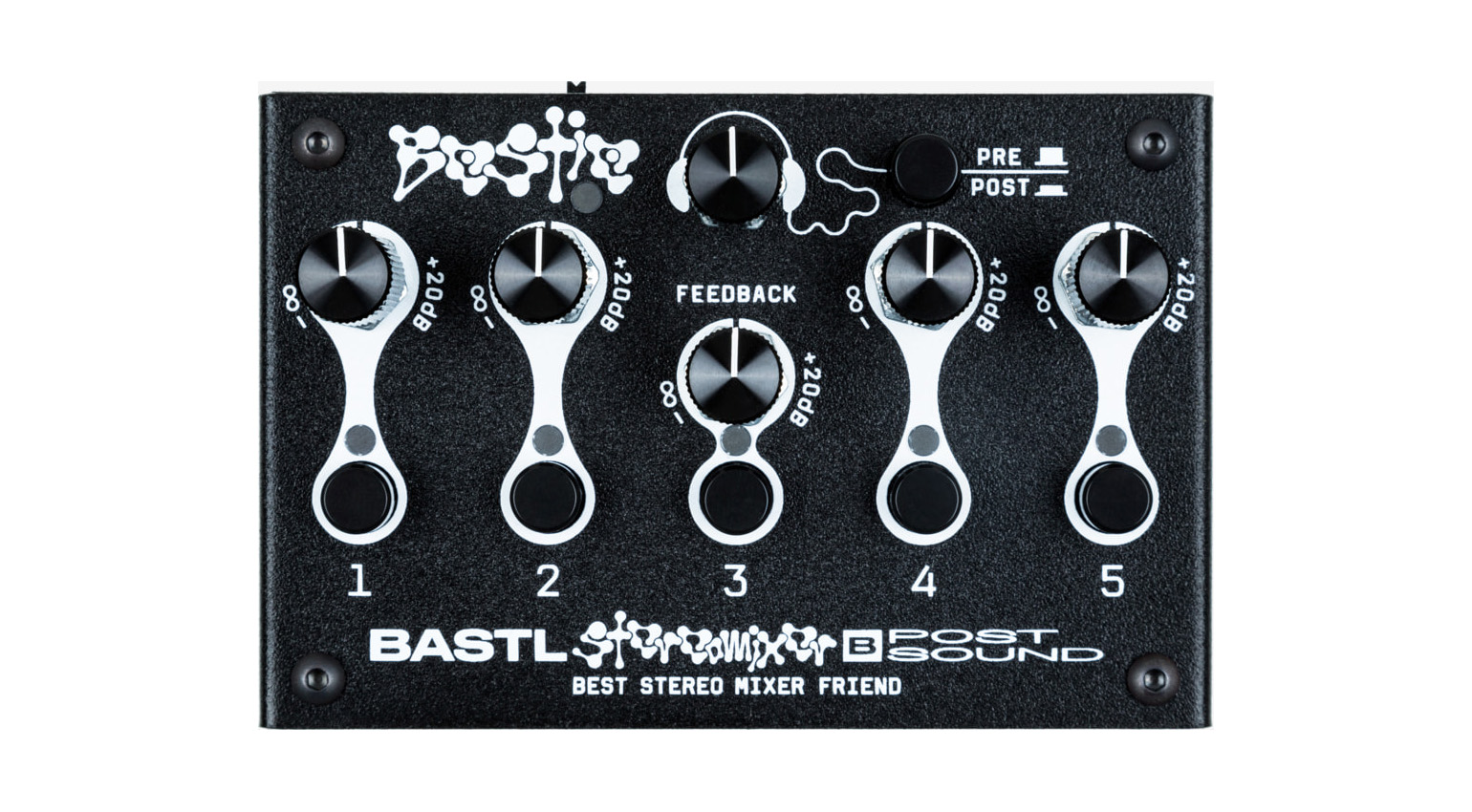
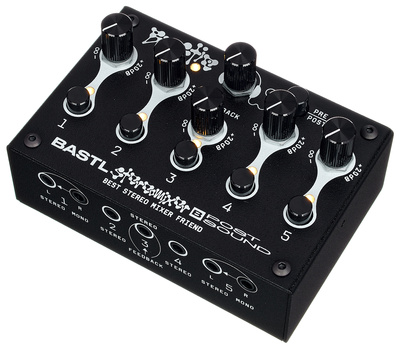
The Bastl Instruments Bestie is tiny! Despite its small size, this 5-channel mixer isn’t short on good ideas.
The Bestie offers five stereo inputs (all on mini jack sockets). Channels 1 and 5 can also take mono signals. Each channel has a level control with up to +20 dB gain and a mute button. In addition to a stereo mix output, there’s a headphone output with separate volume control and a pre/post switch.
Simple and effective! But the Bestie has a special trick up its sleeve: if nothing is connected to channel 3, this channel becomes a feedback loop. This means that this pocket-sized mixer can also deliver plenty of saturation and distortion if desired.
You can get the Bastl Instruments Bestie at Thomann*.

KORG volca mix: Mixer, Clock, and Power for the volca Series
Ever since the first volcas came out, fans had been pestering the manufacturer to release a mixer for the series. When it finally arrived, many were a bit disappointed. Although the volca mix has some good ideas and practical features, it’s also quite limited in its capabilities.
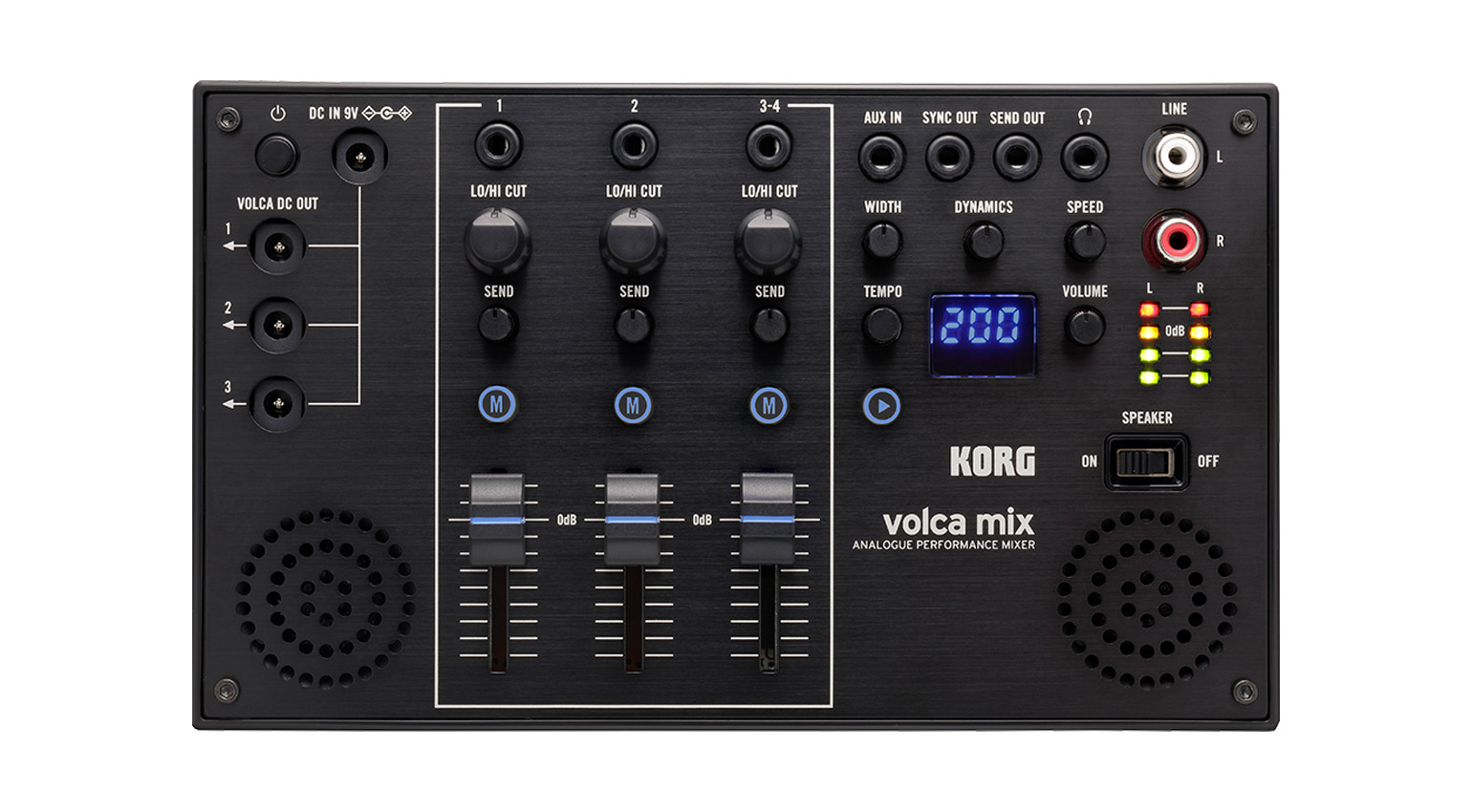
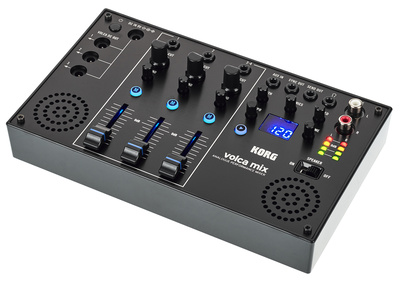
Primarily intended for the series of the same name, the volca mix only has three inputs: two mono channels and one stereo channel. Each channel has a single-knob filter (high pass or low pass), an illuminated mute button, a small fader, and a send control. An aux return is also available.
KORG opted for RCA jacks for the line output, presumably due to space constraints. There’s also a headphone output and even a pair of built-in speakers for your next volca party on the go.
Despite its rudimentary features, the volca mix makes a lot of sense as the hub of a small setup. It can not only mix, but also power three connected volcas, eliminating the need for additional wall warts or batteries. What’s more, there’s also a master clock and sync output: just press the mixer’s play button to set all connected volcas in motion. Two master effects (stereo width expander, compressor) are the icing on the cake.
You can get the KORG volca mix at Thomann*.

Radial Engineering Key-Largo: Floor Mixer for Synths and Keyboards
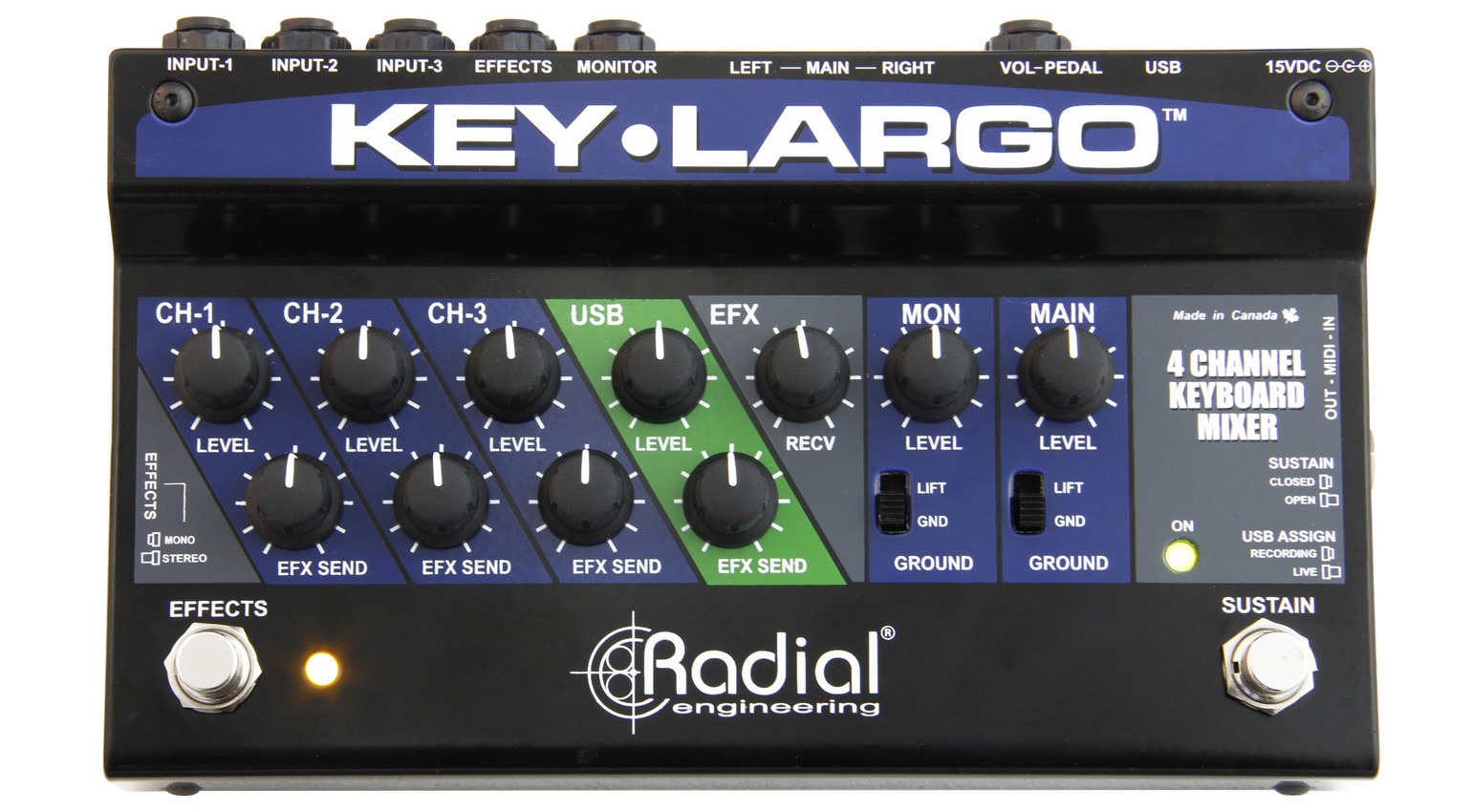
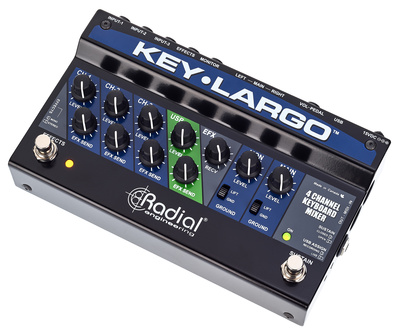
The Key-Largo from Radial Engineering isn’t so much designed for electronic live performers, but more for gigging keyboard players. Designed to live on the floor like a stomp box, it offers three analog stereo input channels. A fourth channel can be used to connect a laptop via USB for playing software instruments on stage. In addition to a balanced stereo output in XLR format (after all, Radial is known for its DI boxes), there’s a second stereo output for monitoring. The Key-Largo also offers an FX loop, with individual send levels per channel and a foot switch for turning the effects on and off.
But the Key-Largo can do even more. The pedal also functions as a versatile MIDI hub. In addition to the USB port, there’s a pair of 5-pin MIDI connectors. For example, you can connect a controller whose MIDI data is then sent to the computer via USB, while the USB connection also carries the audio signal from the computer. The Key-Largo can even be used as a sustain pedal.
The Radial Engineering Key-Largo is available from Thomann*.

Rack-Mount Line Mixers: Space-Saving Mixers for Synths
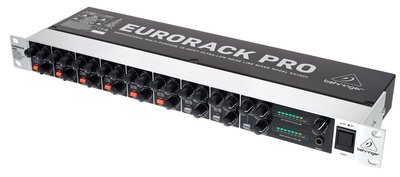
Maybe you don’t need any special performance features or a clever layout – all you need is a mixer for as many line signals as possible. Rack mixers are perfect for things like connecting numerous synths and/or drum machines to a single pair of inputs on your audio interface.
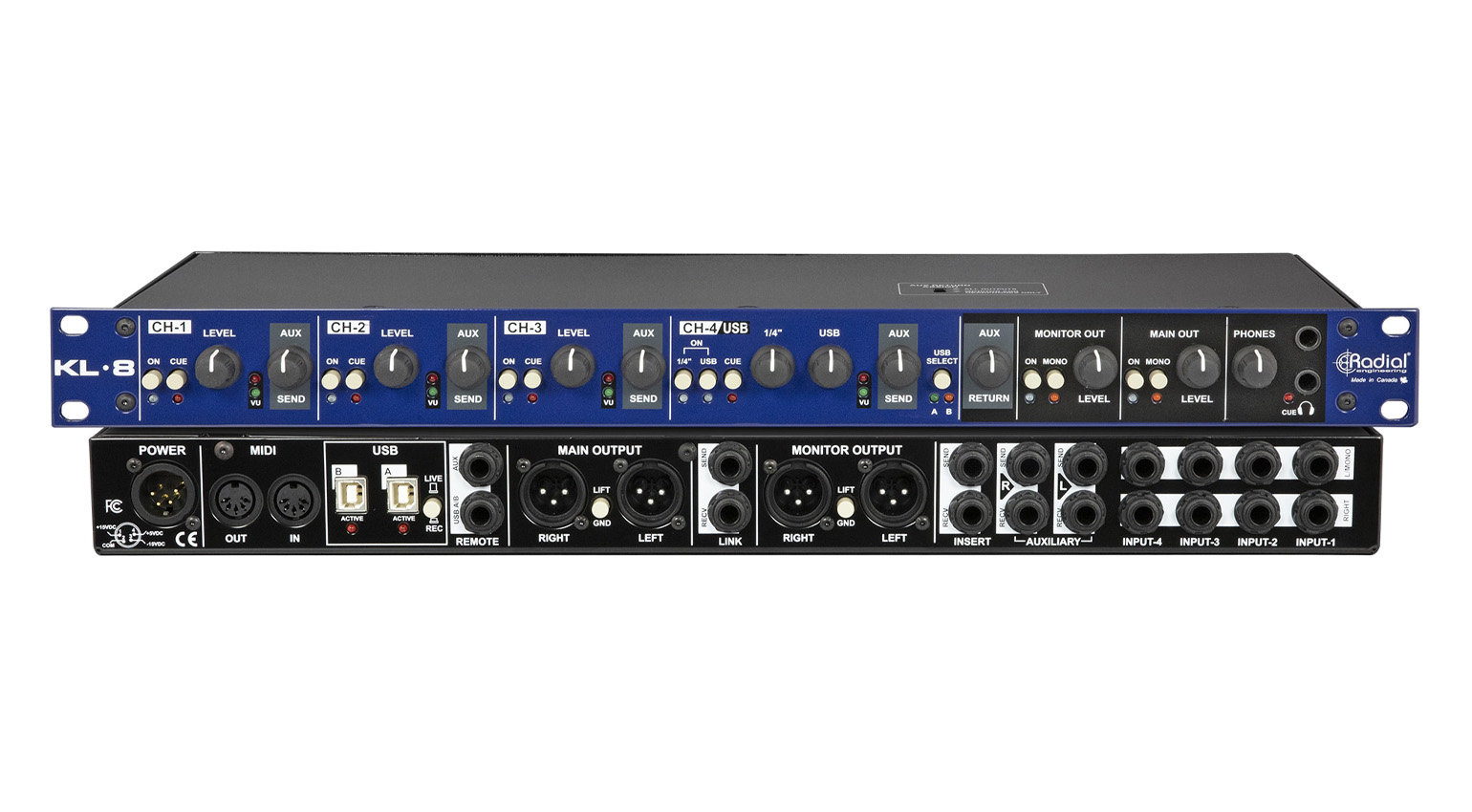
While rack mixers differ in their features and channel counts, they all have one thing in common: they offer a comparatively high number of channels in a small space. Some have useful extras that can tip the scales in favor of one mixer over another. For example, the Tascam LM-8ST and the ART MX822 also have a single XLR microphone input. The Radial Engineering KL-8 offers two USB ports and MIDI In/Out for playing software synths, as well as a foot-switchable FX loop. The Behringer RX1602 V2 is particularly straightforward (and by far the most affordable): 8 stereo line inputs, level/mute/balance per channel, one stereo and one monitor/FX output – sometimes that’s all you need.
You’ll find a selection of suitable rack mixers for synths at Thomann*.


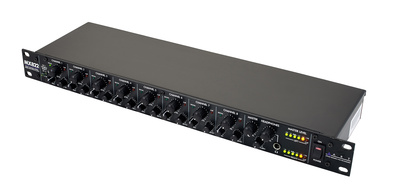

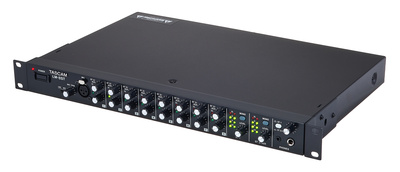
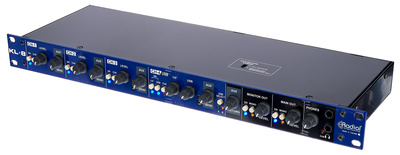
- Tascam LM-8ST product page
- ART MX822 product page
- Behringer RX1602 V2 product page
- Radial Engineering KL-8 product page
- More from Tascam
- More from ART
- More from Behringer
- More from Radial Engineering
Further Reading
- The Best Compact Analog Mixers for your Studio
- The Best Compact Live Mixers for Studio and Stage
- Best Desktop Effects for Synths
- The Best Pocket Synths: 5 Ways to Get Creative on the Go

This might also interest you
One response to “Best Mixers for Synths: Mixers for Electronic Live Performance”

What prevents me from getting a hardware mixer is that they never have a ducking function, which is now mandatory for basic mixing, at least for kick/bass management, but also for techno “pumping”.
It would just require 1 additional knob per bus (or even a hidden combo on digital mixers), a main curve knob and a midi in for silent sidechain source if you don’t want to use channel 1 as source (useful for techno with long kicks).
And why not advanced sidechain/ducking capabilities on more advanced mixers.
That would make mixers way more pertinent in a DAWless config. And save tons of cable management for those who manage sidechain pre-mixer.