The Best Guitars for Jazz Beginners: 6 Hollowbodies and Offsets Under $1,000
Great sound, vintage looks!


The 5 Best Guitars for Jazz Beginners: 6 Hollowbodies and Offsets Under $1,000 · Source: Bildanbieter:Marco Destefanis, Alamy

A beginner jazz guitar needs three things: a warm neck pickup, a body that stays controllable at home volume, and a neck that handles chord changes. These are six best guitars for jazz beginners, all under $1,000, sorted by price.
Our Picks
The Best Guitars for Jazz Beginners: A Short History
In the big-band era, guitarists required volume, so they played acoustic archtops with f-holes. In 1936, Gibson fitted a pickup to the ES-150, and Charlie Christian moved the electric guitar to the front of the band.
Then in 1949, the ES-175 set the template that most affordable jazz boxes still follow. While jazz does seem like a genre that focuses very much on its tradition, today you will also see Telecasters and Jazzmasters on jazz stages. So when you’re looking for the best guitars for jazz beginners, it does not HAVE to be a hollowbody, just to do jazz sounds.
What to Look for When Buying the Best Guitar for Jazz Beginners
The biggest part of a jazz guitar’s sound (besides the fingers, of course) is the guitar’s body. Compared to rock or metal, jazz guitars are often either hollow or semi-hollow. A hollowbody model will give you the most acoustic character; however, these models are much more prone to feedback on stage.
By comparison, semi-hollows add a center block against feedback and sit between hollowbodies and solid bodies, sonically. Our semi-hollow guide covers those.
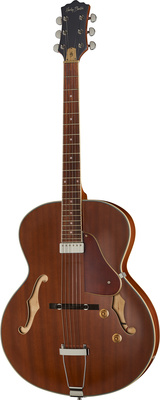
Harley Benton Custom Line Manhattan-Standard
The Manhattan-Standard is the cheapest full hollowbody archtop on this list, and it’s been around since 2013. Its laminated mahogany body features an arched top and no cutaway, and its mahogany neck carries an amaranth fingerboard with 22 frets.
This model comes with a single ceramic mini humbucker with volume and tone controls. The ovangkol bridge floats on the top, and the strings end in a trapeze tailpiece. This jazz guitar oozes 20s character and it can be a great choice when you’re looking for guitars for jazz beginners.
Check it out at Thomann*.


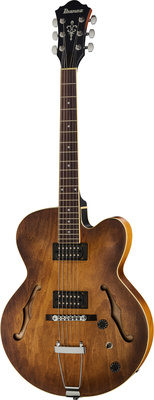
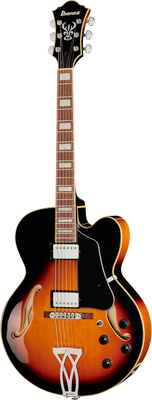
Ibanez Artcore AF55 and AF75
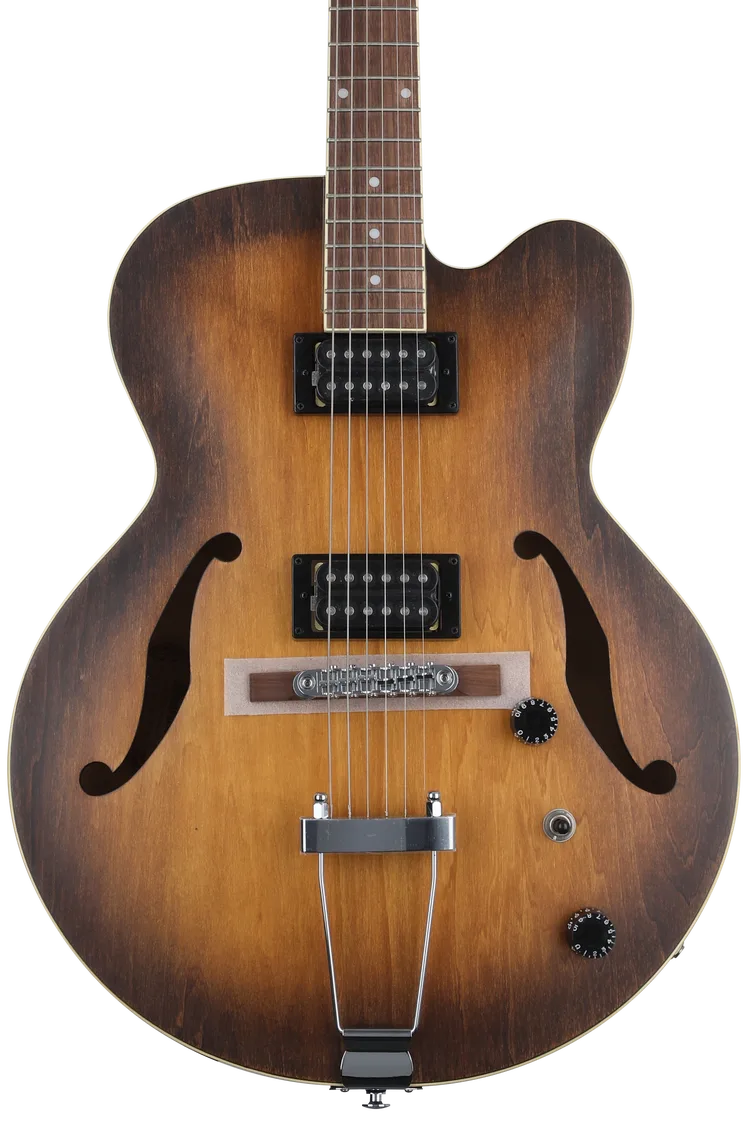
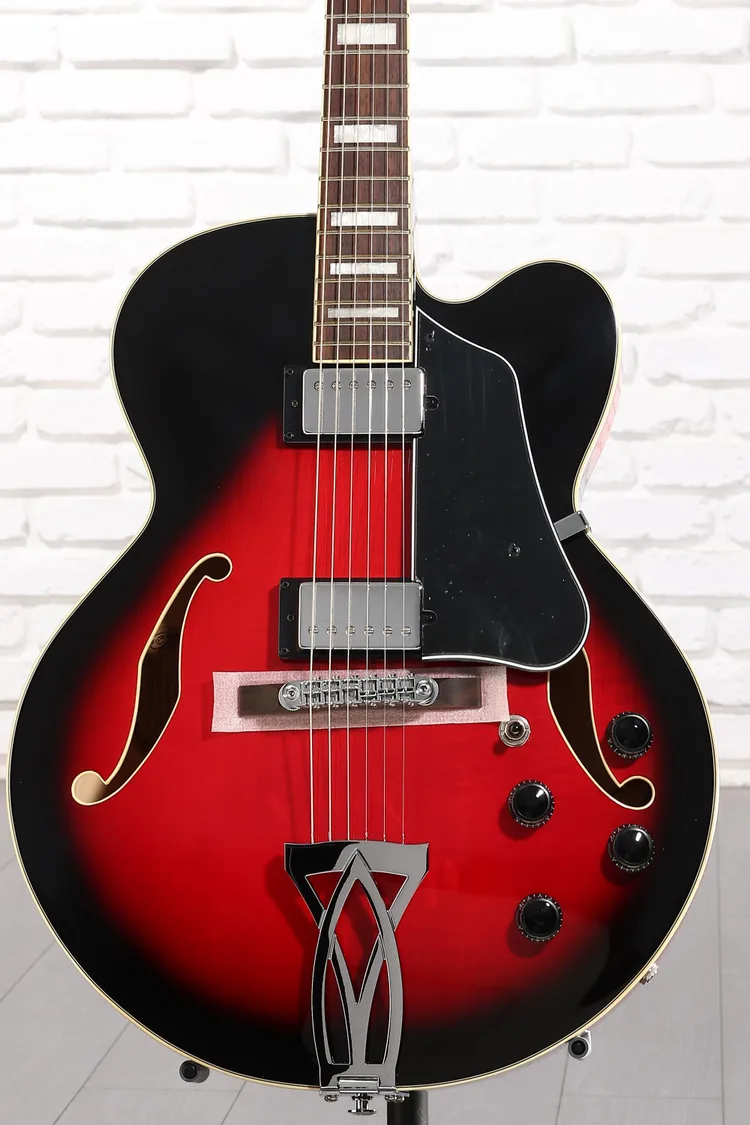
For many jazz guitarists, Ibanez’ Artcore series is where they got started. Both the AF55 and the AF75 offer all of what guitars for jazz beginners should: two humbuckers, basswood body, nyatoh neck, laurel fingerboard, 20 frets. And all of that with the sonic character and workmanship Ibanez is famous for.
For the AF55, you get two uncovered Infinity R humbuckers, with a single volume and tone control and a three-way switch. For the AF75, you get separate volume and tone controls for the two Classic Elite humbuckers, and an ART-1 bridge with a VT60 tailpiece.
If you ask around, both in forums and among seasoned jazz players, many will name one of these two as the best guitars for jazz beginners, because both hit a sweet spot for quality and price.
Where to buy:
- AF55: at Thomann* and at Sweetwater*
- AF75: at Thomann* and at Sweetwater*


Squier Classic Vibe ’60s Jazzmaster
It’s called Jazzmaster for a reason. When Fender released it in 1958, most jazz players stuck with their archtops, while surf and indie guitarists adopted it instead. But times have changed. It’s a great first guitar for anyone who wants a jazzy sound.
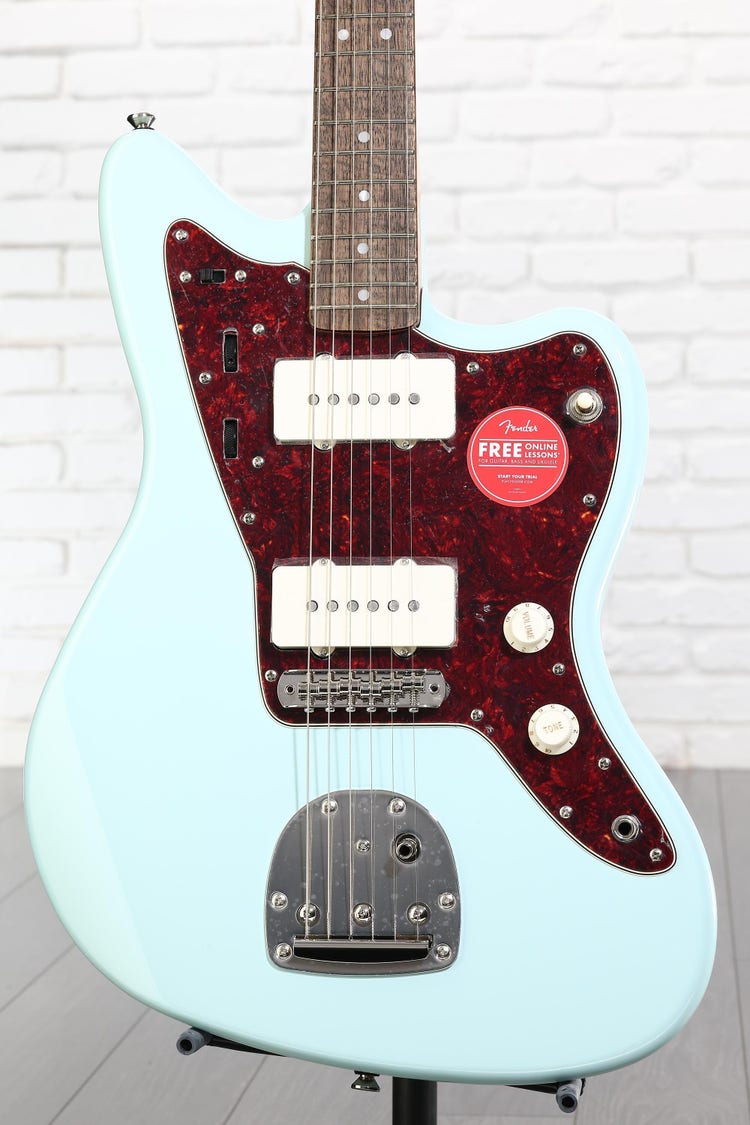
The CV 60s Jazzmaster from Squier features a poplar body, bolt-on neck with a C profile, and two Fender-designed Alnico single-coils.
Its rhythm circuit is the reason the Jazzmaster is on the list of the best guitars for jazz beginners. A slide switch activates the neck pickup on its own, with separate thumbwheels for volume and tone. That gives you a preset for darker sounds.
Get it at Thomann* or at Sweetwater*.

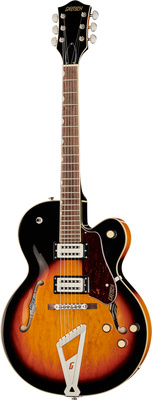
Gretsch G2420 Streamliner
Earlier in the last century, Gretsch was an absolute heavyweight among jazz players, while today most guitarists link the brand more with rockabilly and country. But make no mistake, Gretsch guitars can still swing and dance as well (or better than) as any other hollobody. The Streamliner series is Gretsch’s entry-level line, and the G2420 is its fully hollow single-cut.
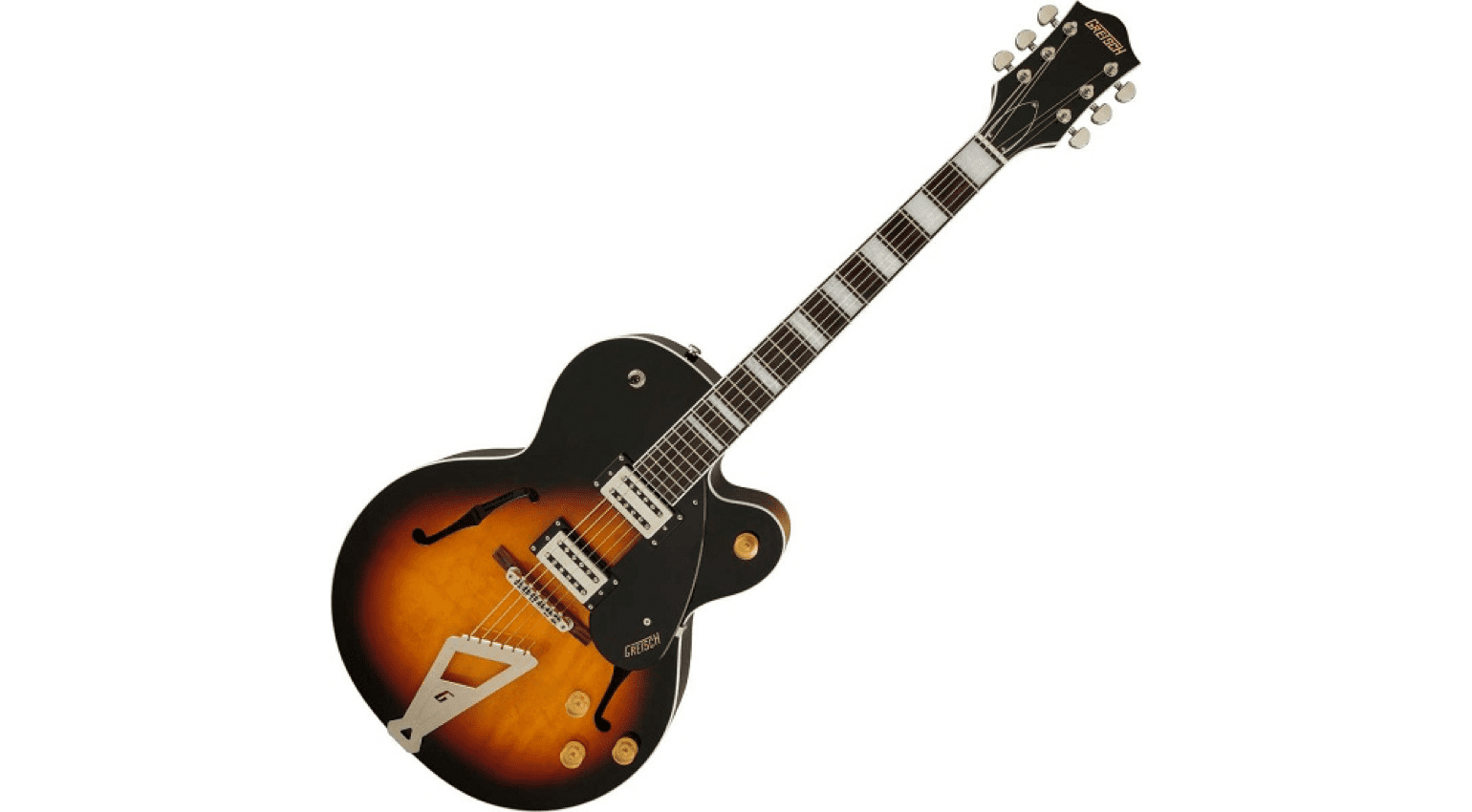
The guitar’s two Broad’Tron BT-3S humbuckers have separate volume controls, and a master volume and a master tone sit next to them. Pull the master volume knob to switch both pickups to single-coil mode, so you get even more sonic versatility.
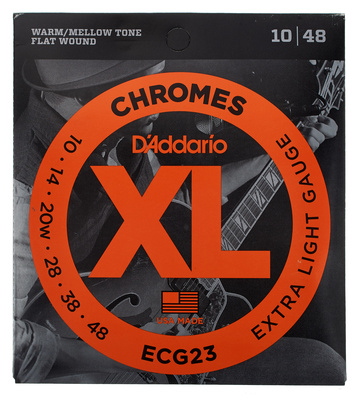
Gretsch ships the G2420 with roundwound .010–.046 strings. For a jazzier sound, consider also getting a set of flatwounds.
Available at Thomann* or at Sweetwater*.


Godin 5th Avenue Kingpin
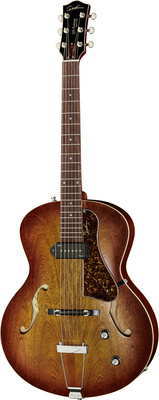
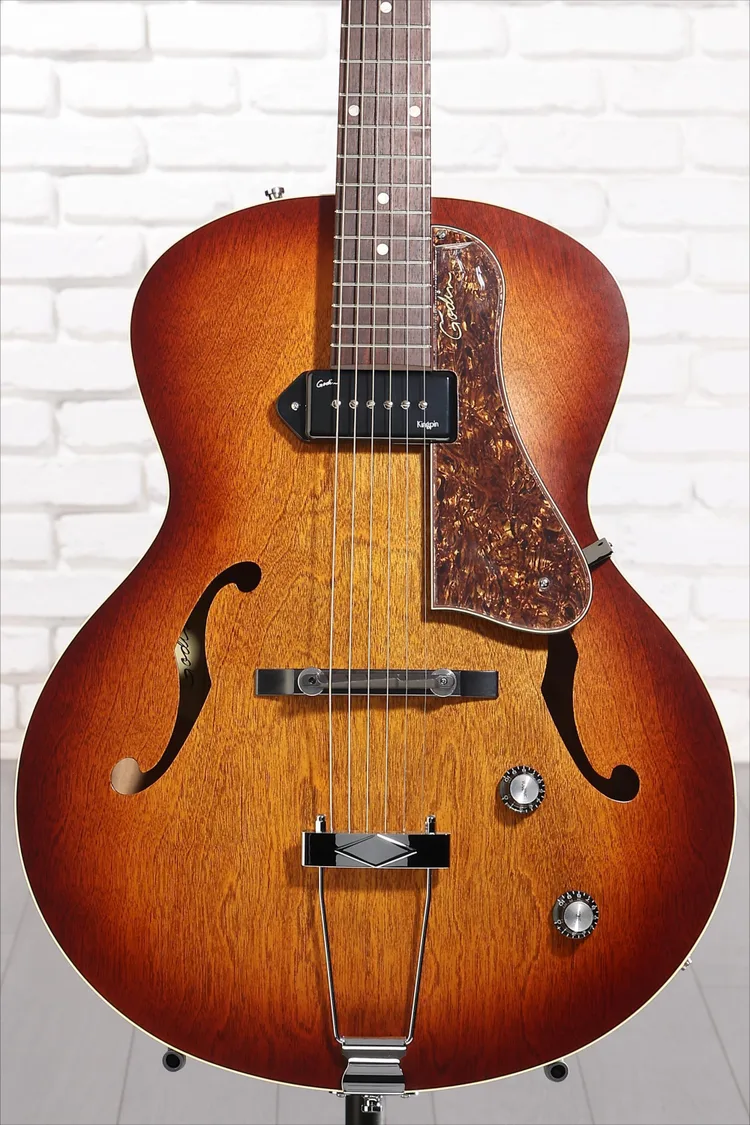
Godin markets the 5th Avenue as an affordable North American archtop. It features a Canadian wild cherry body with a molded arched top and back, which is just stunning to look at. And it gets you a sonic world, where the lightest dynamics make it hum and swing in very different directions.
A single Kingpin P-90 sits at the neck, with one volume and one tone control, which is all you need, really. It might be less sonically versatile compared to models with two pickups, but you get some of the best sounds a jazz guitar under 1,000 euros has to offer.
Get it at Thomann* or at Sweetwater*.

Conclusion
So, which one of these was your favorite? What other guitars for jazz beginners would you recommend?
Let us know in the comments!
FAQ on the Best Guitars for Jazz Beginners
Do I need a hollow-body guitar to play jazz?
Not necessarily. Hollowbodies deliver the classic archtop sound, but you can play jazz on solid-body guitars too.
What is the difference between a hollowbody and a semi-hollow for jazz?
A hollow body has no center block. This means that it resonates more and produces feedback earlier. In contrast, a semi-hollow guitar comes with a solid block in the middle, which reduces feedback and produces a tighter sound.
Is a Humbucker or P-90 better for jazz?
Humbuckers produce a rounder sound and generate less hum. P-90s, on the other hand, have more bite and attack, but they also pick up more noise.
*Disclaimer: This post contains affiliate links and/or widgets. When you buy a product via our affiliate partner, we receive a small commission that helps support what we do. Don’t worry, you pay the same price. Thanks for your support!


This might also interest you