Making Your Mix Louder: 3 Steps to a Loud Master – Perfect Match
Why most mixes fall apart when pushed louder and how to fix it with a clean mastering chain

 3,9 / 5,0 |
Making Your Mix Louder: 3 Steps to a Loud Master – Perfect Match · Source: FabFilter / GEARNEWS

If you want to mix louder, it’s not about pushing levels to the limit. It’s about control, balance, and understanding where loudness actually comes from. If your tracks feel weak next to professional releases, this is exactly where you need to start.
How to Mix Louder Without Destroying Your Sound
The Path to Mix Louder
Many producers ask the same question: how do you actually mix louder without destroying your sound? The answer is not a single plugin or trick. It is a sequence of controlled steps that work together. In this Perfect Match, we focus on three stages that allow you to mix louder in a musical way and introduce tools that complement each other on the master bus.
This is not a full mastering tutorial. Instead, the focus is on one goal: helping you mix louder while keeping your sound clean, punchy, and intact.
Before You Start: You Can’t Mix Louder Without a Balanced Mix
Before you even think about trying to mix louder, your mix needs to be balanced. If one frequency range dominates, loudness becomes difficult to achieve. The limiter will struggle, the mix will lose clarity, and the result will feel smaller instead of louder. A balanced mix is what makes it possible to mix louder without breaking the sound.
When frequencies, dynamics, and arrangement are under control, every following step becomes more effective.
Headroom: Why Your Mix Should Not Be Too Loud Yet
This is where things often feel counterintuitive. To mix louder, you actually need space first.
If your mix is already too loud, there is no room left for processing. Leaving proper headroom allows the entire chain to work cleanly and gives you control over how loud the mix can become. Without headroom, you are not mixing louder. You are just pushing into distortion.
Control Peaks with a Clipper
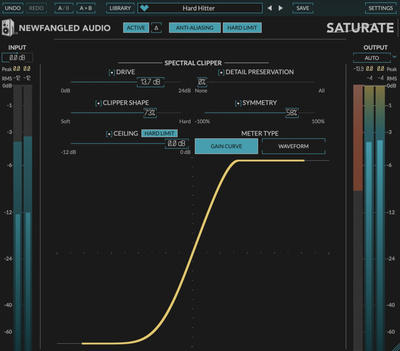
The first step to mix louder is controlling peaks. Instead of compressing transients, a clipper gently trims them. When used correctly, this process is almost inaudible but has a massive impact on how loud your mix can get.
This is especially important for drums. Sharp peaks often eat up headroom without increasing perceived loudness. By reducing those peaks, you create space to mix louder later in the chain.
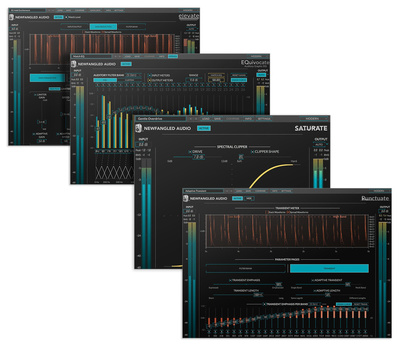
A tool like Newfangled Audio Saturate* works well here because it allows precise control while keeping the sound intact.


Shape Dynamics with a Compressor
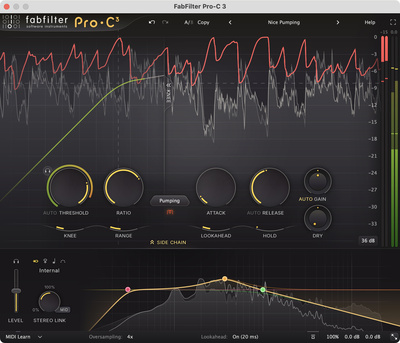
Once peaks are controlled, the next step is shaping the dynamics. A compressor helps your mix feel more connected and increases perceived loudness. The key is not to overdo it. If you compress too much, you lose the very energy you are trying to enhance. To mix louder successfully, you need subtle control. The mix should feel tighter, not smaller.
FabFilter Pro-C 3* is a strong choice here because it allows both transparent and more character-driven processing, depending on what your mix needs.

Use a Limiter to Finalize How Loud You Mix
This is the final step where you actually bring your mix up to its final level. The limiter defines how loud your mix will be, but it works best when it is not doing all the heavy lifting. Because the previous steps already prepared the signal, the limiter can work more smoothly. This is how you mix louder without destroying transients or clarity.
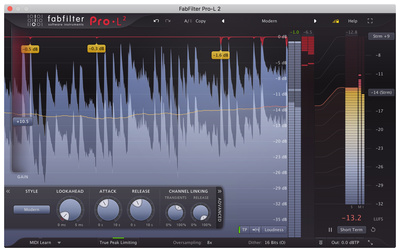
FabFilter Pro-L 2* is a go-to tool for this stage. It gives you detailed control over loudness and helps you push levels while staying clean. Features like oversampling and look-ahead ensure accuracy, while delta monitoring lets you hear exactly what is being removed.
Why This Chain Works
The reason this approach works is simple. Loudness is not created in one step. Each stage contributes to the result. First, peaks are controlled. Then dynamics are shaped. Finally, the limiter defines the level.
Because the workload is distributed, you can mix louder without forcing any single processor too hard. The mix stays open, punchy, and controlled.
Conclusion: A Louder Mix Without Killing Your Sound
If you want to mix louder, you need to think beyond volume. Loudness comes from balance, control, and a structured signal path. When each stage supports the next, your mix naturally becomes louder without losing clarity or impact.
The real difference is not the tools themselves. It is how you use them together. That is what allows you to mix louder in a way that actually translates.
More Information
- How To Use Clipping: An Essential Mixing Tool
- 5 of the Best Clipper Plugins: Win The Loudness War
- Why do we still use Leveling Amplifiers in the Recording Process?
- The Best Compressor Plugins For Beginners
- The Best Mastering Plugins for Beginners
- Perfect Match
*Note: This review contains affiliate links that help support our site. The price remains the same for you. If you purchase through these links, we may receive a small commission. Thank you for supporting our work.


This might also interest you