Elektron Tonverk: Granular Power and Sequencer Magic in One Box – Review!
Just How Much Sampling and Sound Design is in There?

 3,9 / 5,0 |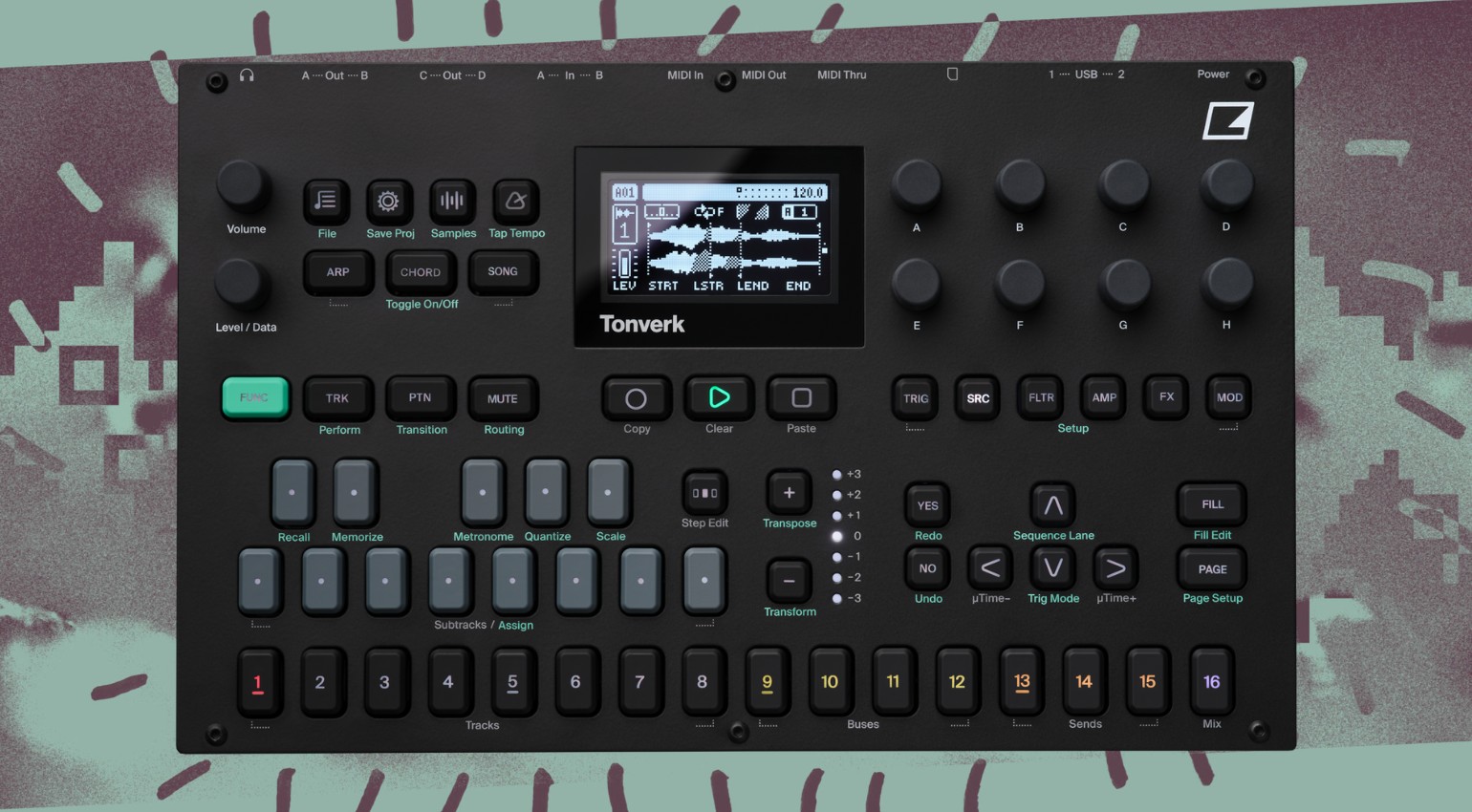
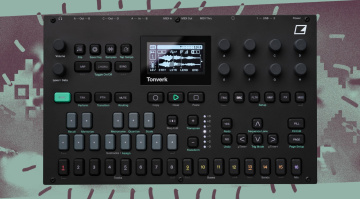
Elektron Tonverk: Granular Power and Sequencer Magic in One Box - Review! · Source: Elektron

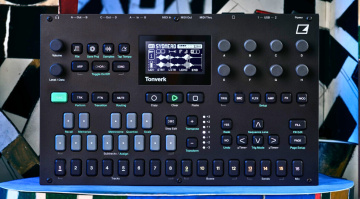
With the Elektron Tonverk, the company recently released a polyphonic sampling workstation based on eight stereo tracks, modular routing structures, and a powerful sequencer. It combines multisampling, subtracks, granular sound generation, and performance features in a device that aims to be more than just a sampler. For years, Elektron has been known for its uncompromising hardware instruments that encourage creativity rather than dictate workflow. But how far does this claim really go, and where does the concept reach its limits? Here is my review.
The Most Important Facts at a Glance
- Eight stereo audio tracks, four bus tracks, three sends, and one master mix track for a modular studio setup. There are also eight MIDI tracks for external sound generators
- Four machine types per track: Single Player, Multi Player, Subtracks, or MIDI. This allows for flexible work with samples, multisamples, or external equipment
- A 256-step sequencer with Elektron-typical parameter locks, micro-timing, trigger conditions, an arpeggiator, and a chord function
- The latest update, version 1.1.0, brings a new Grainer engine for granular sound design, side-chain compression, post-effects panning, new audio formats, and workflow optimizations
- Ideal for producers, sound designers, and performers who see sampling as a creative foundation
Review: Elektron Tonverk
What Technology is Behind Elektron Tonverk?
Tonverk works like a small studio in hardware form. Its eight stereo audio tracks serve as flexible sound sources and are complemented by four bus tracks, three sends, and a master mix track. This setup allows for complex signal paths, parallel effects, layering, and submixes. Each audio track can function as an audio or MIDI track, making it easy to integrate external synthesizers, even via the audio input. All this comes with all the familiar Elektron features!
Each track provides access to one of four “machines.” The Single Player plays classic mono or stereo samples; the Multi Player loads multisamples with velocity layers; the Subtrack mode allows up to eight monophonic sub-tracks within a track; and the MIDI mode controls external devices. Thus, the Elektron Tonverk combines a sampler, sequencer, and MIDI hub in one system. This architecture is reminiscent of the modularity of a DAW—just without a computer.
How Well Does the Workflow Function?
Those who have worked with Elektron devices before will immediately feel at home. The menu structure is logical, the encoders are precise, and the OLED display is clear. Despite its many functions, the device remains easy to operate. One clear advantage is the well-designed routing system. Each track can be routed individually to buses and sends. Filters, effects, and modulators are also deeply integrated. This means endless possibilities—and, above all, exceptional sound design.
In everyday work, it becomes clear how quickly ideas can be implemented. Placing a sample on a track, activating a loop, setting parameter locks, and adding effects can all be done in seconds. The subtracks are particularly practical; eight monophonic tracks in one slot result in drum kits or layer sets with a small memory footprint. However, all subtracks share the effect slots, a typical Elektron compromise. Nevertheless, you have your own filters and envelope generators available for each sub.
But How Does the Elektron Tonverk Really Sound?
Sonically, the Tonverk is impressive across the board. The engine sounds open, clear, and powerful. Multisamples sound organic, not sterile, and even polyphonic instruments retain their dynamics. The A/D and D/A converters deliver punch and transparency, and playback remains stable when experimenting with layers. Creating your own sounds or breathing new life into old samples transferred to the SD card is really fun.
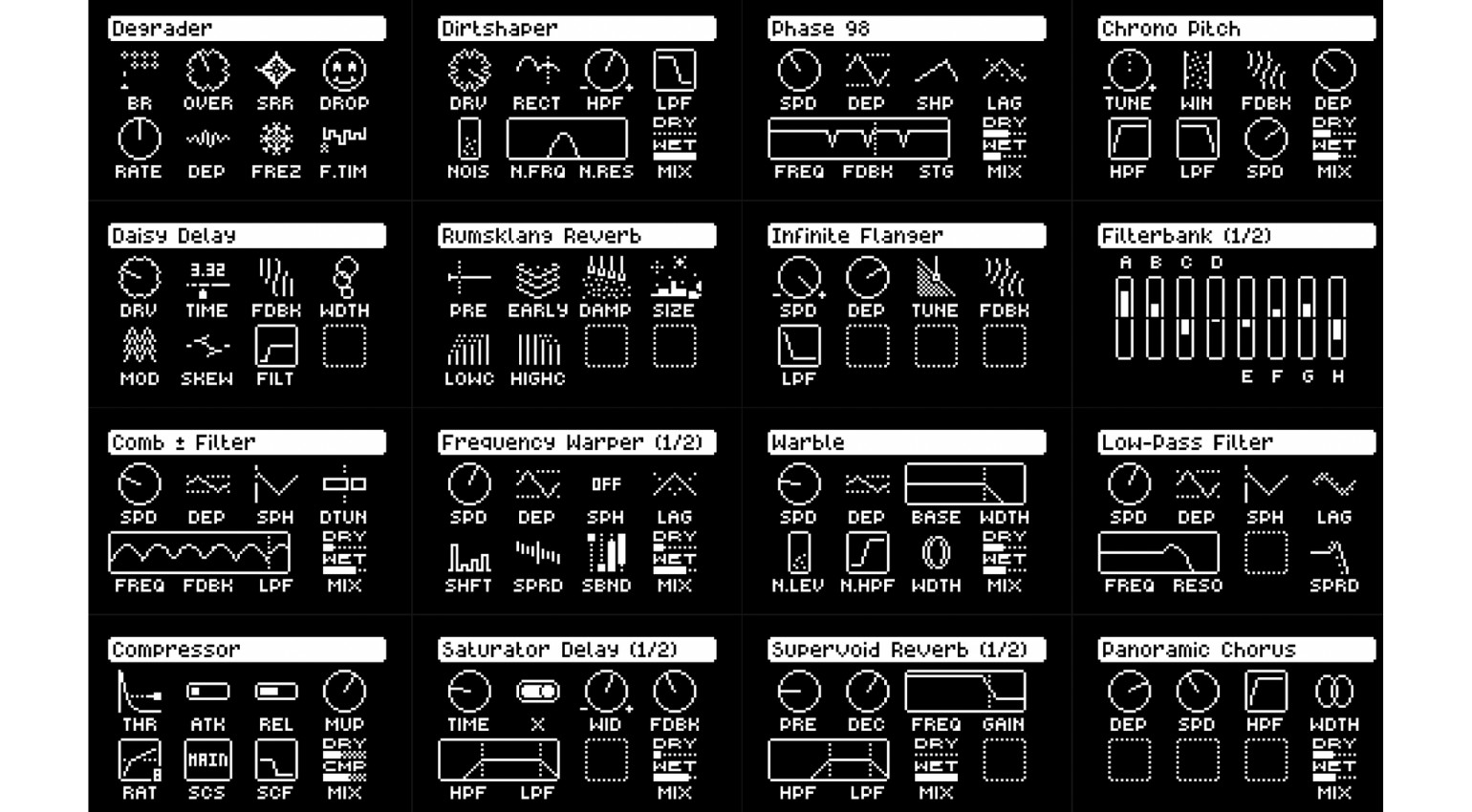
The 16-effect effects section showcases Elektron’s signature style with filters, overdrive, chorus, delay, and reverb that are musically tuned and sound warm and rough but never digitally sharp. Each audio track offers two LFOs, two FX LFOs, a modulation envelope generator, and various target assignments. Additionally, there are bus effects and global sends. The Tonverk truly shines when it comes to electronic music with movement, density, and texture.
What Does the 1.1.0 Update Offer, and What Exactly is “Grainer”?
Tonverk OS 1.1.0 significantly expands Elektron’s range of functions. At its heart is the new Grainer engine, a granular machine that breaks samples down into tiny fragments called grains. You can control these grains in terms of density, size, position, direction, and randomness. Three playback modes allow you to create ambient pads, rhythmic stutter effects, or tonal textures. Each voice can generate up to eight grains, leading to extremely dense sound structures when multiple voices are used per track.
Grainer brings new momentum not only to the feature set: It can transform a simple vocal sample into an expansive ambient pad, a hi-hat into a glitchy texture, and a field recording into a moving soundscape. Elektron is thus closing a gap that was previously filled by plugins or specialized granular synthesizers. Notably, Grainer integrates organically into the system without interrupting the workflow.
The update also offers a new Shape Machine for creating rhythmic volume curves, a side-chain source for the bus compressor, post-effects panning, and support for extended formats (WAV, FLAC, ALAC, CAF, and M4A). All in all, Elektron Octaver now feels like a brand new product. Awesome!
How Does the Sequencer Perform in Practice?
To me, the sequencer is a prime example of Elektron’s design philosophy. With 256 steps per track, typical parameter locks, micro-timing, conditional triggers, probability functions, and an arpeggiator, you can create complex yet musical structures. Each sample can have its own timbre per step, and pitch, filter, effects, and volume can be modulated separately.
In the studio, the sequencer becomes a composition tool. It allows for polyrhythms, transpositions, and smooth transitions without losing the pattern. For live performances, it enables spontaneous interventions with scenes and performance macros. However, Elektron Tonverk doesn’t quite match the live performance capabilities of an Octatrack—nor is it intended to.
How Does the Elektron Tonverk Perform in Everyday Studio Use?
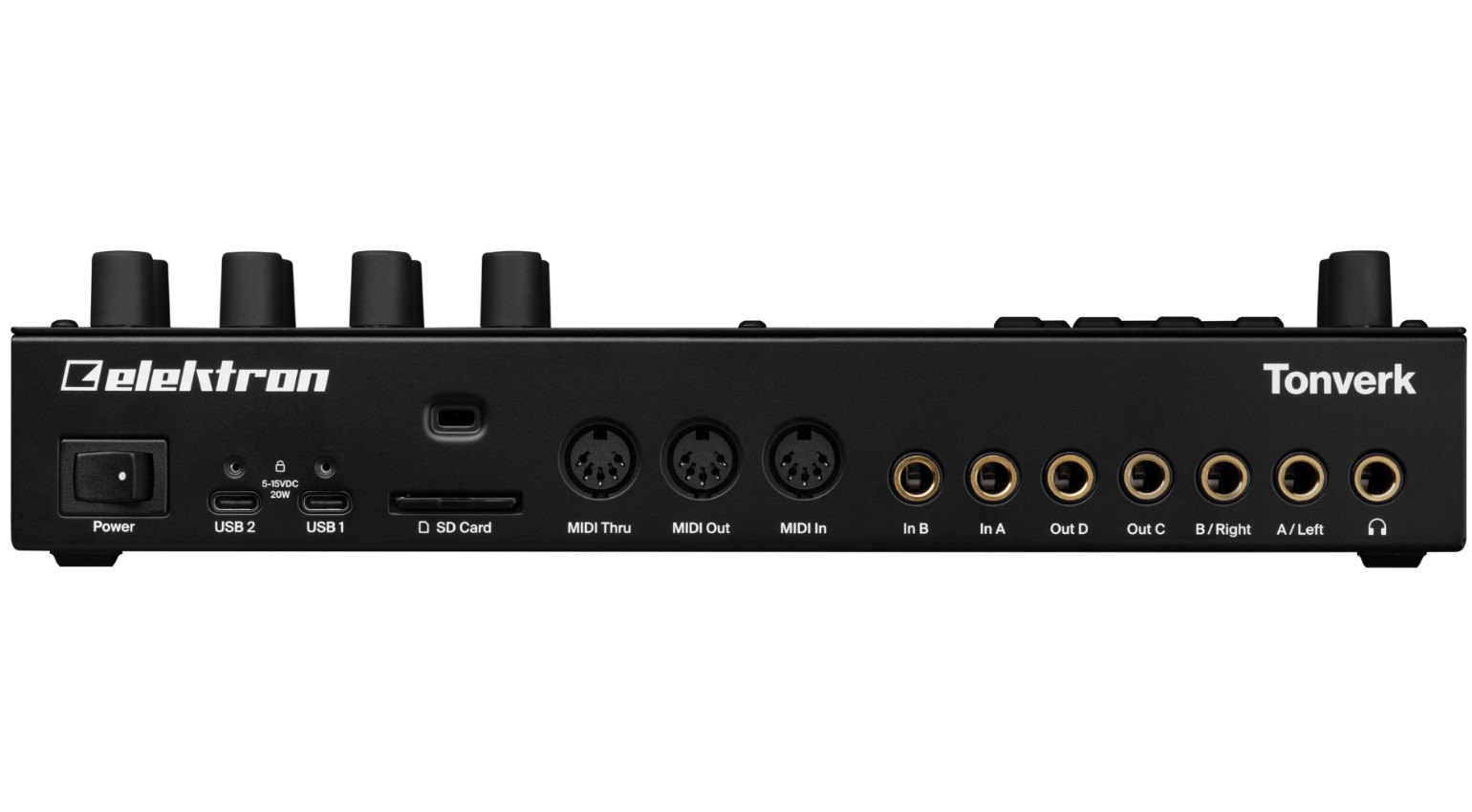
The Tonverk unfolds its full appeal in your own studio. The auto sampler allows you to multisample external synthesizers directly, which is ideal for making hardware sounds available on the go. Multisamples respond polyphonically, enabling you to recreate entire instruments. The sound quality remains astonishingly high, even during long sessions.
Thanks to its routing and FX management capabilities, the Elektron Tonverk is a flexible hub. One track provides drums, while two others control external synthesizers via MIDI and another plays granular textures via Grainer. Buses allow effects to be processed together, while sends add subtle spaces. The result is a seamless connection between studio and performance workflows.
How Does Elektron Tonverk Work on Stage?
Live, the machine impresses with its stability and clarity. Patterns can be switched on the fly, parameters can be automated live, and FX sends can be used for performative effects. External mixers or effects devices can be integrated via the bus tracks with multi-outputs. Tonverk provides structure and precision, especially when used with modular setups or drum computers.
The only drawback is the lack of integrated time stretching or direct slicing, which makes it more difficult to make spontaneous adjustments to loops or breakbeats. Those who improvise and work extensively with sample decomposition may find their limits here. However, these features could be added in future updates.
Who is Elektron Tonverk Best Suited for?
Tonverk is clearly aimed at producers, sound designers, and performers who want to delve deeper into sound design. Those who love sound architecture, enjoy creating routings, and use modulation as a creative tool will be happy here. However, the learning curve may seem steep for beginners or classic loop producers.
Tonverk is particularly exciting for anyone who uses hybrid setups. Those who integrate external synthesizers, supplement modular systems, or want flexibility in live performances will find versatile hardware here because MIDI Out is also a significant feature.
Conclusion: How Good is the Elektron Tonverk Really?
The Elektron Tonverk is not a successor to the Octatrack; it’s a completely new interpretation of sampling. It combines a structured workflow, modern architecture, and sound depth. With eight stereo tracks, bus routing, subtracks, multisampling, granularity, sequencer power, and update maintenance, it’s an exciting tool and a great new Elektron product.
However, it has some limitations: there is still no time stretching, no individual FX assignment per subtrack, and the menu navigation is complex. Some users also complain about the unstable MIDI connection. Those willing to master its structure, however, will be rewarded with a powerful instrument. With Tonverk, Elektron has built a tool for long-term creative development, not a device for quick loops. And I can confirm that!
Prices and specifications for Elektron Tonverk
The Elektron Tonverk is available at Thomann* for $1,189.00.


The price includes the hardware (W x D x H: 286 x 176 x 63 mm / 1.85 kg), a 64 GB SD card, a USB-C cable, the PSU-5 USB-C power supply, and a poster.
Pros and Cons of Elektron Tonverk
Pros
- Eight stereo tracks with bus/sends/mix for studio integration
- Four machine types: audio, multi, subtracks, and MIDI
- Sequencer with 256 steps, parameter locks, and micro-timing
- Extensive effects and modulation matrix for sound design
- Update 1.1.0 includes the “Grainer” engine, side chain, and post-FX pan
Cons
- No time stretching or classic slicing yet
- FX slots for subtracks are not individual
- Workflow requires familiarization
The Elektron Tonwerk is less of a sampler and more of an instrument. Its combination of structure, sound quality, and flexibility creates an inspiring and challenging system. With the new Grainer engine, it opens up to sound design and texture work. If you prefer shaping your own sounds to endlessly searching through presets, you’ll find a serious tool here—perhaps Elektron’s most ambitious device to date.
FAQ: Frequently Asked Questions About the Elektron Tonverk
What Makes the Grainer Engine Special?
It breaks samples down into small grains, enabling granular sound design with parameters such as density, position, randomness, and direction. This makes it ideal for ambient music, sound design, and experimentation.
Can the Elektron Tonverk Play Multisamples?
Yes, via the multi-player. The auto-sampler can even create its own polyphonic instruments. You can also import multi-sample audio formats.
Is Tonverk a Replacement for Octatrack or Digitakt?
No. Tonverk works completely differently. It is more structured and flexible, and has a more modern sound. However, it lacks the Octatrack’s spontaneous performance depth.
How Well Does it Work Live?
Very stable. With scenes, bus routing, and multi-outs, the Elektron Tonverk offers a lot of control, although it lacks classic slice handling.
How Does it Sound Compared to Older Elektrons?
It sounds more open, clearer, and more powerful. The engine seems more modern and dynamic. The Grainer and the FX section in particular provide more depth of sound.
More Information About Elektron Tonverk
*Note: This Elektron Tonverk review contains affiliate links that support our website. The purchase price and final price always remain the same! If you buy something through these links, we receive a small “donation” and thank you for your support!

This might also interest you
One response to “Elektron Tonverk: Granular Power and Sequencer Magic in One Box – Review!”
u smoking crack dude, the undo/redo buttons haven’t been implemented, copy/paste doesn’t work anywhere, and there are still other basic features from other electron boxes missing. poor sample management, no slicing, etc its crazy.