The Big Lie about Vintage Sound: Why Old Guitars Don’t Automatically Sound Better
Old Doesn't Mean Good — But That's Not the Whole Story Either

 5,0 / 5,0 |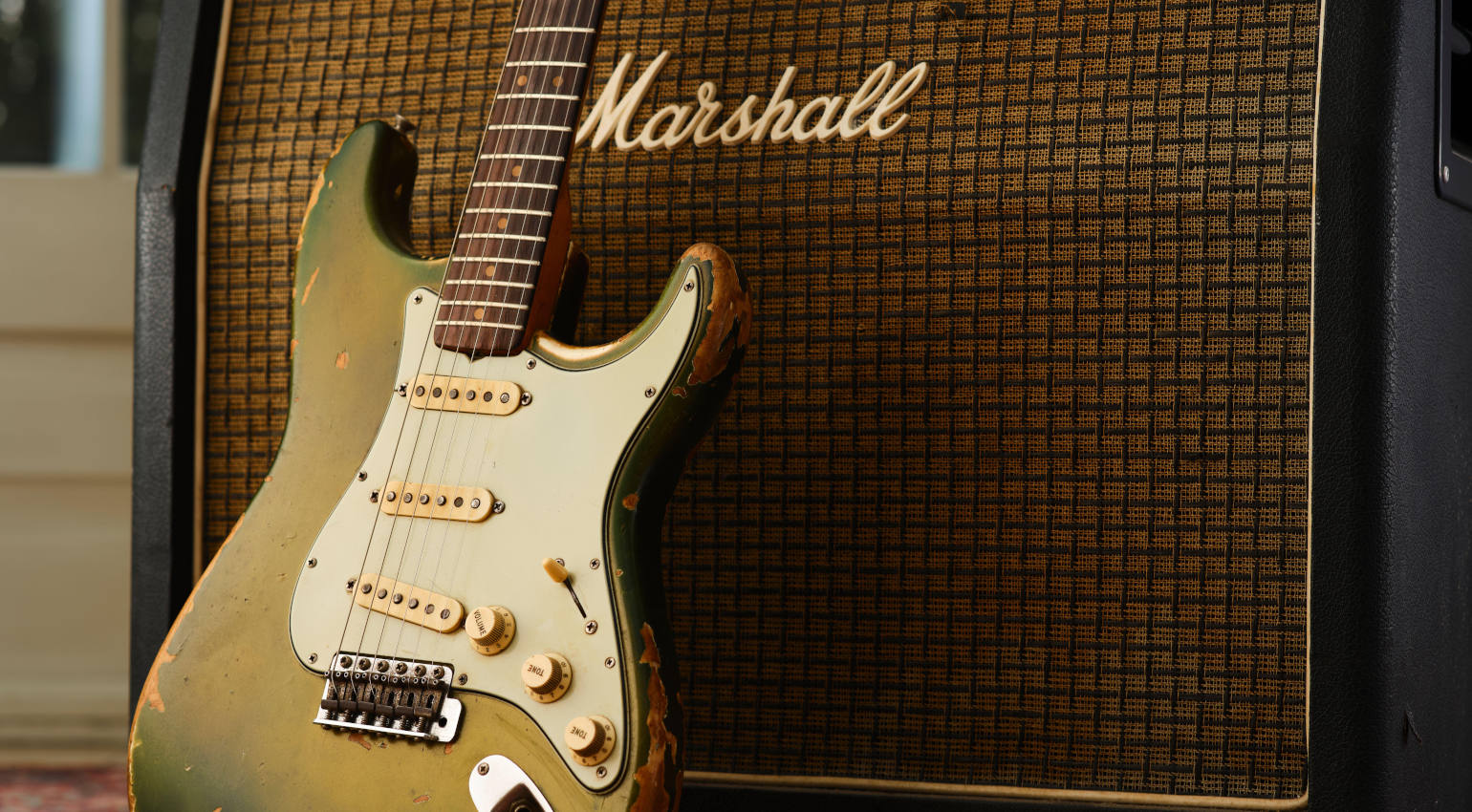
The Big Lie about Vintage Sound: Why Old Guitars Don't Automatically Sound Better · Source: Adam Gasson / Alamy Stock Foto

Somewhere in a small guitar shop, an old Stratocaster hangs on the wall. The finish is cracked, the frets are worn down, and the tuners feel like they’ve already absorbed three decades of rock history and a few liters of beer. Someone takes it off the wall, plays a chord, and suddenly everyone in the room starts talking in hushed tones about “the real tone.” About mojo. About magic. I get it. I genuinely do.
Vintage Sound, Survivorship Bias and the Psychology of Gear
Why We Chase Old Guitars, Amps and Tone, and Whether Any of It Makes Sense
I love old guitars. I love old Marshalls, beat-up cases, oxidized hardware, and the feeling of holding an instrument that played stages long before I was even born. Vintage gear has an aura that modern instruments often just don’t have. Maybe can’t have.
But the longer I spend around guitars, amps, and recording, the more often I catch myself asking an uncomfortable question: does vintage gear actually sound better, or do we just really want it to?
Because if you look at it with some distance, a lot of facts are stacking up against the vintage sound myth. Modern guitars are built with more precision. New amps are more reliable. Plugins and profiling systems have gotten absurdly close to classic tube amp sounds. And yet guitarists are still spending five-figure sums on old Les Pauls, buying artificially aged relic guitars, and arguing late into the night about the influence of old capacitors on tone.
That’s what this article is about: the vintage sound myth, real tonal differences, psychology, marketing, music history, and why old instruments hit us emotionally in ways that modern gear rarely does. Because maybe the big lie about vintage sound is more complicated than it first appears.


Why We Love Vintage Gear in the First Place
Before we start picking apart any myths, let’s be honest: guitarists don’t love vintage gear only because of the sound.
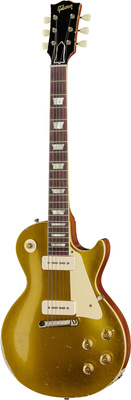
An old Gibson Les Paul isn’t just a piece of wood with two humbuckers. It’s automatically connected to Jimmy Page, Slash, or Joe Bonamassa. An old SG immediately brings to mind Angus Young, sweat, walls of Marshall cabs, and the duck walk across massive festival stages. And the moment someone cranks a vintage Plexi, you already hear “Back in Black” or “Whole Lotta Love” in your head. Vintage gear is music history you can actually touch.
There’s also something that modern instruments struggle to replicate: character. Old guitars age visibly. The finish changes, the wood moves, metal oxidizes, frets wear down. Even the smell and feel shift over decades. All those little details create the sense that an instrument is alive.
And that feeling genuinely changes how you play. I notice it myself: on an old guitar, or even something that just feels vintage, I automatically play differently. Whether that’s objectively useful barely matters. Inspiration is inspiration.
That’s probably why the relic market has been booming for years. And honestly: a perfectly aged Murphy Lab Les Paul* is emotionally more compelling than a brand-new gloss guitar straight out of the box. Even when the wear marks are completely fake.
The Big Myth on Vintage Sound: “Everything Sounded Better Back Then”
Here’s where it gets uncomfortable. The moment you start looking at vintage gear a little more soberly, something becomes obvious: things weren’t automatically better back then. We just tend to remember the good parts.
That’s called survivorship bias. The psychological effect that causes us to perceive almost exclusively the great vintage instruments from the past: the legendary ’59 Les Pauls, the exceptionally resonant Strats, the old Marshalls with the perfect sweet spot.

The hundreds of thousands of mediocre or outright bad instruments from that same era? Nobody talks about those anymore.
Because let’s be real: even in the ’50s, ’60s, and ’70s, not every guitar was a masterpiece. Manufacturing tolerances were sometimes enormous. Wood varied wildly. Some instruments were heavy as concrete slabs, others barely held tune. Old amps hummed, buzzed, or gave up mid-gig. There have always been duds. We just don’t mention them.
There’s another point that often gets overlooked: many legendary vintage sounds happened not because of the equipment, but despite it.
Musicians from earlier decades worked with technical limitations that would barely be acceptable today. No noise gates, no dialed-in IRs, no digital recording chains, no low-wattage tube amps with headphone outputs for home use. Many classic rock sounds exist simply because nothing else was available at the time.
Old Tube Amps: Magic or Just Loud?
Now we’re getting to possibly the biggest myth in all of guitar culture: old tube amps.
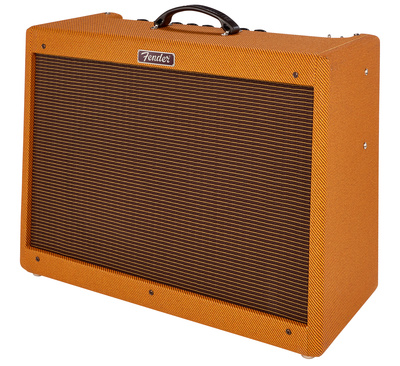
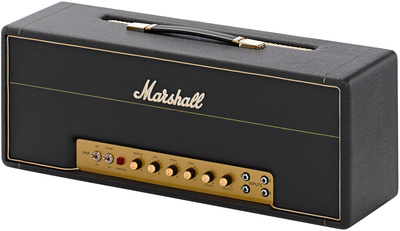
Few things get romanticized as heavily as a vintage Marshall Plexi*, a Fender Blues Deluxe*, or an early Vox AC30. The fantasy is always the same: switch the amp on, volume to ten, play one chord and suddenly you sound like Angus Young, Hendrix, or Jimmy Page. In theory, anyway.
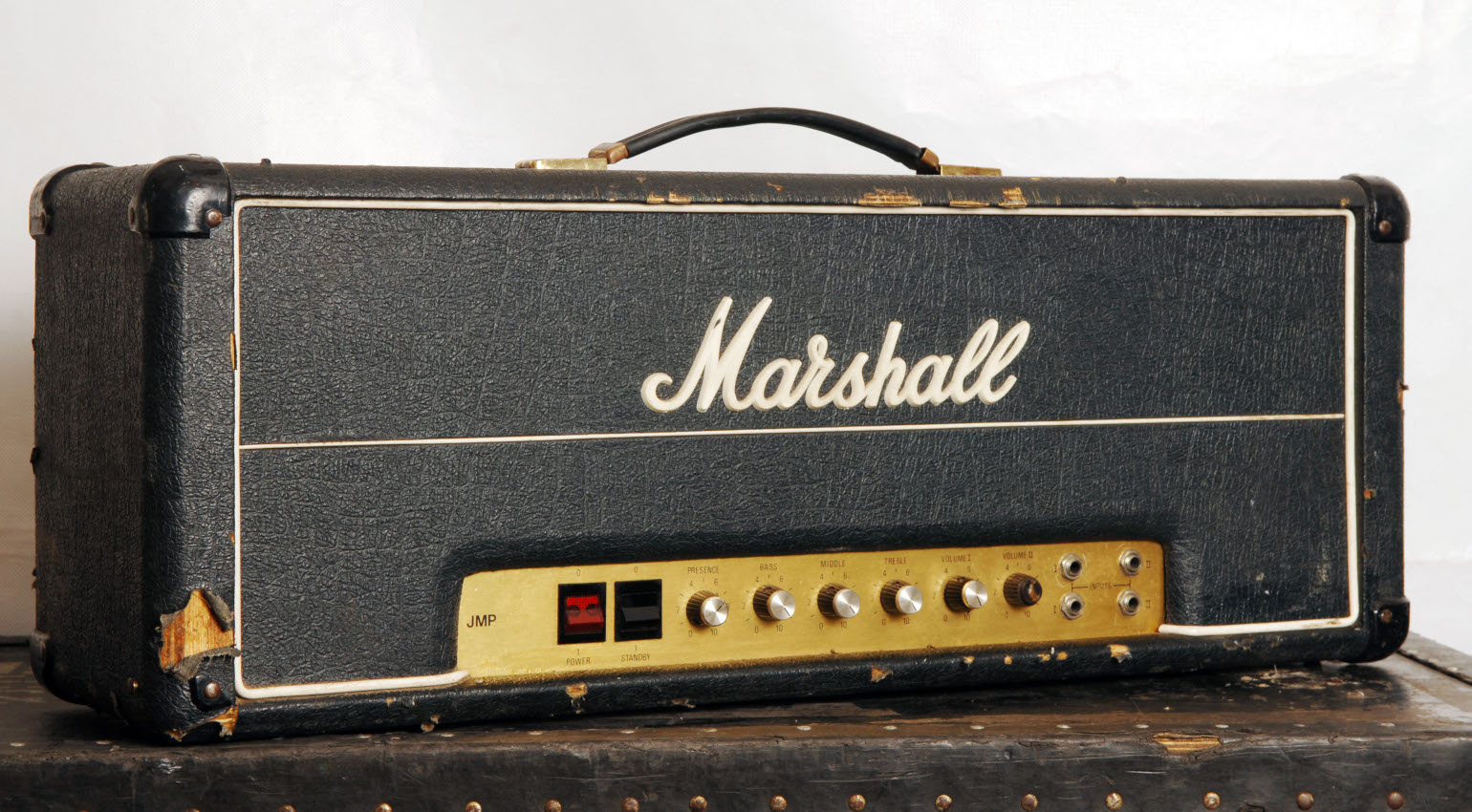
In practice, it’s usually a bit more complicated. Many of those legendary vintage amps only really work when played brutally loud. Actually brutally loud. An old Marshall Super Lead doesn’t develop its famous overdrive sound at bedroom volume. That compression, that playing feel, that aggressive dynamics only show up when the output stage is working hard.
The problem: an amp like that is roughly as socially acceptable in a modern apartment as a fighter jet taking off. But with a lot of vintage sound.


The Vintage Sound Culture Shock
A lot of guitarists hit a moment of culture shock at some point. The legendary vintage amp sounds surprisingly harsh, thin, or just uncomfortably loud at home. The “magical” sound usually only materializes in combination with a big cabinet, a loud room, and a band. And possibly other substances.
That’s exactly why load boxes, attenuators, and profiling systems have been booming for years. Modern gear like Kemper, ToneX*, or the Quad Cortex* tries to capture not just the sound of an old amp but its behavior under full load. And by now, it works frighteningly well.

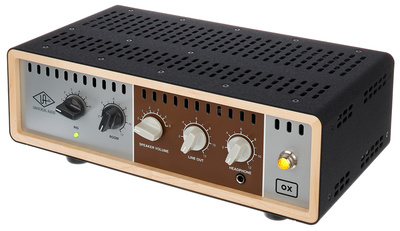

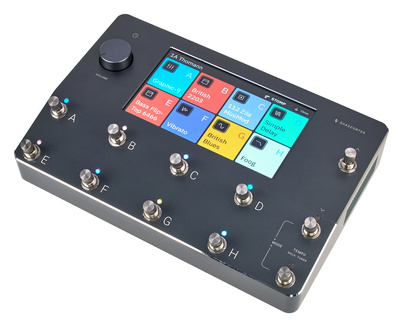


Because what we guitarists actually love isn’t the sound of old amps. We love the sound of old amps at their limits. And those limit situations are barely practical in everyday life anymore, but they can be reproduced pretty convincingly with modern tools.
Vintage Guitars: Wood, Myth and Psychology
Old wood sounds better — it’s the authentic vintage sound. Nitro lacquer resonates more freely. Instruments back then could “breathe.” The wood was better. The magnets sounded warmer. And a good ’59 Les Paul is simply beyond reach.
The truth? As usual, it sits somewhere between real physics, genuine experience, and complete mythology.
Materials do age. Wood loses moisture over decades, old nitro lacquer changes its structure, and certain components really do respond to time and use. The idea that an old guitar might feel different from a new one isn’t complete nonsense.
But automatically concluding that old guitars fundamentally sound better is a stretch.
Modern manufacturing is simply superior to older production methods in many areas. CNC routing is more precise. Fret work and neck geometry are more consistent, modern hardware stays in tune more reliably. Many current instruments objectively outperform a lot of vintage guitars on a technical level.
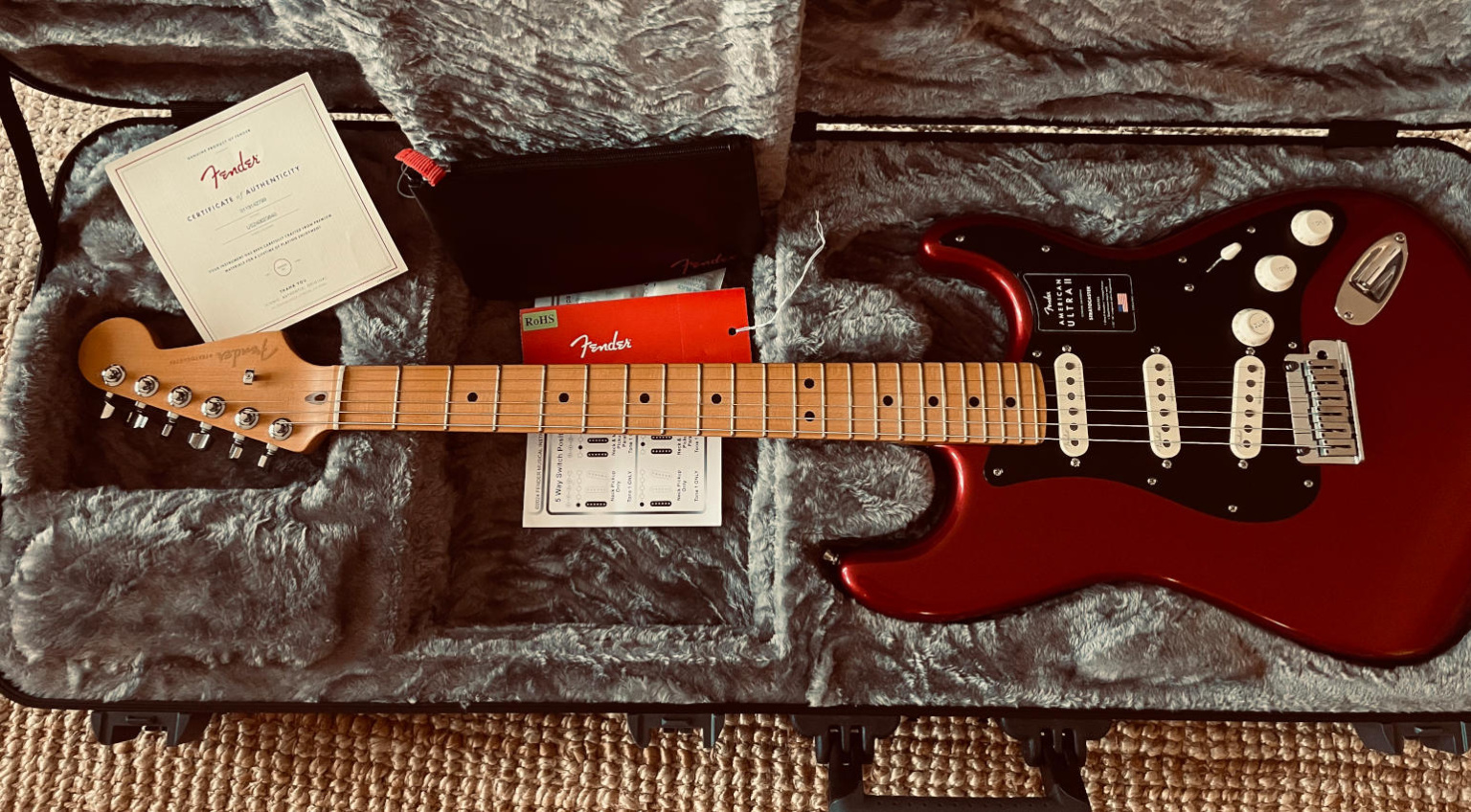
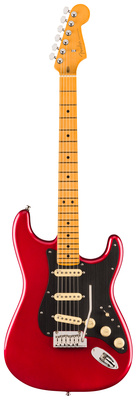
You really notice this with modern high-end models. The current Fender American Ultra II Stratocaster plays with a precision and comfort that many vintage production instruments never came close to. Build quality, playability, and electronics operate at a level that old production-line instruments simply didn’t reach.
And yet most guitarists have an immediate emotional reaction the moment an old Strat or Les Paul enters the room.
Why? Because we don’t perceive guitars purely rationally. An old guitar carries visible marks of time. Dings. Worn spots. Stories. Even if a modern instrument is technically superior, the vintage one feels more significant.
I’d argue that this is actually the core of what “vintage sound” really means. Not every old guitar sounds better, but many old guitars feel more inspiring.
The Boutique Industry Runs on the Vintage Dream
Without the myth of the perfect vintage sound, probably half the boutique gear industry wouldn’t exist.
Because practically the entire modern guitar world is built around the idea of recapturing some lost holy grail from the past: the perfect Plexi clone, PAF-correct pickups, NOS capacitors, nitro aging, the whole package. Even modern products are often sold not on innovation but on their closeness to the past. And the fascinating thing is: it works extremely well.
A quality boutique pedal often sounds fantastic. Handwired amps can respond beautifully. And yes, some old circuits genuinely have a character that modern designs don’t exactly reproduce.
But the guitar world is also extremely susceptible to emotional inflation. The moment words like “NOS,” “vintage correct,” “handwired,” or “limited run” appear, a certain part of the guitarist brain switches on. Or off, depending on how you look at it.
The Uncomfortable Truth: Modern Gear Is Often Better
The longer you spend with modern guitar technology, the harder it gets to defend many vintage sound arguments on technical grounds. Emotionally and culturally, sure. But purely technically, it gets difficult.
Modern guitarists are living in absolute luxury. Good equipment has never been more accessible. Even affordable instruments now play at a level that would have been unthinkable twenty or thirty years ago. Compare your first electric guitar to what Harley Benton ships today.
Modern manufacturing means even mid-range guitars are built surprisingly clean. Fret work, hardware, and electronics function more reliably than ever before.
Then there’s the digital revolution. Plugins like Neural DSP, AmpliTube, or ToneX have gotten frighteningly close to classic tube amps, and modern profiling systems respond dynamically, feel direct, and solve many of the problems that classic tube amps still carry with them.
Noiseless pickups eliminate the typical hum of classic single coils almost completely without destroying the character. Modern tremolo systems stay in tune. Current high-end Strats offer switching options that vintage players could only dream of.
In metal and high-gain territory it’s even more obvious: many modern productions simply wouldn’t work with classic vintage setups. Tight djent playing, ultra-clean high-gain recordings, complex stereo rigs — these almost always rely on modern technology and not on vintage sound.
Why Vintage Sound Will Never Die
And yet vintage gear will never go away. Because guitarists aren’t fully rational creatures.
Thank god for that.
Because music was never just technology. Nobody falls in love with a song because the frequency response is particularly linear or the dynamics measured perfectly. Music lives on emotions, atmosphere, and well-told stories.
And here, vintage gear wins by a wide margin.
An old SG feels different from a modern superstrat. Not necessarily better, but different. An old Les Paul immediately creates pictures in your head. Old Marshalls sound like clubs, sweat, and stages that were way too loud. Even small details like yellowed lacquer or worn knobs change how you perceive an instrument.
That sounds irrational, and it probably is. But that’s exactly what makes music interesting to me.
An old tube amp sometimes responds unpredictably. A vintage guitar might push me toward a different playing style. A slightly microphonic pickup behaves with its own personality, and the whole thing is impractical.
But those are exactly the moments where something creative happens.
Conclusion: The Big Lie about Vintage Sound Is Maybe Not a Lie at All
So: is vintage sound one big lie?
Yes. And no.
The guitar world does romanticize an enormous amount. Not every old guitar is magical, not every old Marshall sounds better than modern alternatives. Many boutique products are primarily selling nostalgia, and some discussions about wood, lacquer, or capacitors drift dangerously close to religious territory.
But at the same time, the vintage myth does contain a real core. Because music doesn’t come from measurements and technical specs alone. It comes from inspiration, emotion, and connection. Old instruments tell stories. They create images. They change the way you play and listen.
The big lie about vintage sound might not actually be that vintage gear sounds special. The real lie might be thinking it’s only about what can be measured.
More on The Big Lie about Vintage Sound
- Jimmy Page’s Gear – The Greatest Guitarists of All Time
- Slash’s Gear: The Best Guitarists of All Time
- The Greatest Guitarists of All Time: Joe Bonamassa – Sound and Gear
- The 5 Best Guitar Intros of All Time That Every Guitarist Should Know
- More Guitar Features on Gearnews
*Originally published at Gearnews.de by Jan Rotring.
*Note: This article about The Big Lie about Vintage Sound contains affiliate links that help us keep Gearnews running. The price for you always stays the same! If you buy something through these links, we receive a small commission. Thanks for your support!

This might also interest you

2 responses to “The Big Lie about Vintage Sound: Why Old Guitars Don’t Automatically Sound Better”

Sounds like something an opinion piece tied to a new instrument music store would say. jk jk
I agree with a lot of the sentiments. The technology has gotten incredibly good. I wouldn’t trade my Kemper for Superlead.
I think part of the allure of vintage is the character of it. Tangentially video game designers today are making things in the style of Playstation One graphics. It is an ugly mess of an art style, but the imperfections of the limitations of the time gave it a character that is appealing for those exact limitations.
I also don’t know if it will go away. Yesterdays “brand new” will be tomorrows “vintage.” I mean.. even the Metalzone has had its own resurgence in popularity.
Well, I remember in 1991 playing a Fender mustang on a Marshall in a vintage guitar shop, trying to feel the vibe of Kurt Cobain, and being blown away. That was the sound! The same, the first time on a Rick 4001 to imitate Lemmy. Vintage guitars are markups of sounds recorded a long time ago. There was a time where guitars were made with mistakes, before being industrialized, like Fender in the CBS era. The imperfections we corrected, and the markups disappeared. I think, the vintage era is between 1950 and 1969, after that, the industry of guitars changed of scale, and became more professional. That was a good thing in a way : hifi sound, better instruments for beginners, expanded possibilities with digital for a fraction of the analog prices. Nowadays, master builders seem to be the legacy of the analog years. I would trust them more than vintage instruments in vintage shops that are beaten up and unable to stay in tune. The problem is: when you want to experience musical styles from the past, do you find the rights instruments or do you have to look for oldies.