Sampling Copyright EU 2026: BGH Delivers Final Ruling, Kraftwerk Sample Stays Legal!

 5,0 / 5,0 |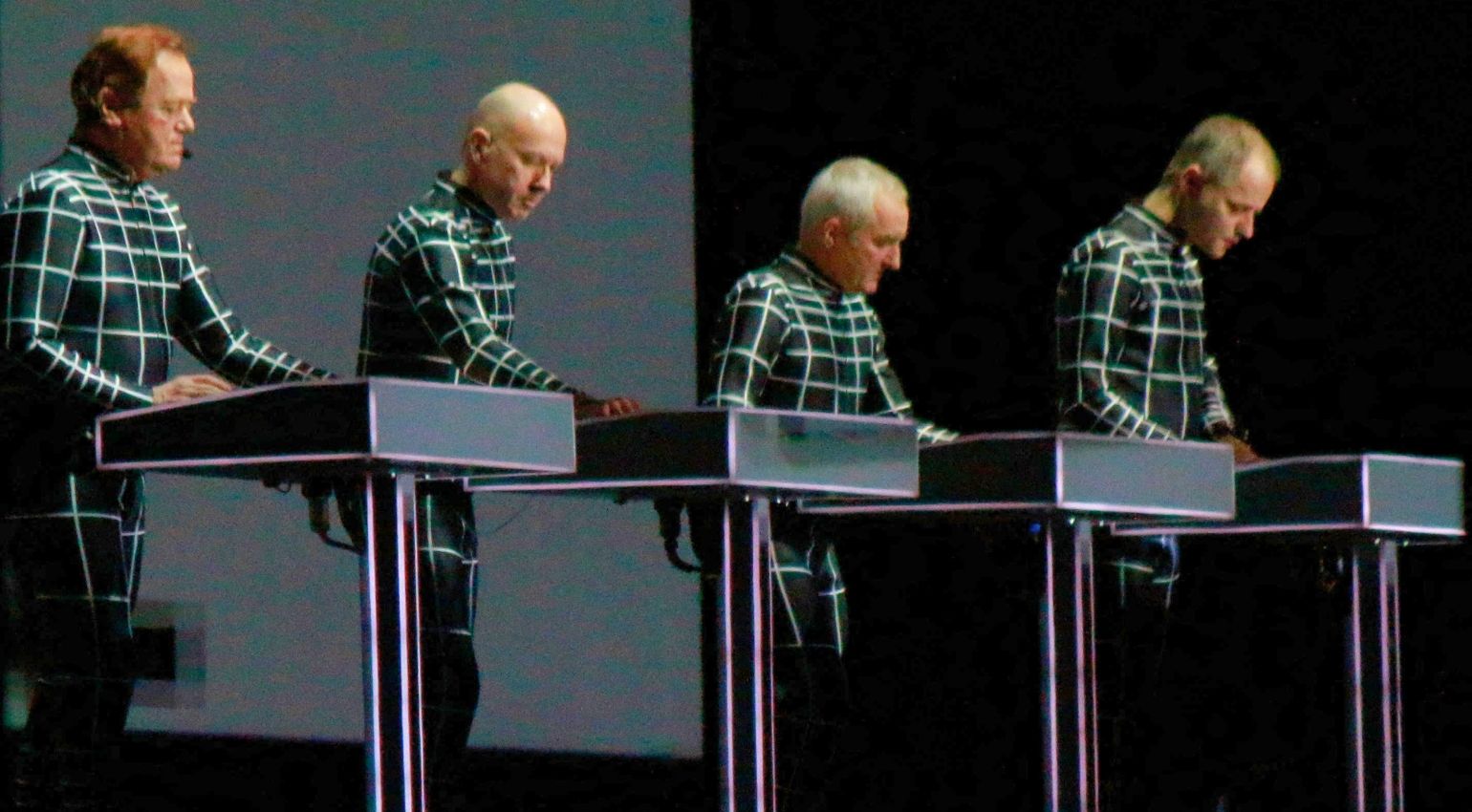
Sampling Copyright EU 2026: BGH Delivers Final Ruling, Kraftwerk Sample Stays Legal! · Source: 360b / Alamy

Sampling Copyright EU 2026: Almost 30 years after this legal battle first began, the sampling copyright story finally has its ending. Germany’s Federal Court of Justice (Bundesgerichtshof, BGH) has rejected Kraftwerk founder Ralf Hütter’s appeal, upholding the 2022 ruling from the Hamburg Higher Regional Court. Using a two-second drum sample from “Metall auf Metall” in Sabrina Setlur’s “Nur mir” is now definitively legal as a pastiche, fully in line with the EU Court of Justice’s decision from April 2026.
Sampling Copyright EU: What the Final BGH Ruling Against Kraftwerk Means for You
Reactions from the Music Industry: Relief Meets Frustration
Andreas Walter, co-managing partner at law firm Schalast and Moses Pelham’s attorney, summed up what this ruling means for the industry: anyone who picks up a fragment of someone else’s sound, transforms it, and places it in a genuinely new artistic context isn’t copying, they’re creating. The BGH applied the ECJ’s standard consistently, and that gives the entire industry real legal certainty going forward.
Ralf Hütter himself, according to Sony Music Publishing, reacted “with regret.” From his perspective, it’s still unclear exactly where the line falls between genuine creative dialogue and unlawful appropriation, especially since German courts sided with Kraftwerk between 2002 and 2021. Despite today’s ruling, Pelham still has to pay damages, a small consolation prize for Hütter, even though the bigger legal question is now settled.
BVMI Pushes Back: Does “Pastiche” Become a Loophole?
The German Music Industry Association (BVMI) is considerably less thrilled. Chairman Florian Drücke warns that the pastiche concept risks turning into a “free pass for unlicensed sampling” if simply recognizing a sample in a new context, with some musical alteration, counts as enough to qualify as artistic dialogue.
What’s genuinely relevant for anyone working in a studio today: Drücke explicitly ties this back to generative AI, pointing out that some players in that space are already pushing back against licensing obligations using similar logic. René Houareau, the BVMI’s head of legal and political affairs, adds that simply dropping a recognizable sample into a new musical setting doesn’t automatically count as dialogue with the source material, otherwise the whole concept risks becoming an almost impossible-to-verify formality.
For your own work in the studio, here’s what stays true either way: sampling copyright in the EU no longer hinges on whether you used a sample at all, but on whether there’s a genuine, recognizable creative engagement with it, and that principle now stands confirmed at Germany’s highest court too.
What do you think about that topic: sampling copyright EU? Leave us a comment below.
How to Sample Legally Right Now – Sampling Copyright EU
[April 20, 2026] Sampling has been a core part of music production for decades, and the same question always comes back around: what’s actually allowed? A recent ruling from the European Court of Justice moved the needle here in a meaningful way. The starting point, as usual, is the long-running dispute between Kraftwerk and Moses Pelham. Using a short clip from “Metall auf Metall” in a hip-hop track sparked a debate that’s still shaping the industry today.
What This Sampling Ruling Actually Changes
The updated EU sampling framework brings real clarity for producers, and it all comes back to the term “pastiche” once again. The court sharpened its definition here, laying down a clearer foundation. Sampling can be legal when there’s a recognizable creative engagement with the original material.
That’s a meaningful shift. It’s no longer just about whether a sound got lifted, it’s about what you actually build with it. Once a sample lands in a new context and gets audibly developed further, the whole legal calculus changes. That’s honestly how plenty of genres have operated for years already.
In the Studio: What This Actually Means for Producers
For your own workflow, this boils down to one thing above all: more clarity. Sampling still isn’t a free pass, keep that in mind no matter what, but the rules genuinely feel more graspable now.
If you take a sample and build something genuinely your own out of it, you’re standing on safer ground. Straight-up copying without transformation is still risky territory. The distinction now leans harder on how creatively you actually handle the material.
This approach is basically bread and butter in hip-hop, techno, and electronic music generally. Sounds don’t just get lifted, they get chopped up, processed, and rebuilt into something new. There’s no shortage of tools built specifically for that these days.
More Freedom, But Not Fewer Risks
Still, this isn’t suddenly a closed chapter. Rights holders will obviously keep a close eye on how their work, right down to tiny fragments, gets used elsewhere. Once well-known tracks are involved, context becomes everything. Where does the sample show up? How heavily is it transformed? What role does it actually play in the new track?
Worth repeating: this ruling shifts the line, it doesn’t erase it entirely.
Opinion: An Important Step, But Not a Free Pass – Sampling Copyright EU
Honestly, this ruling arrives late, but at exactly the right moment. Sampling has been a core part of music history for a long time now, not some fringe practice. Shifting the focus toward creative context makes a lot of sense. Music keeps evolving precisely because it builds on what came before. That’s finally getting recognized here.
One thing still nags at me though. This ruling doesn’t create absolute certainty. A lot will still come down to case-by-case judgment calls. For producers, this means more freedom in spirit, but not complete legal clarity. Worth keeping in mind too as stem separation keeps getting more common in modern workflows.
Verdict: Sampling Stays, Just With Clearer Rules
Sampling has been part of modern music production for a long time, and it’s not going anywhere. This ruling gives the whole practice a sturdier legal foundation and shifts the focus toward genuine creative contribution. That matters for every producer working with sampled material.
For musicians, that’s genuinely good news. More room to work means more creative options. At the same time, the responsibility grows too, you can’t just lift a sample, you actually need to push it somewhere new.
And that’s really where the line between a copy and your own sound sits. Originality and a distinct signature in a track are what actually drive success, not imitation. This ruling brings more clarity to sampling law, but it still doesn’t replace the judgment calls you make in your own studio.
How We Got Here: Two Decades of Legal Back-and-Forth
This dispute stretches back to the late 1990s, when Kraftwerk first took action over that two-second drum loop from “Metall auf Metall” showing up in Setlur’s “Nur mir.” German courts went back and forth for years, at one point even ruling the track couldn’t be promoted, only for the Federal Constitutional Court to later side with artistic freedom instead. The case eventually reached the European Court of Justice in 2019, which first established that unauthorized sampling could infringe on rights unless the result was “unrecognizable to the ear,” setting up the “pastiche” framework that ultimately decided the case.
Kraftwerk Win Sampling Copyright EU Lawsuit – What Next for European Copyright Law?
[01 August 2019] It took 20 years, but justice has been dealt at last. In a case filed in the late 90s, the European Court of Justice ruled in favor of Kraftwerk, deeming the sampling of the band’s 1977 tune “Metall auf Metall” by the producers of singer Sabrina Setlur (in her 1997 song “Nur Mir”) unlawful. Granted, it might be just two seconds of audio, but it’s still a piece of original Kraftwerk music being prominently looped in the song without clearance and compensation.
The case is also an example of contemporary European copyright and sampling law in action, perhaps giving a clue towards how future cases like it may be treated. In its initial verdict, the ECJ argued sampling equals reproduction of original work with clearance needed from the rights holders. However, the court also maintained that a musical recording “in a modified form unrecognizable to the ear”, a.k.a. mangled sampling, does not constitute reproduction.
Thus, the case will return to the German Federal Court and further analysis will establish whether the Kraftwerk sample is “reproduction” or “artistic work.” Since the snippet from “Metall auf Metall” is left mostly intact, it is very likely that the German court will too side with “die roboter.”
However, European law has yet to come up with clear guidance on the legalities of sampling. As of now, there are no principles regarding the extent and nature of using copyrighted work and what constitutes infringement. The conclusion to this case is that sampling a tiny bit of copyrighted audio as-is is infringement, which could be evaded by artistically rendering the material unrecognizable. Basically, if the end result of your sample doesn’t make the listener go “what the heck is that?!” upon hearing it, you might be a criminal. Surely we need something more functional than that?

This might also interest you
2 responses to “Sampling Copyright EU 2026: BGH Delivers Final Ruling, Kraftwerk Sample Stays Legal!”
in this case it was outright stealing, but i’m in support of sampling if it’s creative and distinguished. it’s what art is- borrowing and building upon the previous.
Word up. You can sample ANYBODY and ANYTHING you like if you follow the following rules.
1. Don’t make a single penny or any headway from the music that you make (that includes copyrighted samples). This includes live performances/DJing etc. If you’re making free, public domain, non-profit music, you cannot be sued.
2. Don’t use a sample so out of context that the original artist is defamed or financially setback by your use of a sample.
You can only be sued if you’re making money, or if an artist is losing money because of your activities. If you operate in a publicly-stated non-profit way, you can sample anyone you like. Just make sure that everyone who gets your recordings is fully aware of the implications of making money from them, ie that your recordings are for public domain, non-profit use only. We sample who we like. Including Kraftwerk!