oeksound soothe3: The World’s Most Popular Mixing Plugin Gets a Complete Remake
Built from the Ground Up, and According to oeksound It Sounds Better Than Ever

 4,3 / 5,0 |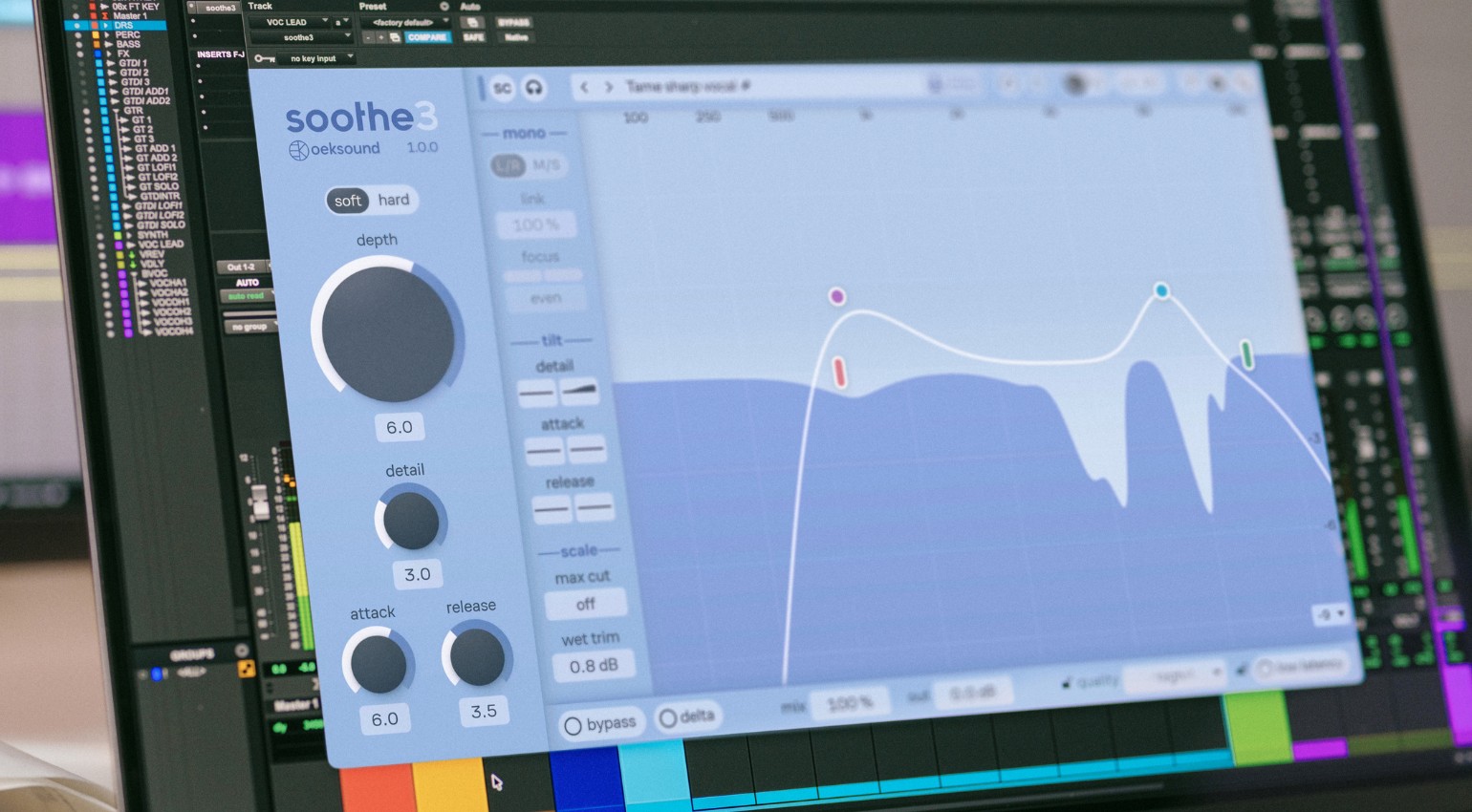
oeksound soothe3: The World's Most Popular Mixing Plugin Gets a Complete Remake · Source: oeksound

If you’ve spent any time doing professional mixing, you know soothe2. oeksound’s dynamic resonance suppressor became one of the most widely used plugins in the world and has been a fixture in countless mixes ever since. Now soothe3 is here, with a completely rebuilt algorithm, new features, and what oeksound calls a significantly more transparent sound. Now available.
All About oeksound soothe3
Why soothe2 Became Such a Big Deal
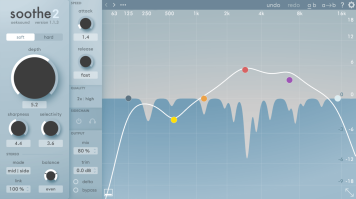
soothe2 solved a problem that used to take a lot of manual work: unwanted resonances in recordings that static EQs could only address clumsily. The plugin detected problem frequencies in real time and reduced them automatically, only where and when needed. Vocals, guitars, drums, buses. It worked on virtually everything. Grammy-winning engineers and producers swore by it, and once you had it in your workflow, it was hard to imagine mixing without it.
That’s what makes soothe3 worth paying attention to: this isn’t a minor update. It’s a complete restart.
What soothe3 Actually Does Better
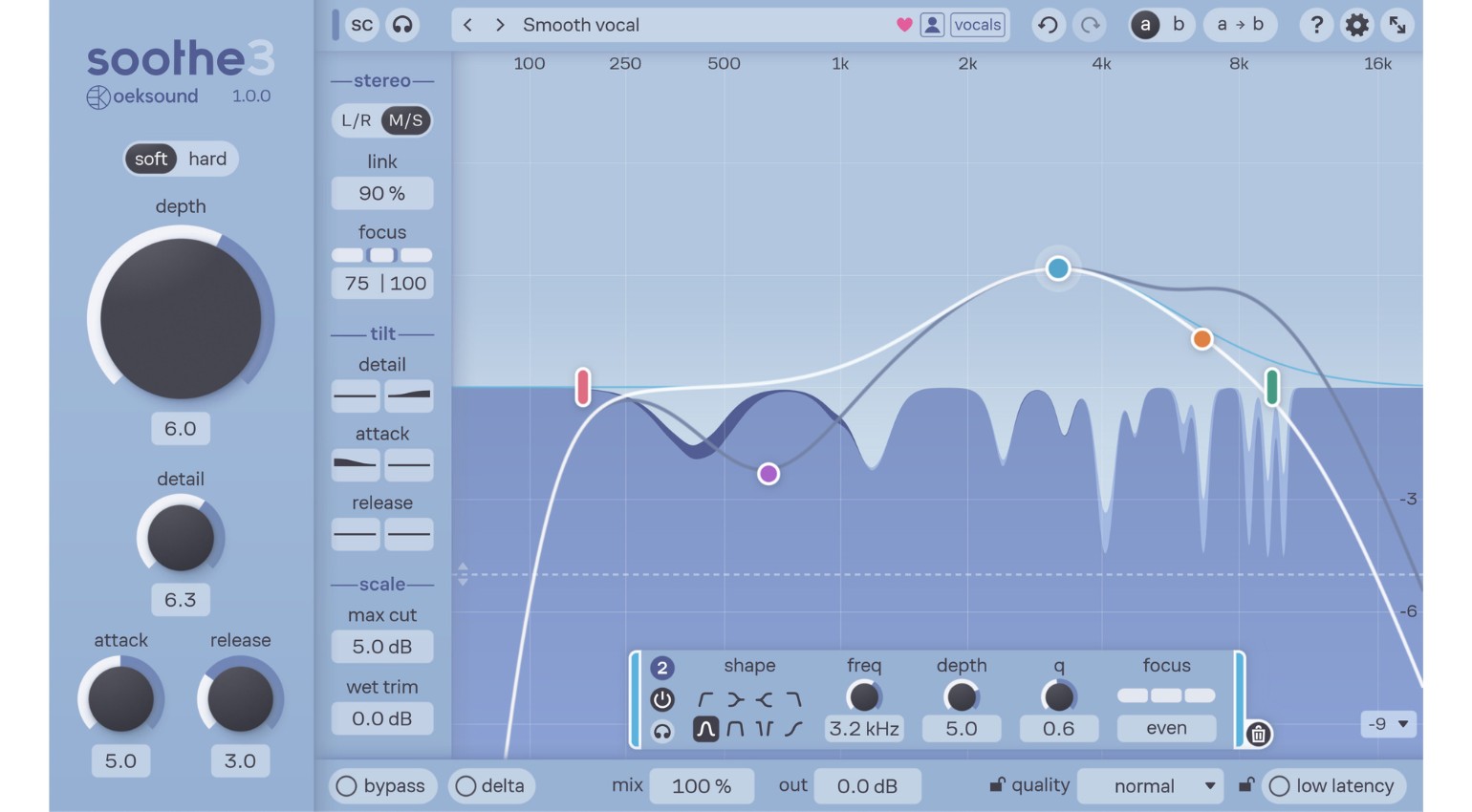
The core change is the DSP algorithm, rebuilt from scratch. According to oeksound’s principal DSP architect Tommi Gröhn, the goal was to minimize the recognizable soothe2 character when pushed, while keeping the precision for actually fixing resonances intact. soothe3 is more aware of the overall tonal balance of the source, works more selectively, and is less likely to introduce new problems while solving existing ones. More sweet spot, less sonic fingerprint.
Soft and Hard modes carry over from soothe2, but their differences are now more pronounced. Soft mode is almost completely level-independent and suits classic resonance treatment well. Hard mode behaves more like a compressor, reacting strongly to input level. Both modes are more distinctly useful than before.
What’s New in Version 3
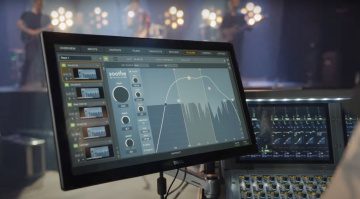
soothe3 adds several capabilities that simply weren’t possible before. The low latency mode is the most immediately practical: it makes soothe3 usable during tracking, giving artists a more polished sound to monitor while recording, and opens the door for live mixing applications as well.
Multichannel support up to 9.1.6 is also new, which brings soothe3 into immersive audio formats. Less relevant for everyday stereo work, but a genuine addition for anyone working in Dolby Atmos or similar environments.
The new Detail parameter merges the Sharpness and Detail controls from soothe2 into a single knob, which streamlines the workflow noticeably. The hideable side panel carries the familiar stereo controls along with the new Tilt and Max Cut parameters.
Price and Availability
oeksound soothe3 is available now, priced at €229 ($259). Rent-to-own is also an option. The upgrade from soothe2 costs €50 ($55). Available directly at oeksound.
oeksound soothe3 Leaked: What’s New?
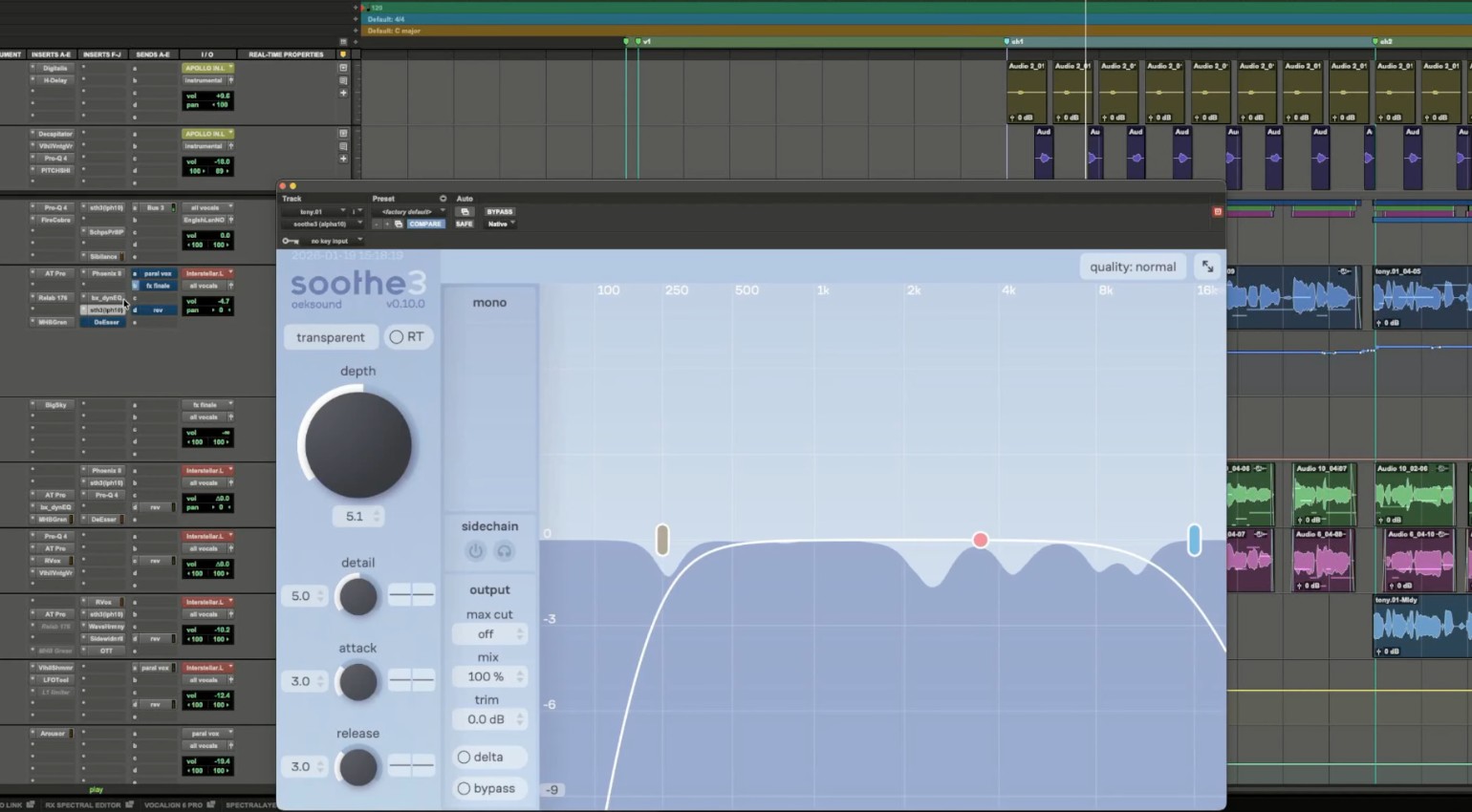
[20 March 2026] A few days ago, Italian YouTuber and music producer CanovA leaked a beta version of the upcoming oeksound soothe3 (see reddit). During a session, he apparently revealed the updated interface of the popular resonance suppression plugin in a livestream. No further details were shared, which raises the question of what has actually changed.
oeksound’s soothe Version 3 is Coming!
As briefly seen in the YouTuber’s video, the updated interface of soothe3 appears cleaner and more modern. Alongside a revised layout of existing functions, several new elements can already be identified. It also looks like additional character modes have been introduced, although only “Transparent” is visible so far. An “RT” button is present as well, which likely activates a real-time mode.
Another new field is labeled “max cut,” which likely defines the maximum depth of the ducking effect and how strongly the signal is attenuated. The visual representation of individual frequency points has also been updated, with cuts now shown as elongated shapes instead of circles. In addition, next to “detail,” “attack,” and “release,” there are new controls that resemble adjustable low- and high-cut filters. This could indicate the ability to target or exclude specific transient ranges across the frequency spectrum.
At this stage, all observations remain speculative, as the manufacturer has not released any official details about the upcoming version. Updates will follow as soon as more information becomes available.
More Information

This might also interest you