My Top 5 Expressive Synths

 4,7 / 5,0 |

I decided to take a look at some of the more expressive synths of the last 40 years that I have owned and used. From mighty digital giants to emotive analog beasts, I explore instruments in my collection that have used innovative ways to add expression to your keyboard performances.
I’m not the most proficient keyboard player, hence my need to surround myself with enough technology to help eke out the ideas in my head into some sort of musical product. But when I discovered the KORG Prophecy on the mid/late 90s, I found a synthesizer whose expression capabilities actually made me sound like I knew what I was doing!
So here, along with the Prophecy, I wanted to talk about five synths that I own that afford me varying levels of expression that make them somewhat unique and which are very dear to my heart. Of course, this isn’t an exhaustive list, and is completely subjective, so if you have a favourite synth that allows for extra depths of expression, let me know in the comments below!
My Top 5 Expressive Synths
Yamaha DX1
Ok, so I’m going to start with a big one, and it’s one that not many people will be able to experience themselves. I still have to occasionally pinch myself when I glance over at my DX1. Never in a million years did I ever think I’d have one in my studio.
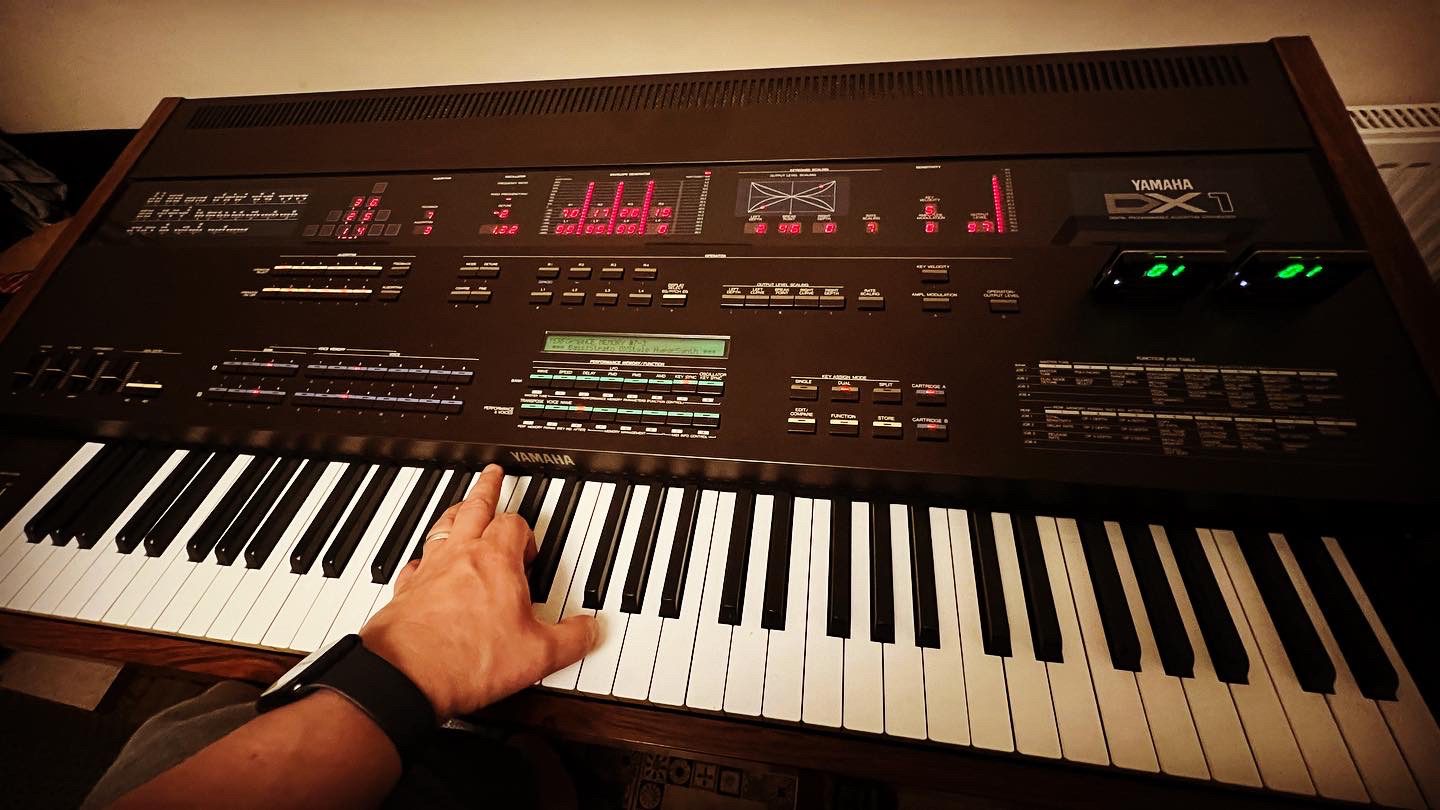
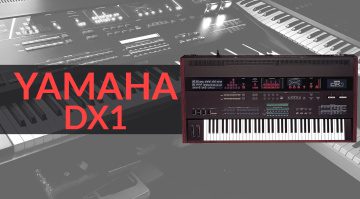
The DX1 was released AFTER the DX7 in late 1983, some 6 months after its smaller sibling’s earth-shattering debut. The DX1 was derived from a prototype called the CSDX, with Yamaha’s early thinking that sticking CS in the name would align it with their previous all-analogue synths.
The DX1 is often described as two DX7’s in a box. It is so much more than that, and one of the key differences is the way you can be expressive with it. Whilst the DX7 had a legendary brilliant synth action keybed, the DX1 borrowed the design from the CS-80. Lift that massive lid, and you will see wooden keys that are around 18″ in length.
And just like the CS-80, they feature polyphonic aftertouch. So, as well as the delightful weighted hammer action keybed, built by Yamaha’s piano division (in fact, the whole DX1 was built there), you have the ability to express on an individual note-by-note basis.
This keybed alone sets it well apart from the DX7, as does the ability to layer two patches with unique performance parameters. There are multiple expression pedal ports at the rear, and the DX1 also features a breath control input. Put all of these factors together, and you have the most expressive FM synth available until the release of the mighty Montage M8x. Until maybe the Behringer BX1?



KORG Prophecy
I scoffed at the KORG Prophecy when it was launched. The asking price of £1,299 for a 37 key monophonic synth seemed ludicrous at a time when one could buy a 32 note polyphonic, 16 part multitimbral synth for less than £500.
However, I soon came to regret my derision when I actually sat in front of one and began playing it. Not only was I bowled over by the breathtaking sounds its MOSS-based modelling engine could produce, but the thing that struck me more than anything was how expressive it allowed me to be.
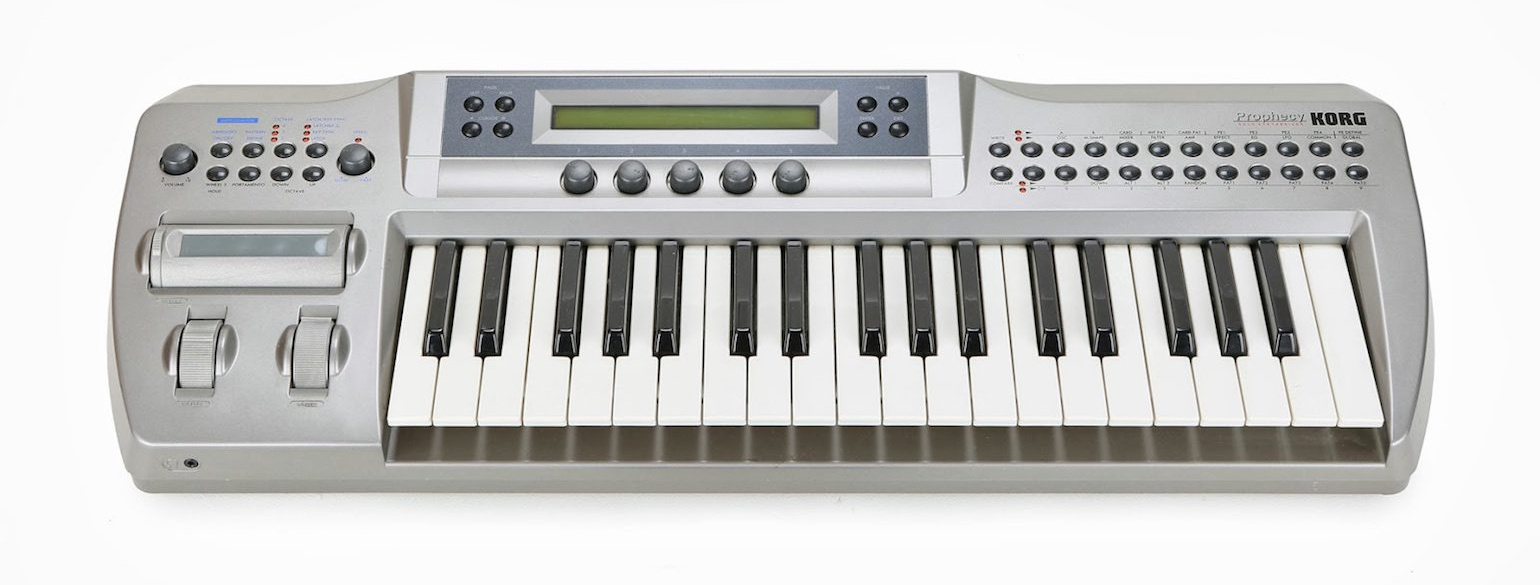
A combination of the three wheels, one of which was affectionately nicknamed “The Log”, ribbon controller and aftertouch made so many of the physical modelling sounds, such as reeds, woodwind and brass, so delightfully and rewardingly expressive.
One of my favourite patches, B01 Reedfife, was, I think, the patch that made me get my wallet out. The hardware featured a Hold Button for Wheel 3 and if lowered and locked, it gave you a lovely bit of reverb that you could then drift away into the Scottish Highlands with as you played.
Brass models, like the Trombone, could easily be replicated with the ribbon performing the job of the slide! Every patch opened up a world of expression that is still incredibly inviting to this day. It’s a shame it didn’t add a breath controller input, but this can be overcome with a third-party MIDI breath adapter.
The KORG Prophecy went from being an object of my ridicule to one of my very few “cold, dead hands” synths. I cherish it to this day and judge all other physical modelling synths by it. It looks weird, sounds amazing and plays like a dream.
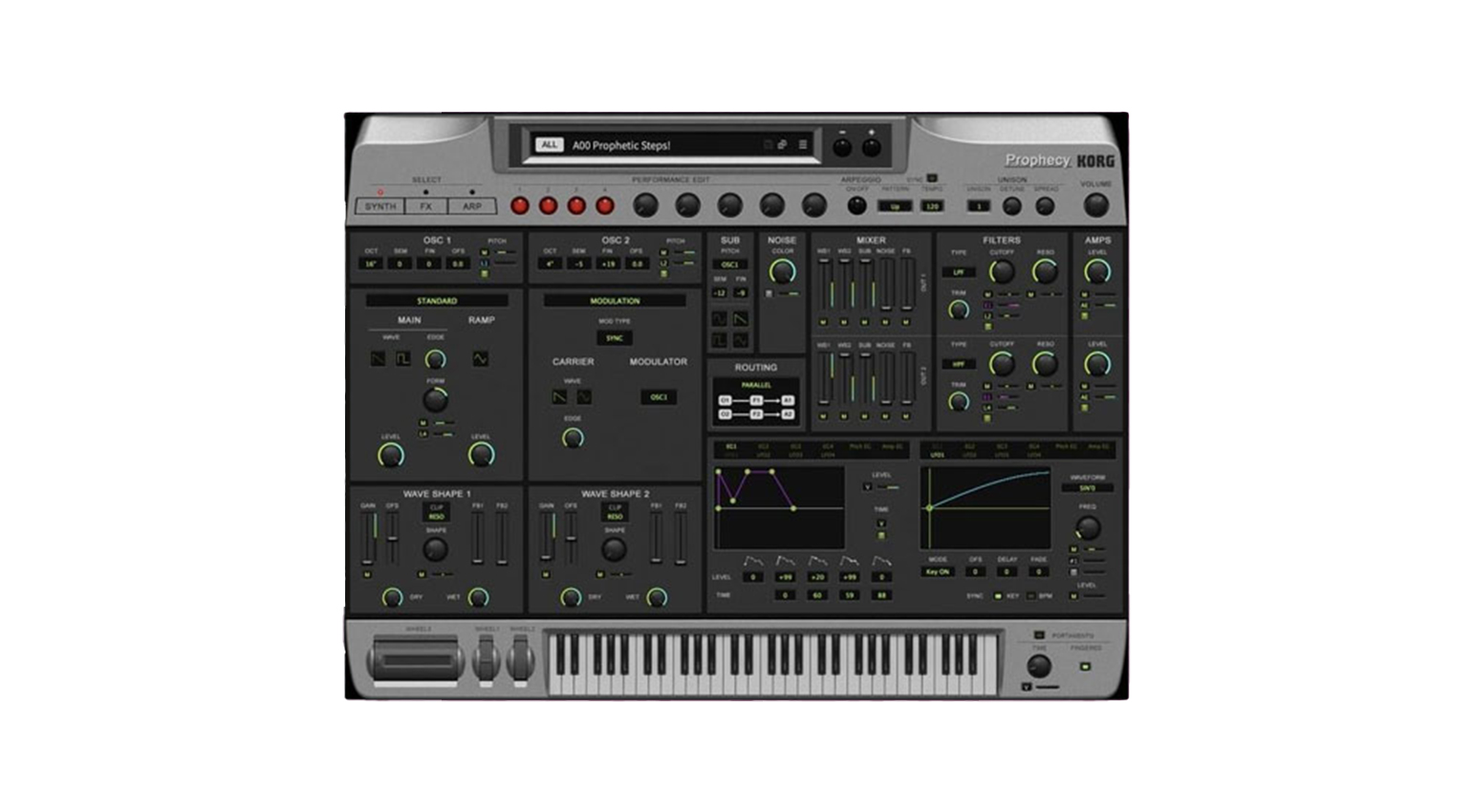
Hardware versions are generally not too hard to find online, but beware failing audio output capacitors. This is a relatively easy fix. And if you can find either of KORG’s expansion cards, ‘Analog & Vintage Models’ and ‘Modern Models’, you’ll be in heaven. Luckily for us, KORG have recreated the Prophecy (and its expansion) as a plugin, and it is incredibly accurate. I just wish it would double up as an editor and librarian from the hardware.

ASM Hydrasynth
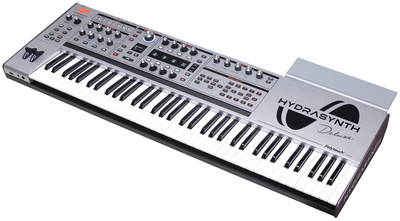
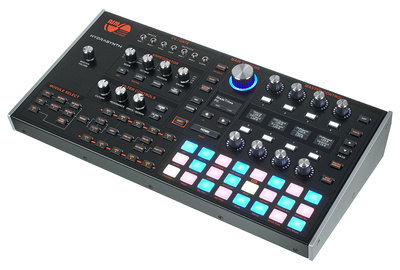
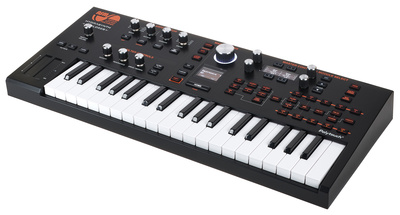
Ashun Sound Machines, quite literally, turned the synth world upside down on its head when it released the Hydrasynth. This new brand, based in China and headed up by industry veteran and super nice guy Glen Darcey, delivered an unashamedly digital yet hugely expressive synth just as the world entered the ‘Pandemic Times’.
In all honesty, it should have crashed and burned. Launched at a time when nobody could go and try one, and being the first synth from what was effectively a new company, the Hydrasynth defied all the odds, and one of the key reasons was how expressive it could be.
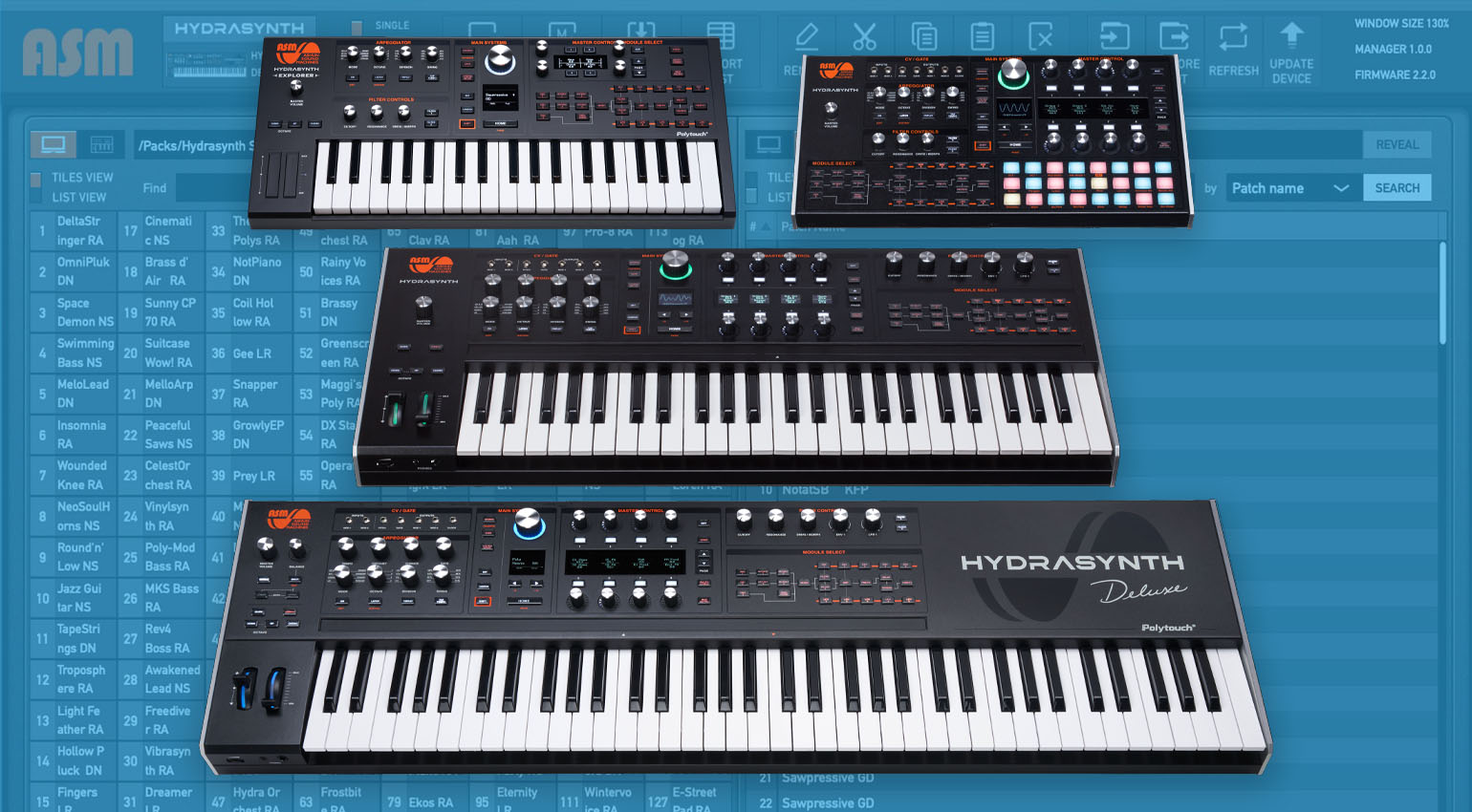
The first, and probably most important thing it did was to reintroduce polyphonic aftertouch into a synthesizer marketplace that had, for all intents and purposes, dismissed and forgotten this most expressive element of keyboard synths.
After the demise of the CS-80, very few synths adopted this function, with a tiny number of exceptions from the likes of Ensoniq and Sequential, possibly because it wasn’t cost-efficient to develop and manufacture, or maybe because a large majority of synth players weren’t demanding it.
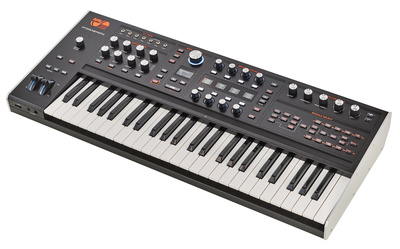
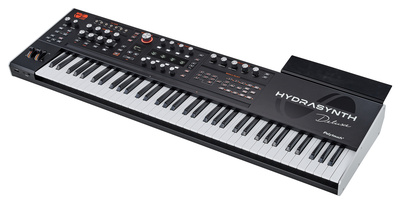
With their own, bespoke design called PolyTouch, they singlehandedly reintroduced a new generation of synth players to the expressive capabilities of polyphonic aftertouch, so much so that it is now often seen as a glaring omission if a synth doesn’t have it, especially in this world of MPE.
The Hydrasynth also brought back the ribbon strip embedded above the keyboard, and so, with these two features, it was often described as a CS-80 for the 21st century. The fact that they literally re-wrote the synth design book with their first synth is nothing short of remarkable.
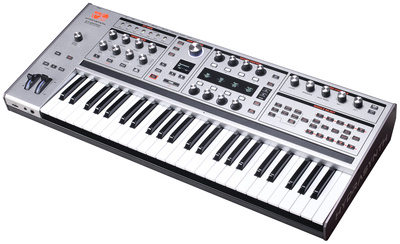
These expression controls, coupled with their amazing digital engine, deliver a world of sound creation and performance that we haven’t experienced in a mass-market polyphonic synth in nearly three decades. Hydrasynth was a breath of fresh air and spawned three further versions so that there’s a Hydrasynth for everyone.

Expressive E Osmose
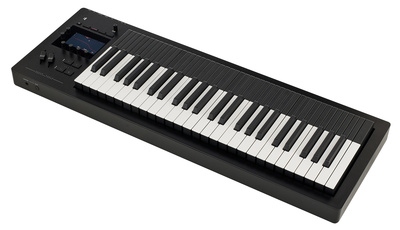
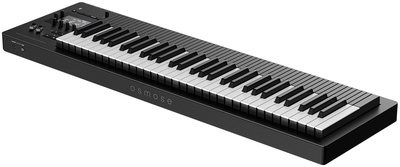
The Osmose from Expressive E had a long and protracted development period, with early crowd-funding backers having to wait some time before they were able to get their hands on one. But many would agree that it was absolutely worth the wait.
Where ROLI’s Rise (not included here because I don’t own one) reimagined a traditional Western piano keyboard in the form of a fleshy control surface that responded to multiple inputs of pressure and movement, Expressive E tried to stick to the more conventional design that had been around for centuries.
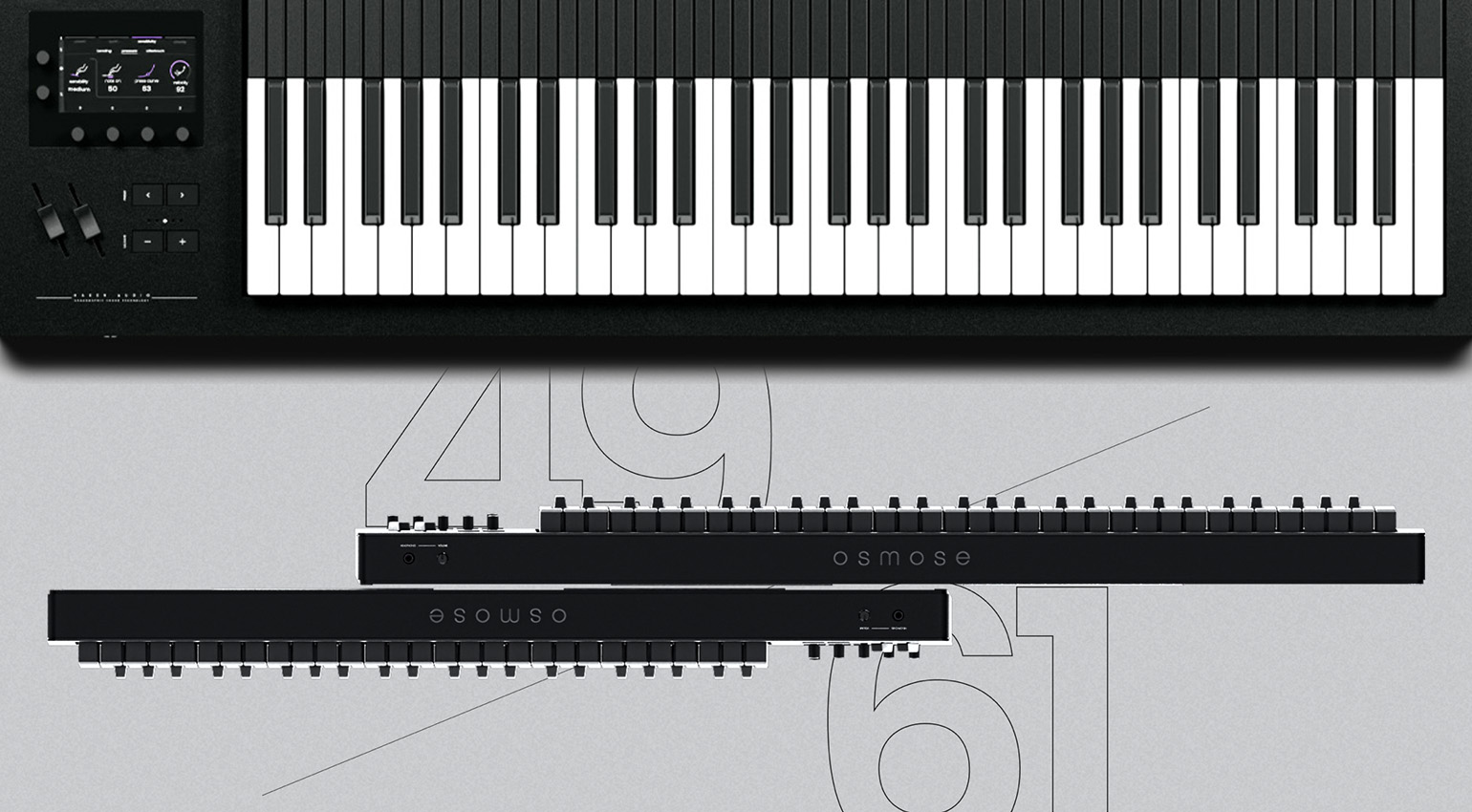
What they did seemed to align more directly with a wider range of players and their habits and muscle memory. Also, their collaboration with Haken Audio and inclusion of their amazing physical modelling synth engine made for a brilliant standalone synth that blew many people away, myself included.
The Osmose’s keys look, feel and behave like most other keyboards, but with the ability to interpret vertical and horizontal movement, velocity and polyphonic pressure and marry up with an MPE-capable synth engine to deliver unprecedented amounts of expression.
Keyboard players now have very similar expressive abilities to those who play wind-based and string-based instruments, with almost every movement being capable of affecting the sound being played. The sensitivity of these responses can be adjusted to suit an individual’s playing style.
Since getting my Osmose, I have dived headfirst into the world of MPE instruments. With synths like the newly resurrected Absynth 6, Arturia’s amazing Pigments and Expressive E’s own collaborations with the likes of AAS, Kilohertz and Synapse Audio, the Osmose has set a bar for expression within the synth community.

Arturia PolyBrute 12
We started of this article referring to the Yamaha CS-80, and we even made the comparison between it and ASM’s Hydrasynth, but one thing all these other distinctly digital synths discussed here lack is a true analogue synthesis engine.
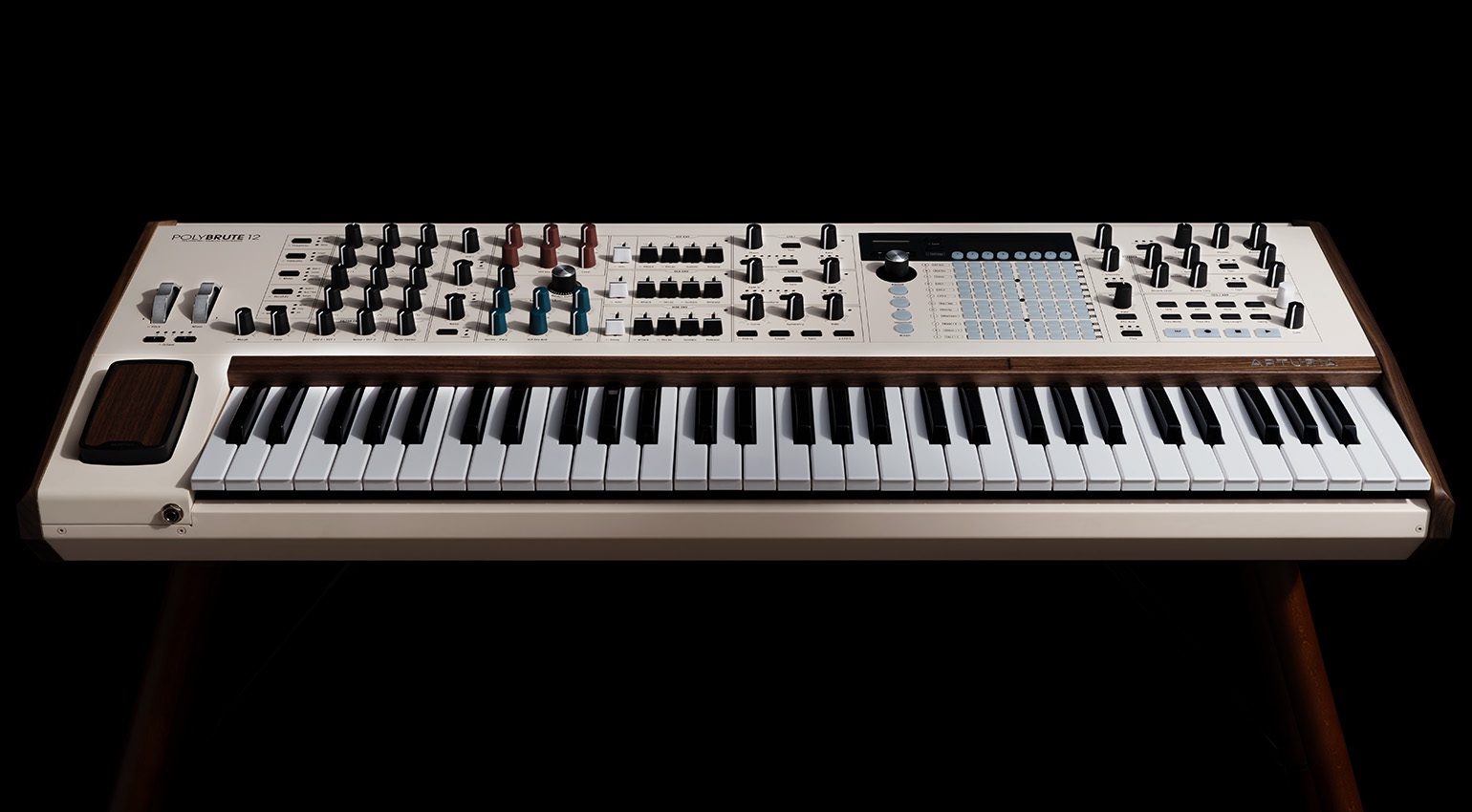
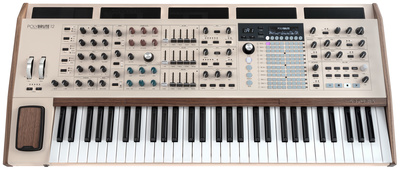
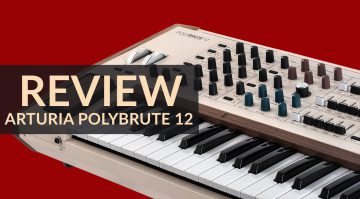
And in 2024, Arturia made what I believe is the true successor to the CS-80, the utterly compelling and hugely expressive PolyBrute 12. Arturia said that the PolyBrute 12 was over a decade in development, with the Polybrute 6 being somewhat of a stopgap.
The main reason it took so long was its unique keyboard mechanism that truly sets the PolyBrute 12 apart from any other analogue synth on the market today. Arturia’s FullTouch keyboard is a real joy to play delivering unparalleled levels of expression without abandoning a paradigm built over centuries.
The FullTouch mechanism is able to begin triggering notes as soon as the key moves from its resting position, opening up the amplitude envelope as it continues travelling through its range until it hits the point where aftertouch kicks in.
Striking the key hard can trigger the envelope instantly, meaning that a single patch can be played as both a slow attack pad and a fast attack lead. And then polyphonic aftertouch can be applied to further enhance the expression.
Just like its earlier incarnation, the PolyBrute 12 is blessed with a ribbon controller and the unique Morphée X-Y-Z pad controller, the latter of which is affectionately referred to as a place to rest one’s mobile phone! But doing this would prevent some wonderful expression capabilities.
Add the fact that each PolyBrute 12 patch can be morphed at the parameter level from A to B, and that these morphs can be assigned to any of the PolyBrute 12’s expression tools, makes the PolyBrute 12 an instrument that genuinely feels organic and alive in your hands.
The PolyBrute 12 is not a flagship synth because it’s the biggest or most expensive synth in their range. It is a flagship because it does things that not only none of their other synths can do, but also, no other manufacturer currently makes anything that comes remotely close.
It is the very epitome of expressive synth performance and design, and will go down as one of the greatest, most expressive analogue synths ever made. Like all the synths listed here, it invites the user to explore music at a much deeper and human level.

In Conclusion
The five instruments I have highlighted here are by no means exhaustive, and because I’ve focused on hardware, I’ve not even begun to go through how many wonderful and expressive software synths there are. Maybe that’s an article for another day.
As I said at the outset, this is my personal, subjective list based on synths I own. I wholeheartedly encourage you to share your own choices and experiences in the comments below. I’d love to hear your points of view.
Expression is a deep-seated human trait and is the very essence of who we are, and so any tool that allows us to express our feelings, our emotions and our views is a brilliant thing.
*Note: This article contains advertising links that help us finance our site. Don’t worry: the price for you always stays the same! If you purchase something through these links, we receive a small commission. Thank you for your support!

This might also interest you

One response to “My Top 5 Expressive Synths”

YESSSS to expression! Thank you for sharing your faves. Did you ever see the bootleg Korg Prophecy shirt with wild painterly lines back in the day? I once wore it whilst playing said Prophecy (and thinking of the Jan Hammer endorsement), and it made me smile so much. Crazy how it’s taken so long for expression to come this far, but now we’ve got it.
I applaud Expressive E on shipping robust hardware and making the Haken Audio legacy available to more with a delightful modern UI.
The Arturia Morphee reminds me (wood and all) of the Expressive E Touche, in fact — Touche is an amazing expression-adder to just about any conventional keyboard.
And big props to HydraSynth for licensing their tech to Korg. I wish the smaller Arturia controllers had Polytouch.