dadamachines TBD-16: A Compact, Open-Source Groovebox for €499
Three Processors, 50+ Synth Engines, and Fully Open Firmware in the Palm of Your Hand

 4,9 / 5,0 |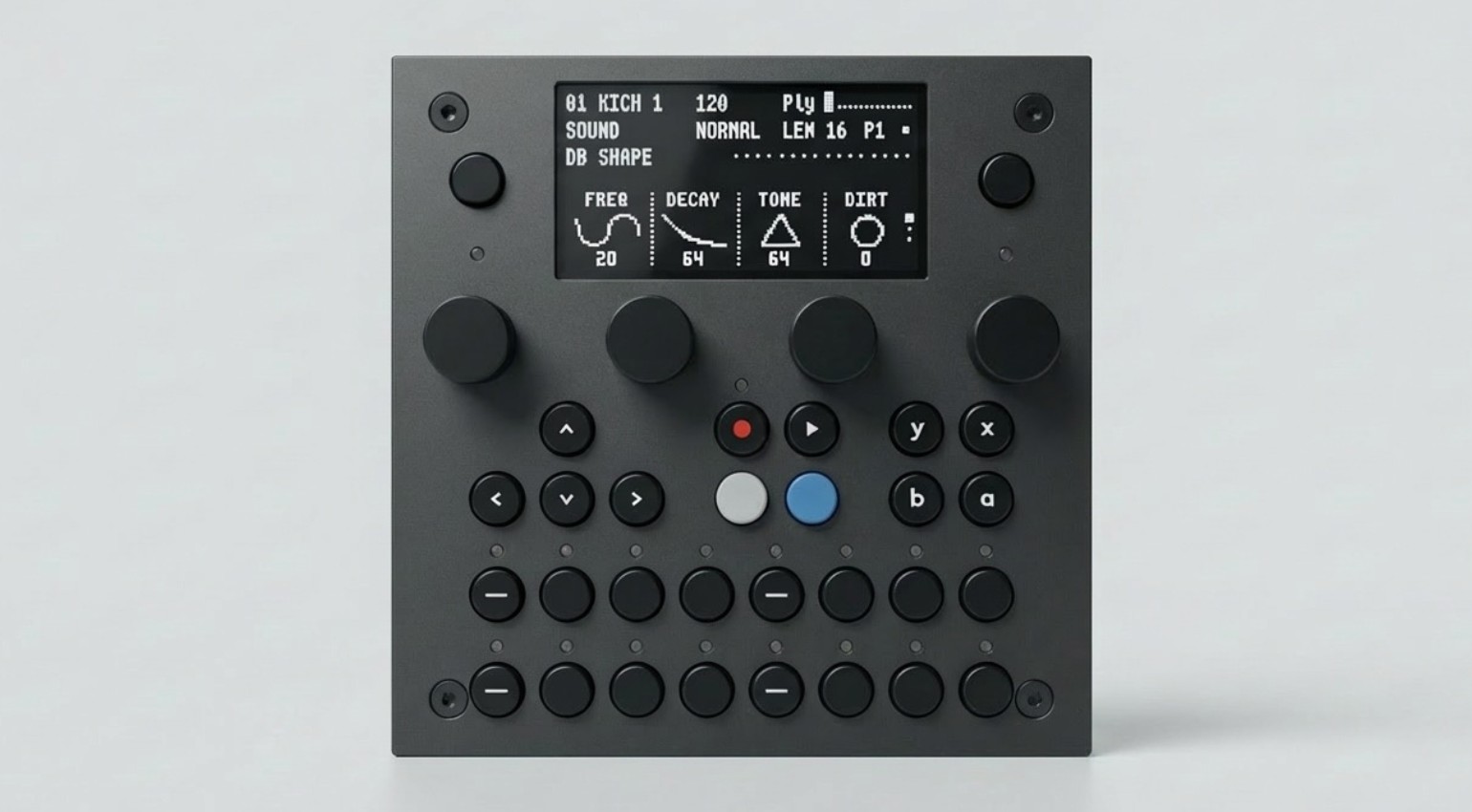


dadamachines is back with an instrument a lot of people in the electronic music world have been quietly waiting for: the TBD-16 is a compact, fully open-source groovebox that fits in the palm of your hand while holding its own against much larger competitors. €499, preorders are already live, and the device is on show at Superbooth 2026 at booth Z385.
dadamachines TBD-16: Everything You Need to Know About the Compact Open-Source Groovebox
dadamachines TBD-16
dadamachines is not an unknown name in the electronic music world. Founder Johannes Lohbihler is best known for the automat toolkit, a modular system of solenoid-powered actuators that can turn almost any object into a percussion instrument. In the intervening years, he also spent time at KORG Berlin during the early development of what eventually became the phase8. With the TBD-16, he’s back on home turf: a device that’s ready to play straight out of the box but stays completely open and hackable throughout.
What Is the TBD-16?
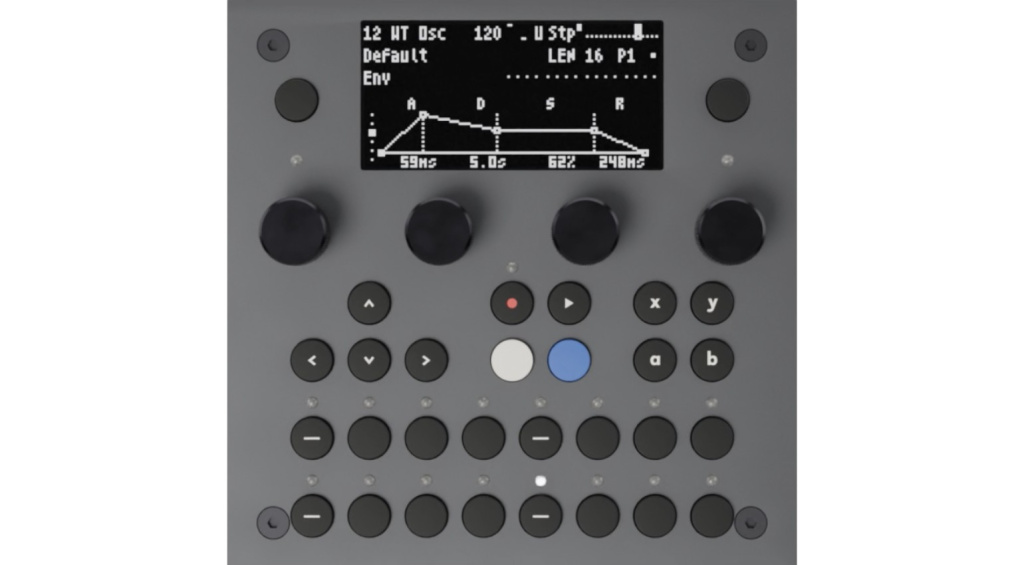
The TBD-16 is built on the CTAG TBD open-source platform, originally created by Robert Manzke, and at its core is a standalone desktop groovebox with a built-in sequencer, over 50 DSP plugins, stereo input and output, and Ableton Link support over WiFi 6. The device measures 110 x 110 x 25 mm, which means it genuinely fits in a jacket pocket.
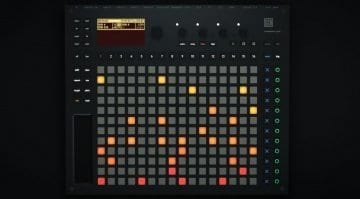
The enclosure features anodized aluminum on top and powder-coated steel on the base, so it feels solid without being precious about it. The control surface consists of 30 tactile RGB buttons, four high-quality endless encoders, a 2.4-inch OLED display, and a dedicated volume wheel. Connectivity covers stereo line in and out, a headphone output, two TRS MIDI inputs and two TRS MIDI outputs in minijack format, two microSD slots, USB-C for power, and a USB host port for external controllers. A clever power bank mounting system makes the TBD-16 usable on the go without needing a wall outlet.
Three Processors, One Open Platform
Under the hood, three dedicated processors run in parallel. The ESP32-P4 dual-core RISC-V chip handles real-time audio DSP, the RP2350 (a Raspberry Pi chip, also dual-core) drives the hardware interface, MIDI, and sequencing, and the ESP32-C6 takes care of WiFi and Ableton Link. Each layer is independently programmable, and latency comes in at under one millisecond according to dadamachines.
That’s not just technically impressive but has real practical implications. Anyone who wants to build custom controller apps works on the RP2350 using Arduino and PlatformIO. Anyone who wants to write DSP plugins works in C++ for the ESP32-P4, and can test everything in a desktop simulator without needing the hardware at all. The firmware is fully licensed under GPLv3, with Web UI tools under LGPL.
Groovebox App and Sound Engines
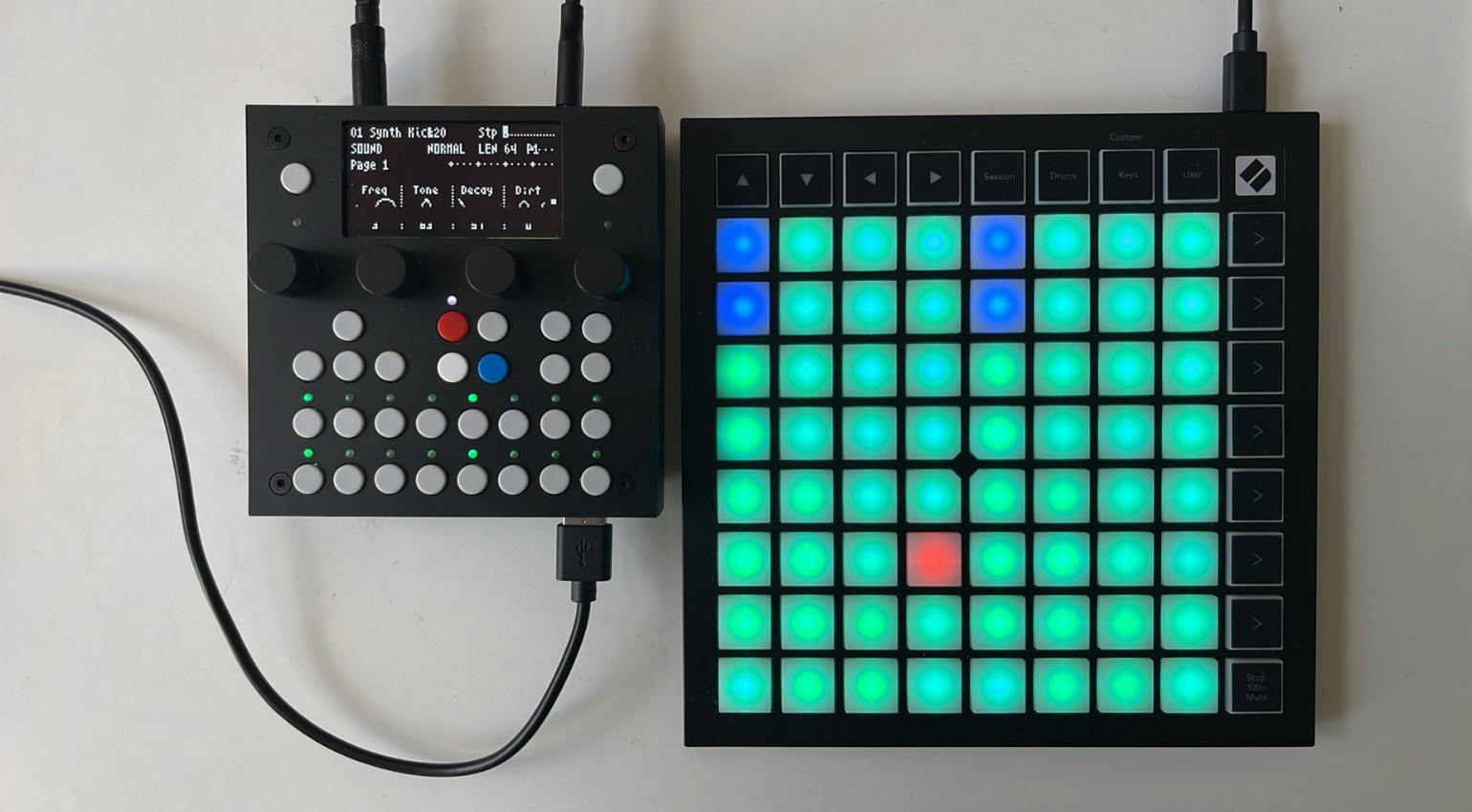
Out of the box, the TBD-16 runs a complete groovebox app with step and live sequencing, per-step parameter locks, polyrhythmic patterns with independent lengths per track, a mixing system with effects sends, onboard delay, reverb, and a master compressor. Preinstalled controller support covers the Novation Launchpad Mini MK3 and Launchkey Mini MK4.
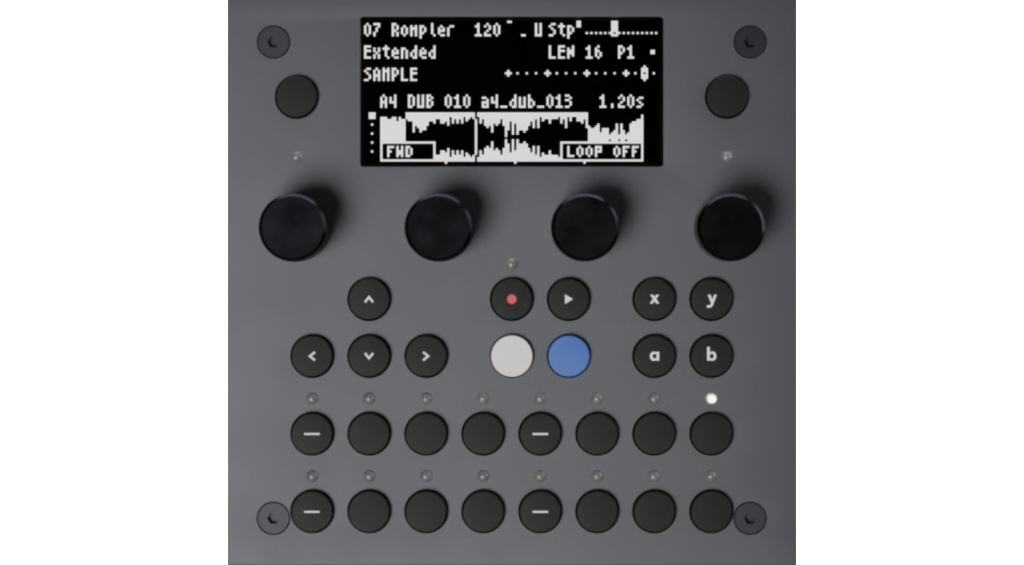
The sound engines, called Machines internally, include a synth kick, analog bass drum, FM kick, digital and analog snare, hi-hats, a 303-style acid line, a mono synth, a wavetable lead, and a 24-engine macro voice in the tradition of Mutable Instruments Plaits and Braids by Émilie Gillet, but with a new AHR envelope. A rompler and an external audio passthrough on track 16 round things out. New engines can be added at any time, and anyone familiar with the Vult DSP language will find early entry points there as well.
Run Your Own Apps
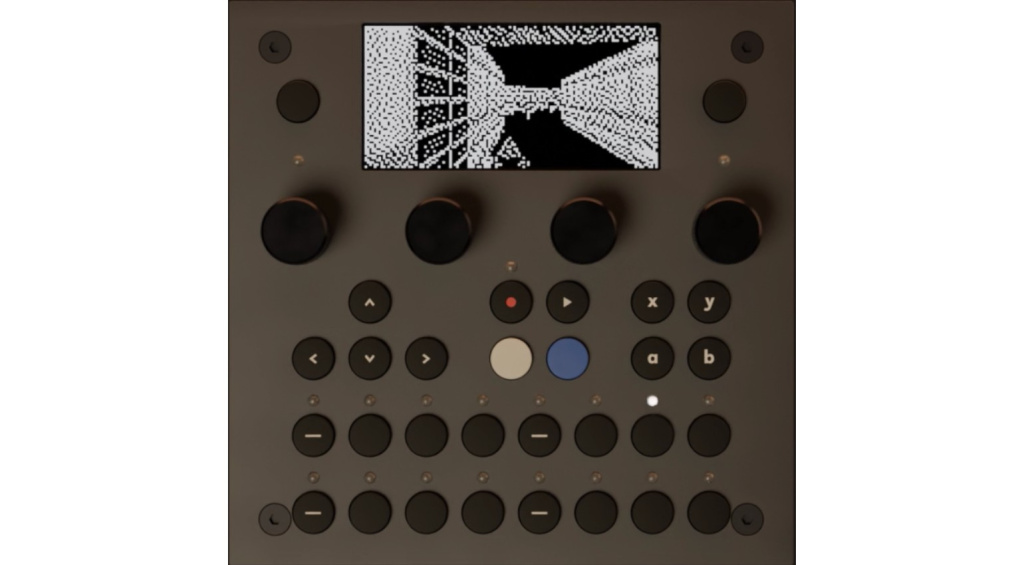
What sets the TBD-16 apart from other grooveboxes is the ability to load completely different apps via SD card, with no hacks or special modes required. That means turning the device into an external sequencer for the Elektron Machinedrum, using it as a MIDI controller and audio interface for iPhone or iPad, running it as a standalone multi-effects processor, or, yes, playing Doom on it. That last one is not a joke, it’s an official app option, and it says a lot about the spirit behind this project.
Verdict
The TBD-16 is the kind of device you either get immediately or don’t. Anyone looking for an open, hackable groovebox that’s still ready to play from the moment it arrives will find something genuinely unusual here. At €499 with this hardware spec and a fully open software stack, the value proposition is hard to argue with. Expect it to generate real buzz at Superbooth 2026.
Pricing and Availability
The dadamachines TBD-16 is priced at €499 (including VAT) and is currently available for preorder with no money down. It’s on show at Superbooth 2026 at booth Z385. A specific shipping date has not been announced yet.
More Information

This might also interest you