Blawan: How Modular Systems, Distortion, and Noise Shape His Uncompromising Techno Sound
Why Sound Design, Distortion, and Unconventional Signal Paths Matter More Than Classic Drum Patterns

 5,0 / 5,0 |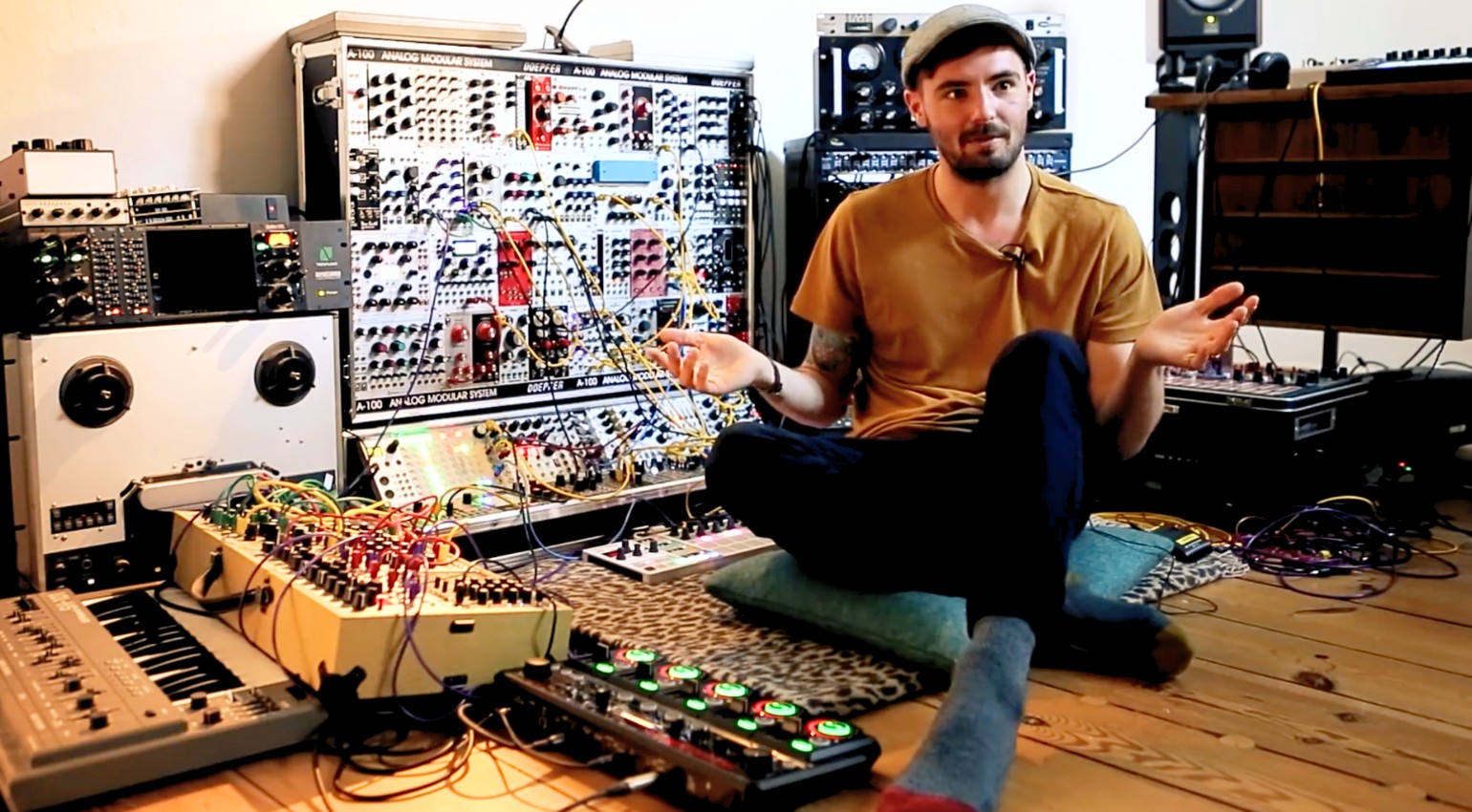
Blawan: How Modular Systems, Distortion, and Noise Shape His Uncompromising Techno Sound · Source: Electronic Beats / YouTube

When you listen to current techno releases, sooner or later you come across a sound that immediately sticks. Not because it sounds beautiful, but because it feels almost uncomfortably real: Blawan. His tracks don’t come across as constructed, but as something shaped in the moment. Nothing feels polished, nothing sounds “club ready” in the traditional sense. Instead, sounds build pressure, twist, shift, and at times feel like they could collapse at any second. And that’s exactly where it becomes interesting. This is not about the perfect kick or clean arrangement. It’s about pushing sound until it develops a character of its own. And that’s why his tracks don’t just sit in the mix, you actually feel them.
Key Facts
- Blawan stands for uncompromising sound design instead of classic track structures
- Modular systems are a central part of his workflow
- Distortion and feedback shape the sound in a significant way
- Percussion often emerges from noise and experimental signal paths
- Tracks rely on texture and energy rather than melody
- Fewer elements, but maximum sonic depth
Blawan’s Sound DNA at a Glance
Why Blawan Sounds Completely Different from Most Techno Productions
Most techno tracks are built around patterns. With Blawan, everything grows out of sound. Kick, percussion, or texture are not fixed roles, but the result of a process. And that shift changes everything. The focus moves away from arrangement and toward the material itself. That’s where the real work begins.
Blawan: How His Sound Evolved from UK Techno to a Radical Sonic Aesthetic
Blawan comes from the UK scene, and you can clearly hear that influence. Early tracks move somewhere between dubstep and techno, but even then it becomes obvious that this is less about genre and more about sound. Many producers stop at this point because it works. Blawan kept pushing further, right into the space where things start to feel uncomfortable and interesting at the same time.
Over time, his sound became rougher, more direct, and far more distinctive. Classic drum patterns moved further into the background. Instead, a different question took over: what happens when a sound is broken apart and rebuilt from scratch? That’s where his signature style begins. Hardware and modular systems are not used for their own sake, but as a natural extension of this way of working.
Today, Blawan represents a sound that deliberately avoids polished perfection. It is not “perfect” techno in the traditional sense. But once you hear it on a large system, it becomes clear why this raw approach works so well.
Sound Over Arrangement: Blawan’s Production DNA
Listen closely to a Blawan track and something becomes obvious very quickly. There is often less happening than expected. No classic build-ups, no predictable drops. And still, the tension never disappears. The reason is simple: the sound itself keeps evolving.
A single element shifts slightly, gains pressure, becomes more distorted, or starts to break apart. Suddenly, the entire energy of the track changes. This is not random. It is control on a deeper level. Arrangement becomes secondary. The sound does not just carry the track. It defines it.
And that’s exactly where things separate. It is easy to stack multiple layers. It is much harder to develop a single sound until it holds everything together. Try it yourself.
Modular Systems: The Sound Lab Behind Blawan’s Sound
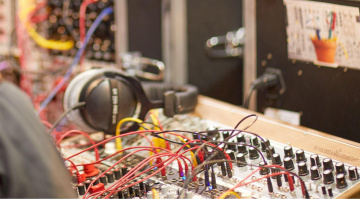
For Blawan, a Eurorack modular system is not an instrument in the traditional sense. It is not something you simply switch on and play. It behaves more like a reactive system. A cable is patched, a signal is sent through, and the result unfolds. Sometimes it makes sense to intervene. Sometimes it is more interesting to let it run and capture what happens. The most compelling moments often appear unexpectedly.
The crucial point is that nothing is predefined. There are no fixed signal paths and no presets to recall. Every patch exists only in that moment. This creates a different way of working. It forces you to listen more closely, stay present, and respond to what the system offers.
That is exactly where the difference lies. The process is not just about building sounds, but about interacting with something that constantly shifts. At first, it can feel chaotic. But that unpredictability often leads to the most distinctive results.
Distortion, Feedback, and Noise: The Core of Blawan’s Sound
Distortion is often treated as a finishing step that adds weight or character. In this context, it plays a completely different role. Here, the sound is shaped through distortion from the very beginning.
A simple signal can be enough. Driven harder, fed back into itself, and pushed further, it starts to transform. Movement appears, tension builds, and the sound gains an almost unstable quality. This is not accidental. It is where the character comes from.
The challenge lies in keeping control without smoothing everything out. It is tempting to reduce harshness too quickly. In a full mix, however, these rough edges often carry the energy and define the overall impact.
Percussion Reimagined: Beyond Classic Drum Machines
Traditional drum machines do not play a central role here. Many elements do not resemble kick, snare, or hi-hat in a conventional way.
Instead, sounds emerge from noise, short impulses, or unusual signal sources. A tightly shaped filter envelope can produce a kick-like result. A processed noise signal can take on the role of a hi-hat. This is not a trick, but a shift in perspective.
On their own, these sounds can feel too raw or even unfinished. Within a track, however, they often translate with far more impact. Especially on a large system, this approach cuts through in a way that more polished sounds sometimes cannot.
Practice: How to Build Your Own Blawan Style Industrial Techno
If you want to try this approach, start by doing the opposite of what is usually recommended. Skip pre-made samples and avoid sample packs. Begin with a simple signal. Noise, a click, something raw and unrefined.
From there, shape it with a filter and a short envelope, then drive it straight into distortion. Do not hold back. Push it until something starts to happen. After that, refine the result with EQ and remove what is not needed.
The key idea is simple. This is not about creating a “beautiful” sound. It is about developing character. And that character does not have to feel comfortable.
Unusual Sound Sources: From Signal to Sound
One thing stands out consistently. The original sound source often plays a minor role. What happens afterward becomes far more important. In a way, the process turns into a small arrangement focused on a single sound.
A self oscillating filter, a feedback loop, or an unstable signal can be far more engaging than a clean oscillator. The important part is not to correct these behaviors too quickly.
Let the system run. Listen carefully. Then make small, deliberate changes. Often, a subtle adjustment is enough to turn something chaotic into something structured. These are the moments that tend to stay.
From Signal to Track: Blawan’s 5 Step Workflow
- Create a simple sound source
- Modulate it
- Push it through distortion and feedback
- Shape it into a rhythm
- Keep the arrangement minimal and leave space
Why Producers Can Learn from Blawan
The real takeaway is not a specific tool or setup. It is the mindset. The shift from asking what is still missing to exploring what can be created from what is already there.
It is easy to rely on presets or sample packs. They are fast and often effective. But they also lead to familiar results. Blawan takes a different path, and that is exactly why his sound stays with you.
Not every sound needs to work immediately. Some feel too raw, too harsh, or even broken on their own. Within a track, however, these elements often carry the energy. Pushing into that space can change how a production feels. It starts to move, to breathe, and to take on a life of its own.
10 Specific Tools from Blawan’s Sound World
- Eurorack systems
- Noise generators
- Analog filters with self oscillation
- Distortion and saturation modules
- Envelope generators
- VCAs for dynamic control
- Modular sequencers
- Analog mixers with drive or saturation
- Field recorders for external sound sources
- Ableton Live for recording and structure
A Blawan Style Setup: Gear for Raw, Modulated Sound Design
Studio Setup: Focus on Sound Design
Goal: Developing sound from scratch instead of selecting it.
Example Setup:
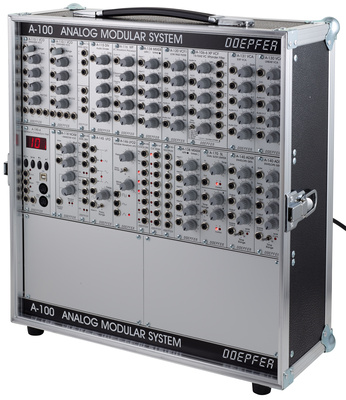
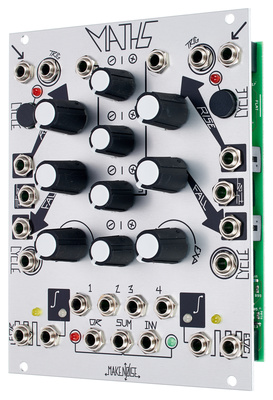
- Eurorack System: Doepfer A-100 Basic System*, Make Noise Maths*, Intellijel Polaris, Erica Synths Xenodrive*
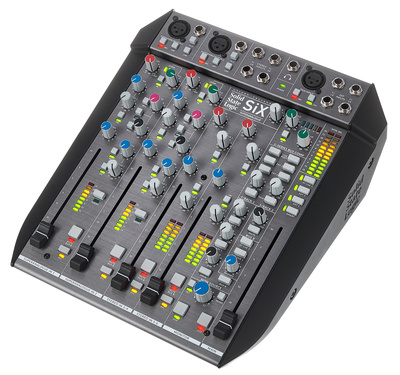
- Analog mixer with saturation: SSL SiX*, Mackie ProFX12v3*
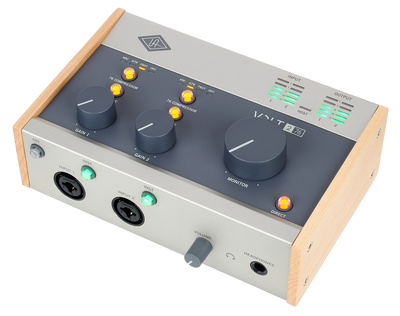
- Audio interface: Universal Audio Volt 276*
- Ableton Live 12 Suite
Why this works: The sound is created inside the system, not on the screen. Ableton Live acts more as a recorder and structural layer. The real character comes from the patch itself, from how signals interact and evolve over time.










Sound Design Setup: Sound as Experiment
Goal: Discover new sounds instead of reproducing familiar ones.
Example Setup:
- Noise Generator: Make Noise Strega*, Shakmat Modular Archer’s Rig*
- Filter: Korg MS-20 mini*
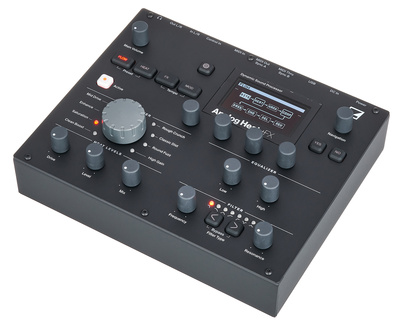
- Distortion: Elektron Analog Heat +FX*
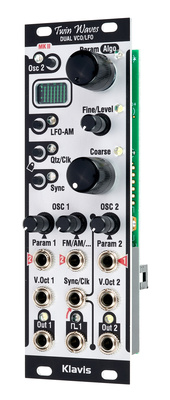
- Modulation Sources: Klavis Twin Waves MKII*
- Field Recorder: Zoom H5*
Why it works: It does not take much gear to get there. What matters is interaction. Small changes in envelopes, filters, or modulation can completely reshape the result. The complexity comes from movement, not from stacking more layers.









Stage Setup: Energy Over Perfection
Goal: Create a raw and direct sound in a live context.
Example Setup:
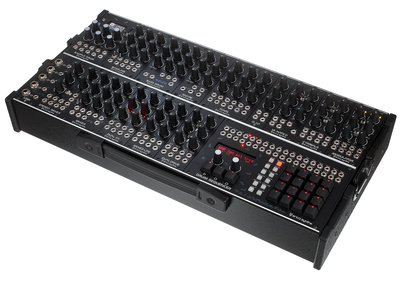
- Eurorack case with compatible modules: Erica Synths Techno System*, Make Noise René*, ALM Pamela’s PRO Workout
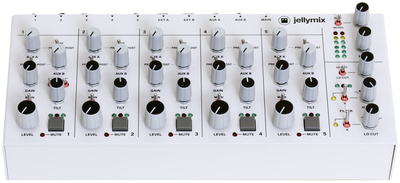
- Performance mixer: Intellijel Designs Jellymix*
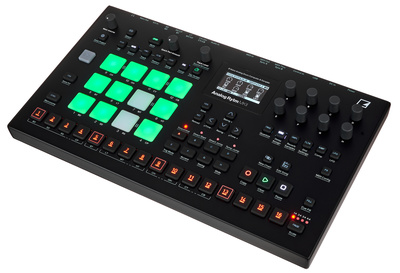
- Sequencer: Elektron Analog Rytm MKII Black*
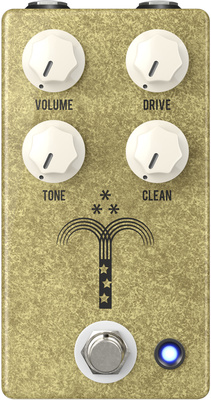
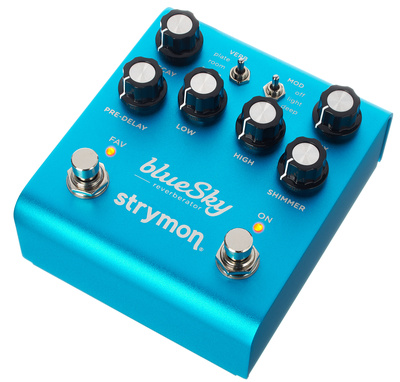
- Drive and reverb effects: JHS Pedals Morning Glory Clean Overdrive*, Strymon Bluesky V2*
- Audio interface: RME Babyface Pro FS*
- Ableton Live 12 Suite
Why this works: Live performance is not about perfection. It is about tension and energy. Small movements change everything immediately. That constant shift is exactly what makes this kind of setup feel alive and unpredictable.






Conclusion: Why Blawan Sees Techno as Sound Material
Blawan makes one thing very clear. Techno does not come from perfect sounds. Quite the opposite. It is often the rough edges that give a track its identity.
Once you lean into that idea, your perspective on production starts to shift. You listen differently, make different decisions, and approach sound in a more open way. And that is where it becomes interesting. It is not the gear that defines the result. It is how far you are willing to push it. Even a minimal setup can open up completely new directions.
FAQ: Blawan and the Modern Techno Sound
Who Is Blawan?
Blawan is a British techno producer known for his raw, sound design driven approach.
Why Does His Techno Sound So Different?
Because the focus lies on shaping sound instead of relying on pre-made elements.
What Role Do Modular Systems Play?
They allow open signal paths and unpredictable sonic behavior.
Does He Use Classic Drum Machines?
At times, but many of his sounds come from experimental sources and self generated material.
What Makes His Sound Special?
The balance between reduction, distortion, and constantly evolving textures.
Blawan shows that machines are not just there to reproduce sound. They become systems that generate it. Sound does not begin with a preset. It emerges through the process itself. And that shift changes everything. The focus moves away from structure and toward the material.
More Information
- Blawan’s Instagram
- Techno Legends Use This Gear: Surgeon – Techno as a Live Patch
- Techno Legends Use This Gear: Robert Hood and the Discipline of the TR-909
- Techno Legends Use This Gear: Richie Hawtin aka Plastikman
- Techno Legends Use This Gear: Jeff Mills and His Roland TR-909
- Eurorack in Techno 2026: Why Does a Modular System Belong in a Modern Techno Setup?
- Drum Machines for Techno 2026: Punch, Workflow, and Character
- The Best Synths for Techno Productions in 2025: Powerful, Flexible and Creative
- Techno Legends Use This Gear: Charlotte de Witte — Acid Pressure and Peak-Time Precision
- Ghost Producers in Techno: The Hidden Architects of the Scene
- More about Techno
*Note: This review contains affiliate links that help support our site. The price remains the same for you. If you purchase through these links, we may receive a small commission. Thank you for supporting our work.

This might also interest you