Arturia Pigments 7 – Magnificent and Deadly: Review
I test out the latest iteration of Arturia's megasynth

 5,0 / 5,0 |
When the press release dropped on the Gearnews desk, a colleague was overheard saying, “How do they still come up with new stuff to add to this thing?” We chuckled, but seriously, how do Arturia do it? How can they continue to improve upon what is already a great instrument? Well, it’s time to find out as I put it through its paces.
Pigments 7 Headline Updates
- Revamped Play View
- Three new filters, one new effect
- Improved amplitude envelope
- New audio content
- New sound design tutorials
- Workflow and performance enhancements
New Filters and FX
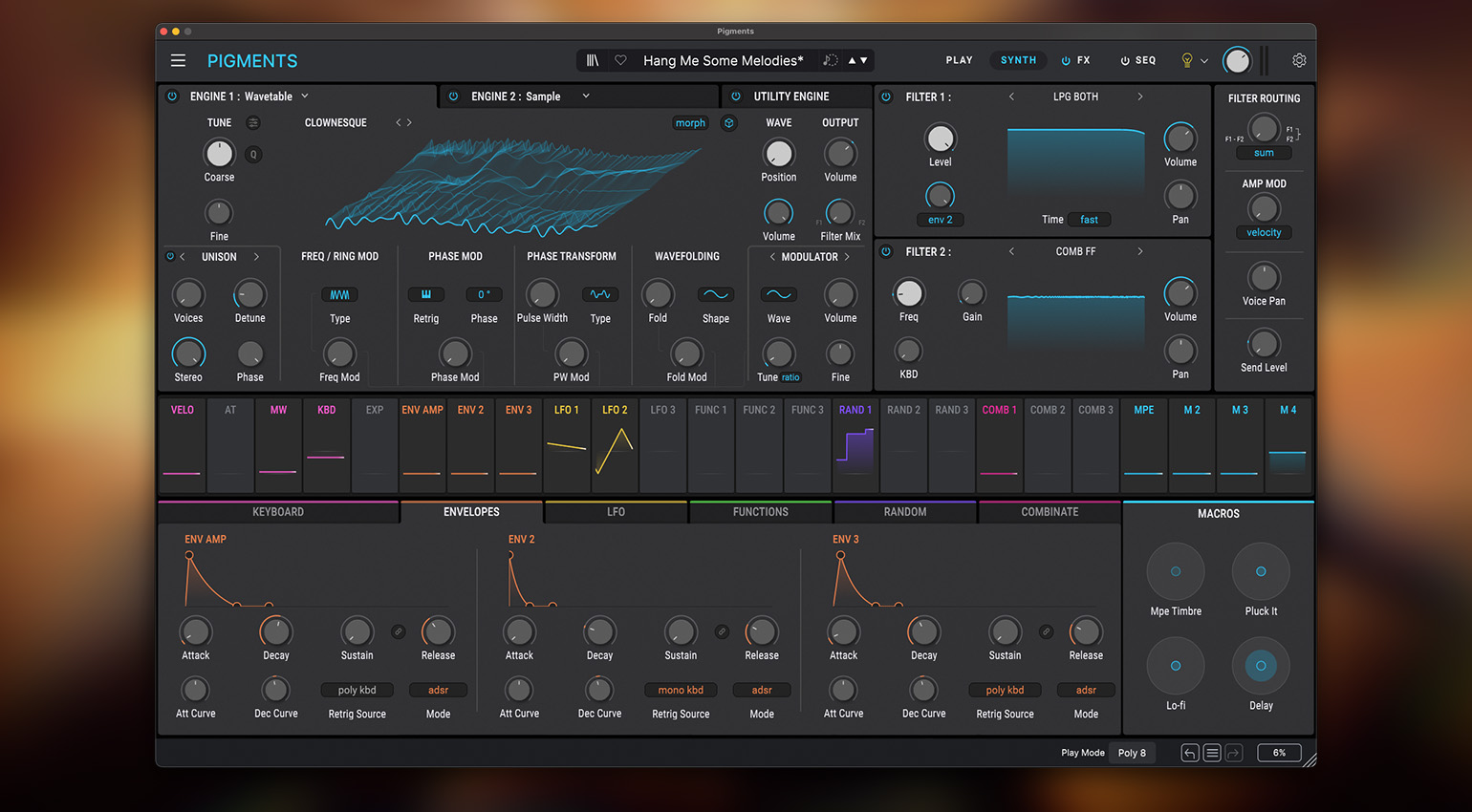
There are three new filters included with Pigments 7. The Rage filter has been designed to add grit and dirt to your sounds and is hailed as a great way to add energy and distinctive harmonics. It combines a resonant filter with multiple distortion algorithms with five different types.
The Ripple filter combines a series of all-pass filters to produce phase shifting and variations in tone with the added bonus of feedback and distortion. Three settings allow you to choose between subtle, medium or hard phase shifting.
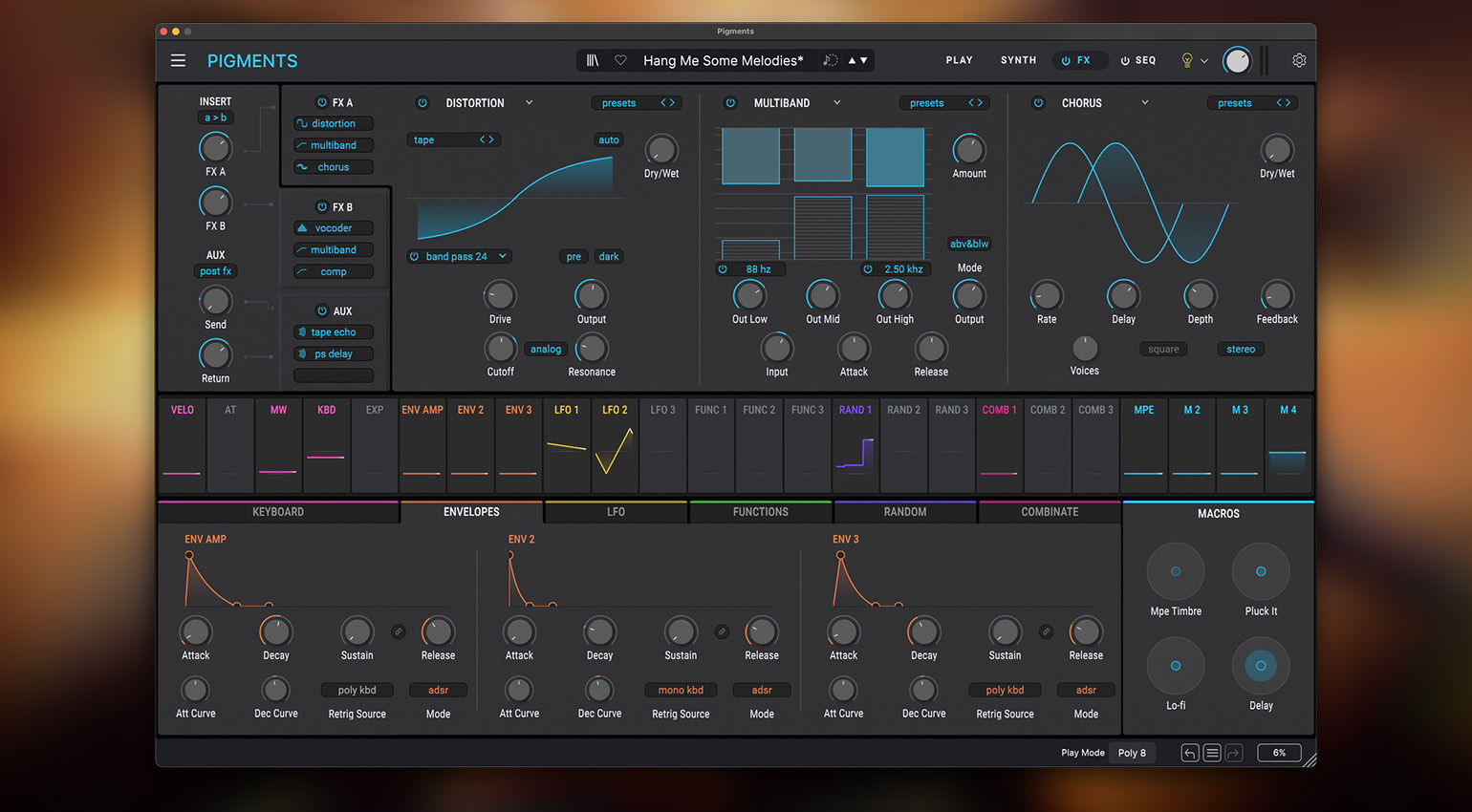
Reverb is a standard effect on almost every synth, including Pigments, but now we have a Reverb filter that applies a tiny amount of very short reverb to your sound that modifies the timbre instead of adding space to the overall sound. Arturia claim it adds weight and character to your tone.
Pigments Classic filter has also been improved with the addition of FM modulation, meaning that both engines and modulators can act as FM sources. There’s also a new effect called Corroder, which, as you might guess by its name, erodes your sounds in ways ranging from delicate to aggressive.
Play View and Improved Sound Engine
The new Play View delivers a simplified front end to your Pigments 7 patches, in a similar style to that seen on Analog Lab, albeit that Pigments has some more detail. There are easy-to-access and easy-to-control settings, ideal for tweaking live. It also now comes with a pretty animated graphic.
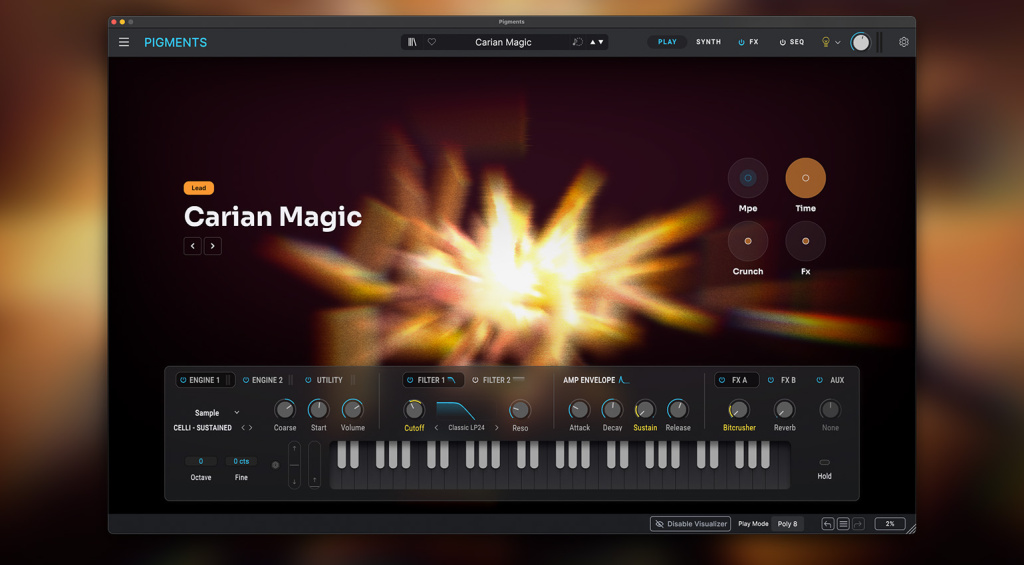
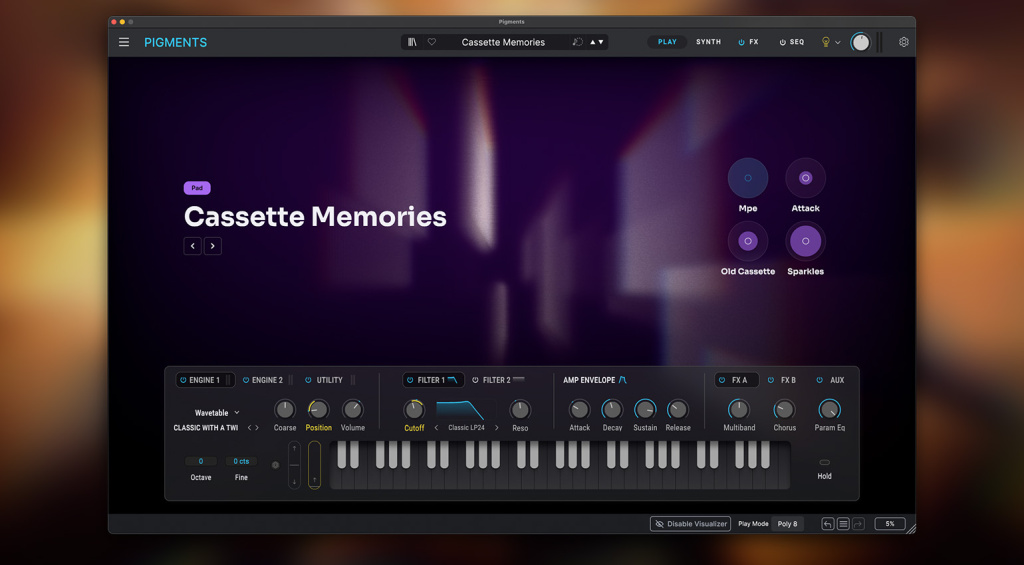
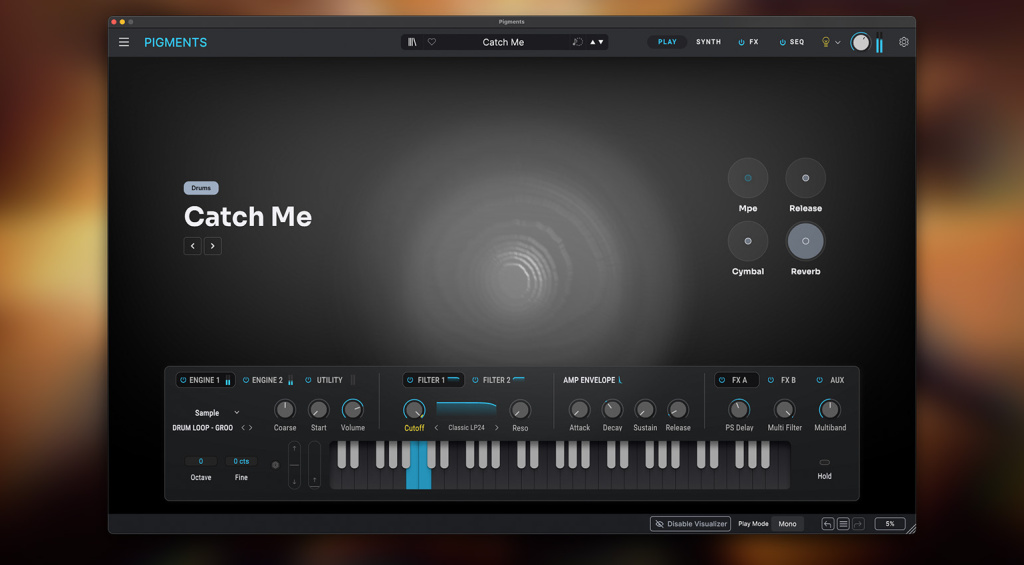
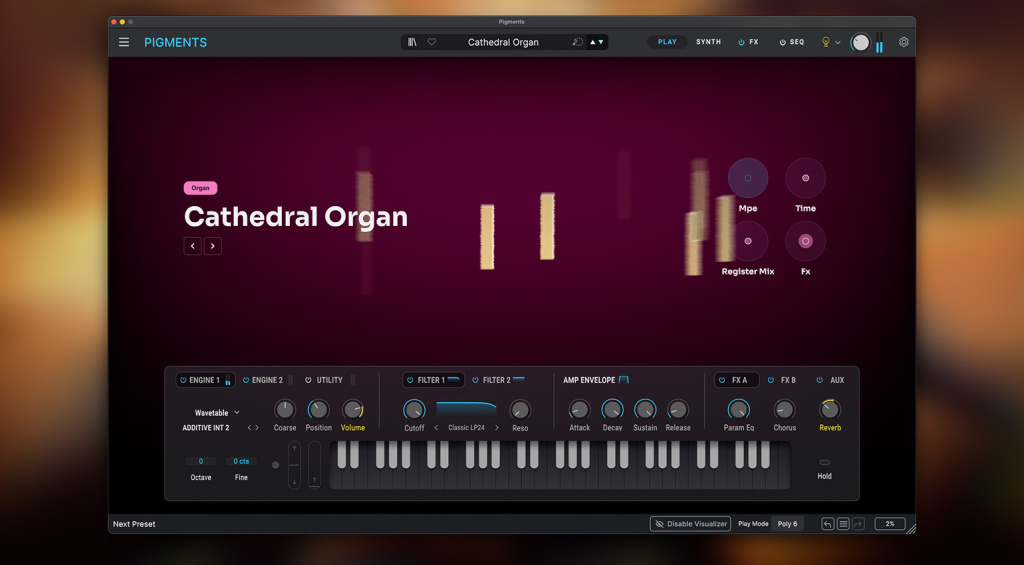
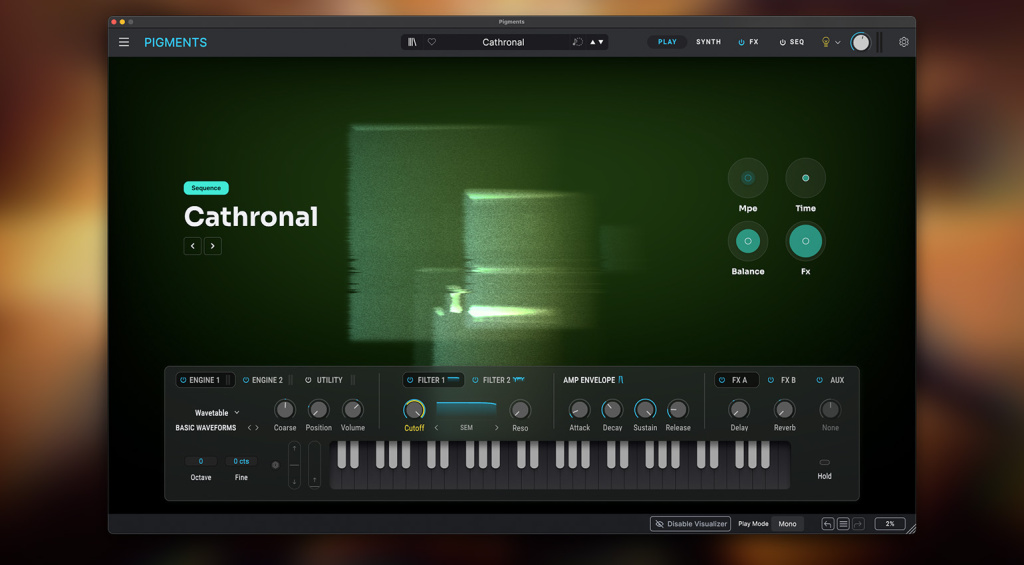
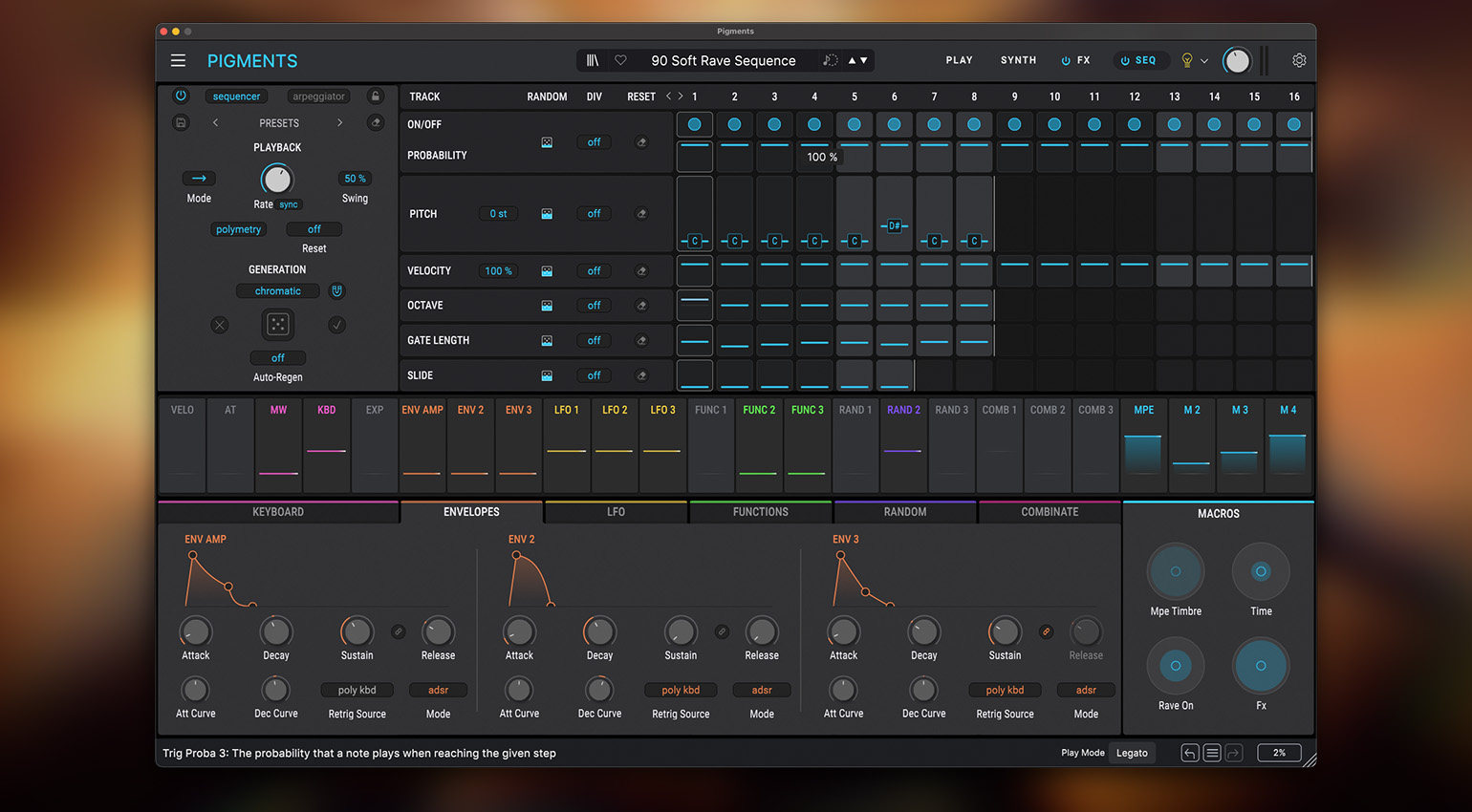
Pigments sound engine has also had a revamp with reduced clicking via new S-shaped ADSR envelopes and faster parameter response. Pigments 7 now features an expanded set of presets with 150 new ones added for this update, along with 50 wavetables, 30 samples and 20 noises. There are also 450 new expansion presets.
Under The Hood
Pigments 7 isn’t just a bunch of new toys. Arturia claims to have made significant CPU improvements as well as a range of subtle workflow enhancements based on customer feedback. There are also more in-app, use-case-driven tutorials, which, in a synth as complex as Pigments, are always very welcome.
New Stuff or Just Fluff?
That question, which was posed by my colleague, remains unanswered. How DO Arturia keep finding ways to make Pigments even better without bloating it out and making it a performance hog? I have no answer for that, but I am so glad they do.
Pigments 7 remains one of the most versatile, powerful and utterly unique software instruments ever made and has no need to resort to extortionate pricing or elaborate and complex user interfaces. It is a real gem and should be in everyone’s sonic toolkit.
FAQ
Are there upgrade discounts and introductory offers for new and existing users?
Yet again, Pigments 7 is a free update for all existing Pigments owners, which is just fantastic!
Pigments 7 will have a limited intro price for non-users. See details below.
Is Pigments 7 MPE-compatible?
Very much so! MPE has been a part of Pigments for some time and with Pigments 7, it is an important and impressive part of its allure!
Is Pigments 7 compatible with AstroLab?
At the time of going to press, my tests show that any preset that uses any of the new features of Pigments 7 is not currently compatible with AstroLab. I would expect an update to Astrolab to rectify this soon. Analog Lab has been updated so it will support Pigments 7.
Pigments 7 is yet another significant update to this already powerful and inspiring synth. The addition of new filters and FX, along with noteworthy performance and workflow updates, make this worth every penny.
In Conclusion
Arturia have done it again. Pigments has grown in terms of features and become leaner and meaner under the hood, with those CPU and workflow improvements. It retains its place at the top table of software synthesizers, sitting alongside the likes of Omnisphere, Absynth 6 and UVI’s Falcon.
For the MPE enthusiasts amongst you, Pigments further cements its place as a showcase instrument for such endeavours. Pair it up with an Osmose, Rise or even Arturia’s own PolyBrute 12, and Pigments 7 becomes next-level superb.
If I had one quibble, it would be the lack of day-one support for AstroLab. They always seem to be playing catch-up, which will leave AstroLab owners slightly frustrated that they can’t take advantage of these new sounds straight away.
Price and Availability
Pigments 7 is a free update for all existing Pigments owners, downloadable from your Arturia account. This is an incredible offer that Arturia continue to give, and it is very welcome! There are few other synths this powerful and impressive that offer free major updates. Bravo, Arturia!
If you’ve never owned Pigments, you can jump on board for a bargain €/$99 until January 7th, 2026!
There’s also a new expansion pack entitled Explorations Vol.5 that is available for €/$19.99 and contains 450 new patches.

*Note: This article contains advertising links that help us finance our site. Don’t worry: the price for you always stays the same! If you purchase something through these links, we receive a small commission. Thank you for your support!

This might also interest you

2 responses to “Arturia Pigments 7 – Magnificent and Deadly: Review”

Feels like it was yesterday v6 was released. I can’t really get mad at them since owners always get the new versions for free, but it seems a bit pointless with a new major version when not that much has changed. The only other developer who releases new major versions this fast is iZotope, but that’s because they are trying to force customers that buy perpetual license to change to their subscription model instead (which is why I’m actively trying to replace every iZotope product I use with alternatives). Doesn’t seem like this is the case with Arturia though. I will say that I hate their use of raster GUIs and complete refusal to package all of the files into some kind of archive so that installation and uninstallation becomes much quicker. Pigments is one of the few Arturia plugins that doesn’t use raster GUI’s though, so at least it’s got that going for it.
If this doesn’t have a preset called “Giorgio Corroder,” I’ll have to make one myself.