Apple Logic Pro 12.3: Updates for Alchemy and Beat Breaker, Plus a New Sound Pack
New Filter Modes, Granular Sync, Formant Shifting, and More for macOS and iPad

 4,6 / 5,0 |
Apple Logic Pro 12.3: Updates for Alchemy and Beat Breaker, Plus a New Sound Pack · Source: Apple

Apple Logic Pro 12.3 is out for macOS and iPad, and alongside a hefty pile of stability fixes and under-the-hood improvements, there are some genuinely useful new features in this one. The highlights are the expanded Beat Breaker options, a brand new Granular Sync mode for Alchemy, and a fresh sound pack that puts both features through their paces right from the start.
All About Apple Logic Pro 12 and Updates
Apple Logic Pro 12.3: What’s New
Beat Breaker gets two welcome additions in 12.3. First, there are new filter and resonance modes that let you apply a high- or low-pass filter individually to each slice, a much more targeted way to shape the sound of a chopped loop than anything that was there before. Second, a new panning mode lets you place each slice freely in the stereo field. Nice.
The randomizer functions also got an upgrade. You can now randomize all parameters or individual modes at once, and two new controls for probability and intensity let you dial in exactly how drastic or subtle those random variations should be. Great for getting loop variations going without having to program every step.
On the synthesis side, Alchemy picks up a new Granular Sync mode for Sample Alchemy, which lets grains lock to the project tempo for rhythmically synchronized grain textures. For a lot of people, this is probably the headline feature of the 12.3 update. Alongside that, Logic Pro 12.3 also adds Formant Shifting, a function that lets you change the tonal character of a sample without touching its pitch. Both together open up some interesting sound design territory that wasn’t really there before.
The new sound pack that ships with the update is a nice addition too. It comes packed with loops, one-shots, and field recordings, all processed with the new Granular Sync mode, which makes it both a useful starting point and a pretty effective demo of what the new feature actually sounds like in practice.
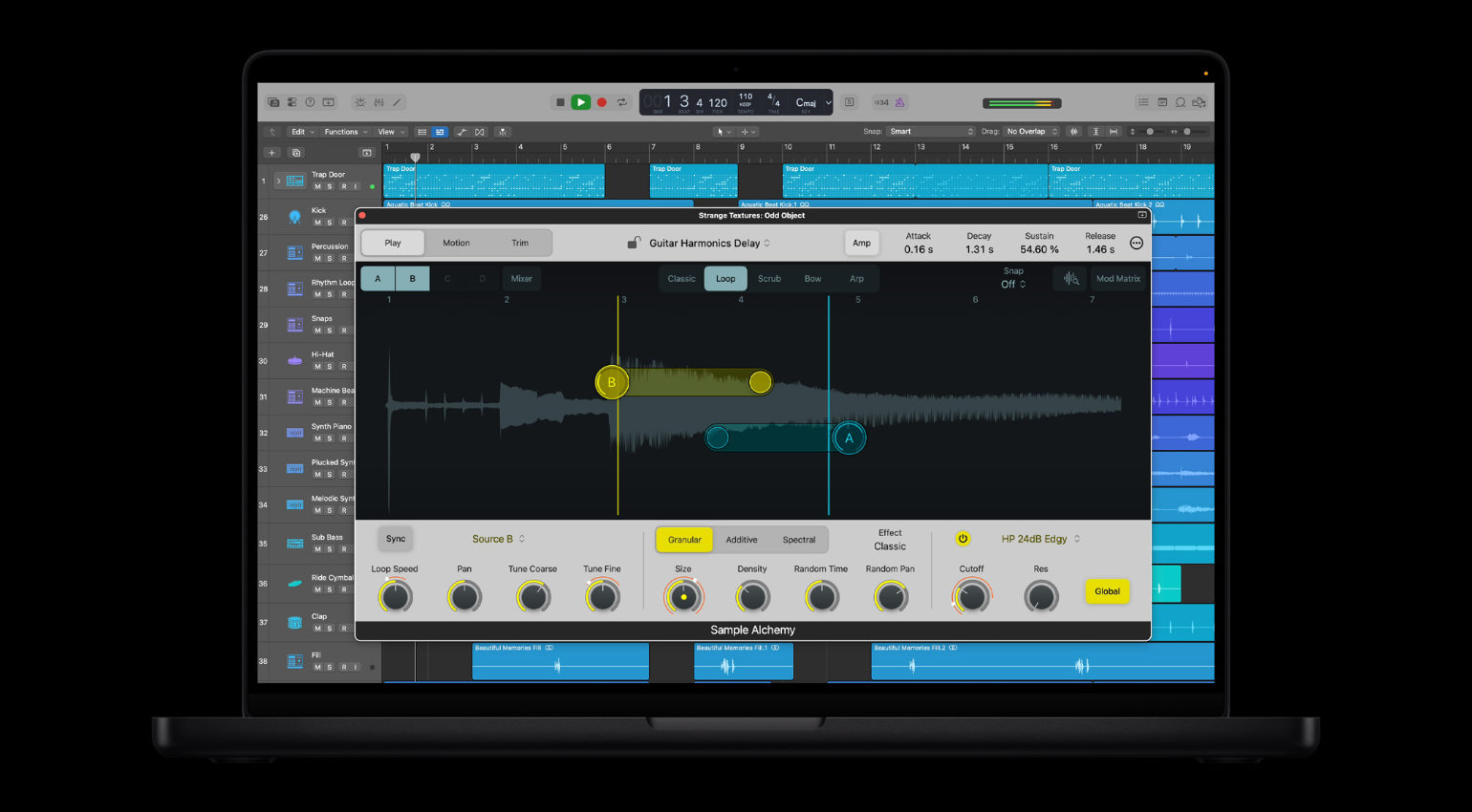
Beyond the headline additions, 12.3 includes a long list of improvements across the board, including better Chord ID performance on Intel Macs. Anyone who wants the full picture can dig into the release notes here. Apple also recommends making a backup of your current Logic version and all your projects before updating, and you’ll find more details on that here.
Logic Pro 12 Puts Harmony at the Center
[28 January 2026] Logic Pro 12 builds on its roots as a music theory–based production tool, offering a slightly different perspective. When you drag audio, MIDI, or a quick recording into the project, the system recognizes the chords and writes them to the chord track. It’s more than just a display because other tracks react to it, building pads, accompaniments, and rhythmic patterns. This feature is particularly useful for intros, transitions, and atmospheric layers, where a small amount of material can quickly develop into something more. But that was not all.
The environment feels less like a pure recording space and more like a musical translator. The “Chord ID” function listens to and analyzes one track, turning it into a harmonic template for the others. Thus, a simple loop provides not only sound but also a kind of blueprint for further elements. Musically, this means that even simple ideas can gain depth without you having to program each voice individually.
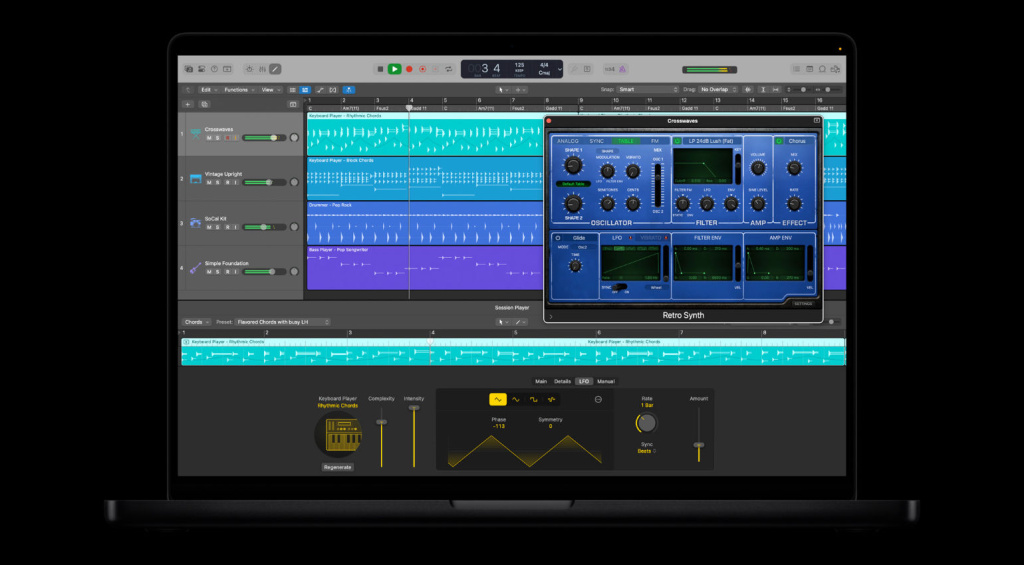
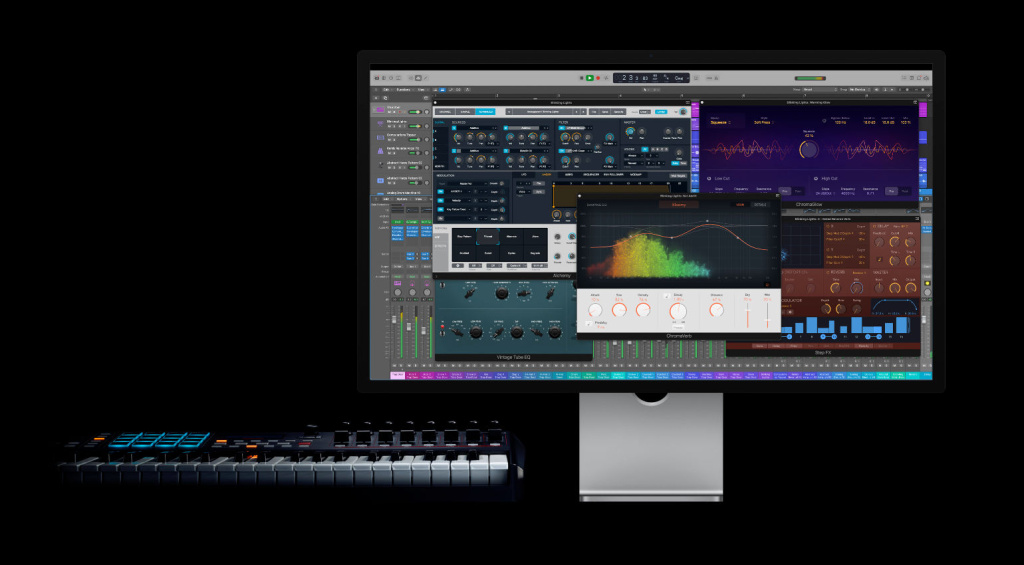
Chord recognition is often surprisingly accurate, capturing not only the right harmonies but also their changes over time. This directly influences how pads move and accompaniments breathe. If the system is turned off, you can quickly turn it back on and continue using the structure. This keeps the creative flow going and saves you from spending a lot of time entering and rebuilding.
Accompaniment Tracks React Like Fellow Players
New additions of Logic Pro 12 include synth and bass players based on the chord track. They don’t play randomly, but rather remain harmonious within the context of the project. This creates dynamic textures from static sources that fit organically into the arrangement. You can use them to fill backgrounds, layer pads, or enhance bass lines without constantly making corrections.
The step sequencer now responds to these harmonies and adjusts its patterns accordingly. This generates lines from individual steps that automatically change over the course of the track. In combination with random functions, movement emerges that remains tonally coherent. Logic Pro 12 audibly intervenes in the soundscape, with rhythm and harmony interacting more closely than before.
In Logic Pro 12 There’s More Design Than Just Display
Compared to the previous version, chords are not just visual aids – they actively control other tools. You can move harmonies within the arrangement and copy them between sections to indirectly influence entire tracks. This feels less like correction and more like musical shaping. Logic Pro 12 treats harmony as audio material that can be cut and reassembled.
This allows you to quickly create new material, especially when you’re lacking inspiration or source material. A short loop provides the foundation to which other tracks respond by building layers. This is helpful for sketches, transitions, or experimental parts where movement is needed without having to program everything from scratch.
Conclusion
Logic Pro 12 doesn’t just add features, it changes the way harmony is used in the creative process. It helps ideas grow faster from minimal material by turning chords into something the whole project can react to. Rather than manually building every supporting part, you can guide the musical direction while letting the system handle the relationships between elements. For producers, this means spending less time setting up theory on the grid and more time shaping the feel, texture, and movement of a piece.
Of course, Apple has added many smaller updates and bug fixes to the existing features of Logic Pro 12. You can find a list of these updates here.
Price and Availability
Logic Pro 12 runs on latest macOS and iPadOS. Existing users receive the update free of charge, while new users can purchase the software individually ($199) or via Apple Creator Studio subscription. The iPad app is now part of the Apple’s Creator Studio subscription.
More Information


This might also interest you

One response to “Apple Logic Pro 12.3: Updates for Alchemy and Beat Breaker, Plus a New Sound Pack”

Yeah I think I’ll pass on this update. I hate all this ai crap.