Panorama Whitekirk Delivers Haunting Guitars in a 12th Century Church – Sounds and Presets

 5,0 / 5,0 |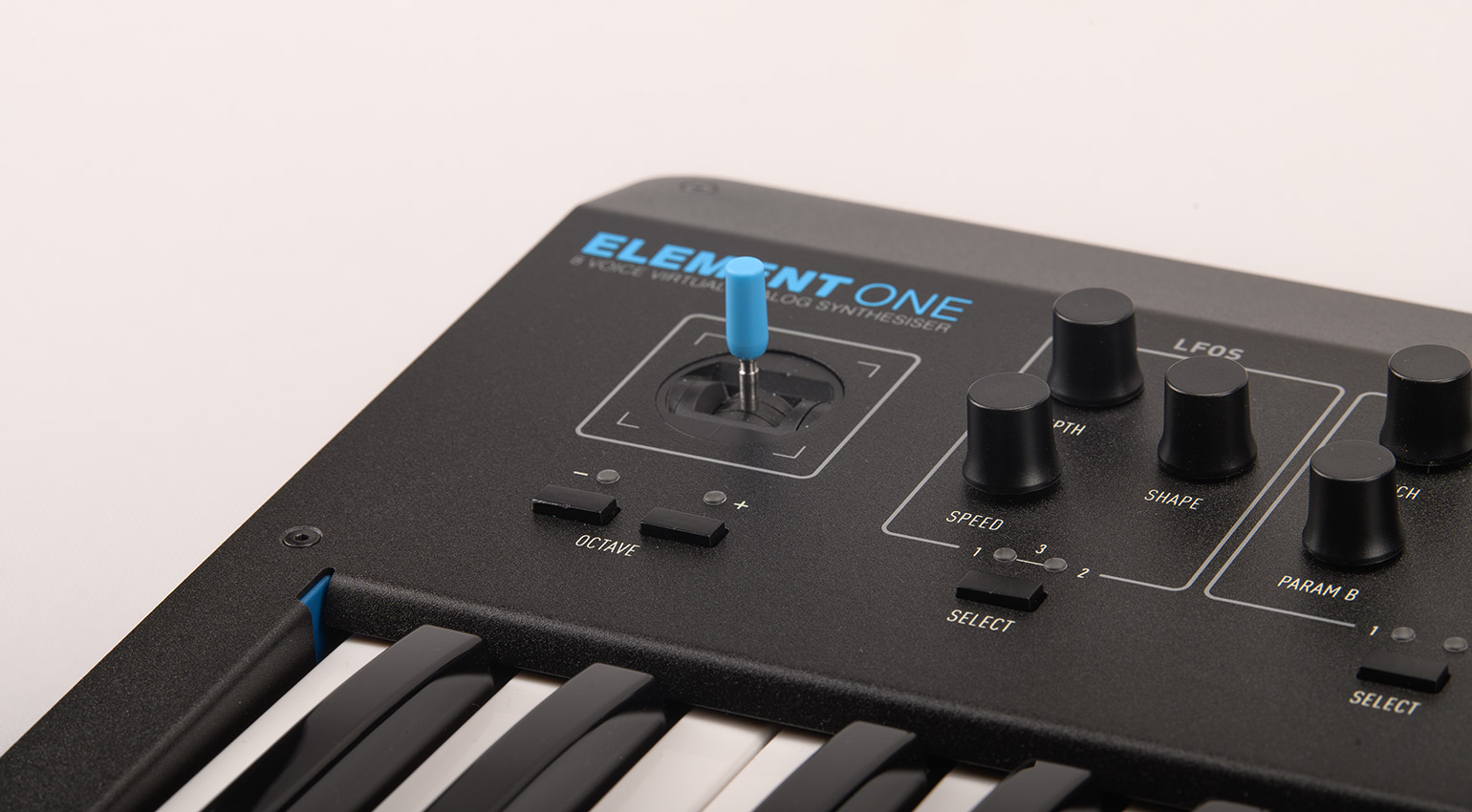

A broad collection of sounds for you this week, featuring Panorama Whitekirk, a delightful sampled guitar, plus sounds for classic, quirky analogue synths and the Moog Muse!
Sounds and Presets
Panorama Whitekirk for Kontakt/Kontakt Player by Sonora Cinematic
Everyone loves a plucked guitar soaked in reverb, don’t they? Well, I do, and Panorama Whitekirk knocks it out of the park when it comes to deeply atmospheric guitar tones washing over and around you in a beautiful, natural space.
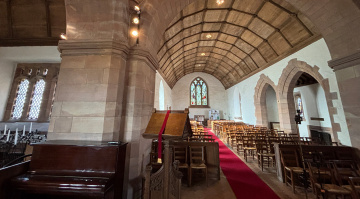
So what is Panorama Whitekirk, and where does it get its unusual name from? Whitekirk Church is located in East Lothian, Scotland, between Dunbar and North Berwick and about 25 miles east of the capital, Edinburgh.
Living close to this church is the composer and sound designer (and fellow Italian!) Alessandro Mastroianni. Alessandro found that this ancient church has two distinct areas with their own sound and reverb. The wood ceiling of the nave gives a warmer tone, whereas the stone-clad choir is far more reverberant.
Choosing an electric and hollow-bodied semi-acoustic, he set about capturing the sounds of these for Panorama Whitekirk and, in doing so, has come up with a delightful and truly evocative Kontakt library. Panorama Whitekirk has a very simple interface that features a plan of the church building, a plate and atmosphere reverb control and a pedalboard selection.
Located in the main space of the church plan is a control that allows you to move up and down the main space, morphing between the two distinct-sounding areas of the building. This gives Panorama Whitekirk a very useful tool in shaping your sound as you play.
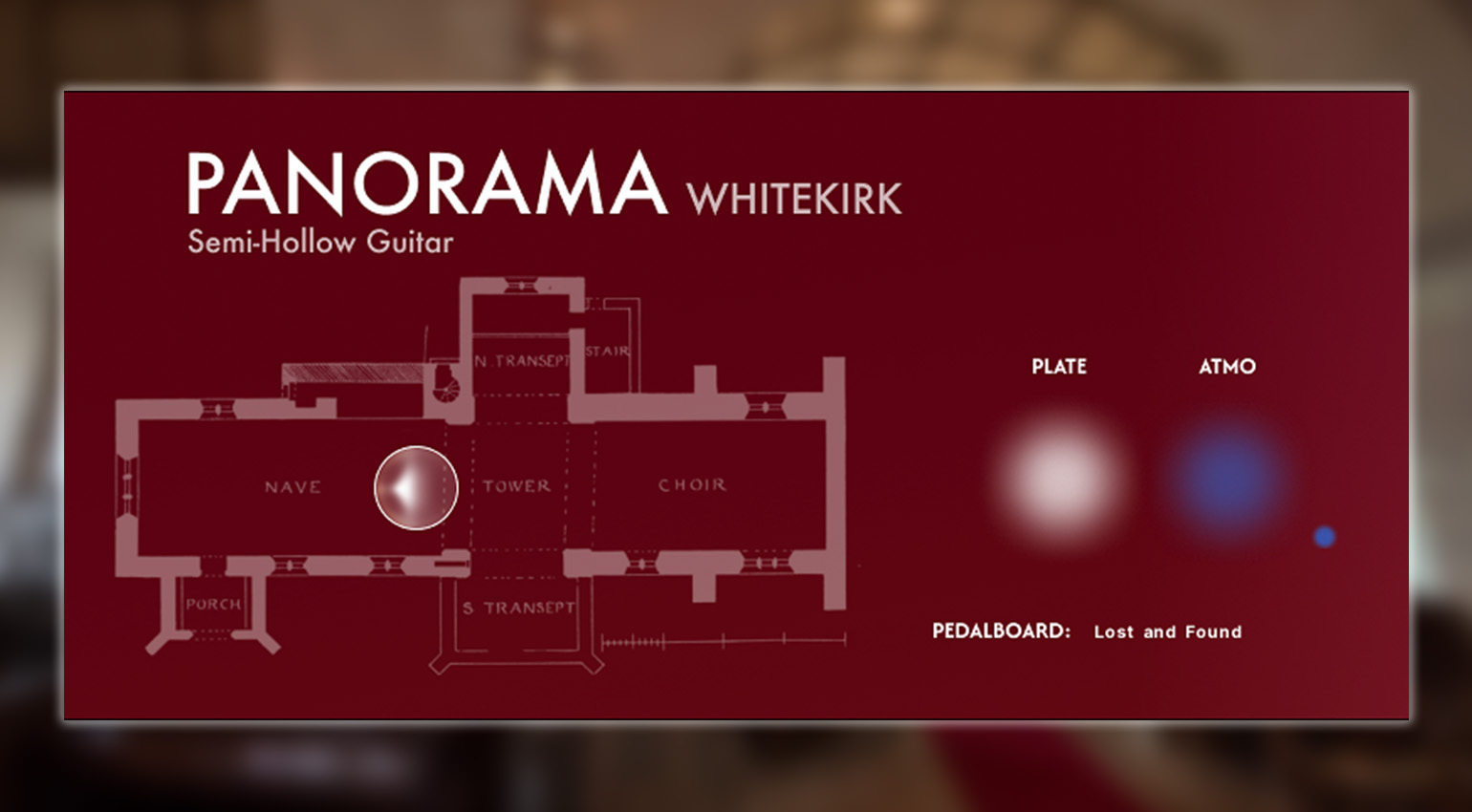
The plate reverb does exactly what it says on the tin, and the atmosphere control gives you a couple of extra effects akin to granular and shimmer, but in a very subtle and organic way. The pedalboard is the icing on Panorama Whitekirk’s cake, allowing you to dirty up and process the otherwise clean tones.
Featuring full NKS integration and available for the free Kontakt Player as well as the full version of Kontakt, Panorama Whitekirk is a cinematic must-have as well as being ideal for anyone looking for those moody, mysterious tones that only a reverb-drenched guitar can give.
Panorama Whitekirk is on sale now, with a launch discount, for £39, rising to £49 later.




Dreamer for Crumar bit99/01 and FB Bucket One by Nick Klimenko
In recent weeks, we’ve seen quite a few sound libraries emerging for some classic vintage synths, and here we are again, with a bank of sounds for the cult classic Crumar bit99 and 01 synths. And, as is increasingly common these days, these sounds will also work with a software recreation of those instruments.
Better still, that software recreation is the free Full Bucket Music ‘Bucket ONE’ which does a pretty neat job of replicating this quirky Italian synth. This means you don’t need to own a vintage classic to benefit from this excellent set of sounds!
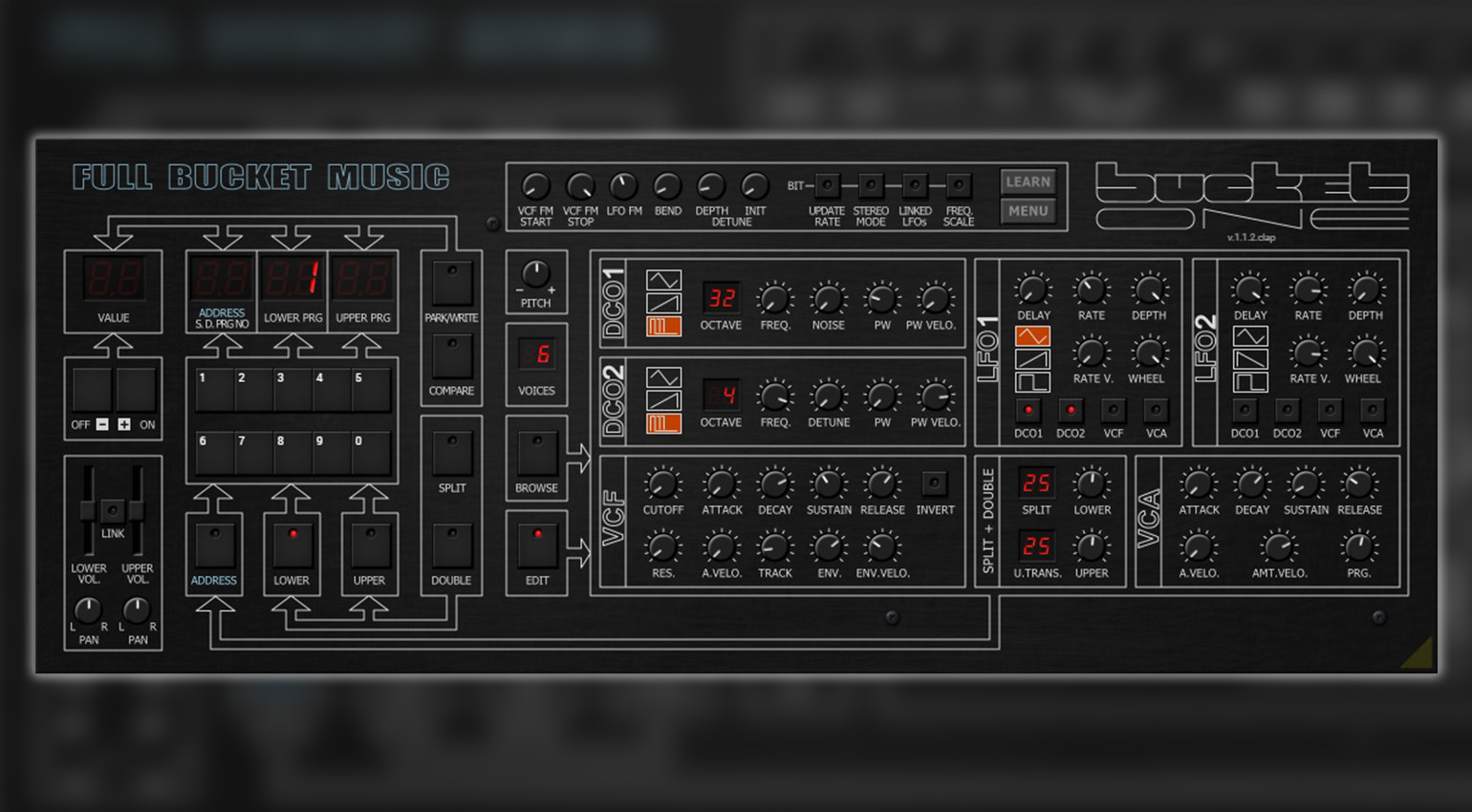
The bit99 was one of those synths that tried desperately to cling on to some kind of relevance in a world rapidly turning digital. Like other post-DX7 synths, it ditched knobs and sliders in favour of buttons and red LED displays. It even used a similar green colouring to the DX7! It sported DCOs and a rather confusing signal path diagram on its case to supposedly make its limited UI easier to understand.
But as with most Italian synths, its weirdness was part of its charm and today, it commands some healthy respect in the world of vintage synths, so it is nice to see some new sounds for it in the shape of the Dreamer Soundset, crafted by Nick Klimenko.
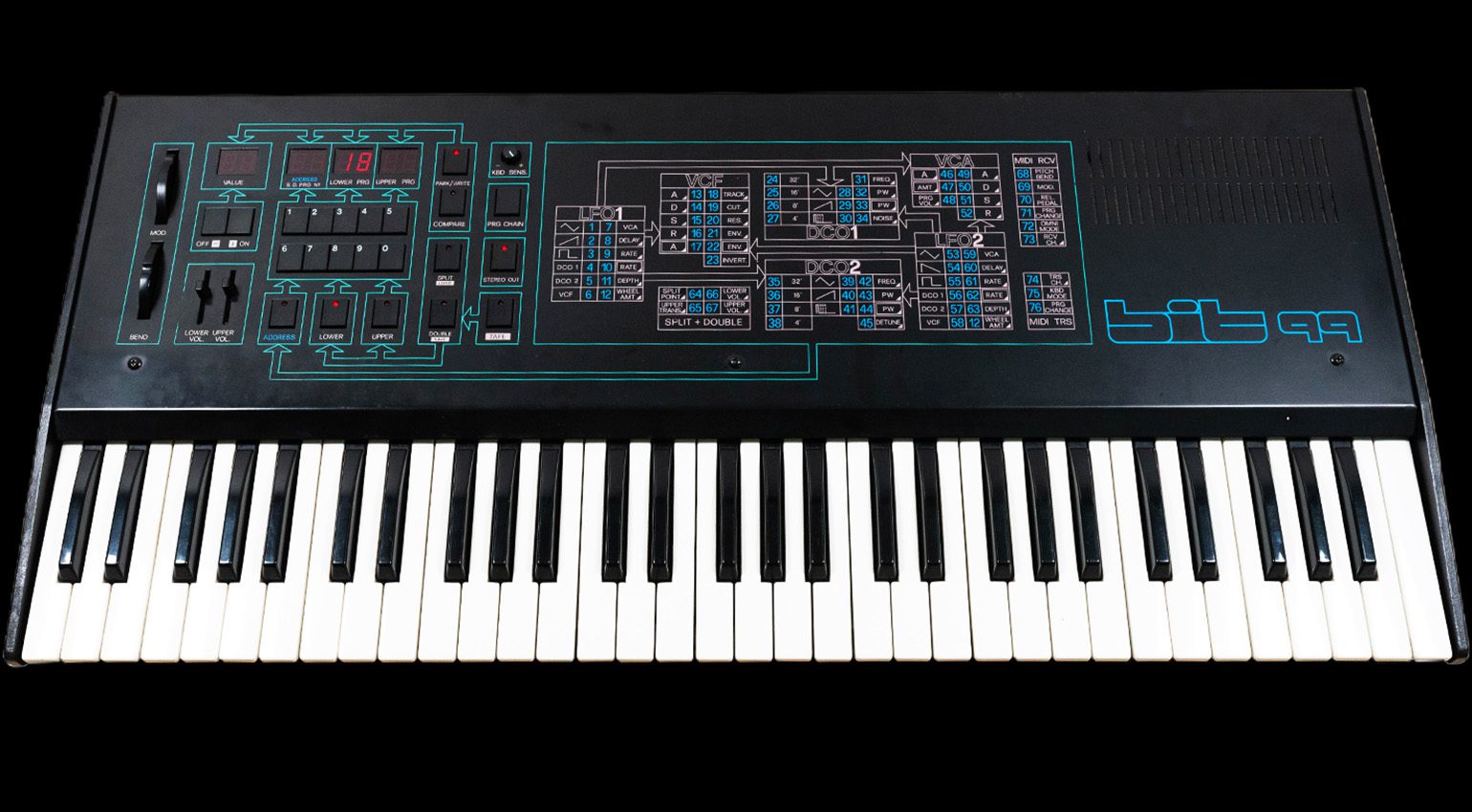
Of course, for the vast majority of us, this broad collection of 75 presets will more likely be used with the free Bucket ONE and all of its present-day extra features. You can snag the Dreamer Soundset for just €15 over at the LFO.store site.
Ambika for Modal Element One by Nick Klimenko
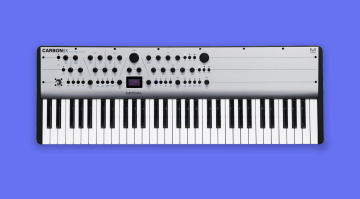
It’s fair to say that all has not been well on the good ship Modal for a while. However, under the stewardship of Christian Stahl, they seem to have navigated their way out of the storm, and the Element One is the first new product since the CARBON8.
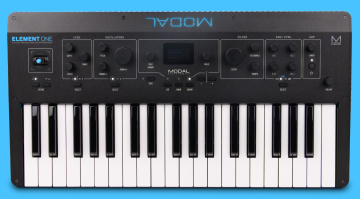
When I spoke with Christian at Superbooth this year, he emphasised that the Element One was laser-focused on delivering exceptional sound with minimal fuss, hence the greatly simplified user interface. He said he wanted an instrument that anyone could pick up, regardless of experience and get great sounds.
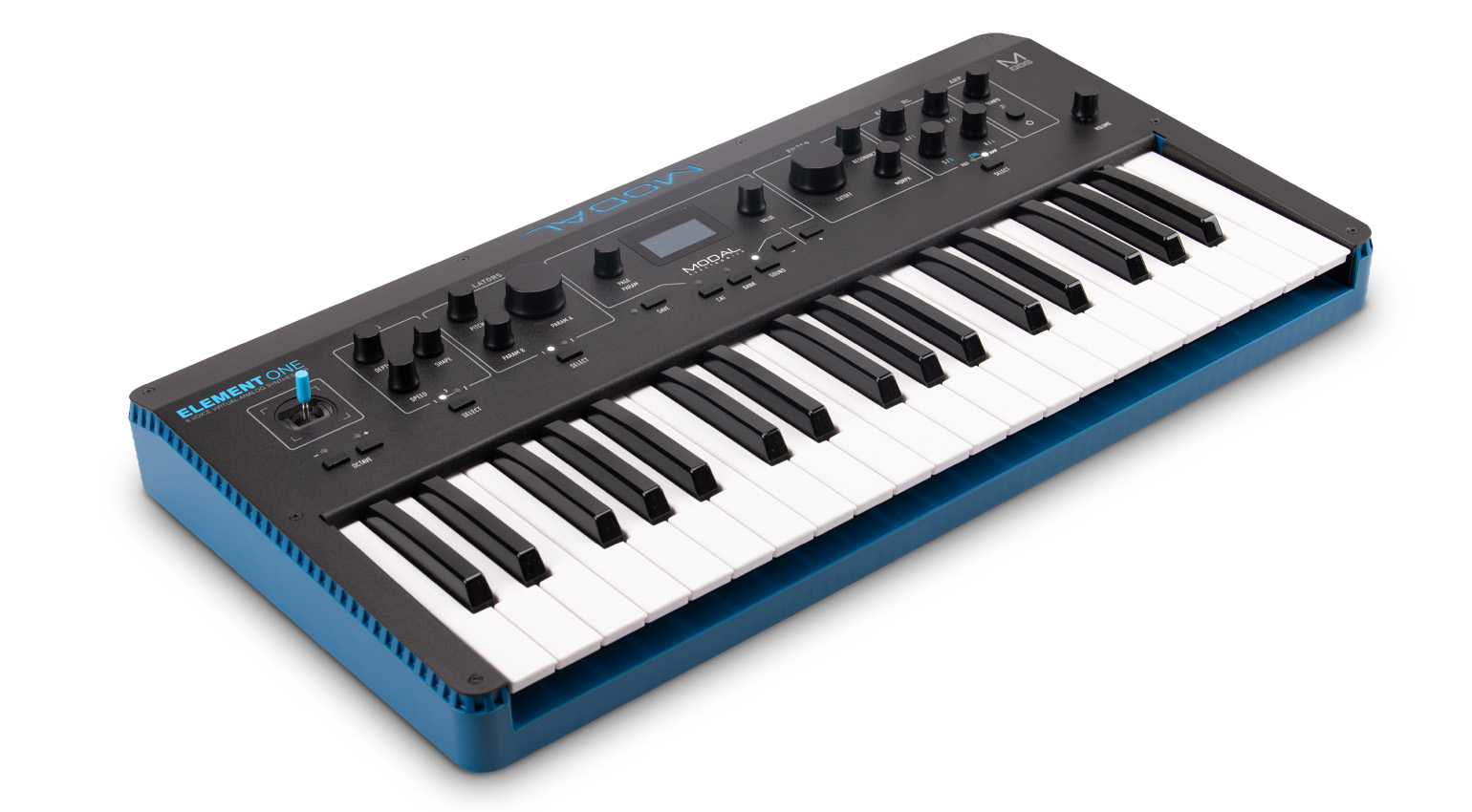
And playing around with it at the show, they certainly ticked that box. All the power that could be found in their other synths is there, with Element One seemingly more inspired by their COBALT8 synth. But whilst the UI is dramatically reduced in detail, all the power remains and can be accessed via their ModalApp.
The construction is decidedly more, how shall I say…, frugal? There’s more plastic on this than the metal we saw in previous synths, but this is a company trying hard to regain a foothold in the market and the need to come up with something more affordable is clearly essential.
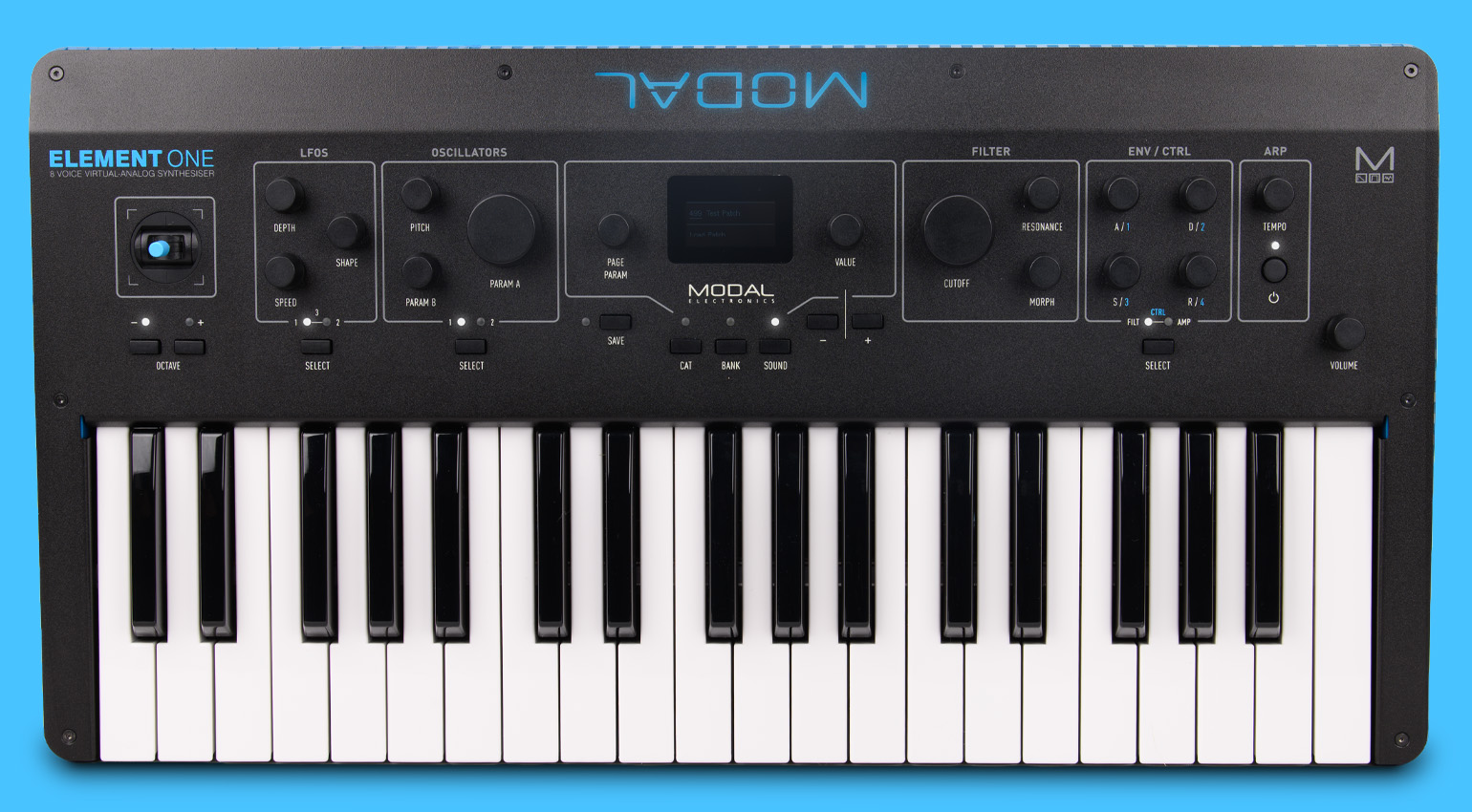
But don’t be fooled. Element One is a powerful synth and not to be ignored. Thankfully, it hasn’t been ignored by that chap Nick Klimenko (he gets about, doesn’t he?), and Ambika is a new collection of 50 patches that can easily be installed on the Element One using the aforementioned app.
There’s all the usual fare contained in this bank, with Nick’s excellent programming skills, especially if you’re looking for sounds that evolve and deliver a sense of motion. What this bank does is clearly demonstrate that the Element One sounds a lot bigger than it looks!
Grab the bank now for €15 from the LFO.store site.

Bass Collection for Moog Muse by Anton Anru
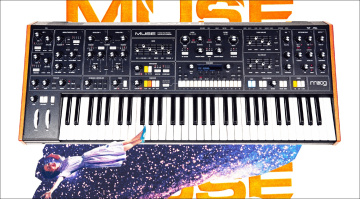
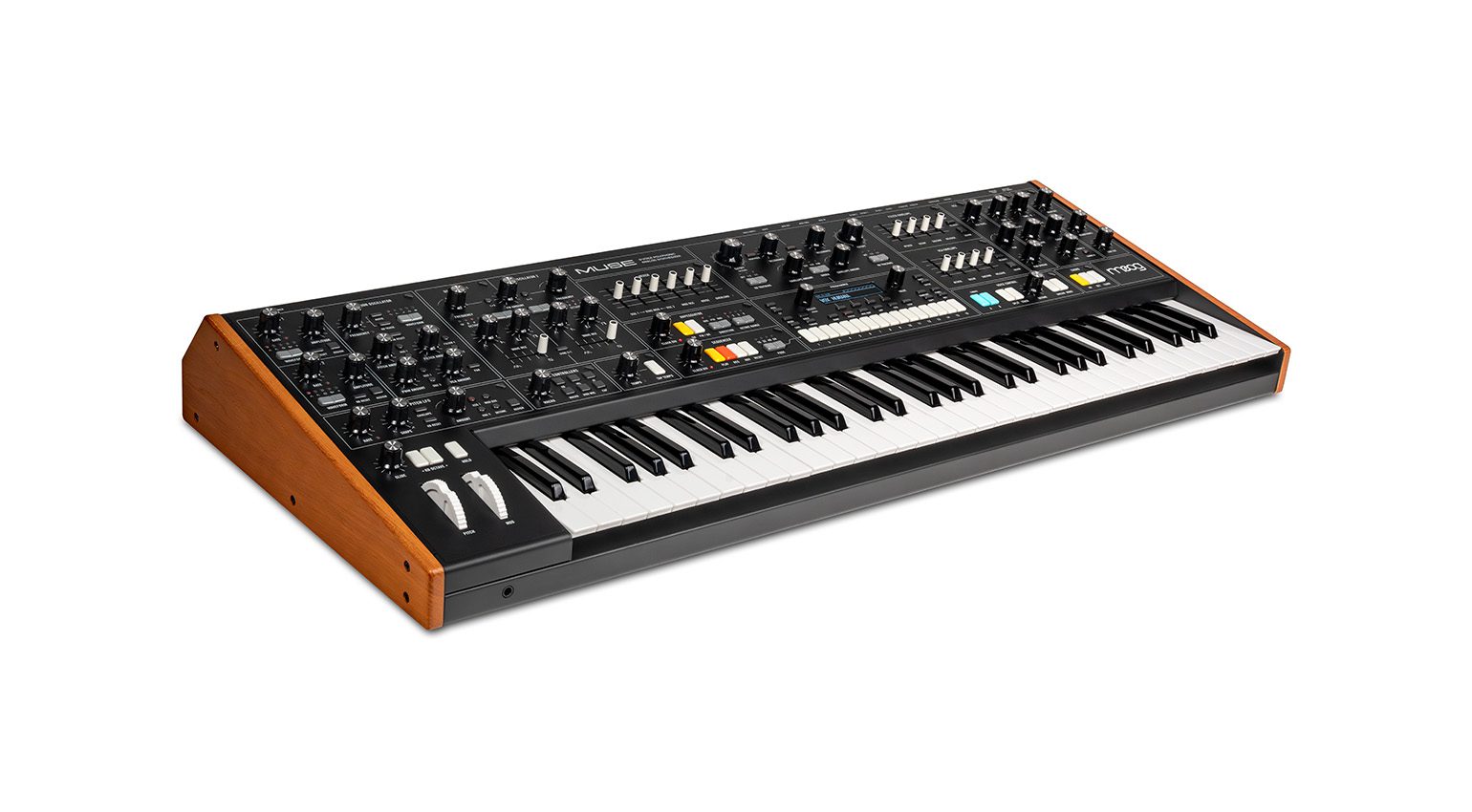
The Moog Muse was Moog’s first proper attempt at a decent polysynth after the somewhat troubled Moog One. The expectation was heavy, and when it finally broke cover, all of our fears and concerns were allayed.
It had strong competition from the Arturia PolyBrute 12, a synth that took expressive analogue synthesis to new heights with its FullTouch keyboard and powerful 12-voice architecture. The Muse, on the other hand, quietly went about its business being a Moog synth. Strong, solid and oozing class.
It sported some cool features without going overboard and really seemed like someone had sat down and decided to build a “greatest hits of Moog” into one gorgeous looking instrument. It is unquestionably Moog and effortlessly delivers a satisfying analogue polysynth experience.
The Muse excels at many styles and genres, but any Moog synth worthy of that name absolutely HAS to be good at bass sounds. This new bank from Anton Anru ably confirms this to be the case with the Muse! The bank covers all kinds of bass tones and makes use of the Muse’s extensive performance controls.
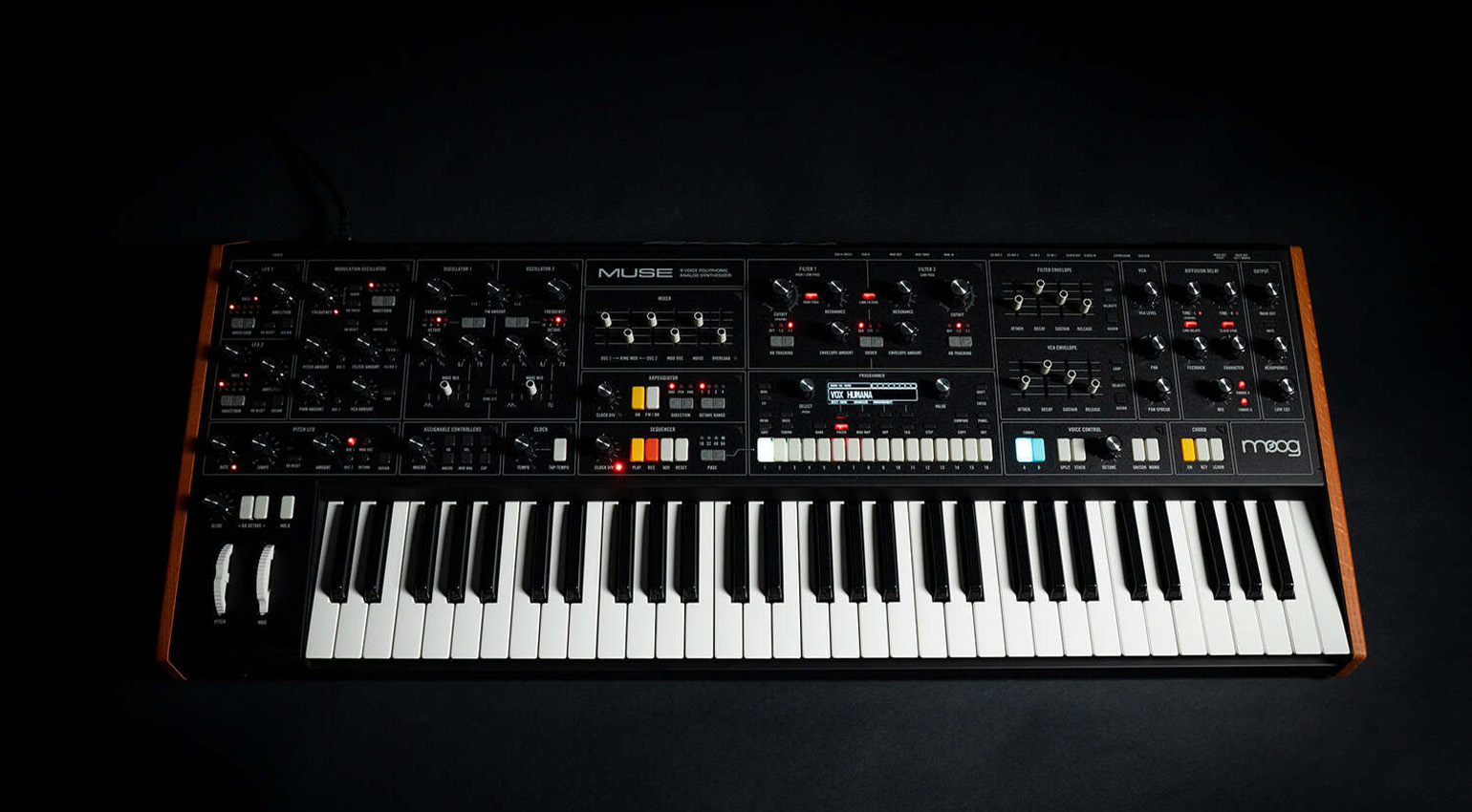
There’s something for everyone’s bass needs here, and whilst it might seem a waste to use such a powerful polysynth for just bass sounds, if you’ve got it, flaunt it! You can buy this pack for $24.95 from the Anton Anru webstore.

*Note: This article contains advertising links that help us pay for this site. Don’t worry: the price for you will always be the same! If you buy something through these links, we will receive a small commission. Thank you for your support!

This might also interest you