The Best Bass Pedals: The 7 Effects Every Bassist Actually Needs in 2026
Everything to get you started on shaping your bass sound

 4,7 / 5,0 |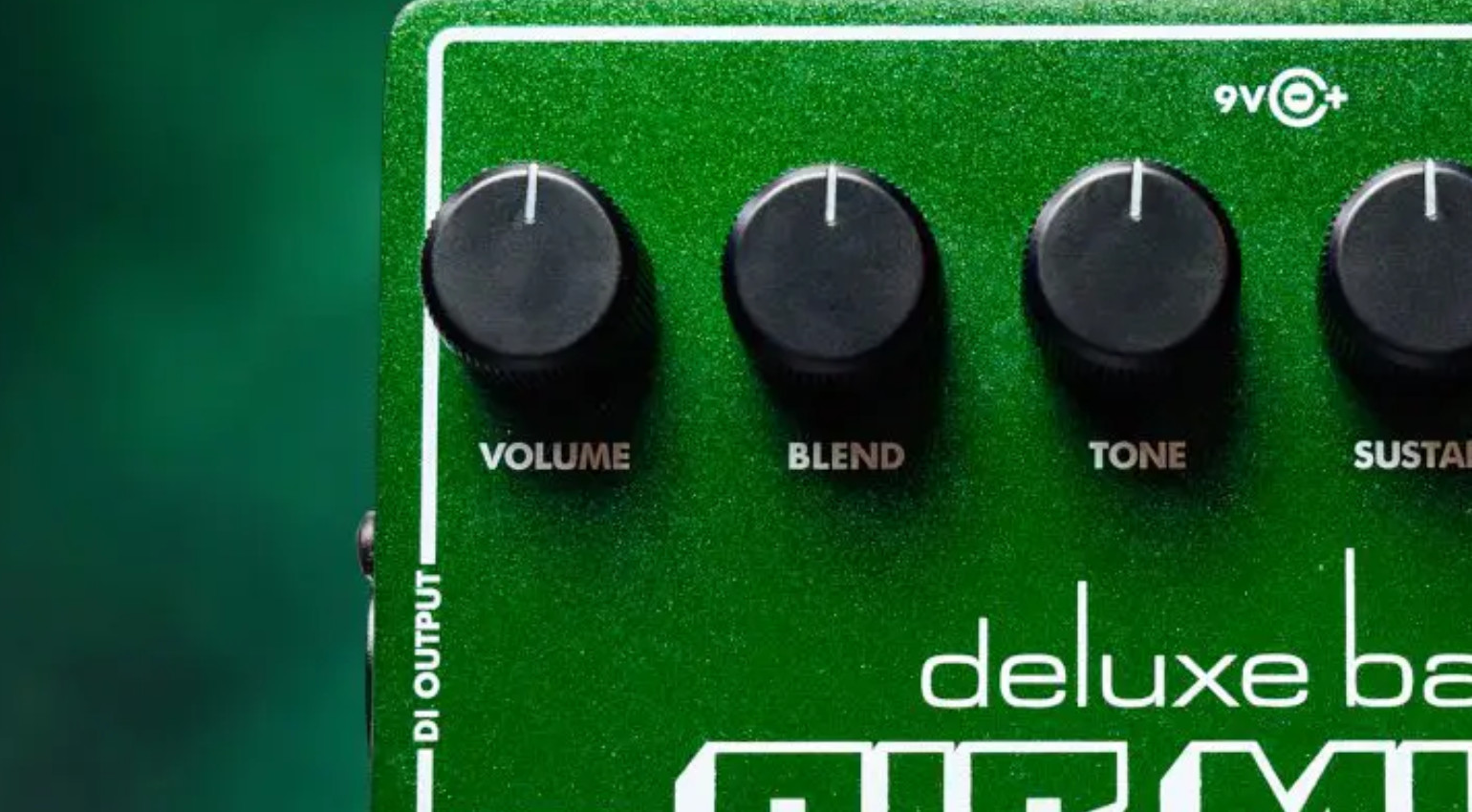
The Best Bass Pedals: The 7 Effects Every Bassist Actually Needs in 2026 · Source: EHX

Whether you’re just starting out on bass or you’ve just gotten that signature bass model you’ve been eyeing forever, bassists need pedals, too! And loads of them! But what are the best bass pedals? Which effect categories do you even start with? And what’s the correct order? So many questions…
Key Takeaways
- The best bass pedals all solve one problem guitar pedals can’t: they change your signal’s sound without thinning out the low end.
- Look for a blend control or a crossover filter — that, not the word “bass” on the enclosure, is what makes a pedal work on four strings.
- These seven bass effects cover almost every situation: compressor, octaver, envelope filter, overdrive, fuzz, chorus, and a preamp DI.
- Order matters more on bass than on guitar. Anything that reads your dynamics or your pitch goes before anything that distorts.
- Start with the DI and the compressor. Those two earn their place at every gig regardless of style.
The Perfect Bass Signal Chain:
The Best Bass Pedals Don’t Come From Guitar Pedal Guides
Most pedal buying guides are aimed at guitarists. And let’s be fair, the six-stringers outnumber the four-strings by a wide margin. So there is that. But then, when they ask around, oftentimes bassists get told to just buy the same stomp boxes. But then they come to find out their low end gets sucked out.
That’s the one thing the just should never happen to a bass signal. The best bass pedals have one job a guitar pedal never really has to achieve: affect the sound without losing the bottom end.
Let’s take a look at seven of the best bass pedals in the order they usually go onto a pedalboard.
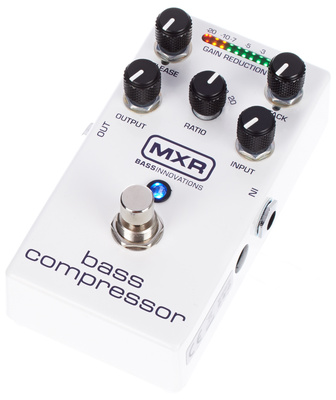
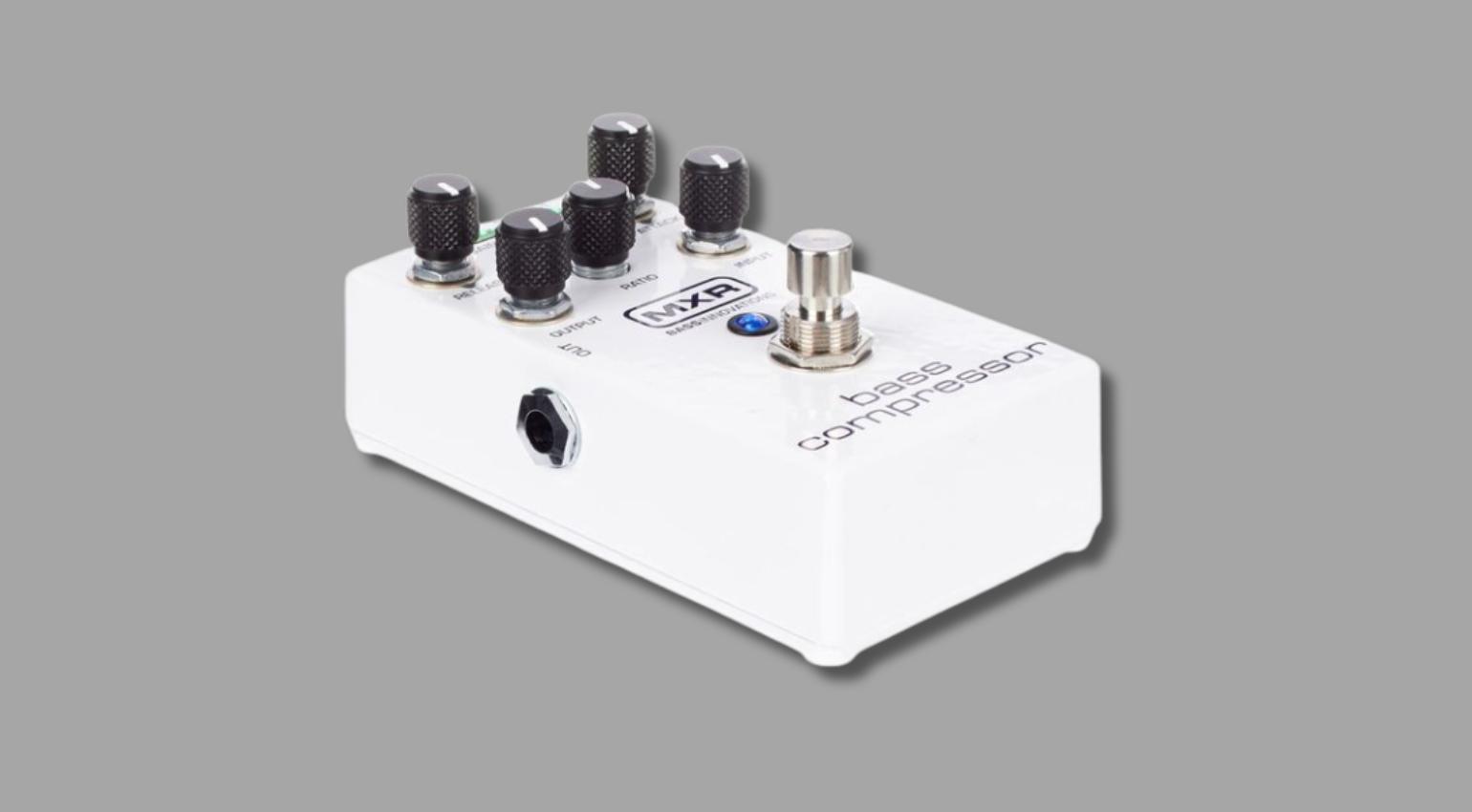
Best Bass Pedal for Compression: MXR M87 Bass Compressor
What it does to your sound: makes it more even, controlled, and every note audible, without squashing the life out of your playing.
The M87 gives you the full studio compression experience: Attack, Release, Ratio, Input, Output. And its Constant Headroom Technology keeps the signal clean under a hot active bass. The ten-segment LED gain-reduction meter is the reason it’s so popular: you can see what you are doing on a loud stage instead of guessing.
Get it from Thomann* or Sweetwater*.
Budget alternative: TC Electronic SpectraComp Bass Compressor*.



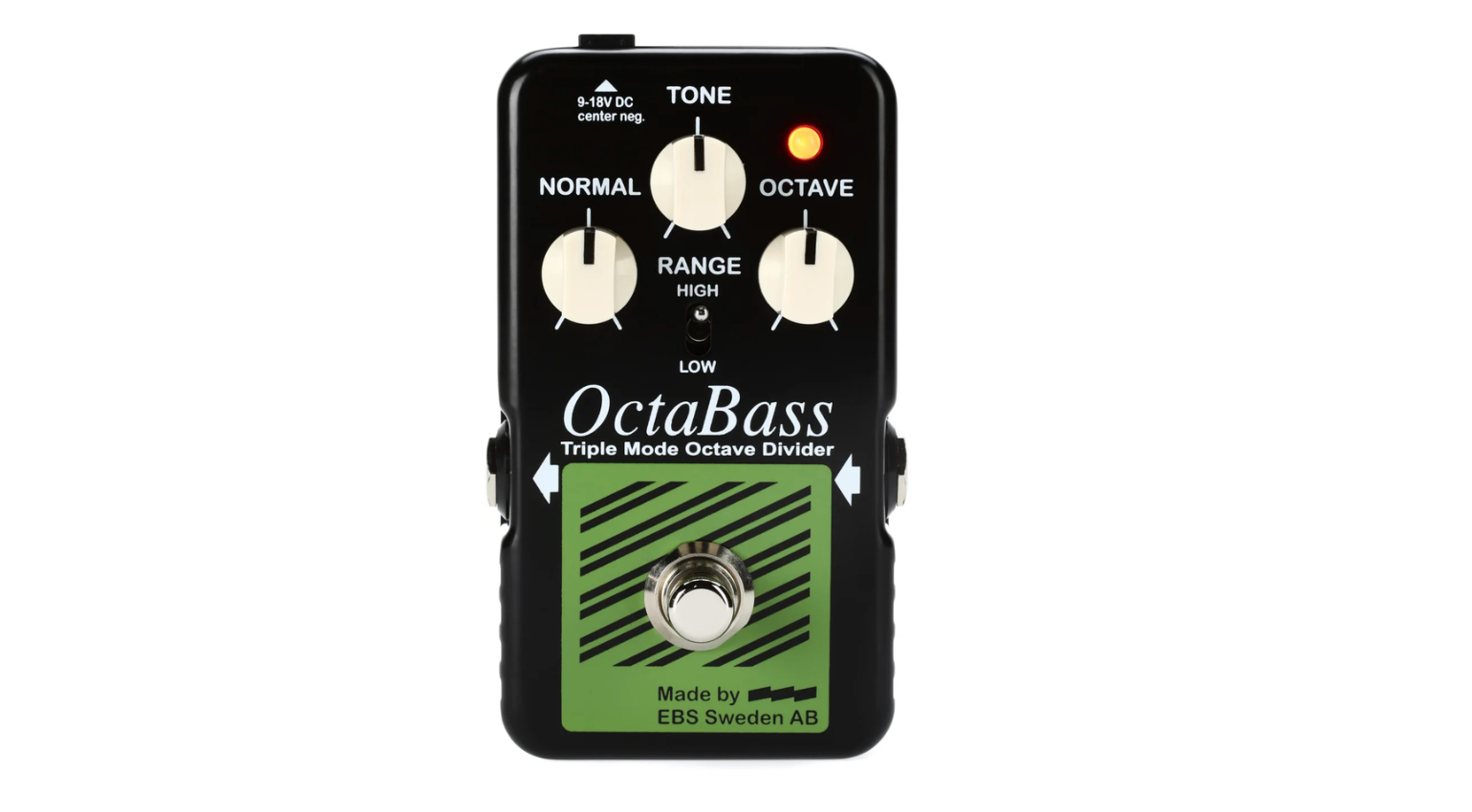
Best Octaver Bass Pedal: EBS Octabass Blue Label 2020
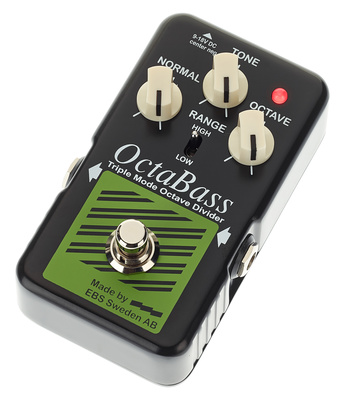
What it does to your sound: Adds an octave-up signal that lets your bass cut through like Royal Blood’s Mike Kerr’s sound
Let’s make one thing clear: these kinds of pedals are NOT to be confused with the more wide-spread octave-down pedals like Boss’ OC-5, where guitarists add a little oomph to their single notes. The best bass pedals add something unique to bass signals that isn’t just “same like guitar but lower”. The EBS Octabass is one of the best octave-up pedals for bass that does not touch the low-end.
Get it from Thomann* or Sweetwater*.
Budget alternative: TC Electronic Sub ‘N’ Up Mini*.

Best Envelope Filter Pedal for Bass: MXR M82 Bass Envelope Filter
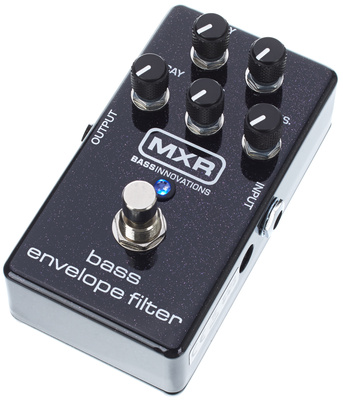
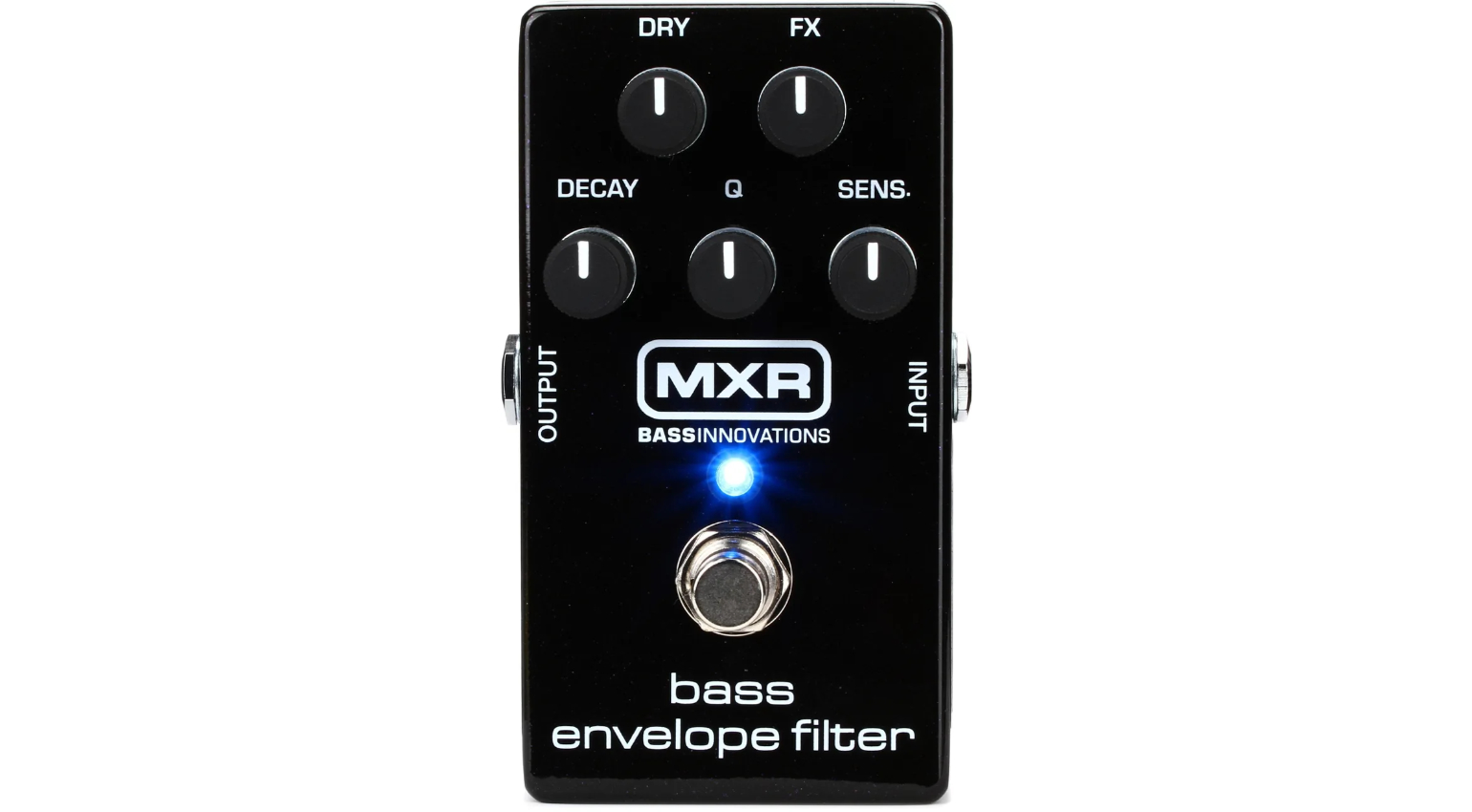
What it does to your sound: It’s a filter triggered by the dynamics of your playing- instant funk vibes
The M82 features a Sensitivity control to match the circuit to your instrument’s output, plus Q and Decay for the shape of the cutoff movement. The Dry and FX knobs are what make it usable on bass at all; without these, envelope filters tend to thin out the low end.
Get it from Thomann* or Sweetwater*.
Budget alternative: Electro-Harmonix Bassballs Nano*.
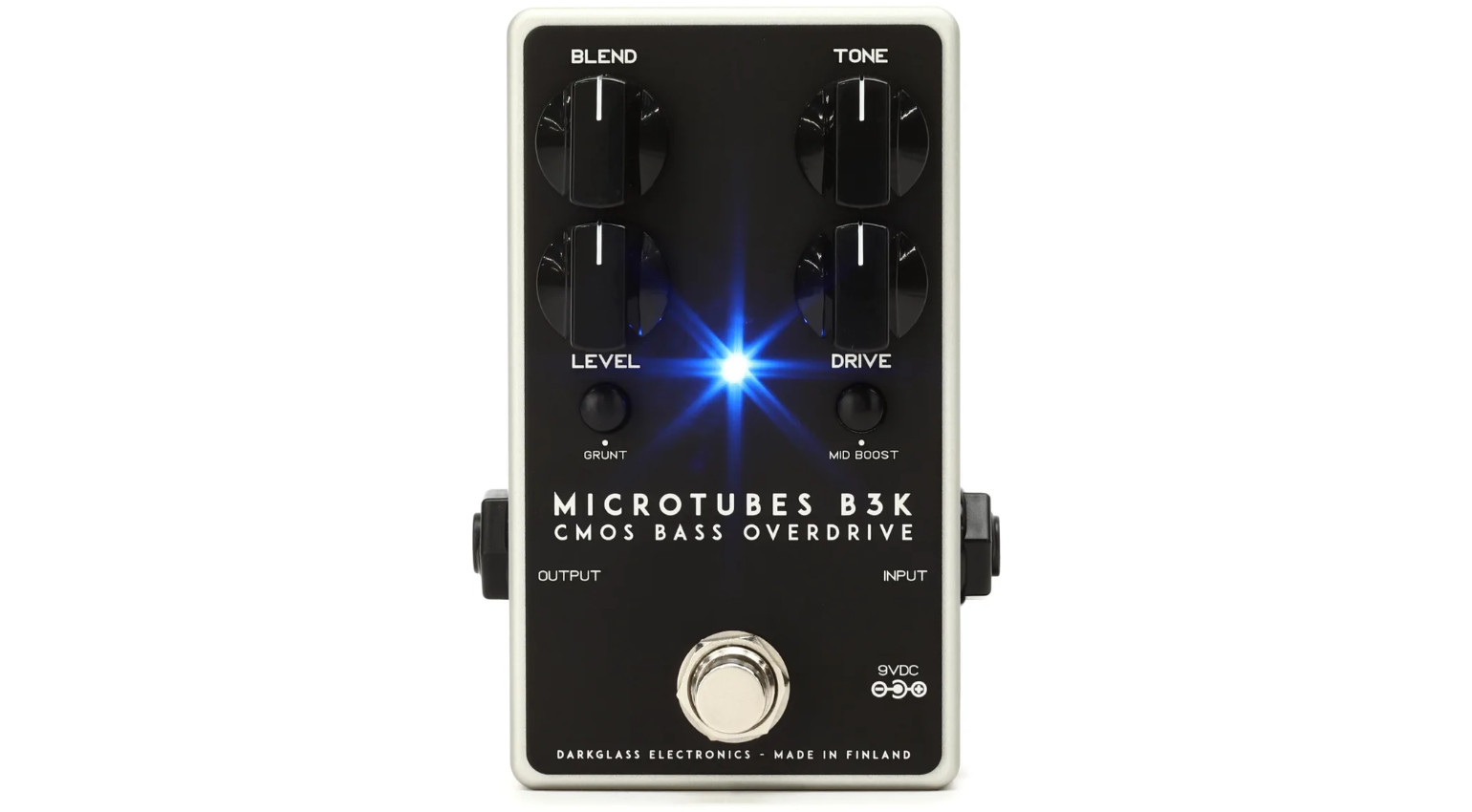
Best Bass Overdrive Pedal: Darkglass Microtubes B3K V2
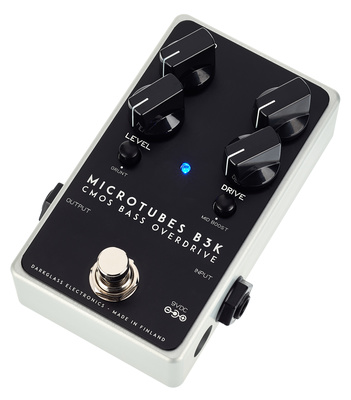
What it does to your sound: creates today’s uber-aggressive bass sound from modern metal or prog
The pedal’s Blend control runs your clean signal in parallel with the drive, so you can dial in as much saw as you want without losing the fundamental. In addition, the Grunt switch controls how much low-end feeds into the distortion, and Attack shapes the top end. V2 adds the mid boost the original lacked, This is one of the best bass pedals for anyone looking to make their signal more aggressive-sounding.
Get it from Thomann* or Sweetwater*.
Budget alternative: Boss ODB-3 Bass Overdrive*.

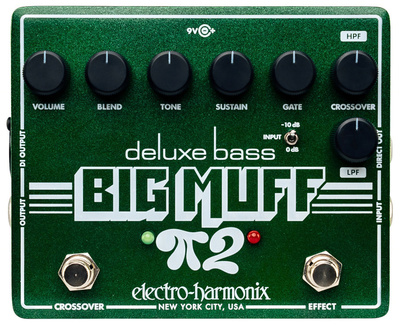
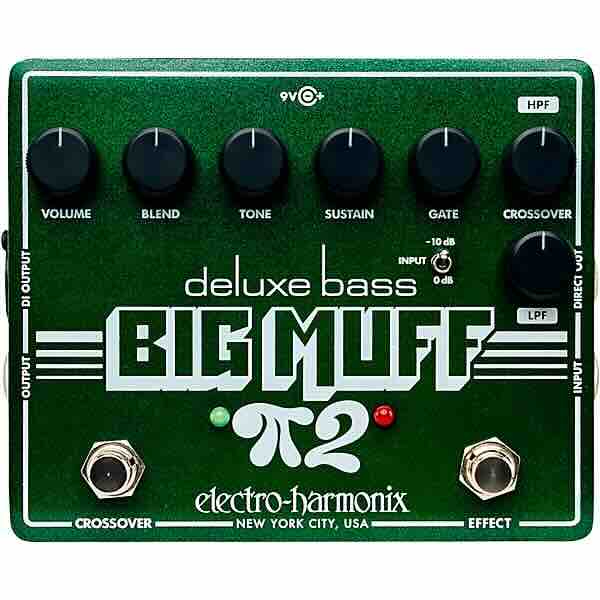
Best Bass Fuzz: Electro-Harmonix Deluxe Bass Big Muff Pi 2
What it does to your sound: Creates a bass beam that’ll sonically destroy anything in its lower-midrange path, like one Cliff Burton did
Fuzz is a sonic wall: it compresses your signal into a thick, sustaining, “slightly” broken tone that behaves almost like a synth oscillator. EHX’s Deluxe Bass Big Muff Pi 2 version is what happens when the circuit gets the controls bassists actually need: a Blend knob, a footswitchable crossover with separate high-pass and low-pass filters, a -10dB pad for active pickups, a variable gate, and an XLR DI output. If you’re playing in any kind of heavier rock or metal band, this is one of the best bass pedals you could ever want.
Get it from Thomann* or Sweetwater*.
Budget alternative: Electro-Harmonix Nano Bass Big Muff 2 *.

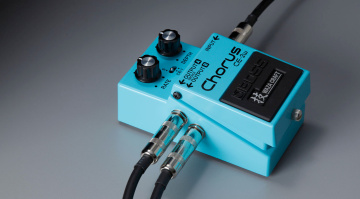
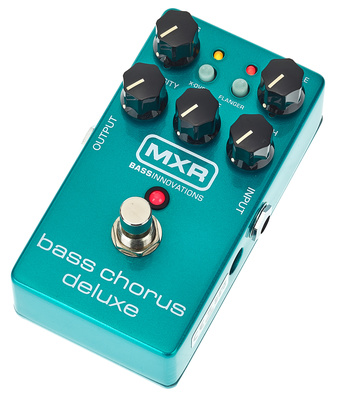
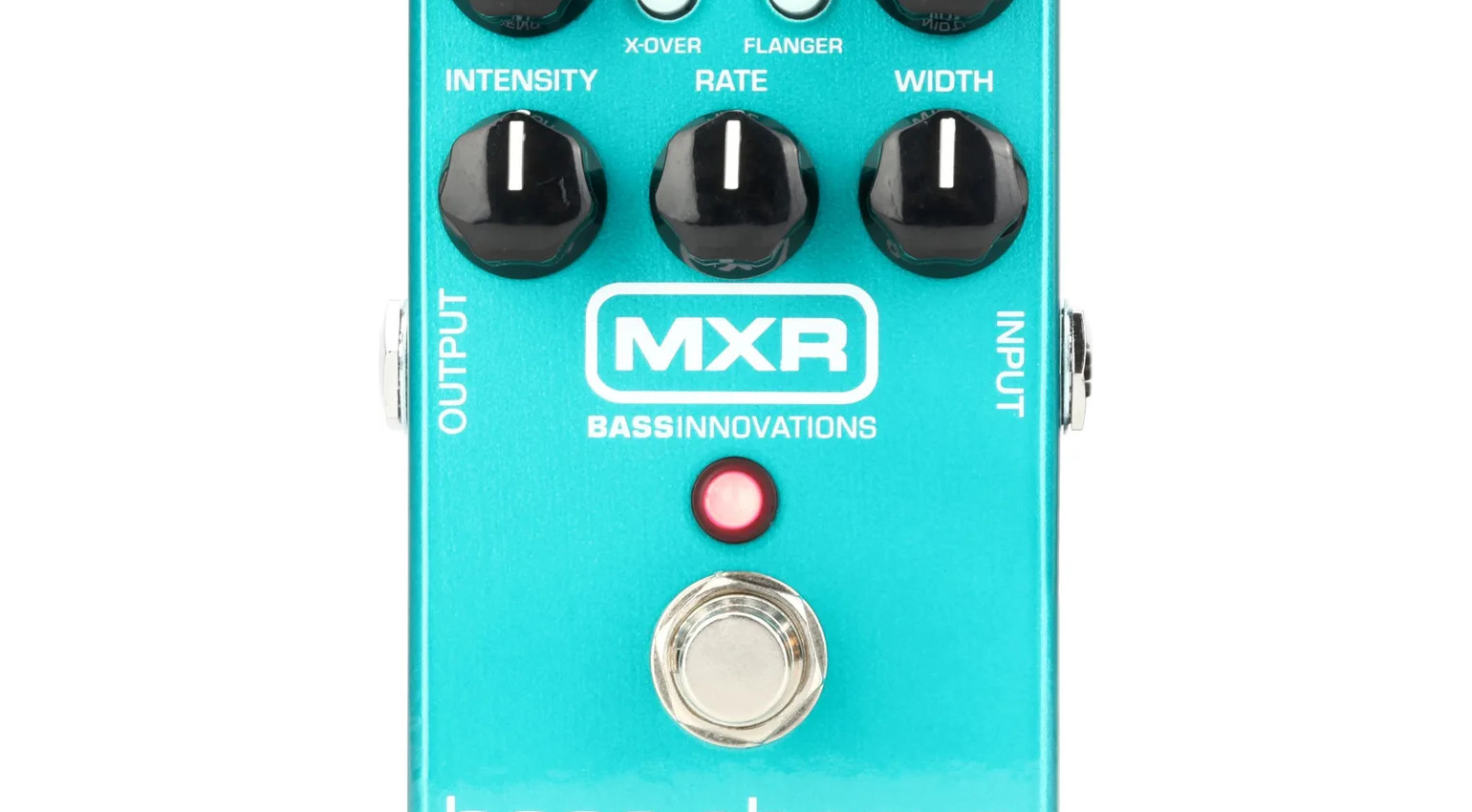
Best Bass Chorus Pedal: MXR M 83 Bass Chorus Deluxe
What it does to your sound: make it sound dreamy and sad like Peter Hook (Joy Division) or Simon Gallup (The Cure). Soften it to sit well in a stadium rock arrangement like Duff McKagan (Guns ‘n’ Roses)
Chorus on bass has a specific history: in post-punk and new wave it stopped being a subtle thickener and became the sound itself. Joy Divison and The Cure were pioneers in this regard. And the sound is coming back! The M83 Bass Chorus featues ab X-Over switch where everything below 100 Hz stays unmodulated. Without that, chorus on bass turns the low end into a wobble. If you’re looking to add a new dimension to your bass sound, it’s one of the best bass pedals.
Get it from Thomann* or Sweetwater*.
Budget alternative: Electro-Harmonix Bass Clone*.
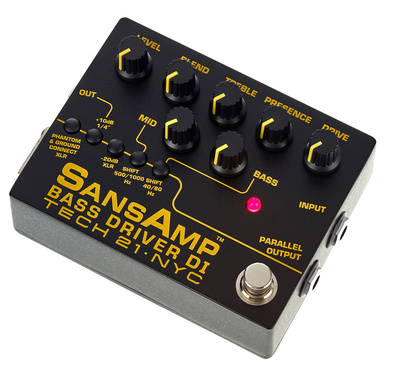
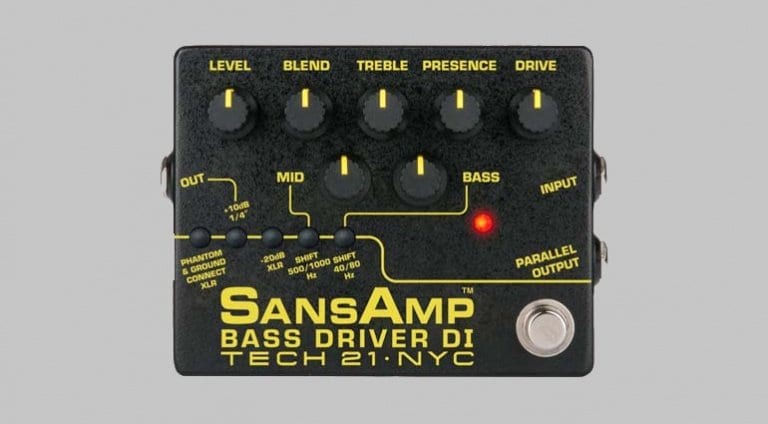
Best Bass DI: Tech 21 SansAmp Bass Driver DI V2
What it does to your sound: No matter how big or small your pedal board is, at the end of the chain, your signal needs to go to a PA. The Sansamp makes sure, your bass sounds just like it does at home.
V2 added two features: a switch that centers the bass control at either 80 Hz or 40 Hz, which makes it work much better with five- and six-string models, and a midrange control with a selectable frequency that lets you match it to different pickups. The Blend knob mixes the SansAmp circuit with your clean signal, and the parallel outputs send the processed sound to front-of-house, while your amp gets its own signal. If you only need one pedal among the best bass pedals, get this one.
Get it from Thomann* or Sweetwater*.
Budget alternative: Behringer V-Tone Bass BDI21*.

In What Order Should Bass Pedals Go?
Every pedal responds to the signal it receives, so what sits in front of it changes what it does. On bass that matters even more than on guitar. Here’s a suggestion that’s pretty common on bass boards:
- Compression – Octaver – Envelope Filter – Overdrive – Fuzz – Chorus – Preamp
The compressor goes first because it is the one pedal here that needs your raw dynamics. Put it after a distortion, and there is nothing left to compress.
The octave pedal comes second. Pitch tracking reads the fundamental of a single clean note. Feed it a distorted signal full of added harmonics and it tracks the wrong pitch, worst of all on a low B.
The envelope filter follows for the same reason. It is triggered by how hard you hit the string, so it needs dynamic range left in the signal.
Then the dirt, overdrive before fuzz, so the overdrive can push the fuzz harder when you want both.
Modulation goes after distortion. Modulate a clean signal and then distort it and the movement turns into intermodulation mush.
The preamp DI goes last because it is the end of your rig into your amp’s return, into the front-of-house desk.
Of course, this is a mere suggestion to get you started. Once you start developing your sound, peak on other’s boards (we all do!) and check out more and more of the best bass pedals, you’ll likely find the perfect order for you.
What’s your perfect signal chain for bass? Let us know in the comments!
FAQ on the Best Bass Pedals
What are the best bass pedals to start with?
A preamp DI and a compressor. Those two work on every gig regardless of what you play.
Can I just use guitar pedals for bass?
Most guitar pedals cut low frequencies as part of the circuit. But if a guitar pedal has a blend control, it will usually work on bass.
What order should bass pedals go in?
Compressor, octaver, envelope filter, overdrive, fuzz, chorus, preamp DI. The rule behind it: anything that reads your dynamics or your pitch goes before anything that distorts, because distortion destroys both.
Can one multi-effects pedal replace several of these?
A multi-effects unit can cover most of them. The trade-off is that you are stuck with the manufacturer’s version of each effect rather than picking the best bass pedals individually for each job.
*Disclaimer: This post contains affiliate links and/or widgets. When you buy a product via our affiliate partner, we receive a small commission that helps support what we do. Don’t worry, you pay the same price. Thanks for your support!

This might also interest you