Lexicon Reverb Alternatives: Digital Space Machines
Different ways to get the famous Lexicon 224 and 480L sound, and beyond...

 4,3 / 5,0 |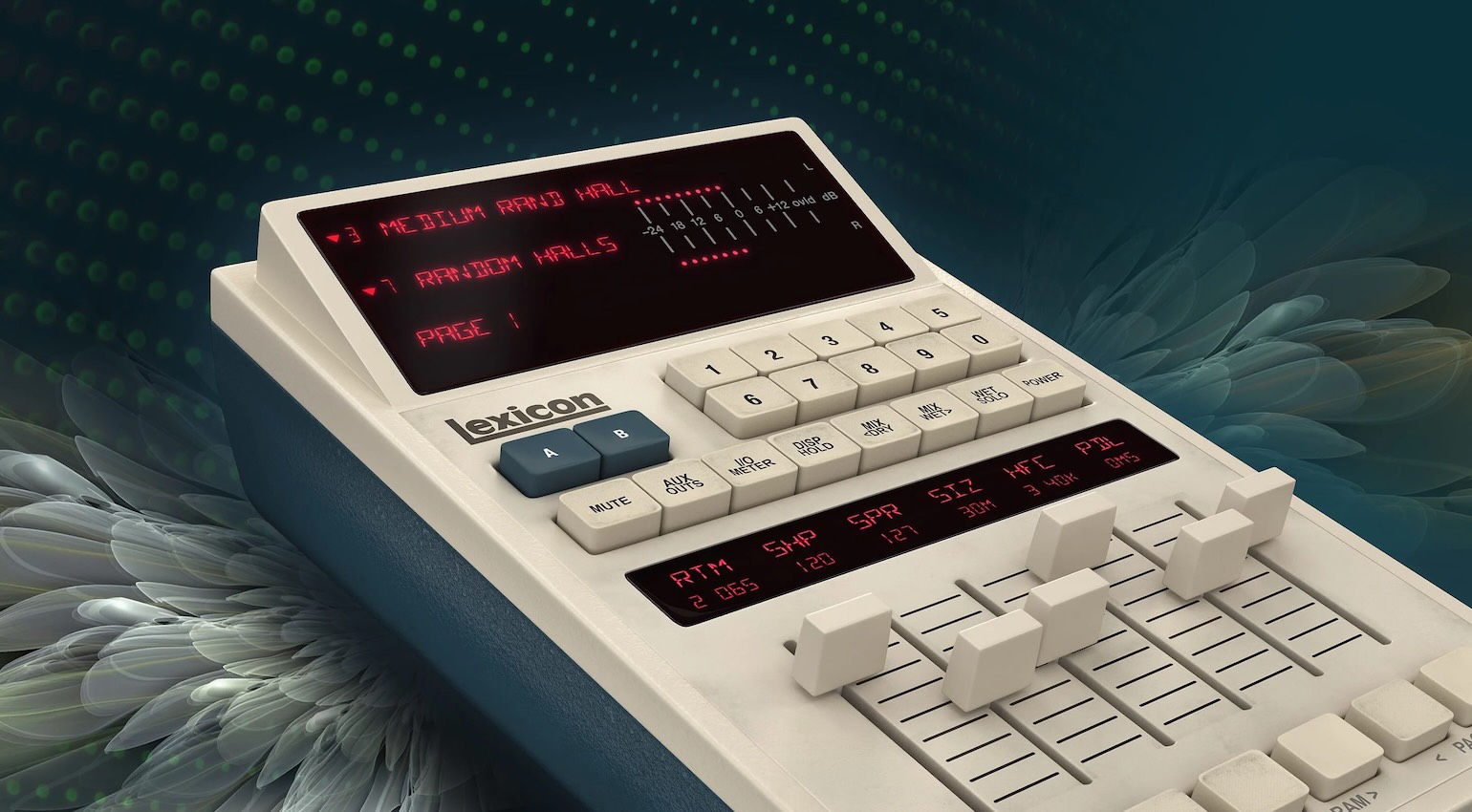

We investigate Lexicon reverb alternatives to find different ways of getting that classic vintage digital reverb sound that dominated the 1980s.
In this Article
What’s so great about vintage Lexicon reverbs?
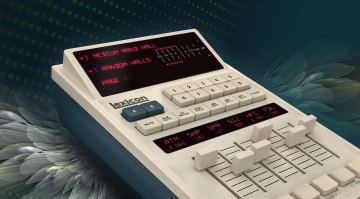
In 1978 and later in 1986, Lexicon released two reverbs that would define the sound of record production throughout the 1980s and ’90s. Easily the most famous reverbs ever designed to this day, the 224 and 480L used intricate delay networks to generate artificial space, with digital delay signals looped back into one another.
Of course, as the 480L was launched nearly a decade later, it advanced the technology used in the 224 considerably, with more powerful microprocessors that allowed multi-voiced time-varying random delay networks for much more realistic reverbs.
If you compare these two legends, the 224 is more dreamy and sci-fi (think Blade Runner), whereas the 480L was used by engineers like Andy Wallace in the early 1990s to create the massive mixes on Nirvana’s Nevermind.
Lexicon Reverb Alternatives: TAL-Reverb-4
When your DAW doesn’t come with a vintage-modelled digital reverb plugin, the Swiss developer TAL Software (Togu Audio Line) has a simple algorithmic plate reverb plugin that can deliver a similar modulated reverb sound inspired by 1980s digital reverb units. Originally, this algorithm was developed for the TAL-Sampler plugin, but TAL decided to create a separate plugin and make it available for free.
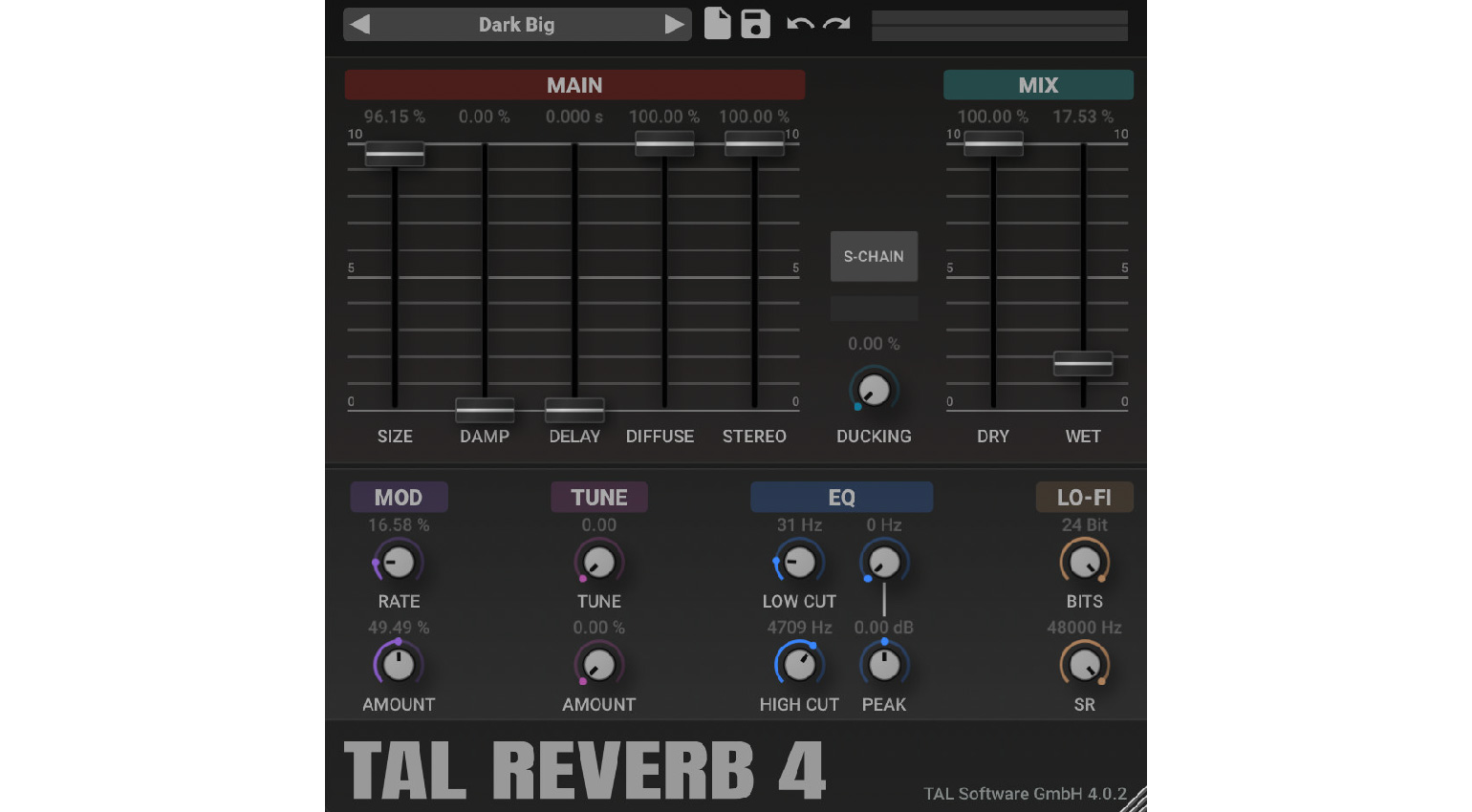
Although it only gives you a plate algorithm, the TAL-Reverb-4 gives you a fair bit of control to mold the reverb sound around your vocals, synths, and drums. Besides the basic pre-delay, size, damping, and diffusion controls, there are features like stereo amount and a ducking function with an external sidechain input, which lets you shape the reverb musically. This is particularly effective for using the dry signal to duck the wet, a technique used by engineers throughout the 1980s.
In addition, there is a modulation section, a pitch shifter, an EQ section with filters and a parametric peak, as well as controls for changing the sample rate and bit depth. Whether you’re trying to model a classic Lexicon sound or simply making the reverb sit nicely in the mix, these controls are a welcome addition.
Lexicon Reverb Alternatives: Relab Development LX480
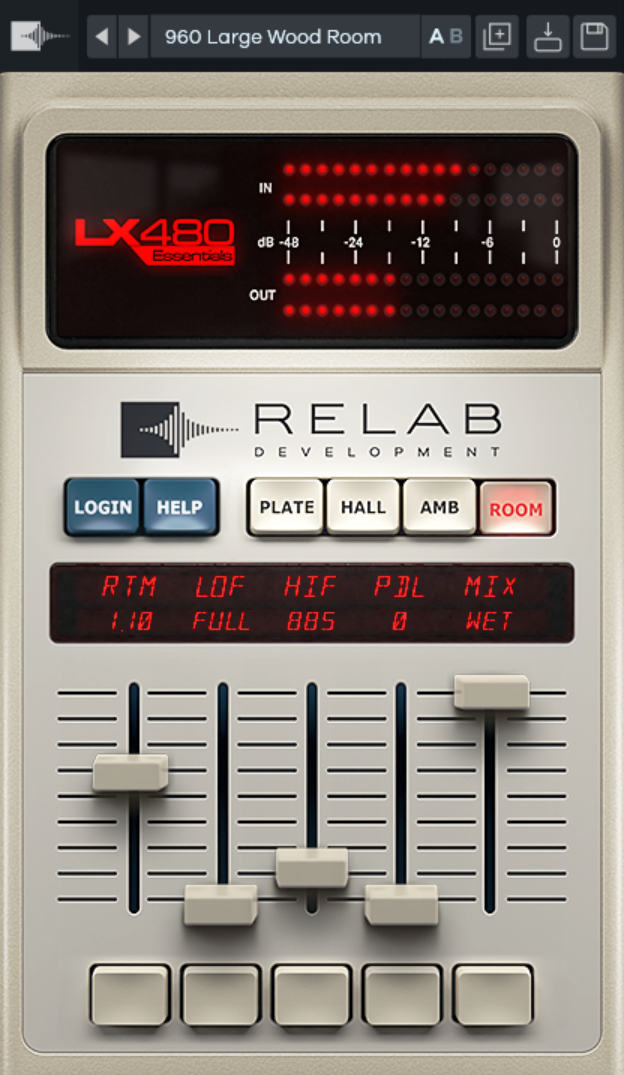
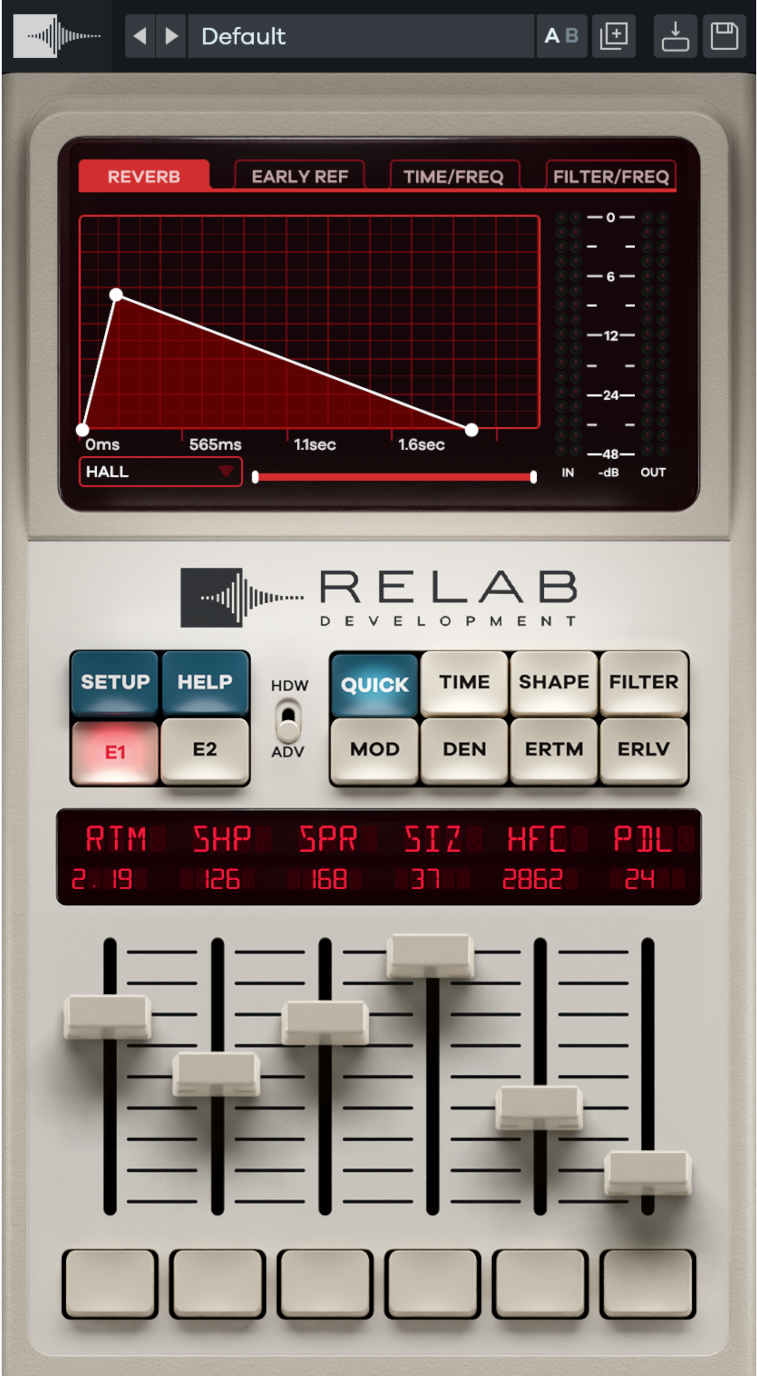
The LX480 is a sample-accurate recreation of the Lexicon 480L from Relab Development, which uses DSP to model the delay networks and 18-bit linear AD/DA conversion stages that contributed to its legendary sound. Different users have specific needs, so there is a basic Essentials version of the plugin and a “pro” version with an extended feature set.
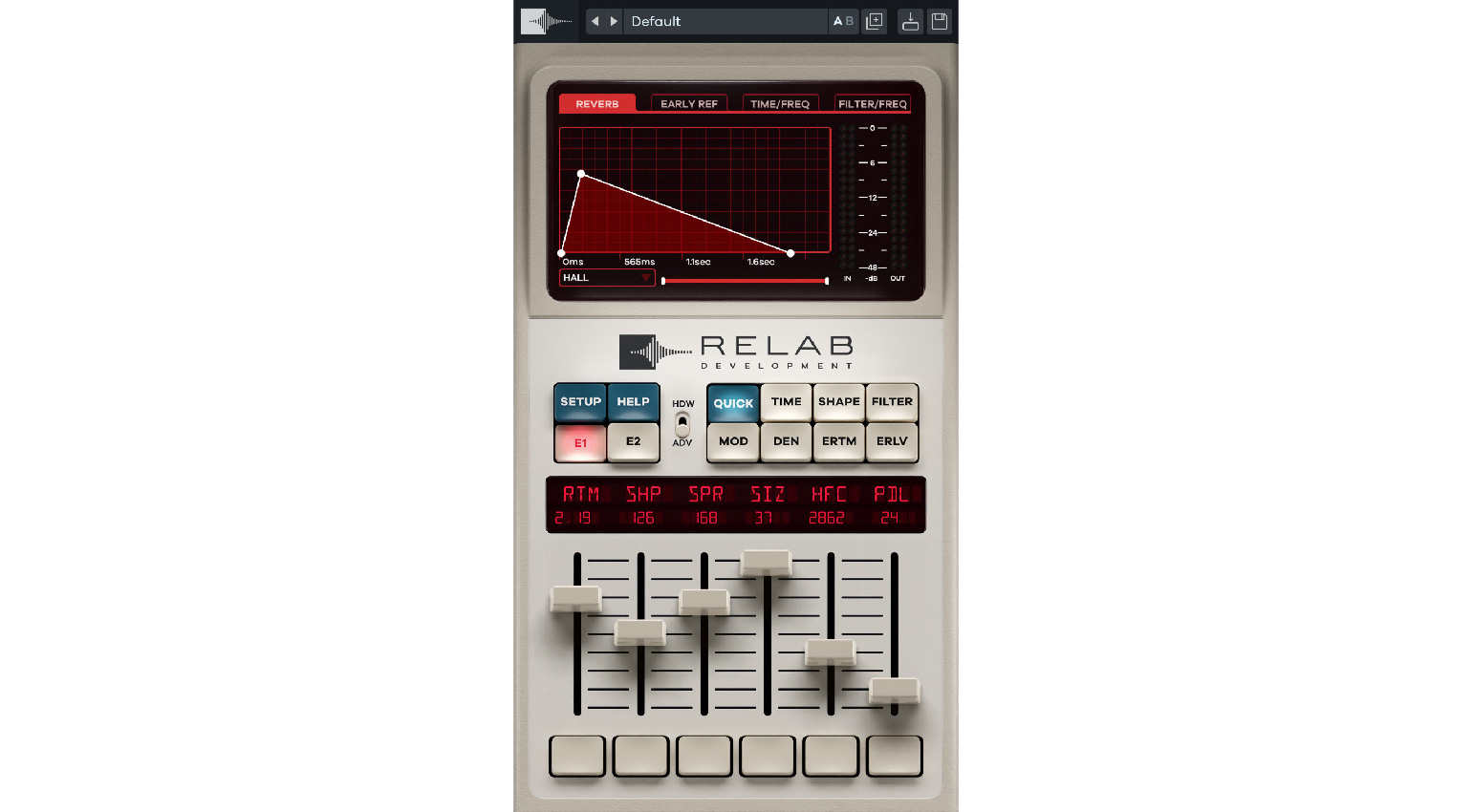
This includes a dual-engine routing system and a choice of eight algorithms, while the Essentials version offers a single engine with four algorithms. Furthermore, the pro version also lets you choose between 18-bit and 32-bit float internal processing, and provides a range of more advanced controls for shaping the reverb more precisely.
Overall, while the Essentials version gives you the basics of a top-quality Lexicon emulation, the pro version expands this functionality, not only with more realistic sonics but also with extended features that make it more than just a vintage reverb. With the ability to create cleaner, more modern reverbs as well, the LX480 can become your go-to reverb plugin. Get it at Plugin Boutique.*

Lexicon Reverb Alternatives: Universal Audio UAFX
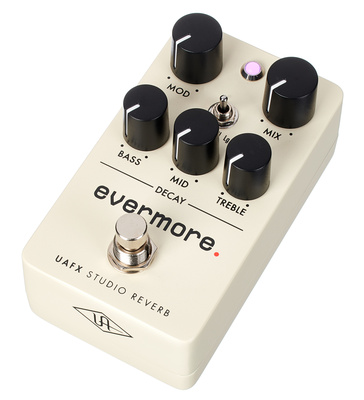
If you want vintage Lexicon reverb sounds on your pedal board, the UAFX range has options that suit both guitarists and DAW-less jammers. Starting with the Evermore Studio Reverb pedal, you get a choice of three algorithms (Room, Sm Hall, and Lg Hall) modeled on the Lexicon 224 and controls for EQ, modulation amount, and wet/dry mix.
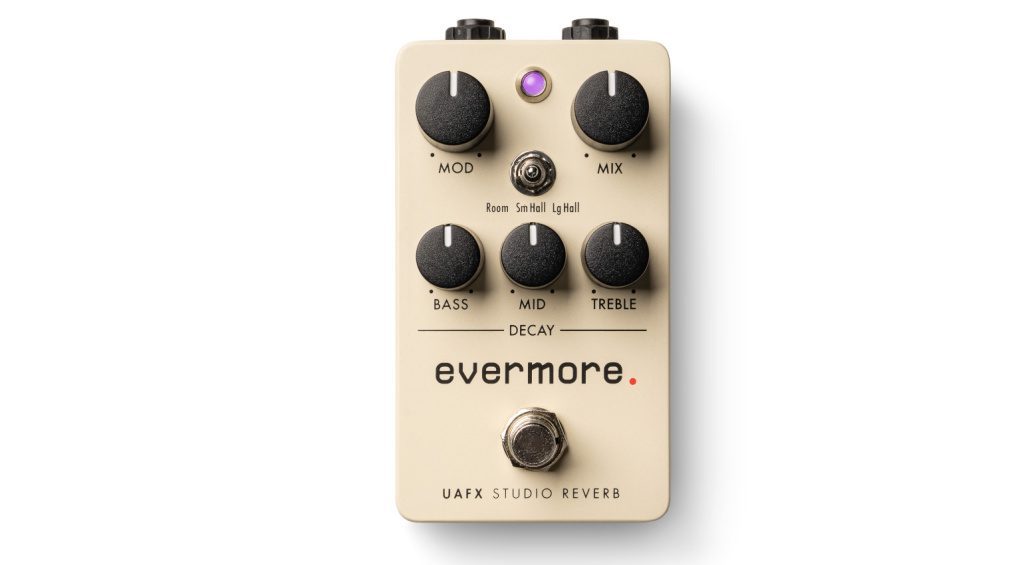
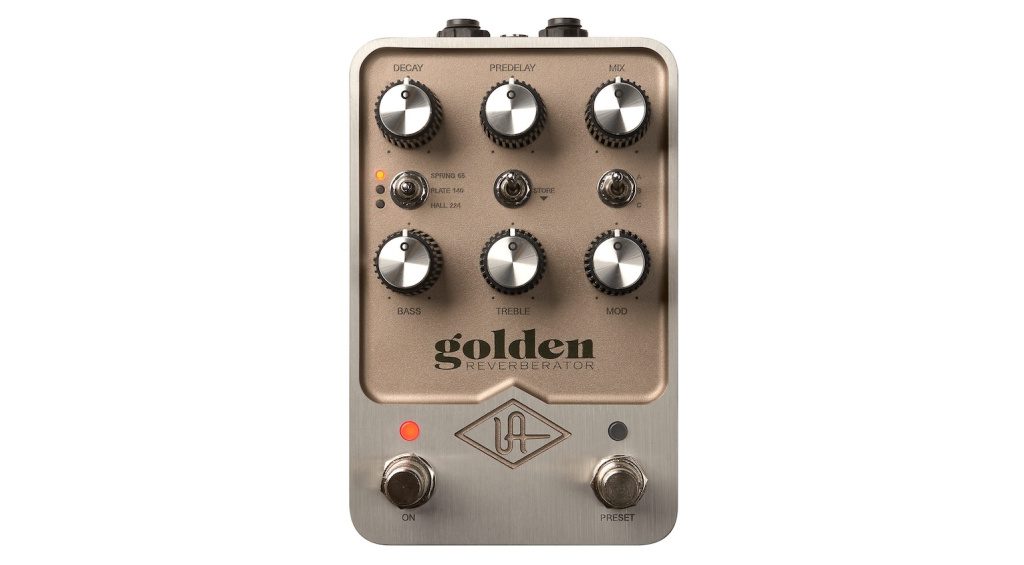
Although this is a mono in/mono out pedal, it gets straight to the point without any menu systems, and the quality of UAD algorithms remains among the best. For a more extensive array of classic reverbs in a more flexible stereo pedal, the Golden Reverberator offers more control, with knobs for pre-delay and decay time.
In addition, the UAFX mobile app can sync via Bluetooth, offering more extensive editing power it unlocks a fourth effect slot. This means that besides the vintage spring, EMT 140 plate, and Lexicon 224 Hall, you get the 224 chamber and plate settings as well. Overall, this is a great way to get the Lexicon sound without spending over 500 bucks. Get it at Thomann.*


Lexicon Reverb Alternatives: Meris Mercury
Meris is a company founded by former Line 6 and Strymon engineers that is renowned for its studio-grade 32-bit floating-point DSP architecture. Among its extensive range of effects is the Mercury series, a range of pedals and 500-series modules with algorithms inspired by the legendary Blade Runner soundtrack created by Vangelis with the Lexicon 224.
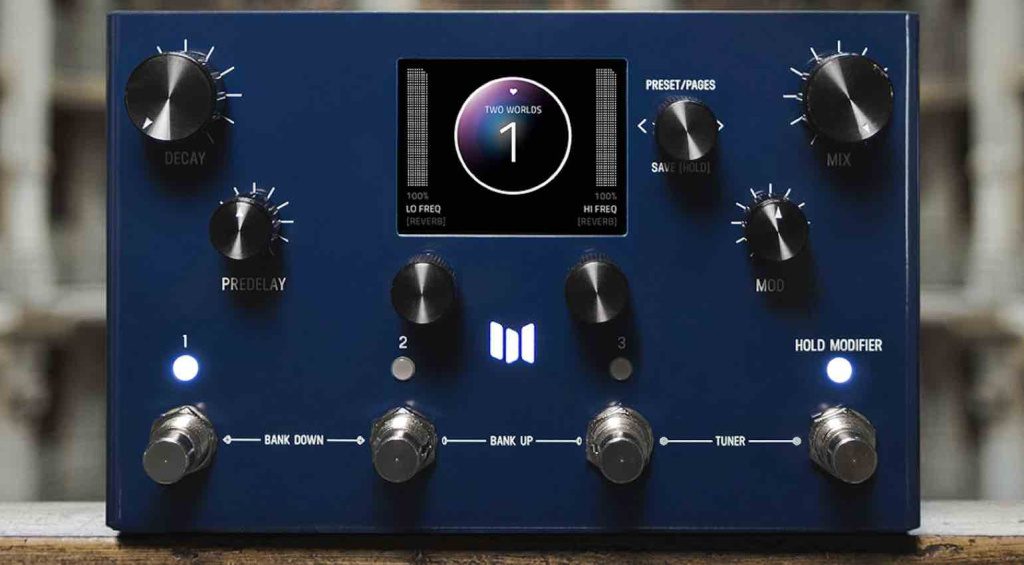

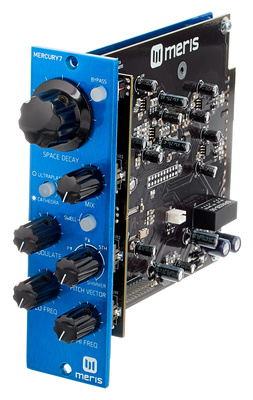
The range starts off with the Mercury7, a pedal that gives you two Blade Runner-inspired reverb algorithms, including Ultraplate, a quick and flexible reverb, and Cathedra, for expansive soundscapes. The 500-series module version offers the same controls (decay, pitch, EQ), but it has studio-grade converters, and you’ll need a linked pair of modules for stereo operation.
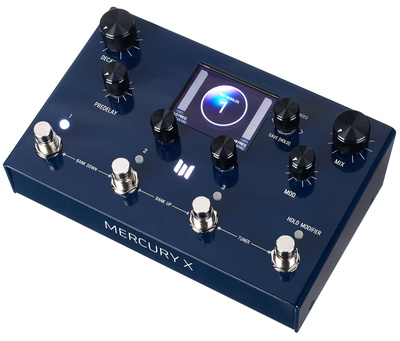
Meanwhile, the Mercury X expands the concept into a more workstation-like pedal, with eight algorithms and the ability to layer two patches in series, parallel, or ping-pong configurations. Although the Mercury X has a wider range, three of these algorithms were also used in the CMX 1978, a reverb pedal with motorized faders developed in collaboration with Chase Bliss. Get it at Thomann.*


Lexicon Reverb Alternatives: Bricasti M7
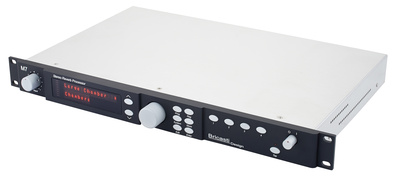
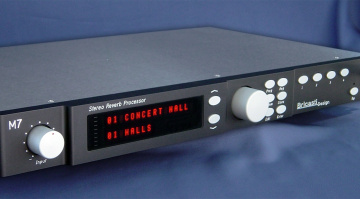
After spending years working for Lexicon in different capacities, Brian Zolner and Casey Dowdell decided to team up in 2004 and develop their own algorithmic reverb generation system and couple it with extremely high-grade DSP processors and AD/DA conversion. Under the name Bricasti Design, the Model 7 reverb was launched in 2007 and gradually took over as the gold standard for high-end studio reverb.
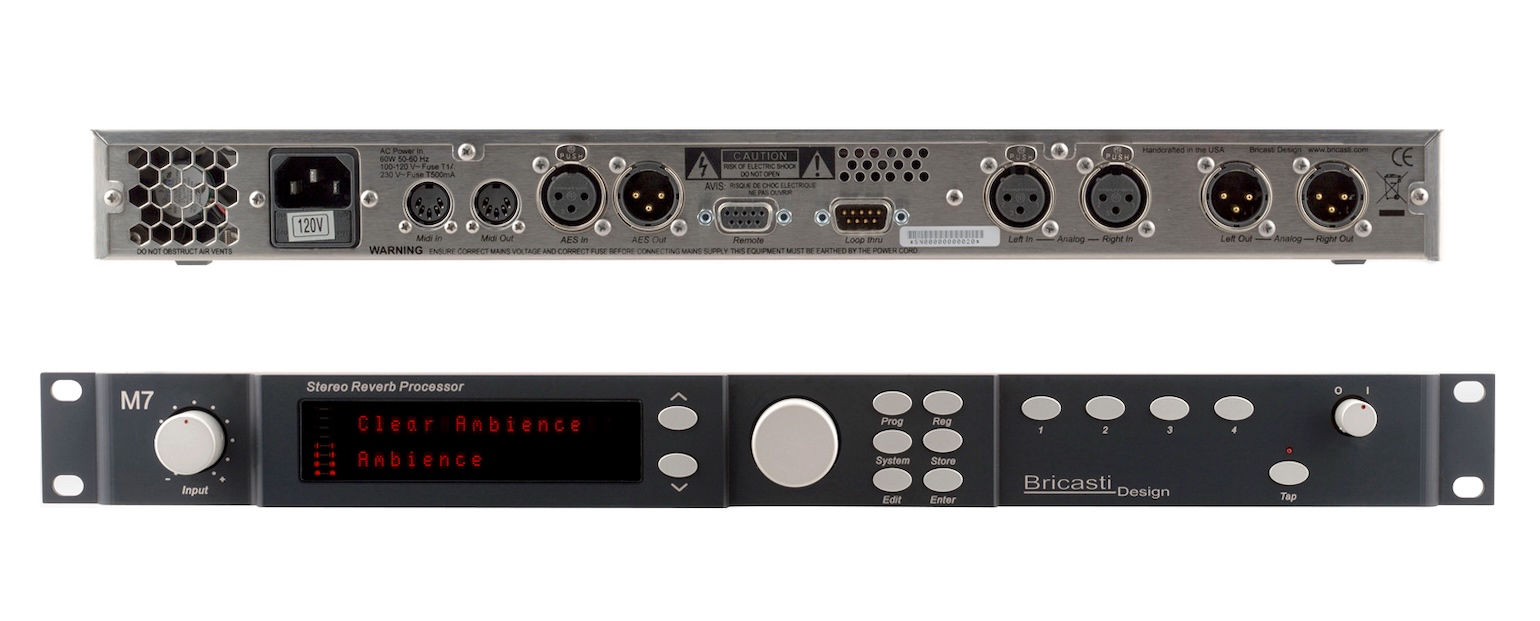
Rather than simply tweaking or modeling an old Lexicon algorithm, Dowdell’s algorithmic engine uses real-time synthesis calculations exclusively, which provides far more sound shaping flexibility. The M7 uses three engines simultaneously for independent management of early reflections, decay tail, and reverberation below 80 Hz, giving its spaces unparalleled weight and depth.
One of the key aspects of the M7 is that it allows you to create spaces like you would with a digital reverb, but then it also has a highly transparent ambience algorithm for modelling more focused acoustic spaces. This, in particular, sets it apart from other reverbs you’ll find and helps to justify the monstrous price tag. Get it at Thomann.*

More about Lexicon Reverb Alternatives:
*Note: This article contains promotional links that help us fund our site. Don’t worry: the price for you always stays the same! We will receive a small commission if you buy something through these links. We appreciate your support!

This might also interest you


5 responses to “Lexicon Reverb Alternatives: Digital Space Machines”

You are currently viewing a placeholder content from Facebook. To access the actual content, click the button below. Please note that doing so will share data with third-party providers.
More InformationYou are currently viewing a placeholder content from Instagram. To access the actual content, click the button below. Please note that doing so will share data with third-party providers.
More InformationYou are currently viewing a placeholder content from X. To access the actual content, click the button below. Please note that doing so will share data with third-party providers.
More Information
Chase Bliss CXM 1978
The algorithms in the CXM are Meris algorithms, as mentioned in the article.
Oops missed that.
Yeah, you’re mostly paying for the fancy motorized sliders with the CXM, and the MercuryX has more than double the algorithms.
Missed my favourite one, OTO Bam!