The Plugin Overload Problem: Do We Really Need More?
Can you ever have enough plugins?

 3,8 / 5,0 |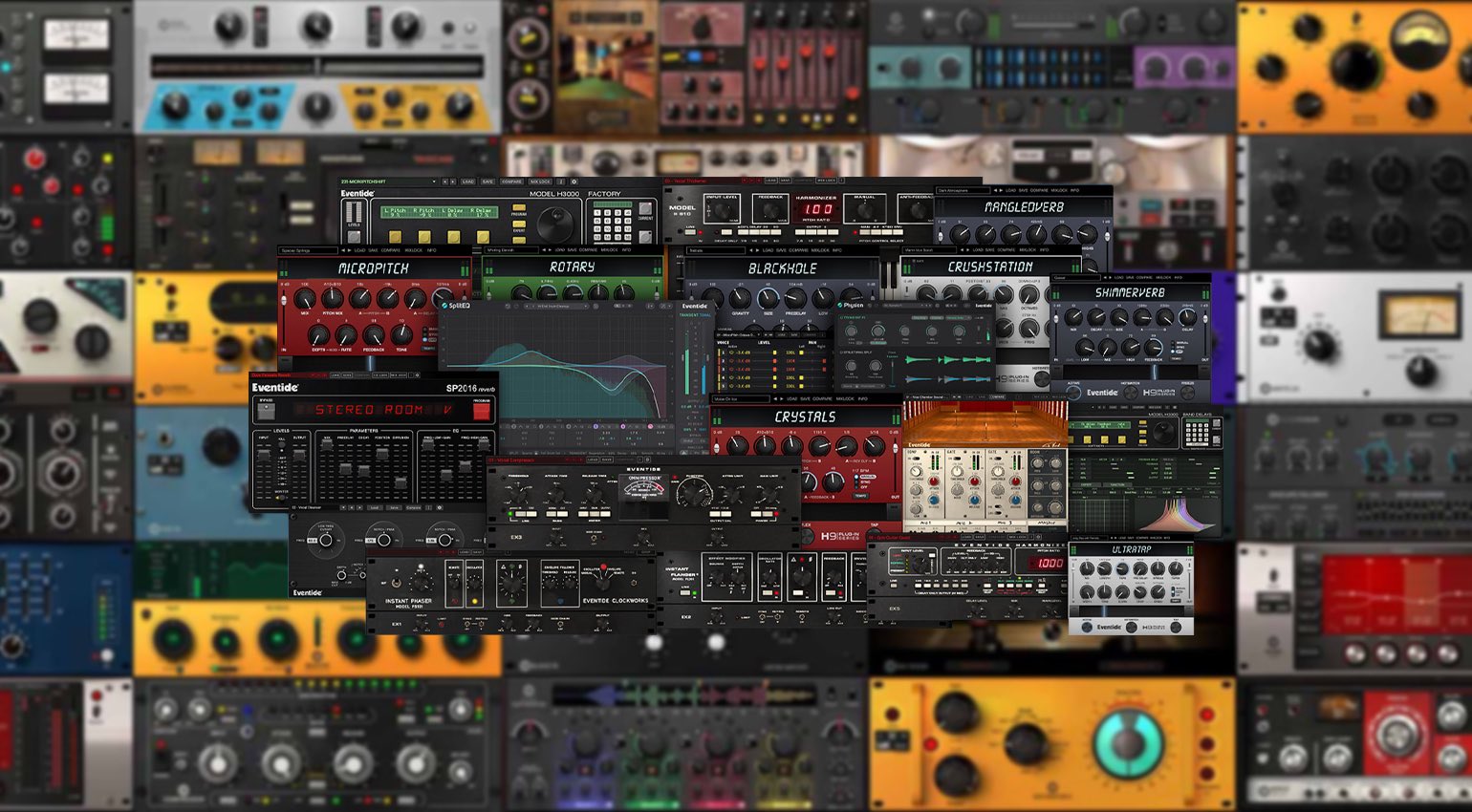
The Plugin Overload Problem: Do We Really Need More? · Source: IK Multimedia / Eventide

We address different aspects of the plugin overload problem and look at ways to avoid what can easily become a never-ending spending trap.
In this Article:
Like most online content, new plugins are marketed to us as the latest and greatest in audio technology, using recency bias to promise us that another compressor or synth plugin is the answer. Phrases like “game-changer” and “revolutionize” have been repeatedly abused to the point where it’s become hard to discern cliché from true innovation.
So often, we buy into the idea that a plugin sounds warmer and “more analogue” than our stock DAW options, or delivers cleaner masters, wider stereo image, more intuitive workflow, or has one or more AI-assisted features. However, for many artists and producers, having an abundance of creative options is not quite what it’s cracked up to be.
The Plugin Overload Problem: The Quest for a Better Sound
One of the primary factors contributing to the plugin overload problem is the idea that newer, better instruments and processors immediately result in a superior standard of music. As we touched on briefly, the marketing behind plugins plays a major role by using defining terms like “analogue modeling”, “industry-standard”, and “AI-powered”, as we are led to believe that pristine audio is only a purchase away.
If we look a bit closer, the tangible difference between one plugin and another is remarkably subtle, especially within the context of a mix. With an experienced pro at the wheel, even stock plugins produce great results because having good instincts and making good decisions counts more than having an array of tools for performing each task.
Rather than a DAW project overpopulated with the greatest plugins on the market, a track with carefully selected sounds, a strong arrangement, and good gain staging immediately stands out from the crowd. Eventually, the realization hits us as producers that we are spending more time tinkering and comparing plugins than creating music.
The Plugin Overload Problem: The Reality of Option Paralysis
Being presented with a deluge of choices at every turn can slow down your creative workflow. Having two or three EQ plugins, for example, allows speedy, decisive processing, whereas having 30 plugins to choose from could become a daunting procedure. Being constantly confronted with choices that don’t actually have that much sway in the final result creates fatigue.
Rather than honing our songwriting instincts and tapping into emotion, we are stuck in a Kafkaesque technical nightmare with questions looming around every corner. Should we use a modern or vintage compressor for this vocal? Does this saturation plugin have the richest harmonics? Which reverb has the most depth?
Ironically, the majority of the listeners we are making the music for will not notice these differences. Instead, their response is based on the raw energy and emotion of the track, where the sense of melody and rhythm count more than which plugins we’ve chosen to process different elements. Remember that moments of creative momentum can be fleeting, so even a single unnecessary choice can interrupt your flow.
The Plugin Overload Problem: The YouTube and Social Media Effect
Music production YouTubers and algorithms have a major influence on plugin consumerism. When plugins are recommended or featured in reviews, top 5 lists, and shootouts, it increases the urge to stay current. These plugins, which we’re constantly exposed to online, create a sense of FOMO, and when your favourite producer or engineer mentions a plugin you don’t have, you are immediately overcome with that feeling that something’s missing.
Also, the business model of music production software rewards companies that frequently release new plugins. These releases and updates create hype, which helps to maintain visibility within a flooded market. This means that the bigger brands often pay for visibility, and we are overwhelmed with attractive, limited-time offers all year round.
When combined with the growth of the prosumer sector of the market, it becomes harder and harder to decide whether you are following a consumer impulse or you’ve actually discovered something that will improve your workflow.
The Plugin Overload Problem: The Power of Stock Plugins
Another contributing factor in the plugin overload problem is the rate at which stock DAW plugins have improved. These days, you can open any DAW you like, from Ableton Live and Reason to Logic Pro and Cubase, and find excellent instruments and effects plugins for music production.
What stock plugins sometimes lack in features and fancy GUI, they make up for with clean CPU-friendly processing, which makes them reliable and versatile. What’s more, they are excellent tools for learning the trade, so beginners will do well to master the stock plugins in their DAW of choice before exploring third-party options.
You often find that experienced producers and engineers develop an affinity with a certain stock plugin that simply gets the job done. What’s more, they will sometimes limit their workflow intentionally by exclusively using familiar stock plugins to focus on making good mixing decisions and speeding up the workflow.


The Plugin Overload Problem: Consistency
A key factor that is often overlooked is the inconsistency that comes with using loads of different plugins. When you’re constantly switching between different plugins, you can create more work for yourself, as the mix becomes unbalanced. Each plugin designer has their own philosophy with regard to signal processing and UX, so moving between different interfaces can feel unfamiliar rather than fluent.
With a carefully curated batch of tried and tested plugins, the interfaces become a transparent part of the process. This way, we make decisions intuitively with confidence, and we can use our ears to focus on how compression is affecting a particular signal, how an EQ enhances the vocal range, or how reverb makes synths sit in the mix.
While many professional mix engineers may have large plugin libraries, you’ll often find this is to accommodate the popular plugin choices of their clients. When they actually get down to mixing, they tend to use the same handful of plugins that help them achieve quality results repeatedly.
The Plugin Overload Problem: When Do New Plugins Make Sense?
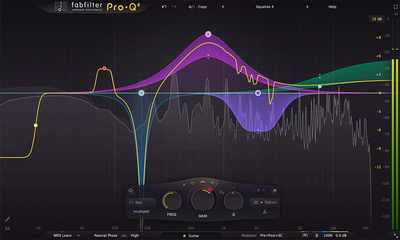
Naturally, we can rule out purchasing new plugins completely. There are those, like FabFilter, that offer genuine workflow enhancements, for example, with an instance list that gives you quick access to every EQ and compressor in your DAW. When it comes to creating sounds, a fresh interface approach or a new type of synthesis can inspire the creative direction.
Also, if we are doing highly specialized tasks such as audio restoration, options like iZotope RX and Steinberg SpectraLayers have features you won’t find standard in your DAW. Be aware of plugin developers who offer specialized solutions like Zynaptiq, as well as companies like Waves that have a plugin for every task under the sun.
When you choose to add a plugin to your collection, do it with intention.
A useful plugin purchase will solve a problem:
- workflow enhancement
- increased CPU efficiency
- adding unique creative functionality
- performing a task that your current setup can’t
- improved accessibility or usability
Remember that collecting plugins is never a substitute for developing skills.

The Plugin Overload Problem: Creativity First
If we look at music historically, we can quickly see that massive plugin libraries don’t often lead to great records. Some of the most iconic albums were created with limitations on the choice of equipment and track counts. Of course, technology matters, but not as much as creativity.
A music creator with a deep understanding of arrangement and emotive composition, as well as balance and dynamics, can create amazing music using only a few key tools. Meanwhile, if you have access to a limitless plugin library, it will not make weak ideas stronger or improve creative misdirection.
As we have instant access to almost any music production technology, the key is to learn when your setup is sufficient. For many artists and producers, the most effective studio upgrade will come from the simplification of the workflow, reducing any distractions, and mastering your current setup, rather than acquiring a new plugin.
More Info:
*Note: This article contains promotional links that help us fund our site. Don’t worry: the price for you always stays the same! We will receive a small commission if you buy something through these links. We appreciate your support!

This might also interest you