Chase Bliss Big Time: The Ultimate ’80s Voiced Rack Delay Pedal?
Could this be the delay pedal of the year?

 4,2 / 5,0 |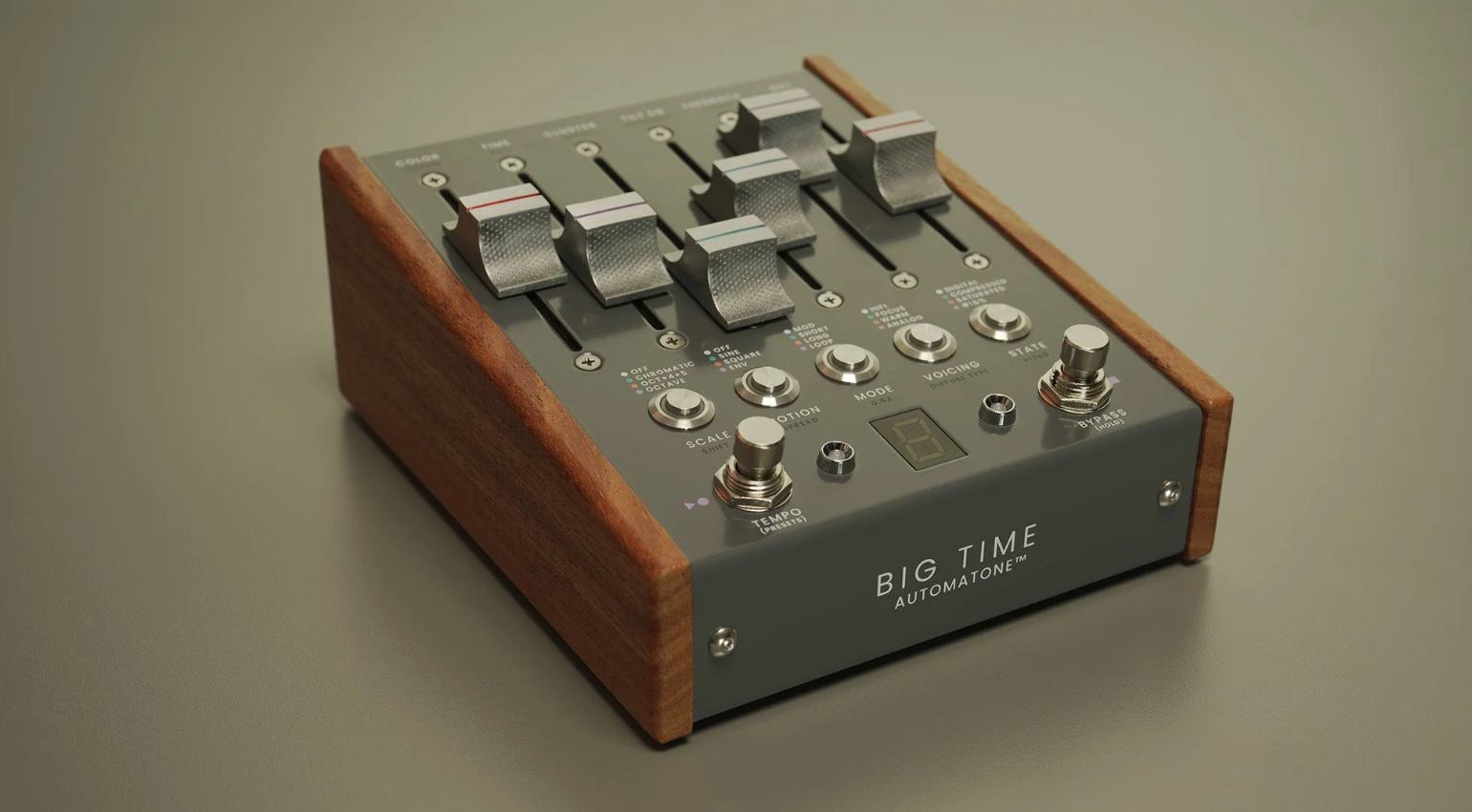
Chase Bliss Big Time: The Ultimate '80s Voiced Rack Delays in a Pedal? · Source: Chase Bliss

Chase Bliss had really built up the hype in recent days. And now the Chase Bliss Big Time is here. A monstrous stereo, digital-to-analog delay in the Automatone large-format. Anyone familiar with the two previous pedals in the series knows how good they sound.
Contents: Chase Bliss Big Time
Chase Bliss and Electronic Audio Experiments
For the Chase Bliss Big Time, they have teamed up with John Snyder of Electronic Audio Experiments. They make even more unusual effects pedals, most notably the Prismatic Wall physical modeling resonance pedal.
So here, two effects companies come together that aren’t exactly known for standard versions of effects. Joel Korte, who runs Chase Bliss, is a genius in many ways, so this collaboration will have his fans salivating to get one and play with it.
’80s Rack Delays
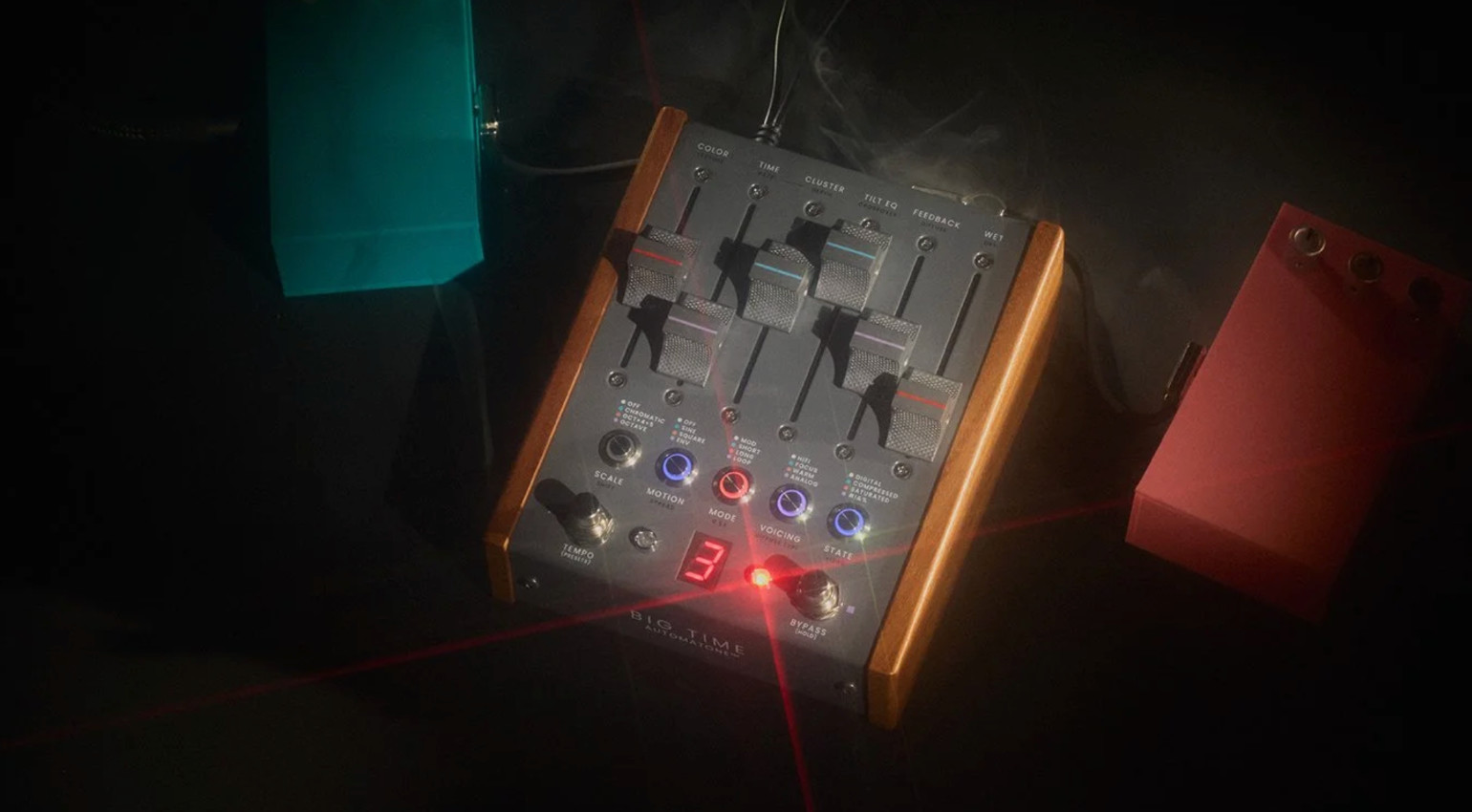
Big Time was fundamentally based on the legendary rack effects of the eighties, such as the PCM 70 or SDD-3000. Due to low sample rates and often rather poor converters, these delays often produced a very unique sonic character; one could almost speak of digital vintage.
The recent Keeley RK2000 models a similar’ 80s-vintage delay, so the effect is back in vogue once more, for sure.
Big Time
Less is more – that was the motto behind the development of the Chase Bliss Big Time. It starts with the stereo preamp, continues through the stereo limiter in the feedback path, and culminates in a delay paradise that covers pretty much all echo tastes.
The compression stage after the preamps is borrowed from the clean input; following that is the limiter, which can be set to three levels of overdrive.
The actual delay offers four modes via the bottom middle button: Mod, Short, Long, and Loop. In other words, everything from chorus effects and slapbacks to endlessly meandering glitch delays and looping sessions is possible. The Chase Bliss Big Time, by the way, has up to 3.2 minutes of looping memory.
Workflow from Big Time
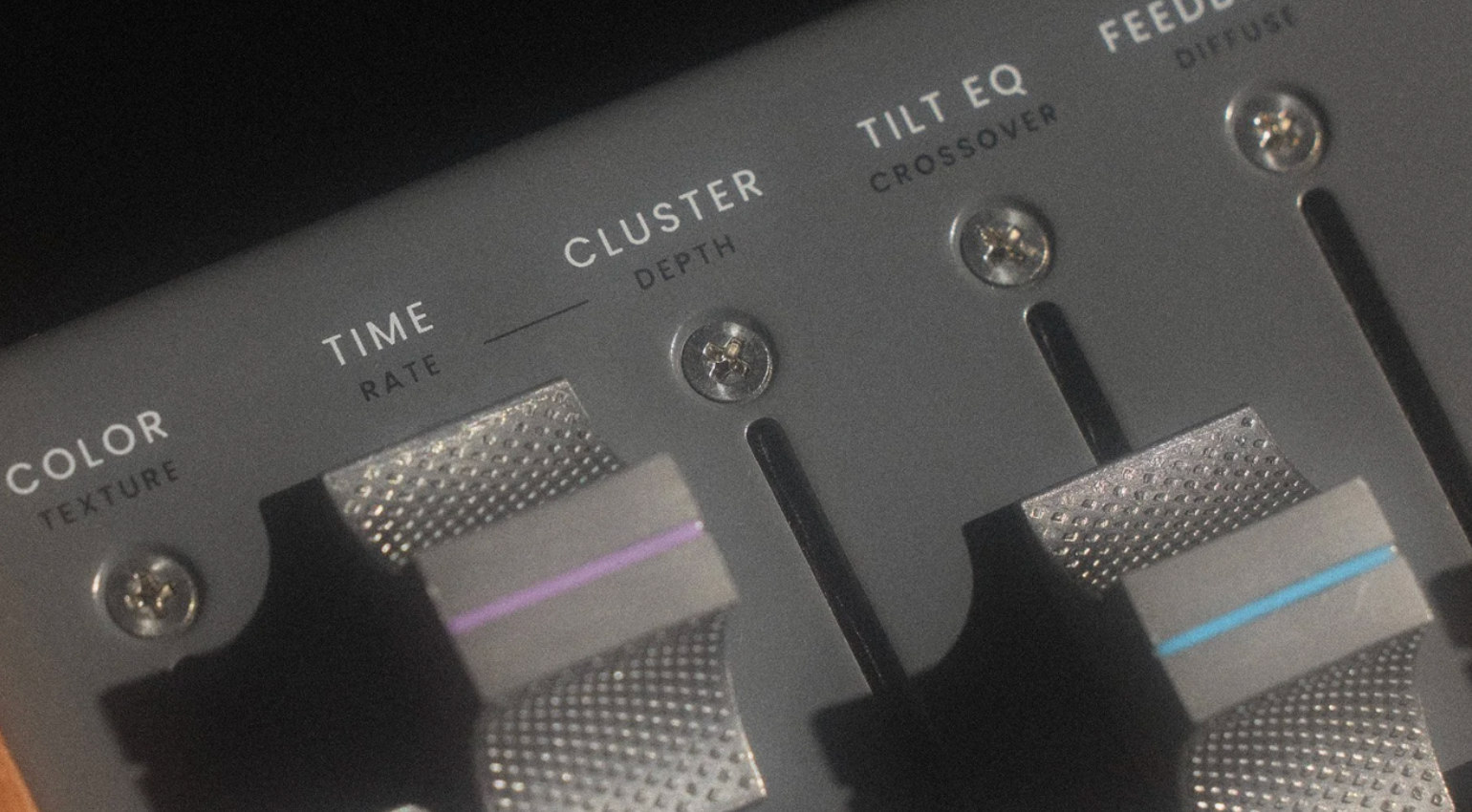
Six faders, five buttons, two footswitches, an Automatone enclosure: that’s the Chase Bliss Big Time in a nutshell. The faders control the level (and thus the saturation) of the preamps with Color, the delay time with Time, add further glitch delays with Cluster, filter the delays with Tilt EQ, set the echo duration with Feedback, and then decide how much of the effect is applied (Wet). So far, so familiar.
Buttons
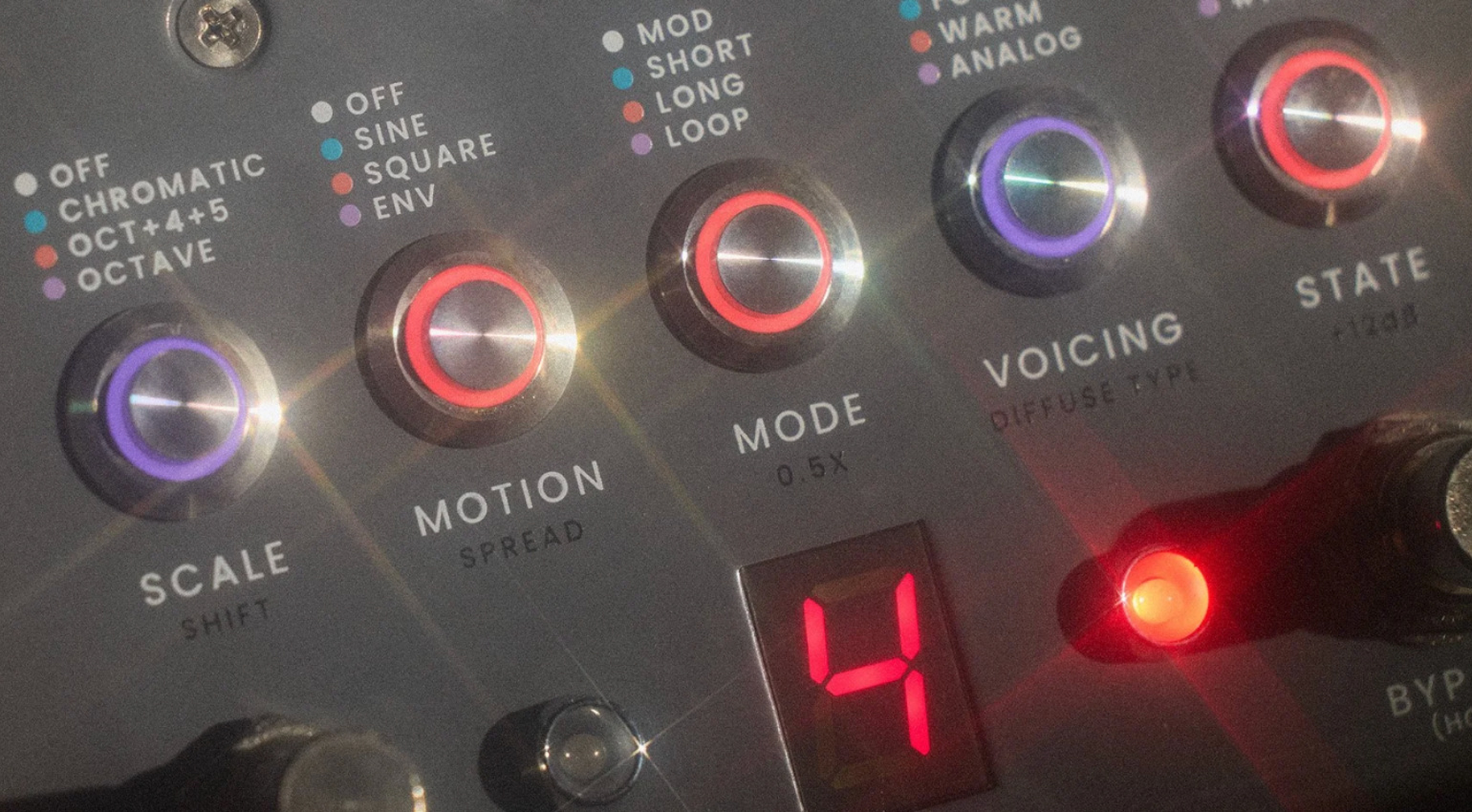
Buttons let you switch between modes and modulation levels. Of course, the Chase Bliss Big Time also features a second settings level, accessible via the rightmost SHIFT button. This allows each of the six faders to control additional settings, such as modulation speed and depth, spread, and more.
The five buttons below the faders determine the delay’s character. You can tune the delays tonally (similar to the Thermae) with the Scale button, change the modulation curve, modify the type and intensity of the delay filters, and alter the limiter’s sonic character. A true delay universe.
Connection options
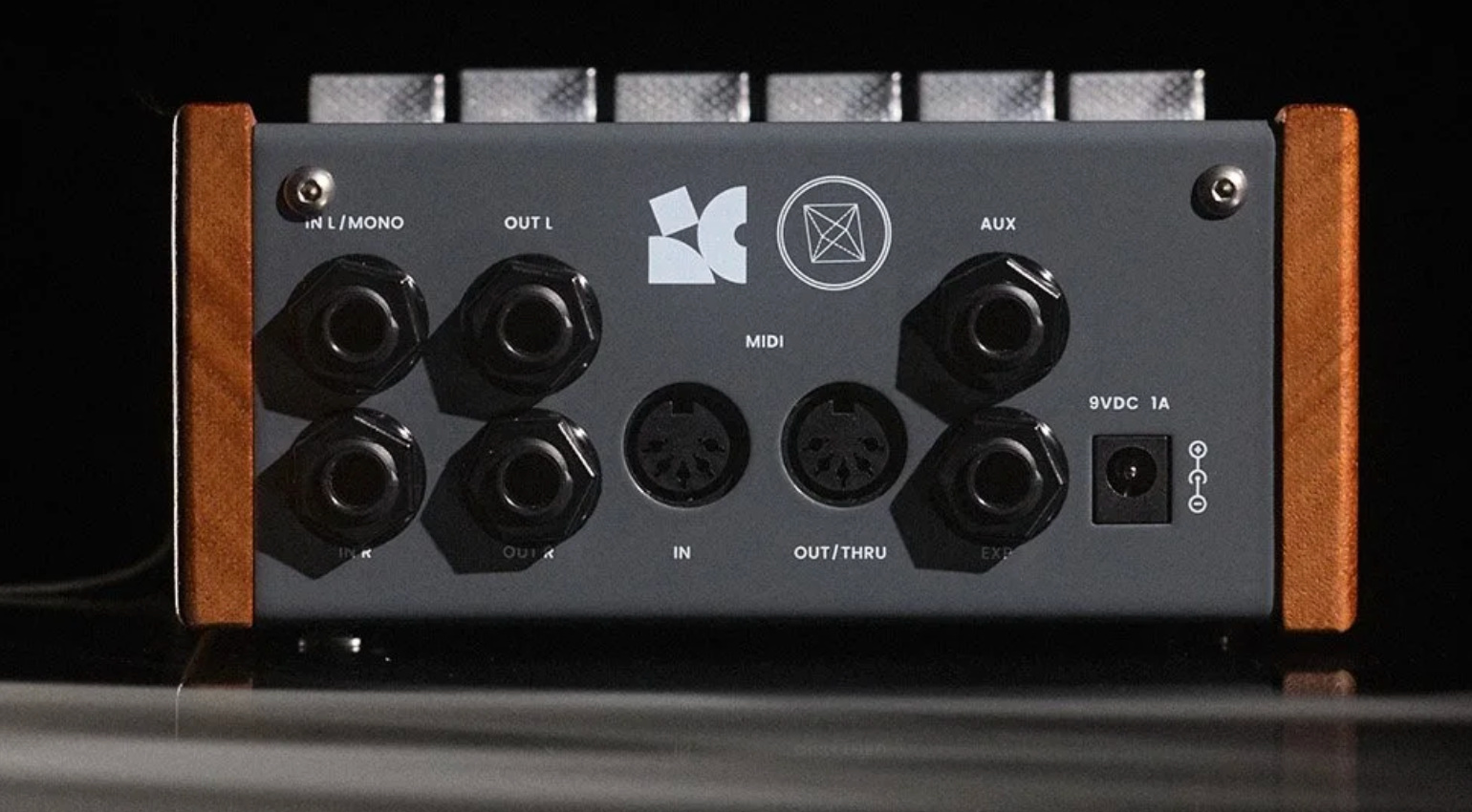
The Chase Bliss Big Time offers two stereo inputs and outputs. The pedal can handle both balanced and unbalanced signals, making it the perfect centerpiece for a synth setup. With MIDI In and MIDI Thru via 5-pin connectors, 10 directly accessible presets, and a total of 127 available via MIDI, it’s the perfect tool for delay experiments!
How much does the Chase Bliss Big Time cost?
Now you’ll have to be strong. Anyone familiar with Chase Bliss’s Automatone pedals knows they’re already at the top of the pedal price scale. The Chase Bliss Big Time takes it a step further, and at €1,099, it’s their most expensive effects pedal to date!
As always, you can only order via the website. The presale is currently underway, and the first orders are expected to ship in June 2026.
More Information

This might also interest you


2 responses to “Chase Bliss Big Time: The Ultimate ’80s Voiced Rack Delay Pedal?”
That price is ridiculous for technology from the last century. SMH 😒
Great, another pedal for the ‘Bleep, Blorp’ players. And it’s a GRAND?!?
SMH