Rave Sound 2026: Hardware for Hard-Hitting Techno Beats in Perfect Match
Raw Hardware Setups for Hard-Hitting Rave Energy

 4,4 / 5,0 |
Rave Sound 2026: Hardware for Hard-Hitting Techno Beats in Perfect Match · Source: Bubimages / Alamy

Music today feels more fragmented than ever, so everyone probably has their own idea of what a “rave sound” really is. And that’s fine, because defining it too narrowly doesn’t reflect how diverse the scene has become. Rave can be hard and fast, but it can also slow down or lean into intricate breakbeats and more complex rhythms. At the same time, many of these styles share a few common sonic elements. And that’s exactly the focus here. It’s about highlighting the core ingredients that shape a modern rave sound, the elements most of you will immediately recognize in your own productions.
Rave Sound 2026 – Perfect Match
Rave Sound 2026
What exactly defines a rave sound? When the scene first emerged in the late 1980s and early 1990s, it brought together a wide mix of musical styles. Back then, even guitar-driven acts occasionally fell under the same umbrella. Today, that association has almost completely disappeared, and guitars rarely play a role in how rave is understood.
Instead, the focus shifts to techno-driven rhythms with a punchy, often heavily distorted kick, layered with breakbeats, distinctive synth sounds, and driving basslines. These elements are often complemented by melodies, sequences, or vocals that add movement and identity. Alongside the kick, a few signature sounds stand out, including the well-known “Hoover,” which will be covered in more detail shortly. Today, rave sound leaves plenty of room for experimentation.
As always in this series, three products are introduced, often with alternatives. None of these choices are set in stone or meant as the only valid option. The goal is to inspire and offer direction. At the same time, these recommendations come from real-world use and reflect setups that have proven themselves in practice. Let’s get started.
Rave Sound Relies on a Powerful Kick Like the Jomox MBASE
It has come up before, and it still holds true: rave sound depends on a strong kick. Much like many techno styles, it draws heavily from the classic TR-909. The 909 remains one of the defining drum machines in the scene. As a foundation, it still works extremely well, but the kick often benefits from additional shaping, for example through subtle or more aggressive distortion.
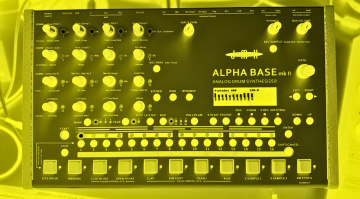
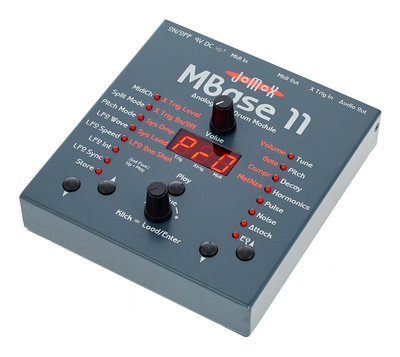
But this time, the focus shifts away from the usual 909 recommendation. Instead, attention turns to the Jomox MBASE. This unit is not a full drum machine, but a dedicated drum synthesizer designed specifically for analog kick drums and related sounds.
Its character can get very close to a TR-909-style kick, since the Roland classic clearly influenced its design. At the same time, the MBASE goes further and reaches much more aggressive and raw tonal territory when pushed.
The interface stays fairly minimal, but shaping a kick happens quickly and directly. The unit responds to MIDI input and also supports an analog trigger, which makes it easy to integrate into different setups. A manual trigger button allows instant playback, which is especially useful when sampling kicks. In addition, there are free Max for Live devices available that allow deeper control over the MBASE parameters.
When it comes to drum sounds, the MBASE offers significantly more control than a TR-909, allowing a much wider range of kick variations. These sounds can also be stored as presets, which makes the unit a reliable source for custom drum sounds and sample creation.
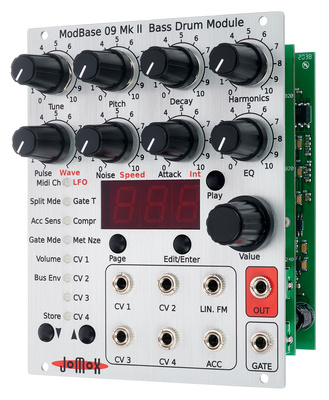
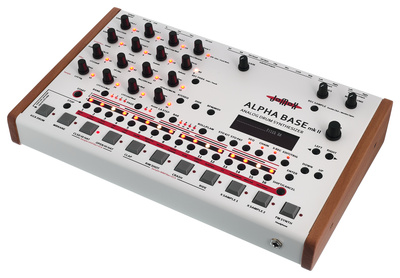
For modular setups, the ModBase 09 MKII is also available as a Eurorack version. The latest generation, the Jomox MBASE 11, is currently available here at Thomann*, while the Alpha Base MKII expands the concept into a full drum synthesizer with eleven instruments. For a broader overview, there are also dedicated guides covering both analog and digital drum machines.


Elektron Digitakt II for Drums, Rave Sound Samples, Loops, and Sequencing
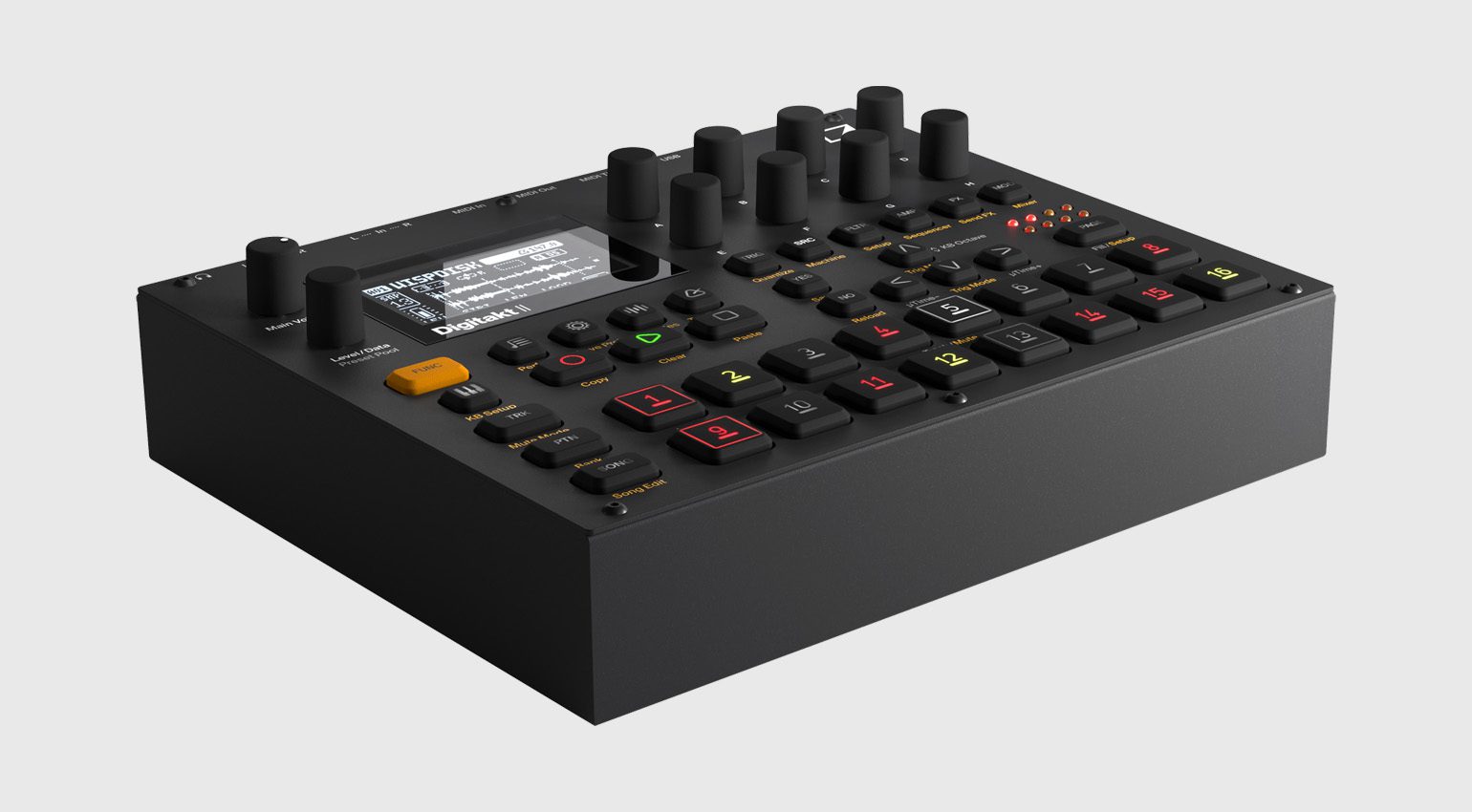
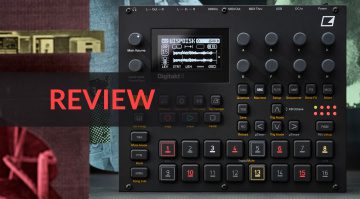
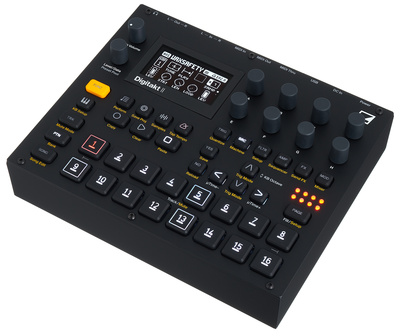
Creating a classic rave sound no longer requires much more than a computer and a DAW. Still, that approach doesn’t always deliver the same hands-on experience, and this is exactly where hardware comes into play. A sampler like the Elektron Digitakt II brings a more direct and engaging workflow into the process.
The Digitakt II offers 16 tracks that can be used for both sample playback in mono or stereo and MIDI sequencing. Its tight integration of sampling and sequencing allows ideas to take shape quickly, even from short loops. With just a few well-chosen rave samples, the foundation for a track comes together in no time.
The MBASE can be sampled directly through the audio input, allowing kick drums to be captured and stored inside the Digitakt II. The sampler provides 400 MB of sample memory, along with 20 GB of internal storage, which offers plenty of space for custom material. Once the kicks are stored as samples, the setup can easily be expanded with an additional synthesizer, resulting in a compact and flexible configuration that also works well for live use.
Time-stretching and warping functions make it easy to shape breakbeats, while integrated filters help refine the overall sound. Additional processing is available through send effects, and resampling allows sounds to be reworked repeatedly into new variations. On the master side, overdrive and a stereo compressor add the final layer of punch and controlled distortion.
One standout feature is the ability to transfer individual tracks, including FX tracks, directly to a computer and DAW via USB. This makes it easy to refine arrangements or apply additional processing outside the hardware environment. The free Overbridge software handles this integration.
The Elektron Digitakt II* is not limited to rave applications and works just as well across a wide range of genres. That flexibility makes it a strong option for different production setups. There are also several alternative samplers worth considering, with current models covered in dedicated buying guides.

Roland SH-4d: Classic Roland Sounds Including the Hoover Sound in a Synth Groovebox
One of the most recognizable rave sounds is the so-called Hoover sound. The sound often appears as a sample in many productions, but there are also modern instruments that allow it to be created directly. The following example focuses on a synthesizer that makes it easy to shape this classic tone and a wide range of related sounds.
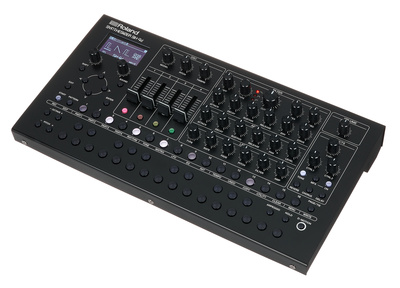
The Roland SH-4d doesn’t appeal to everyone, to be honest. Still, this compact hybrid of synthesizer and groovebox covers a wide range of sounds, which is exactly why it works so well for techno and rave. Since the last update, the unit includes thirteen oscillator models, ranging from classic tones inspired by the SH-101 or Juno-106 to more modern engines like Cross FM, Ring, Wavetable, SH-3D, and Sync.
In addition to four synthesis parts, the Roland SH-4d includes a dedicated rhythm part that provides an additional source for drum sounds. The FX section offers a wide range of processing options, while Motion Recording introduces dynamic changes that bring more movement into a track. Functions like D-Motion and Visual Arpeggio even react to the physical movement of the unit, adding an interactive layer to sound shaping.
A later update addressed many of the initial criticisms, which highlights one of the key advantages of modern digital instruments.
A maximum polyphony of 60 voices allows for dense pads and layered harmonies, which play a central role in many rave productions. In this context, the Roland SH-4d integrates seamlessly into such a setup. Order here at Thomann*.

Conclusion: Why This Trio Is a Perfect Match for Rave Sound
As outlined earlier, the term “rave sound” remains difficult to define precisely. It often points toward techno-driven structures with a hard kick, occasional breakbeats, extensive sample use, and characteristic synth elements such as the Hoover. Not all of these ingredients need to be present at the same time, but they form a common foundation across many productions.
For a hardware-based setup, the Jomox MBASE stands out for shaping powerful and focused kick drums. The Elektron Digitakt II combines sampling and sequencing in a way that allows full track ideas to take shape quickly. Complementing this, the Roland SH-4d adds flexible synthesis, additional drum capabilities, and access to classic rave textures, including Hoover-style sounds. Together, this combination forms a cohesive setup that covers rhythm, sampling, and synthesis in a compact workflow.
More Info and Highlights from Perfect Match
- Eurorack in Techno 2026: Why Does a Modular System Belong in a Modern Techno Setup?
- Dub Techno: This Gear is a Perfect Match in 2026
- Drum Machines for Techno 2026: Punch, Workflow, and Character
- Techno Beats in Ableton Live Made Easy!
- The Best Synths for Techno Productions in 2025: Powerful, Flexible and Creative
- Producing Techno with Minimal Gear: These 3 Products are a Perfect Match
- Techno Rumble in Ableton Live – Made Easy!
- Techno Legends Use This Gear: Jeff Mills and His Roland TR-909
- More about Perfect Match
*Note: This article about rave sound contains affiliate links that help support our site. The price remains the same for you. If you make a purchase through these links, we receive a small commission. Thanks for your support.

This might also interest you