ASM Leviasynth: Big 1.2 Firmware Update Brings Sequencer Entropy and More – Review

 4,4 / 5,0 |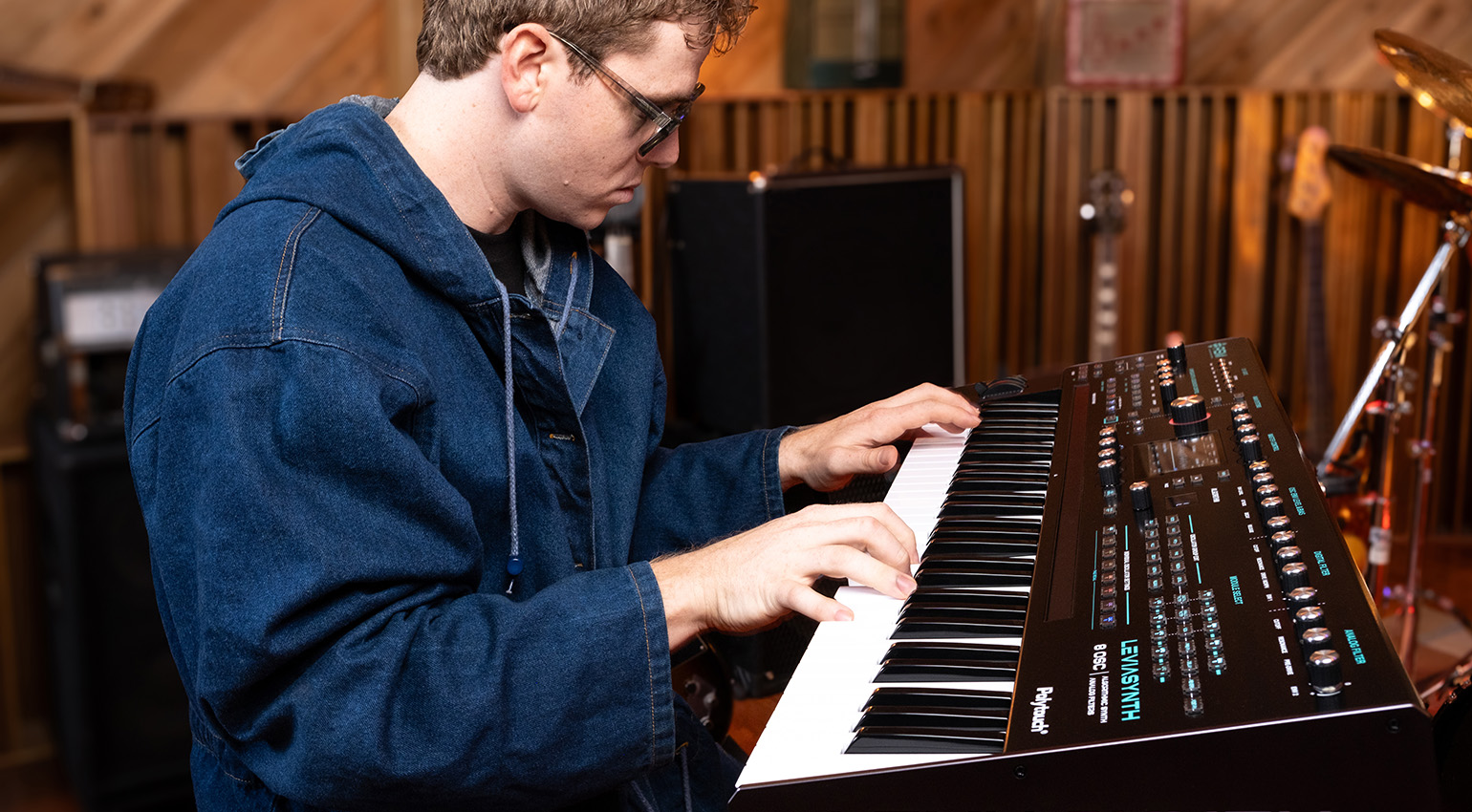
ASM Leviasynth Keyboard · Source: ASM
ASM Leviasynth Keyboard · Source: ASM
ASM Leviasynth Keyboard · Source: ASM
ASM Leviasynth Keyboard · Source: ASM
ASM Leviasynth Keyboard · Source: ASM
ASM Leviasynth Keyboard · Source: ASM


ASM Leviasynth Keyboard · Source: ASM

ASM Leviasynth Keyboard · Source: ASM
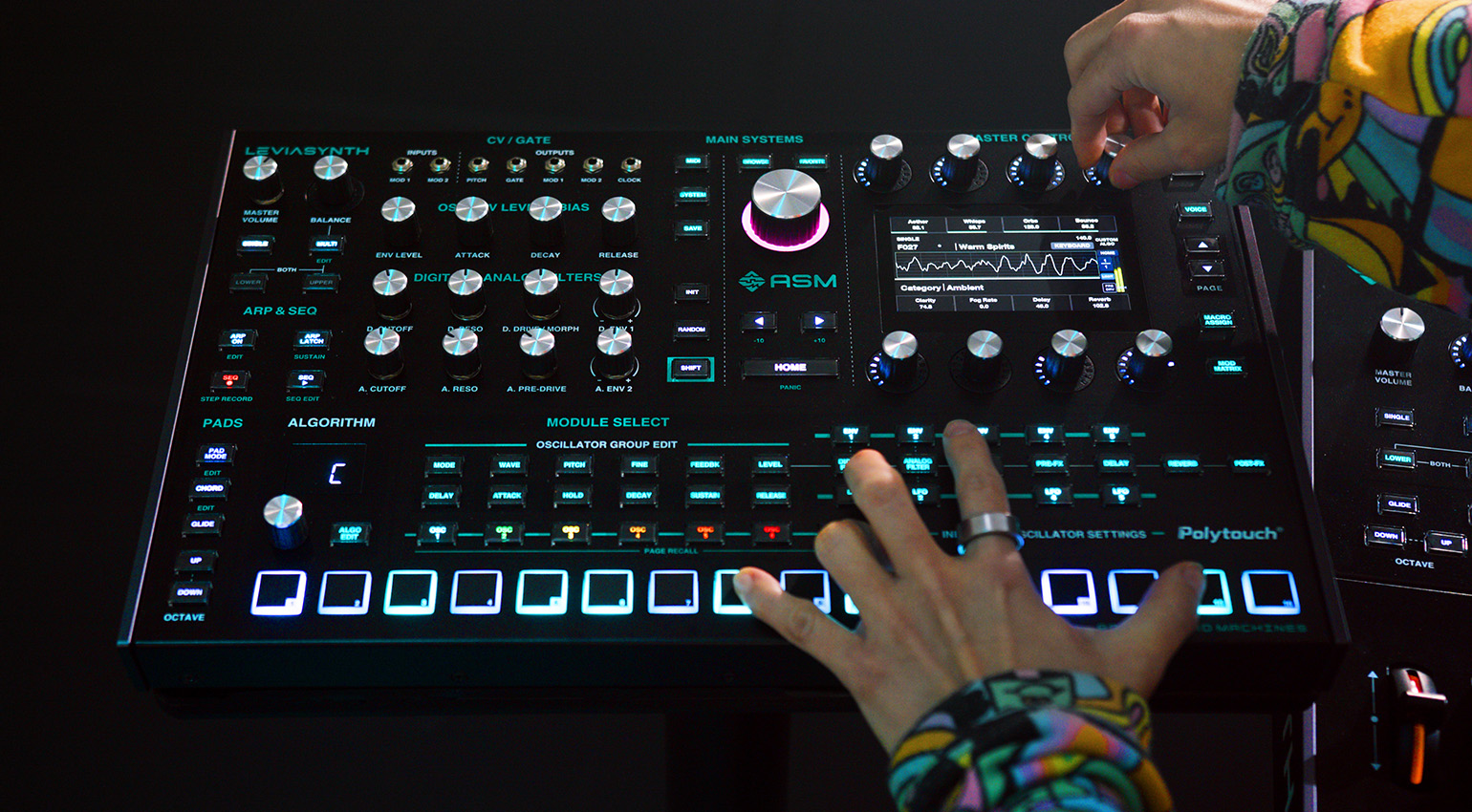
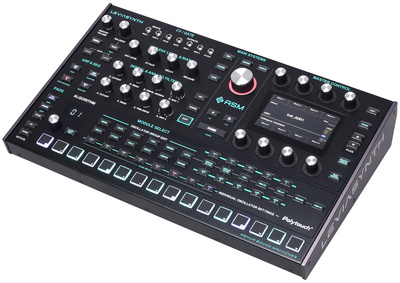
ASM Leviasynth Desktop · Source: ASM
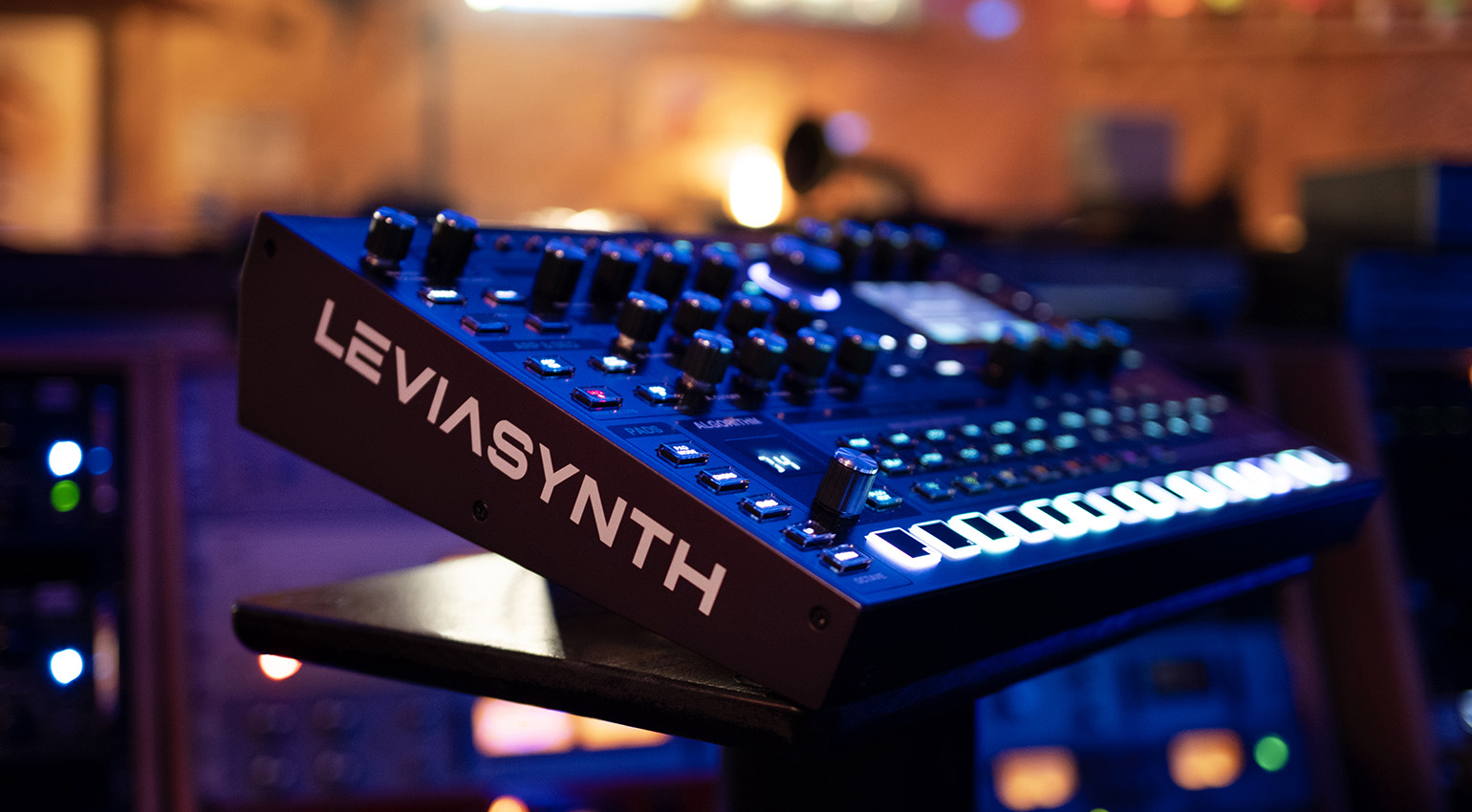
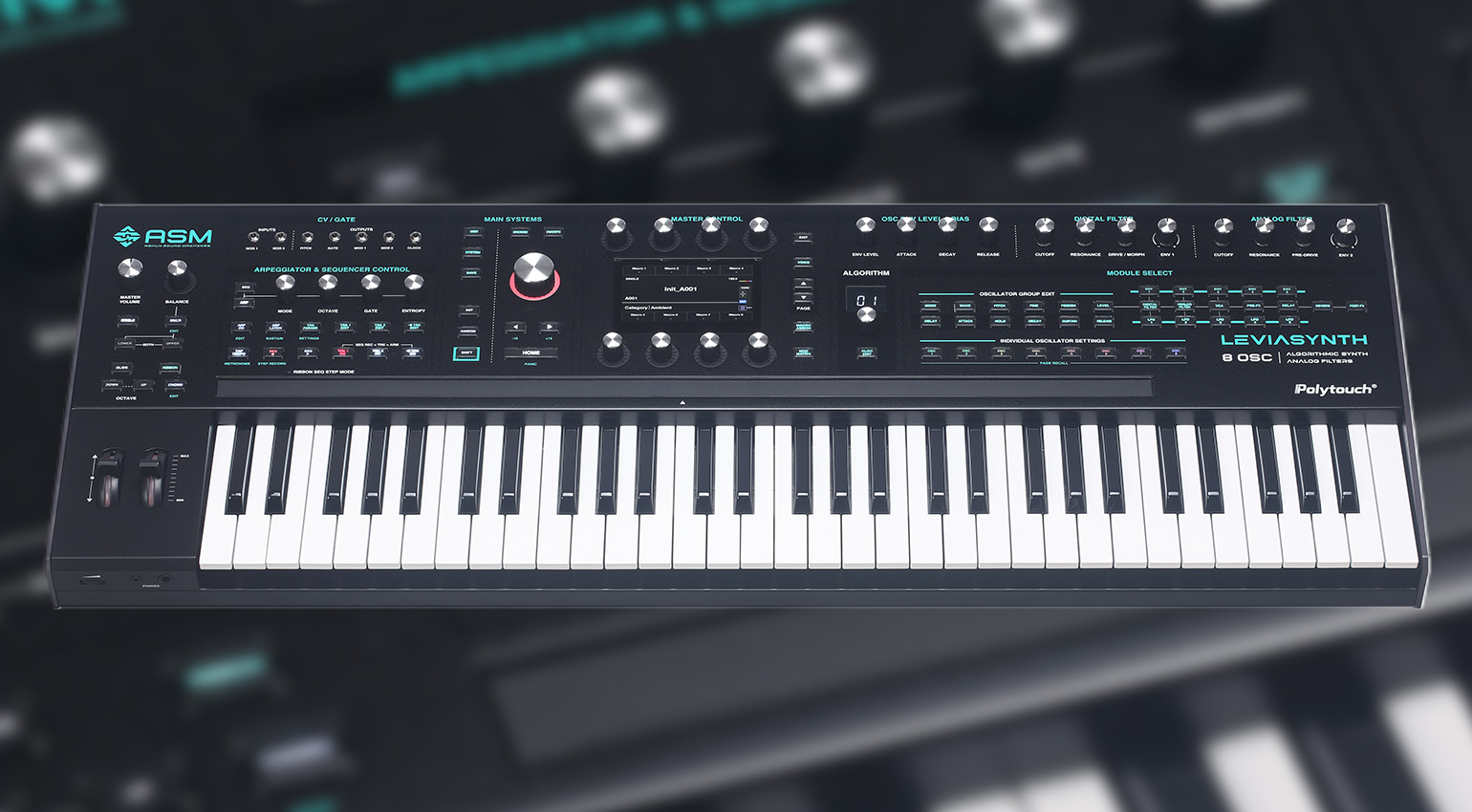
ASM Leviasynth Keyboard · Source: ASM
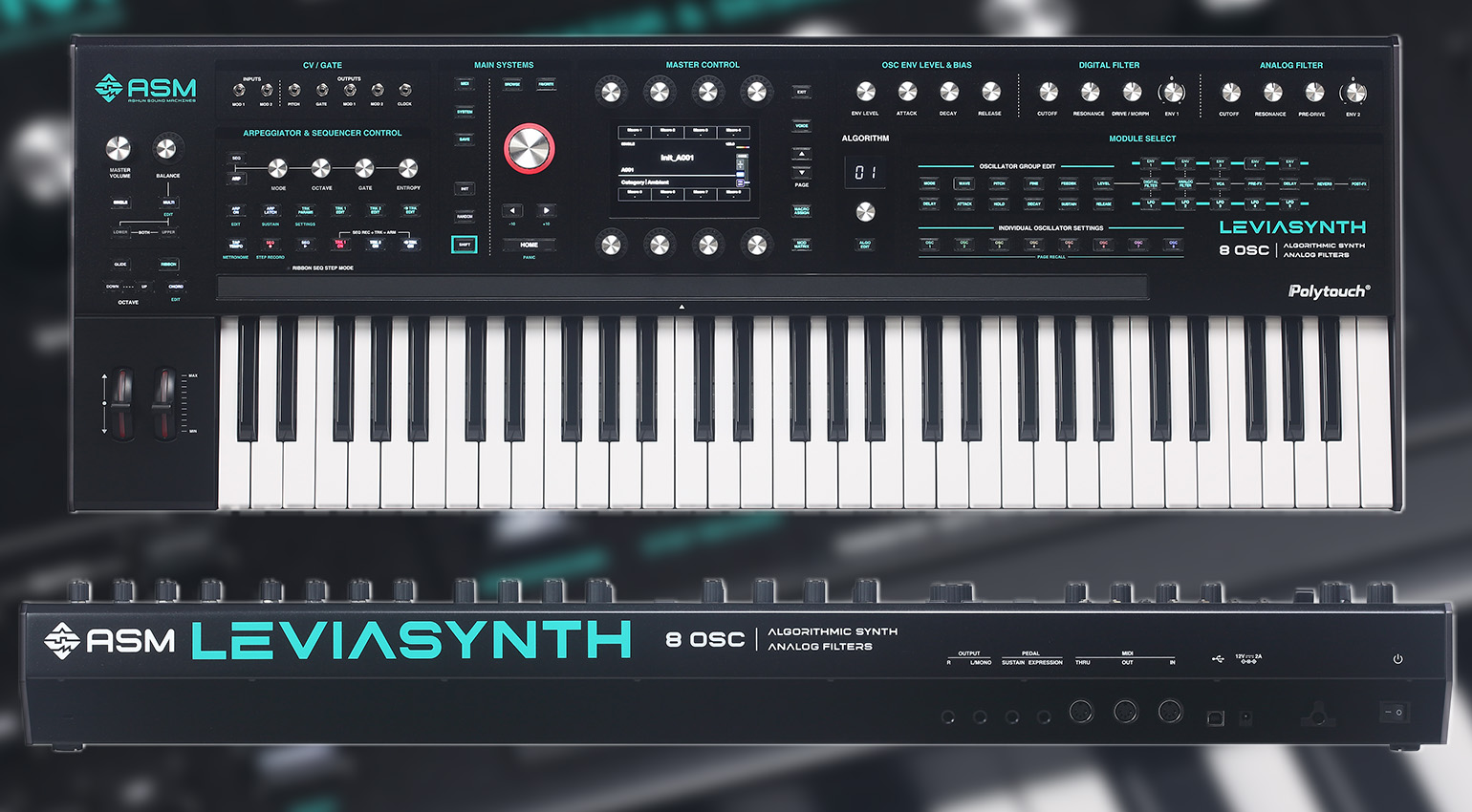
ASM Leviasynth Keyboard · Source: ASM
ASM Leviasynth Keyboard · Source: ASM
ASM Leviasynth Keyboard · Source: ASM
ASM Leviasynth Desktop · Source: ASM
ASM Leviasynth Desktop · Source: ASM
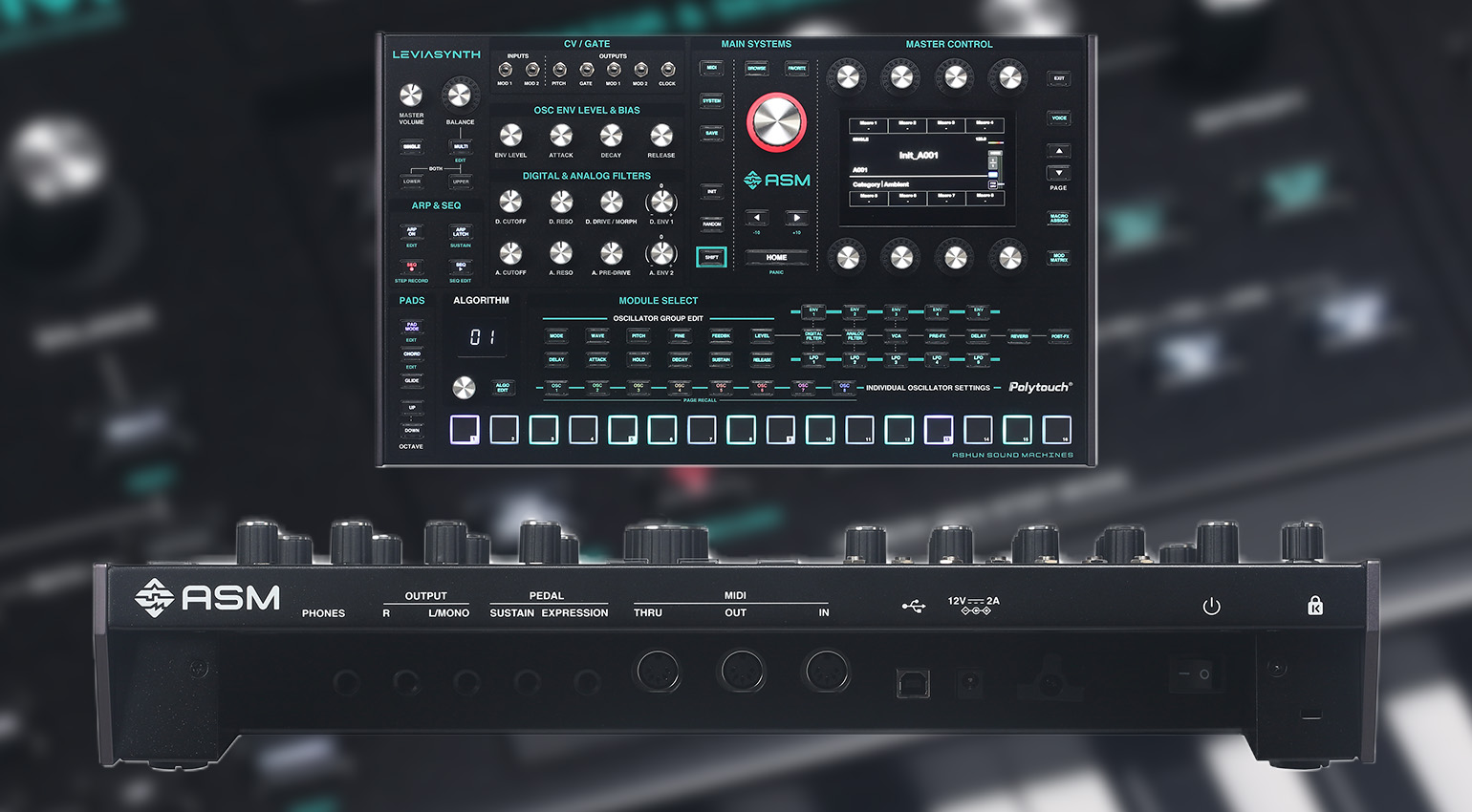
ASM Leviasynth Desktop · Source: ASM
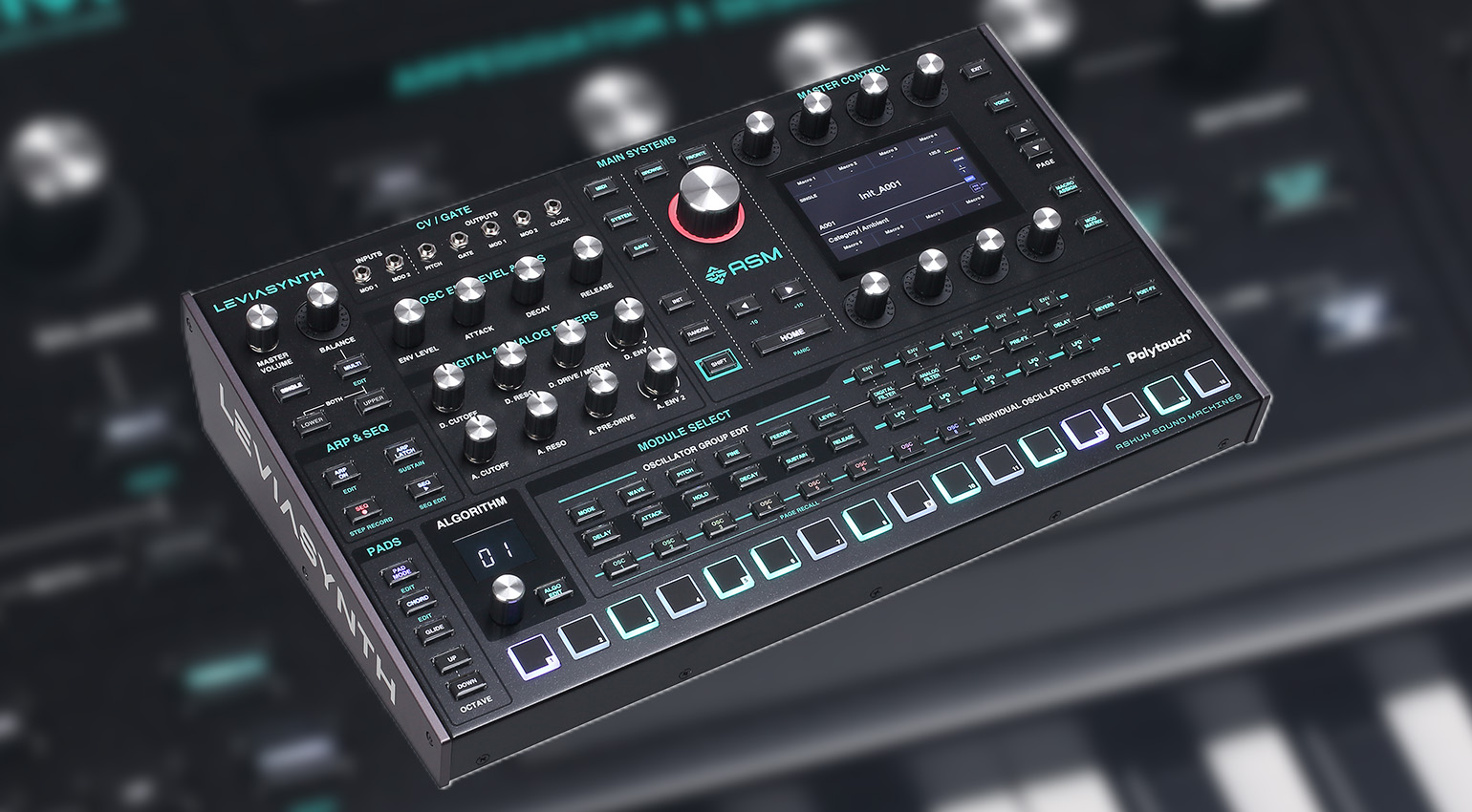
ASM Leviasynth Desktop · Source: ASM
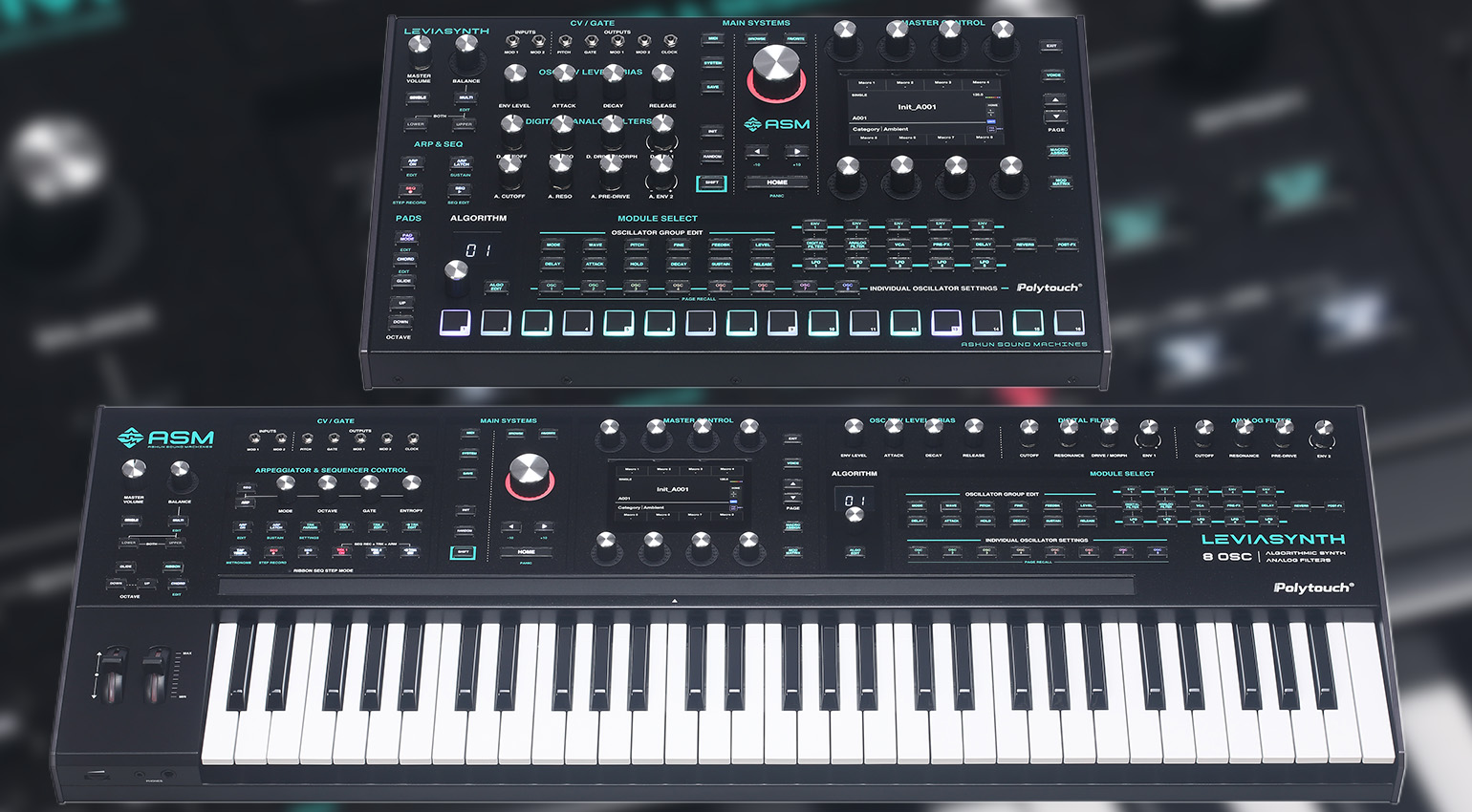
ASM Leviasynth Desktop & Keyboard · Source: ASM


ASM’s Leviasynth continues to grow and flourish as it receives a significant update that brings some cool functionality to its sequencer!
Key Takeaways
- Powerful, algorithmic synthesis that goes way beyond traditional FM
- ASM’s trademark workflow
- Colour touchscreen but still LOADS of buttons!
- Powerful analog and digital filters
- Tons of connectivity
- All the expression you’d expect from the makers of Hydrasynth
ASM Leviasynth Review
v1.2 Firmware Update
[UPDATE: July 25th, 2026] ASM’s Leviasynth kicked off the new year back in January as the sequel to the mighty Hydrasynth finally broke cover and immediately made an impact around the synth world. This algorithmic synth, which goes way beyond what many people still consider as an “FM” synth, combines the best of both digital and analogue worlds.
Never ones to rest on their laurels, ASM have just released a significant firmware update that delivers the Sequencer Entropy Deviation feature, as well as fixes and improvements of both the keyboard and desktop versions of the instrument.
Sequencer Entropy Deviation allows the user to introduce a degree of controlled variation on their sequences. What this means in plain old English is that each step can now influence the level of deviation from the original value that was programmed. This means that sequences are no longer rigid affairs and can evolve organically over time.
Other fixes include increased sequencer reliability, improved ARP and Chord mode behaviour, restored microtonal scale importing and improved pad response on the desktop version. Other bugs and fixes have been bundled in and ASM strongly recommends all Leviasynth users upgrade as soon as possible.


Where Has Leviasynth Come From?
[January 19th, 2026] When is an FM synth not an FM Synth? When it’s a Leviasynth. ASM’s second keyboard synth is a love letter to algorithms, but in their own special way.
Remember when someone thought they’d discovered the new ASM synth a while back because they’d trawled the patent office website and found that ASM had registered the name ‘Leviasynth’? And then Glen Darcey, ASM’s CEO, played it down in a rather cool fashion? Well, it turns out there may have been some subtle hoodwinking going on.
I mean, it wasn’t untrue when Glen said that they’d found a name they might like to use and so made sure nobody else got it. But there WAS a new synth, and it definitely was in development, but it’s ASM’s absolute right to pour water on any slow-burning fires.
So imagine my surprise when I got a meeting request from Glen back in 2025 to see if I’d be interested in testing something new. But before that all got signed off, I was treated to some of the back story. What we now see and hear as Leviasynth isn’t how things started out. Oh no, not by a long chalk.
Leviasynth’s gestation has been long and arduous. Glen always wanted to make an FM synth, but not a DX7 clone or homage. He saw things differently and wanted much more from it. Glen’s vision was taken up by the ASM team, headed up by Dominic Au, and they spent three years thrashing out the specifications and details.
After some major obstacles were overcome, the result is what we see before us today. Yet another unashamedly digital synth with real depth and a raft of surprises that make exploring and playing fun and rewarding, whether you’re into sound design, performance or songwriting. This is truly a great synth.
What Is Leviasynth?
The first thing I want to make absolutely clear is that Leviasynth is huge. Not in physical size but in its sheer depth of possibility. The reason I want to make this clear is that there is no way I am going to be able to convey everything you can do with this synth in this review alone. This synth truly embodies its name. And maybe that’s just as well, because Behemoth doesn’t quite have that ring to it!
Available as both a keyboard and a desktop, Leviasynth is a hybrid algorithmic synth. The mention of the word ‘algorithmic’ might have you thinking FM. If it does, park that thought for now whilst we continue with the numbers. It is a 16-voice synth with 8 oscillators per voice. Each oscillator has over 300 waveforms to choose from and 7 independent Oscillator Modes. Each oscillator has its own amplitude envelope. More on these later.
Leviasynth has a single and multi-mode, allowing for single patches as well as splits and layers. No need for a ‘Deluxe’ version then? Multi-mode splits the 16-voice polyphony into two lots of 8 and can deliver some very impressive patches. There’s a balance control to allow you to create your perfect blend.
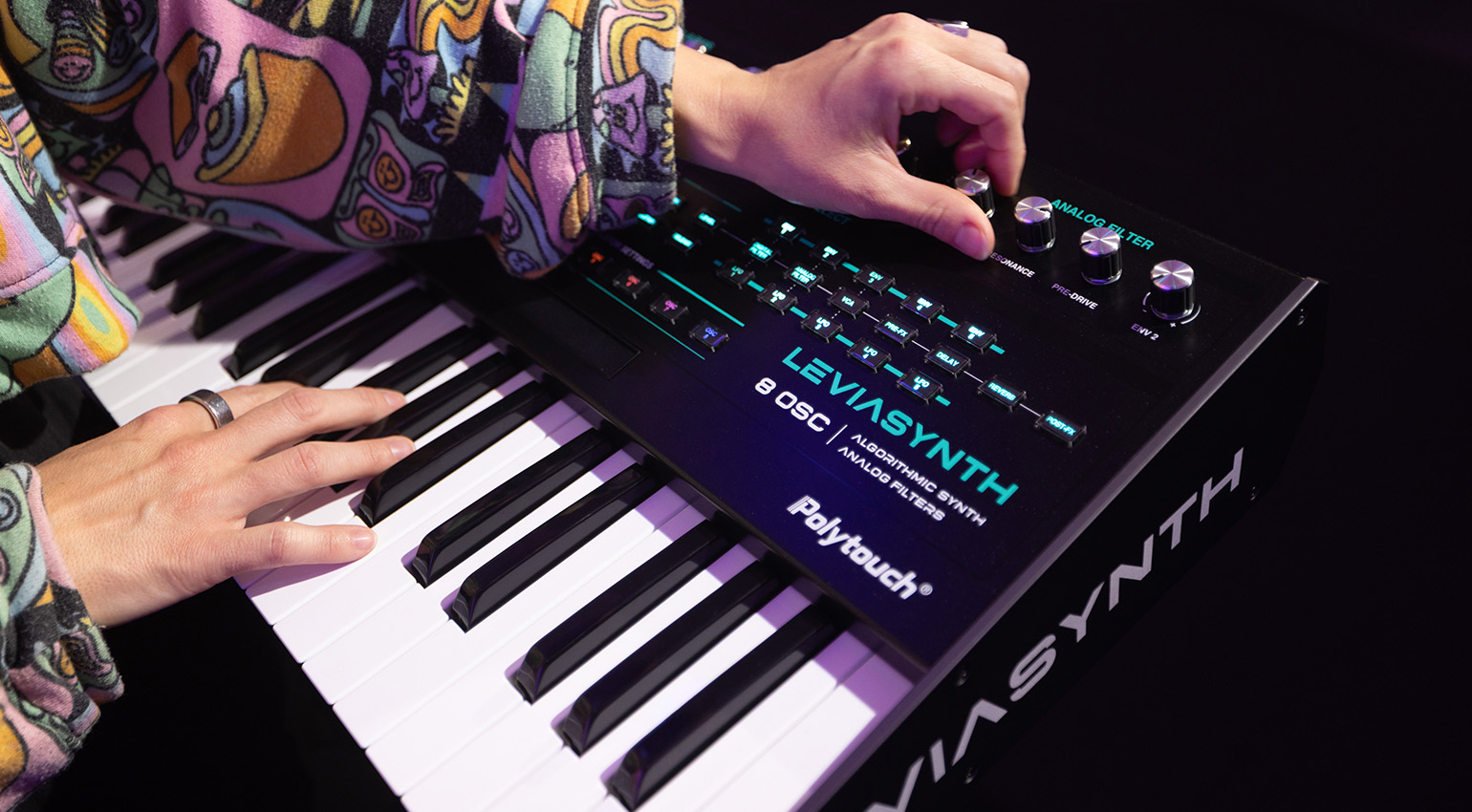
There are also 5 common envelopes and 5 LFO’s. All of these are freely routable via the 32-slot modulation matrix. And then we have the filters. First up is a digital filter, very similar to that found in the now legendary Hydrasynth, featuring 18 different filter models. These models include models of a SEM filter and an MS20 filter. There’s also plenty of low, band and high pass options, and a rather lovely vowel filter.It is joined by a true analogue 4-pole, 24dB/octave low-pass filter capable of self-oscillation and featuring pre-drive saturation.
As for effects, Leviasynth comes with two master effects and two insert effects, which can be populated by effects modules that cover chorus, flanger, rotary, phaser, Lo-Fi, tremolo, EQ, compressor and distort. These are placed either before or after the delay and reverb, both of which have multiple types to choose from.
Whereas the Hydrasynth just had a very decent arpeggiator, Leviasynth has this and more in the form of a 3-track sequencer that features both note and macro automation. The arpeggiator also features a new Entropy function for added real-time fun messing around with probability variations.
Controls and Connections
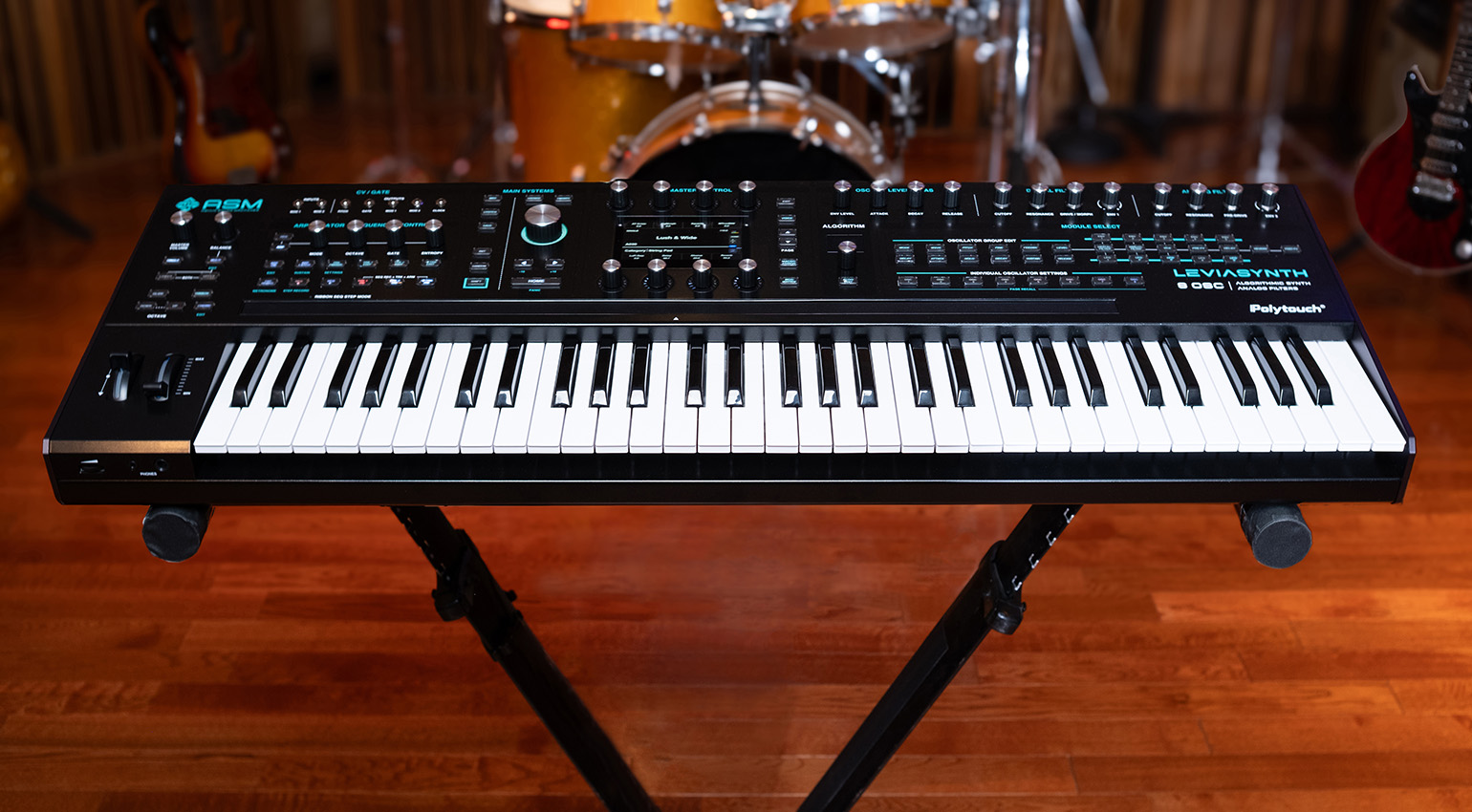
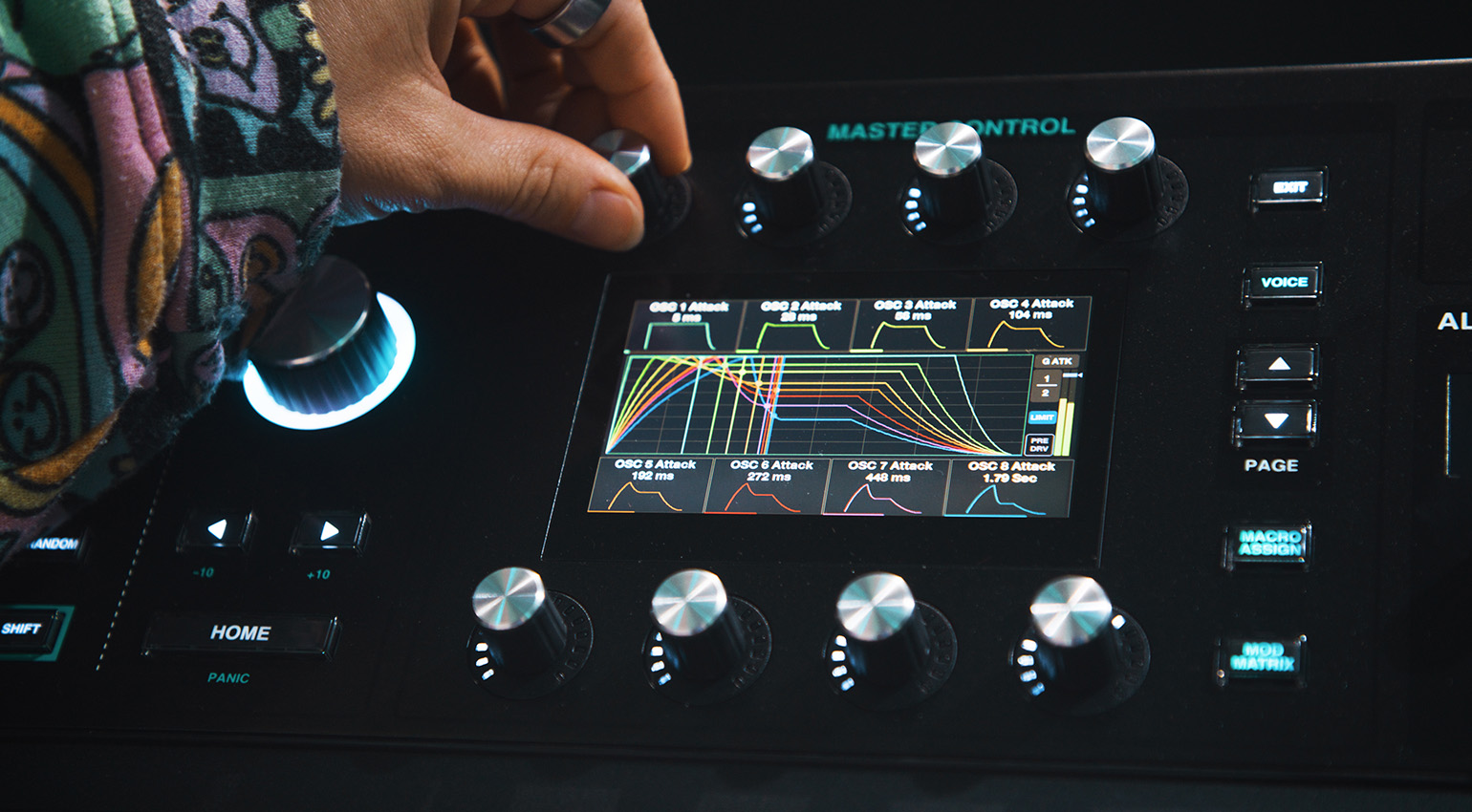
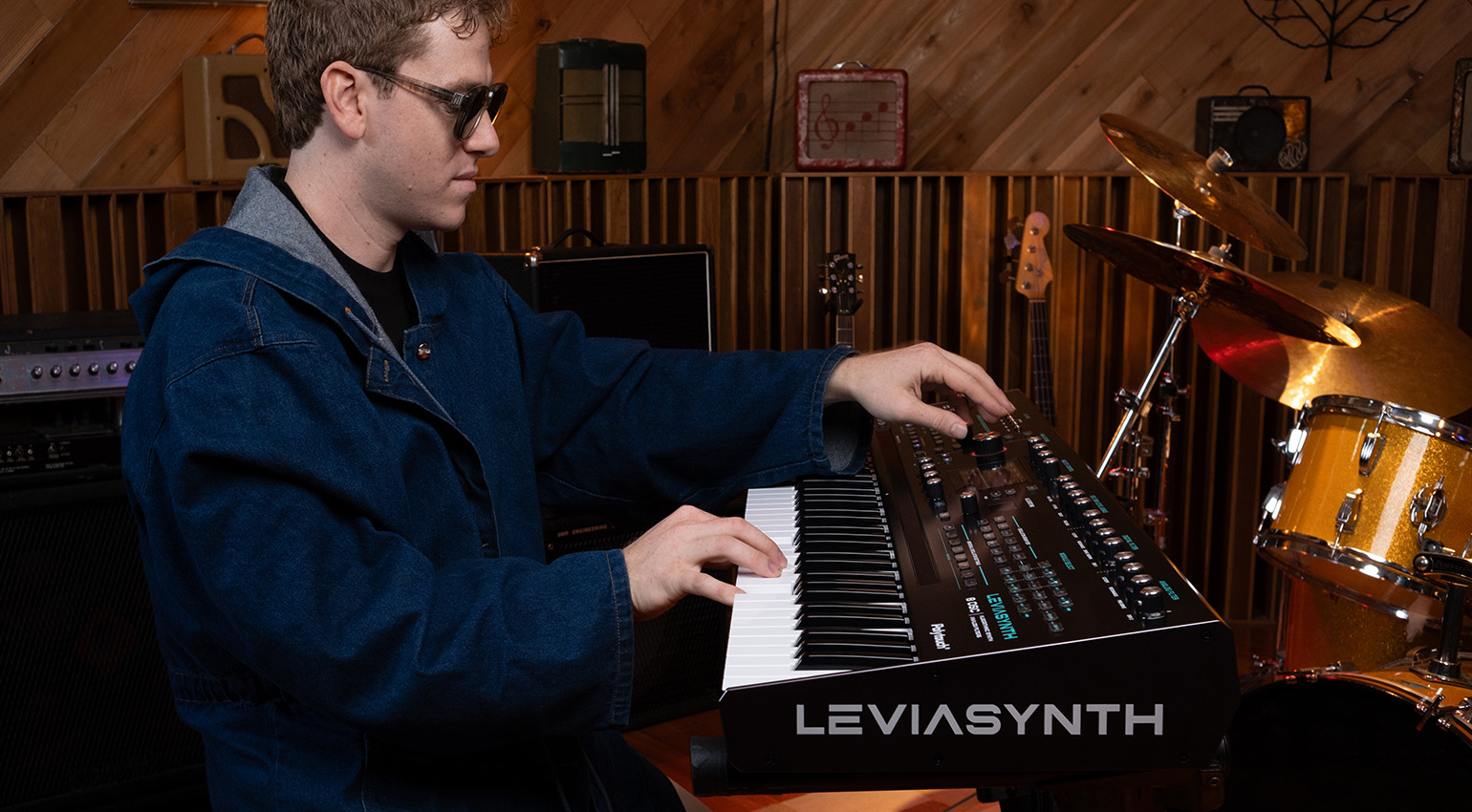
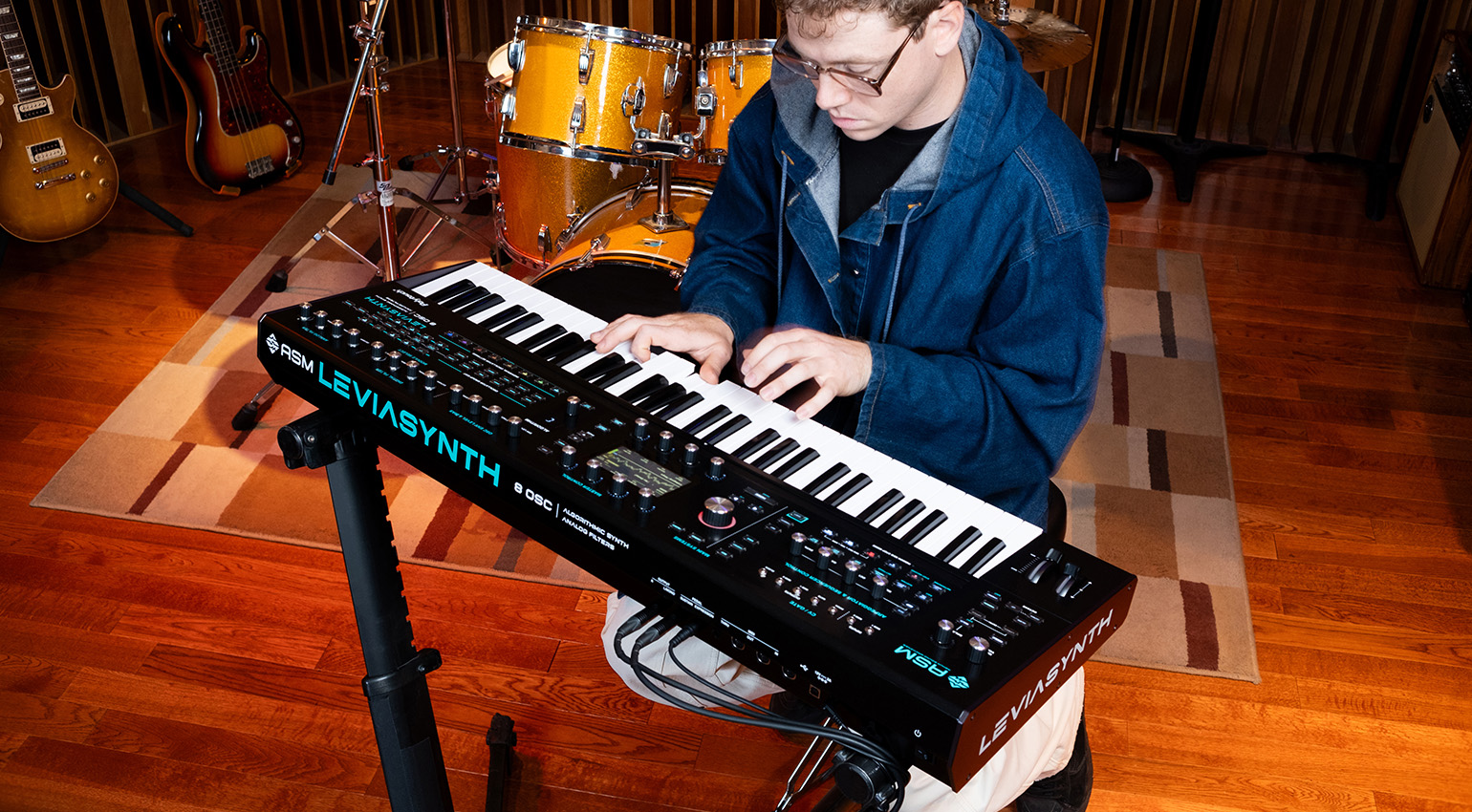
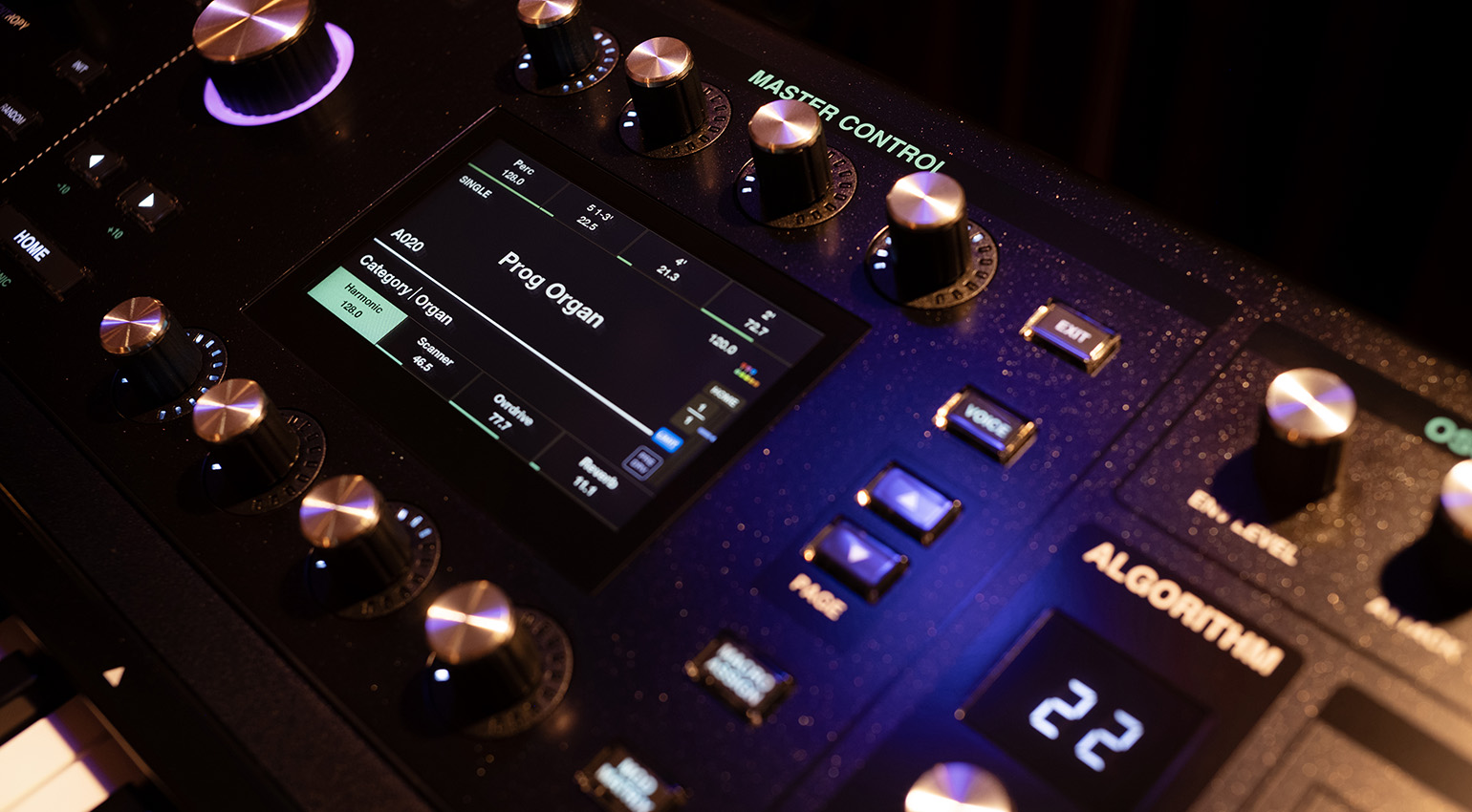
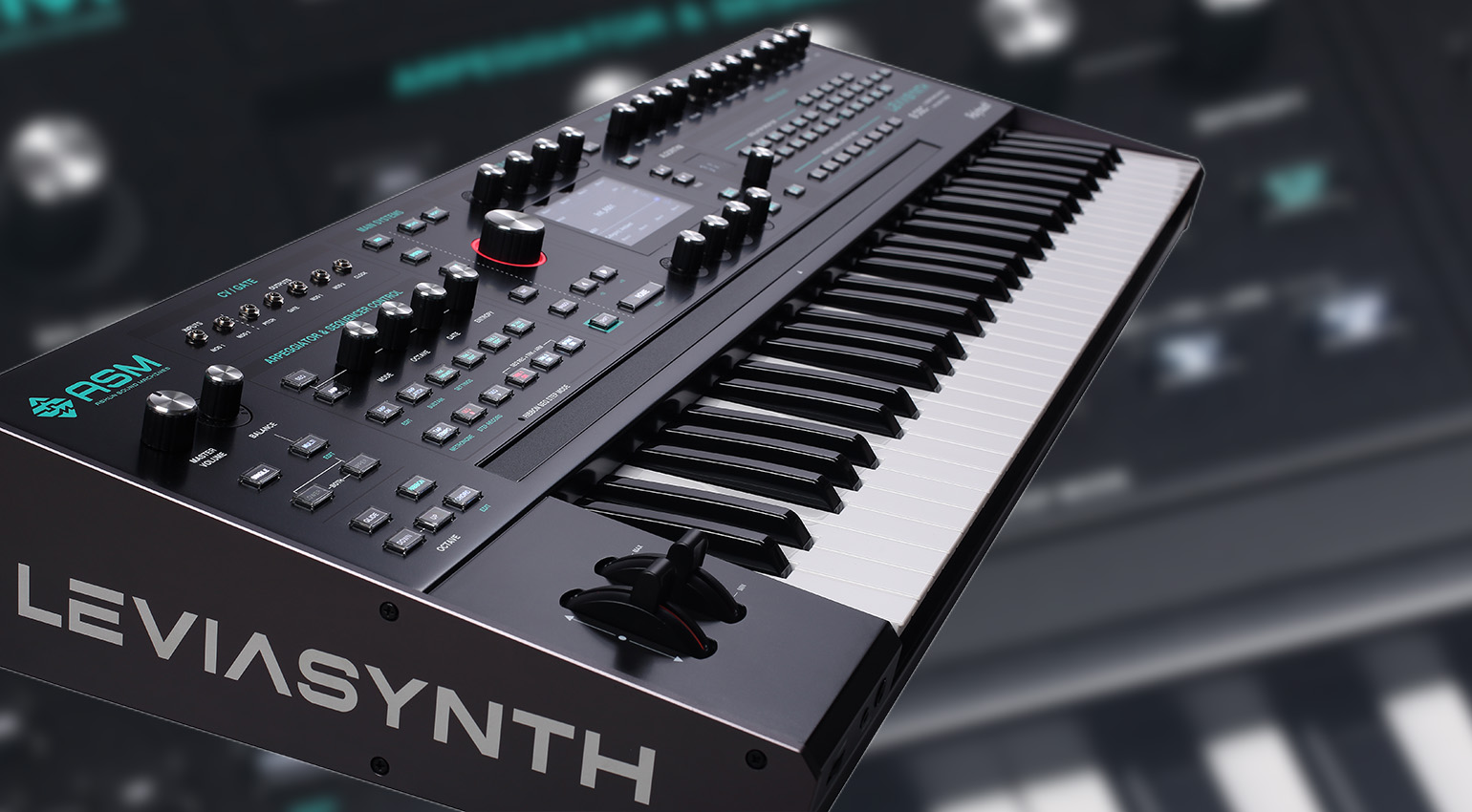
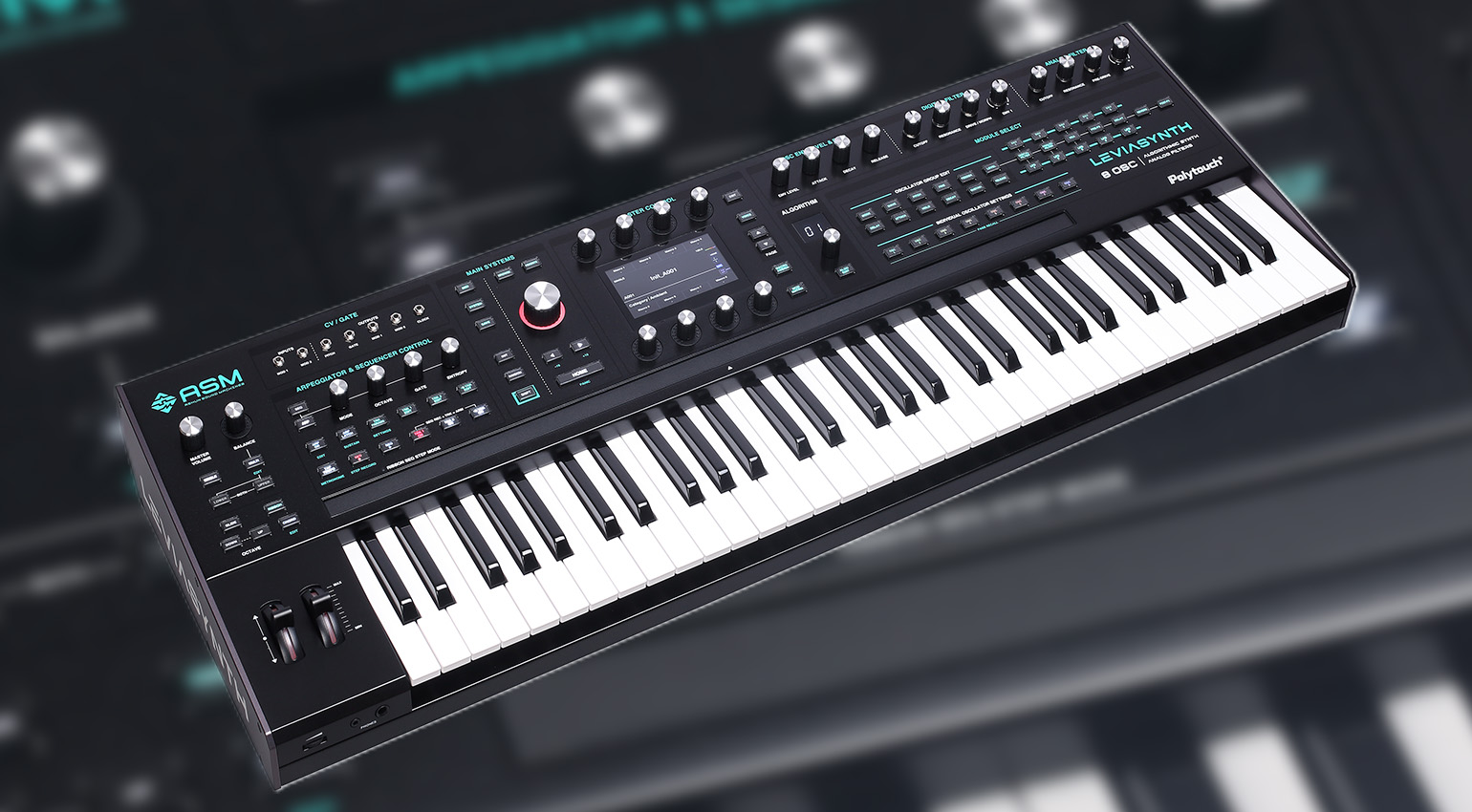
Looking at the Leviasynth keyboard, one will feel perfectly at home if you have any experience with the Hydrasynth. I really like how ASM has gone for UI consistency here. But you don’t need to be Sherlock Holmes to notice the main difference. Yup, there’s a brand new 4.3” colour touchscreen.
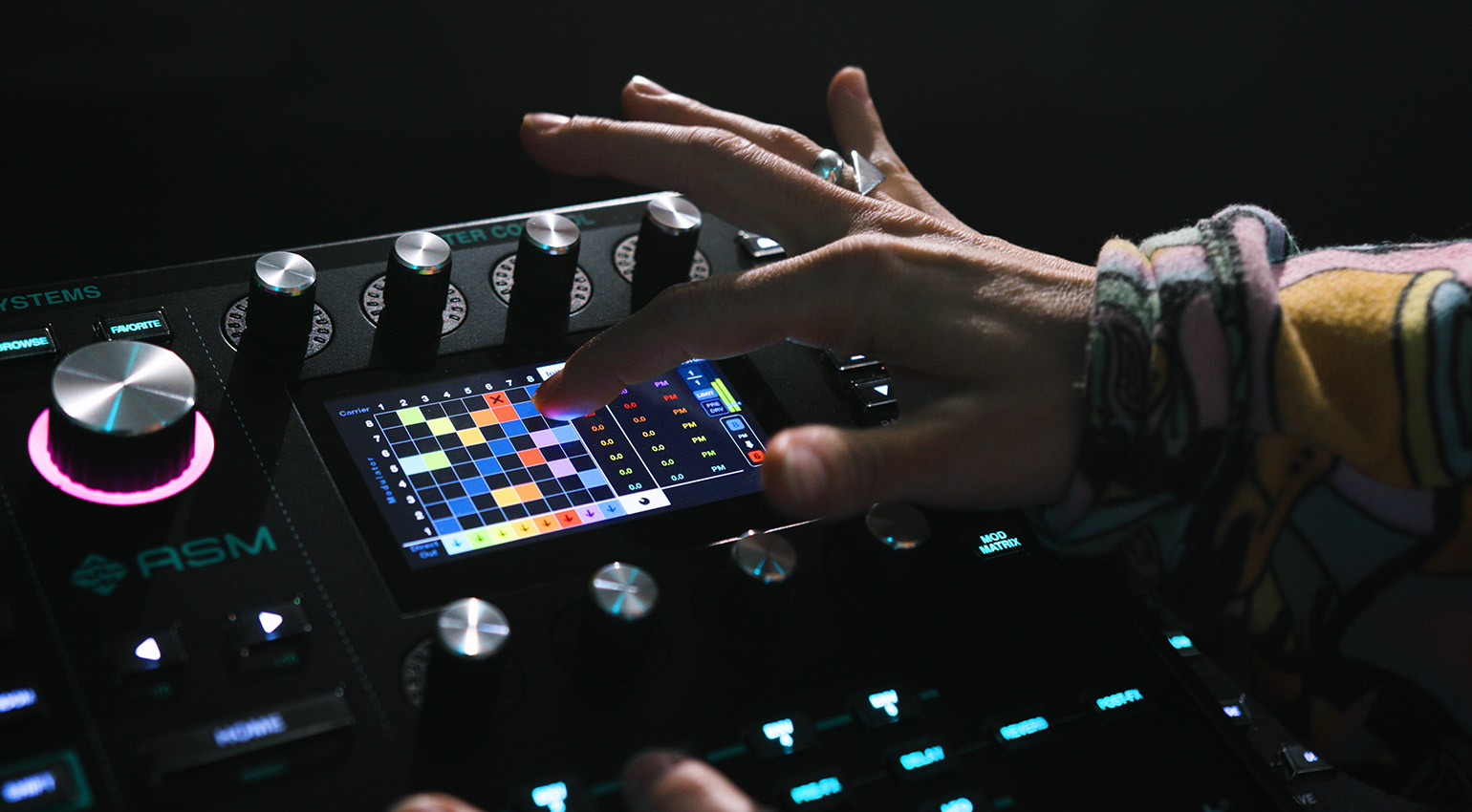
This touch screen replaces the paradigm we saw on the Hydrasynth with had mini OLED screens with dedicated rotaries and buttons. But, in another clever move, everything pretty much works the same. The screen dynamically changes the soft option, and whilst the rotaries remain, the buttons are now touch areas on screen. But now, the screen can deliver so much more feedback and information for the user.
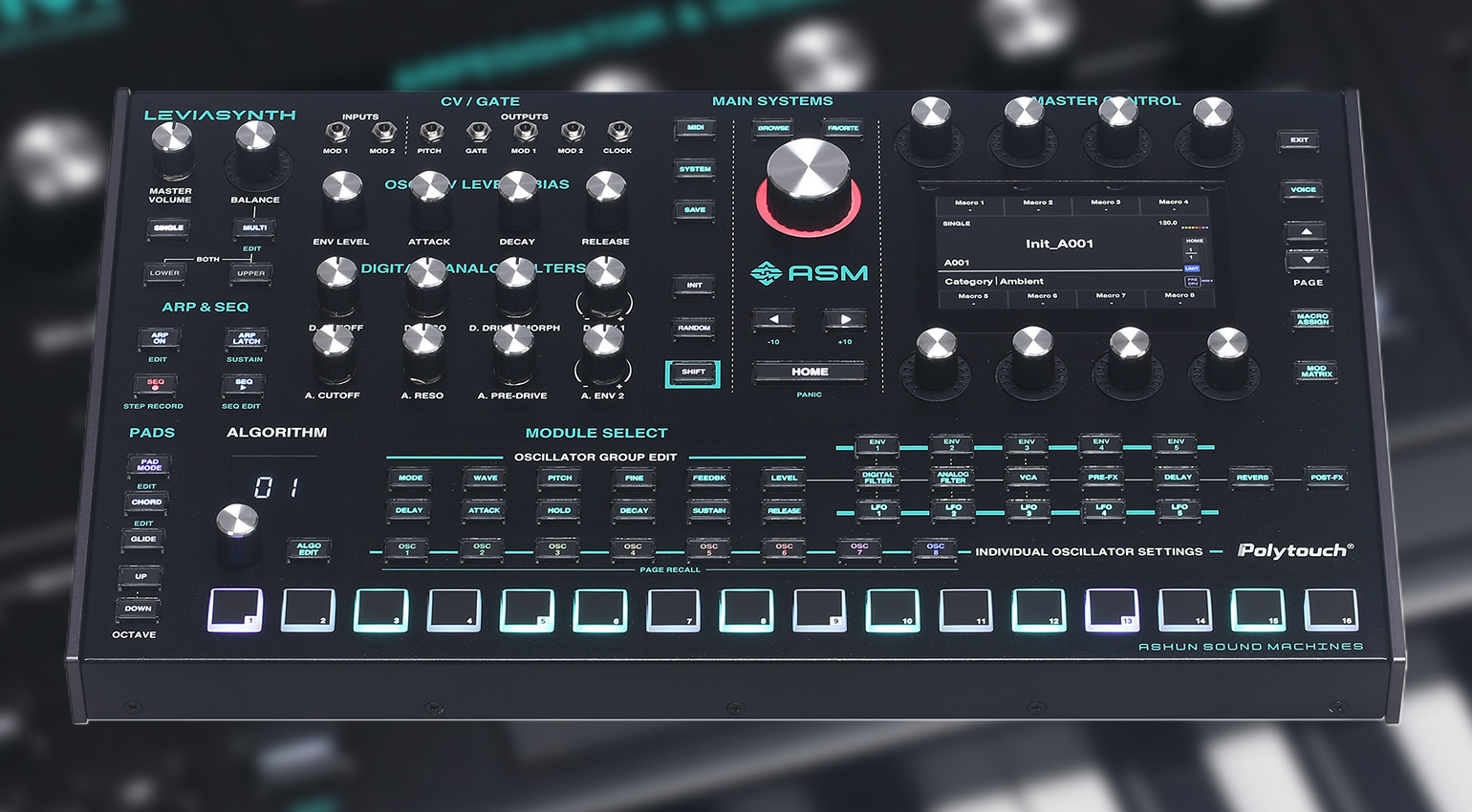
Either side of this Master Control section, everything is in keeping with the Hydrasynth, mostly. Being an algorithmic synth, there’s an Algorithm selector with a digit display above it. To the right of that are the filter controls and an oscillator envelope level and bias control area. These level and bias controls affect all oscillators at once. The Module Select area is, again, familiar, save for some obvious differences associated with individual or group oscillator settings.
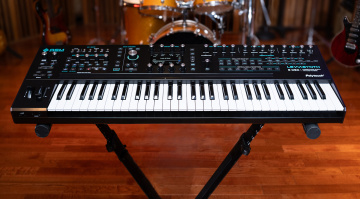
The keybed is, of course, one of ASM’s PolyTouch affairs, 61 keys and a nice, playable synth action. Above this is the ribbon controller, and the trademark pitch and mod wheels have that very useful paddle on each. And yes, the CV/Gate connections, all 3.5mm jacks, are present and correct.
Around the back, it’s fairly simple with power, USB-B, MIDI IN/OUT/THRU, sustain and expression pedal connections and a pair of stereo outs. Headphones can be connected at the front, with both a 6.4 and 3.5mm connection and independent volume control. Once again, construction is solid metal and capable of withstanding the ardours of both studio and stage use.
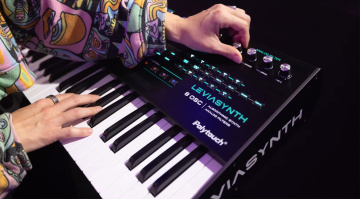
It’s also worth pointing out that the arp and oscillator envelope level and bias rotaries are touch sensitive, meaning that you can simply tap the metal surface and the setting for that specific control will be displayed on screen. This is a great feature, something that Arturia have done with their controllers, and it’s nice to see here. Other rotaries have LED rings or black markers to show their position.
Leviasynth Desktop
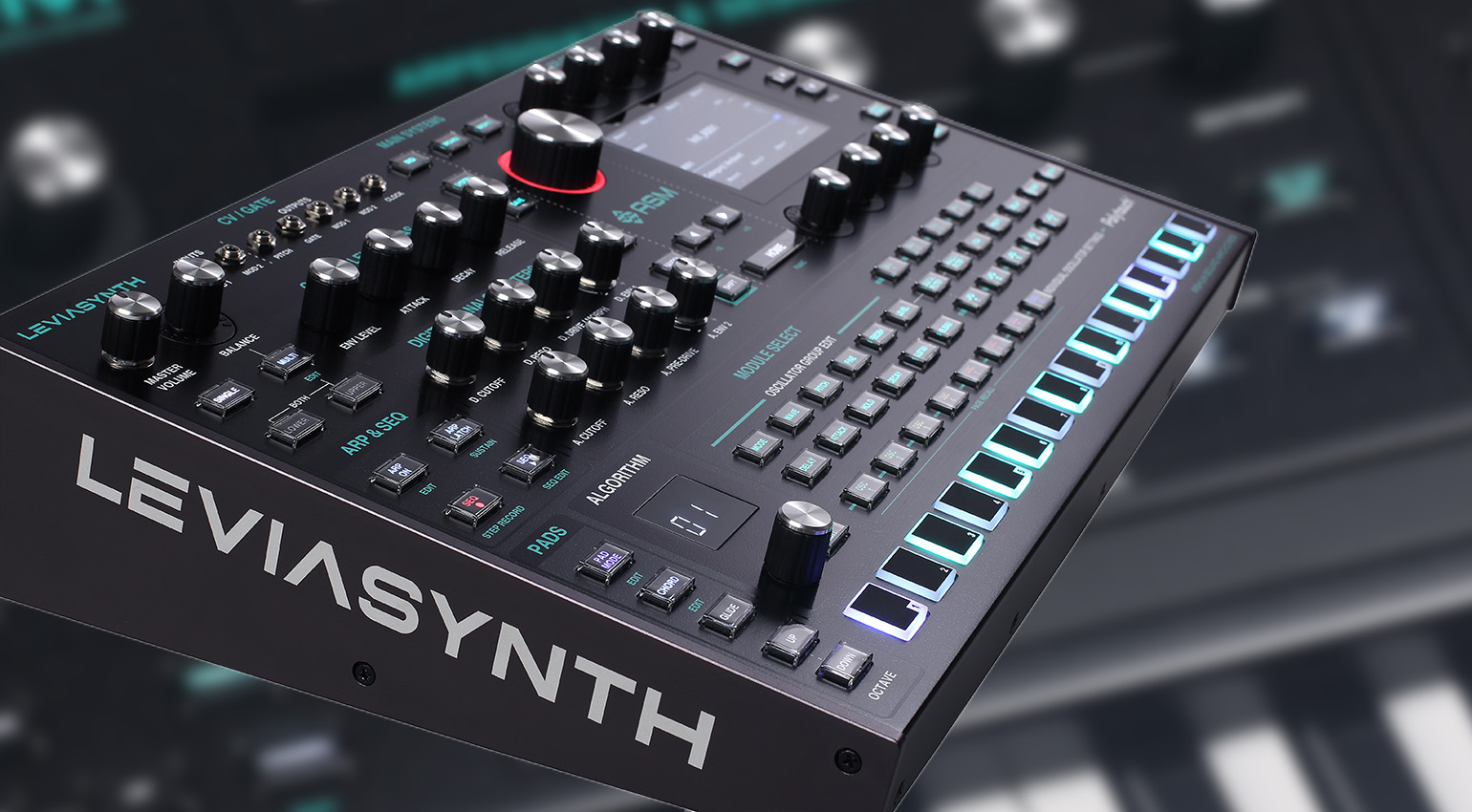
I want to state that I have only used the keyboard version of the Leviasynth, and so this review is based entirely on that. Aside from the keyboard, ribbon, pitch bend and mod wheels, the desktop unit is identical internally and features 16 PolyTouch pads, 8 fewer than the Hydra.
Algorithms and Oscillators
Right, let’s dig a bit deeper into the heart of Leviasynth, the algorithms. At the top of this article, I alluded to FM. I admit, I was being playful, but also a little serious too. Mention algorithms, and any synth head will immediately conjure up images of the DX family of synths from Yamaha. Their approach to FM, which was (yes, we know) actually linear phase modulation, was to create algorithms that placed each of the six operators in certain positions in order to somewhat simplify the technique.
Their implementation of Dr Chowning’s discovery was to create, in the case of the DX7, six operators that each contained a sine wave oscillator, envelope generator and VCA that would take pitch and modulation data to create an audio output.
By designating each operator as a carrier (an operator whose output is connected directly to the audio patch) or a modulator (an operator whose output is connected to the input of another operator), the 32 algorithms of a DX7 gave the user a variety of the most useful operator combinations with which to create a wide variety of sounds.
So is the Leviasynth an FM synth? Well, yes, it is. But it is almost infinitely more powerful because there are almost no constraints on how you configure the 8 oscillators and nearly 5 times as many preset algorithms to choose from. And you can even create your own custom algorithm per patch!
But one of the key differences with Leviasynth’s oscillators over a typical FM operator is the fact that they have modes. That means that you can pick from 7 modulation types per oscillator. This opens up almost infinite possibilities for shaping your sound. You can pick from phase modulation, frequency modulation, pulse width modulation, HTE Sync (oscillator sync), and 3 types of phase distortion (Square/Saw/Saw Pulse).
Within each of these modes, there are numerous settings to get them to do exactly what you want them to do. And these modes can be applied, per oscillator, on any of the 300+ waveforms contained within Leviasynth. Remember that each oscillator also has its own envelope generator as well as common EG’s. Now do you see how powerful this thing is?
One more thing. This thing features algorithm morph. You heard me. You can morph between algorithms within a single patch over time. Select up to 8 different algorithms and then crossfade between them manually or by mapping an LFO, envelope or macro to it. And if you find a point between two algorithms that you like, save it as a new patch and keep it there!
How Does it Sound?
At this point, I could veer off and start digging into the complexities of programming the Leviasynth. However, I don’t think I’ve even mastered it enough to convey that, and my editor will not be happy with the word count! So I will tell you what I think based on spending the last few months testing this thing.
Working my way through the presets, of which there are 512 Single mode and 256 Multi mode, I wasn’t expecting this thing to sound so analogue. By which I mean I think my head was expecting FM on steroids. But it really isn’t that. Unless, of course, you want it to be. If you want those classic FM tones, they’re absolutely achievable, but if that’s all you want from this, you’re missing the point.
The term ‘hybrid’ is bandied about a lot in the world of synthesizers, almost to the point where it feels like it is being used to forgive the fact that it might be a jack of all trades but master of none. In the case of Leviasynth, hybrid definitely means the best of both worlds.
The sheer enormity of possibilities offered by the oscillator settings, modes and algorithms means that not only will you be creating big, warm, smooth, buttery analogue tones with consummate ease, but you will also be able to extract everything that is to be loved about digital synthesis and FM. And then there’s everything in between!
The combination of precise digital filters and thick, warm analogue ones allows you to sculpt your sound almost surgically. I found myself wildly tweaking both in real time and just discovering sonic areas that neither could provide on their own, but in conjunction with each other, delivered absolute magic and disaster in equal measure.
Chucking all of this through what some might call a limited number of effects only serves to add a final polish to your creation. Remember, when it comes to FX, it’s quality over quantity. And of course, the ease with which you can route your modulations will have you generating all kinds of movement and expression.
Ah yes, the ‘E’ word. Expression. Well, it wouldn’t be an ASM synth if it didn’t deliver expression. They single-handedly reintroduced polyphonic aftertouch to the mass synth market, and Leviasynth continues that trend, with MPE compatibility to boot.
My Thoughts
I admit that I found myself dwelling on a small number of presets or sounds that I’d created for lengthy periods of time, simply because the sheer depth of manipulation on offer means that you easily slip down a long, deep rabbit hole of sonic exploration.
But what Leviasynth excels at is its ability to be instant and immediate when you want it to be and infinitely deep at the same time. The choice is yours, but trust me, the reward from either is huge. Marry all this up into a hardware unit that is built like a tank, has numerous levels of expressive input and is well laid out, and you are on to a winner.
As are ASM. It may have taken them a long time to follow up the Hydrasynth, and many were concerned that they might find themselves battling that ‘tough second album syndrome’, but with Leviasynth, they have not only created a worthy successor to the Hydrasynth, but they’ve created a synth that will sit alongside it both sonically and visually. I’ve had my Hydra sat above my Leviasynth for most of the duration of my testing, and they complement each other perfectly.
Frequently Asked Questions
Q: Will there be Deluxe and Explorer versions of the Leviasynth?
A: At this present time, ASM tell me that these are not currently planned. In my opinion, an Explorer version might be nice, but I feel the 61 key and desktop versions are just fine.
Q: Is the touch screen big enough for all the detail that it provides?
A: In all honesty, a larger screen may have been nice to have, but for the most part, it is big enough for what is needed. There are elements that are a little small on the main page, such as the algorithms, but once you directly access those functions, there is no issue. I think they’ve got the balance just right.
Q: Are there any features you wish the Leviasynth had that it doesn’t currently have?
A: It might have been nice to have individual outs when using the multi-mode and the USB-B port would have been nicer if it were USB-C, but I get that the B is sturdier and USB 3 isn’t required.
ASM’s Leviasynth is a powerful hybrid synthesizer that takes the concept of algorithmic synthesis to new levels of power, flexibility and performance. By introducing huge amounts of waveforms and algorithms, and giving them a wealth of possibilities in how they behave and interact with each other, Leviasynth will satisfy a broad range of musical styles and use cases.
It has the ability to be a sound designer’s dream but also to be immediate, fun and engaging at the same time. The inclusion of an analogue filter ensures that it has the ability to deliver the best of both digital and analogue synthesis in a solid, well-built package.
In Conclusion
As a huge fan of FM synthesis, particularly the algorithmic implementation developed by Yamaha, I was both cautious and excited about Leviasynth. I wondered if it might deviate too much from the things I liked or, even worse, not deviate from them much at all. Whilst I love digital synthesis, and am a huge fan of many forms of that method, I also adore the aspects of analogue that digital can’t touch.
A constantly recurring sentiment I hear when discussing FM synthesis and the synths that use it is that many people would really love FM if only it had analogue filters, or filters of any kind. In recent years, some manufacturers have done that, such as KORG with the opsix. Leviasynth fully embraces this with its filter offering and its many options.
What the team at ASM have done is combine all the best bits of both forms and delivered a package where the line between the two is blurred so much as to be almost imperceivable. The immense power and flexibility on tap is mind-blowing. Morphing algorithms? Seems obvious, but the thought had never crossed my mind!
Ashun Sound Machines were, quite literally, the biggest disruptors on the market when they introduced Hydrasynth. Leviasynth may have slightly less impact simply because it isn’t their first offering. Hydrasynth blazed that trail, and Leviasynth more than carries that torch, both in terms of sheer synthesis power coupled with a fantastic level of expression and build quality.
If you were waiting for ASM to slip up with a dodgy sophomore release, you are going to be massively disappointed. Neglect this synth at your peril. It’s Leviathan.
More Information
The ASM Leviasynth Keyboard will retail for €3,299/£2,899/$3,199 and the Desktop for €2,399/£2,111/$2,333.
Both are available to buy now.
*Note: This article contains advertising links that help us pay for this site. Don’t worry: the price for you will always be the same! If you buy something through these links, we will receive a small commission. Thank you for your support!

This might also interest you


6 responses to “ASM Leviasynth: Big 1.2 Firmware Update Brings Sequencer Entropy and More – Review”
You are currently viewing a placeholder content from Facebook. To access the actual content, click the button below. Please note that doing so will share data with third-party providers.
More InformationYou are currently viewing a placeholder content from Instagram. To access the actual content, click the button below. Please note that doing so will share data with third-party providers.
More InformationYou are currently viewing a placeholder content from X. To access the actual content, click the button below. Please note that doing so will share data with third-party providers.
More Information
Never mind… the original is really really good for iambent music anyway and using with my MAKE NOISE SHARED SYSTEM especially MATHS (x13)
Love ASM 💕
Well, I still think new synths are on its way soon. If the rumour would be confirmed by them, the Hydrasynth sales would drop significantly. That’s why companies never announce their new products in advance.
Hard pushed to beat the Hydrasynth, though this synth looks really great, even better, but no way can I afford it. I wonder if you can set the oscillators to wavetable? Imagine being able to do that as well, with 500 waves you could arrange in any order, or just switch the osc to FM, or use both! A split keyboard, into FM bass and wavetable pad, both with poly aftertouch. That’d be somewhat supreme, I reckon…
looks good.
Looks bad
Not my cup of tea.