The Best Hardware Sequencers for Electronic Music Production and Performance
Best Hardware Sequencers for MIDI and CV

 3,2 / 5,0 |

Up until quite recently, hardware sequencers seemed on the way out. Faced with competition from DAW software, standalone sequencers looked like relics from a bygone era. But as more and more producers and performers discover their love for DAWless setups and modular systems, they’re now more popular than ever. Let’s check out some of the best hardware sequencers!
Best Hardware Sequencers
Choosing the Best Hardware Sequencers
Whether or not a specific sequencer works for you often depends on its user interface and workflow—even more so than on specs like the number of tracks, steps, or patterns. That’s why this article doesn’t rank hardware sequencers from ‘best’ to ‘worst’. A sequencer that’s perfect for my style of producing and performing might not work at all for you. One person might be looking for lots of MIDI tracks, while the next person needs lots of CV outputs for their modular system. And while some of us like to be inspired by generative algorithms and randomization, others prefer a straightforward sequencer that simply plays back what you put in.
To find the best hardware sequencers for your setup, it’s best to think about what you’re really looking for, and then check your options. So let’s take a look at some of the best hardware sequencers for MIDI and CV in 2026.
Squarp Instruments Hapax: One of the Best Hardware Sequencers
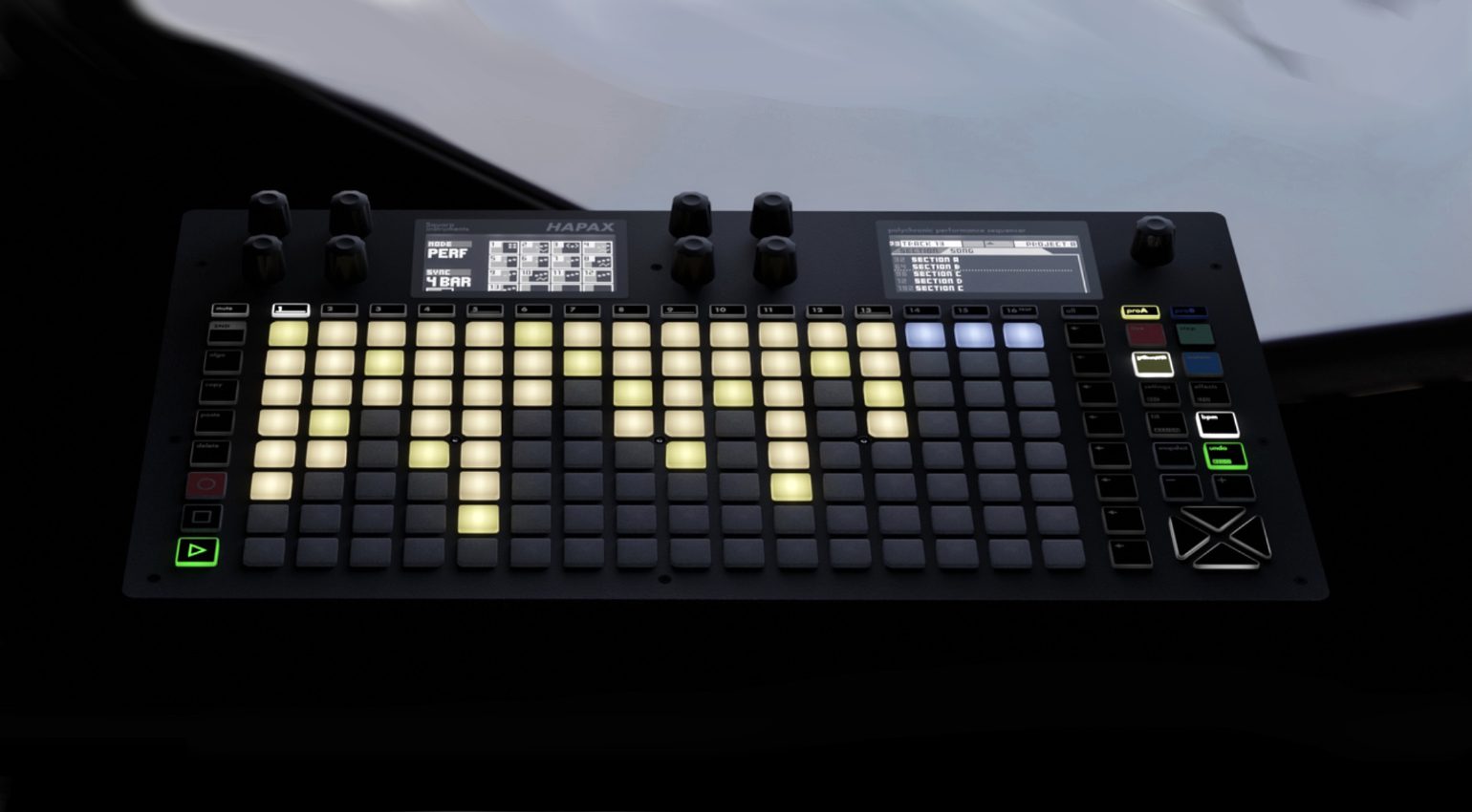
The Squarp Instruments Hapax has a lot of fans—and for good reason. Dubbed a ‘polychronic sequencer’ by the developers, it is undoubtedly one of the most powerful and inspiring DAWless sequencing hubs available today. One of its standout features is the dual architecture: two independent projects with up to 16 tracks each can run in parallel—perfect for live performers!
The lavish matrix with 128 RGB pads works in four modes: Live (isomorphic keyboard, chords, and drums), Step (step sequencing), Pattern (for launching and transposing up to 16 patterns per track), and Automation. In addition, the Hapax offers a plethora of algorithms, composition tools, and MIDI effects that’ll help you come up with unique and interesting patterns, chords, and melodies. A dedicated drum sequencer is also available. Live performers in particular will love the snapshot function, which lets you save the current editing state of a pattern and recall it at any time.
With two MIDI inputs, four MIDI outputs, and no fewer than ten CV/Gate jacks (2 CV In, 4 CV Out, 4 Gate Out), the Hapax easily controls all your synths, drum machines, and even your modular system. An external MIDI controller or even an MPE controller can be connected via USB, while another USB port bridges the gap to your DAW.
The Squarp Instruments Hapax is available from Thomann*.


- Product page
- More from Squarp Instruments
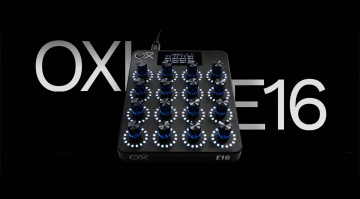
OXI Instruments OXI One MKII: Inspiring Hardware Sequencer for Production and Performance
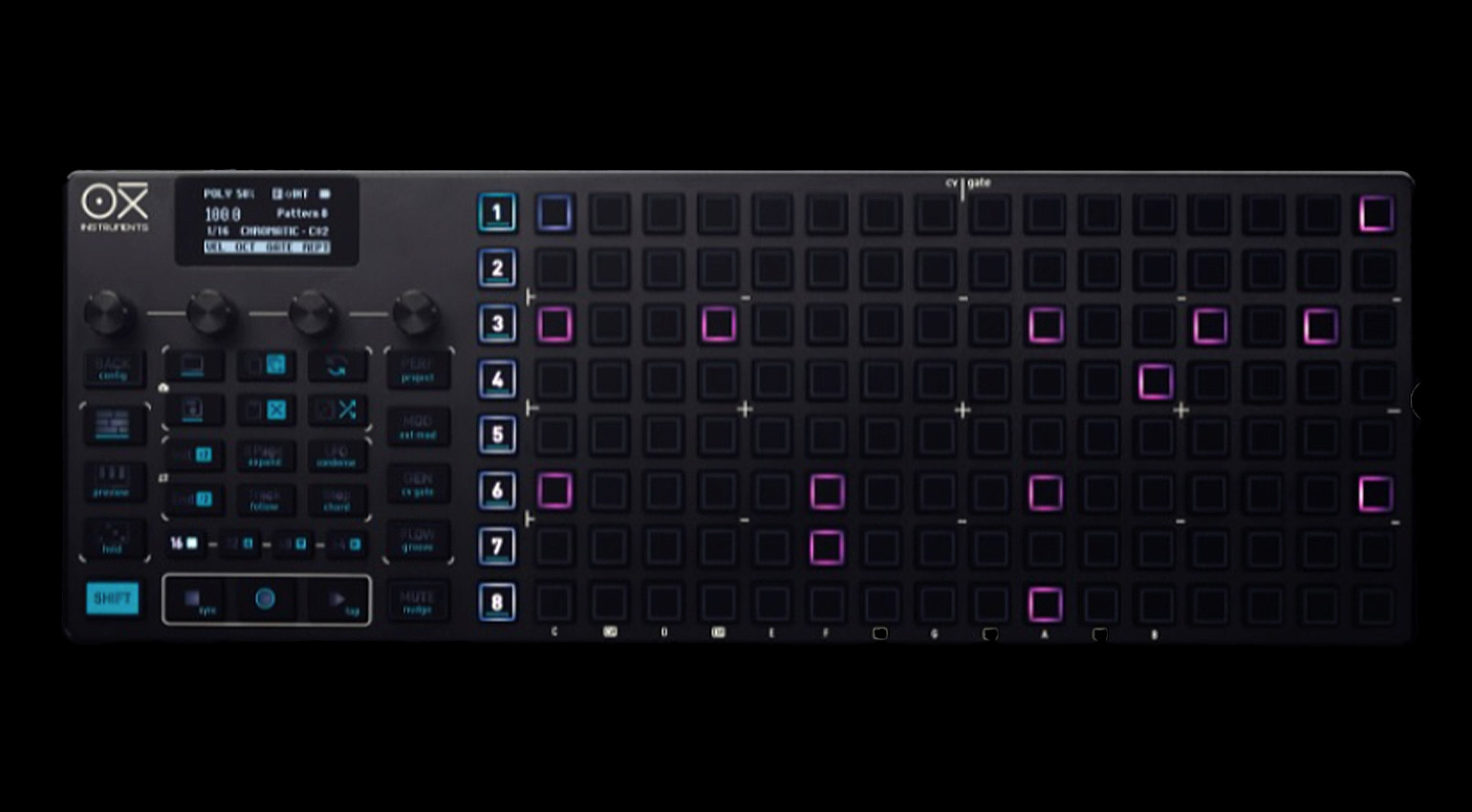
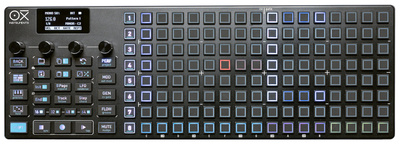
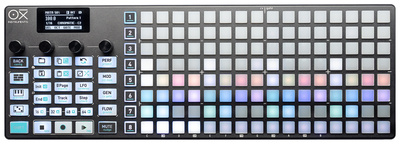
Now in its second generation, the OXI One has long since made a name for itself as a versatile and extremely inspiring performance sequencer. It offers eight independent sequencers with eight tracks each, for a total of up to 64 tracks. You can choose from six modes: Mono, Poly (7-voice), Chord, Multitrack (8 tracks per sequencer with independent parameters), Stochastic (probability), and Matrix (regenerative). One thing the OXI One does particularly well is pattern generation: thanks to various randomization functions and a Euclidean pattern generator, you’ll be creating inspiring patterns in no time.
Regardless of the mode, you can set the velocity, note length, probability, glide, ratchet, and micro-timing per step. Things like playback direction, clock division, and transposition can also be controlled on the fly. Each sequencer also has two LFOs and eight modulation tracks for controlling internal parameters or external MIDI instruments.
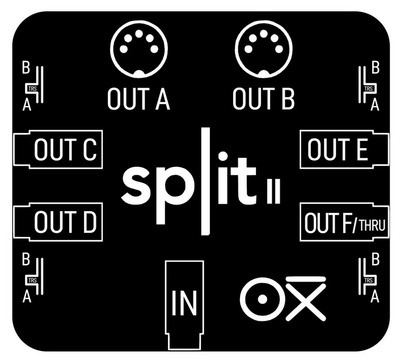
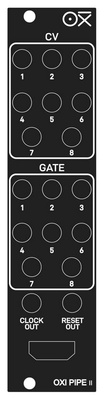
I/O is plentiful, as well. In addition to MIDI In/Out and Clock In/Out, the OXI One MKII offers eight CV and gate outputs each, which can be assigned to sequencer/modulation tracks or the LFOs. This also makes the sequencer a powerful MIDI-to-CV interface. And it’s expandable: if you need even more MIDI, there’s an optional breakout box that brings the channel count up to 96. And the OXI Pipe MKII Eurorack module brings the sequencer’s CV I/O directly into your Eurorack system.
The OXI Instruments OXI One MKII and optional accessories are available from Thomann*.

KORG SQ-64: Inspired by the Legendary SQ-10
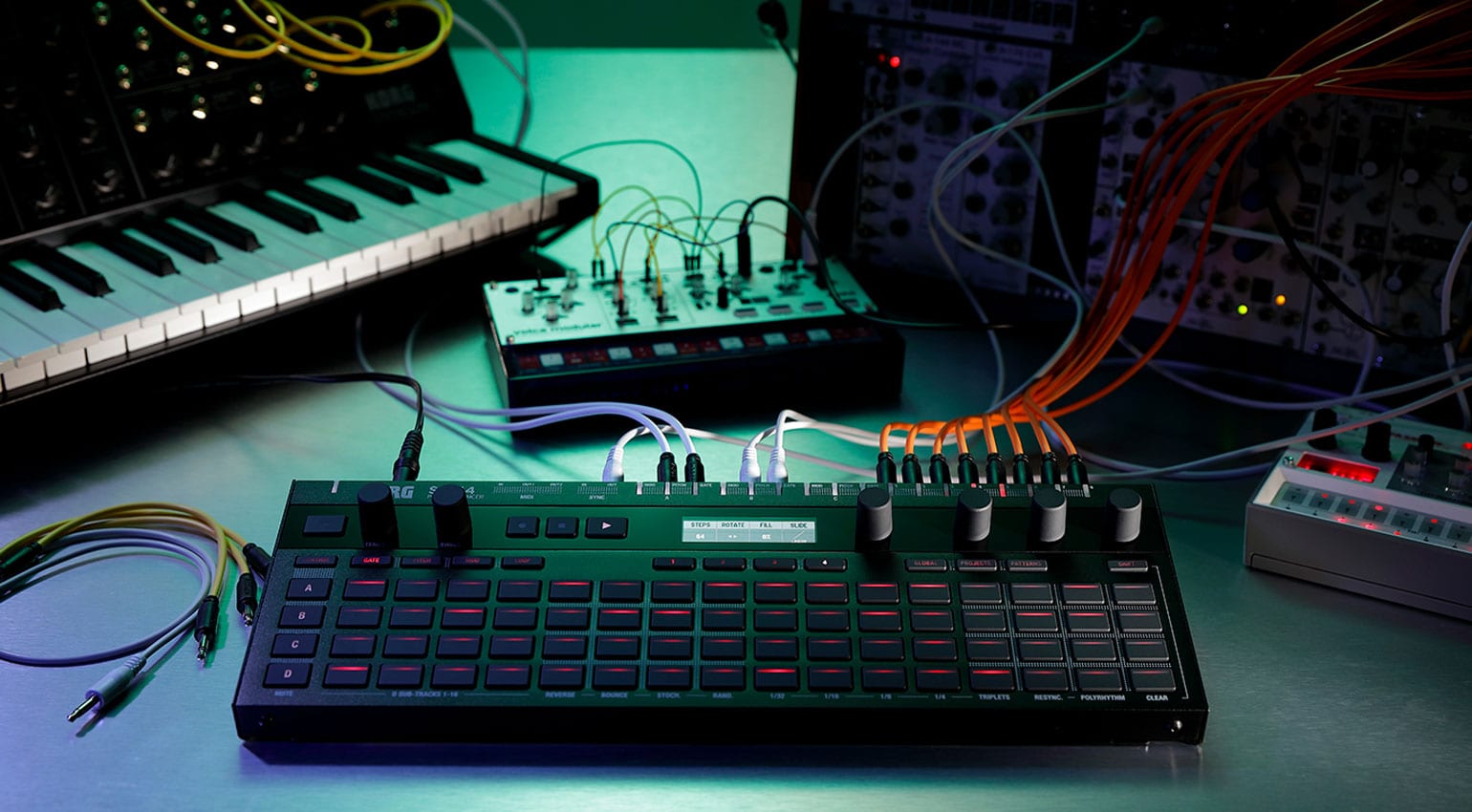
In comparison, the KORG SQ-64 has a somewhat more traditional approach. This polyphonic hardware sequencer offers four tracks, three of which are for melodies and chords and one for drums. The melody tracks each offer 8-voice polyphony and 16 patterns of up to 64 steps. Each melody track also has a modulation track with a corresponding CV output. In contrast, the drum track consists of 16 monophonic sub-tracks, also with 64 steps. The melody and drum patterns can be linked in various ways. In addition to linear playback, the SQ-64 also supports Reverse, Bounce, Random, and Stochastic modes.
The 64 pads not only serve as step buttons, but can also be used as a keyboard for entering chords and melodies. A powerful arpeggiator is also included.
In addition to MIDI In, 2x MIDI Out and analog Sync I/O, the KORG SQ-64 is well equipped with CV and trigger outputs. The three melody tracks each have dedicated Gate, CV, and Mod outputs, while the drum sequencer offers eight trigger outputs.
The KORG SQ-64 is available from Thomann*.

Torso Electronics T1: One of the Best Hardware Sequencers for Pattern Generation
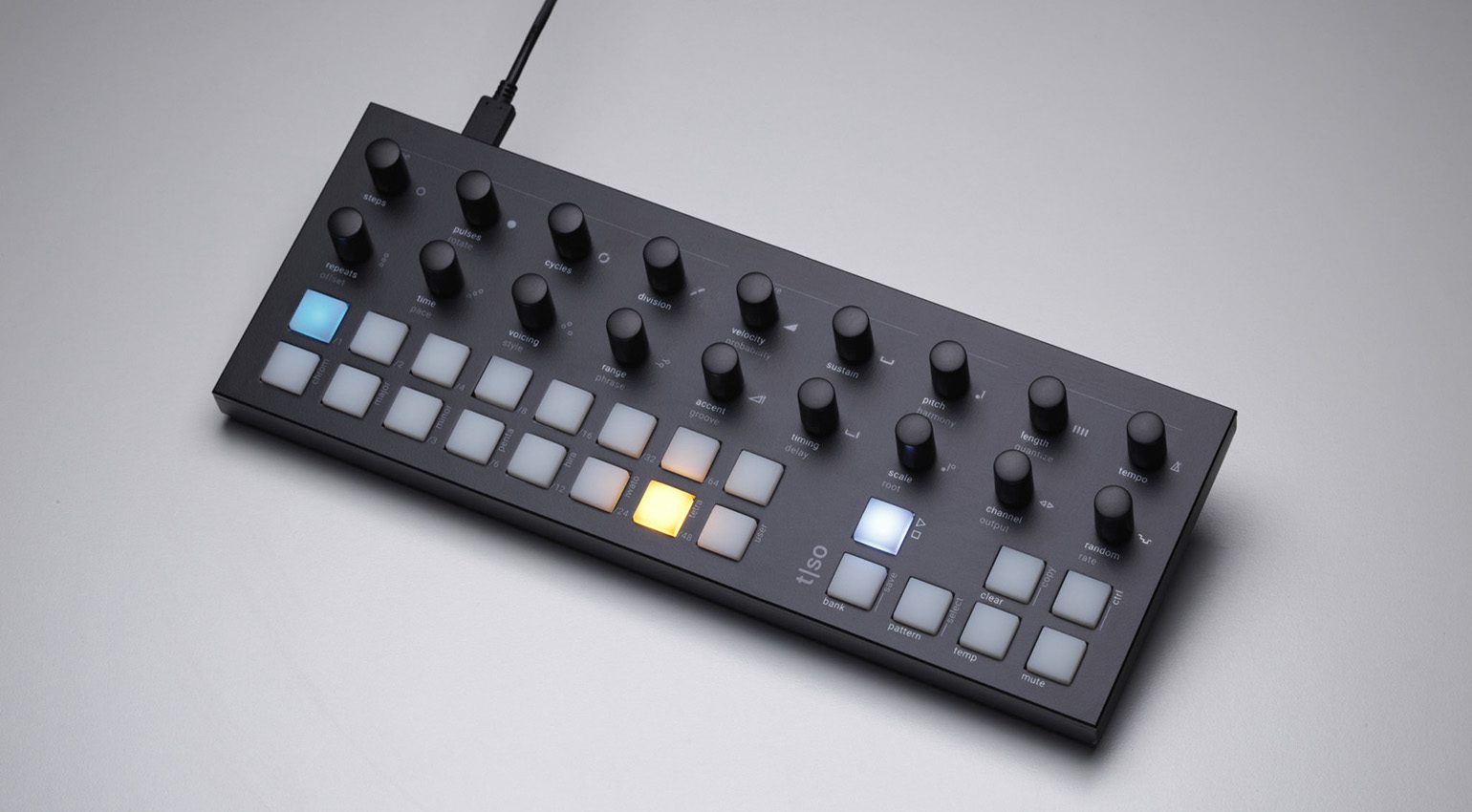
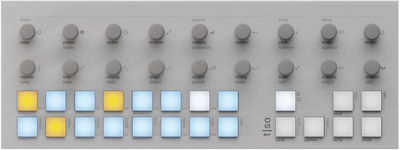
The Torso Electronics T1 is all about algorithmic pattern generation. Its generative workflow makes it a hugely inspiring creative tool in the studio or on stage.
The T1 offers 16 tracks that can operate in three modes. In Note mode, you can create rhythms and melodies using musical algorithms. While pattern generation is the main focus, you can of course also go in and edit steps in detail. In CC mode, you can record modulation and automation curves using the T1’s 16 knobs, or generate them randomly. FX mode offers various real-time MIDI effects.
In addition to USB-C and MIDI (1 In, 2 Out), the T1 offers analog sync and reset jacks. The hardware sequencer also has four CV and two gate outputs, as well as a CV input for recording external CV signals. Wi-Fi and Ableton Link are also available.
The Torso Electronics T1 is available from Thomann*.

Doepfer Dark Time: Take me Back in Time
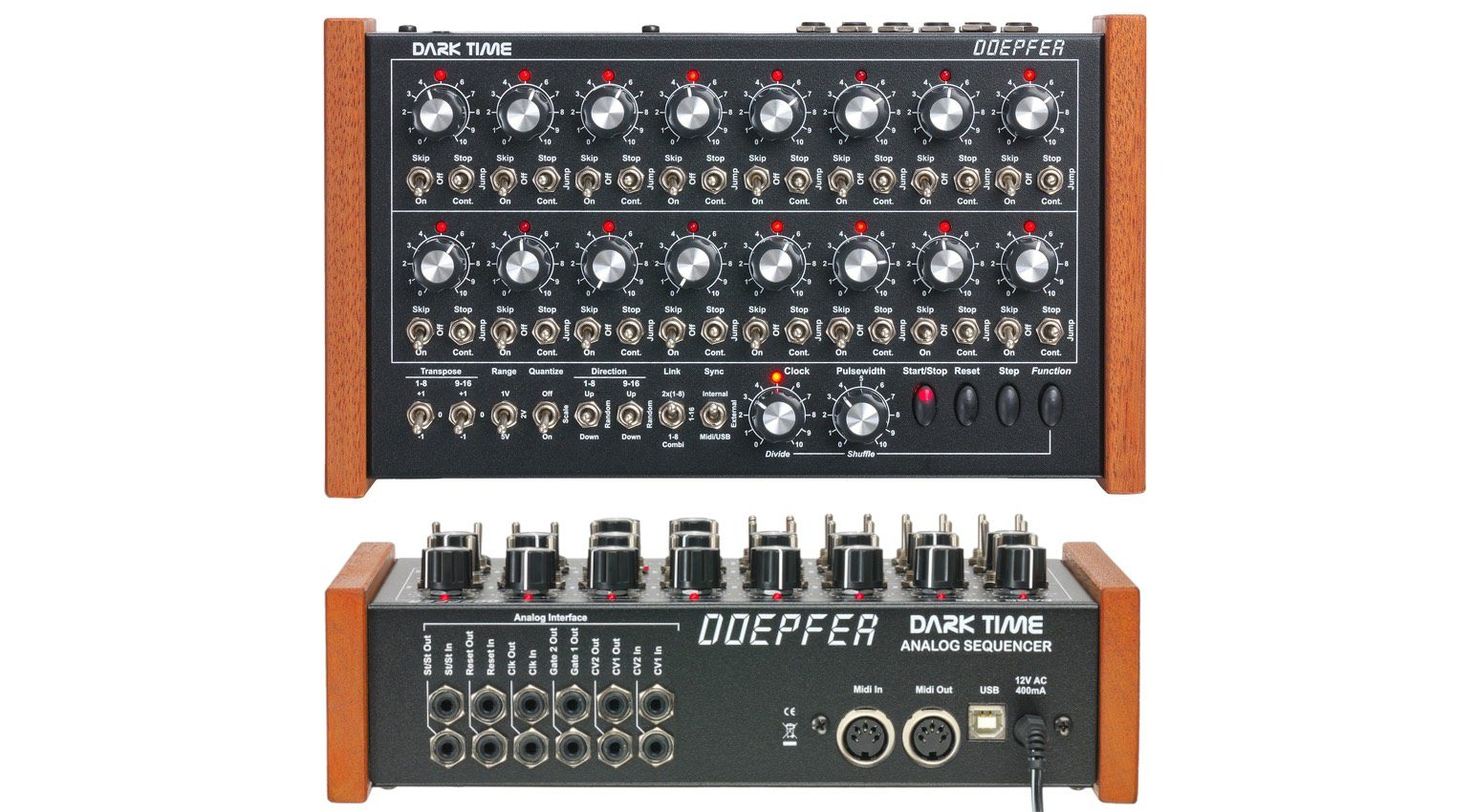
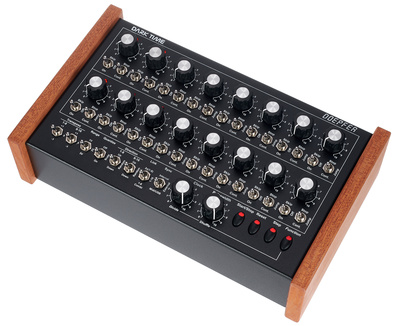
Doepfer’s Dark Time is as old-school as hardware sequencers get. If you’re a fan of the one-knob-per-function interfaces of classic analog synths, the Dark Time is without a doubt one of the best hardware sequencers for your setup. No menus, no modes, no algorithms. Instead, the Dark Time always does exactly what the positions of the knobs and switches indicate. Compared to some of the other best hardware sequencers mentioned here, it’s pretty basic, but also incredibly immediate.
The Dark Time offers two rows of eight steps. For each step, there are an LED, a knob, and two switches: On/Off/Skip and Cont./Jump/Stop. It couldn’t be any simpler. The two rows can run in parallel (e.g., one for notes and the other for modulation), or you can link them to make a 16-step sequence. The playback direction and transposition are selectable independently for each row.
In terms of I/O, the Doepfer Dark Time offers MIDI In/Out, USB, Gate In/Out, 2x CV In/Out, Clock In/Out, Reset In/Out, and Start/Stop In/Out, so it works great with analog systems.
The Doepfer Dark Time comes in two versions with red or blue LEDs. Both are available at Thomann*.

Arturia BeatStep and KeyStep Series: Versatile Hardware Sequencers for MIDI and CV
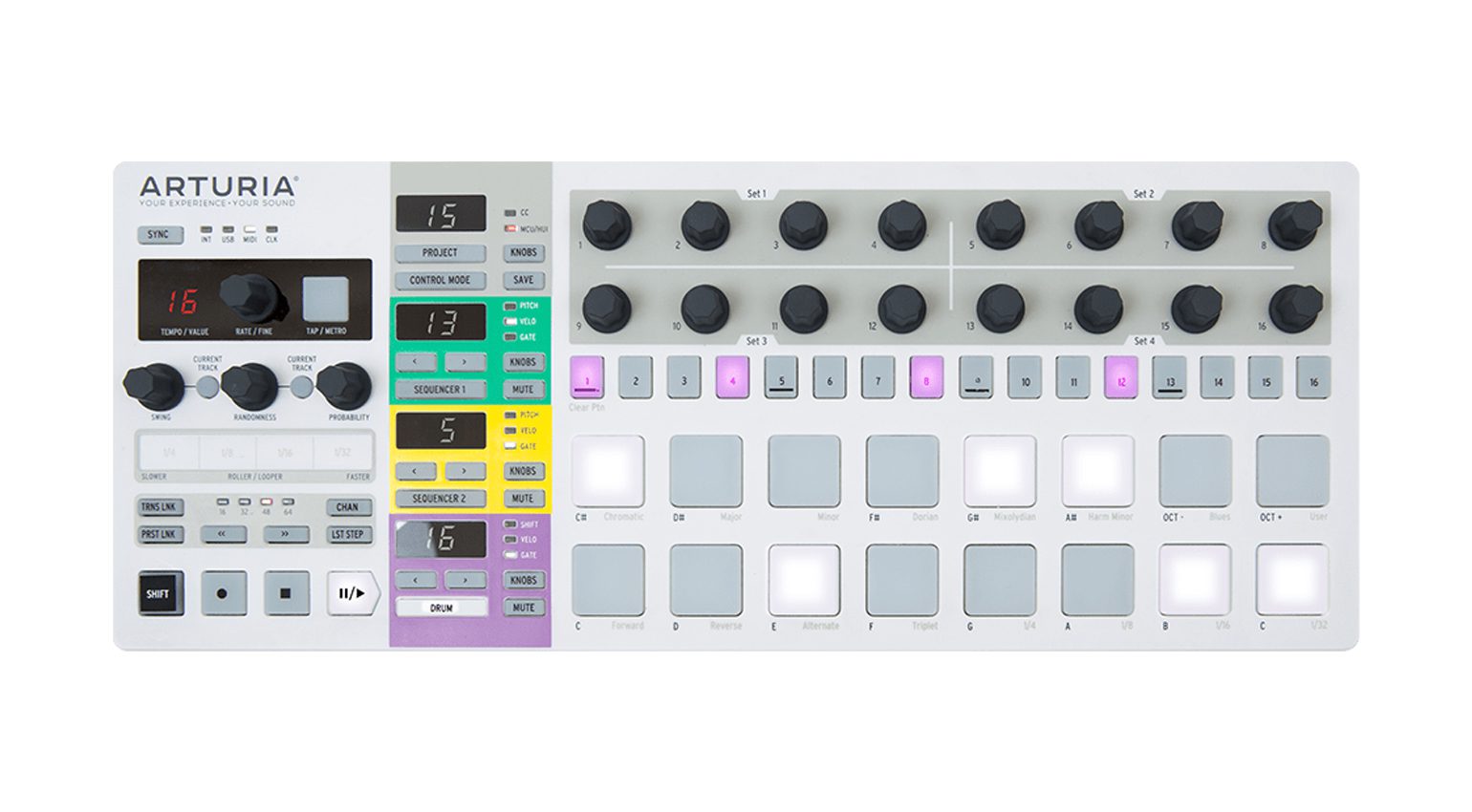
No list of the best hardware sequencers would be complete without Arturia’s incredibly successful BeatStep and KeyStep series. And for good reason: Arturia’s sequencers are comparatively inexpensive, yet well thought-out and intuitive. They can’t do everything, but what they can do, they do very well. Their success was certainly helped by the fact that Arturia was one of the first manufacturers to jump on the modular bandwagon by adding CV/gate outputs to their hardware sequencers and controllers.
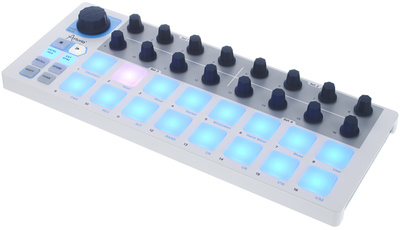
For less than 100 bucks, the entry-level BeatStep is a hardware sequencer and controller with 16 pads and knobs. It can store 16 sequences. In addition to USB and a TRS MIDI output, there’s a pair of CV/gate outputs. You can get it from Thomann*.

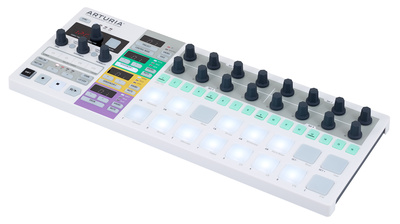
If you want a little more, go for the BeatStep Pro. It contains two independent monophonic step sequencers, each with its own display and three CV outputs (pitch, velocity, gate). There’s also a drum sequencer with eight trigger outputs. MIDI In/Out is of course also available, and the BeatStep Pro even supports DIN sync. It is available from Thomann*.
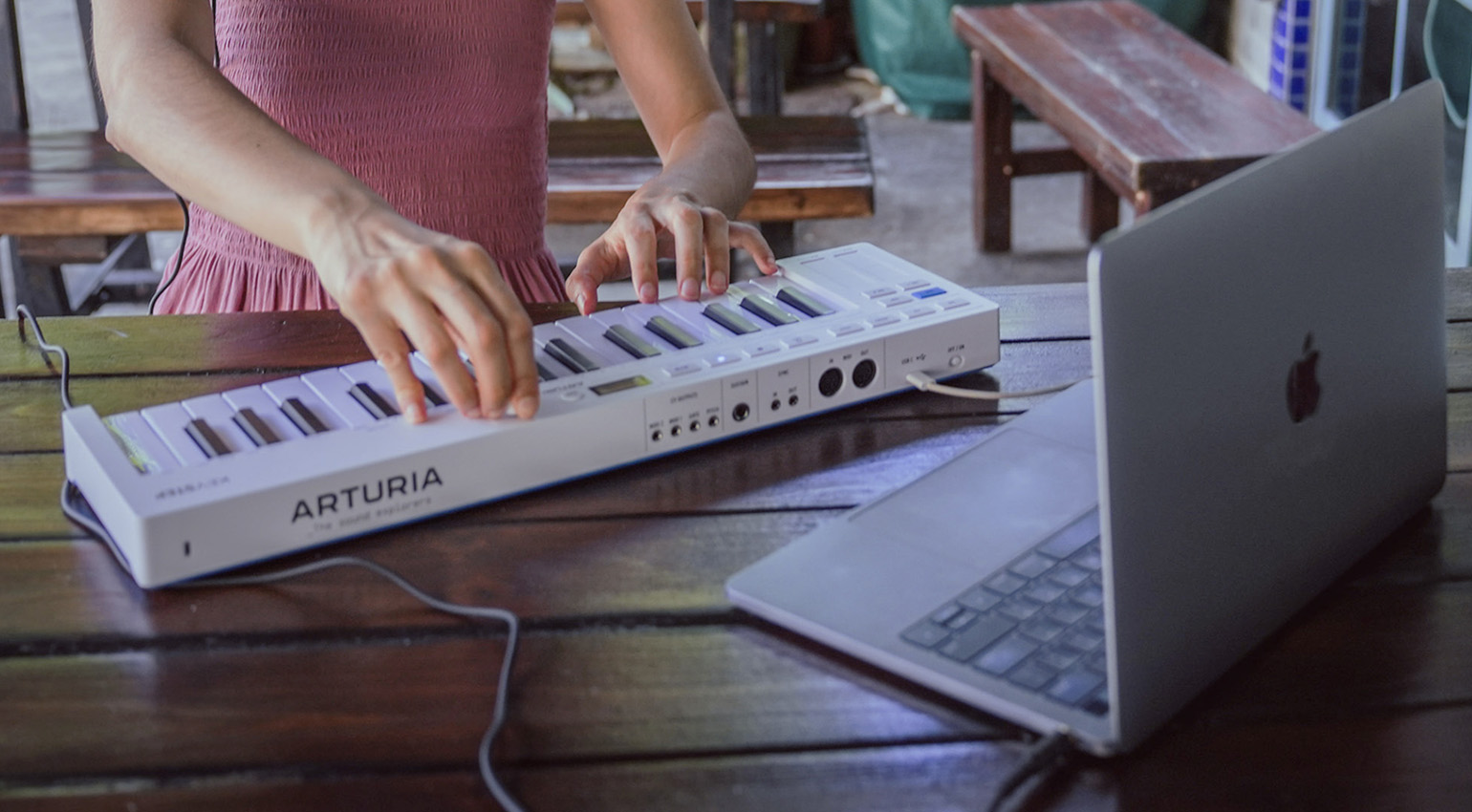
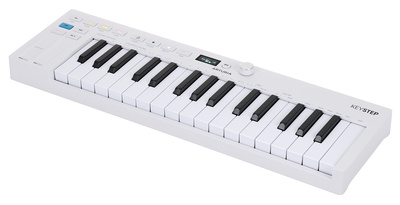
The Arturia KeyStep surely struck a chord: the versatile keyboard controller with an integrated sequencer and CV outputs quickly became the darling of the modular community. Now available in its second generation, the KeyStep mk2 added many new features, such as a mutate function for transforming patterns in real time. The successful concept remains the same: if you need a compact keyboard controller for MIDI and CV that can also sequence, look no further than the KeyStep mk2. You can get it at Thomann*.
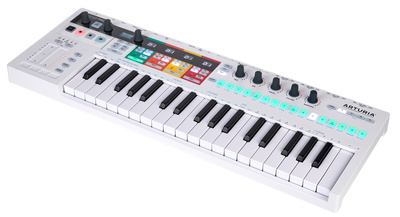
Just like the BeatStep, the KeyStep is also available in a Pro version with multiple tracks, letting you control several synths or parts at once. Equipped with 37 mini keys with aftertouch, the KeyStep Pro comes with a 64-step sequencer with four tracks and up to 16 notes of polyphony per step. In addition, there’s a polyrhythmic drum sequencer with 24 parts. Needless to say, the Pro version also has significantly better connectivity, offering three CV outputs (pitch, mod, gate) for each of the four melody sequencers, as well as eight drum trigger outputs. You also get MIDI (1 In, 2 Out), Clock (In/Out/Reset), Metronome, and a sustain pedal jack.
You can get the Arturia KeyStep Pro at Thomann*.
Further Reading
- Best Desktop Effects for Synths
- Best Budget Beatmaking Gear
- Arrangement Techniques for Electronic Music: 5 Tips for Your Workflow
- Making music outside the box: 5 Ways to Go Dawless

This might also interest you

15 responses to “The Best Hardware Sequencers for Electronic Music Production and Performance”
For pure midi sequencers the cirklon is leagues ahead of the field – super solid timing and very flexible.. As a performance sampler, mixer, studio hub the octatrack is ace.
I agree, the Cirklon(which I have) should be included, like a few notable others that should probably be on this list. Not mentioned because it’s not purchased through Thoman?
No Hapax?
Oxi is fully featured, but not that stable.
Does anyone know of there are external sequencers that can effectively be song-mode for the existing patterns in my SH-4d?
Rather than having to re-step-program each element, I was wondering if there were any external sequencers that could just be song-mode for arranging the sequences I’ve already created in my SH-4d.
Novation Circuit Tracks deserves a mention as well, 4 poly synth parts and drums. Can’t go wrong for the price!
MPC
Absolutely one of the best HW sequencers. I have the Hapax, Push, Force with 2 MPC’s.
The MPC is the most straight forward and quickest workflow as far as its sequencing abilities.
I can write / jam at least 4 tracks a day with my advanced MPC workflow.
(I wish this was the real Roger Lynn)
I use a few electronic hardware/ synths and samplers..my favourite piece of kit to use is a Roland mc-101. It’s an extremely powerful small hardware sequencer that quick to load and portable. In my opinion it’s vastly underrated.
It is obvious that Synthstrom Deluge is the best.
Funny you should mention the Amiga/Protracker, ‘cos the Tracker Mini will now do 16 MIDI tracks if used as a MIDI sequencer, though you might be limited to 2 controllers per track, that you’ll have to input in digits. The Tracker Mini is now where OctaMed was in 1991, but with much better quality, built in synths and effects, and a rather good mastering and rendering section. And a colour screen that doesn’t need a TV licence.
I have a mpc, mc707 and a couple of synths. For me I use the MC707 a lot and haven’t been able to get used to the mpc. what works for one person doesn’t necessarily work for another. you need to find what workflow works for you.
lol this list is a joke to someone who’s been seriously chasing hardware sequencers for more than a few years.
There is only one sequencer that is logical and can be used immediately, you don’t have to learn how to use it. The queen: Alesis MMT-8. The rest are just weak attempts after 1990….
i was reading quite a while ago that the korg sq64 has timing problems.
is that true / are they solved – in case there were any….?
i really love korg products so it would be nice to have the sq64 as well….
You are currently viewing a placeholder content from Facebook. To access the actual content, click the button below. Please note that doing so will share data with third-party providers.
More InformationYou are currently viewing a placeholder content from Instagram. To access the actual content, click the button below. Please note that doing so will share data with third-party providers.
More InformationYou are currently viewing a placeholder content from X. To access the actual content, click the button below. Please note that doing so will share data with third-party providers.
More Information