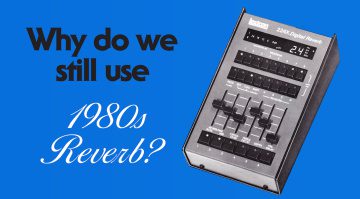
Why Do We Still Use 1980s Reverb?
Many ways to get that classic 80s reverb sound...

 4,4 / 5,0 |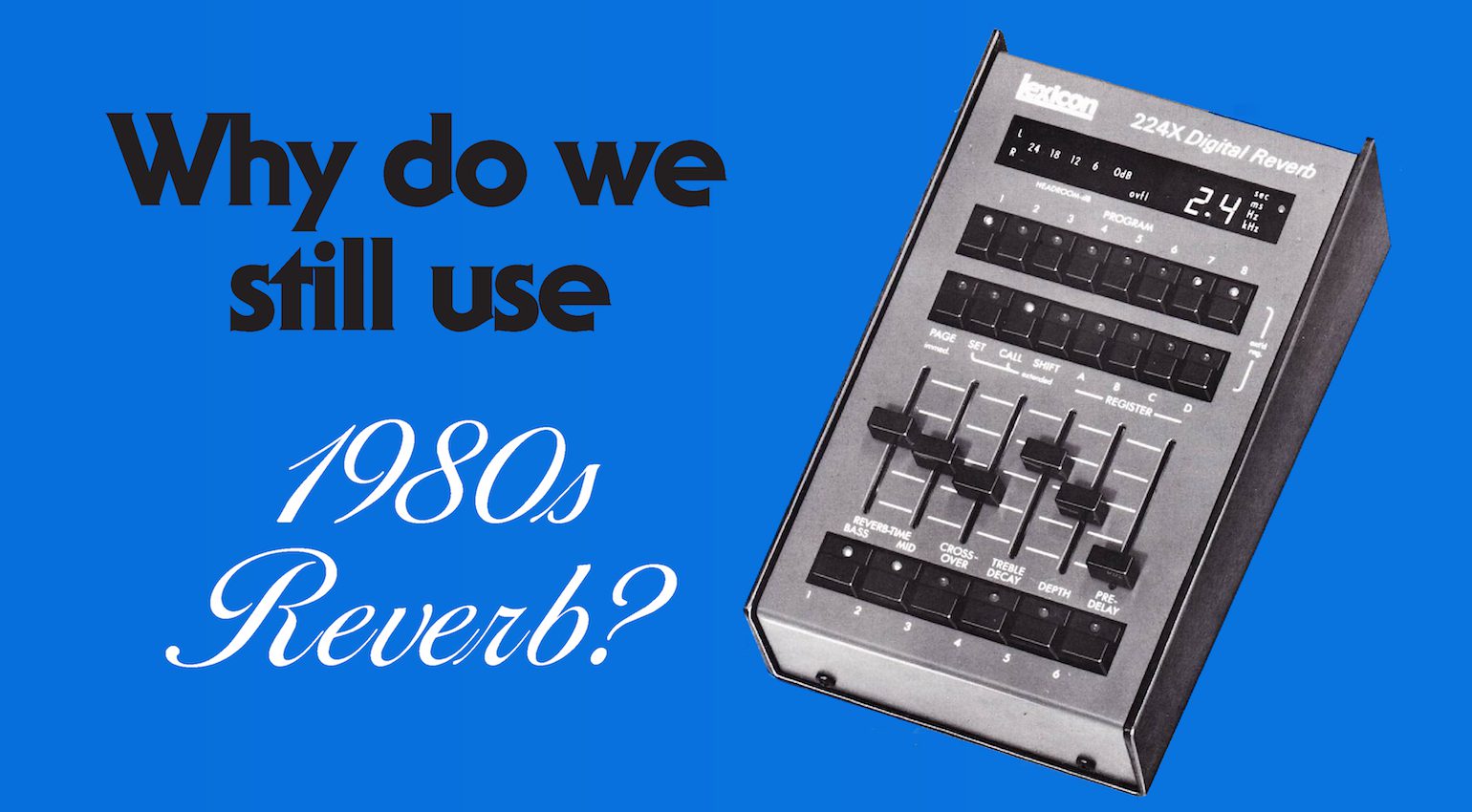

Few effects define a musical era in quite the same way that digital 1980s reverb does. Although we’ve seen so many advancements in audio since then, those classic ’80s reverb sounds are still popular and sought after today.
Key Facts about 1980s Reverb:
- In the 1980s, an effect called gated reverb was pioneered by Hugh Padgham on Phil Collins and Peter Gabriel records, where it was used to give drums an exaggerated, punchy sound without losing mix clarity.
- Rather than emulating real acoustic spaces, early digital reverbs often used non-linear curves that allowed flexible shaping. While this sounded synthetic, it gave drums and vocals a wow factor that stood out even in dense mixes.
- To preserve clarity, engineers in the 1980s used longer pre-delay times and compressors sidechained to the dry signal. This allowed precise control of the onset of the reverb bloom, keeping vocals and instruments upfront, with the spatial effect behind.
- As opposed to being used as an insert, reverb used parallel send and return tracks in the 1980s. This allowed different mix elements to share the same space, for a more cohesive sound with flexible control of the balance and depth.
In this Article:
The Story of Digital Reverb
It begins in 1976 with the EMT 250. Digital reverb provided a controlled environmental ambience with a low noise floor, which was revolutionary in the recording process. Until that time, the use of plates, springs, and re-amping had been some of the methods commonly used to add spatial characteristics to a sound.
Studios also evolved drastically due to the introduction of the SSL 4000 E series(and later G series) consoles. This provided unprecedented routing flexibility, and when combined with the newly available tools of the time, like analogue synthesizers and digital samplers, we got the magical explosion in the record industry that was the 1980s.
Digital reverb units like the AMS RMX16, Lexicon 224X, Yamaha REV-7, and the Sony DRE-2000 became icons of this era. They were used on so many of our favourite records, and engineering superstars like Chris Lorde-Alge still use vintage reverb units or their software equivalents in every mix.
1980s Reverb: EMT 250
Although it was first introduced in the mid-1970s, the EMT 250 is often thought of as the godfather of 1980s reverbs, featuring on classic albums such as Michael Jackson’s Thriller and Prince’s Purple Rain. Developed in Germany by Dr. Barry Blesser, Peter Bermes, and Karl Otto Bäder, the space heater is also one of the rarest pieces of gear, with only 250 units ever produced.
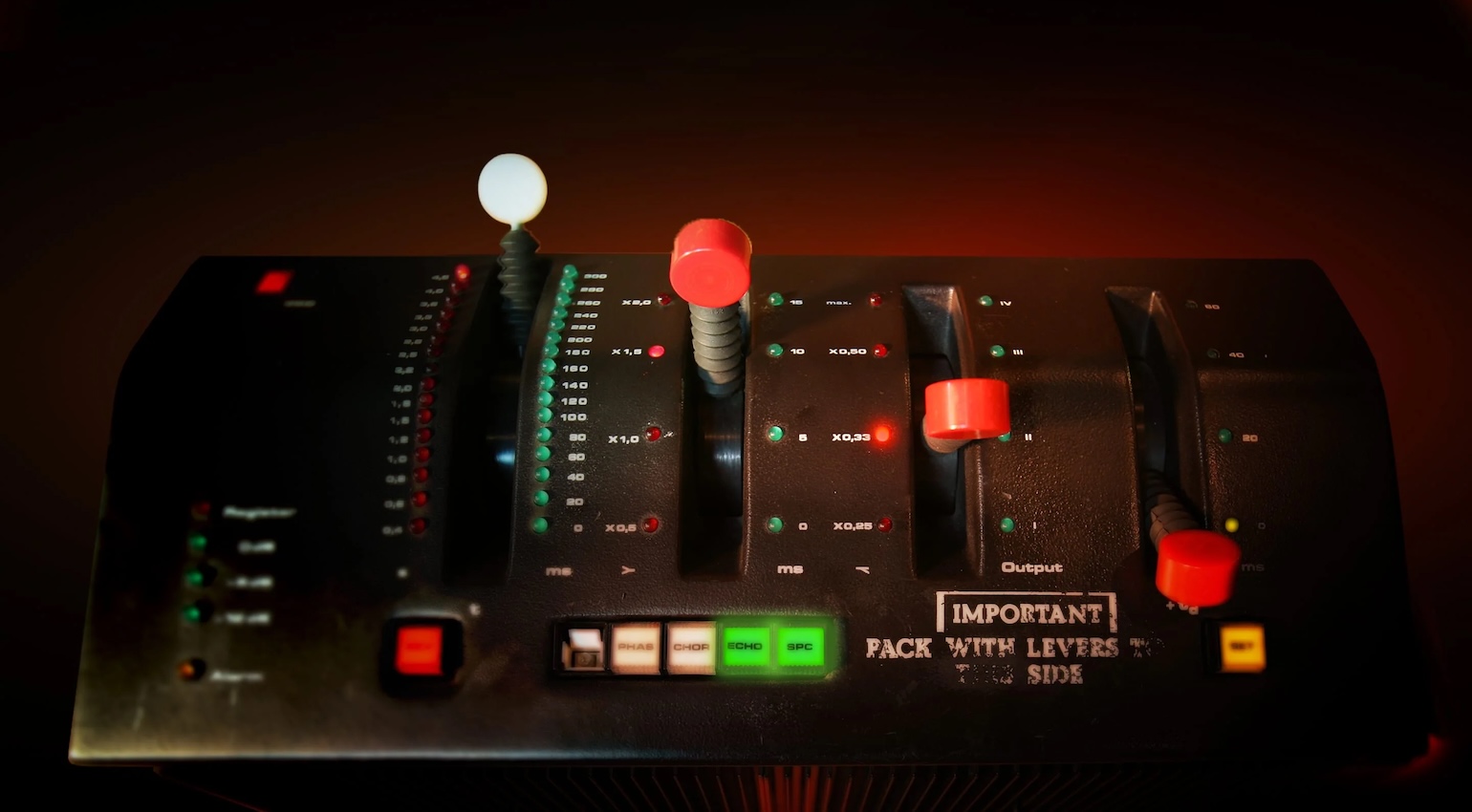
As you can imagine, the digital conversion stage and processing engine are extremely primitive, running at 12-bit (quasi 15-bit) 24 kHz, which is archaic compared to even the most basic DAW processing chains today. However, its slightly degraded, shadowy sound is the exact reason the 250 is such a sought-after reverb.
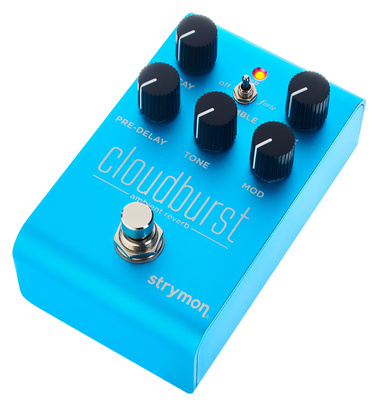
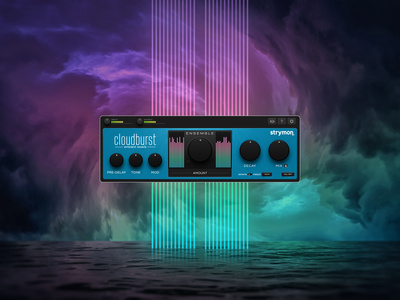
Besides reverb, the 250 also had five other effects algorithms, including delay, phaser, chorus, echo, and space, which was a long sci-fi reverb of about 10 seconds. You can find a similar reverb sound using Valhalla Vintage Verb’s Sanctuary algorithm, as well as plugins like AudioEase Altiverb, Waves Alchemy Dawn, ERS EMpTy250, Strymon Cloudburst, and the officially endorsed UA plugin, which requires the Apollo DSP hardware.


1980s Reverb: AMS RMX16
The RMX16 was released by Advanced Music Systems in the UK in 1982 as the first ever microprocessor-controlled digital reverb. With its 18 kHz frequency response and pseudo 16-bit (12-bit audio + 2-bit range data converted to 16-bit linear) 40 kHz processing, the RMX16 was considered to be cutting-edge technology for its time.
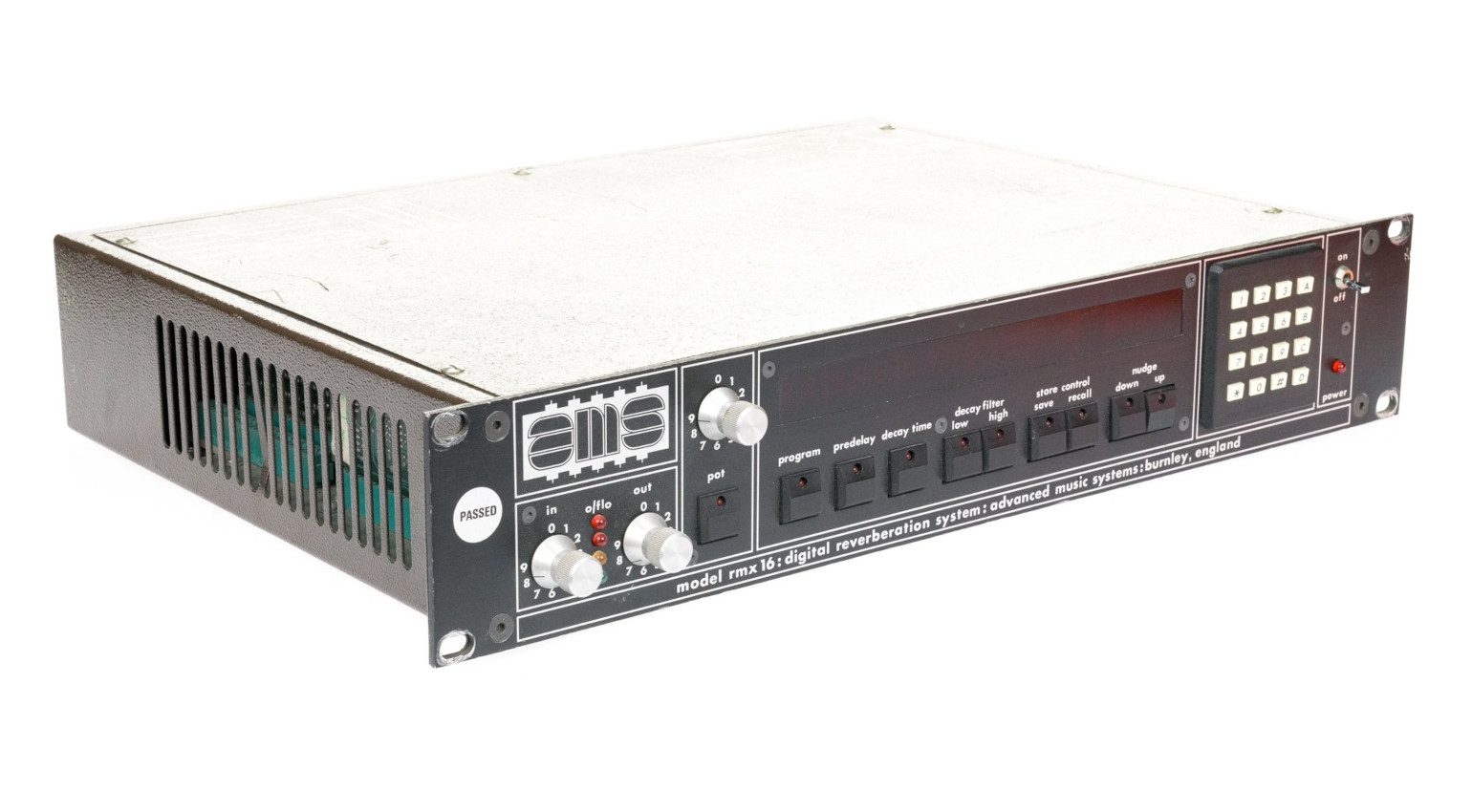
Its nine algorithms were contained on EPROM chips, including Ambience, Room A1, Hall C1, Plate A1, Hall B3, Chorus, Echo, Non-Lin 2, and Reverse 1. With its transparent, larger-than-life sound, the RMX16 became one of the defining reverbs of the 1980s, used by artists like Phil Collins, Peter Gabriel, Kate Bush, Tears For Fears, U2, and Dire Straits.
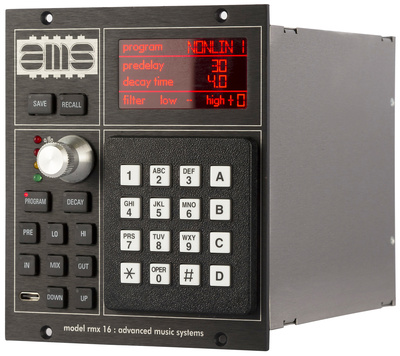
A modern 500-series recreation of the RMX16 is still being produced by AMS Neve in Burnley, UK, with double the amount of algorithms. To get that famous AMS Non-Linear gated drum reverb sound, you can also use Valhalla Vintage Verb’s Nonlin setting or plugins such as AudioEase Altiverb, Wave Alchemy Glow, LiquidSonics Reverberate, and the officially endorsed UA plugin, which requires the Apollo DSP hardware.

1980s Reverb: Quantec QRS
The Quantec Room Simulator was introduced in 1982, at the same time as the RMX16, and although it is not as well-known, the QRS was ahead of its time in many ways. Developed by Quantec founder, Wolfgang Buchleitner, the QRS used sound propagation and resonance modelling, rather than the echo and feedback networks used by other reverbs at the time.
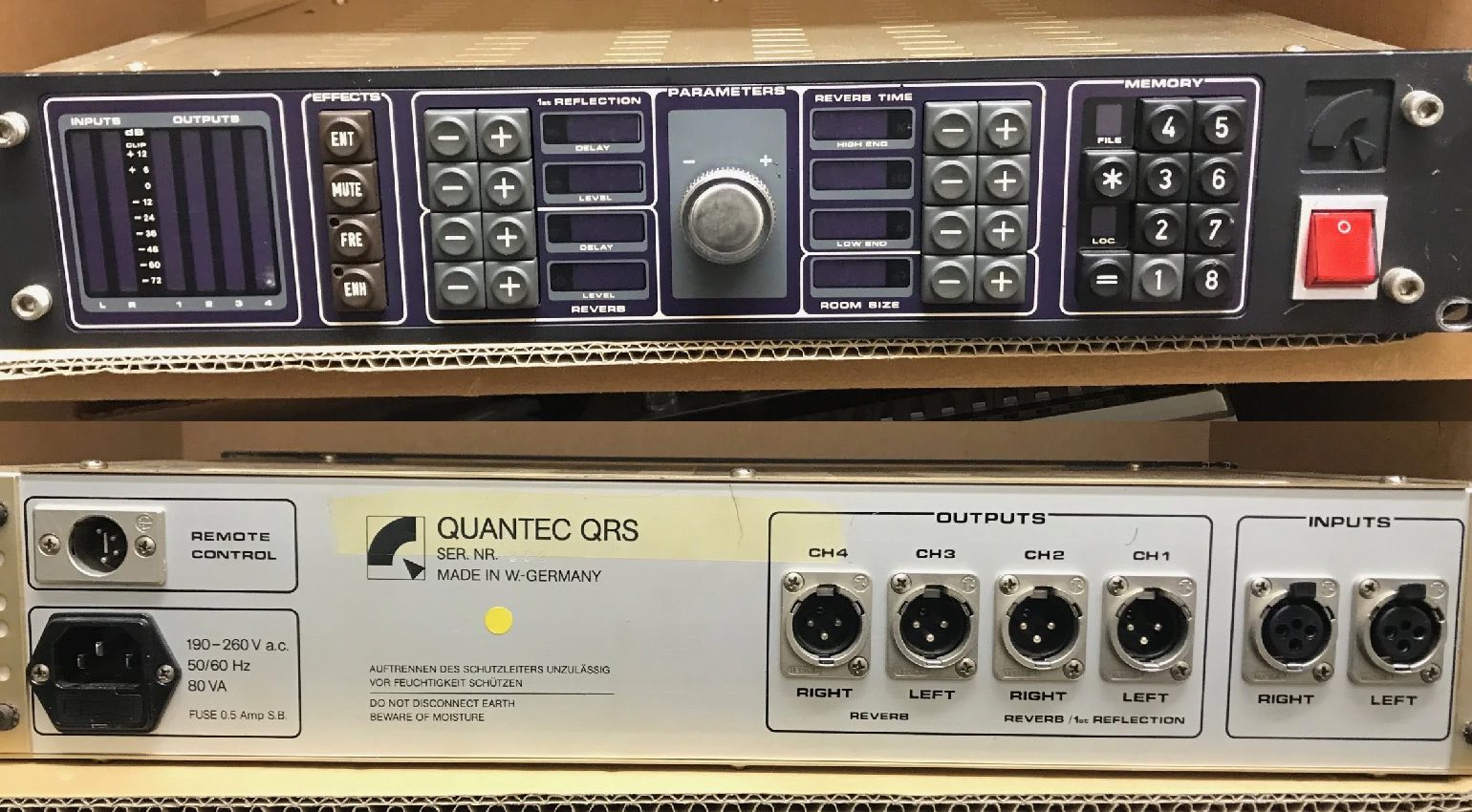
This technology allowed the QRS to generate far more realistic acoustic spaces than its competitors, using 16-bit digital conversion with 2x and 4x oversampling, and 26-bit 20 kHz processing internally. Although it was famously used by artists like Enya, Pink Floyd, Depeche Mode, and ABBA, the QRS also carved a path in film sound design and post-production, with the likes of Hans Zimmer using later iterations of the reverb unit.
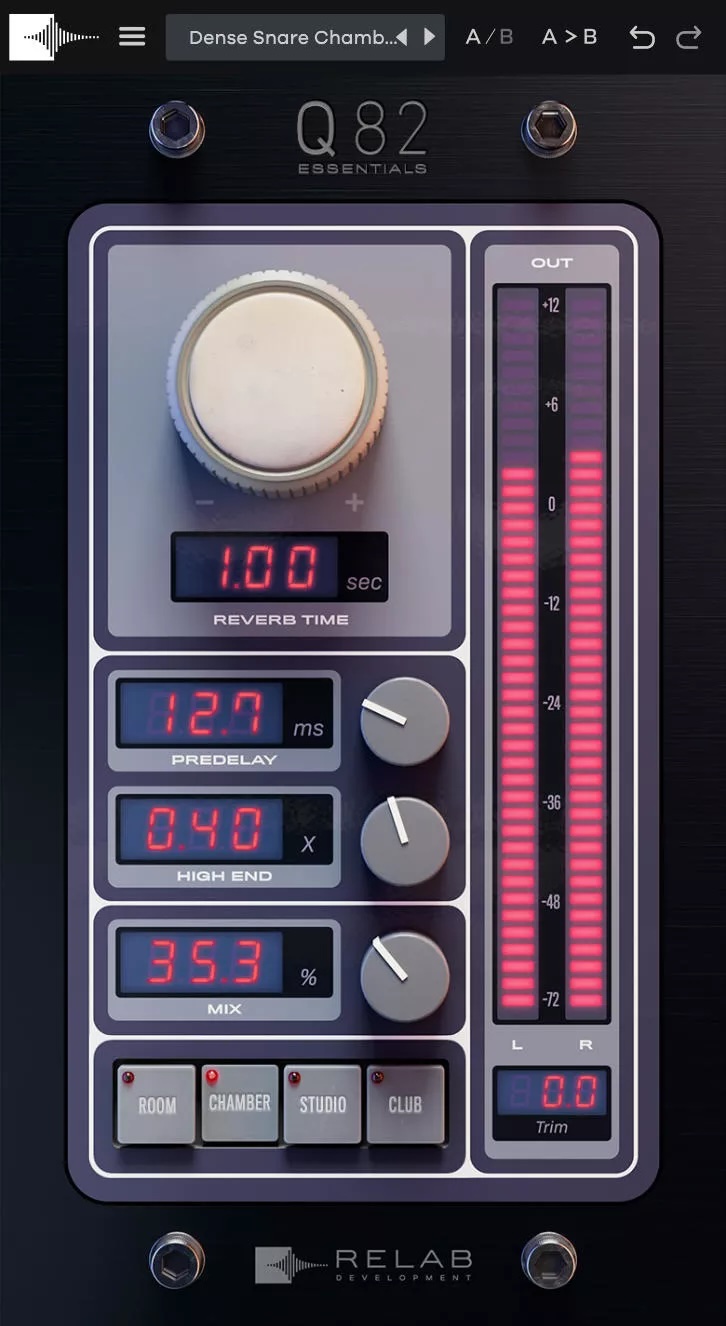
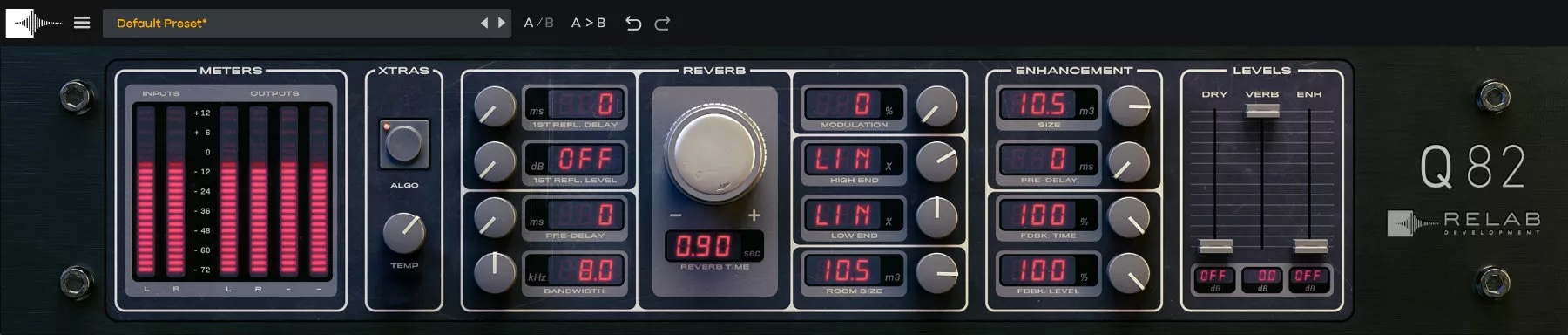
Naturally, the QRS was slightly more technical in terms of its operation than many of the reverbs on this list, but the results were astounding for the time. You can get the QRS sound with the officially endorsed plugin within Apple Logic Pro, as well as others like the Savant Quantum Room Simulator and the Relab Development Q82.

1980s Reverb: Lexicon 224 and 480L
The Lexicon 224, introduced in 1978, and the 480L in 1986, defined the sound of 1980s era music more than any other instrument or effect. While the 224 is certainly considered the more lo-fi of these two iconic reverbs, with 12-bit (gain-shifting for 16-bit range) 20 kHz digital conversion, it still had a room mode enhancement feature that added modulation for realism, and you could EQ the decay of the reverb across three bands.
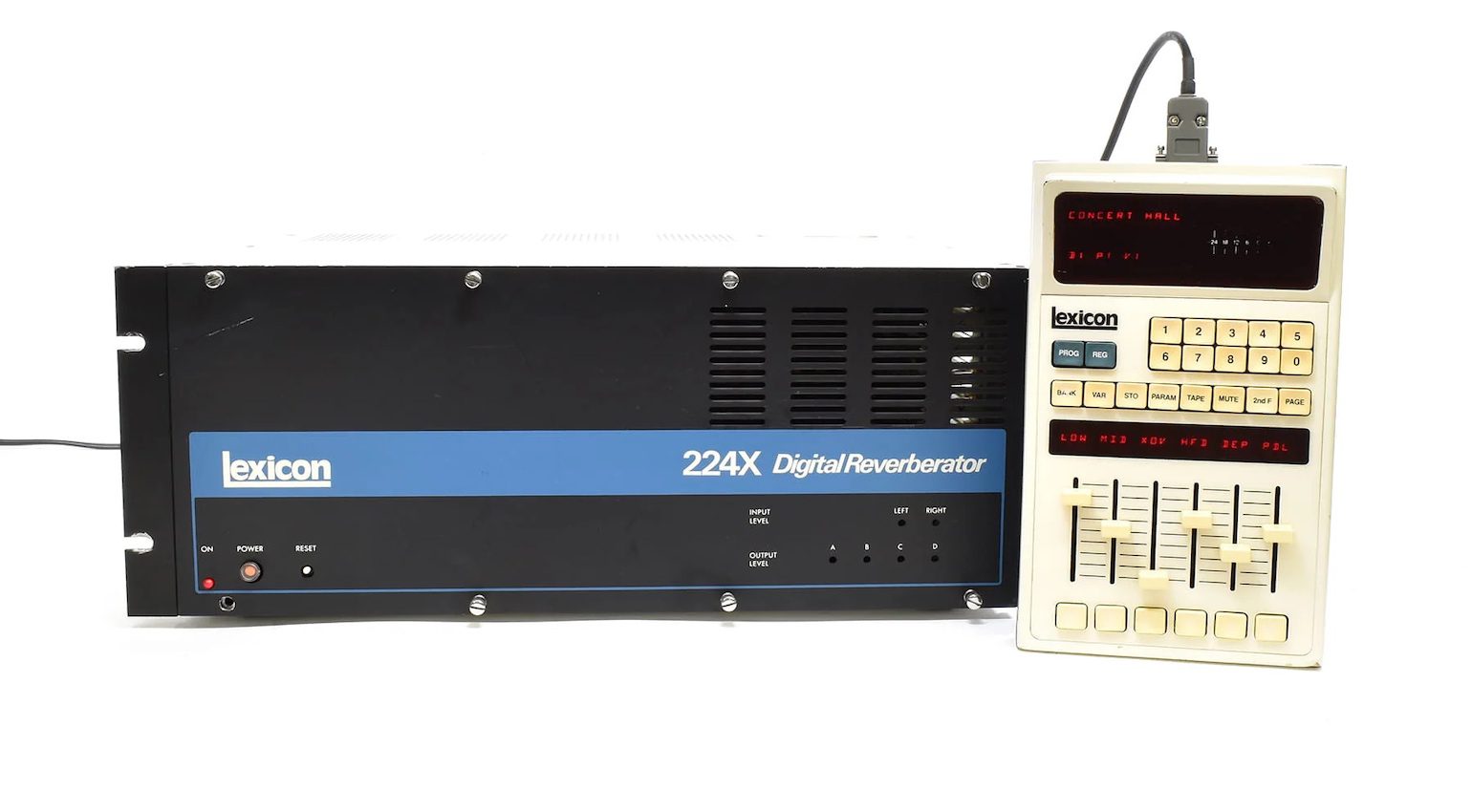
The more advanced 480L took things to a new level and became the standard in professional studios from the mid-1980s onwards. Far cleaner and more flexible, the 480L had a dual processing engine, which allowed you to use two different algorithms at once. Among these were a range of chorus, delay, and doubling effects, as well as the famous Random Hall algorithm.
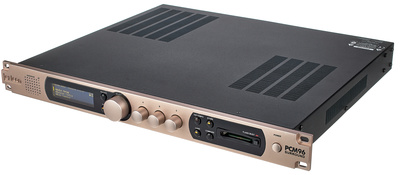
Today, you can still access high-quality versions of these classic reverb sounds with the Lexicon PCM hardware and plugin suite. Alternatively, there is a wide range of options from reputable brands such as AudioEase, UA, Arturia, Relab Development, and, of course, you can use Valhalla VintageVerb.

Using 1980s Reverb in Your Studio
Like many effects we use for tonal quality, reverbs are available in several formats. The set-and-forget approach we take with leveling amplifiers is often used with reverbs, too. This is due to the rather involved technical process that comes with designing your own reverb patches.
Good reverb units were never cheap, but you can get great-sounding reverb without the risk of buying a temperamental and astronomically priced vintage reverb. There are factors to consider, like the advantages of software vs hardware, so we’ll check out some options and find something suitable for your setup.
1980s Reverb: Software Plugins
Having multiple instances of quality reverb plug-ins available in a single click is an incredibly powerful creative tool. Software provides instant gratification without patch cables, which makes it extremely convenient.
Remember, though, that some vintage reverb units were one-trick ponies in the studio. So, unless you’re after the sound of a specific make or model, ensure you select something that has some versatility.
Valhalla VintageVerb
Valhalla VintageVerb is one of the most widely used reverbs on the market. It’s affordable, easy to use, and it provides you with an extremely wide range of different reverb algorithms modelled on both vintage and more modern-sounding verbs.
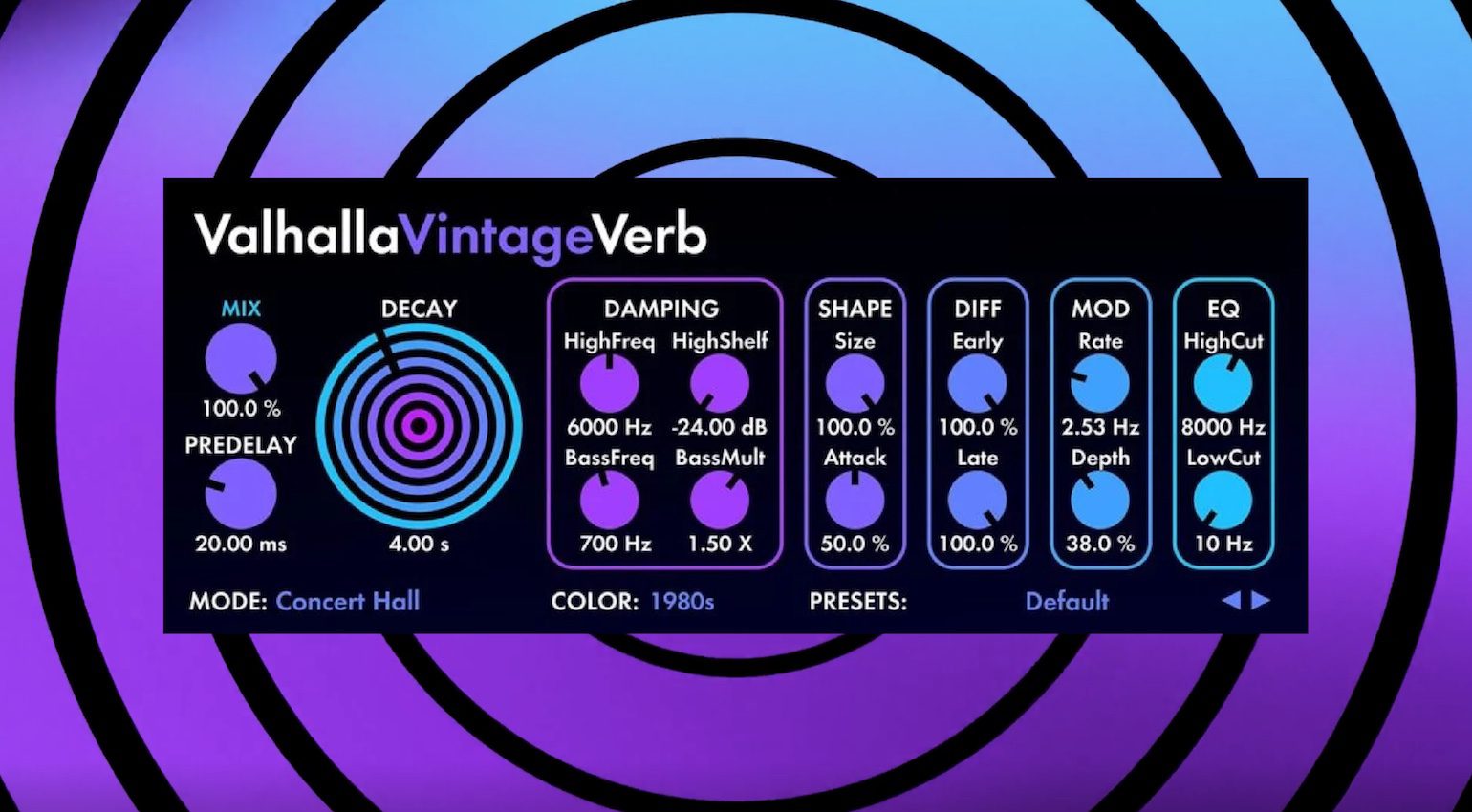
Perhaps the GUI is not the most glamorous in the world, but if you can dial in your reverb sounds fast, and the sonic quality is impressive, maybe looks aren’t quite as important. Whether you prefer cleaner or more modulated reverb sounds, VintageVerb gives you some of the best all round value.
UAD AMS RMX16 Expanded
Developed in collaboration with AMS founder Mark Crabtree, the AMS RMX16 Expanded plug-in is an authentic emulation of one of the most famous reverb units of all time. The no-nonsense UI gives you the classic controls without menu diving, which makes it a pleasure to use.
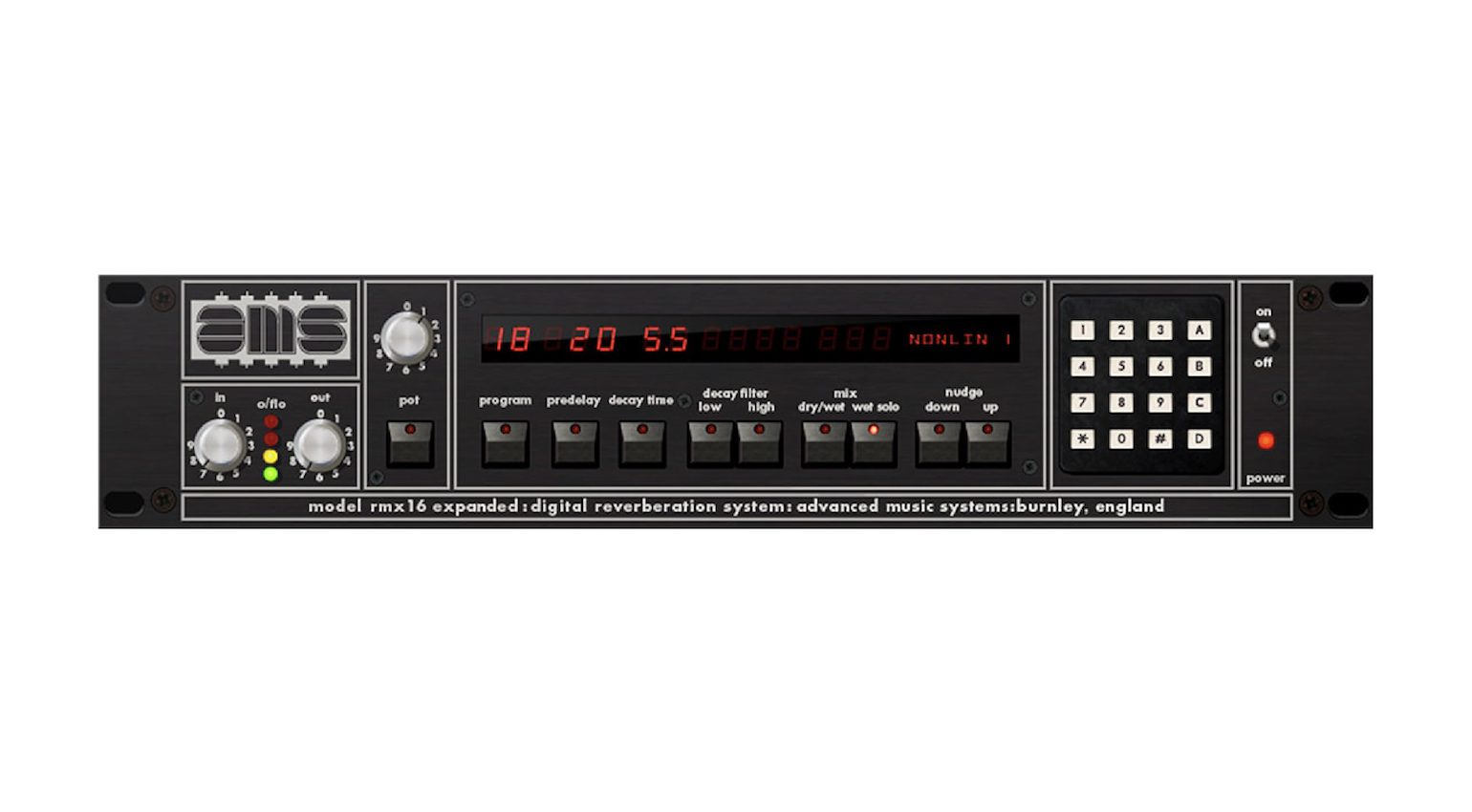
Like most UAD plug-ins, it sounds great, but it also has all the original patches so you get a realistic feel of using the RMX16 reverb in all its glory. All the famous algorithms are included, like the ambience and non-linear reverb settings, and it’s now available natively for any DAW.
- More from Universal Audio


Slate Digital Verbsuite Classics
Verbsuite Classics puts all the famous reverbs in one easy-to-use plug-in. The controls are simple but effective, and the EQ and chorus allow you to shape the sound according to your desired application easily.
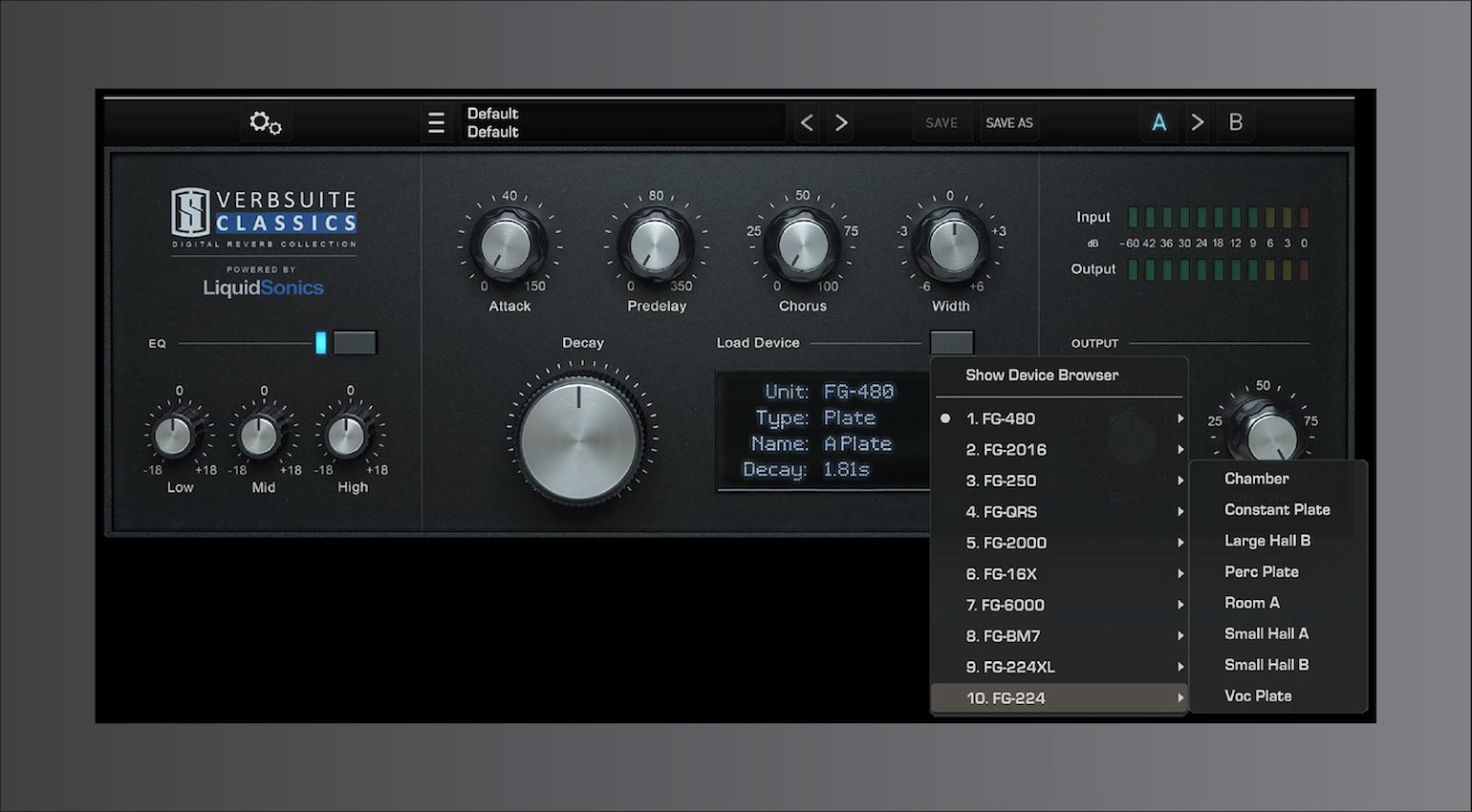
What it lacks in looks and features, it makes up for with its sound. Even if you never deviate from the patches, Verbsuite gives you a wide range of reverbs to choose from.
- More from Slate Digital

Lexicon PCM Native Reverb Bundle
The Lexicon PCM Native Reverb plug-ins have become an industry standard over the years. The bundle gives you seven different reverbs, each with its own patch library. The controls are reminiscent of the PCM96, providing detailed controls and visual EQ.
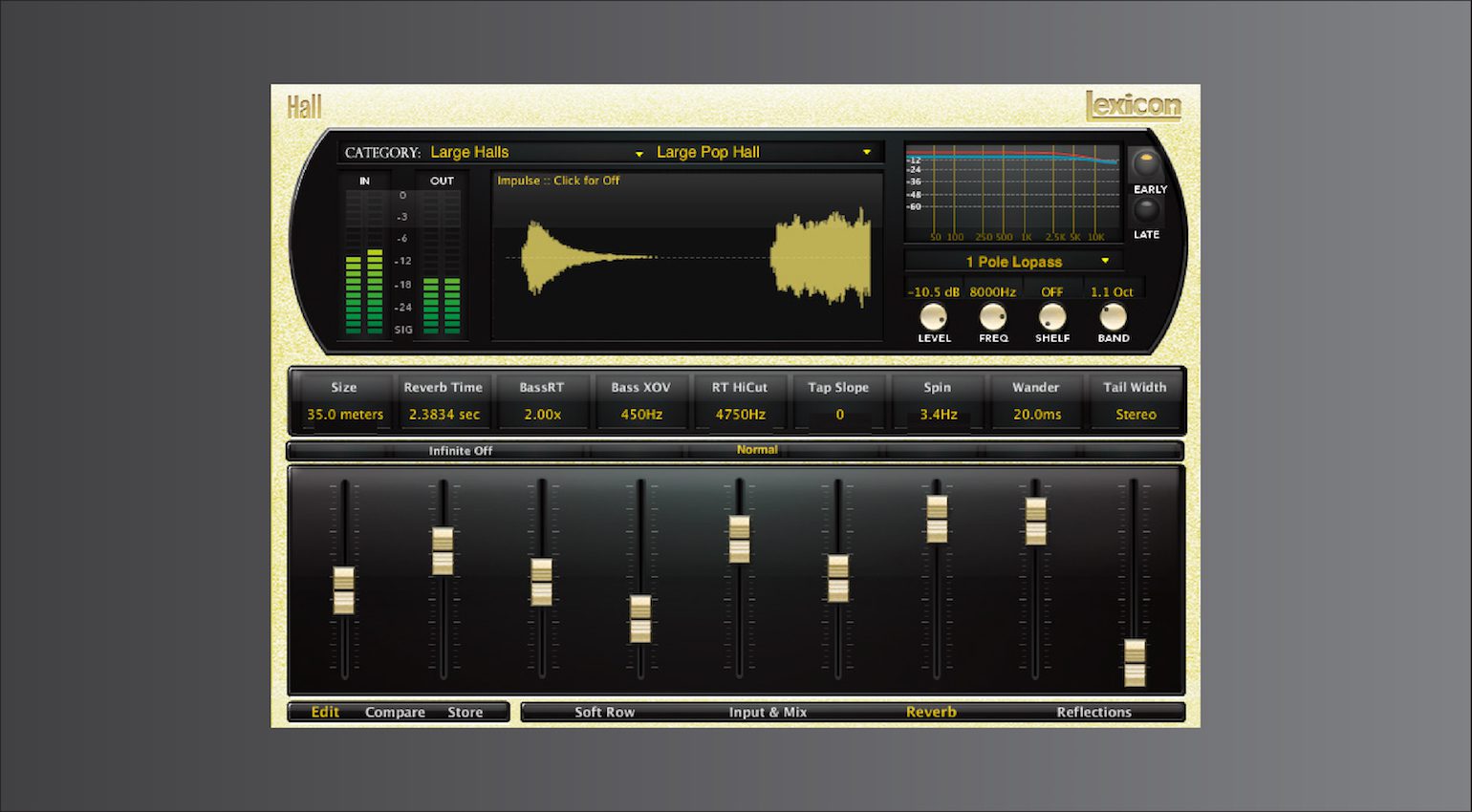
If you’re a lover of the Lexicon sound, this is an easy choice. Although it’s a considerable investment, it does offer a huge amount of flexibility and control beyond simply being a quality reverb.
- More from Lexicon
Audio Ease Altiverb 8
Quite simply, Altiverb 8 is the Omnisphere of reverb plug-ins and one of the most powerful reverbs available in hardware or software. If you work as an engineer or sound designer in games, TV, film, or music, you’ve probably used it before.
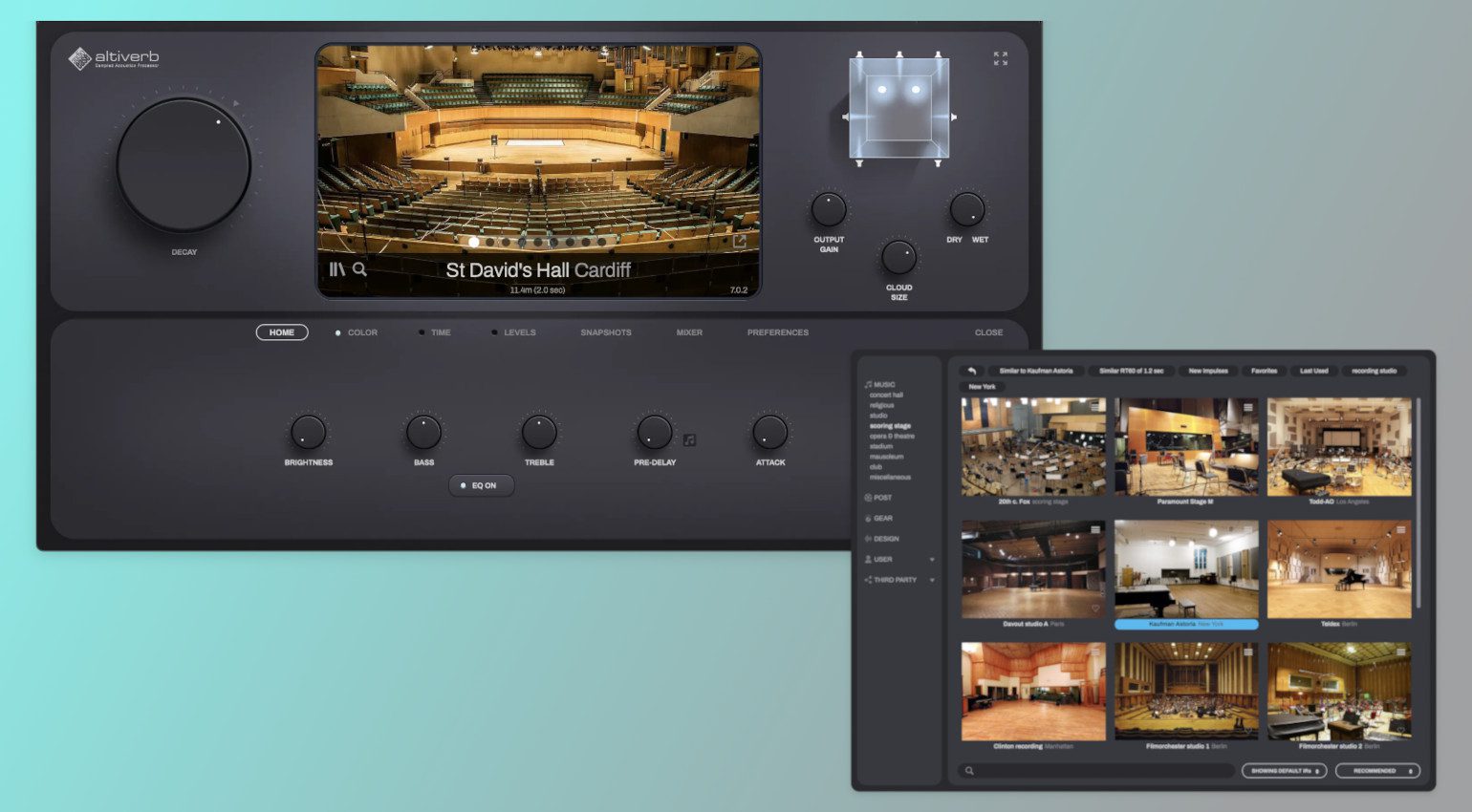
Among its amazing spaces and IR designing capabilities, Altiverb also offers astonishingly realistic vintage reverbs from AMS, Lexicon, Yamaha, and many others. It is pricey, but at least you won’t need another reverb any time soon.
- More from Audio Ease
1980s Reverb: Effects Pedals
Not all reverb pedals are exclusively designed for guitars. Some offer line-level I/O to suit other instruments like synths and drum machines. This is great for using them on aux sends from your mixer, just like you would with outboard rack gear.
Apart from that, they offer great-sounding effects and some even allow you to stack multiple reverb patches and create more complex layered sounds. The creative immediacy of working with a live tweakable instrument also has its own appeal.
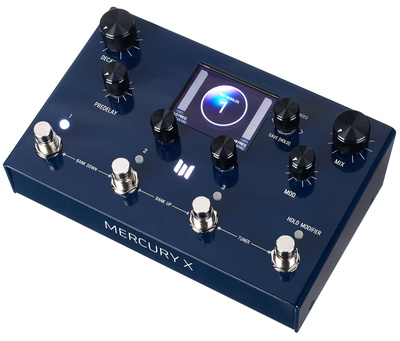
Meris Mercury 7 and MercuryX
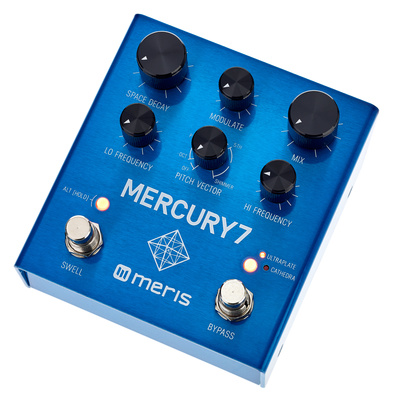
Inspired byVangelis’ shimmering, modulated Lexicon 224 reverb sounds from the Bladerunner soundtrack, the Mercury 7 is a pedal version of its 500 series counterpart. The Meris 24-Bit AD/DA with 32-bit floating point DSP engine, combined with true analogue signal path, means you get studio-quality sound.
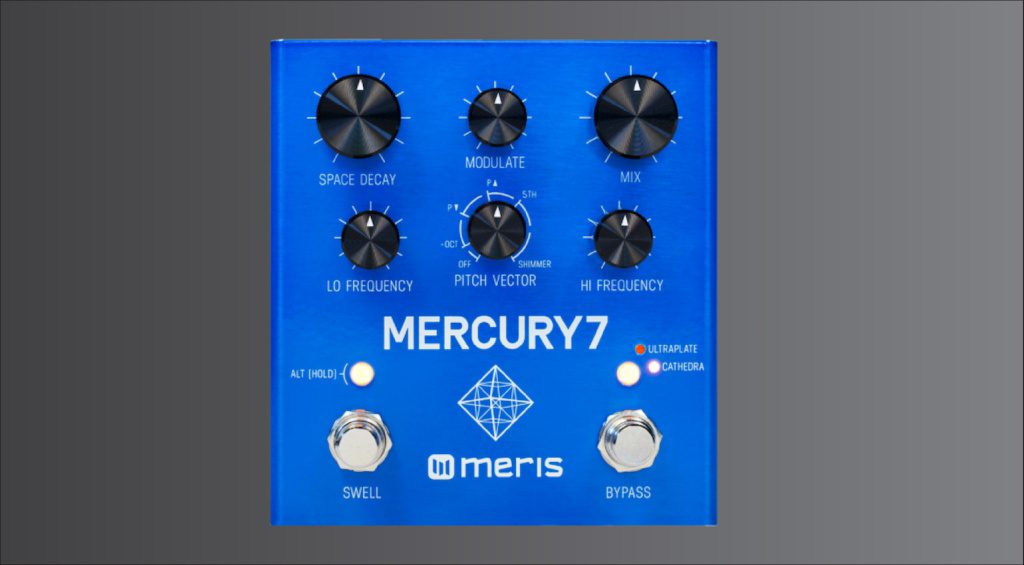
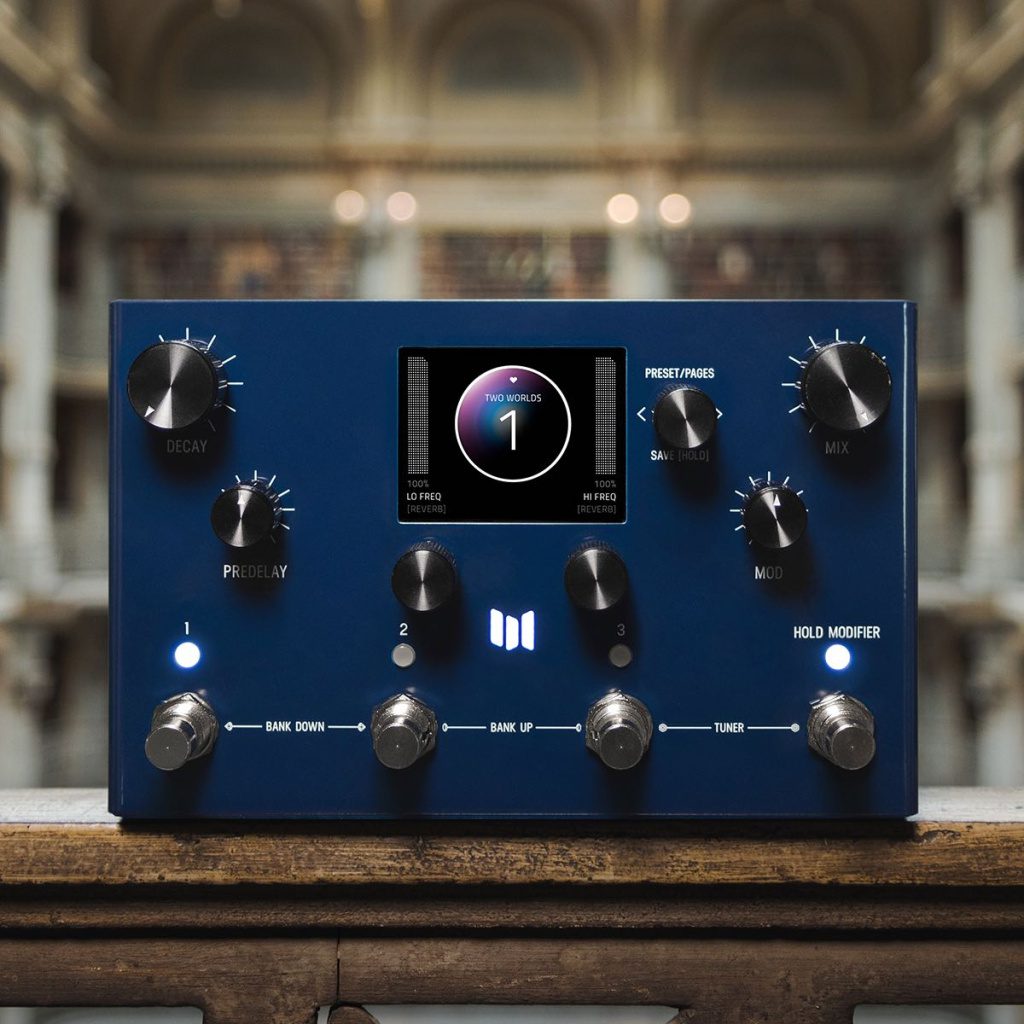
In addition, the Mercury 7 offers two different reverb algorithms (Ultraplate/Cathedra) and extensive tone-shaping capabilities. Apart from the EQ, the pitch vector allows you to accurately shift the wet signal for whichever instrument you’re using.
- More from Meris

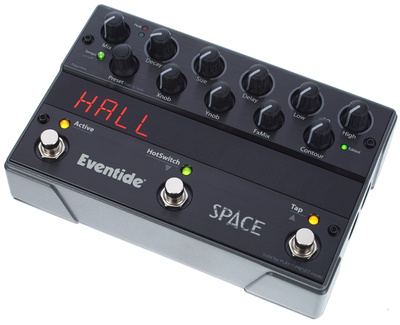
Eventide Space
The Eventide Space pedal gives you 12 signature reverb combo algorithms and 10 knobs to design the sound to your liking. Furthermore, you get 100 patches designed by top engineers and producers like Richard Devine, Alan Moulder, and Flood.
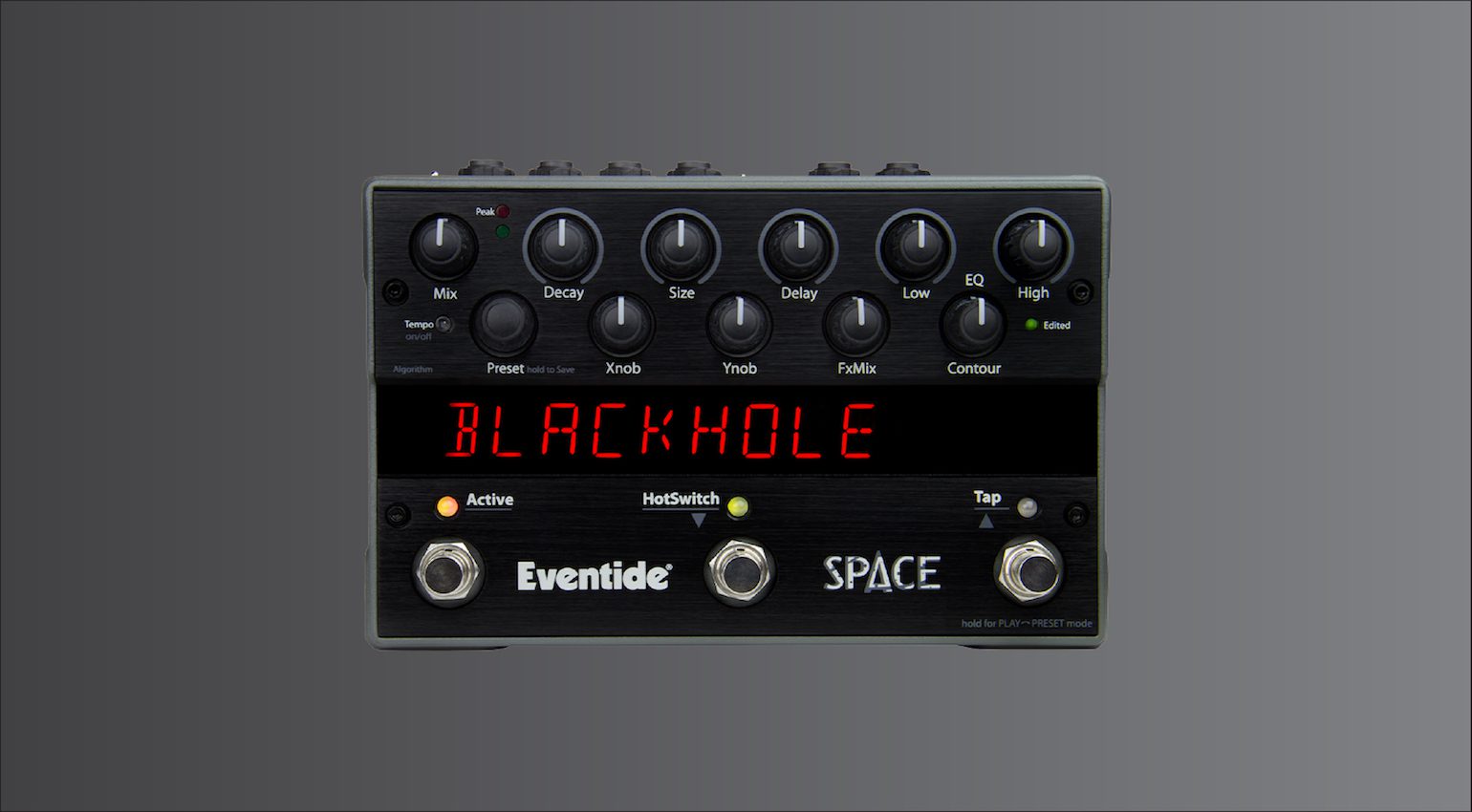
The Space is well built with a metal chassis, so it’s rugged enough for the road. Also, it has great features like MIDI sync via DIN or USB to combine it with other hardware in your setup or even your DAW.
- More from Eventide

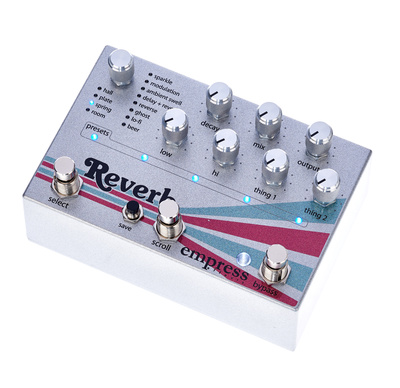
Empress Effects Reverb
Empress Effects is known for creating some of the most innovative designs when it comes to pedals, and the Empress Reverb is no exception. Not only is this an amazing-sounding reverb, but it’s also a very versatile creative tool with 32 reverb algorithms and the ability to further update the firmware via SD card.
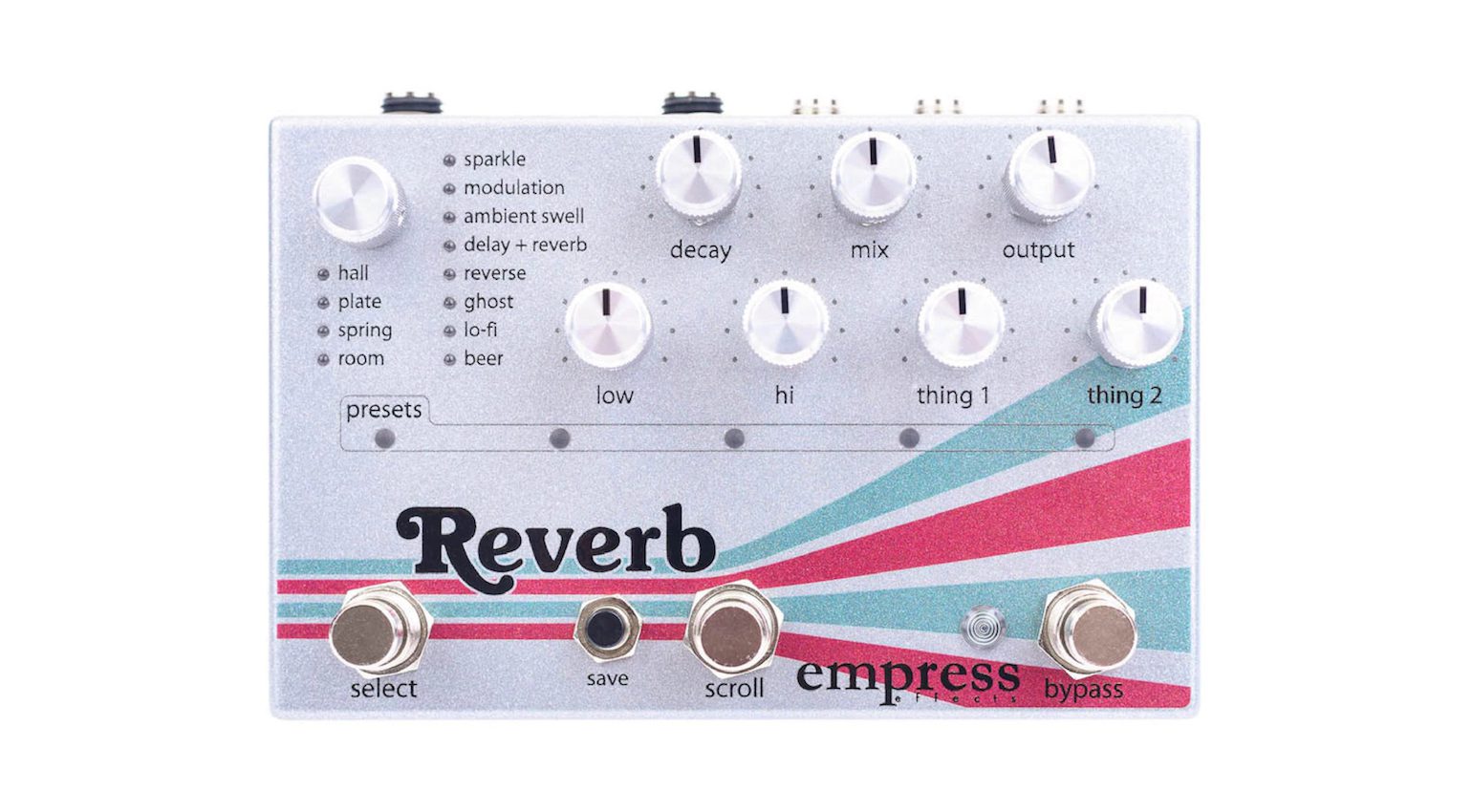
Overall, it’s a great combination of good build quality and simple, effective design. You will, however, need a re-amping device for it to function optimally as a line-level outboard processor.
- More from Empress Effects

1980s Reverb: 500-Series
500 Series effects give you much of the same quality as 19″ rack gear, but the more compact format provides certain benefits. In studio, these are great units if you don’t have much space, and they offer excellent portability for live use.
All it takes is the right 500 series chassis, and you can put your own rig together. Be aware of the space requirements before you look at purchasing these units, as some are larger than others.
Meris Mercury 7 500
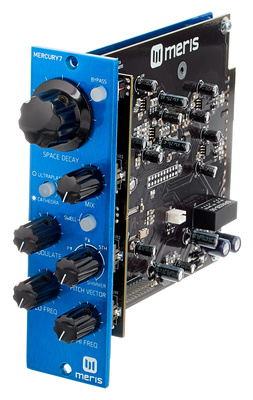
The Mercury 7 500 has all the same features as the pedal version, save for the swell and bypass switches. The fundamental difference is that the 500 series version is a single-space mono unit with more expandability.
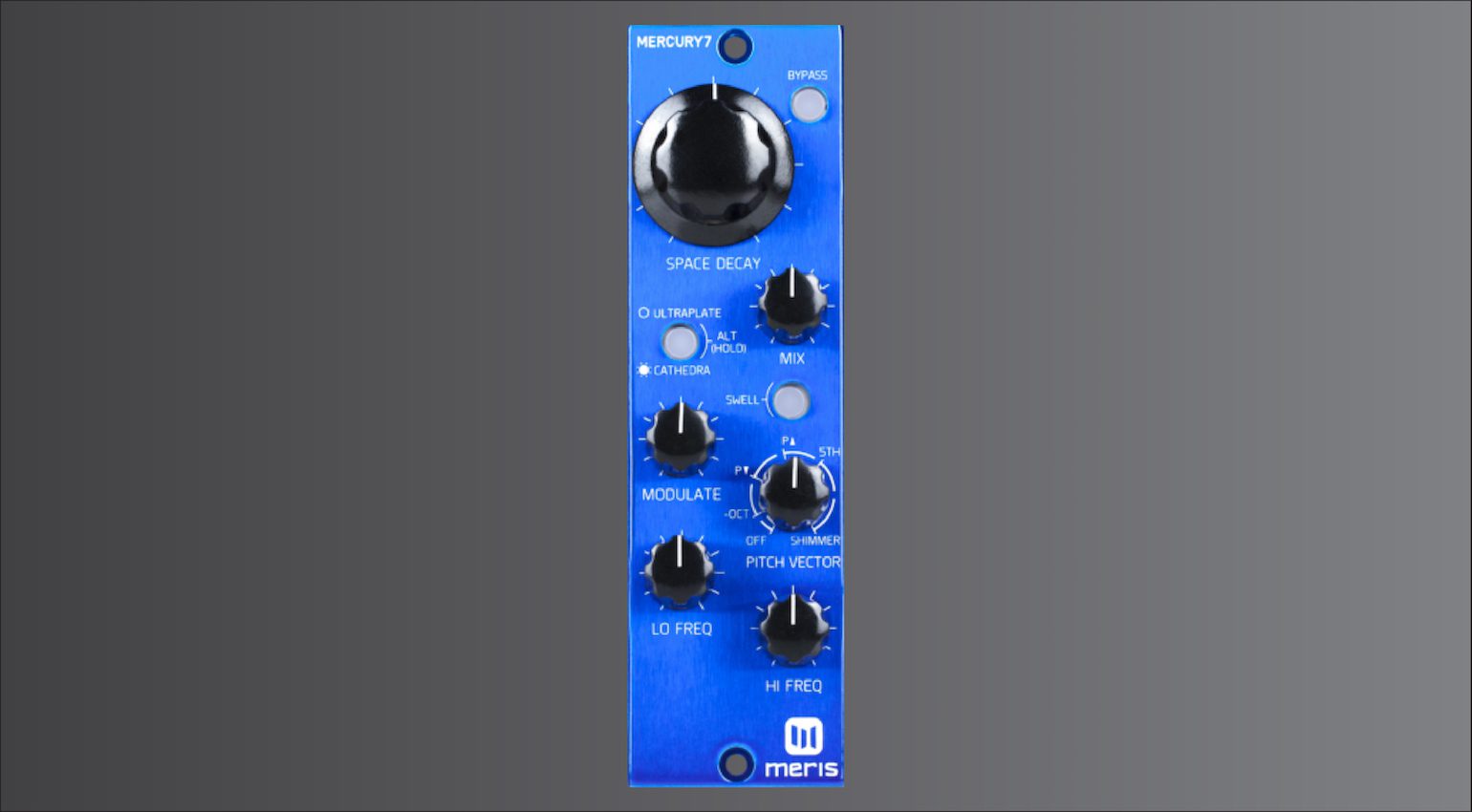
It is both stereo and surround linkable, which makes it extremely formidable considering the cost of high-end studio reverbs. Overall, the approach of the Mercury 7 500 is refreshing, as it encourages real-time sound-shaping rather than sticking to one patch.
- More from Meris
AMS Neve RMX16 500
The RMX16 500 is AMS Neve’s rather recent reissue of the 1981 classic reverb. It takes up three spaces in your 500 series rack and has a very straightforward interface, making it a breeze to build and save patches.
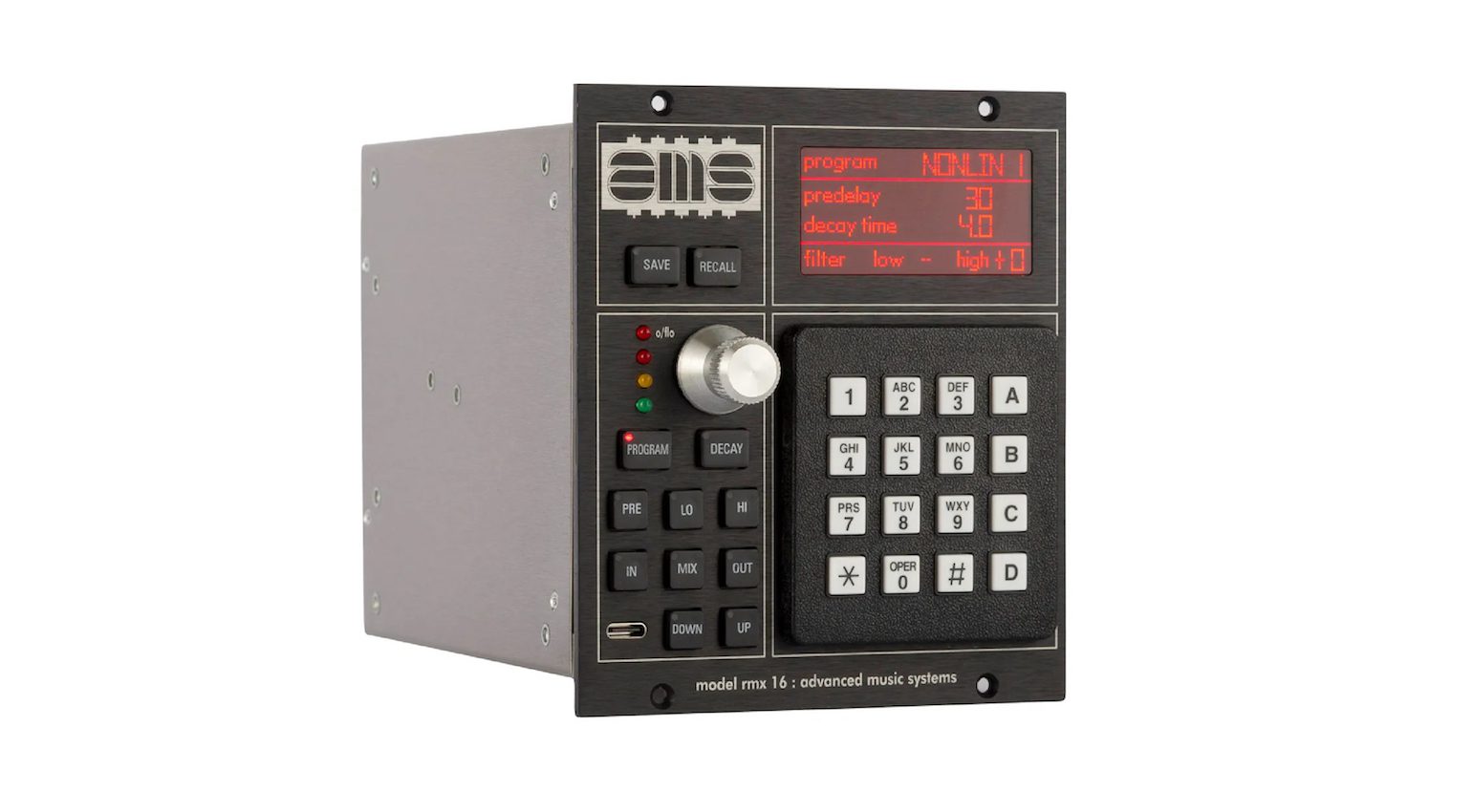
Best of all, though, it’s almost impossible to distinguish from the sound of the vintage RMX16. The character is captured in every way, with the I/O stages perfectly modeled and all the original patches maintained.
- More from AMS Neve
1980s Reverb: Rackmount Units
This is where we get into the higher-end side of reverbs available. You certainly don’t need to spend $2000 simply to create a decent 80s reverb sound. However, it will get you a top-of-the-line reverb capable of creating reverbs for any application.
The great thing about high-end hardware reverbs is that they don’t seem to date, lose much resale value, or go out of style. Once you have one of these in your rack, you are far less likely to keep buying every newly released product, as you would with software.
Lexicon PCM92
Lexicon’s PCM92 has all the features you’d expect from a professional stereo reverb. This includes 28 new and classic reverb, delay, and modulation effects, and a library of over 700 presets to choose from.
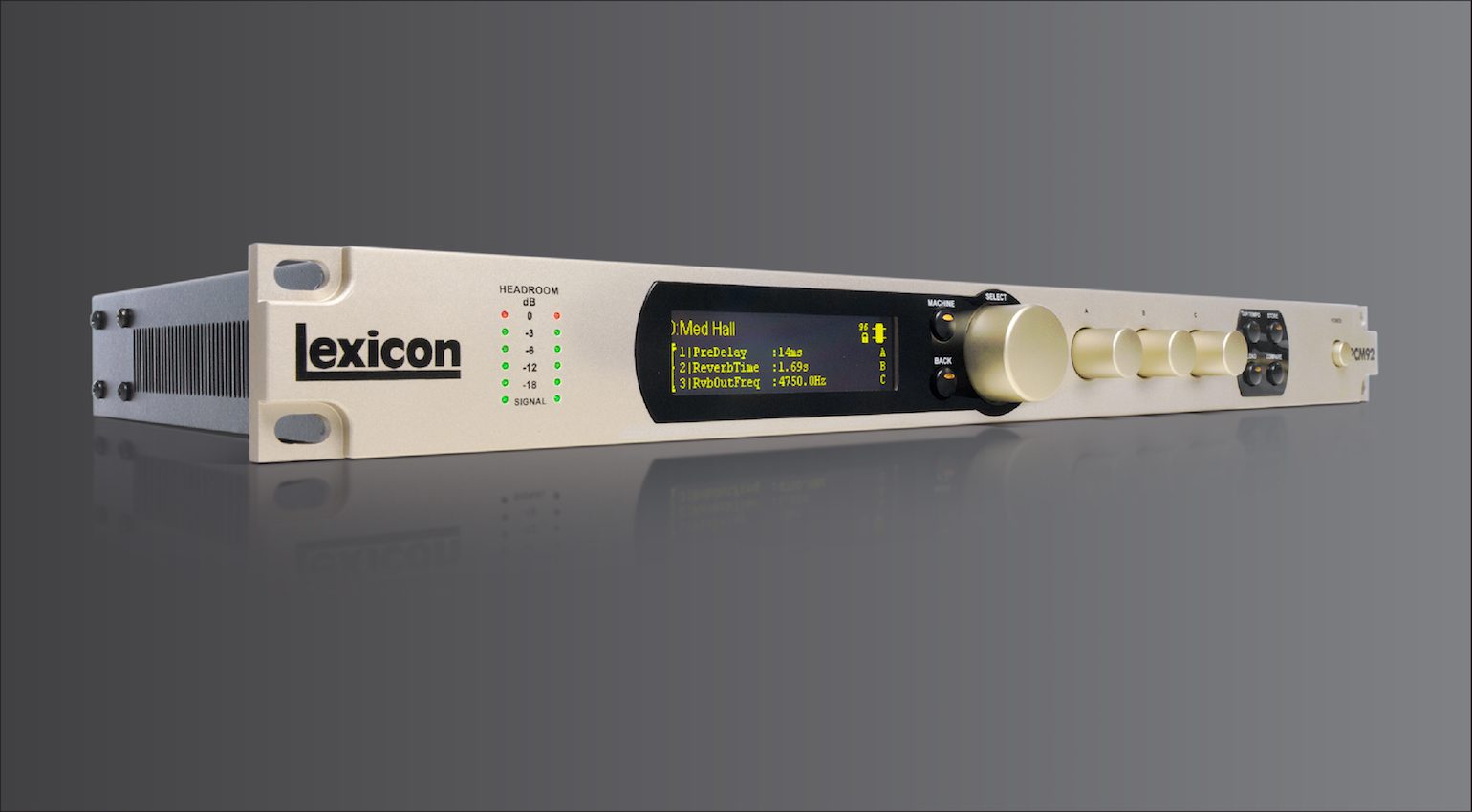
The PCM92 supports up to 96kHz sample rate with its 32-bit floating point system. In addition, It’s equipped with pro-industry connectivity formats such as AES/EBU, word clock, and ethernet. This makes it easy to slot into just about any studio or live setup.
- More from Lexicon
Bricasti M7
Bricasti was founded by DSP engineer Casey Dowdell and Brian Zolner, who has 20 years of experience working with Lexicon. The Bricasti M7 was launched in 2007 and quickly established itself as the industry standard professional reverb unit worldwide.
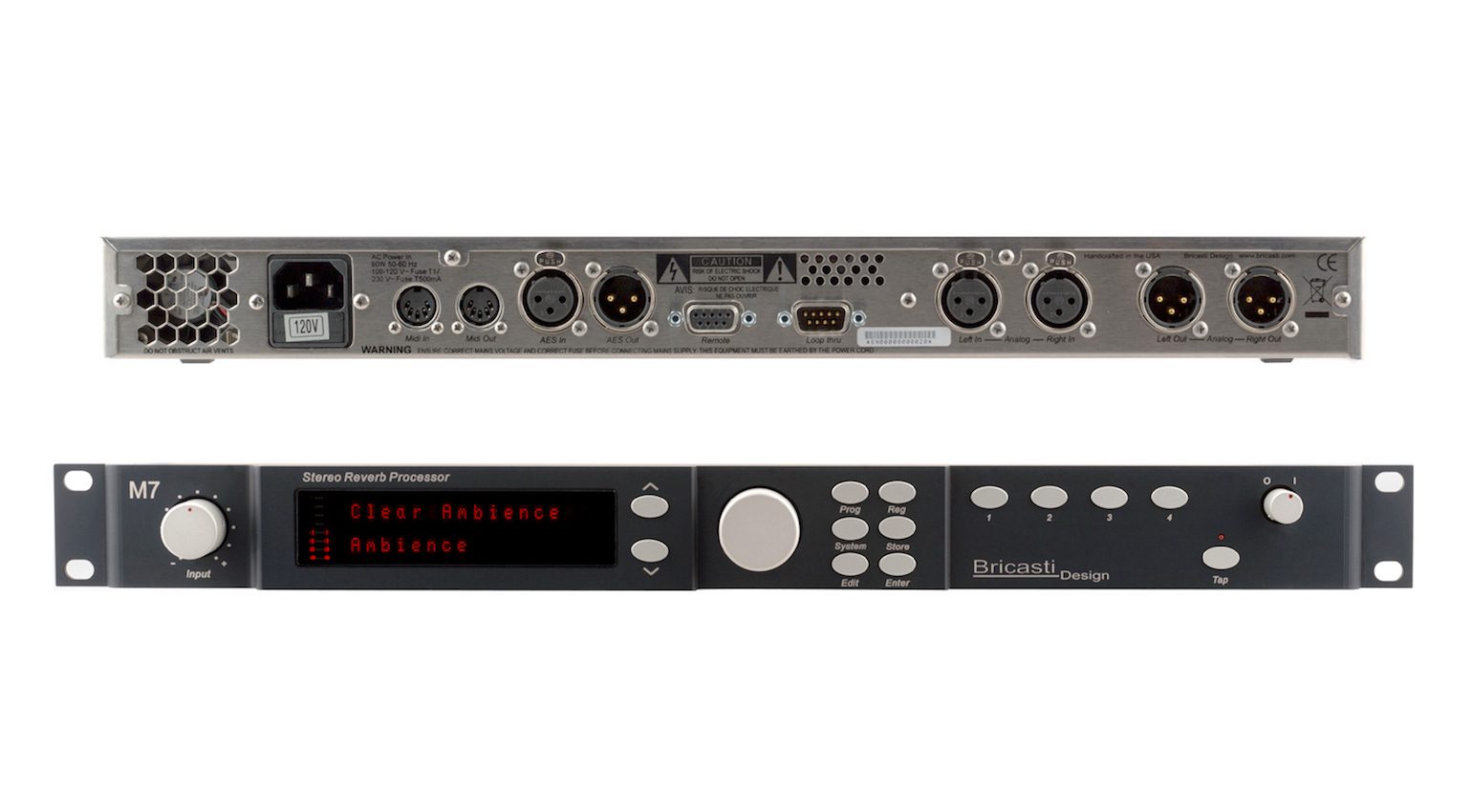
With the ability to produce huge reverbs, transparent chambers, and anything in between, M7 owners are unlikely to ever need another digital reverb. The M7 gives you 100 presets with 12 tweakable parameters and all the pristine DSP you’d expect for the price.
- More about Bricasti

Quantec Yardstick 2496 S
The German answer to AMS and Lexicon, the Yardstick 2496 S is based on the classic Quantec QRS digital reverb from 1982. It’s just astonishing how transparent an early 1980s reverb algorithm still sounds today when compared to other professional reverbs.
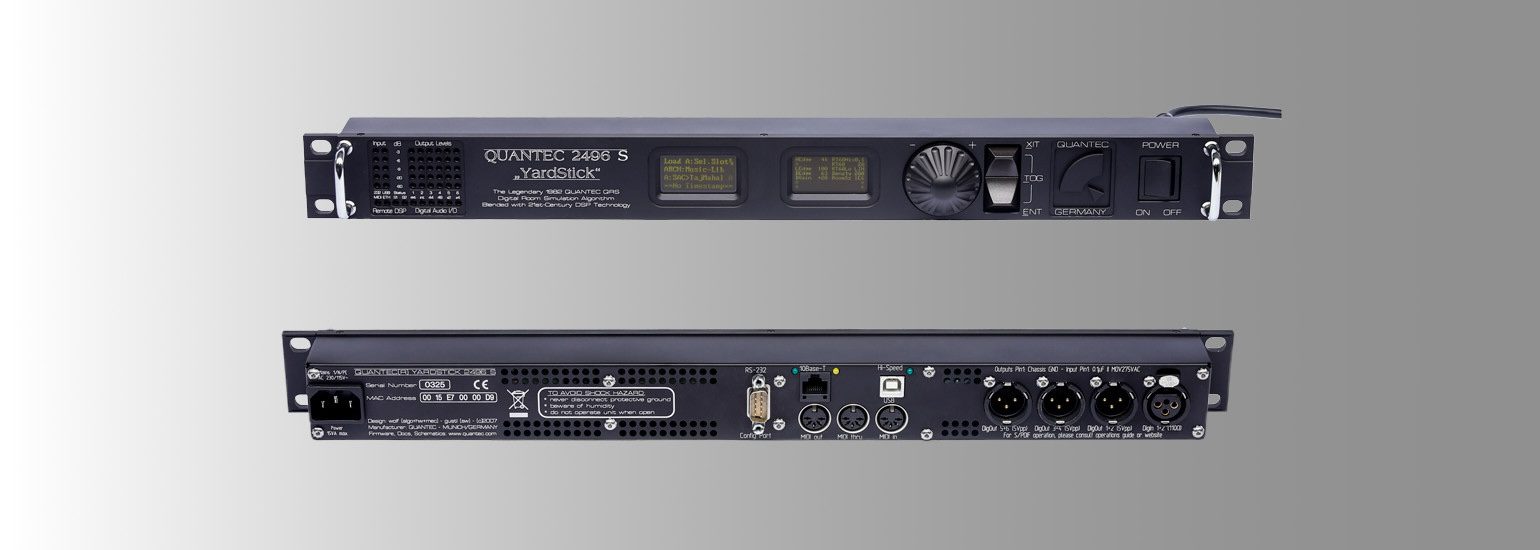
The Yardstick comes with a web app that gives you comprehensive control over its wide range of parameters and the ability to easily match the reverb to the dimensions of the original recording space.
- More about Quantec
FAQs
1. What is 1980s reverb?
In 1980s music production, digital reverb units were used and abused to create artificial spaces, gated effects, and enhanced vocals, drums, and instruments with long ambient tails for added impact.
2. Why was gated reverb so popular in the 1980s?
Gated reverb transformed drum sounds, giving them a massive, punchy sound that didn’t clutter the mix, ideal for the radio-friendly sound of the 1980s.
3. How did engineers keep mixes clear with so much reverb?
They used parallel sends with sidechain compression and EQ, as well as pre-delay to avoid masking the unprocessed signal.
4. Was 1980s reverb realistic or artificial?
Generally, the reverb effects used in the 1980s were artificial by design, using non-linear space modeling to create exaggerated spatial effects rather than realistically simulate acoustic spaces.
5. Can you still use 1980s reverb techniques today?
Yes, 1980s reverb techniques are still implemented in today’s music production landscape to create nostalgic aesthetics in pop, synthwave, and different styles of electronic music.
More about 1980s Reverb:
*This post contains affiliate links and/or widgets. When you buy a product via our affiliate partner, we receive a small commission that helps support what we do. Don’t worry, you pay the same price. Thanks for your support!

This might also interest you
12 responses to “Why Do We Still Use 1980s Reverb?”
Simply because the 80s reverbs are stuck like glue in everyone’s brains.
Well, Nomad Factory’s “80 Spaces” should be mentioned, as well as Valhalla DSP’s VintageVerb.
Basically the 80s drums out of the box.
To the best of my knowledge, you can design your own reverbs, if you have the tech skills, for the Korg NTS1, which currently costs about £80. Somebody might make make an 80s reverb emulator plugin for it at some point. Got an old 80s Yamaha 12 bit reverb somewhere in one of the cupboards, can’t give it away!
Just thinking, as an additional point, maybe Korg should develop the NTS1 effects functions into a sturdier desktop effects box, into which you can load hundreds of plugins, and with which you can assign the comprehensive control knobs to any function of each plugin? Got 3 NTS1s, and I use them on synths that have no on-board effects, as the NTS1 will sync to MIDI clock. Works great with the TD3, Monologue etc.
the yamaha rev 7 is a great reverb unit, and so well designed, this was used on so many hits back in the day and yet you can still get these for next to nothing,,, for now !!
agreed, prince used the rev7 and rev 5 alot, he loved them i think they are still at his studio Paisley Park you can go on the tour and see them. yea you could pick them up for about £170ish a few years ago but prices are rising at the mo, now more like 400 for ones still working, great reverbs and well worth that for lots of reasons. had one back in the day, sold it and im just on the hunt for one also at the mo.
I use four Yamaha REX-50 effects processors!!! I know, hardly studio grade, but there is a character to their sound which I really like but can’t match with anything else. They’re getting pricey now but I got them all for under 50 quid each. I actually bought one brand new in 1987 but sold it a few years later.
Using 80’s reverbs are like choosing a strat or les paul, it’s a part of you forever. How does Relab Development and their LX480 get left out of these lists? They even offer an essentials version with an upgrade option to get your feet and your mix wet.
OTO Bam is a great outboard reverb with many 80s algorithms and the Arturia LX-24 does a good take on the Lexicon.
Lexicon PCM 80 is awesome on guitars.
The Chase Bliss CXM1978 would definitely scratch some of these itches, right down to its slider interface.
And still I wait for a software version of the KLARK TEKNIK DN780
This post is like reverb, it bounces back every couple of years.
You are currently viewing a placeholder content from Facebook. To access the actual content, click the button below. Please note that doing so will share data with third-party providers.
More InformationYou are currently viewing a placeholder content from Instagram. To access the actual content, click the button below. Please note that doing so will share data with third-party providers.
More InformationYou are currently viewing a placeholder content from X. To access the actual content, click the button below. Please note that doing so will share data with third-party providers.
More Information