The Mk.gee Guitar Tone: 3 Pedals for a Lo-Fi Signal Chain – Perfect Match!
It's not just the 424!

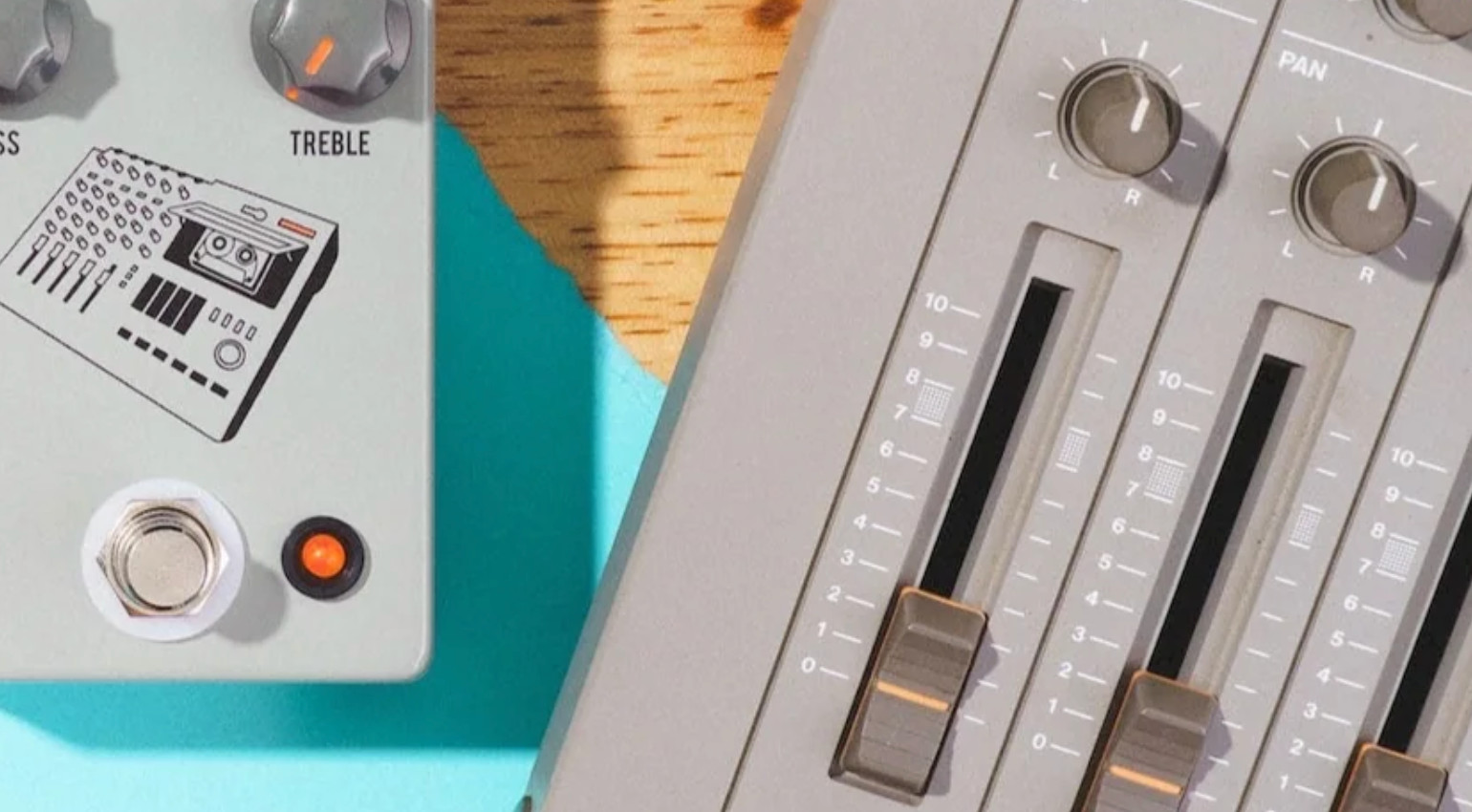
The Mk.gee Guitar Tone: 3 Pedals for a Lo-Fi Signal Chain - Perfect Match! · Source: JHS

The world of guitar is filled with tone chasers. More than just about any other recent player, the Mk.gee guitar tone has become the source of endless discussion and discovery in recent years. Old Tascam multi-track recorders, gated, distorted reverbs, Jaguars with flatwounds… so unique! We’ve picked three pedals you can get from Thomann or Sweetwater that, in combination, will get you pretty close to this rubbery, almost falling-apart type of tone you can hear on Two Star & The Dream Police.
Step by step
The Mk.gee Guitar Tone: It starts with the Guitar
Before we get into the three pedals, it can’t be overstated just how important both Mk.gee’s playing style and his guitar are to his tone. You could get the most expensive, complete signal chain that mimics his. If you play a Les Paul with a pick, it just won’t get you anywhere close. His style is fingerpicking-based, and part of its unique sound is Mk.gee’s extreme use of dynamics. There are moments where the notes are barely audible and others where he explodes into Prince-like antics.
He famously plays a Fender Jaguar with six strings out of a set of seven-string of flatwound D’Addario Chromes. He just omits the seventh string. Any single-coil guitar will do as a starting point, but it’s the baritone flatwounds that can really get you closer to the Mk-gee guitar tone.
Then, of course, there is the whole there is the whole guitar synth situation. His Jaguar is also equipped with a Roland GK-2A pickup feeding into a Roland VG-8 guitar synth. Based on pictures of Mk.gee’s board from recent gigs (it’s changing all the time), these pedals have often been spotted: Chase Bliss Mood, a Rainger FX Reverb-X, an Empress ParaEq, a DigiTech Drop, a Boss CE-2W and a Boss DD-20.
Which leads us to the three suggestions: this is a starting point, where many ingredients from this very intricate signal chain are still missing. The Mk.gee guitar tone is part guitar, part signal chain, and that famed Tascam 424 preamp at the end he famously uses. These suggestions will get your closer.







Pedal 1: JHS 424 Gain Stage – Portastudio in a Pedal
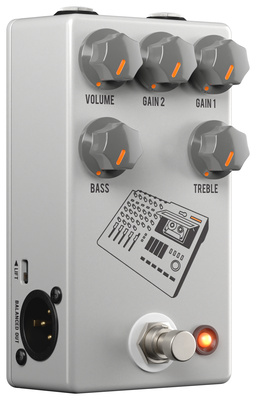
JHS weren’t the first ones to recreate the 424 preamp in a pedal, but thus far they arguably came closest. This thing recreates that rather unsual flavor of distortion, that clipped, almost falling-apart type of sound pretty much dead on.
To get closer to the Mk.gee guitar tone, the clean sounds that is, dial Gain 1 pretty low, Gain 2 around 2 as a starting point. Then slowly turn up Gain 2 until the chords start breaking up. Just be aware that the overall sound of the pedal can be a bit bass-heavy when you put it before an amp. In that case, turn down the bass knob to compensate. Or just go straight in to your interface from the pedal’s XLR output.
Check out the JHS 424 Gain Stage at Thomann* and at Sweetwater*.


Pedal 2: Boss CE-2W – Lo-Fi Wobble (with Vibrato)
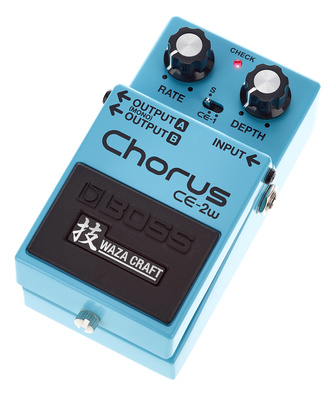
Besides noise as crunchy distortion, tape wobble, which you can get from a vibrato effect, is an essential part of any lo-fi sound like the Mk.gee guitar tone. Boss’ Waza Craft pedal CE-2W is on his board. However, this isn’t for subtle chorusing purposes but rahter the CE-1 vibrato. Fully analog, full of wobble.
To get closer to the tone, set the rate pretty slow and a low depth. That way, you get that worn cassette sound. The Boss CE-2W is available at Thomann* and at Sweetwater*.


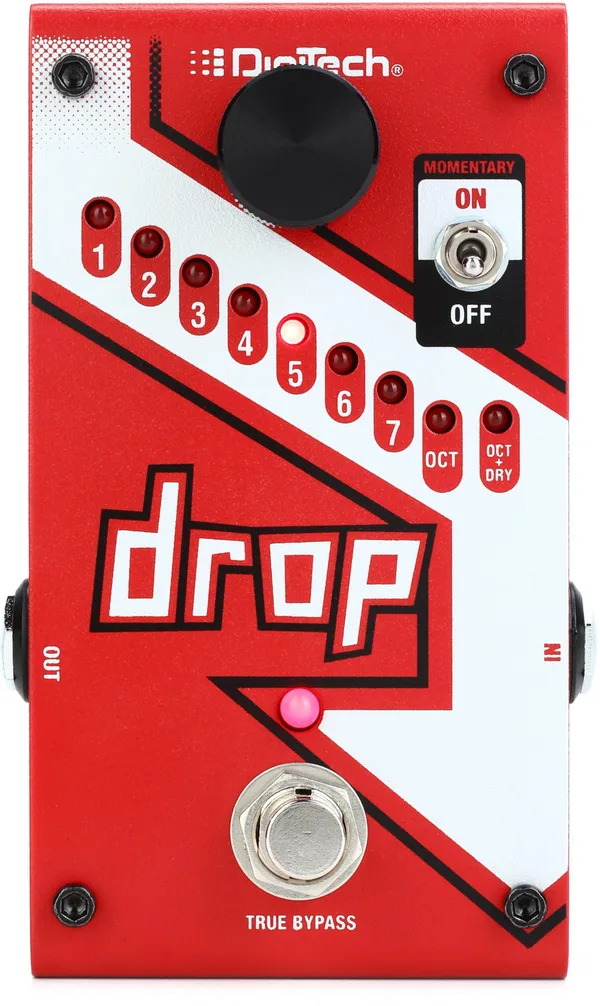
Pedal 3: DigiTech Drop – Baritone Sound without a Baritone Guitar
This pedal will help a lot for the Mk.gee guitar tone. It’s also on his board, but he likely uses it for sudden pitch-dropping effects. For our signal chain, the Drop operates as a polyphonic pitch effect that allows you to get much closer to that baritone tone without needing heavier strings and an actual baritone guitar. Which, if we’re being honest, is where most players will be coming from when chasing the Mk.gee guitar tone.
As a starting point, turn pitch down five semitones. This way your low E string becomes a low B, which is where seven-string baritones usually sit. The DigiTech Drop is available at Thomann* and at Sweetwater*.


The Mk.gee Guitar Tone: The Signal Chain
Now that you’ve gone shopping the question remains in what order to put these three pedals. Our suggestions would be: Guitar (neck pickup single-coil with tone rolled back a little) → DigiTech Drop → Boss CE-2W → JHS 424. If you have a reverb pedal, out that before the 424, too. Distorted reverb is a big part of the Mk.gee guitar tone.
There are many parts we haven’t covered here. The guitar synth (there is the mighty Boss GM-800), the lo-fi multi-effect Chase Bliss Mood, and the distorted reverb from Rainger FX, the Reverb-X. Research these only once you feel comfortable dialing the Mk.gee guitar tone on the three pedals we suggested, as each one is a world of new sounds and new workflows way beyond a simple signal chain.
Conclusion
Is this a perfect match? What’s your take on the Mk.gee guitar tone? What pedals have you used to get close?
Let us know in the comments!
+*Disclaimer: This post contains affiliate links and/or widgets. When you buy a product via our affiliate partner, we receive a small commission that helps support what we do. Don’t worry, you pay the same price. Thanks for your support!