Double-Tracking Guitars: How to Add Width and Punch to Electric Guitar Recordings
What tools and effects do you need to get the ultimate rock sound?

 1,8 / 5,0 |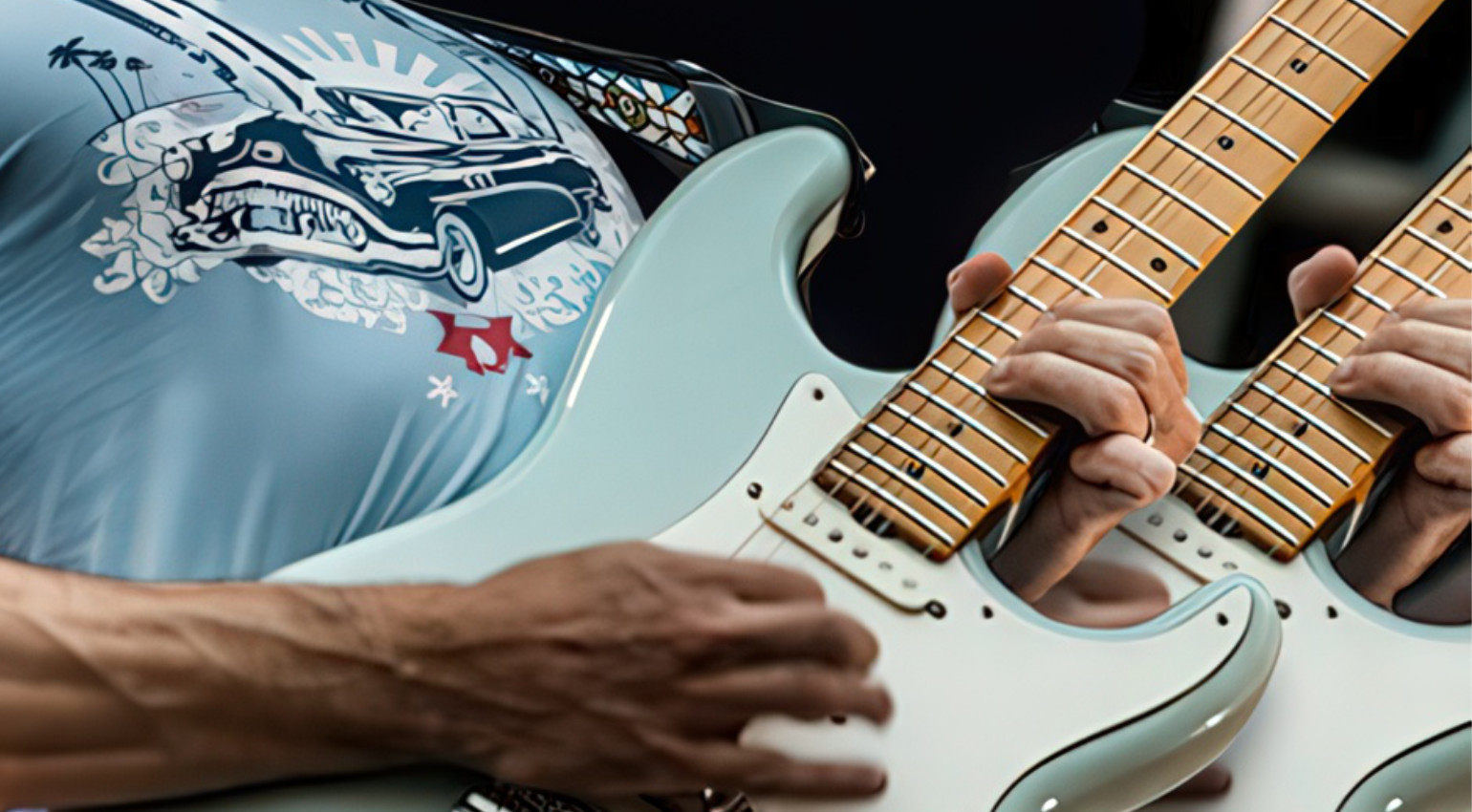
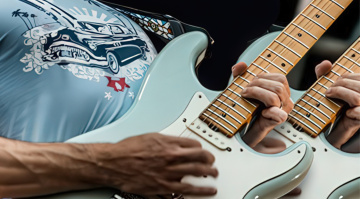
Double-Tracking Guitars: How to Add Width and Punch to Electric Guitar Recordings · Source: TC Electronic

You’ve got your first electric guitar and an audio interface, and you want to record your first riffs. Suddenly, the recording sounds thin and small compared to your idols. The most common tip: double-tracking guitars! Alongside vocals, recording multiple electric guitar takes is one of the most common ways to give this instrument more size and punch in a mix. We’ll show you what you need to keep in mind.
Table of Contents
What Are the Benefits of Double-Tracking Guitars?
Finally, you’re bringing your newly-written riffs from the rehearsal room into your DAW. You’re about to record and mix your first songs: Are you ready? Have you already programmed the drums, set up your DAW, and connected your guitar to the audio interface for the first demos? Then let’s get started!
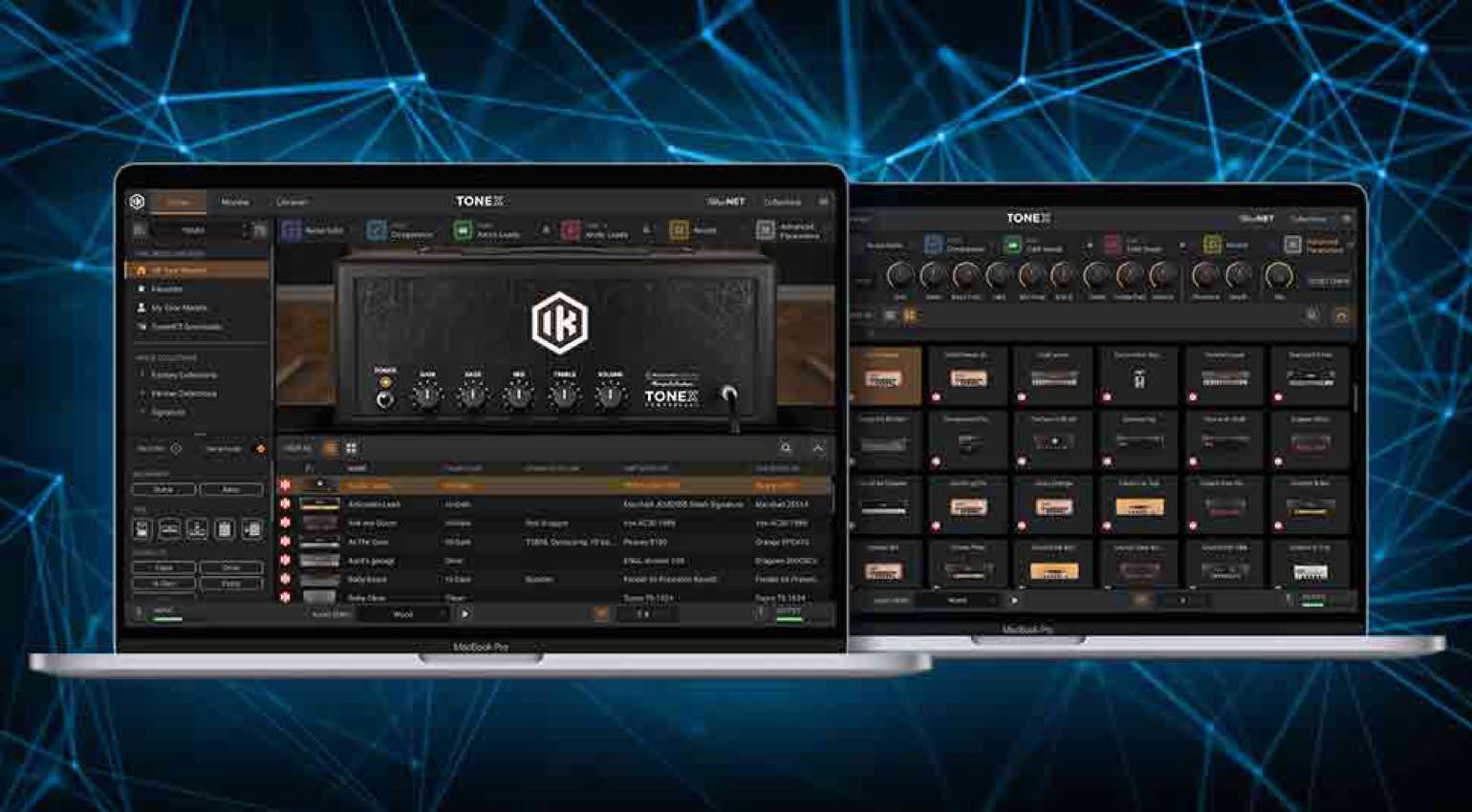
Whether you use a commercial plugin such as IK Multimedia ToneX* and Amplitube, NI Guitar Rig*, or one of the plugins from Neural DSP, freeware such as the NAM Player, or simply your amp and pedals in your DAW, it doesn’t matter at the beginning. But you’ll quickly notice when you compare your guitar sound to that of your idols that theirs often sounds much wider and more powerful.
But you’ve dialed in your pedals and plugins the same way Tom Morello, James Hetfield, and Tim Henson do, right? Sure, in the end, much of the sound comes from your fingers, so you should be able to play your own riffs by heart. But then, when you’re looking for tips, you keep coming across this one: double-tracking guitars. What’s that all about?
Basically, the idea behind double-tracking guitars is to record a riff multiple times and then distribute the recordings across multiple audio tracks in the stereo panorama. This not only makes the riff sound louder and more powerful due to the double distortion, but also wider due to the slightly different timings on the left and right. However, there are a few things to keep in mind.




Can’t You Just Duplicate a Track and Pan It to the Other Side?
Many people initially try to simply duplicate one track and then pan both copies to the left and right. However, this rarely results in anything more than a sound that is twice as loud. The idea behind double-tracking guitars is that the small differences between two, three, or thirteen versions of the riff are precisely what create the width and punch.
A duplicated track is an exact digital copy, meaning there are virtually no audible differences. This makes it almost impossible to create the desired effect. Of course, you can try adding a short delay (less than 20 ms) as an effect before the amp or load a delay in the amp plugin to create a virtual doubling effect.
However, this will never develop the same width and punch as when you play the riff multiple times and then distribute the recorded copies across several tracks in the panorama.
What Should You Keep in Mind When Double-Tracking Guitars?
To achieve the desired effect, keep a few things in mind. The most important thing is to play tight. If you play the riff too clumsily and with a dynamic too different from the intial version, you will hear the doubled riff darting across the stereo panorama after panning. To achieve the closest possible recording, use your DAW’s take folder and comping workflow and record bar-by-bar.
In addition, this tip from a good friend and mixing engineer has saved me a lot of mixing and recording work: layer distortion sensibly. If you record your riff on the second track with the same settings for the distortion pedal and amp, the riff will quickly sound unclear and muddy.
For the best results, it helps a lot if you dial in much less distortion on both tracks. Because when mixed, both tracks will sound rich and big, while individually they might sound a bit tame. On the other hand, if you layer too much distortion, it’ll quickly turn into an undefined wall of noise.
How Can You Improve the Results When Double-Tracking Guitars?
In addition to timing and “distortion management,” do this one thing when recording double-tracking guitars: frequentle tune. Otherwise, the riff will quickly sound like grindcore, which might not be the desired effect. And often it’s not just the lower distortion that makes a double-tracked riff sound bigger. Here are a few tips to make guitar double-tracking sound even better:
- For the layers, play the riff with a different pickup.
- Play the riff in a different position on the fretboard, either an octave higher or an octave lower or by using an octaver pedal.
- If the riff mainly consists of power chords, play only the root notes through a fuzz pedal in a third track after the guitar doubling and mix them in quietly.
- Mix different amp sounds into your doubles, for example, a mid-heavy Marshall sound on one side and a scooped Dual Rectifier sound on the other.
And “more is better” does not always apply. Sometimes the double-tracked guitars might blur the riff too much, sometimes a slight panning is enough to keep backing vocals and reverbs more audible.
Is Double-Tracking Guitars Possible on Stage?
It can be a rather unpleasant experience when you step on stage and stage reality meets studio production, both for the audience and the artist. Because while you may have layered a dozen guitars at home or in the studio to create a wall of sound, on stage, you may be the only guitarist. What to do?
One solution that is sometimes viewed rather critically is backing tracks. This means that while you play the guitar alone in the verse, the other ten tracks come in during the chorus from a laptop. This can work, but it requires precise timing from all band members, and the lengths of all passages are strictly defined. But the effect can still be just what you need.
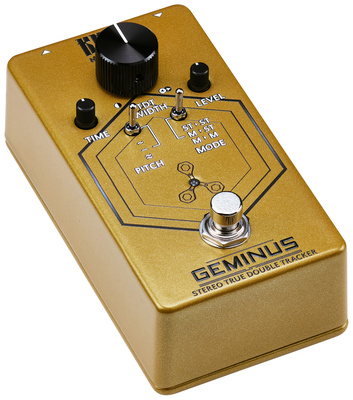
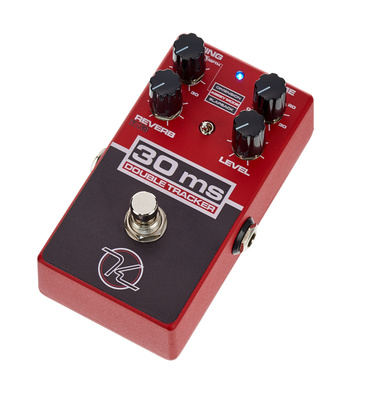
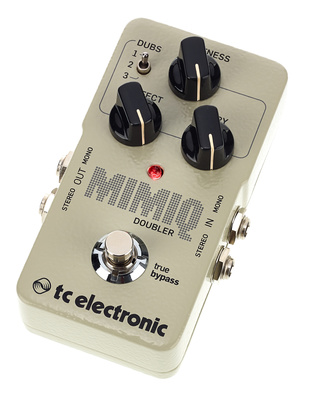
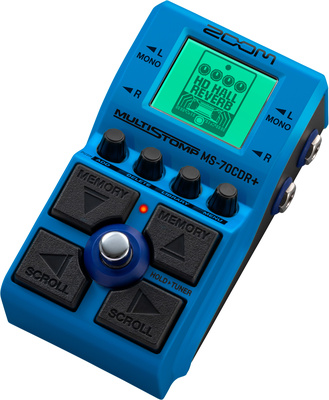
Then, there are pedals such as the KMA Machines Geminus Tracker*, which creates stereo double-tracking with a particularly natural sound. Pedals such as the Keeley 30ms*, TC Electronic Mimiq, and the multi-effect Zoom MS-70CDR+* also offer double-tracking effects. However, it is important to test carefully whether the respective double-tracking effects produce the desired outcome in the riff.




Conclusion
Double-tracking guitars is a widespread production technique in many rock and metal styles. Of course, there are also genres and songs for which these doubles are less suitable. Think of clean funk licks or gentle jazz plucking: even slightly offset doubles would completely change the sound!
How do you do it? What are your experiences with double-tracking guitars? And above all, how do you solve this problem live? Let us know in the comments!
*Disclaimer: This post contains affiliate links and/or widgets. When you buy a product via our affiliate partner, we receive a small commission that helps support what we do. Don’t worry, you pay the same price. Thanks for your support!

This might also interest you