How Detroit Techno Became an Unstoppable Global Phenomenon
Don’t get it twisted: Techno is from Detroit.

 3,7 / 5,0 |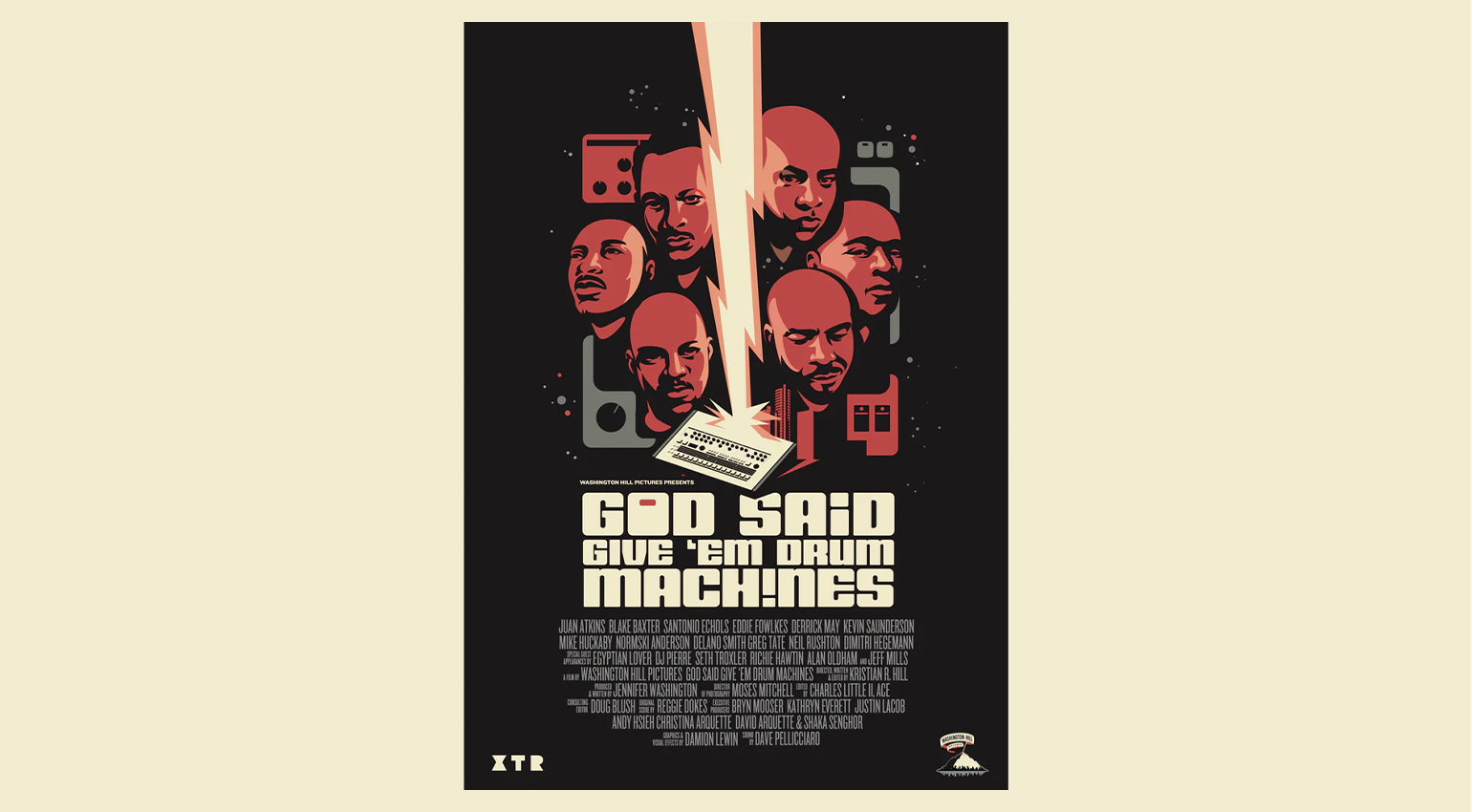

Detroit techno documentary God Said Give ‘Em Drum Machines is now streaming for free. We watch the doc and lament the fact that so many people still think techno is a European creation.
Detroit Techno
No UFOs
In 1995, I had a radio show on KZSU, the station connected to Stanford University. From midnight to 3 am on Sunday nights (or Monday mornings, depending on your point of view), I played all manner of electronic music, from techno to IDM to jungle, usually finishing up with an hour of ambient. I called the show No UFOs after the Model 500 song because it was important to me as an American to highlight the fact that techno began in the States, and in Detroit specifically. The jury may still be out on whether “No UFOs” is indeed the first techno song (I think it is), but there’s no doubt about where the genre itself began: the Motor City.
“No UFOs” was 10 years old at the time of my show, what seemed like a really long time to a twenty-something, but even then, I wanted people to recognize the origins of the music that was spreading so rapidly around the world. Now it’s 40 years past the release of that epochal Juan Atkins song and it seems that the message has become muddled, with many assuming that techno is a European creation.
It’s time for that to change.
God Said Give ‘Em Drum Machines
What got me thinking about this again was the documentary God Said Give ‘Em Drum Machines. The story of the birth of Detroit techno, it’s a fantastic retelling of the start of the genre with interviews with most of the major players of the first wave, including the Belleville Three: Juan Atkins, Derrick May, and Kevin Saunderson. Although it came out in 2022, it’s now found a home on the free streaming site, Tubi. Check it out if you’re in a supported country.

There are lots of interesting twists and turns in the story, such as Blake Baxter’s career-stalling bout of stage fright while on tour in London, and the disappearance of early Saunderson collaborator Santonio from public consciousness. It also gets into the cross connections between Chicago and Detroit, which I was aware of but not to the extent explored in the film (May sold Frankie Knuckles his first TR-909!), plus the fascinating early days with Cybotron and how Atkins and Richard Davis hooked up.
For me, it was also a deep dive into the musical explorations of my youth. My first real musical love was electro. Hearing Kraftwerk in the movie Breakin’ (hey, we all have to start somewhere) made a massive impact on me and turned me on to the power of synthesizers and drum machines. It also inspired me to be a DJ, and Cybotron’s “Clear” was in my crate in junior high – way before I ever knew who Juan Atkins was. Then in high school, I discovered acid house via Psychic TV. Acid house compilations would often have the stray Detroit techno track on it, like Reese & Santonio’s “Rock to the Beat.” Although I was American, San Francisco was a long way from Detroit in 1988, and I ended up learning about the music the same way a lot of Europeans did: through UK compilations.
The Gear of Detroit Techno
Techno was colder than house, cooler. More distant. And that suited industrial-loving me just fine. It sounded much closer to Skinny Puppy and Front 242 than Chicago house did, that’s for sure. Acid may have had the TB-303, the first synthesizer that I could recognize by sound, but techno had the TR-909, FM synths, and samplers – pretty much the same gear as my EBM heroes. Of course, at the time, I didn’t know the names of the gear that Detroit producers used. It was only later, when I started looking into this stuff, that I discovered what a 909 was and all the others.
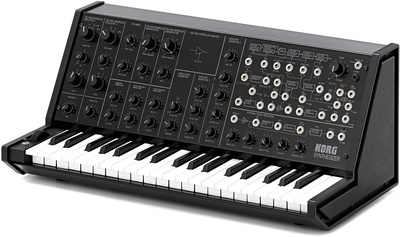
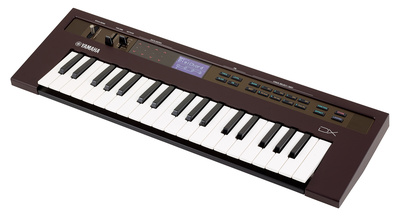
What other gear graced those early Detroit records? Juan Atkins’ first synthesizer was a Korg MS-10. That’s the source of those amazing basslines on Model 500 records, the ones that are still informing electro to this day. Derrick May rinsed the Yamaha DX100 (can you believe “Nude Photo” was his first record?!). Staying in the FM vein, Atkins used the Korg 707, a largely forgotten FM synth with performance sliders to make programming a little easier. And sequencing everything was the Korg SQD-1, which Carl Craig once confirmed to me was the Detroit techno sequencer.
It was with this fairly rudimentary equipment that a handful of producers in Detroit created some undeniably classic records, ones that would go on to inspire the world.
Some modern remakes of the classic gear that Detroit producers used are available at Thomann*.



So What About Kraftwerk?
But Kraftwerk. I see this on social media all the time whenever Detroit techno comes up. Didn’t the German band invent techno in the 1970s with songs like “Trans Europe Express” and “Metropolis”? No. The documentary addresses this, but I’ll also clarify: Kraftwerk inspired a lot of musical genres, from hip-hop (“Planet Rock” is “Trans Europe Express” plus “Numbers”) to synthpop (“Autobahn” blew Daniel Miller’s mind) to mid guitar pop.
And yes, techno too. Derrick May famously said that techno was, “George Clinton and Kraftwerk stuck in an elevator with only a sequencer to keep them company.” You’ll notice Clinton in that equation. Detroit’s hometown hero and the founder of Parliament, Funkadelic, and about a million other groups, was as big a part of the creation of techno as Kraftwerk. But there was also Motown, another Detroit institution, as well as the automobile factories of the city itself – not to mention the dystopian warnings Future Shock and The Third Wave from futurist writer Alvin Toffler.
All of these elements – and many more – came together to inform and inspire the originators of techno. Don’t take away their contributions.
Berlin Runs With It
And speaking of. Berlin did not invent techno either. Berlin took what started in Detroit and ran with it like an Olympic athlete carrying the torch. “No UFOs” came out in 1985, with “Nude Photo” and “Strings of Life” in 1987, and “Rock to the Beat” in 1988. This is all before the Wall fell in 1989, when Berlin opened up and adopted techno as the soundtrack to its newfound freedom.
This is not to denigrate the contributions that Berlin has made to the world of electronic music. Indeed, if you make techno or other kinds of dance music, Berlin is now ground zero. But it’s that way because of Detroit, because artists like the mighty Underground Resistance brought their uncompromisingly hard techno to Tresor in the early ‘90s and showed Berlin a new way to produce music.
Detroit Techno Ground Zero: Submerge
I’ve always wanted to visit Submerge, the distributor/record shop/museum located “somewhere in Detroit.” Spearheaded by “Mad” Mike Banks of UR, it keeps that original flame of Detroit techno alive by highlighting the history and continued importance of the genre.
Submerge gets a brief mention in the documentary, but I would have liked to see more. Much more than the 1980s records, Underground Resistance’s 1990s output has always been my main Detroit techno love. “Final Frontier” has to be one of the greatest electronic music records ever made – of any genre. That’s just one of so many UR bangers. And that’s before we even start getting into side projects like The Martian.
If anything, God Said Give ‘Em Drum Machines should be spun off into a series. Next wave producers like Carl Craig and Stacey Pullen get just a quick mention, and Kelli Hand needs her own hour as well. And oh my God, Drexciya. Drexciya forever.
As an American and lifelong lover of electronic music, it’s incredibly important to me that people recognize that techno is from Detroit. Watch the documentary. Buy the records. Support the artists. Remain underground.
More Information
*Note: This article contains advertising links that help us pay for this site. Don’t worry: the price for you will always be the same! If you buy something through these links, we will receive a small commission. Thank you for your support!

This might also interest you
One response to “How Detroit Techno Became an Unstoppable Global Phenomenon”

Can remember the first Detroit Techno album in 87, can still see the cover, it was a double album if I remember. Juan Atkins and co, at the time it sounded a bit housey and happy clappy. Later though, in a different incarnation, and some noise stuff too, it sounded much cooler. While the Americans probably still make the best House Music, partly down to the gospel ubringings of black artists, techno is better made in Europe by Germans and Brits, who have more of an avant garde approach to the genre. It depends upon what you view the dancefloor for, soul, celebration, progress, innovation, as to what you make techno into, and for what motive. Everybody’s approach will be different. That said, the first techno was absolutely the sound of Detroit in 1987, its response to Chicago’s House Music, and both are still going strong, so it’s all good.