Building The Perfect Shoegaze Pedalboard: Get These Pedals For The Wall of Sound!
How to Sound like My Bloody Valentine, Slowdive or Your Favorite Band

 3,3 / 5,0 |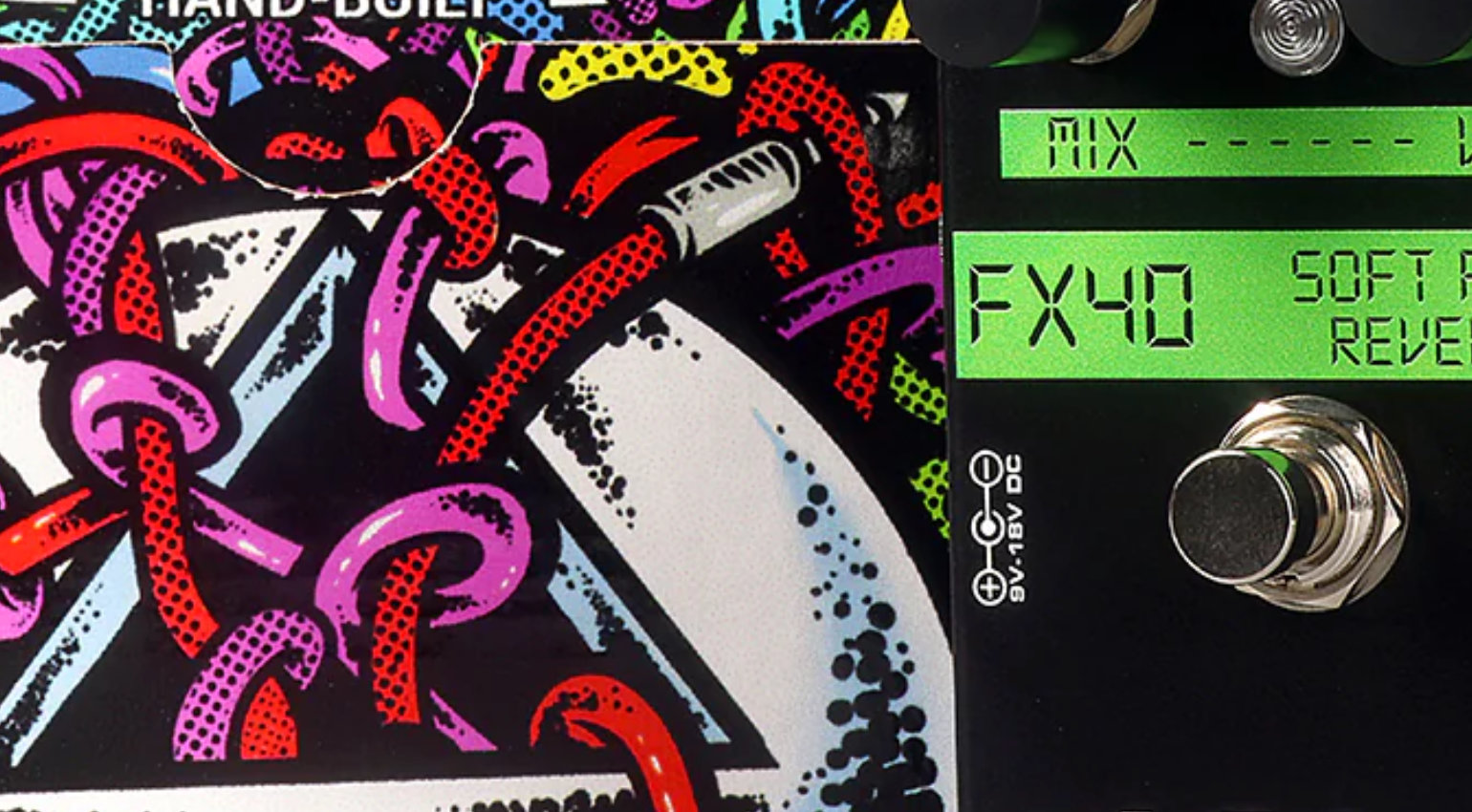
Building The Perfect Shoegaze Pedalboard: Get These Pedals For The Wall of Sound! · Source: Catalinbread

You found My Bloody Valentine, you can’t stop listening to Slowdive, and their guitar tone is the source of endless speculation for you. So, let’s build a shoegaze pedalboard! In this guide, we’ll look at the most important bands of the genre and their sonic aesthetics. Then we’ll list a few typical effects you’d find on a shoegaze player’s board. Finally, we’ll offer suggestions for each pedal, providing both budget and expensive options.
Your Perfect Shoegaze Pedalboard:
Shoegaze Then and Now: The Bands That Built the Wall of Sound
Of course, as with any genre, the origins of shoegaze are a hotly debated topic. This article does not claim authority on this, but merely offers a starting point to get a better idea of what shoegaze sounds like. In the mid to late 80s, The Jesus and Mary Chain buried (with Psychocandy in 1985), the Cocteau Twins and My Bloody Valentine (with Loveless in 1991) created a visual and sonic aesthetic that build upon the dreamy sadness of The Cure.
But these songs were much heavier, so much more dissonant and less pop; neither of these bands ever reached as much of a mainstream reach as Robert Smith did. Still, their unique sound, the emotional depth, and often complete lack of onstage personas drew people in. Sonically, these bands were highly innovative.
What Effects and Techniques Created the Shoegaze Sound?
For instance, My Bloody Valentine’s Kevin Shields played chords while working the tremolo arm of his Jazzmaster, so every note bent slightly out of tune and back again (the so-called “glide guitar” technique) and fed the result through a Yamaha SPX90 set to reverse reverb.
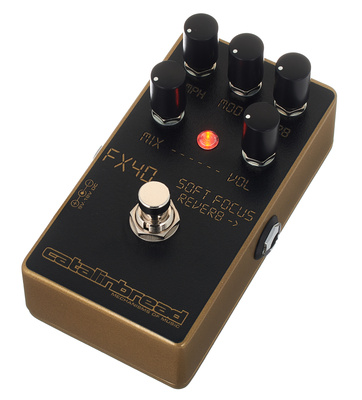
Slowdive built their sound on a preset: the Yamaha FX500’s Soft Focus program, a combination of reverb and symphonic chorus that Neil Halstead and Rachel Goswell used on almost everything, and which is now a pedal in its own right. And Cocteau Twins’ Robin Guthrie ran everything through banks of chorus and digital reverb until the guitar stopped sounding like a guitar.
Shoegaze’s revival from the last decade or so has now almost outlasted the original run. Deafheaven welded the guitar sound to black metal on Sunbather, Nothing and Whirr carried the heavier American strain, and DIIV, Hotline TNT and Narrow Head kept it in the rock clubs.
Then shoegaze went to TikTok: Wisp‘s “Your Face” and the wider bedroom-producer wave put teenagers on Big Muffs, and Julie and Fleshwater are playing rooms that Chapterhouse never filled.
What Belongs on a Shoegaze Pedalboard
The most typical sonic attribute associated with shoegaze is the wall of sound. Mind you, this isn’t simply a matter of changing the right pedals, but also playing the right chords in the right tempo. Generally speaking, shoegaze sounds exist both clean and heavily fuzzed, almost always drenched in chorus, delay and reverb.
Generally speaking, we’re looking for a fuzz, then a vibrato or chorus pedal, then reverb and delay, and finally some type of more exotic pitch reversing or glitch effect. Signal order is key as well, with the fuzz first, then modulation and pitch effects, then delay, and finally reverb. That way, you first heavily clip your signal, then you change its pitch stability, then you make it huge to then throw it into the aether.
All of this works in mono, of course, but stereo, at least for delay and reverb, will allow for a much wider sound – if your amp allows for it. And don’t skip on the reverse, pitching, glitch effect, as it is the one that separates a loud rock board from a shoegaze pedalboard. Shields’ reverse reverb and glide bends are both pitch and time behaving wrongly.
Let’s check out options for each pedal on your shoegaze pedalboard! For each effect, there’s both a budget and a more expensive solution to choose from.
Fuzz: The Thunderous Foundation of a Shoegaze Pedalboard
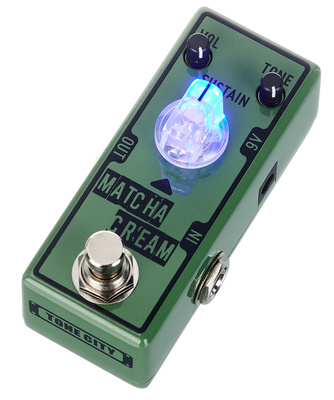
Budget: Tone City Matcha Cream *. It’s inspired by the “famous Russian fuzz pedals” which refers to the Big Muff family, if you haven’t heard of this reference. This tiny pedal also comes with an additional bass switch that adds even more low-end to your clipped-to-oblivion fuzz sound. It sounds huge, it’s small in size and prize: the perfect starting point for your low-budget shoegaze pedalboard!
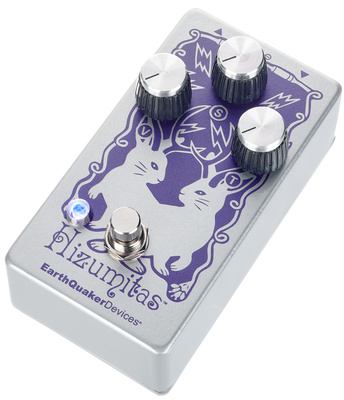
Flagship: EarthQuaker Devices Hizumitas.* Inspired by the Elk BM Sustainar used by Wata of Boris, this is a Muff-family fuzz with more low end and a tone control that stays usable across its whole range. It reacts to picking dynamics in a way the standard Muff does not, which matters when you are playing chords rather than riffs.



Vibrato and Chorus: Modulation & Instability
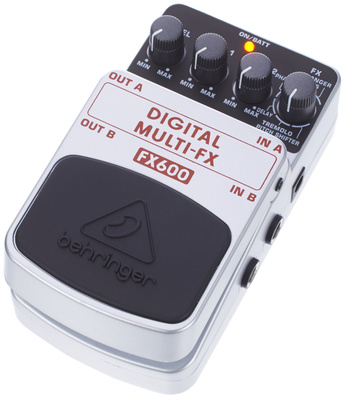
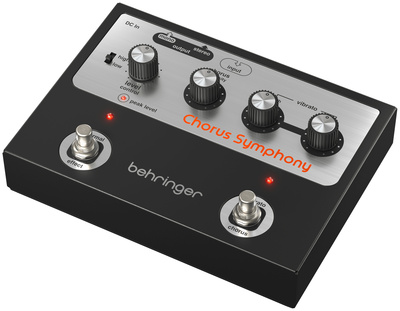
Budget: Behringer FX600*. It might not be as high-fidelity, it might not have that analogue, liquid feeling of a vibrato/chorus effect, but the FX600 is packed to the brim with modulations effects – in stereo. Which, at this price point, is quite the statement. There’s also the bigger, more analogue-sounding Chorus Symphony*.
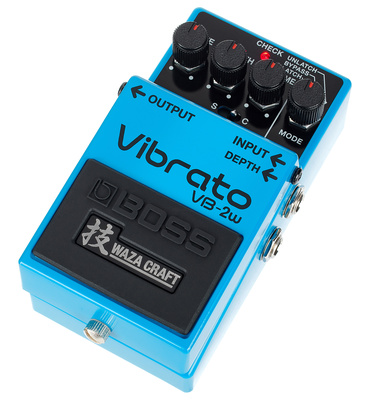
Flagship: Boss VB-2W Waza Craft*. The Waza Craft reissue of the VB-2, with an all-analogue bucket-brigade circuit, a standard mode that reproduces the original and a custom mode with a new filter wave. The rise-time knob fades the vibrato in over a held chord, and there is an expression pedal input for depth.


Reverse and Pitch: Break Your Sound Beautifully
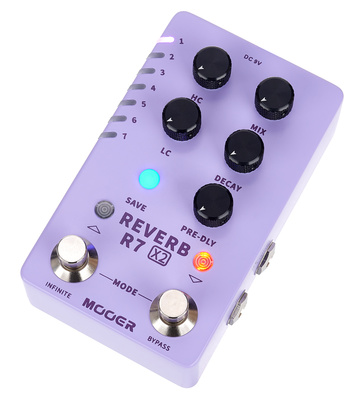
Budget: Mooer R7 X2*. Among it’s fourteen reverb algorithms, the R7 X2 has a reverse reverb, in stereo. So, just throw it behind fuzz and vibrato on your shoegaze pedalboard, and off you go into the abyss. And running it after your main reverb gets you the swelling backwards attack for the price of a set of strings and a coffee.
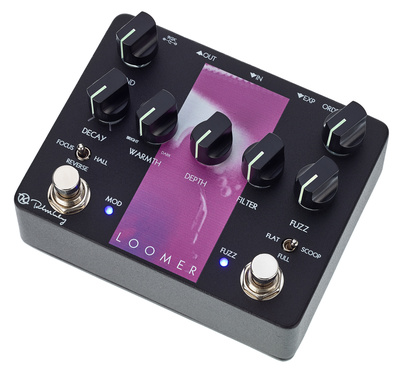
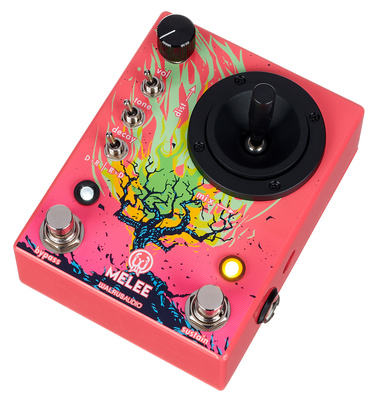
Flagship: Keeley Loomer*. Fuzz and modulated reverb in one enclosure, built with the genre in mind: three reverb modes (Focus, Hall, Reverse) and three fuzz voicings (flat, full, scoop). And the pedal’s reverse mode is modeled on the SPX90 and Alesis Midiverb II. Note that it covers slot 1 as well, so it is a two-pedal purchase in one box. Alternatively, there is the equally quirky and gloomy Walrus Audio Meele*.



Delay: The Smear and the Echo
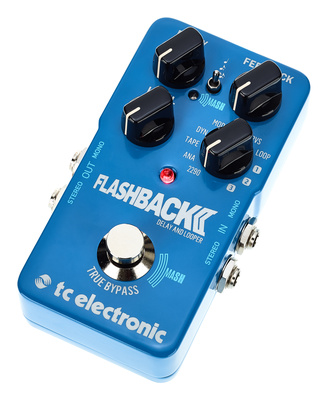
Budget: TC Electronic Flashback 2* This is one powerful delay pedal that offers way more than just traditional delay flavors. For your shoegaze pedalboard, you get eight delay types including tape, analog, reverse, and the shimmering Crystal algorithm, three TonePrint slots, and a pressure-sensitive MASH footswitch that works as a built-in expression pedal. Set the repeats high and the mix lower than you think. Available at Thomann*
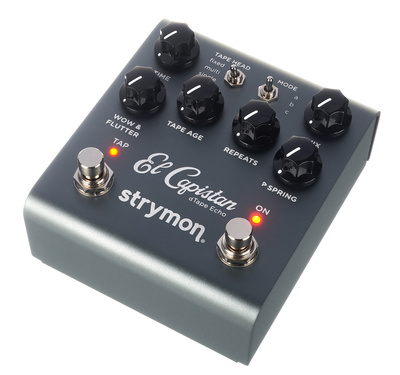
Flagship: Strymon El Capistan V2*. If it is an analog-flavored delay of the meandering tape delay kind you’re after, this is the holy grail. Three tape machine types with three modes each, plus controls for tape age, bias and crinkle, and a spring reverb on top – you get modulated, wobbly delays for days.


Reverb: The Otherworldly Room
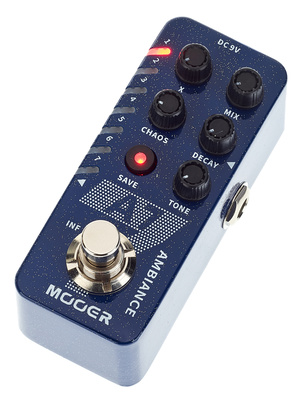
Budget: Mooer A7 Ambiance Ambient Reverb.* Don’t be fooled; just because it says “Ambiance” does not mean this tiny pedal can’t do glassy, modulated shoegaze rooms. Just listen to the algorithms Crush, Dream, or Shimmer; there is plenty of modulated reverb to be had. At a very affordable price, perfect for your budget shoegaze pedalboard.
Flagship: Catalinbread Soft Focus Deluxe*. This is the Slowdive preset as a pedal: the FX500 reverb and symphonic chorus combination, now with the delay the 2022 original left out, spread across six programs plus a footswitchable distortion circuit that can run in series or parallel.

Conclusion
This concludes our guide on building a shoegaze pedalboard. As you see, this genre is quite a bit heavier on effects, as, say punk or funk or blues is. As this guide was for individual pedals, we completely skipped modelers and multi-effects.
What’s your take on the perfect shoegaze pedalboard? Which effects have you used to create the wall of sound?
Let us know in the comments!
FAQ
What pedals do I need for a shoegaze sound?
Five effects in that order: fuzz, vibrato or chorus, reverb, delay, and a reverse or pitch effect. You can build a working shoegaze pedalboard with three of them — fuzz, reverb, delay. The modulation and the reverse effect are what stop it sounding like generic ambient rock.
What order should the pedals go in on a shoegaze pedalboard?
Fuzz first, then modulation, then delay, then reverb. The fuzz needs a dry signal to react to your picking, and the reverb needs to come last so it smears the delay repeats rather than the delay chopping up the reverb tail.
How do you get the Slowdive reverb sound?
Slowdive used a preset on the Yamaha FX500, a rack unit combining reverb with symphonic chorus. Catalinbread’s Soft Focus Deluxe recreates it directly.
How did My Bloody Valentine get the Loveless guitar sound?
Kevin Shields strummed chords while holding the tremolo arm of a Jazzmaster, so the pitch drifts through the whole chord — the technique he called glide guitar. That went through a Yamaha SPX90 running reverse reverb.
What guitar and amp work best for shoegaze?
A Jazzmaster or Jaguar, mainly because of the floating tremolo arm — that is the glide technique, and it is hard to replicate on a hardtail.
*Disclaimer: This post contains affiliate links and/or widgets. When you buy a product via our affiliate partner, we receive a small commission that helps support what we do. Don’t worry, you pay the same price. Thanks for your support!

This might also interest you
One response to “Building The Perfect Shoegaze Pedalboard: Get These Pedals For The Wall of Sound!”

whats the point in this article if it got so many things wrong?